Decision allows states to send ballots under process followed for years even as president tried to limit system
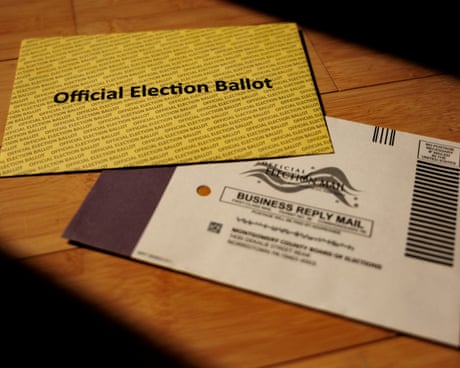
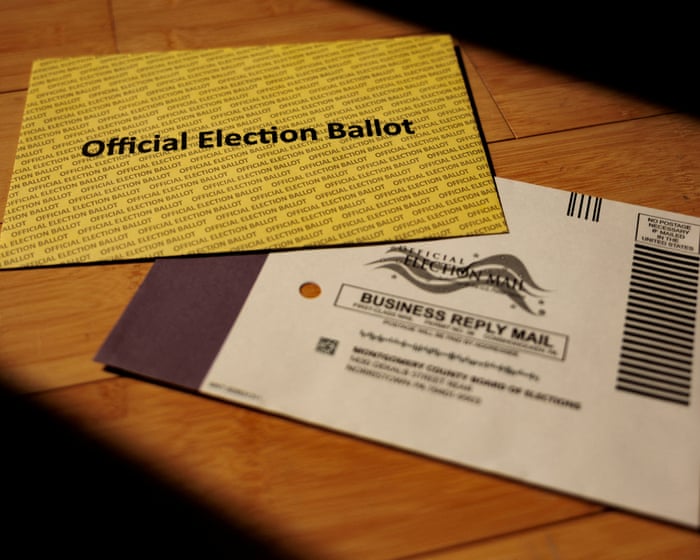
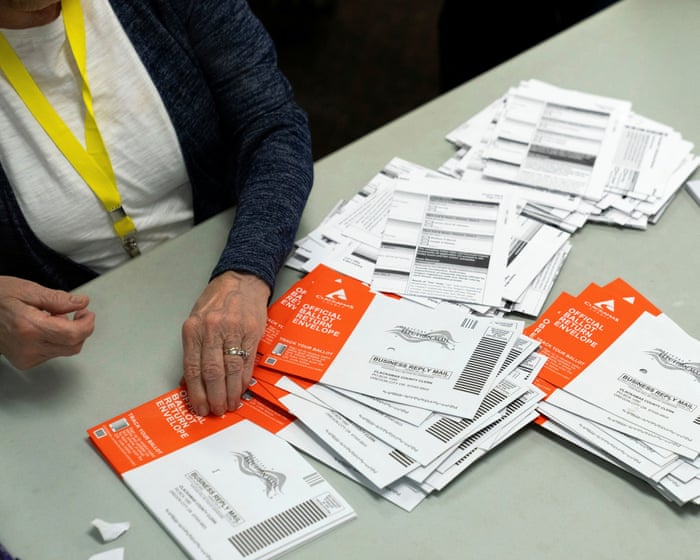
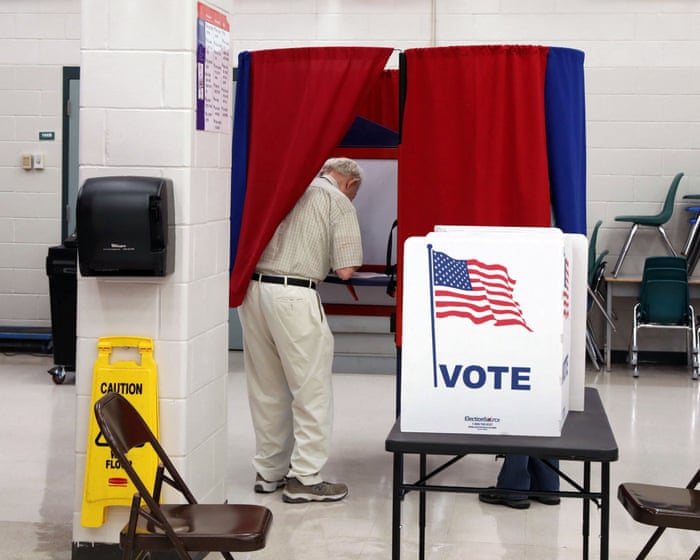
The supreme court on Monday rejected Donald Trump’s mail ballot restrictions for now, capping a flurry of last-minute legal action with voting in the midterm elections already underway.
The decision allows states to continue sending out mail ballots under the same processes they have used for years.
Alexander Zverev was simply too good for the home hope at the US Open on Sunday. Andy Roddick’s record may stand for some time to come
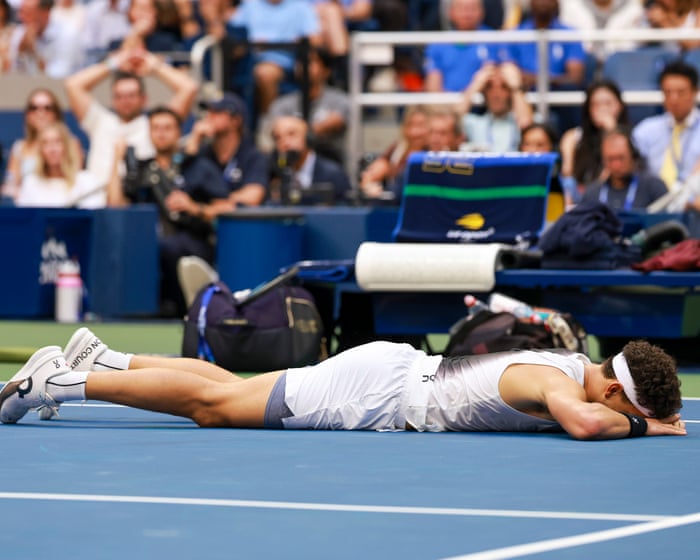
On a Sunday afternoon set up for Ben Shelton to play national hero, the US Open final debutant suffered a four-set defeat to Alexander Zverev, a result that deflated the partisans at Arthur Ashe Stadium. The match compounded Shelton’s miserable head-to-head record against the German, who claimed a second career grand slam title without having to face final bosses Jannik Sinner or Carlos Alcaraz. The defeat also extended a long drought – the last win by an American man at a grand slam was Andy Roddick at the 2003 US Open, when Shelton was still a month off his first birthday.
After the final, Shelton wore a hangdog expression as he thanked his team and the capacity crowd in New York, tucking the silver runner-up tray under his arm as if shunted off to high school detention. “Disappointed with how today went,” he said in his press conference afterward. “Excited with the progress that I feel that I’ve made. But, yeah, this one stings 100%.”
A Ukrainian company has unveiled a homegrown strike drone built to fly deep behind Russian lines, Militarnyi reported on 13 September. Octava Defence showed the new long-range aircraft—a bigger version of a drone already used in combat—at the MSPO 2026 defense expo in Kielce, Poland. The company says the smaller drone is built to keep working in electronic warfare conditions without a reliable satellite signal.
Russian jamming is one of the biggest obstacles to Ukrainian strikes deep in the rear, which is why Ukrainian makers keep building guidance that does not depend on satellite signals.
The workhorse is already in the fight
The base FLYCAT, presented in January 2026 by another Ukrainian firm, Venator Technologies, is a strike drone Ukrainian forces have used in combat since March. An improved model went into action in July and August and is now undergoing codification—entry into Ukraine's official weapons register.
Explore further
Watch first naval battle in history fought entirely by drones: Ukrainian uncrewed boat spots, fires on, and sinks Russian one in Black Sea
The company says the updated drone can fly more than 80 km, stay in the air for an hour, and carry a warhead weighing up to 3.7 kg. It is built to hunt armored vehicles, artillery, radars, and air-defense systems, as well as lighter shelters and communications gear. It can pair with a scout drone that finds the target and passes the coordinates. Several FLYCATs can also strike a single target together or hit multiple targets at once.
Nearly everything on it is built in Ukraine—the communications, navigation, guidance, and warhead. Only the engines come from abroad. Its two cameras—day-only or day-and-night—feed a terminal-guidance module that picks out the target from 2,000 m as it closes in.
The one that reaches deeper
The FLYCAT SL is a bigger, longer-range version, and it is still in testing. The company says it is built to fly more than 200 km, stay airborne for over two and a half hours, and carry a heavier load of up to 7 kg.
One of the warhead variants of the FLYCAT strike drone, shown at MSPO 2026 in Kielce, Poland. Photo: Militarnyi
That range is meant to let it go after command posts, armored vehicles, artillery, and air defenses far behind the front line.
Some of the everyday struggles animating voters have a climate link lurking in the background
When Florida governor Ron DeSantis signed a law erasing the words “climate change” from state statutes in May 2024 – colloquially known as the “don’t say climate change” law – Democrats were outraged. Just six months later, many liberal politicians began to go quiet on the issue themselves. After Donald Trump won the 2024 election, mentions of the climate crisis started to disappear from Democrats’ rhetoric. As the 2026 midterms approach, that retreat is still shaping how some candidates talk about climate on the campaign trail.
The trend, known as “climate-hushing”, may reflect the limitations of Joe Biden’s climate policies, said Daniel Aldana Cohen, assistant sociology professor at the University of California, Berkeley, who studies climate politics and inequality. Green jobs and housing investments fell short of the climate movement’s desires, consumer incentives disproportionately benefited wealthier households, and Democrats struggled to effectively communicate their accomplishments. The president has since rolled back many Biden-era clean energy incentives and regulations.
We take a look at some of our favourite snapshots from New York as Elena Rybakina and Alexander Zverev both triumphed in the final grand slam of the year
Donald Trump has claimed there is a “SICK conspiracy” against artificial intelligence and data centers in response to the growing calls for greater checks on AI development.
“The only control or ‘guardrails’ that AI needs is a STRONG AND SMART (High IQ!) PRESIDENT, and the U.S.A. has that, in spades!” Trump wrote on Truth Social, insisting that the administration has stopped leaders of AI companies from “doing bad, or potentially bad” things. However, he didn’t point to any concrete examples for how he has curbed possible abuse or malfeasance in the industry.
There is a SICK conspiracy going on against AI and Data Centers, and the only one that is happy about it is China … We are leading China, and all others, and will continue to do so. Conspiracy Theorists, Treasonists, Traitors, and Leakers, BEWARE!
Project will prepare volunteers across US to monitor polls, encourage early voting and respond to disinformation
The Democrats intend to train tens of thousands of volunteers to monitor the polls and counter possible voter intimidation under a new plan to protect November’s US midterm elections from anticipated interference from Donald Trump and his allies.
The nationwide initiative, dubbed the New Battlefield Project, will help state Democratic committees build up a vast coalition of volunteers to monitor the polls, push voters to cast their ballots early and create a network to respond to disinformation.

 Connexion