
 Connexion
A US-Russia deal won’t end the war. It will start the next one
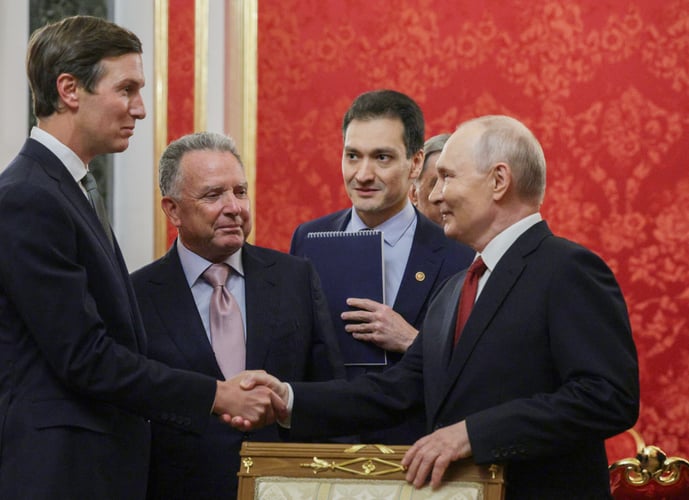
After talks between President Putin and President Trump's representatives Steve Witkoff and Jared Kushner ended, the White House called them "substantive." Putin's aide Yuri Ushakov called the meeting "substantive, constructive and exceptionally frank," adding that the US representatives "formulated a number of considerations on ways to reach a settlement."
According to Bloomberg, Putin is prepared to end the war only on Moscow's terms, and Russian demands have hardened because the Kremlin believes it holds a military advantage. Putin expects to seize the rest of Donetsk Oblast by the end of 2026, Reuters reported, citing a person close to the Kremlin: "There is no chance of reaching an agreement on the front line until Putin finishes taking the rest of Donetsk Oblast."
Witkoff has made many trips to Moscow. He arrived in Kyiv for the first time only the day after. That speaks volumes about where America's focus lies: Russia, not Ukraine.
The danger, though, is not the deal alone. Two American processes are running at once—a peace negotiated on Moscow's terms and a review that would pull US forces from Europe—and together they lower both the political and the military cost of a Russian attack on NATO. Everything below is why that convergence, not the handshake in Moscow, is the thing to watch.
Negotiating a Russian lie, not its strategic demand
Russia has long used disinformation to create strategic ambiguity, offering the West four different tales—all unpleasant, one designed to look like an "easy way out."
The first—give up Crimea, Luhansk, Donetsk, Zaporizhzhia, and Kherson—is what Trump's plan offers. But Putin's demands transcend Donbas, as both his 2024 speech and Russia's military operations show. His stated prerequisites require Ukrainian withdrawal from territory Russian forces do not even occupy, the "demilitarisation" and "denazification" of the Ukrainian government—meaning its replacement with a pro-Russian one—and Ukrainian neutrality excluding NATO.
The second: Foreign Minister Lavrov said in January that "nothing will work without settling the issue of Novorossiya"—which adds Kharkiv, Dnipropetrovsk, Mykolaiv, and Odesa.
The third, "one people, one nation," claims all of Ukraine. And the fourth—"the Russian World," the only one formalised in Russian strategic documents—encompasses the "former territories of Kyivan Rus, the Kingdom of Muscovy, the Russian Empire, the Soviet Union, and the contemporary Russian Federation." Its ultimatum of 17 December 2021 demanded that the US leave the European continent entirely.
This is what Russia is fighting for, and why the Kremlin sees an existential war: Russia becomes a Great Power or remains a pariah state. Trump is negotiating the first lie. If he intended a just and lasting peace, he would be addressing the fourth—Russia's actual strategic aim—not the one designed to look easy.
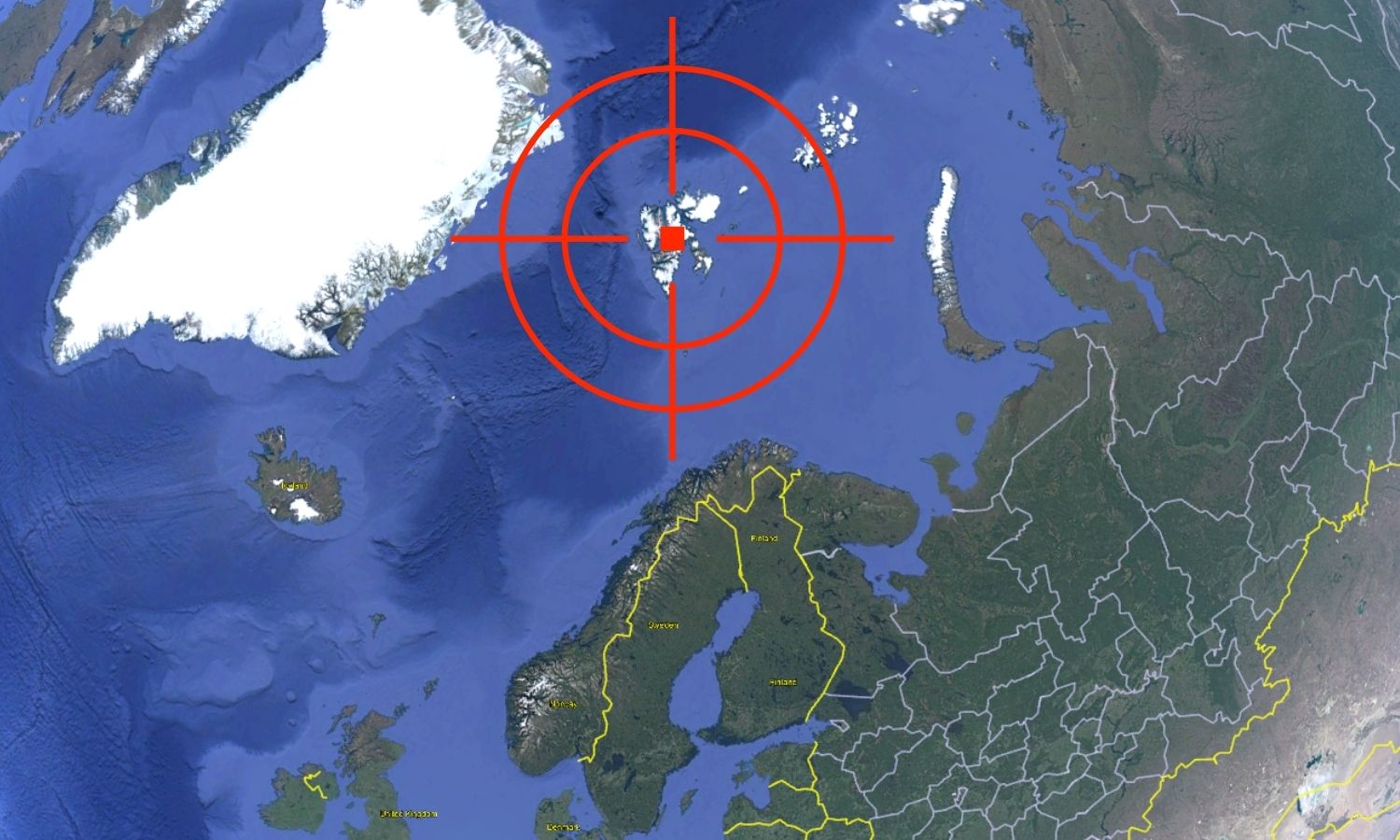
The so-called peace plan
Six months before Trump took office, I concluded his "peace plan" was a blueprint for Russian victory over Ukraine and the West. The 28-point plan published by Axios in November 2025—which alarmed European leaders, excluded NATO, and imposed demands on the EU beyond America's authority—proved the point.
The transactional logic is explicit. On 2 September, Trump said: "We want to have good relations with Russia, Ukraine, with everybody. Be great for business. Russia's got great land and very valuable land."
Asked whether Washington would pressure Russia if talks stalled, Kushner sidestepped and applied a corporate frame to the war: "In the business world, you think in terms of win-win." Of Putin, he added: "he has certain objectives... but there are different aspirations he has for his country that can also be achieved once this is concluded."
The administration does not care about peace or war, international law or the security architecture—only trade. And it has signalled that the aggressor should be rewarded, implying might makes right. This is why Treasury Secretary Scott Bessent recently blamed Ukraine—not Russia—for high fuel prices: "Ukraine has decided that they want to blow up Russian energy assets." He said it after a meeting with Russia's finance minister.
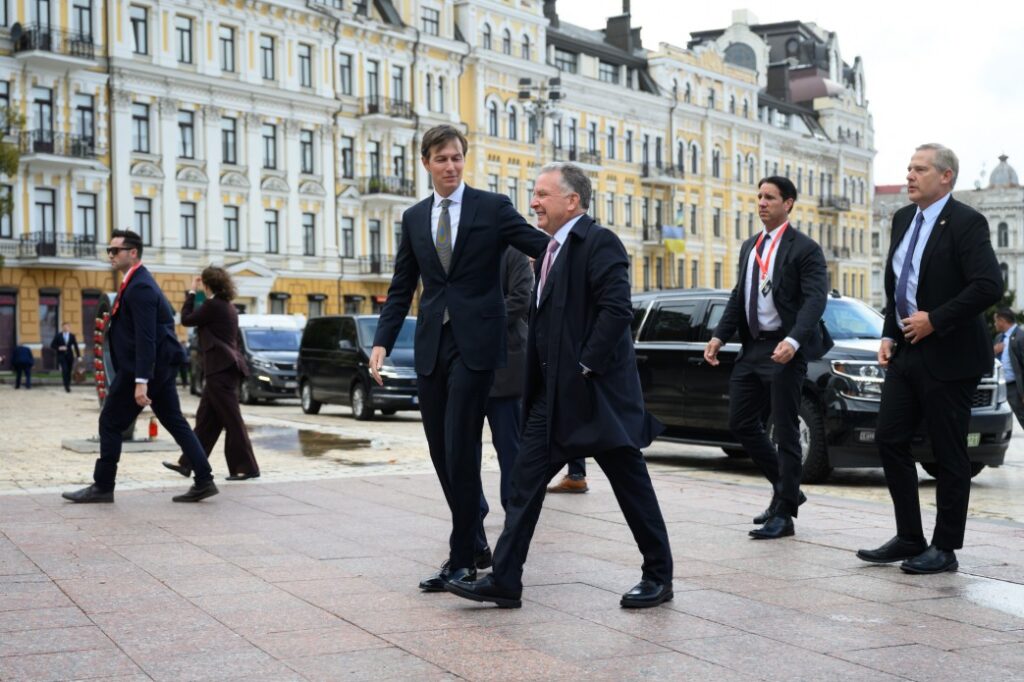
The sequence of talks
The US representatives went to Moscow first, Kyiv second—carrying the aggressor's terms to the victim, not the other way around. Since they are effectively negotiating European security, an objective team would have consulted US allies in Europe first. According to the EU Ambassador to Washington, Jovita Neliupšienė, Moscow has not abandoned its military objectives, and "the top priority remains unchanged: to provide Ukraine with everything it needs to defend itself"—implying US and European strategy are no longer aligned. We already know the US is not planning to provide Ukraine any defence aid. French, British and German security advisers were allowed to join only the final Kyiv session—informed, but not allowed to influence their own security.
It is strategically absurd to let Europe's two strategic adversaries negotiate European security—which is what happens when we insist on solving the war from within NATO and the EU rather than through a coalition of like-minded countries able to stand up to both Russia and Washington.
The military half
For Europe, the ongoing US review of its troop levels and basing matters as much as the peace process—and it is equally transactional. Defence Secretary Pete Hegseth announced the review at NATO on 18 June, framing it as a transition to "NATO 3.0," with Europeans taking on conventional defence and the US concentrating on strategic and nuclear priorities.
The Pentagon's Terms of Reference reportedly examine troop levels, basing, overflight rights, capability gaps Europeans would have to fill—and, tellingly, "the degree to which individual allies support broader US strategic priorities." The Pentagon expects four options ready by 6 November, with a decision in December. There is no reason for optimism.
There are roughly 80,000 US personnel in Europe. At the June meeting, Washington indicated it would immediately reduce the aircraft, reconnaissance drones and naval assets it would activate for Europe in a crisis. Defenders note that Congress set a floor of 76,000 and that European allies have largely filled earlier gaps. But the floor guards the headcount, not the cavalry. The assets that decide a European war—the aircraft, drones and naval power surged in a crisis—are exactly what Washington signalled it would hold back.
More troubling is a Pentagon questionnaire—sent partly in response to Europe's unwillingness to back Trump's war on Iran—asking whether governments have been "publicly supportive of US foreign policy priorities," whether they restrict US basing and overflight, and whether those restrictions could be removed. It reads as a loyalty test: the US making the size and location of its commitment conditional not on military utility but on political alignment—turning the alliance into a competition for American favour and gutting any European strategic autonomy.
Be afraid
If the USA and Russia reach an agreement, be afraid. It would mean the Kremlin has convinced the White House to give it what it wants—and that Russia is positioned to do what a growing number of European intelligence services warn of: war against NATO by 2029.
The US will want its forces out of Europe before Russia moves. Russia will await the outcome of both processes before it strikes, to reduce the risk of a US response. On my read of both timelines, the assault comes while Trump is still in office—and Russia may attack within three years. Europe will not be ready until 2035.
The two processes are not coordinated. They do not need to be. Both flow from the same transactional instinct, and both land on the same variable: Russia's calculation of whether it can attack NATO and survive the response. A deal on Moscow's terms removes the political cost of aggression—it tells the Kremlin that force sets borders and the West will ratify what the battlefield delivers. The force-posture review removes the military cost, cutting the reinforcement flow that makes an assault on NATO expensive. Lower the political cost through the "peace" and the military cost through the withdrawal, and both sides of Moscow's equation fall at once. That is the link: not a plan, but a convergence—two American processes that together make a Russian war on NATO cheaper to start.
Hans Petter Midttun

Editor's note. The opinions expressed in our Opinion section belong to their authors. Euromaidan Press' editorial team may or may not share them.
Submit an opinion to Euromaidan Press

