Vue lecture

Russia’s North Korean missiles could threaten Kyiv and six other regions, ISW says
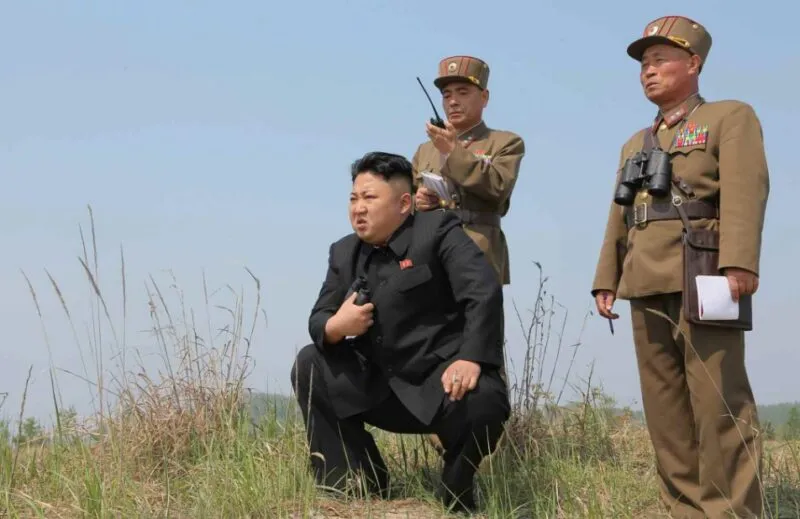
North Korean leader Kim Jong-un crouches in a grassy field while two uniformed military officers stand behind him.

Russia is deploying six launchers for North Korean ballistic missiles in Voronezh Oblast, the Institute for the Study of War (ISW) reported on 20 August. The assessment cited Ukraine’s military intelligence agency (HUR).

Russia has already used North Korean missiles in deadly strikes across Ukraine, and Pyongyang is supplying more of them. From Voronezh Oblast, the weapons could threaten Kyiv and six other regions, adding to the ballistic arsenal Moscow can use in mass attacks intended to overwhelm Ukrainian air defenses.

Six launchers expand Russia’s missile threat

The North Korean missiles could reach Kyiv, Sumy, Kharkiv, Chernihiv, Poltava, Dnipropetrovsk, and Zaporizhzhia oblasts, ISW said.

The unit may eventually field 120 missiles. HUR said North Korea had transferred around 50 KN-23, KN-24, and upgraded KN-30 ballistic missiles to Russia by July.

The KN-30 can carry a 2,500-kilogram warhead, though ISW has seen no evidence of Russia using it against Ukraine. Other North Korean missiles have larger warheads than Russia’s Iskander-M but are less accurate, Ukrainian military expert Anatolii Khrapchynskyi said.

Those missiles could join Russia’s combined attacks. ISW expects Moscow to stockpile ballistic and cruise missiles for several days before launching large barrages intended to overwhelm Ukraine’s air defenses.

ISW pointed to the 19–20 August attack as the latest example of that pattern. The barrage lasted nearly nine hours and killed at least 15 people in Kyiv. Ukraine’s Air Force said it intercepted most drones and cruise missiles, but no longer routinely reports how many ballistic missiles Russia launches or Ukraine intercepts.

North Korean missiles have already killed civilians

Preliminary evidence indicated that Russia used a North Korean ballistic missile in a 30 July strike on Radushne, Dnipropetrovsk Oblast, that killed five members of one family.

On 10 August, a North Korean missile killed seven Zaporizhstal steelworkers and injured 21 others in Zaporizhzhia, Ukrainian officials said. The workers were heading to a shelter when the missile struck.

Ballistic missiles travel at high speed and leave civilians little time to seek cover. They are also harder to intercept than drones or cruise missiles, while Ukraine has limited supplies of the Patriot interceptors used against them.

  •  

Kyiv is asking Musk to let it strike inside Russia. Its best line to Musk is gone

kyiv asking musk let strike inside russia its best line gone · post elon 2026 world economic forum / ciaran mccrickard wef ukraine news ukrainian reports

Ukraine is asking Elon Musk to let it arm deep-strike drones with his Starlink network and turn them on Russian ballistic-missile launchers far inside Russia, the Financial Times reported. The plan needs Musk's approval — and US President Donald Trump was cool to the idea when Ukrainian President Volodymyr Zelenskyy raised it at the White House on 28 July, with people present expecting Musk to refuse.

Kyiv is chasing the workaround because its air defenses are stretched: Russia keeps escalating its missile and drone strikes, and Ukraine is running low on the Patriot interceptors that are its only dependable answer to Russian ballistic missiles. As Russia builds more missiles and drones, Ukraine's interceptor needs run into the hundreds before the year is out.

At the meeting, FT reported, Zelenskyy pressed Trump to lobby Musk for permission to fly Starlink-linked drones across the Russian border. He capped the pitch at 200 km into Russia — far enough to reach launch sites, command posts, and other targets on the calculation that a shallower limit might make Musk likelier to agree.

Starlink could extend Ukrainian drone strikes

Riding SpaceX's satellites, Starlink drones hold a steadier link to their pilots at long range than ordinary radio allows, and they shrug off the jamming that grounds other drones. The drones have already shown their worth in the fighting at home, and Vienna-based military analyst Franz-Stefan Gady said that across the border they "could be very useful in hunting" Russian launchers, FT wrote.

Kyiv's best channel to Musk has also just closed: Zelenskyy recently fired his defense minister, Mykhailo Fedorov, who had a direct line to the billionaire.

mykhailo fedorov during an interview in june 2026
Mykhailo Fedorov during a June interview, a month before his dismissal, in which he described leaks and private-company influence inside the defense ministry. Photo: screenshot from PRESSING / Army-Media of Ukraine's Defense Forces

Speaking to a Ukrainian podcast on 6 August, Fedorov said that even with a channel to Musk still open after his firing, he had made no progress on cross-border Starlink use—"a difficult task right now."

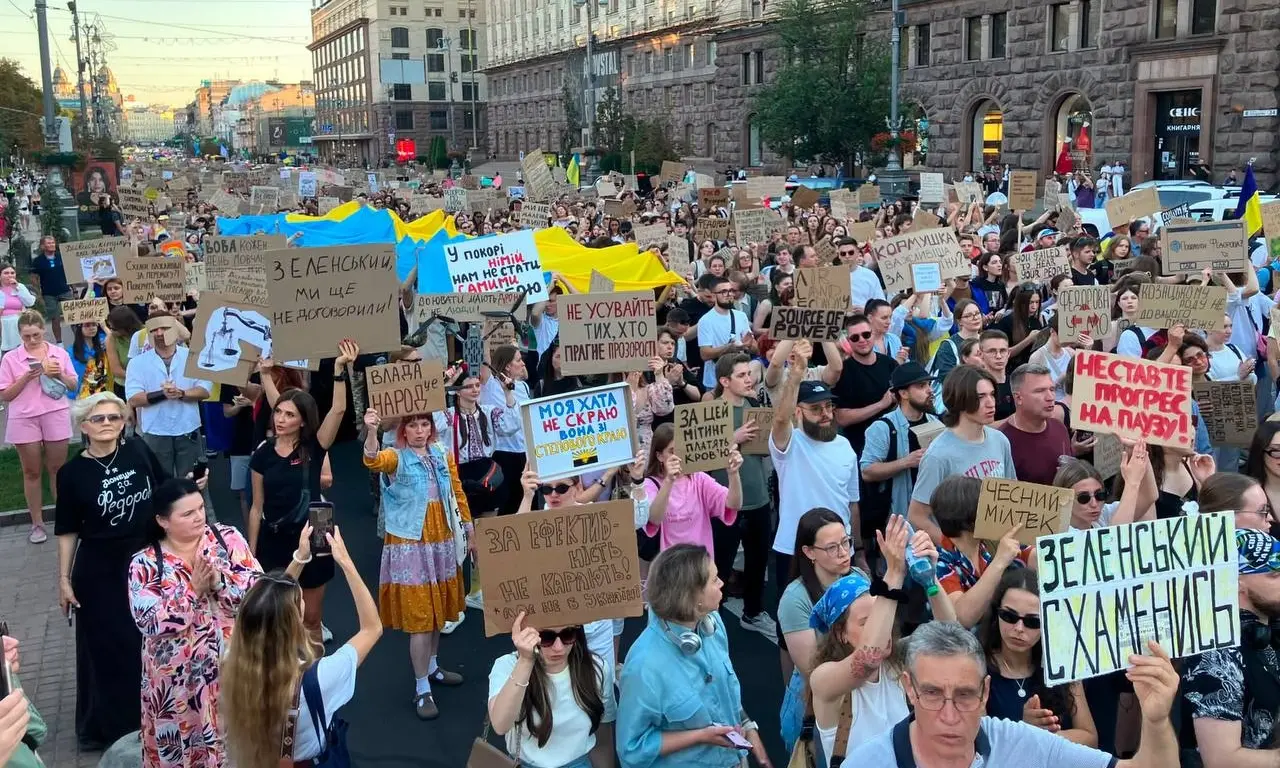
A column of protesters demanding reinstatement of Mykhailo Fedorov as Defense MInister walks in vul. Khreschatyk in Kyiv, 1 August 2026. Photo: Serge Kostezh/Kyivpost
Explore further

The Fedorov protesters lost. But they backed a man for what he built, not what he promised—and that may be new in Ukraine.

Musk’s Starlink decisions have affected both sides in the Russo-Ukrainian war

Musk has backed Ukraine's heavy dependence on Starlink for military command and comms. In 2022, Musk declined to extend Starlink coverage for Ukrainian troops mid-operation near occupied Crimea, citing his fear of triggering a nuclear escalation.

He has also acted against Moscow: in February, at Fedorov's direct request, Musk shut down the Starlink terminals that Russian forces had been operating illicitly against Ukraine.

Now, Musk answered Fedorov's Monday post with a line about "trying to do the right thing" and wanting peace — and said nothing about the Starlink ask.

  •  

Ukraine’s biggest weakness against Russia isn’t interceptor shortage, analyst argues. It’s what happens before missiles even launch

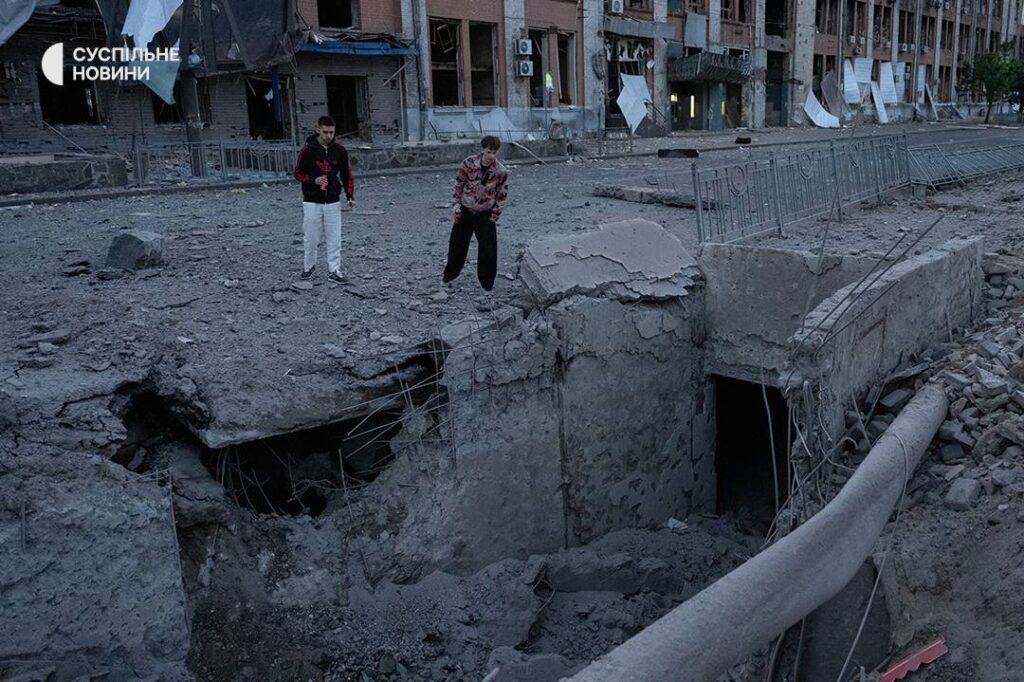
Aftermath of a massive Russian ballistic missile attack in Kyiv's Lukianivka district, 19 July 2026. Photo: Suspilne

Ukraine’s failure to anticipate and prepare for Russian threats is a bigger problem than the shortage of air defenses, says Oleksandr Kovalenko of the Information Resistance group. Russia, meanwhile, has demonstrated its ability to develop and execute medium-term plans for terror operations that can take years to prepare, according to Obozrevatel.

Russian forces adapt almost every month to new challenges and opportunities, scaling up their attacks. The use of jet-powered Banderol drone missiles is one example.

Russia is now employing a “tactical adaptive distribution” approach, flexibly redirecting missiles and strike drones toward different regions and rear cities depending on Ukrainian air-defense capabilities.

The main difference

The key change in Russia’s 2026 campaign against Ukraine’s rear areas has been the growing use of jet-powered drones based on the Iranian Shahed-238 and Karrar, which Russia has localized as Geran-3/4/5.

Russia first used a jet-powered kamikaze drone against Ukraine in January 2024. These weapons have been continuously upgraded over the past two years.

Ukraine, however, failed to adequately anticipate the threat and now lacks an effective, low-cost way to intercept Geran-3/4/5 drones, Kovalenko says. Russian forces used more than 1,400 jet-powered drones in the first half of 2026 alone, compared with 180 throughout all of 2025.

“It is possible that the facility in Alabuga, Tatarstan, could eventually be fully converted to producing jet-powered kamikaze drones as part of this strategy,” the analyst said.

What comes next: strikes on Kyiv to exert psychological pressure

A significant share of Russia’s new hard-to-intercept weapon variants appears to be concentrated for strikes on Kyiv.

Russian forces are seeking to exploit Ukraine’s acute shortage of Patriot and SAMP/T interceptors, using the opportunity to intensify their campaign of terror. Russia has previously used similar tactics to exert psychological pressure on civilians and disrupt economic activity in regions including Kharkiv and Odesa.

The same approach could increasingly be directed at the capital, particularly ahead of and during Ukraine’s Independence Day.

  •  
❌