Vue lecture

Russia launches “massive” attack on Ukrainian power plant as Kyiv braces for extremely difficult winter
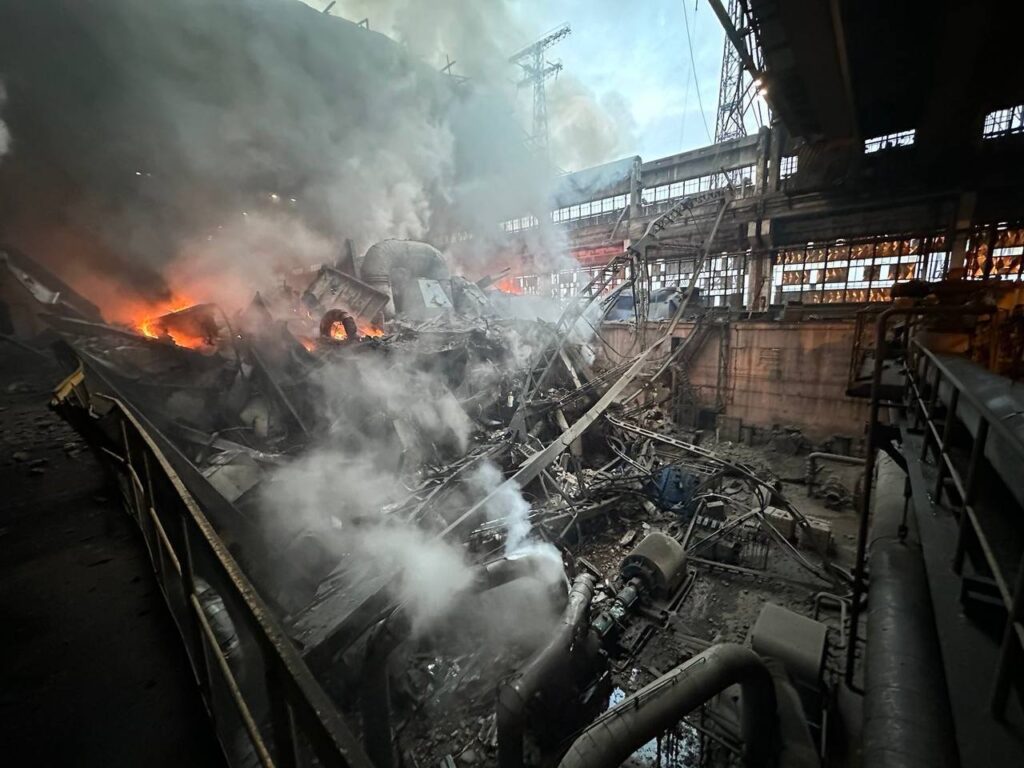
Russia launched a massive attack on one of Ukraine’s DTEK thermal power plants, severely damaging equipment and forcing the facility to stop generating electricity, the energy company said on 18 August.

The strike comes as Russia continues its campaign against Ukraine’s energy infrastructure ahead of another winter, with Ukrainian officials warning that Moscow is expected to intensify attacks on critical civilian systems.

DTEK power plant sustains significant damage

DTEK said Russian forces heavily damaged equipment at one of its thermal power plants, forcing the station to halt electricity generation. The company did not identify the plant or provide an estimate of when it could resume operations.

DTEK’s thermal power plants have been attacked more than 230 times since the start of Russia’s full-scale invasion, according to the company.

During the previous major attack on 12 June, one DTEK employee was killed, the company said.

Ukraine faces another winter of energy attacks

The latest strike adds to extensive damage Russia has inflicted on Ukraine’s power system. Energy Minister Denys Shmyhal said earlier this month that Russia has destroyed or damaged more than 80% of Ukraine’s power-generating capacity.

Ukraine is preparing for another difficult winter after repeated Russian strikes last winter caused widespread damage to electricity and heating infrastructure.

Shmyhal has also warned that Russia could broaden its campaign this winter by targeting Ukraine’s water systems. Such attacks could make prolonged power outages significantly more dangerous for civilians by disrupting water supplies and sewage systems.

Kyiv Oblast faces mounting Russian attacks

The power plant strike came as Russia launched another large drone attack on Ukraine, with Kyiv Oblast the main target. Ukraine’s Air Force said dozens of drones were launched during the day, with most intercepted or suppressed by Ukrainian air defenses.

The latest assault is part of a broader pattern of Russian attacks on Kyiv Oblast in recent weeks. Alongside energy infrastructure, Russian forces have repeatedly targeted warehouses, distribution centers and other logistics facilities around the capital, disrupting the systems that supply Kyiv and other parts of Ukraine.

With winter approaching, the combination of attacks on energy generation and civilian logistics is adding pressure to a country already dealing with years of damage to its critical infrastructure.

  •  

Russia warns UK of “consequences” over British-made drones in Ukraine’s deep strikes. London vows to continue supporting Kyiv

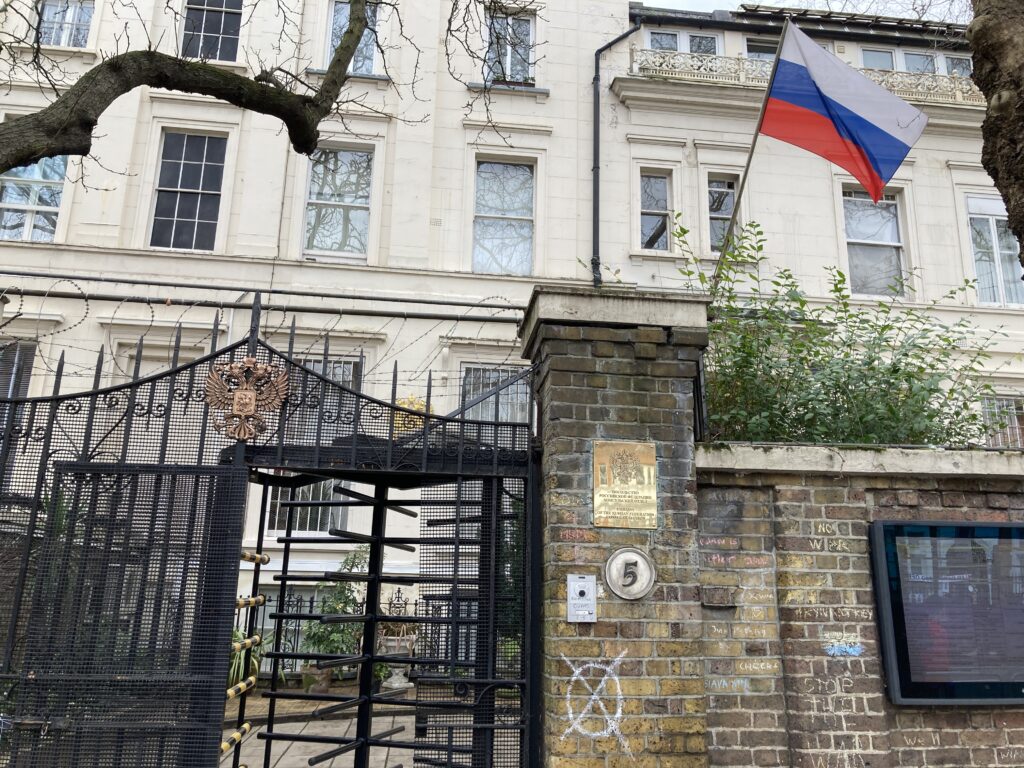
Russian Embassy in London, 2022. Photo via Wikimedia Commons.

Russia has threatened Britain with “consequences” over reports that Ukrainian forces used drones manufactured by UK companies to carry out strikes inside Russia.

The Russian Embassy in London accused the UK of deliberately escalating the war by supporting Ukraine’s long-range strike campaign, saying Britain was seeking to “contain Russia and inflict maximum damage on it by proxy.” It warned that the deeper Britain becomes involved, “the higher the price it will pay.”

The threat followed news that Ukrainian forces had used two British-built drone systems to strike targets inside Russia for the first time. The Sunday Times, citing Ukrainian military sources, reported that the drones had been used against targets including oil refineries in Volgograd and Yaroslavl over the past six months.

Moscow warns Britain of “consequences”

The Russian Embassy said in a statement that the reported use of British-made drones “confirms that London is deliberately opting for an escalation of the Ukraine crisis.”

It warned that British actions would “inevitably carry consequences for which it will have to answer,” without specifying what form those consequences could take.

The warning comes as Ukraine has significantly expanded its long-range strike campaign against Russian military and energy targets. Kyiv has increasingly used large drone swarms to hit targets deep inside Russia, seeking to disrupt military production, logistics, and energy revenues while forcing Moscow to spread its air defenses across a much larger area.

Burnham says UK will continue backing Ukraine

UK Prime Minister Andy Burnham rejected Moscow’s warning, saying Britain would continue supporting Ukraine despite Russian threats, The Independent reported on Tuesday.

“This is the UK doing what it has long said it would do, which is to support Ukraine 100 per cent against this illegal war led by Vladimir Putin,” Burnham said during a visit to Wolverhampton.

“We are providing support so that Ukraine can defend itself,” he said, adding: “We are not fair weather friends. We will be there in Ukraine’s hour of need, and that won’t change.”

UK Work and Pensions Minister Lilian Greenwood similarly said Britain’s resolve to support Ukraine remained “completely steadfast” and that the country would continue providing the military equipment Kyiv needs.

The UK Ministry of Defence also said Russia should have “no doubt” about the government's resolve to oppose Russian aggression in Ukraine and against Britain and its allies.

UK Prime Minister Andy Burnham and Ukrainian President Volodymyr Zelenskyy aboard the Ukrainian Navy’s Cherkasy minehunter at Portsmouth Naval Base, UK, 27 July 2026. Photo: Zelenskyy

British drones expand Ukraine’s deep-strike capabilities

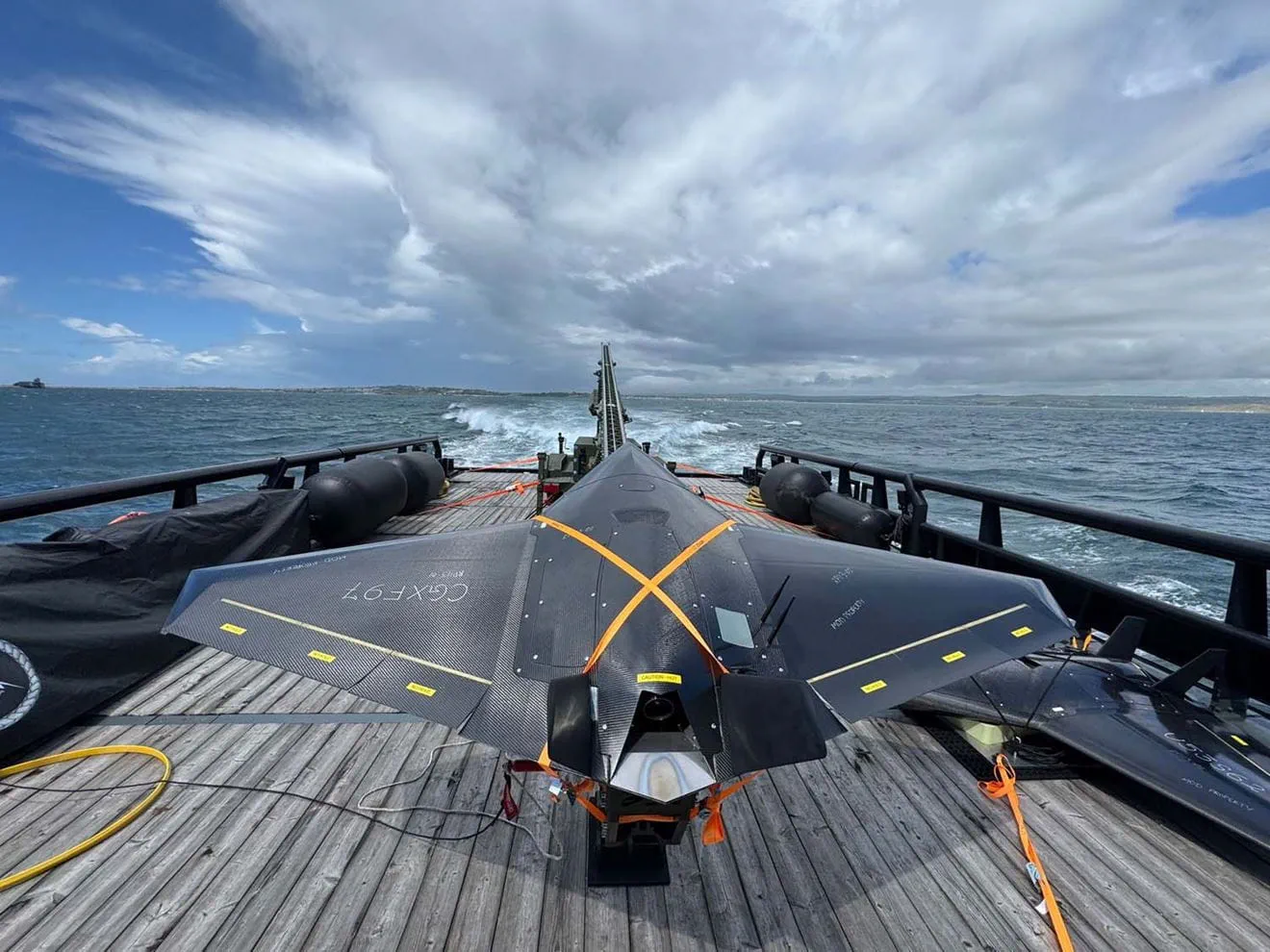
According to The Sunday Times, one of the British systems used by Ukraine is the Nyan, a jet-powered one-way attack drone produced by BAE Systems subsidiary Callen-Lenz, with a reported range of more than 150 miles.

The second system has a reported range exceeding 600 miles, although its manufacturer was not identified for security reasons. The drones provide Ukraine with additional long-range strike capacity that can be produced and deployed in larger numbers than more expensive Western cruise missiles.

Black Nyan one-way attack drone secured to a launcher on the deck of a Royal Navy vessel at sea.
Explore further

British drones hit Russia for first time in Ukraine’s deep-strike campaign – The Sunday Times

The reported deployment marks a further expansion of UK military support for Ukraine as Kyiv increasingly takes the fight to Russian military and energy infrastructure inside Russia.

  •  

“Chasing away vipers”: Ukrainian special forces retake Andriivka-Klevtsove, capture 30 Russian soldiers

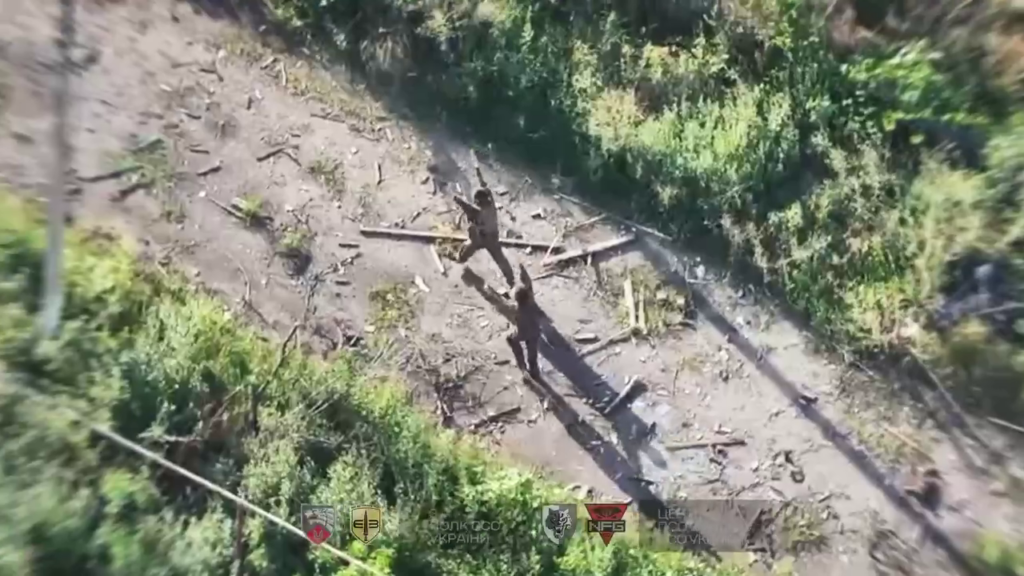
Russian soldiers surrendering in Andriivka-Klevtsove, Donetsk Oblast, Ukraine, as Ukrainian forces retook the settlement, August 2026. Screenshot from video: Ukrainian Special Operations Forces

Ukrainian Special Operations Forces (SOF) have retaken Andriivka-Klevtsove, a settlement on the border between Donetsk and Dnipropetrovsk oblasts, and captured 30 Russian soldiers, the SOF said on 17 August.

The operation is part of Ukraine’s broader eight-month counteroffensive on the Oleksandrivka axis, during which Kyiv says its forces have recaptured 745 square kilometers and 26 villages across Donetsk, Dnipropetrovsk, and Zaporizhzhia oblasts. The offensive has pushed Russian forces back from Dnipropetrovsk Oblast after months of Russian advances toward the region.

Russian forces infiltrated the settlement in small groups

Andriivka-Klevtsove, formerly known by its Soviet name Iskra, had been targeted by Russian forces attempting to gradually establish positions in the settlement.

According to the SOF, Russian troops had been infiltrating the area in small groups and occupying positions on the Oleksandrivka axis.

SOF forces cleared Russian positions and captured 30 troops

Operators from the SOF’s 3rd Regiment, working with an SOF psychological operations center, carried out a coordinated operation to clear Russian forces from the settlement.

Footage released by the SOF shows the ground phase of the operation, including Ukrainian special forces advancing through the settlement and forcing Russian troops from their positions.

Thirty Russian servicemen surrendered and were taken prisoner, according to the SOF. Russian troops who continued to resist were killed.

Ukrainian Special Operations Forces (SOF) have retaken Andriivka-Klevtsove on the border between Donetsk and Dnipropetrovsk oblasts, capturing 30 Russian soldiers in the operation.

Russian forces had been gradually infiltrating the settlement in small groups and establishing… pic.twitter.com/1vnnP37xXx

— Euromaidan Press (@EuromaidanPress) August 18, 2026

Ukrainian forces perform traditional “Chasing Away Vipers” ritual

After securing the settlement, Ukrainian special forces raised the Ukrainian flag and performed a traditional local ritual known as “Chasing Away Vipers.”

The ritual, included in Ukraine’s National Inventory of Elements of Intangible Cultural Heritage, is intended to symbolically drive evil and misfortune from a home.

The SOF said the ritual was used this time to “cleanse” the settlement of the Russian forces it described as “real vipers.”

Andriivka-Klevtsove adds to Ukraine’s gains on the Oleksandrivka axis

Kyiv announced on 12 August that Ukrainian forces had recaptured 745 square kilometers and 26 villages during the Oleksandrivka counteroffensive, which began on 29 January.

The operation was aimed at stopping Russia’s advance toward Dnipropetrovsk Oblast and pushing Russian forces back beyond its administrative border. Kyiv said Russian forces suffered at least 9,550 killed and more than 6,600 wounded during the operation.

The US-based Institute for the Study of War assessed that the Ukrainian advances showed Kyiv could still conduct significant tactical advances and restore limited mechanized maneuver on parts of the front.

  •  
❌