Poland will consider providing Ukraine with additional Patriot interceptor missiles after a Russian cruise missile crossed into Polish airspace during Moscow's latest mass attack on Ukraine, Prime Minister Donald Tusk said on 30 July.
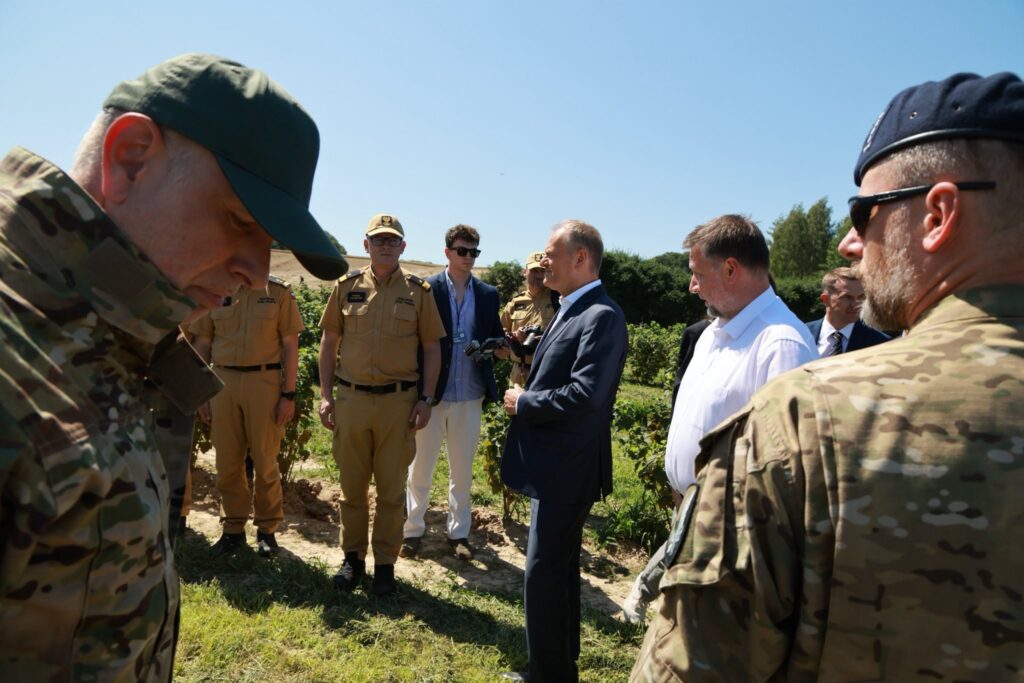
Speaking at the site where a suspected Russian Kh-101 cruise missile crashed in Poland's Lublin Voivodeship, Tusk said Warsaw would review further military assistance to Ukraine following the incident, according to Ukrinform.
Poland weighs additional Patriot missiles
"After this incident, together with the defense minister, we will consider as soon as possible the issue of further assistance to Ukraine, including the transfer of additional missiles for Patriot systems, should such a need arise," Tusk said.
The announcement follows Russia's overnight missile and drone barrage against Ukraine, during which a Russian Kh-101 cruise missile flew roughly 95 kilometers into Polish territory before crashing in a field. Polish authorities said they scrambled an F-16 fighter jet and were prepared to shoot the missile down had it continued deeper into the country.
Explore further
Warsaw confirms a Russian Kh-101 cruise missile overshot Ukraine and hit a field in Poland
Patriot interceptor missiles are currently Ukraine's most effective defense against Russian ballistic missiles. Ukraine has repeatedly warned it is running short of interceptor missiles, while Russia has intensified its use of ballistic weapons that can only be shot down by a limited number of advanced air defense systems.
Tusk added that no country has completely secure airspace.
"There is no sky – not in the United States, not in Israel, not in Ukraine, and not in Russia – that is 100% safe," the Polish prime minister said.
Tusk: Next 100 days could decide the war
Tusk said he discussed the battlefield situation and prospects for ending the war during talks with Ukrainian President Volodymyr Zelenskyy on Wednesday.
"After my conversation with President Volodymyr Zelenskyy, one thing is quite clear: the next 100 days could determine the outcome of this war. It's fifty-fifty," Tusk said, according to Ukrinform.
Investigation into missile incursion continues
Tusk said there was currently no evidence that Poland itself had been the intended target of the missile.
He added that the United States, European Union member states, and Norway had offered assistance with the investigation. Ukraine has also proposed helping examine the incident, and Polish authorities plan to use the expertise of Ukrainian specialists.
The missile incursion occurred during one of Russia's largest aerial attacks in recent months, which killed at least eight civilians across Ukraine and injured more than 50 others. Officials have said the object that crashed in Lublin Voivodeship was most likely a Russian Kh-101 cruise missile.
Explore further
Two children pulled from the rubble alive, three did not survive—one village near Kryvyi Rih after the Russian missile attack
A Russian cruise missile crossed deep into Poland and crashed in a field during Russia's mass overnight strike on Ukraine, Polish and Ukrainian officials said. Warsaw says it scrambled a fighter jet and was ready to shoot the missile down had it flown on. The same barrage killed civilians across Ukraine and sent hundreds of drones and dozens of missiles at its cities.
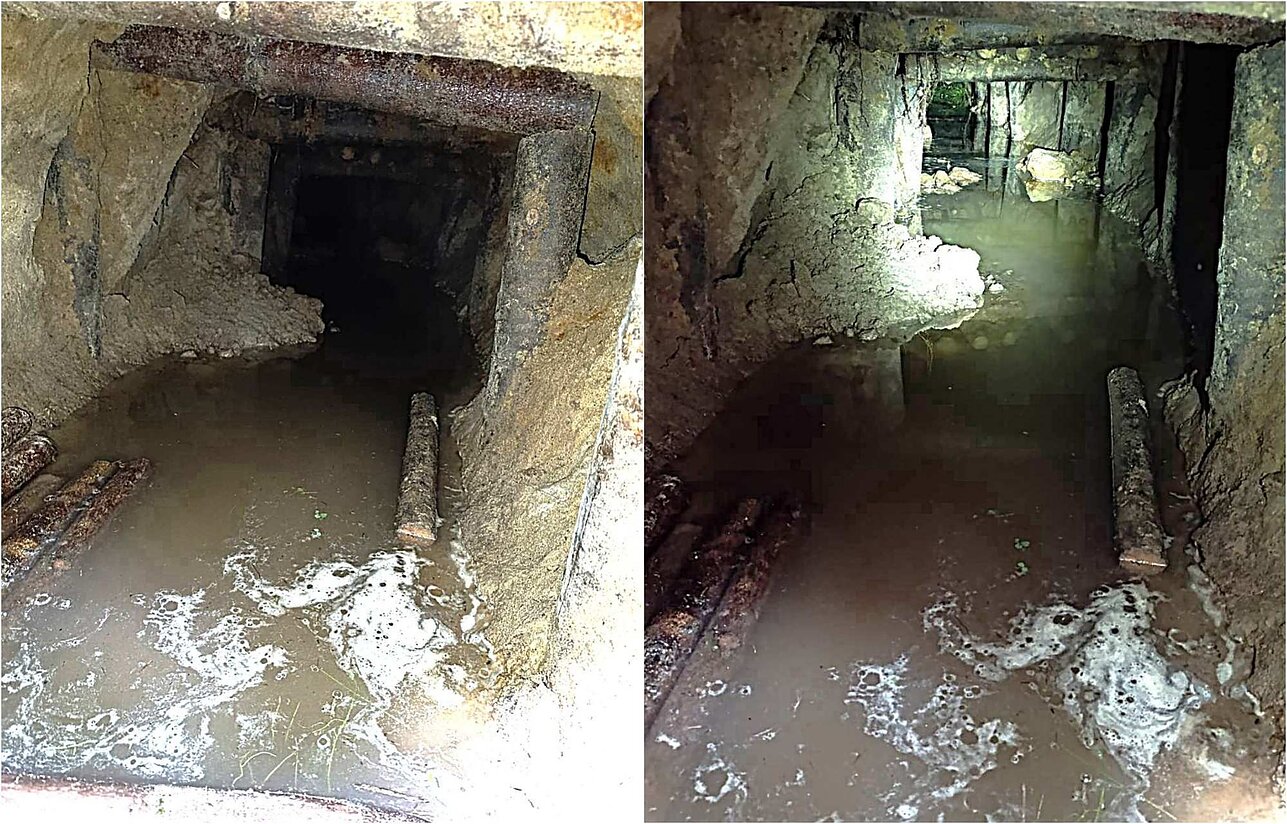
The incursion fits a run of sub-threshold provocations Russia has aimed at NATO's eastern members from the fall of 2025 onward — drones crossing into allied airspace, Russian fighter jets probing the Baltics, a tunnel dug toward the EU from Belarus, and smuggling balloons drifting over the border — each one testing how the alliance answers.
A Kh-101 crossed nearly 100 km into Poland
In the early hours of 30 July, a Russian Kh-101 cruise missile flew into Poland and came down about 95 km from the Ukrainian border, the Ukrainian defense outlet Militarnyi reported.
Poland's Defense Minister Władysław Kosiniak-Kamysz called it an extremely difficult night for the country's air defense and said an unidentified object had fallen in a field.
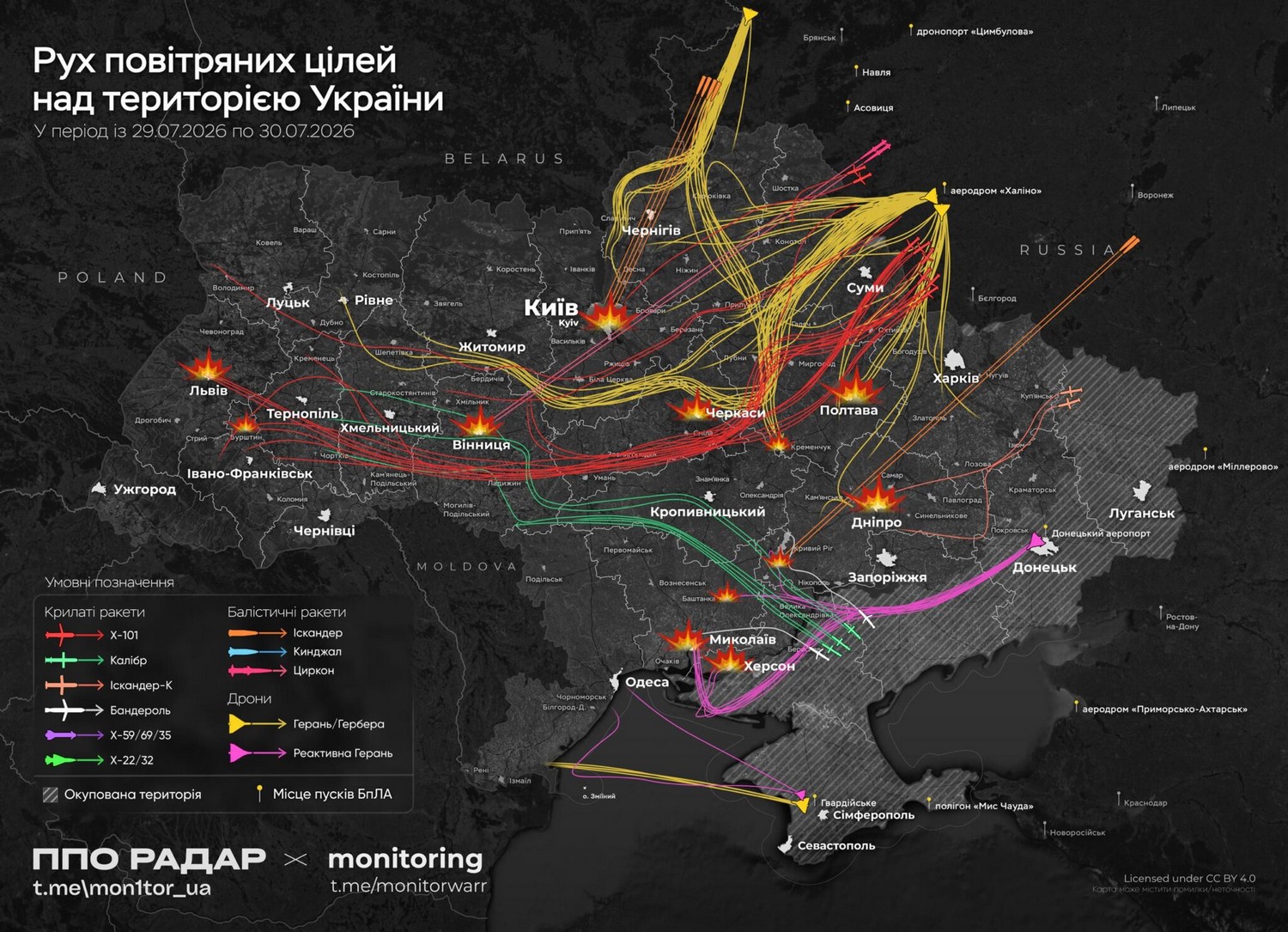
The missile in Poland was one of 74 missiles and 265 drones that Russia fired at Ukraine overnight — 61 Kh-101 and Kalibr cruise missiles, four Zircon and Onyx, and nine ballistic Iskander-M, S-400, and KN-23.
Routes of Russian missiles and drones during the attack on Ukraine, one track crossing into Poland, 30 July 2026. Map: PPO RADAR / monitor_ua
Ukraine's acting Foreign Minister Andrii Sybiha noted that the Kh-101 missile crossed into Poland, called it a violation of NATO airspace, and said Kyiv is informing partners and international organizations about the attack.
Polish Prime Minister Donald Tusk later said everything indicated it was a Kh-101, and that Polish forces were ready to shoot it down had it continued deeper.
Explore further
Two children pulled from the rubble alive, three did not survive—one village near Kryvyi Rih after the Russian missile attack
Poland scrambled a jet and tracked the missile
During the attack, Poland's Operational Command set out the sequence.
Around 03:29 Polish time, one object came within about 5 km of the border, then turned away.
At 3:40, radar caught an unidentified object moving west over Polish territory, and an F-16 went up to identify and intercept it. At 3:46, it vanished from the screens before it could be identified.
Sirens sounded for Lublin and much of the voivodeship only around 3:50.
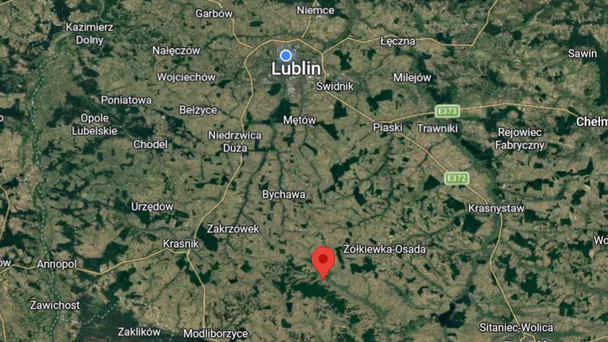
A helicopter crew later located the probable crash site in open ground near Tarnawa-Kolonia, in Lublin Voivodeship.
A map of the area of Lublin Voivodeship, Poland, near where a Russian cruise missile came down, 30 July 2026. Map: Google Maps
Ukrainian monitoring channels eRadar and Strategic Aviation placed a cruise missile over Poland at 04:40 Kyiv time, equal to 03:40 in Warsaw. The monitoring channel Strategic Aviation tracked it over Lublin Voivodeship, which borders Ukraine's Volyn Oblast.
Explore further
The Belarusian tunnel to the EU was almost done. Then Lithuania drilled a hole in exactly the wrong place—for the diggers
At least eight civilians killed in Ukraine during the same attack
In Ukraine, one of the Russian missiles killed a family — parents and three children — in a direct hit on their home near Kryvyi Rih, while rescuers pulled two more children from the rubble alive. In Lviv, western Ukraine, another missile destroyed apartments, injured dozens including children, and damaged two kindergartens and a school. Russia's strike killed at least eight people across Ukraine and injured dozens, with civilian casualties in Kyiv, Poltava, Kharkiv, Mykolaiv, Sumy, Vinnytsia, and Cherkasy.
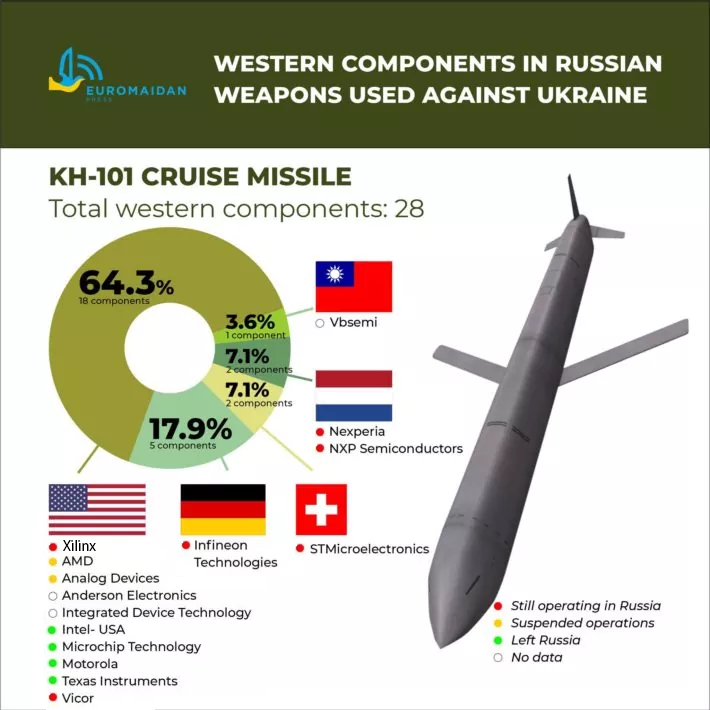
Western components inside the Kh-101 and the companies producing them. Infographcis by Euromaidan Press based on research by Trap Aggressor and the Kyiv School of Economics
Not the first Russian missile over Poland
This was not the first Russian cruise missile to cross into Poland. In 2023, a Kh-55 flew several hundred kilometers over Polish territory before it fell near Bydgoszcz. Earlier in July, the Polish outlet Onet, citing intelligence and diplomatic sources, warned that Poland could become a target of Russian provocations meant to test NATO's resolve, with strikes on critical infrastructure among the scenarios named.
China’s A.I. rise is creating a new dilemma for Beijing. The open models that win influence abroad may pose risks to the country’s security and geopolitical strategy.
The Chinese leader Xi Jinping opening the World A.I. Conference in Shanghai, China, in July. Even as China supports openness in A.I., it needs to “constantly refine measures to forestall loss of control,” he said.
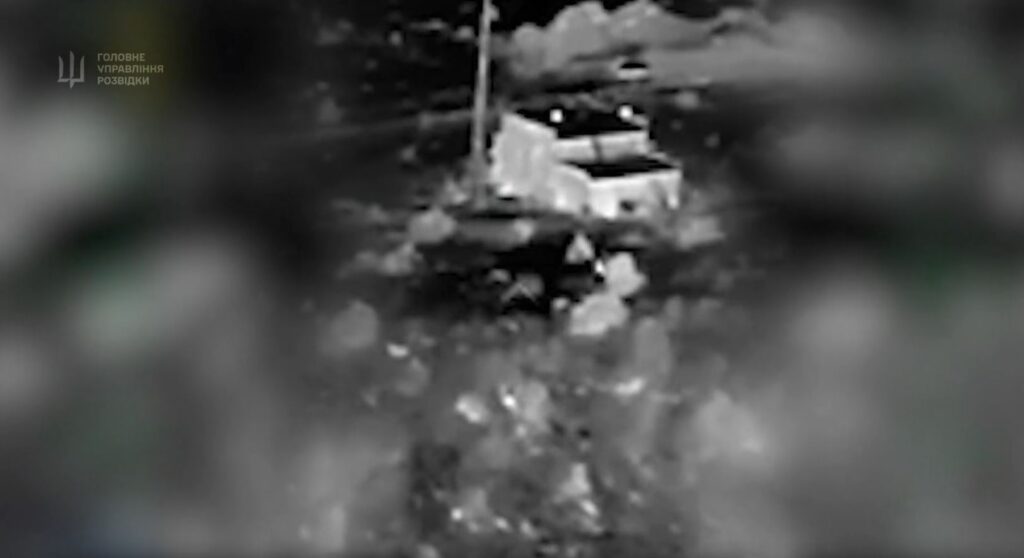
Ukraine's military intelligence has destroyed one of Russia's electronic-warfare stations in temporarily occupied Crimea, the country's Defense Intelligence agency (HUR) said. Fighters caught the coastal complex on the peninsula and published video of the strike, the latest in a run of intelligence operations stripping Russia's sensors off Crimea. The station was built to listen in on and jam communications across a wide area, and none of that reach kept it alive.
Occupied Crimea is the anchor of Russia's position in the south, and Ukraine has spent 2026 trying to make holding it cost more than it is worth. Each sensor or surface-to-air missile launcher stripped from the peninsula clears a little more sky and sea for the next raid, and pushes the price of the occupation higher.
A jamming station that could not save itself
In the night of 26 to 27 July 2026, fighters from HUR's Department of Unmanned Systems found and destroyed the Russian Murmansk-BN electronic-warfare station near Cape Fiolent in occupied Crimea, HUR reported on Telegram, sharing footage of the hit.
The Murmansk-BN is a coastal complex that Russian forces use for radio reconnaissance, intercepting signals, and jamming shortwave communications, HUR said. Its range can reach up to 5,000 kilometers. A station meant to jam and silence an enemy's communications across that distance did nothing to detect the drone closing on it.
What the Murmansk-BN does
The Murmansk-BN is a strategic, long-range electronic-warfare system. Made by the Russian concern KRET, it entered service in 2014 and was first fielded in occupied Crimea, south of Sevastopol. It works in the high-frequency band, the shortwave range armies use for long-distance radio when other links fail.
Western analysts have documented the same system type suppressing high-frequency traffic over great distances. That is what makes each one Ukraine removes a hole in Russia's electronic cover rather than a small loss.
Days after an S-400, another Crimea kill
The jammer is the second high-value Russian system this unit has taken off the peninsula in days. Days ago, HUR's drone operators burned an S-400 Triumf launcher and its 96L6 radar in occupied Crimea, the long-range battery Russia leans on to shoot down aircraft and missiles.
Both hits fit a wider pattern. Ukraine's drone crews have struck close to 200 Russian air-defense assets in the first half of 2026, and over the unit's life have struck 76 radars and 31 electronic-warfare systems among a larger tally, thinning the cover Russia depends on over occupied territory.
Russia struck cities across Ukraine with a mass wave of missiles and drones overnight into 30 July 2026, killing civilians, including children, and injuring dozens, according to Ukraine's Air Force, State Emergency Service, and local authorities. Rescuers dug through collapsed homes in Lviv, in the capital, and in a village near Kryvyi Rih, and one Russian cruise missile crossed the border into Poland. It was the first mass strike on Ukraine's western oblasts since March.
Russia strikes Ukrainian cities and civilian infrastructure daily. Ukraine and international bodies qualify these attacks as war crimes, while Moscow denies deliberately targeting civilians. Russia has spent this year shifting its air war toward ballistic missiles, the category air defenses struggle most to stop, and the interceptor shortage behind that gap has no fast fix.
The scale of the attack
Ukraine's Air Force tracked 358 incoming weapons — 74 missiles and 284 drones of various types. Air defenses shot down or suppressed 320 of them, 55 missiles and 265 drones. The missiles included Tsirkon and Oniks anti-ship missiles, Iskander-M, S-400, and North Korea's KN-23 ballistics, and Kh-101 and Kalibr cruise missiles, alongside Shahed, Gerbera, Italmas, and decoy drones launched from four Russian regions.
The ballistic missiles remain the biggest problem for Ukraine. Of the nine Russia fired, air defenses stopped only one. Impacts landed at 20 locations, with debris falling on 13 more.
Another Russian missile and drone attack
The main target was the west of Ukraine, alongside Kyiv and other cities across the country. Some missiles hit apartment buildings, killing civilians.
The attack included drones, cruise and ballistic missiles.
President Volodymyr Zelenskyy put the current nationwide toll at eight dead and dozens wounded in the capital and across ten oblasts. He tied the losses directly to the missing air defenses.
"Protection from the Russian missile threat is the most important task for saving our people's lives," he wrote. "Untimely help, delays in supplying anti-ballistic missiles — that is exactly this destruction, exactly these casualties that, unfortunately, we have today."
A family of six killed near Kryvyi Rih
The heaviest loss of life came in Radushne, a village in Kryvyi Rih district of Dnipropetrovsk Oblast. An Iskander-M ballistic missile hit a house where a large family lived. Six people died, three of them children, and eight were wounded, the head of the Kryvyi Rih Defense Council, Oleksandr Vilkul, reported.
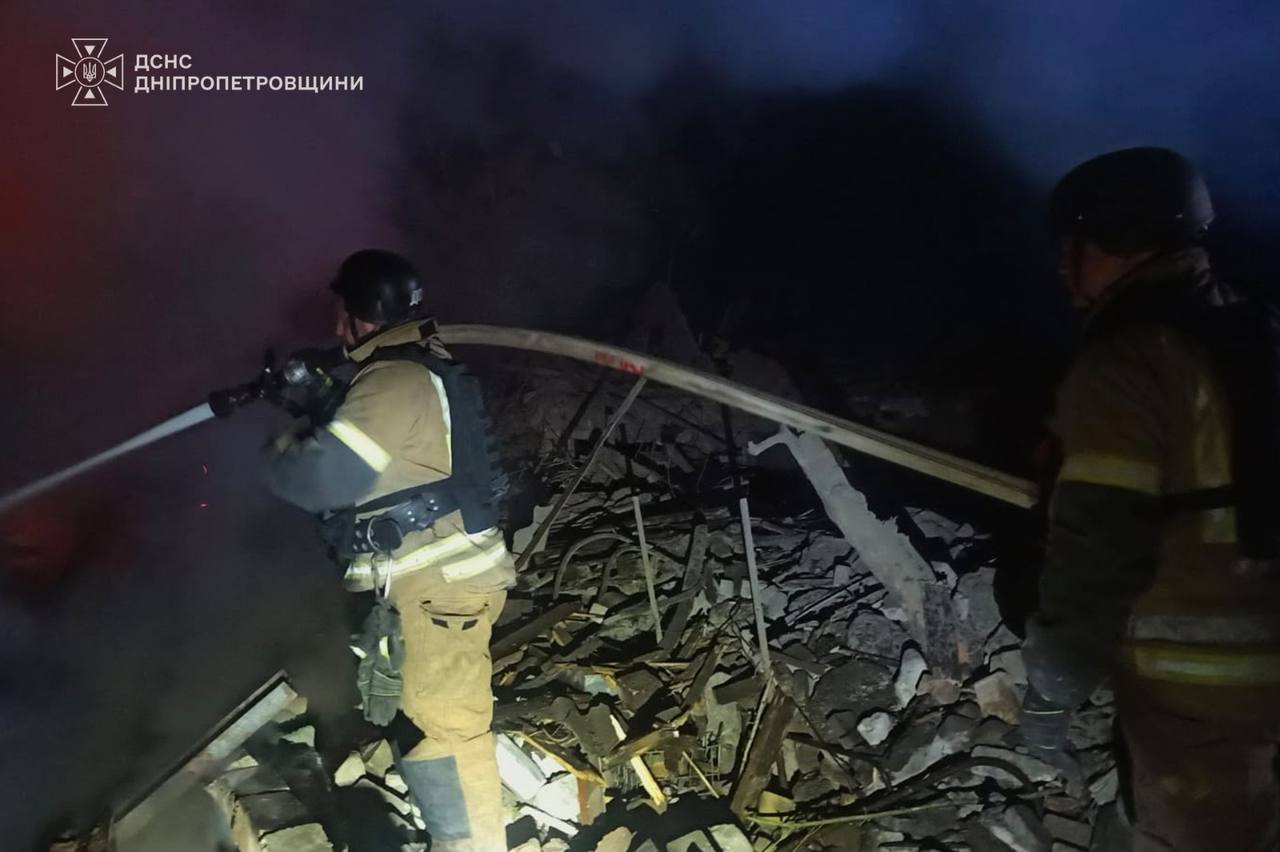
Rescuers extinguish a fire at the site of a Russian missile strike in Radushne, Kryvyi Rih district, Dnipropetrovsk Oblast, on 30 July 2026. Photo: State Emergency Service of Ukraine
The head of Dnipropetrovsk Oblast, Oleksandr Hanzha, named the children killed as a six-year-old girl and boys of 11 and 17. An 84-year-old woman was hospitalized in serious condition, and a 49-year-old woman and boys of 6 and 15 were taken to hospital in moderate condition. Two houses were destroyed and five damaged. Rescuers pulled two children from the rubble alive.
Russia’s missile wipes out a family home near Kryvyi Rih
Six people from one family died when an Iskander-M ballistic missile struck Radushne in Dnipropetrovsk Oblast overnight on 30 July. Three of those killed were children aged six, 11, and 17.
Lviv neighborhoods took some of the worst damage. The number of wounded recently rose to 26, with 15 hospitalized, children among them, the head of Lviv Oblast, Maksym Kozytskyi, reported. One child was in the hospital.
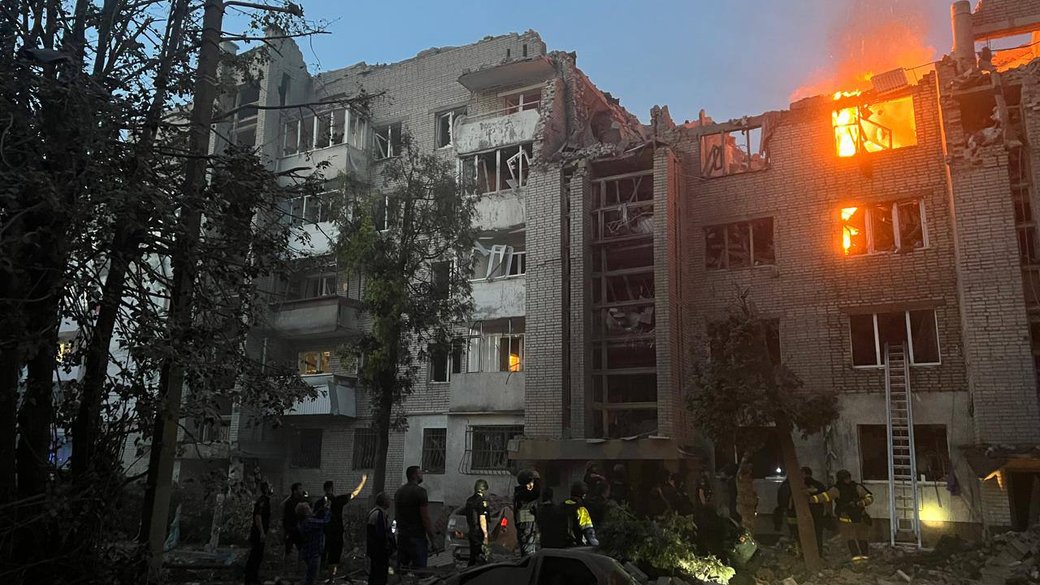
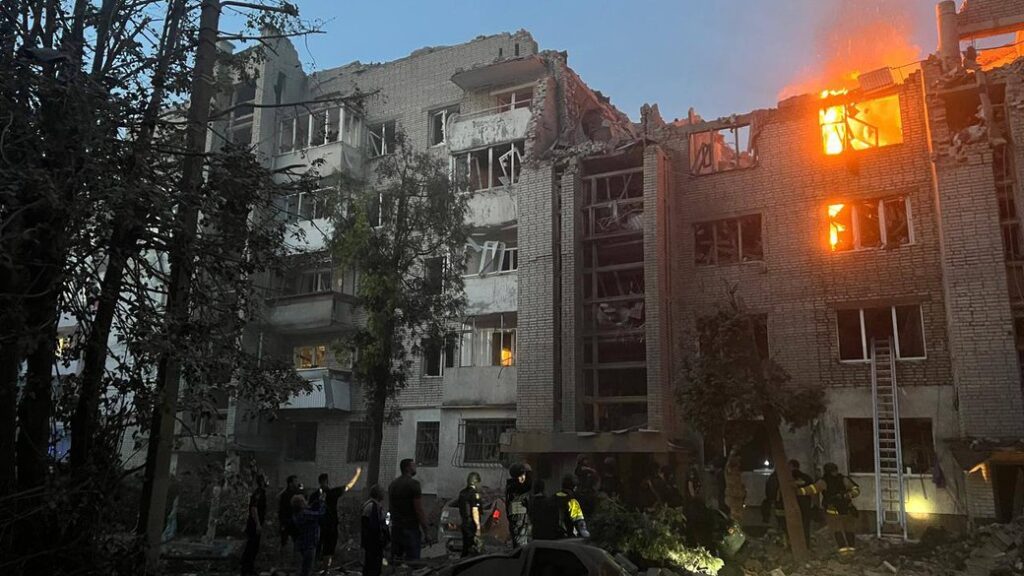
Two residential buildings on Patona and Vyhovskoho streets were hit, and more than 20 apartment buildings were damaged, along with lyceum school No. 15 — where 140 windows and four doors were blown out — and two kindergartens. Mayor Andrii Sadovyi described a direct hit and no military target anywhere near it.
"Here on Patona we see a direct missile hit. The floors have essentially been sheared off," he said. "They simply attack residential buildings, kill people directly. There are no military targets here, nothing at all."
Rescuers freed a woman, a man, and his six-year-old son from a collapsed building, the Lviv Oblast prosecutor's office said. A crane was used to lift people from a damaged five-story block through a blocked stairwell.
Lviv residents joined rescuers clearing rubble on Patona Street where a Russian missile struck the residential building
People remain trapped beneath the damaged residential building after a Russian missile strike. The rescue operation continues, with locals working alongside… pic.twitter.com/ldGTpbH0Bx
In the capital, one person died and two were hurt, the Kyiv Military Administration and the Emergency Service reported. Fires broke out in two districts: market pavilions in Obolon and a garage cooperative in Sviatoshyn, where firefighters found a body while putting out the flames and hospitalized an injured man, the emergency service said.
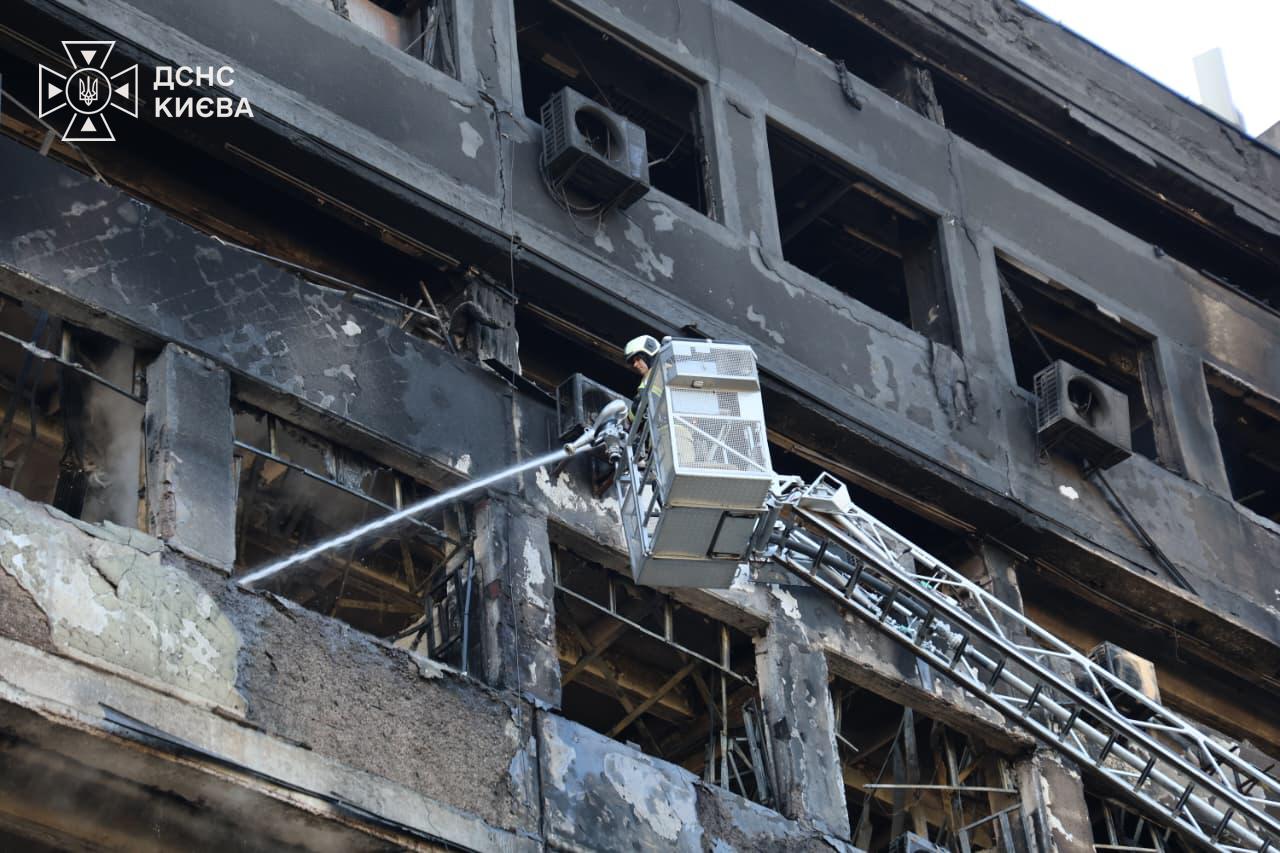
A firefighter douses a burned-out building after the Russian strike on Kyiv, 30 July 2026. Photo: State Emergency Service of Ukraine
In Skybyn, in Brovary district of Kyiv Oblast, a strike partly destroyed a two-story house and wounded five people, including a 16-year-old boy, the emergency service confirmed.
People shelter in a metro station in Kyiv during the Russian missile and drone attack, 30 July 2026. Photo: AFP
Poltava, Zhytomyr, Mykolaiv, and the coast
In Poltava district, warehouses caught fire from the strikes and one person died, the head of Poltava Oblast, Vitalii Diakivnych, said. A Nova Poshta parcel terminal was also hit, with no casualties there.
Mykolaiv Oblast came under a night of drone attacks that damaged port infrastructure, warehouses, homes, an ambulance, and an administrative building, but wounded no one, the oblast administration reported.
In Kharkiv, a jet-powered Shahed hit an industrial zone, Mayor Ihor Terekhov reported.
The Russian strikes injured three children and two adults in Zhytomyr Oblast, local authorities said.
Air defenses also worked over Kirovohrad Oblast, where a private yard was damaged in Svitlovodsk and no one was hurt, the oblast administration said.
Explore further
Moscow struggles to stockpile all the missiles it needs—so it fires them straight off the line, Ukraine says
A cruise missile in Poland
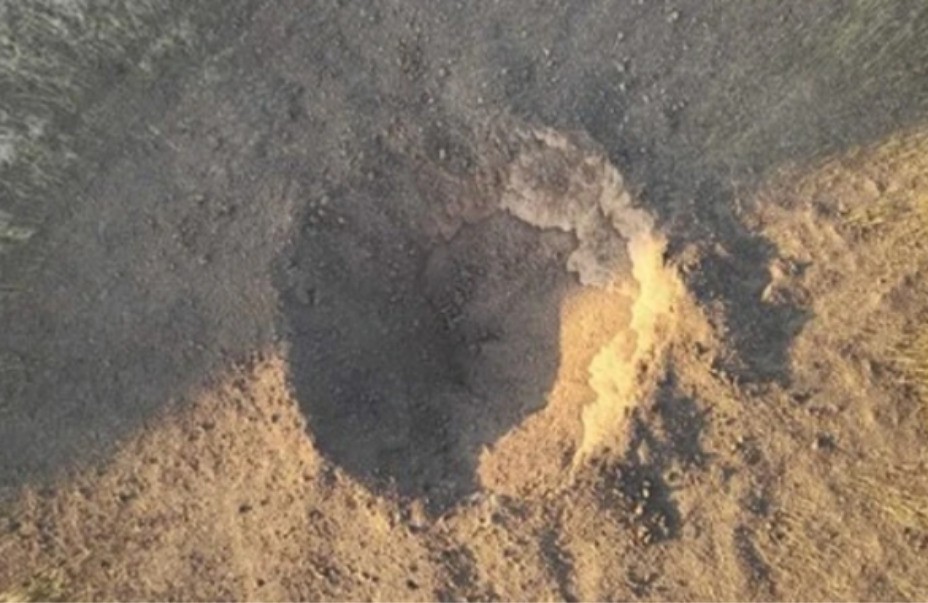
One Russian cruise missile crossed into Poland during the attack and came down in Lublin voivodeship, near the village of Targowisko, where a blast woke residents and rescuers found a crater in a field, the outlet lublin112 reported. Polish forces had put military aircraft into the air hours earlier because of Russia's long-range strikes on Ukraine, the country's Operational Command said, with fighters and an early-warning plane airborne and ground air defenses at readiness.
The site where a Russian cruise missile came down in Lublin voivodeship, Poland, on 30 July 2026. Photo: lublin112
It was not the first such incursion. In 2023 a Russian Kh-55 flew several hundred kilometers over Polish territory before it fell near the city of Bydgoszcz. Earlier in July, the Polish outlet Onet, citing intelligence and diplomatic sources, warned that Poland could become a target of Russian provocations meant to test NATO's resolve.
The Patriot is the only system in Ukraine that can reliably stop Iskander-M, Kinzhal, and Tsirkon missiles on ballistic and quasi-ballistic paths, and Ukraine is running short of its interceptors. Kyiv has urged partners to expand production. Earlier this month, US President Donald Trump said Washington could grant Ukraine a license to produce Patriot missiles, and Zelenskyy said last week that Ukraine was nearing the ability to build them and could become the third country to hold that arrangement. This, however, won't solve the issue in the short term.

 Connexion


 PPO Radar