Vue lecture

Rutte praises Trump in a NYT interview while warning of Russia's rising threat to NATO
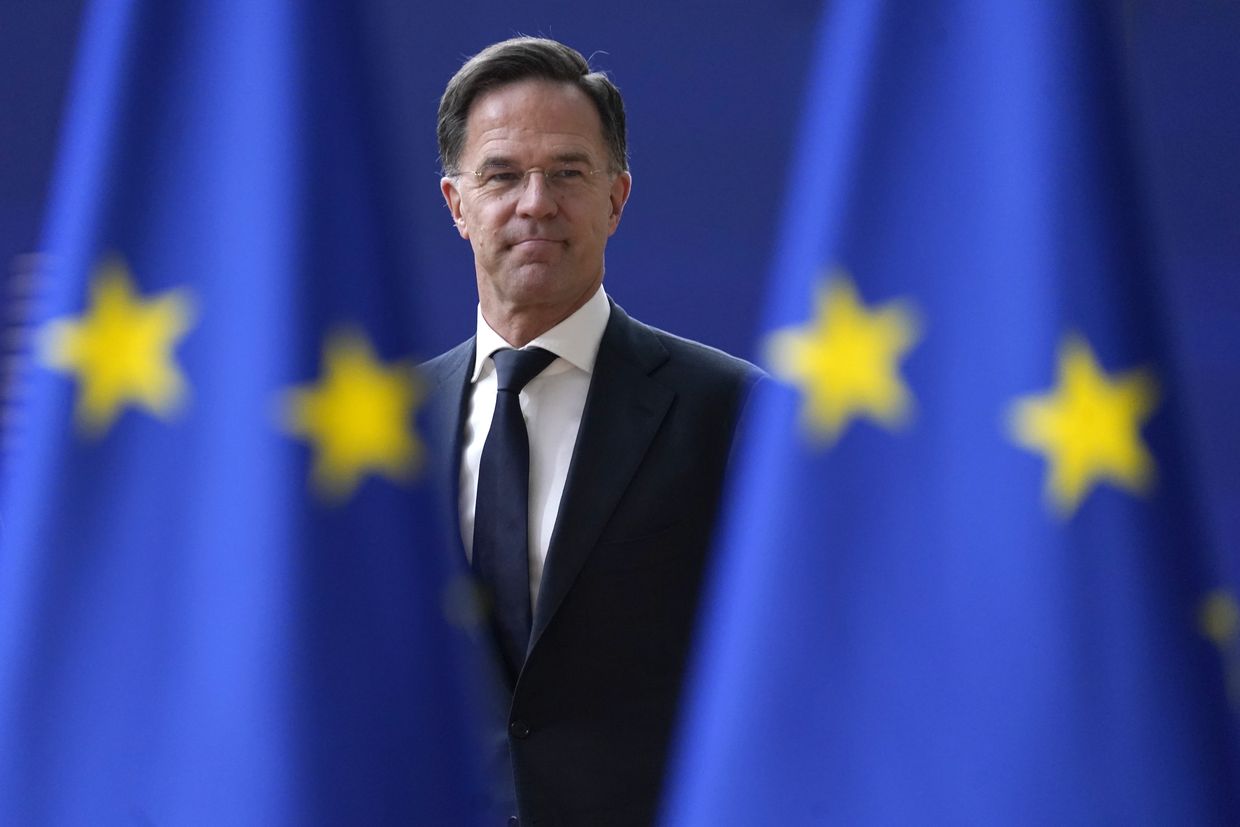
Rutte praises Trump in a NYT interview while warning of Russia's rising threat to NATO

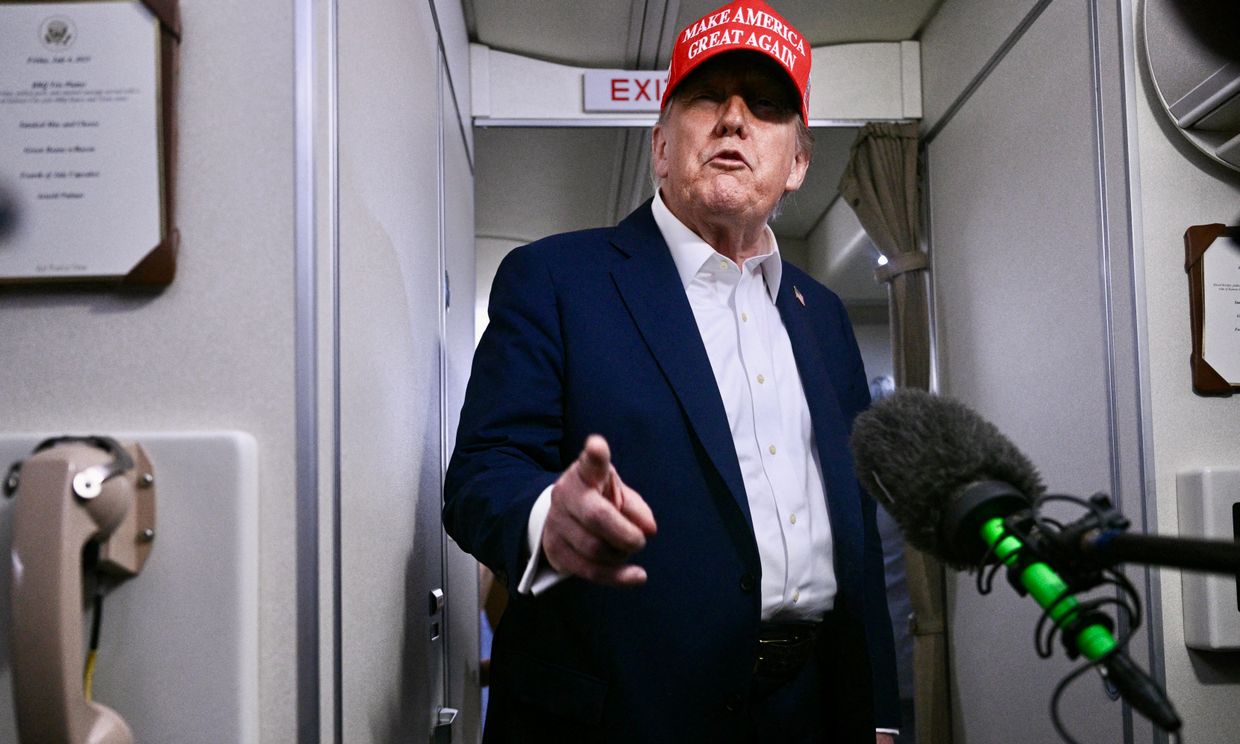
Europe must dramatically ramp up its defenses against a resurgent Russia, NATO Secretary General Mark Rutte said in an interview with the New York Times published on July 5, crediting U.S. President Donald Trump for driving the alliance to unprecedented levels of commitment.

Rutte, who assumed his role late last year after 14 years as Prime Minister of the Netherlands, has been navigating NATO through a period marked by Russia's expansionist ambitions and questions about the reliability of the United States as an ally.

"Russia is reconstituting itself at a pace and a speed which is unparalleled in recent history," he told the outlet, adding that "...they are now producing three times as much ammunition in three months as the whole of NATO is doing in a year. This is unsustainable, but the Russians are working together with the North Koreans, with the Chinese and Iranians, the mullahs, in fighting this unprovoked war of aggression against Ukraine."

He emphasized the interconnectedness of security across different regions, noting that a secure Arctic is vital due to increased Chinese and Russian activity, and a secure Atlantic is "crucial" for the U.S. "If the Arctic, if the Atlantic Ocean, if Europe is not secure, the U.S. has a big problem," Rutte said, arguing that Russia is ultimately aiming to attack the U.S.

The Secretary General strongly dismissed Russian Foreign Minister Sergey Lavrov's comments that NATO's new defense spending targets would "bankrupt" members.

"I know Sergey Lavrov very well. He has been foreign minister of Russia since the birth of Jesus Christ, and I’ve never taken him seriously. When you talk about fake news, listen to Sergey Lavrov," Rutte told the NYT. He believes Lavrov's comments are "clearly evidence that the deterrence is working."

Rutte acknowledged concerns about the defense industrial output across the alliance, adding that, "we simply lack the defense industrial base to produce the weapons we need to make sure that we can deter the Russians or the North Koreans or whoever to attack us." He underscored the importance of not just financial investment, but also having sufficient personnel and industrial capacity to effectively utilize weaponry.

On the subject of Ukraine, Rutte confirmed that European allies have significantly increased their financial commitment. "The Europeans have now cobbled together $35 billion in military aid this year to deliver to Ukraine, which is more than last year," he said. He viewed this as a logical and fair shift, with the U.S. expecting Europeans to "take more of the burden when it comes to the concrete support to Ukraine."

While acknowledging the complex discussions surrounding peace talks, Rutte recognized President Donald Trump's role in initiating dialogue with Russian President Vladimir Putin.

"He is the one who broke the deadlock with Putin. When he became president in January, he started these discussions with Putin, and he was the only one who was able to do this. This had to happen. A direct dialogue between the American president and the president of the Russian Federation."

However, Rutte admitted that subsequent peace talks in Istanbul involved Russia sending a less serious delegation, leading to the conclusion that "we are not there yet, and that means that in the meantime you have to make sure that Ukraine has what it needs to stay in the fight."

Despite some perceived divergences in approach between NATO and the U.S. regarding peace talks, Rutte insisted on the American administration's commitment to the conflict's importance.

"The American administration completely takes the view and shares it with the Europeans that this war in Ukraine is crucial for the defense of NATO territory going forward and that we have to make sure that Ukraine is in the strongest possible position to stop the Russians from taking more territory, and that when it comes to a cease-fire or, even better, a peace deal, that Ukraine with some help will be able to prevent Putin from ever attacking Ukraine again in the future."

Trump says Putin ‘wants to keep killing people,’ signals US may send Patriots to Ukraine
“It just seems like he wants to go all the way and just keep killing people. It’s not good,” U.S. President Donald Trump said.
Rutte praises Trump in a NYT interview while warning of Russia's rising threat to NATOThe Kyiv IndependentTim Zadorozhnyy
Rutte praises Trump in a NYT interview while warning of Russia's rising threat to NATO
  •  

Zelensky describes phone call with Trump as 'best conversation in all this time'

Zelensky describes phone call with Trump as 'best conversation in all this time'

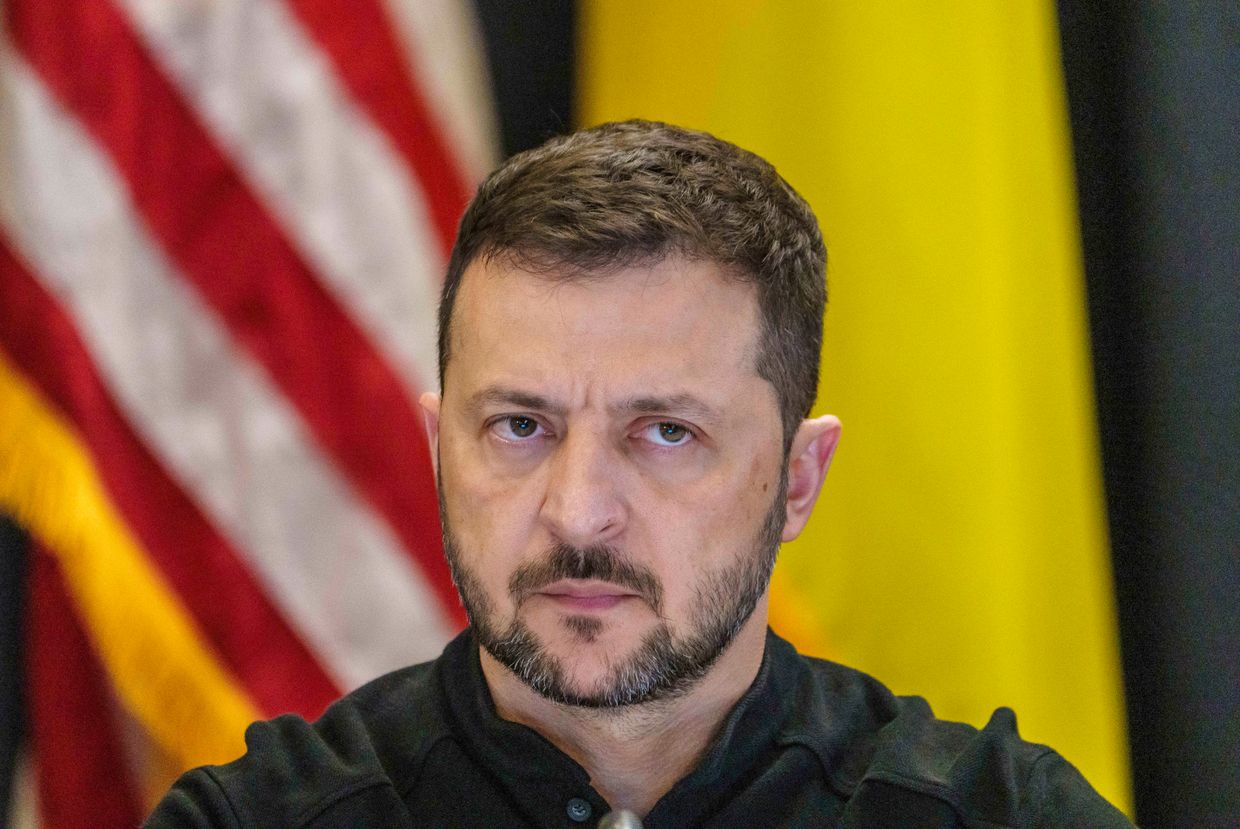
President Volodymyr Zelensky described his recent phone call with U.S. President Donald Trump as "the best conversation in all this time" in an evening address on July 5.

"Patriot (missiles) are key to protection from ballistic (missiles). We discussed several other important issues that our teams will work out in detail at meetings in the near future," Zelensky said.

The two leaders spoke on July 4, agreeing to strengthen Ukraine's air defenses amid intensified Russian strikes, Zelensky said earlier.

A day prior to speaking with Zelensky, Trump held a phone call with Russian President Vladimir Putin in an effort to discuss ending Russia's war against Ukraine.

"This was probably the best conversation in all this time, it was maximally productive. We discussed the topic of air defenses. I am grateful for the readiness to help," Zelensky said, describing his phone call with Trump.

Relations between Ukraine and the U.S. have previously been strained as the White House pushed Kyiv to sign a lucrative bilateral minerals deal and tried to broker a peace deal with Moscow that did not rule out major concessions for Ukraine.

Zelensky's phone call with the U.S. leader followed media reports and announcements from Washington of a pause in military assistance to Ukraine. Trump, on July 3, denied that Washington has stopped supplying weapons to Kyiv.

Trump described his July 3 conversation with Putin as disappointing, saying that the call "didn't make any progress" in stopping Russia's war against Ukraine.

"I'm very disappointed with the conversation I had today with President Putin," Trump told journalists. "Because I don't think he's there. And I'm very disappointed.  I don't think he's looking to stop this fighting."

Russia launches another horrific attack on Kyiv hours after Trump-Putin call
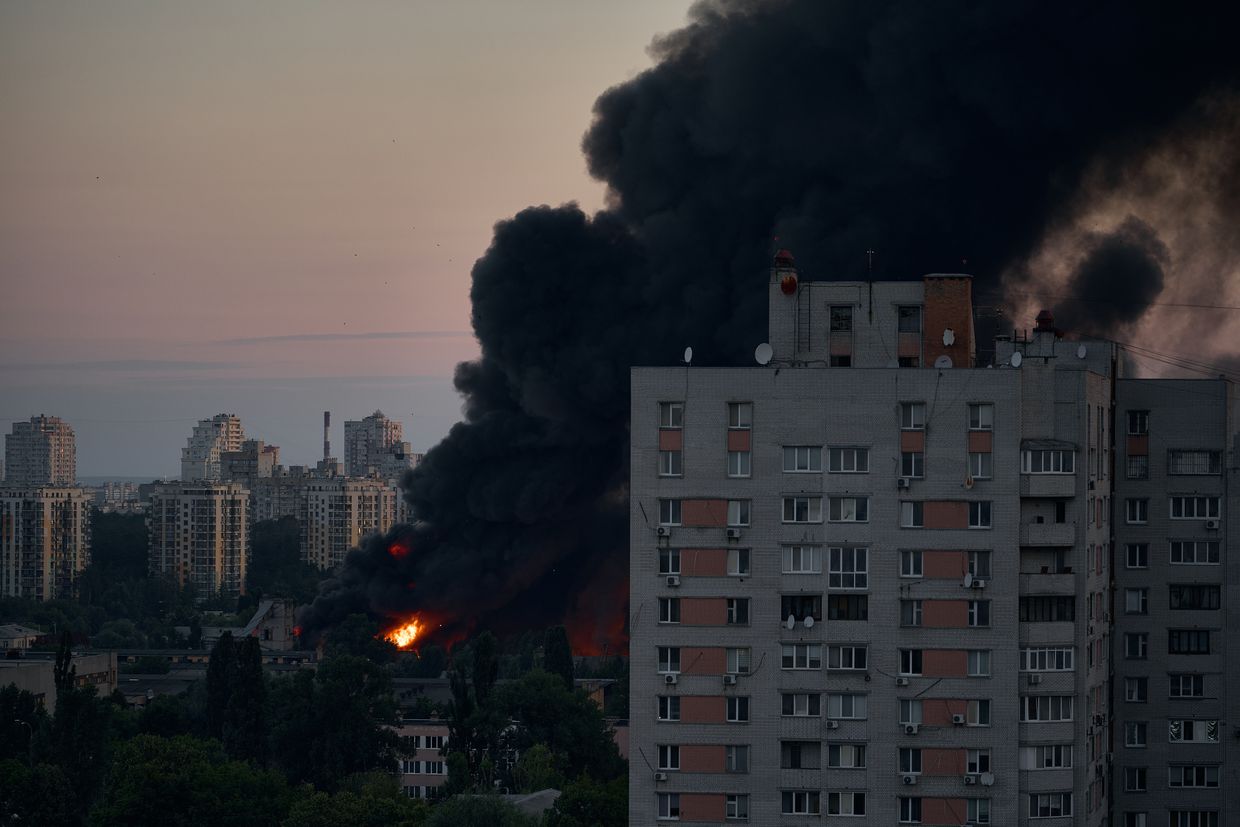
Ripe cherries and apricots fill the stalls of fruit vendors, while people bustle about on a scorching July Friday. Yet just a five-minute walk from the stand, the scene shifts dramatically: a gaping hole mars the five-story residential building where the stairwell once stood. Rescuers tirelessly sift through the
Zelensky describes phone call with Trump as 'best conversation in all this time'The Kyiv IndependentKateryna Hodunova
Zelensky describes phone call with Trump as 'best conversation in all this time'
  •  

New NATO commander takes helm as alliance lauds outgoing chief for modernizing defense

New NATO commander takes helm as alliance lauds outgoing chief for modernizing defense

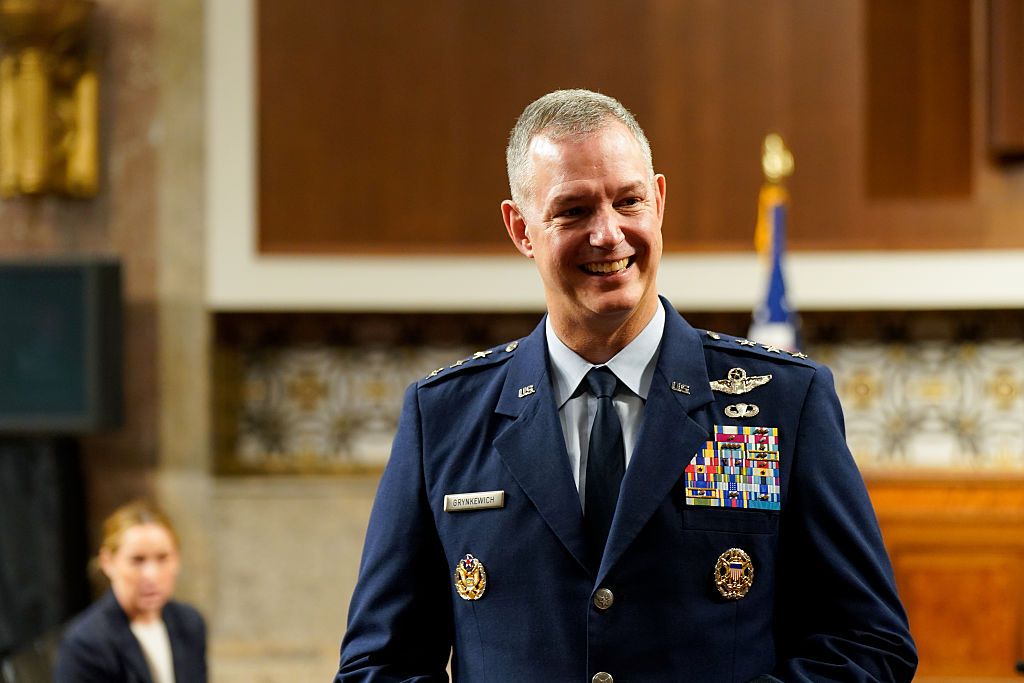
U.S. Air Force General Alexus G. Grynkewich assumed command as the 21st Supreme Allied Commander Europe (SACEUR) on July 4 during a ceremony at Supreme Headquarters Allied Powers Europe.

NATO Secretary General Mark Rutte presided over the handover, commending outgoing U.S. Army General Christopher G. Cavoli for his contributions to modernizing NATO's collective defense and bolstering support for Ukraine.

Rutte highlighted Cavoli's efforts to strengthen NATO’s presence in the Baltic Sea in response to threats to critical undersea infrastructure and credited him with conceiving and establishing NATO’s new command in Germany to enhance assistance to Ukraine. He also noted Cavoli's role in refocusing the Alliance on collective defense following the 2022 Madrid Summit, where NATO adopted a new Strategic Concept in response to Russia’s full-scale invasion of Ukraine.

Cavoli played a central role in developing and securing approval for NATO’s regional defense plans at the 2023 Vilnius Summit—a significant overhaul of the Alliance’s military posture since the Cold War.

His tenure also included the integration of Finland and Sweden into NATO’s military structures, expanding the Alliance’s strategic reach. In 2024, Cavoli oversaw "Steadfast Defender," NATO’s largest military exercise since the Cold War, involving approximately 90,000 troops practicing large-scale reinforcement across the eastern flank and validating a new high-readiness force model.

Rutte specifically acknowledged Cavoli's leadership in rapidly reinforcing NATO's Baltic Sea presence during threats to underwater infrastructure and for establishing the NATO Security Assistance and Training for Ukraine (NSATU), which continues to support Ukraine.

The secretary general welcomed General Grynkewich, noting that, as a former fighter pilot, he brings "a deep understanding of the threats we face from the skies, and across other domains." Rutte added that Grynkewich’s recent role as Director of Operations of the Joint Staff provides him with broad experience in advancing military and security priorities amid global challenges.

Allied Command Operations—responsible for planning and executing all NATO operations—now falls under General Grynkewich's command, a position first held by General Dwight D. Eisenhower.

Russia launches another horrific attack on Kyiv hours after Trump-Putin call
Ripe cherries and apricots fill the stalls of fruit vendors, while people bustle about on a scorching July Friday. Yet just a five-minute walk from the stand, the scene shifts dramatically: a gaping hole mars the five-story residential building where the stairwell once stood. Rescuers tirelessly sift through the
New NATO commander takes helm as alliance lauds outgoing chief for modernizing defenseThe Kyiv IndependentKateryna Hodunova
New NATO commander takes helm as alliance lauds outgoing chief for modernizing defense
  •  
❌