Vue lecture

Strikes didn’t destroy Iran’s nuclear sites, US intel finds, contradicting Trump, CNN reports

Strikes didn’t destroy Iran’s nuclear sites, US intel finds, contradicting Trump, CNN reports

Recent U.S. strikes on three Iranian nuclear facilities did not eliminate the core components of Tehran’s nuclear program and likely delayed it by only a few months, according to an early assessment by the U.S. Defense Intelligence Agency (DIA), CNN reported on June 24, citing four sources familiar with the findings.

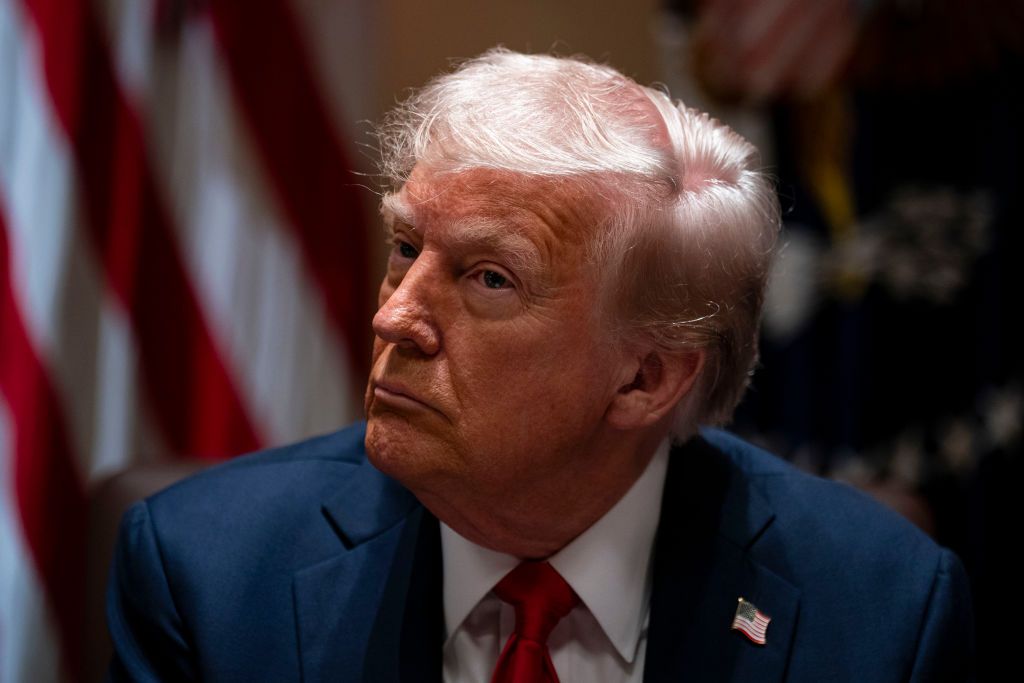
The analysis, based on a battle damage report from U.S. Central Command, contradicts public statements by President Donald Trump and Defense Secretary Pete Hegseth, who claimed the operation had "obliterated" Iran’s nuclear capabilities.

"So the (DIA) assessment is that the U.S. set them back maybe a few months, tops," one source told CNN, adding that Iran’s stockpile of enriched uranium was not destroyed and that most centrifuges remain “intact.”

The White House acknowledged the assessment’s existence but strongly dismissed it. "This alleged assessment is flat-out wrong and was classified as ‘top secret’ but was still leaked to CNN by an anonymous, low-level loser in the intelligence community," press secretary Karoline Leavitt said. “The leaking of this alleged assessment is a clear attempt to demean President Trump, and discredit the brave fighter pilots who conducted a perfectly executed mission to obliterate Iran’s nuclear program. Everyone knows what happens when you drop fourteen 30,000 pound bombs perfectly on their targets: total obliteration.”

Trump, for his part, stood by his assessment of the mission's success. “I think it’s been completely demolished,” he said on Tuesday. “Those pilots hit their targets. Those targets were obliterated, and the pilots should be given credit.” Asked if Iran could rebuild, Trump responded: “That place is under rock. That place is demolished.”

While both Trump and Hegseth praised the strikes as decisive, others expressed caution. Chairman of the Joint Chiefs of Staff Dan Caine said it was “way too early” to determine whether Iran retained nuclear capabilities.

Republican Rep. Michael McCaul, former chair of the House Foreign Affairs Committee, also avoided endorsing the president’s characterization. “I’ve been briefed on this plan in the past, and it was never meant to completely destroy the nuclear facilities, but rather cause significant damage,” McCaul told CNN. “But it was always known to be a temporary setback.”

The DIA’s assessment reportedly found that damage at the Fordow, Natanz, and Isfahan sites was mostly limited to aboveground infrastructure, such as power systems and uranium metal processing buildings. The underground facilities—where Iran's most sensitive nuclear work takes place—were largely unaffected, the sources said.

According to CNN, Israel had been carrying out its own strikes on Iranian nuclear facilities prior to the U.S. operation, but relied on U.S. B-2 bombers equipped with 30,000-pound “bunker buster” bombs to finish the job. Despite over a dozen bombs being dropped on Fordow and Natanz, the sites’ key components remain intact, the sources said.

The U.S. also reportedly used Tomahawk missiles launched from a submarine to target Isfahan, rather than deploying bunker busters. A source said this was due to doubts over whether the bombs could penetrate Isfahan’s deep underground levels, which are believed to be even more fortified than Fordow.

Two sources also told CNN that Iran likely retains undisclosed nuclear facilities that were not targeted and remain operational.

Meanwhile, classified briefings for lawmakers on the strikes were postponed. The all-Senate briefing was rescheduled for Thursday, and the House briefing’s new date remains unclear.

More empty threats from Washington, more deadly bombs from Russia
The ongoing and escalating slaughter of Ukrainian civilians depends on two preconditions: Moscow’s determination to erase Ukraine, and the tacit permission it receives from America and Europe. On Monday, a Russian missile tore through a residential building in Kyiv, leaving at least six civilians dead and over a dozen
Strikes didn’t destroy Iran’s nuclear sites, US intel finds, contradicting Trump, CNN reportsThe Kyiv IndependentAndrew Chakhoyan
Strikes didn’t destroy Iran’s nuclear sites, US intel finds, contradicting Trump, CNN reports
  •  

Trump casts doubt on NATO defense pledge as alliance confronts Russian threat

Trump casts doubt on NATO defense pledge as alliance confronts Russian threat

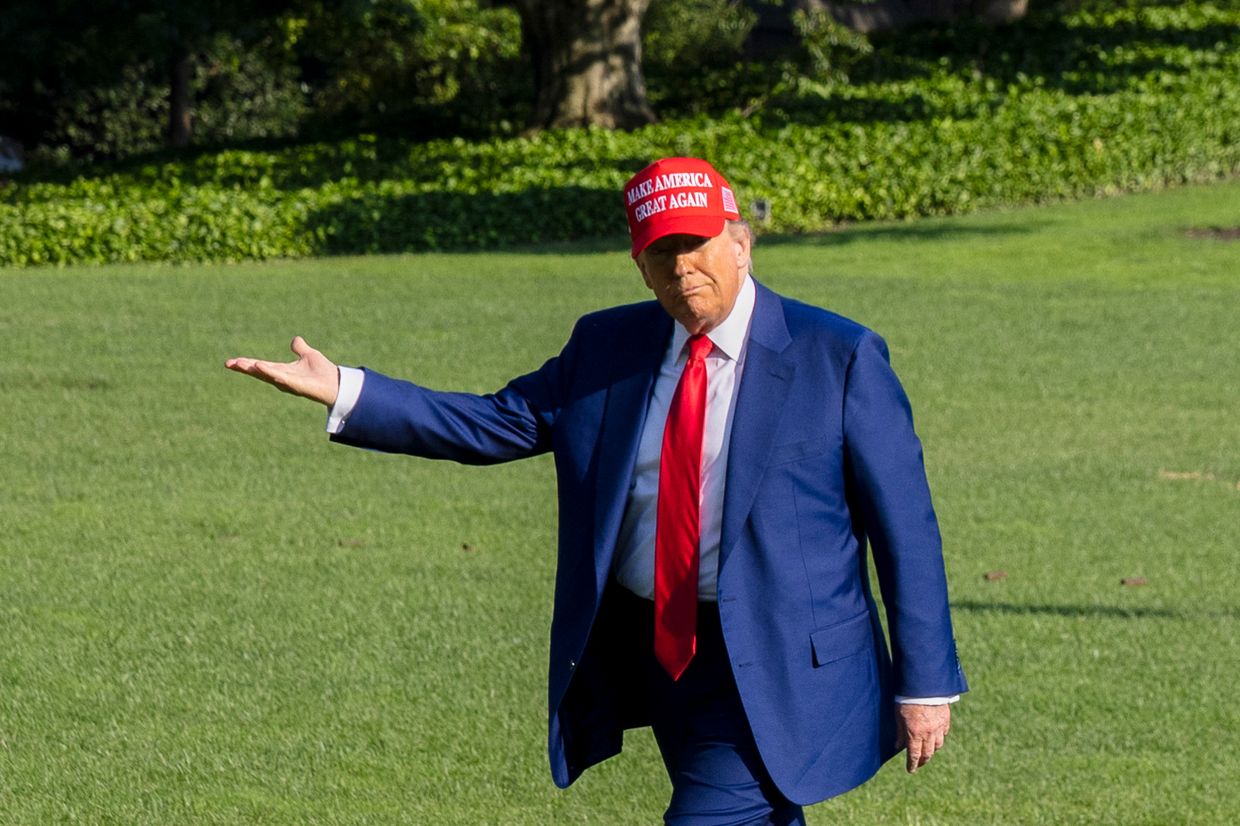
President Donald Trump refused to give a clear commitment to NATO’s Article 5 — the alliance’s collective defense clause — as he departed for a pivotal summit in The Hague, raising fresh concerns about his stance on one of NATO’s core principles.

When pressed by reporters aboard Air Force One on whether he would uphold the mutual defense obligation, Trump replied, “It depends on your definition of Article 5,” adding, "There’s numerous definitions of Article 5. You know that, right? But I’m committed to being their friends, you know, I’ve become friends with many of those leaders, and I’m committed to helping them."

Although Article 5 is central to NATO’s security framework, Trump has previously expressed skepticism about honoring it, often criticizing member states for not contributing enough to shared defense efforts.

Asked to elaborate, he said, "I’m committed to saving lives. I care about life and safety." He added that he would explain his position in full once at the summit: "I’ll give you an exact definition when I get there — I just don’t want to do it from the back of a plane."

Trump’s remarks come as NATO faces what its leadership describes as its most significant threat in decades.

At a press briefing on June 23, NATO Secretary General Mark Rutte said Russia remains the primary danger to the alliance, citing its growing alignment with China, North Korea, Iran, and Belarus.

"Moscow continues to wage war against Ukraine, with support of North Korea, Iran, and China, as well as Belarus," Rutte said.

He added that NATO leaders plan to adopt a "historic" defense investment plan at the June 24–25 summit in The Hague, including a new 5% of GDP benchmark for defense spending and stronger backing for Ukraine.

"All leaders will take bold decisions to strengthen our collective defense, making NATO a stronger, fairer, and more lethal alliance," Rutte said. “This is a leap that is ambitious, historic, and fundamental to securing our future.”

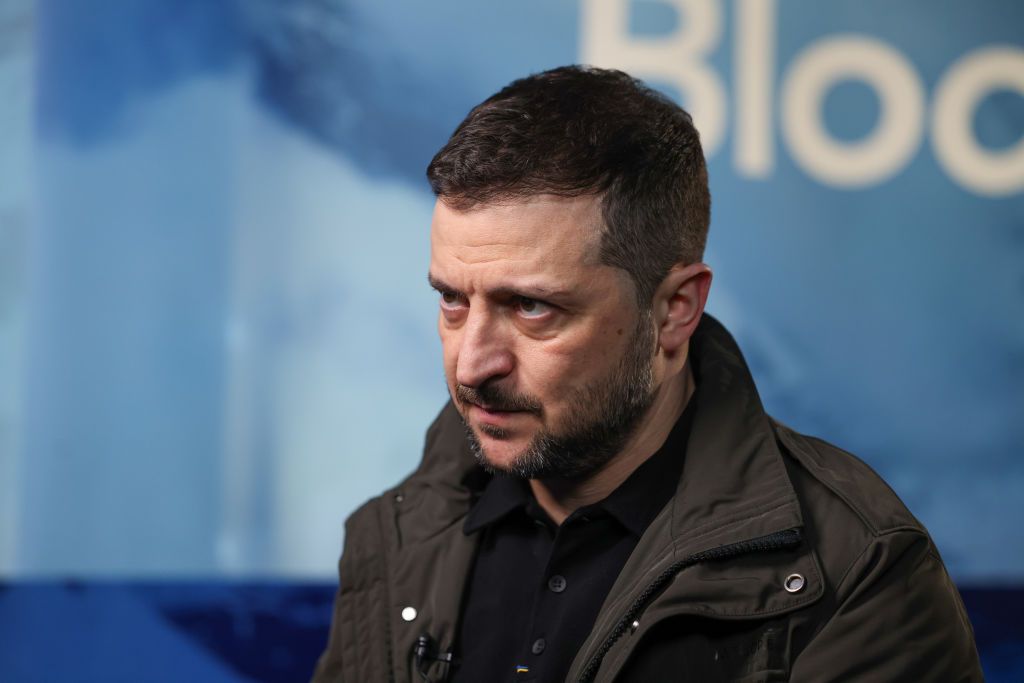
While at the summit, Trump is also set to meet President Volodymyr Zelensky, the White House confirmed on June 24.

Their last meeting was in April at Pope Francis' funeral, amid concerns over the U.S. role in peace talks between Kyiv and Moscow. Details of the June 25 meeting are still being finalized, but the talks are expected in the "early afternoon," a source told AFP.

Investigation: How Russia prepares its strategic missile plant for ‘eternal war’
Key findings: * Despite international sanctions, Russia’s strategic missile plant was able to import complex machinery to dramatically increase missile production. * The Kyiv Independent has identified the equipment supplied to the plant, as well as the supply chains, mostly from China. * We located the plant’s new premises, built to house the
Trump casts doubt on NATO defense pledge as alliance confronts Russian threatThe Kyiv IndependentAlisa Yurchenko
Trump casts doubt on NATO defense pledge as alliance confronts Russian threat
  •  

Trump says Putin called him to offer help with Iran

Trump says Putin called him to offer help with Iran

U.S. President Donald Trump said on June 24 that his Russian counterpart Vladimir Putin had called him and offered to help resolve the conflict between Iran and Israel, Fox News reported.

"As you know, Vladimir called me up. He said, can I help you with Iran? I said, 'no, I don't need help with Iran. I need help with you.' And I hope we're going to be getting a deal done with Russia, which is a shame. Six thousand soldiers died last week," Trump told journalists while heading to a NATO summit.

Trump's remarks come as The Hague hosts the NATO summit on June 24-25, at which the American leader is expected to meet Ukraine's President Volodymyr Zelensky.

Trump added he would like "to see a deal with Russia," which recently launched a new summer offensive against Ukraine, disregarding calls by Kyiv and its Western partners for an unconditional ceasefire.

The U.S. president did not provide further details on a potential deal with Russia.

Russia has deepened military and political ties with Tehran during the full-scale invasion of Ukraine.

Iran has supplied Moscow with thousands of Shahed attack drones used in routine strikes on Ukrainian cities.

Russia and Iran have cooperated to develop their own nuclear programs as both countries face Western sanctions. Russia supplied Iran with the Middle East's first nuclear power plant despite objections from the West.

Tensions between Iran and Israel had already been rising after Iran launched missile strikes on Tel Aviv and other Israeli cities on June 13, killing multiple civilians, including five Ukrainian nationals. The attack came in retaliation for Israeli military action.

Following several days of escalating conflict, Trump announced a ceasefire between Israel and Iran, but it was violated within hours of the American president's statement.

‘Dead and wounded everywhere’ — at least 160 casualties as Russia strikes Dnipro with ballistic missiles, hits civilian train
Russia launched a deadly missile attack on the Ukrainian city of Dnipro on June 24, striking civilian infrastructure and a passenger train, local officials reported.
Trump says Putin called him to offer help with IranThe Kyiv IndependentAnna Fratsyvir
Trump says Putin called him to offer help with Iran
  •  

Israel reportedly strikes Iran despite Trump's call for calm after announced ceasefire

Israel reportedly strikes Iran despite Trump's call for calm after announced ceasefire

Editor's note: This is a developing story and is being updated.

Israel launched airstrikes on Iranian territory on June 24, defying U.S. President Donald Trump's call for calm just few hours after he announced a ceasefire between the two countries, according to the Times of Israel.

The attack comes less than an hour after Trump told reporters that "Israel needs to calm down" as he criticized both countries for undermining the ceasefire he says he brokered.

"We basically have two countries that have been fighting so long and so hard that they don't know what the f*ck they're doing," Trump said on June 24.

Hours after Trump said the ceasefire came into effect, Israel accused Tehran of launching missiles toward its territory — an allegation Iran denied.

Following Iran's alleged missile strike, Trump and Israeli Prime Minister Benjamin Netanyahu reportedly spoke on the phone and agreed that Israel would carry out a limited response. The air force strike targeted a single "symbolic" radar installation.

Ahead of Israel's strike, Trump wrote on Truth Social that all of the Israeli planes "turn around and head home, while doing a friendly 'Plane Wave" to Iran."

According to the Times of Israel, Israeli officials said Trump was still sending messages promising that Israel would not attack Iran "after he knew we would attack," a senior official told the Kan public broadcaster.

Why can’t the West match Russia’s ammunition production?
Editor’s Note: This article has been updated to reflect new details of BAE Systems’ new chemical process that the company confirmed to the Kyiv Independent after initial publication. The West is failing to catch up to Russia’s production of the most basic unit of war for the past half-millennium — gunpowder.
Israel reportedly strikes Iran despite Trump's call for calm after announced ceasefireThe Kyiv IndependentKollen Post
Israel reportedly strikes Iran despite Trump's call for calm after announced ceasefire
  •  

Trump to meet Zelensky during NATO summit, White House confirms

Trump to meet Zelensky during NATO summit, White House confirms

Editor's note: The story was updated after the White House confirmed the meeting between Ukraine's President Volodymyr Zelensky and his American counterpart Donald Trump.


U.S. President Donald Trump will meet his Ukrainian counterpart Volodymyr Zelensky during a NATO summit in The Hague, the White House confirmed on June 24.

The last time Zelensky and Trump met was in April on the sidelines of Pope Francis' funeral amid concerns that Washington would withdraw from mediating peace talks between Kyiv and Moscow.

The White House did not provide any further details about the meeting between the two leaders.

The talks between Zelensky and Trump were scheduled for the "early afternoon" on June 25, the source told AFP, adding that "the teams are finalizing the details" of the meeting.

Trump and Zelensky are expected to discuss Ukraine's "purchase of a defense package, a large part of which consists of air defense systems," according to the source.

The discussion will also focus on "sanctions against Russia, and a price cap on oil," the source added.

Earlier, Trump said that he "would probably meet" Zelensky in The Hague after the two presidents did not manage to talk during the G7 summit in Canada earlier in June, AFP reported on June 24.

When asked what he would say to Zelensky, Trump replied: "I'll say: 'How are you?' He's (Zelensky) in a tough spot, he shouldn't have been there at all".

Zelensky also said in an interview with Sky News that he planned to meet Trump in The Hague. Asked whether the meeting would be a formal discussion or an informal encounter, Zelensky said it was a matter of scheduling: "They are talking about timing. It's timing."

Zelensky's participation in the summit was confirmed by the European Council on June 20, following reports that he was reconsidering the visit due to uncertainties surrounding Trump's participation.

Upon arrival in The Hague on June 24, Andriy Yermak, head of Ukraine's presidential office, said he held a "substantive" discussion with U.S. Secretary of State Marco Rubio about the upcoming Zelensky-Trump meeting. Yermak said the two discussed the structure, agenda, and key topics for the meeting.

Zelensky is also scheduled to meet European Commission President Ursula von der Leyen and NATO Secretary-General Mark Rutte during the summit.

In the interview, Zelensky also addressed concerns about Trump's perceived closeness to Russian President Vladimir Putin.

"It is a complicated question because I truly do not know what relationship Trump has with Putin," Zelensky said. "I think what I know, you know, and the media knows. There are various signals about that."

He added that he believes Trump understands Ukraine is a U.S. ally and that "the real existential enemy of America is Russia."

"They will never be friends. They may be short-term partners, but they will never be friends," Zelensky said.

Zelensky expressed hope that Trump's approach to Russia is tactical, intended to pressure Putin into peace negotiations. "I would like this approach to be only a way to force Putin to the negotiating table and to end the war. And let us hope so," he said.

Zelensky was scheduled to meet Trump at the Group of Seven (G7) summit, held June 15-17. However, the U.S. president left the multilateral event early due to the renewed conflict between Israel and Iran.

Zelensky also left the summit early, citing Russia's mass drone and missile attack on Kyiv.

‘Let’s not be naive’ — Rutte urges NATO to face Russia, China threats, pledges support for Ukraine
NATO Secretary General Mark Rutte said NATO’s role is to ensure Ukraine has the military means to stay in the fight until “serious” peace negotiations begin.
Trump to meet Zelensky during NATO summit, White House confirmsThe Kyiv IndependentAnna Fratsyvir
Trump to meet Zelensky during NATO summit, White House confirms
  •  

Europeans oppose following Trump if he pushes Ukraine to cede territory, lift Russia sanctions, poll finds

Europeans oppose following Trump if he pushes Ukraine to cede territory, lift Russia sanctions, poll finds

A majority of Europeans would oppose following the U.S.' lead if President Donald Trump pushed Ukraine to cede territories or lifted sanctions on Russia as part of a peace agreement, a new poll published on June 23 has found.

Despite the self-imposed deadline of 100 days to end the war in Ukraine, Trump is now 155 days into his presidency and Russian attacks have only escalated.

Trump has still yet to take any concrete steps to pressure Moscow into ending its war but has floated several concessions that Ukraine could be forced to make including ceding territory, while at the same time announcing no new military aid packages for Kyiv.

The survey, conducted by the European Council on Foreign Relations, found that even in countries with pro-Russian governments like Hungary, more people opposed the idea than supported it.

Respondents in 12 countries (Denmark, Estonia, France, Germany, Hungary, Italy, Poland, Portugal, Romania, Spain, Switzerland and the U.K.) were asked about three scenarios — the U.S. pushing Ukraine to cede territory, lifting sanctions on Russia, and withdrawing all military support.

Majorities in all countries opposed their own governments following the U.S. lead except for Hungary in the case of withdrawing all military support.

Opposition was highest in Denmark, the U.K., Poland, Spain and Portugal, and lowest in Hungary, Romania and Italy.

"A benevolent interpretation is that Europeans support an autonomous European policy to support Ukraine and they don’t want to blindly follow Trump’s lead," the report's authors said.

"But another reading of that data is that Europeans want Ukrainians to continue fighting on their behalf."

The wide-ranging survey also asked about attitudes to increasing defense spending and compulsory military service.

Majorities supported increased defense spending in Poland (70%), Denmark (70%), and the U.K. (57%), with large minorities in Germany (47%), Spain (46%), and France (45%).

When asked about compulsory military service, France (62%), Germany (53%), and Poland (51%) were the strongest supporters but crucially, not in the age bracket most likely to be called up — 18 to 29-year-olds.

Europeans are also becoming increasingly despondent about the U.S. under the leadership of Trump, with large majorities in the U.K. (74%) and Germany (67%) believing the U.S. political system is "broken."

The ECFR poll surveyed 16,440 adults last month.

‘Let’s not be naive’ — Rutte urges NATO to face Russia, China threats, pledges support for Ukraine
NATO Secretary General Mark Rutte said NATO’s role is to ensure Ukraine has the military means to stay in the fight until “serious” peace negotiations begin.
Europeans oppose following Trump if he pushes Ukraine to cede territory, lift Russia sanctions, poll findsThe Kyiv IndependentAnna Fratsyvir
Europeans oppose following Trump if he pushes Ukraine to cede territory, lift Russia sanctions, poll finds
  •  

Israel accuses Iran of violating ceasefire hours after Trump announcement

Israel accuses Iran of violating ceasefire hours after Trump announcement

Editor's note: This story was updated to include comments made by U.S. President Donald Trump.

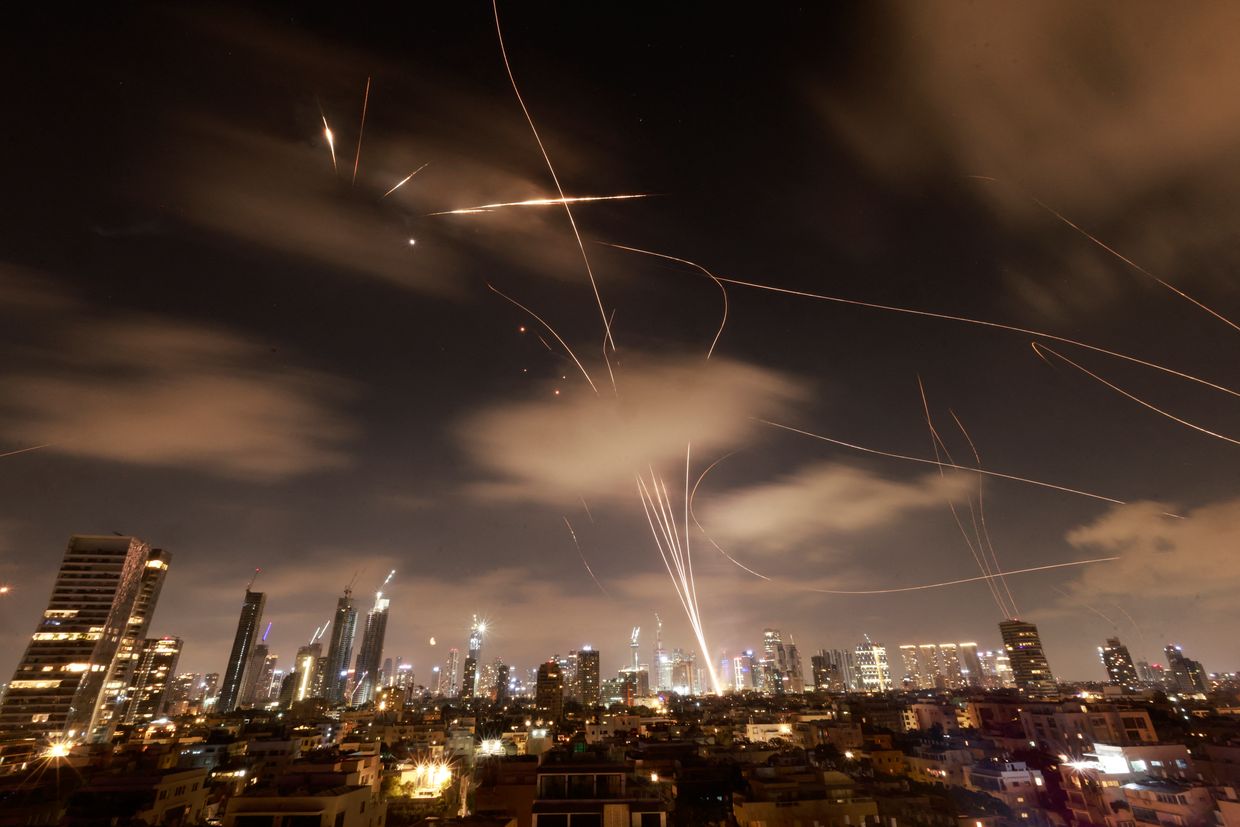
Iran launched missiles toward Israel on June 24, just hours after U.S. President Donald Trump announced a ceasefire between the two countries had come into effect, the Israeli military said. Iran denied the accusation.

"A short while ago, sirens sounded in northern Israel following the identification of missiles launched from Iran toward the State of Israel," the Israel Defense Forces (IDF) said in a statement.

"At this time, the IAF (Israeli Air Force) is operating to intercept and strike where necessary to eliminate the threat," the statement read.

Israeli Defense Minister Israel Katz instructed the army to respond forcefully to Iran's ceasefire violation, Reuters reported. Katz said that Israel will continue to strike Iran after the "utter violation" of the ceasefire.

Shortly after Israel's statement, Iranian state media reported that Tehran denied firing missiles at Israel after the ceasefire began.

A senior security official in Iran told CNN that “no missiles have been fired at the enemy" after the ceasefire.

The reports come after days of escalating hostilities in the Middle East. Early on June 24, Trump declared in a Truth Social post that a ceasefire had begun, writing, "The ceasefire is now in effect. Please do not violate it!"

Israeli Prime Minister Benjamin Netanyahu said on June 24 Israel had agreed to Trump's ceasefire proposal, claiming that Israel had "achieved its goal of removing the Iranian nuclear and ballistic missile threat," according to Reuters.

Trump said later on June 24 that Israel needs to "calm down" after what he described as violations of the ceasefire by both sides.

"I gotta get Israel to calm down now," Trump said as he left the White House. "Israel, as soon as we made the deal, they came out and they dropped a load of bombs, the likes of which I've never seen before, the biggest load that we've seen."

He added: "We basically have two countries that have been fighting so long and so hard that they don't know what the f*ck they're doing."

Trump also wrote on Truth Social that "Israel is not going to attack Iran."

"Nobody is going to be hurt. The Ceasefire in in the effect," U.S. president wrote,  

Previously, the U.S. launched airstrikes on Iran's nuclear facilities in Fordow, Natanz, and Esfahan on June 21. In response, Iran fired missiles at U.S. military bases in the region, including at least 10 targeting Al Udeid Air Base in Qatar and one aimed at a base in Iraq.

The Pentagon confirmed that Iran launched several short- and medium-range missiles at Al Udeid but reported no U.S. casualties. Trump dismissed the attacks as "limited and largely ineffective."

Iran is a key arms supplier to Russia, providing Shahed drones used in attacks on Ukrainian cities and pledging to send ballistic missiles. Israel, while home to a significant Russian-speaking population, has not joined Western sanctions against Moscow.

Ceasefire between Iran and Israel now in effect, Trump says
“The ceasefire is now in effect. Please do not violate it!” U.S. President Donald Trump said in a post on Truth Social on June 24.
Israel accuses Iran of violating ceasefire hours after Trump announcementThe Kyiv IndependentAnna Fratsyvir
Israel accuses Iran of violating ceasefire hours after Trump announcement

  •  
❌