❌

Vue lecture

Russia’s Geran-5 has hit 1,000 km/h in maneuvers, and Chinese engineers help develop some technical solutions for Russia’s drones

Ukrainian specialists study electronics taken from Russian weapons

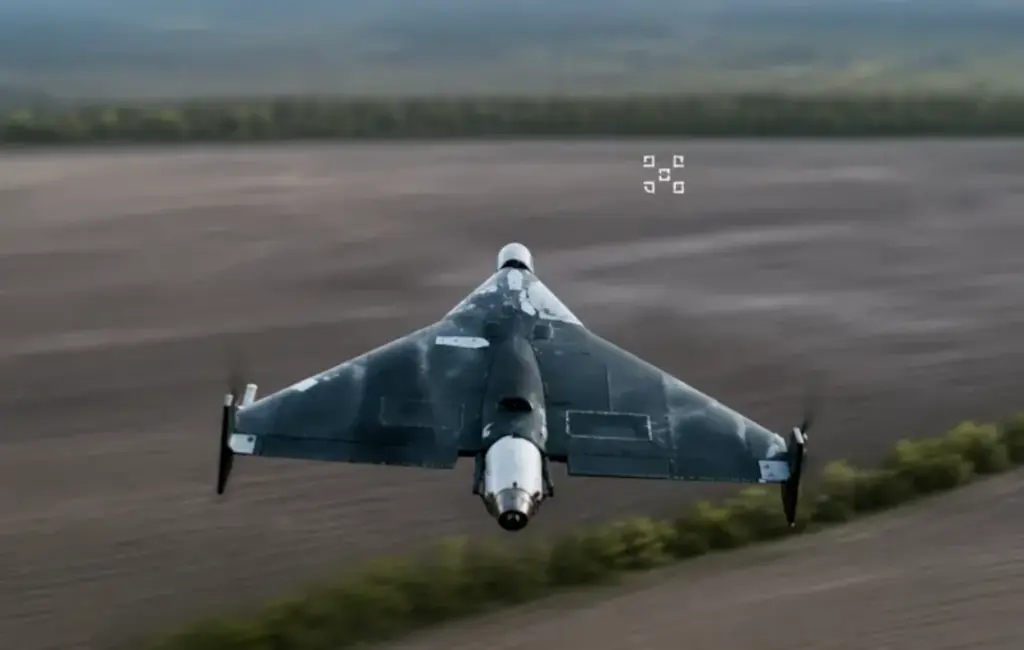
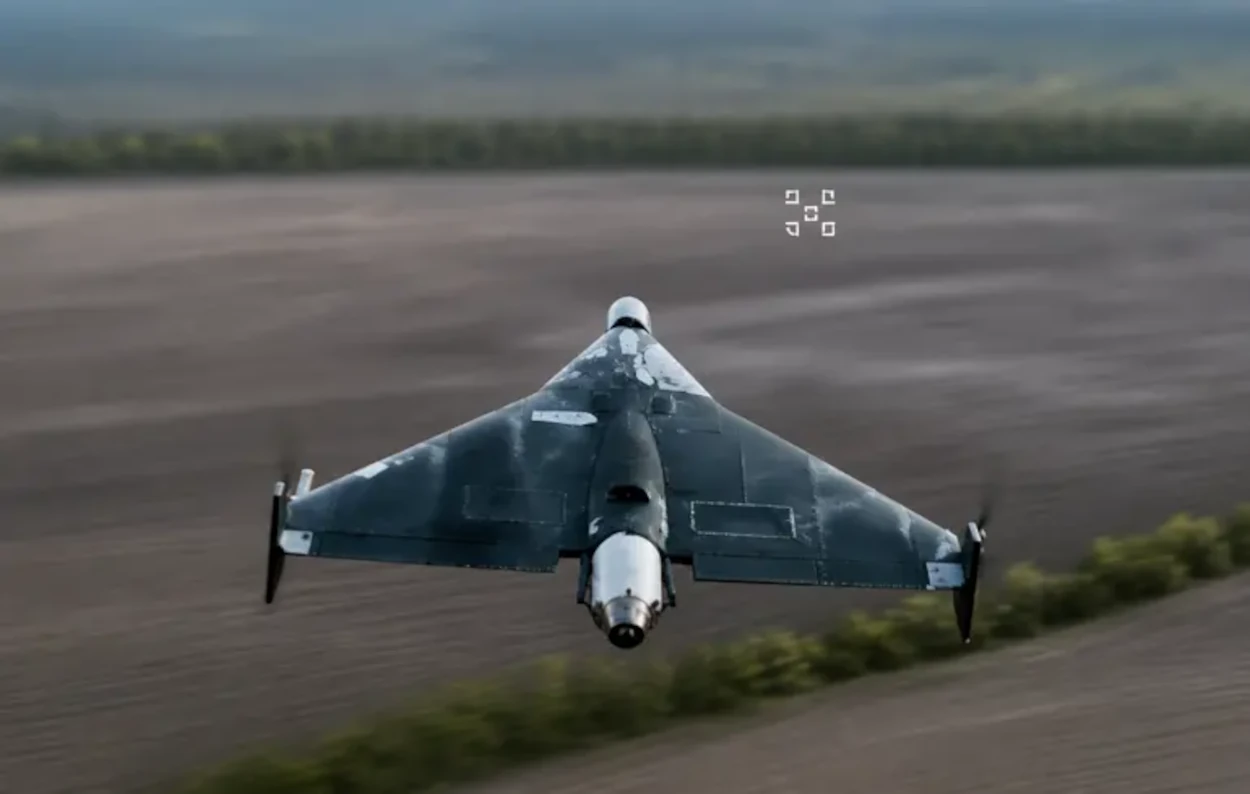
Russia’s Geran-5 jet drones have sped up to 1,000 km/h while maneuvering, Ukraine’s presidential adviser on defense technology Serhii “Flash” Beskrestnov said in Kyiv on 29 October. He added that Chinese engineers help develop Russia’s Geran drones.

When Russia moved to faster Geran versions, Ukrainian developers had to look for new ways to intercept them, Beskrestnov said, and Ukraine must learn to stay a step ahead. From 1 to 26 September, air defenses downed only 55% of Russia’s jet-powered drones. On 29 October, one such drone hit Dnipro’s railway station, and the death toll has since risen to 15. Over the past three months, air defenses downed nearly 60% of the jet-powered Geran-4, the General Staff said on 27 October, noting a shortage of guided anti-aircraft missiles. That update gave no Geran-5 figure.

A peak well above cruise speed

That peak, about 620 mph, came during maneuvers. Ukraine’s military intelligence (HUR) puts the Geran-5’s cruise speed at 450–600 km/h. By Beskrestnov’s count, the earlier Geran-3 flew at 280–300 km/h.
money engineering what stands between ukraine russia's fastest drones zelenskyy says · post russia’s new “geran-4 seeker” shahed variant geran-4 news ukrainian reports
Explore further

Ukraine intercepts nearly 60% of Russia’s Geran-4 jet drones, General Staff says, as Kyiv races to counter evolving threat

Russia’s best engineers work against Ukraine, and China’s do too, Beskrestnov told journalists. Russia’s Alabuga drone plant sets Chinese engineers tasks such as work on the control module, he said. Key components inside Russia’s Shahed-type drones are Chinese, he said. Meanwhile, China will require licenses for Geran engines from 18 November, Ukraine’s sanctions commissioner Vladyslav Vlasiuk said. Licensing is not a ban, he stressed.

Speed is the easy part

Some interceptors are being designed to match the Geran-5’s cruise speed. US firm CHAOS Industries claims a top speed of 540 km/h for its Vespid Mk 1 interceptor. On 14 October, Ukrainian defense outlet Defense Express judged that may be enough against the Geran-5’s 450–600 km/h cruise speed.

Ukrainian defense technology adviser Serhii “Flash” Beskrestnov works near the front line monitoring Russian drone signals. Photo: Serhii “Flash” Beskrestnov
Explore further

Russia equips Geran attack drones with image-based navigation using Google map imagery, reducing reliance on satellite navigation that Ukraine can jam, defense adviser warns

Ukrainian manufacturers have already shown jet-powered interceptor drones, Beskrestnov said. But they have run into problems with control, guidance, automatic target lock, and scaling up production. A model that flies fast is only one part of the job, he said, and an easy-to-use serial product is a different question entirely.

  •  

Ukraine finds Russia’s Geran drones fitted with a compass that works through GPS jamming, but Western electronics still at their core

magnetometers in geran

Russia has started installing magnetometers in the tails or tail fins of its Geran attack drones, Vladyslav Vlasiuk, the Ukrainian president’s commissioner for sanctions policy, said on Facebook on 28 October.

Russia uses its Shahed-Geran series drones in massive daily attacks on Ukraine. Ukrainian forces jam Gerans’ satellite navigation to push them off course, and Russia keeps hardening the drones against it, already fitting them with adaptive antennas. The magnetometer appears designed to go further, giving the drone a heading that doesn’t depend on satellites at all. Earlier this month, Ukrainian military intelligence reported a US-made magnetometer in the upgraded Geran-4.

A new jamming device, and Western parts at the core

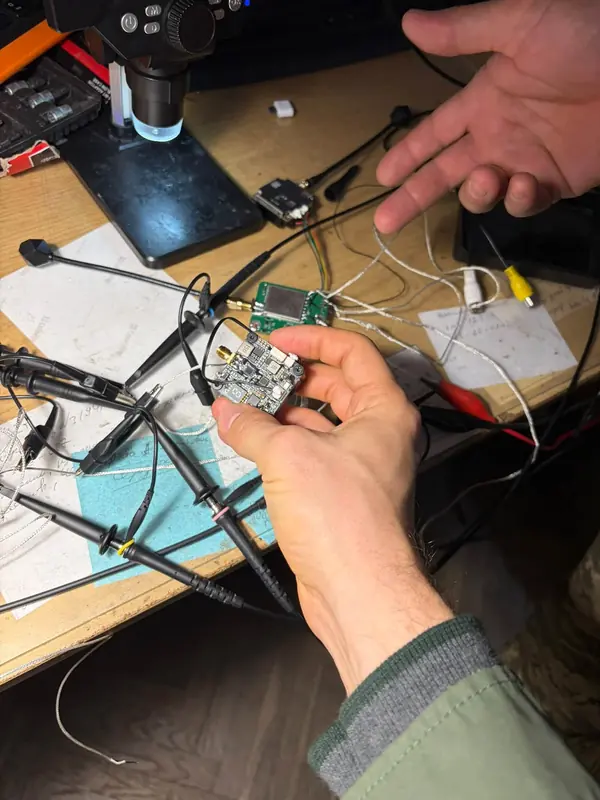
Vlasiuk posted photos from a site where Ukraine studies Russian weapons and their components. He said he takes the findings for Ukraine’s sanctions work. He did not say which Geran models carry the magnetometer.

Ukrainian specialists study electronics taken from Russian weapons
Ukrainian specialists study electronics from Russian weapons. Photo: Vladyslav Vlasiuk/Facebook

At the same time, Ukraine is studying how a new jamming device works. Vlasiuk did not say where it was found or what it targets.

“Western electronics are at the core everywhere,” Vlasiuk wrote.

Geran-4 already flew with a US-made sensor

On 5 October, Ukraine’s Defense Intelligence (HUR) said the upgraded Geran-4 carries a new “MOKh” unit built around a PNI5GA magnetometer made by US firm PNI Sensor. The unit works with the SADRA inertial navigation module to cut gyroscope drift and make the drone’s autonomous navigation more accurate.

HUR said Russia also added an electro-optical navigation system called Susanin to the upgraded Geran-4. It compares camera images with a reference image stored in memory to keep the drone on its route to the target. The new K5 version of the Geran-5 uses a similar system.

Presidential adviser Serhii “Flash” Beskrestnov warned on 28 October that if Russia starts using Susanin en masse on Geran-5s and other drones and missiles at night, Ukraine may have to go back to switching off lights, especially on roads.

  •  

Ukraine intercepts nearly 60% of Russia’s Geran-4 jet drones, General Staff says, as Kyiv races to counter evolving threat

money engineering what stands between ukraine russia's fastest drones zelenskyy says · post russia’s new “geran-4 seeker” shahed variant geran-4 news ukrainian reports

Ukraine’s air defenses have been intercepting nearly 60% of Russian Geran-4 jet-powered attack drones over the past three months, with the interception rate reaching 80% during some attacks, Ukraine’s General Staff said.

Russia has increasingly used jet-powered drones in its attacks on Ukraine, adding a faster-moving threat to the Shahed-type drones Moscow deploys against Ukrainian cities and infrastructure. Ukraine is working to improve interception rates while reducing the cost of countering these aerial threats amid shortages of surface-to-air missiles.

The General Staff’s update did not mention interception rates for Russia’s more advanced Geran-5 jet-powered drone.

F-16s, Mirage jets help intercept Russian drones

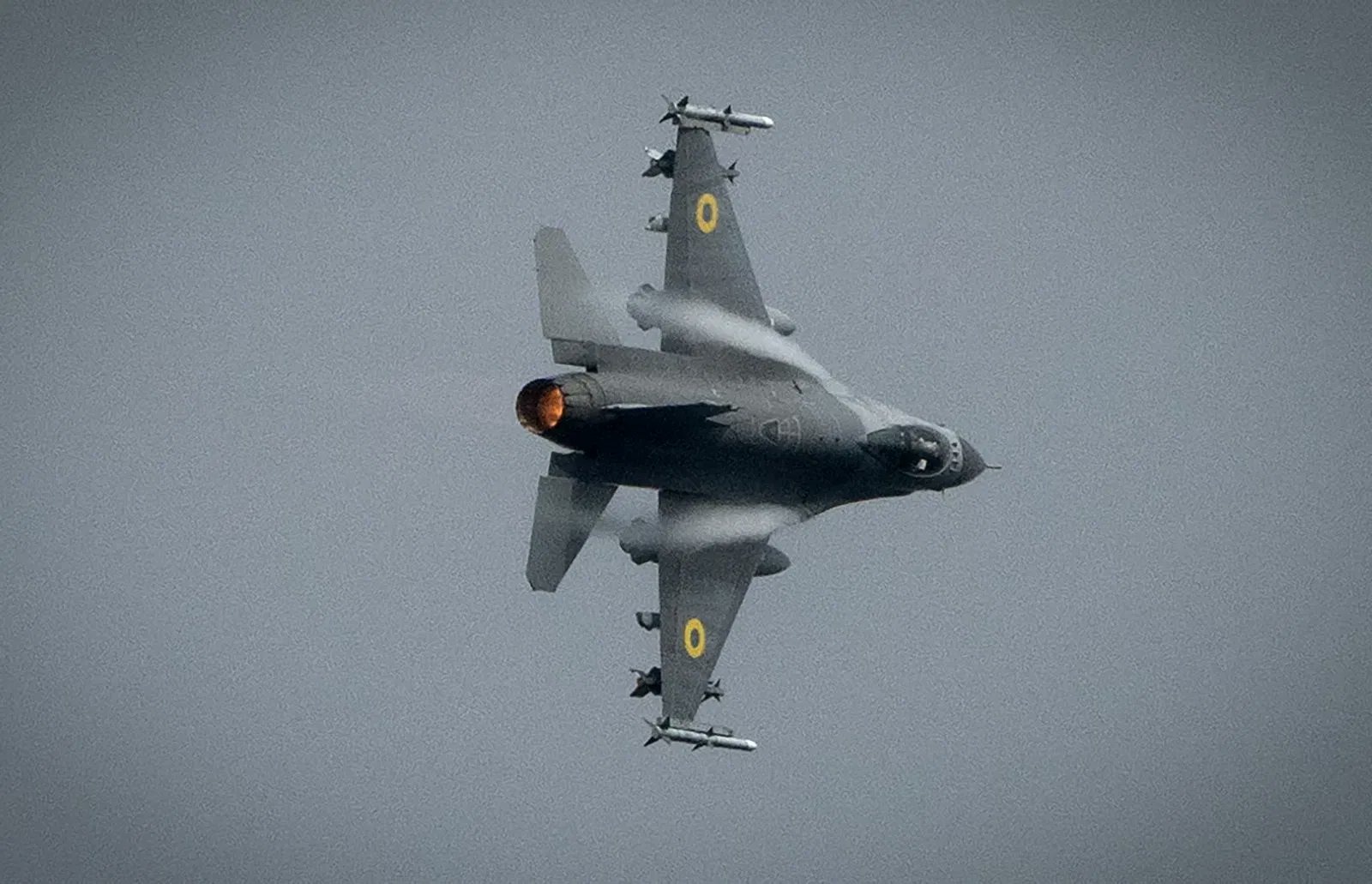
According to the General Staff, tactical aviation plays a significant role in destroying Russian jet-powered drones. Ukraine uses F-16s, French Mirage aircraft, and MiG-29 fighters to intercept them.

The military is also strengthening what it calls “short-range air defense” as Ukraine faces a shortage of guided anti-aircraft missiles. These systems include Gepard and Shilka anti-aircraft guns, newer Skynex, Skyranger, and Terrahawk Paladin systems, interceptor drones, and mobile fire groups deployed by different branches of Ukraine’s Defense Forces.

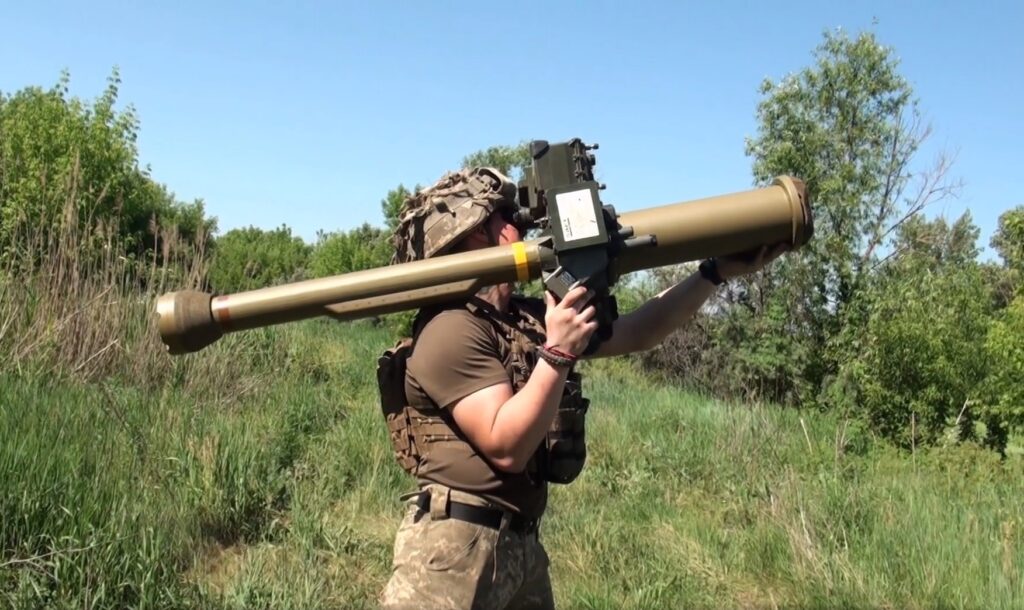
Mobile fire groups are equipped not only with machine guns and supporting equipment but also with man-portable air-defense systems (MANPADS). Ukrainian troops have been successfully using these missiles to shoot down Russian jet-powered drones, the General Staff said.

ukrainian soldier lmm martlet manpads air assault forces militarnyi 02-7
A Ukrainian soldier with an LMM Martlet MANPADS. Screenshot: Ukrainian Air Assault Forces, via Militarnyi.
A Ukrainian air force F-16.
Explore further

Denmark rushes 50,000 cannon rounds to Ukraine to help F-16s hunt Russia’s advanced jet drones

Ukraine tests cheaper drone interceptors

Ukraine is also seeking to lower the cost of countering Russian aerial attacks by testing new interceptor drones.

According to the General Staff, some models have already downed dozens of Russian Geran jet-powered drones. The military did not provide further details about the interceptor models or the number of drones destroyed.

The rising interception rate reflects Ukraine’s efforts to adapt its air defenses to Russia’s evolving drone campaign while preserving scarce and expensive air-defense missiles for threats that require them.

  •  

Built as a cheap Shahed lookalike, Russia’s Gerbera now flies with a 10-kg warhead and an incendiary bag

built cheap shahed lookalike russia’s gerbera now flies 10-kg warhead incendiary bag · post payload bay russian gerbera-2 drone additional tank гербера-2 з бойовою частиною масою 10 кг і додатковим

Russia has started fitting its enlarged Gerbera-2 drones with a 10-kg warhead and an extra bag of incendiary mixture, Ukrainian military outlet Militarnyi reported on 18 October. The setup is designed to start a fire where the drone hits and is probably meant for attacks on critical infrastructure and warehouses, the outlet said.

Russia’s industry makes about 3,000 jet-powered Geran-4 and Geran-5 drones a month, Ukraine’s military intelligence has said, and Russian strikes have destroyed 2.1 million m² of Ukraine’s modern warehouse space since the full-scale invasion began. A cheap drone that carries fire adds one more threat for air defenses that already let nearly half of Russia’s jet-powered Shaheds through.

A fire bag behind the warhead

Ukrainian Telegram channel Polkovnyk HSh posted photos of the payload on 17 October. Gerbera-2 strike and reconnaissance drones had begun to appear with a 10-kg high-explosive fragmentation-incendiary warhead and an extra package of incendiary mixture, the channel wrote. They navigate with Kometa-M12, a 12-element antenna array designed to resist jamming, it added.

Explore further

Russian drones set their own detonators at altitude: Why cutting wires won’t save from new Gerberas?

In the photos, the incendiary mixture sits in a separate soft plastic tank behind the main warhead, Militarnyi said. Gerbera-2s have been seen with warheads of 4 to 10 kg depending on range, while strike versions of the original Gerbera usually carried up to 5 kg, the outlet noted.

Half a Shahed engine

Russia has mainly fielded the Gerbera, a cheap drone shaped like a Shahed, as a decoy and reconnaissance platform flying alongside Shahed-type strike drones. It has also used bigger Gerberas to drop FPV drones.

Serhii Beskrestnov, now an adviser to Ukraine’s president, flagged a much bigger Gerbera in Ukraine’s skies on 7 August. The Gerbera-2 has a larger airframe, a reshaped wing, and a bigger tail fin, Militarnyi said. In August, the outlet reported it had a stronger piston engine: half of the one in the Shahed-type Geran-2, at about 275 cm³. Production of these engines was set up at the Izhevsk Motorcycle Plant, according to preliminary information the outlet cited.

Ukrainian defense technology adviser Serhii “Flash” Beskrestnov works near the front line monitoring Russian drone signals. Photo: Serhii “Flash” Beskrestnov
Explore further

Russia equips Geran attack drones with image-based navigation using Google map imagery, reducing reliance on satellite navigation that Ukraine can jam, defense adviser warns

Earlier versions ran on a Chinese DLE60 model-aircraft engine of about 61 cm³. The switch was likely possible because Geran-2 engine output partly freed up as jet-powered Geran-4s took a growing share of Russia’s drones, Militarnyi said. The Gerbera-2’s fuel tank also holds up to 63 liters, against 10 liters on the original.

One reached Poland’s Baltic coast

In September, a drone preliminarily identified as a Gerbera-2 was recovered from the Baltic Sea near Rusinowo, on Poland’s coast. It carried a high-explosive fragmentation warhead of about 4 kg, a Polish military prosecutor said.

  •  
❌