Vue lecture

Berlin weighs closing the Russian House for spying, yet a federal ministry just moved in beside it
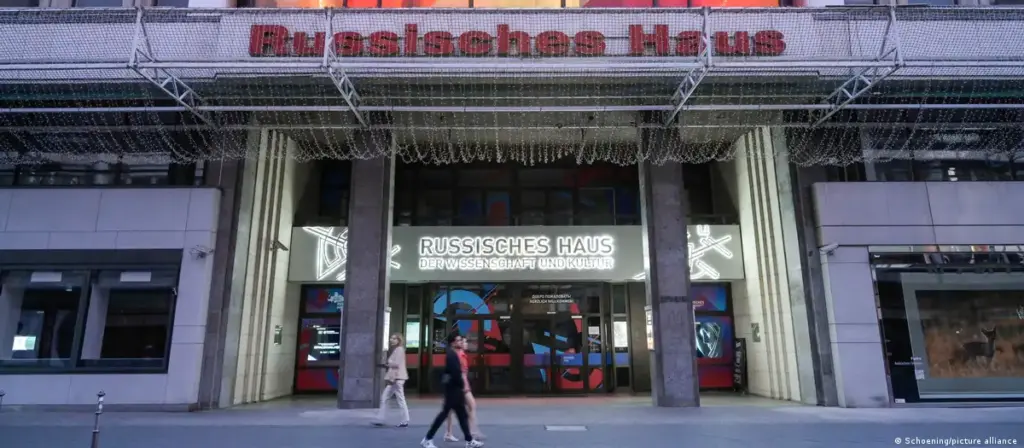
berlin weighs closing russian house spying yet federal ministry just moved beside · post has been fixture berlin's friedrichstraße since 1984 friedrichstrasse schoening alliance ukraine news ukrainian reports

Germany has placed part of a federal ministry directly next to a Berlin building that France links to Russian intelligence, the newspaper Tagesspiegel reported. The branch office shares a wall with the Russian House, a cultural center long suspected of serving as a Kremlin front. One of its units works on protecting Germany's critical networks from attack.

Russia has answered its war on Ukraine with a shadow campaign across Europe—arson, sabotage, drone incursions, assassination plots, and influence fronts run under diplomatic and cultural cover. Western capitals have spent the past four-plus years learning that Moscow's reach does not stop at the front line.

A shared wall in the heart of Berlin

The Federal Ministry for Digital Affairs opened a branch at Taubenstraße 42/43 on 1 July. It sits wall-to-wall with the Russian House on Friedrichstraße, reporter Claudia von Salzen found. The ministry moved in because its main headquarters nearby had run out of space.

Two of the ministry's six departments now operate there. One covers digital infrastructure, including a unit for the security and resilience of public telecom networks.

The other handles digital identities, trust services, and the cybersecurity industry. Both are fields a hostile intelligence service would want to watch.

russia hired desperate hunt german drone-maker boss arms ukraine · post stefan thumann head drone maker donaustahl штефан туманн news ukrainian reports
Explore further

The throwaway agents Moscow sent after a Bavarian drone boss arming Ukraine—and how Germany stopped them

Why the address raises alarms

The Russian House is officially a science and culture center. It opened on Friedrichstraße in 1984 to promote friendship with the Soviet Union.

Rossotrudnichestvo, a Russian state agency, runs it. The EU sanctioned that agency in July 2022 as the Kremlin's main tool for hybrid influence. In Germany, it allegedly helped organize pro-Russian rallies, and many of its staff abroad are Russian intelligence officers.

A leaked French Interior Ministry letter states the building serves as cover for Russian intelligence. The Russian House rejected that and claimed it is a purely cultural institution.

Other branches of government took the threat seriously

Across town, German lawmakers near the Russian Embassy hardened their offices years ago. They were told to avoid Bluetooth devices and to fit their windows with anti-espionage film.

Berlin is also reviewing whether to close the Russian House over the espionage suspicions, TVP World reported. A senior lawmaker, Roderich Kiesewetter of the CDU, called the ministry's choice a clear failure of risk awareness.
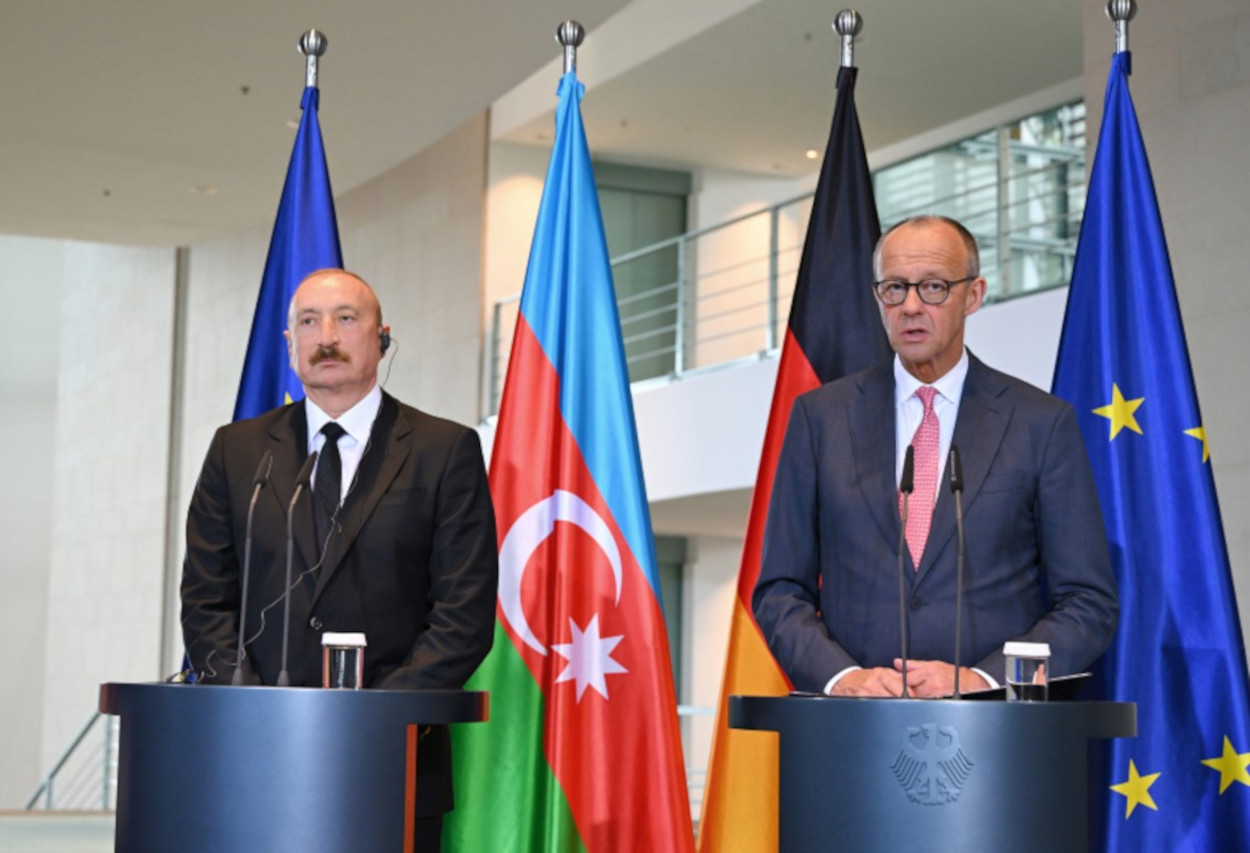
Azerbaijani President Ilham Aliyev and German Chancellor Friedrich Merz in Berlin, 21 July 2026. Photo: Azertag
Explore further

Germany declared a break with Russia—then licensed its nuclear giant

The ministry said it picked the site because the building is federally owned and the right size. It did not answer whether the proximity to the Russian House counts as a security risk.

Russia's shadow war has already reached Germany

Germany has become one of the busiest fronts in Russia's campaign of drone incursions, sabotage, and spying. By December, Germany had logged more than 1,000 suspicious drone flights in 2025 alone. The drones have swarmed both civilian airports and military sites, shutting Munich Airport over two days in October 2025 and stranding thousands of travelers. Analysts judge it highly likely that Russia flew some 144 surveillance drones over a dozen NATO countries between August 2024 and February 2026, including near Ramstein Air Base and NATO nuclear sites. In early August 2026, security staff found an explosives-laden drone beside a Ukrainian cargo plane at Leipzig-Halle airport, an incident Western intelligence tied to Moscow.

Ukrainian An-124 at Leipzig Airport in Germany. August 5 August, 2026. Photo: screenshot from Bild video
Explore further

A bomb-laden drone hit a Ukrainian An-124 in Germany, then lay unnoticed for hours

Much of the ground work runs through disposable agents recruited online. In March 2026, authorities arrested operatives who had surveilled the head of a Bavarian drone firm arming Ukraine, a case its domestic service treats as a planned assassination. Prosecutors separately charged three men over a plot to mail exploding parcels from Germany, described as a test run for future arson attacks.
  •  

Poland and the Baltics risk Russian sabotage for backing Ukraine, Bloomberg says

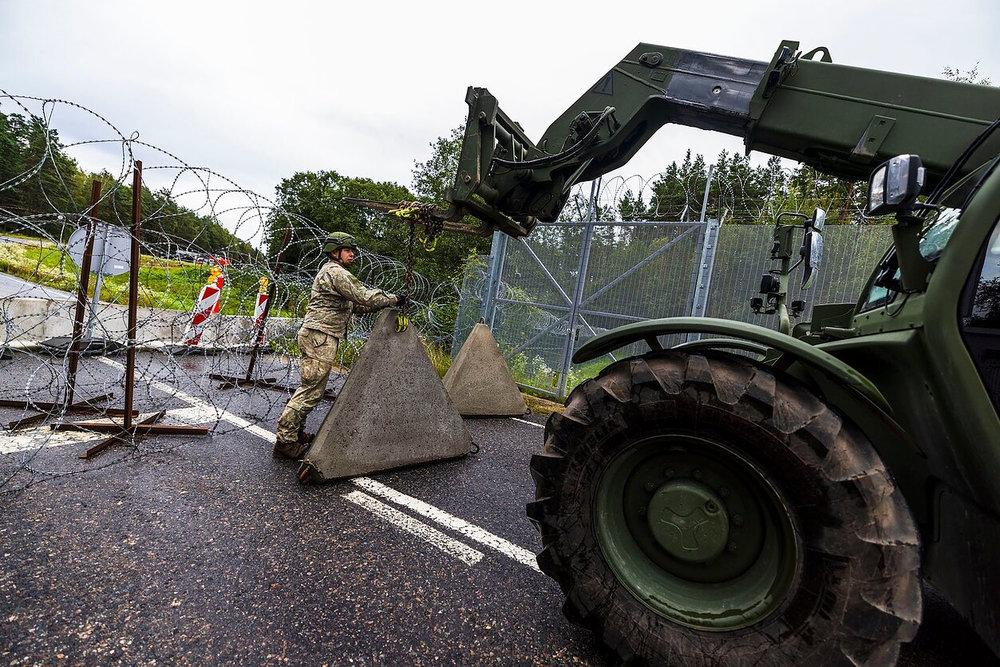
Lithuanian soldier installs concrete barriers and razor wire across a road during a civil defense exercise.

Russia may expand hybrid attacks against Poland and the Baltic states, including infrastructure sabotage or false-flag attacks, Bloomberg reported on 12 August, citing an unnamed European intelligence official. 

The warnings come amid concern that Moscow wants to intimidate Ukraine’s supporters. The CIA warning follows Russian threats, incursions, alleged sabotage plots, and disinformation against Poland and the Baltic states. Most Western military aid reaches Ukraine through Poland, while the Baltic states rank among Kyiv’s strongest supporters. Sabotage of transport, energy, or communications can slow aid delivery and test NATO while hiding Russia’s role.

Separately, a European government official told Bloomberg that the CIA had warned countries in the region of a possible future Russian attack. The CIA declined to comment.

The same official said Russia might instead be creating the impression of an impending attack to sow fear as part of an information operation. The official saw no signs that Moscow was preparing a conventional attack or invasion.

Moscow tests NATO’s eastern flank

Poland and Lithuania had already raised similar concerns. In July, Poland said it had credible intelligence that Russia was planning new provocations. Lithuania later warned that Moscow might rebuild captured Ukrainian drones for false-flag strikes on critical infrastructure.

In September 2025, between 19 and 23 Russian drones entered Polish airspace, shutting down airports and damaging buildings. Poland closed four airports as NATO aircraft responded.

Meanwhile, five people are on trial in Lithuania over attacks allegedly organized for Russian military intelligence in 2024, Bloomberg reported. Lithuania has reinforced infrastructure sites and deployed troops since June.

These warnings and incidents place the CIA alert within a wider pattern of pressure on NATO’s eastern flank and Ukraine’s supporters. 

How Russia strikes without starting a war

Bloomberg cited several recent unexplained drone incidents in Germany alongside the CIA warning. Citing Die Zeit, Euromaidan Press reported that an explosive-laden drone struck the wing of a parked Ukrainian An-124 at Leipzig-Halle airport and failed to detonate. A US Defense Department official in Europe told CNN that Washington assessed the drone belonged to Russian intelligence. 

Bloomberg also reported that a cargo plane hit an unidentified object and that drones appeared over a military base the following day. It did not connect either incident to Russia.

More broadly, Russian hybrid operations have grown sharply since the full-scale invasion. CSIS found that attacks in Europe tripled from 2023 to 2024, after quadrupling the previous year. Separately, the US Helsinki Commission mapped nearly 150 operations in NATO territory attributed to or suspected of Russia between February 2022 and November 2024.

Retired Lt. Gen. Ben Hodges told Euromaidan Press in February that attacks on ports, railways, and cables can probe routes needed for NATO reinforcements. Their deniability raises the political cost of responding.

By hiding its role, Moscow can disrupt support for Ukraine and test NATO without openly starting a war. 

  •  
❌