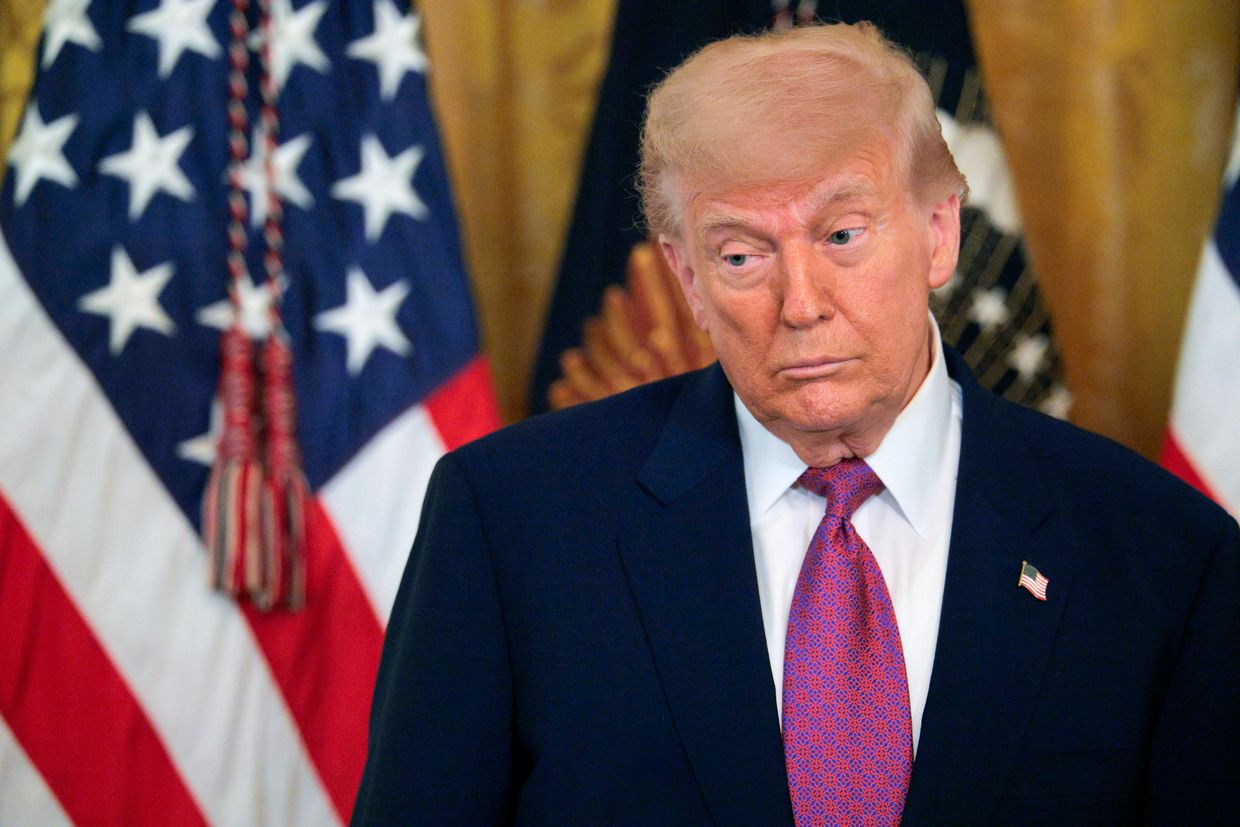
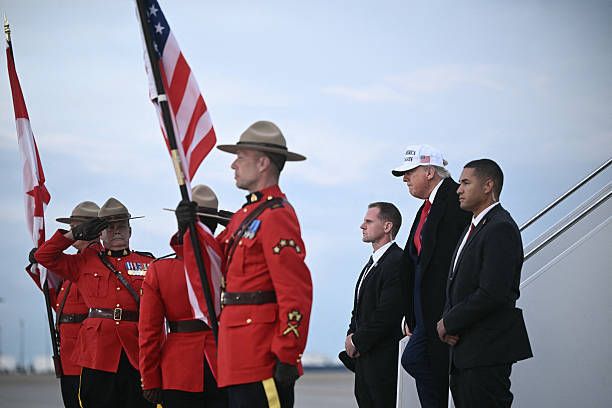
U.S. President Donald Trump arrived in Canada for the Group of Seven (G7) Leaders' Summit late on June 15, according to a Kyiv Independent journalist on the ground.
Trump's arrival comes ahead of his expected high-stakes meeting with President Volodymyr Zelensky on June 17 in Kananaskis, Alberta.
Canada, which holds the G7 presidency in 2025, invited Zelensky to participate in the 3-day summit, which will mark Zelensky's fourth G7 Leaders' Summit since the outbreak of the full-scale invasion in 2022.
After a disastrous first in-person meeting between the two leaders in the Oval Office in February — during which Trump and Vice President JD Vance lambasted Zelensky over what they described as "a lack of gratitude for U.S. support" — a second meeting in the Vaticanled to Trump reiterating calls for a Russian ceasefire and even threatening to impose sanctions on Russia.
In the month since their last in-person meeting, tensions between Trump and Zelensky have risen again. Despite issuing several threats, Trump has not followed through on implementing additional economic pressure on Moscow.
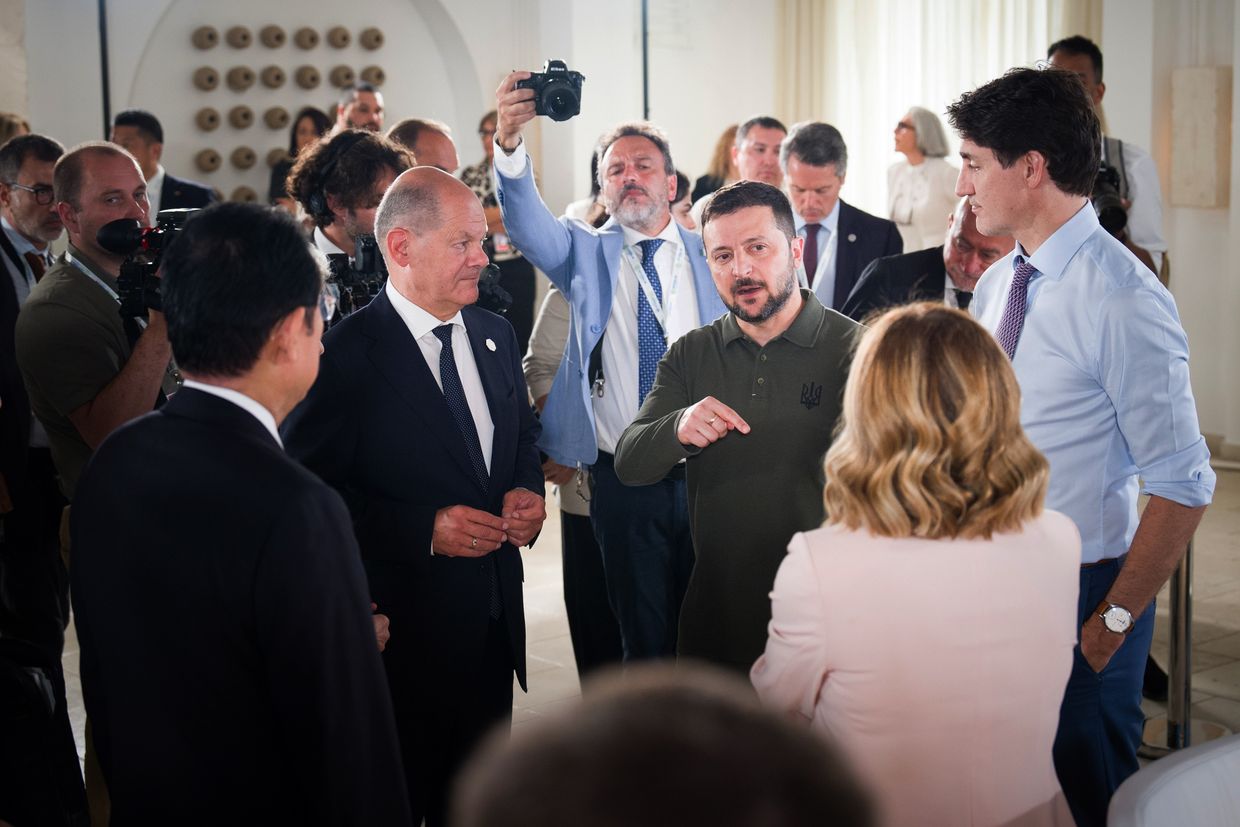
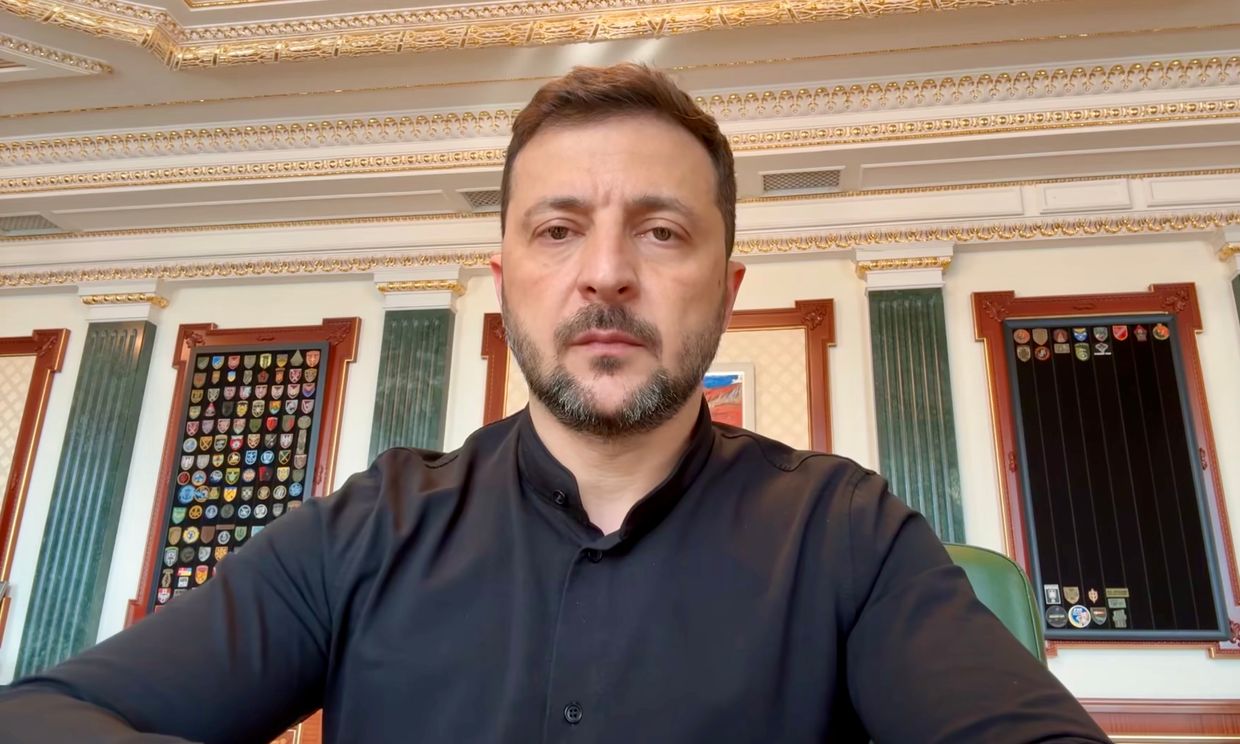
Zelensky said in a closed-door meeting attended by the Kyiv Independent on June 13 that his priority is to speak with Trump about sanctions against Russia, peace talks, weapons purchases, and U.S.-Ukraine economic cooperation.
The anticipated third meeting could signal the future of Trump and Zelensky's relationship, as well as offer insight into the United States' commitment to supporting Ukraine.
Amid increased anxiety around Trump's commitment to ending the war, U.S. Defense Secretary Pete Hegseth recently announced that the Pentagon will reduce funding allocated for military assistance to Ukraine in its 2026 defense budget.
On June 12, Zelensky decried Washington's lack of urgency around sanctions, suggesting that Russia is "lying to Trump." He said that Russian President Vladimir Putin's strategy is to maintain the illusion of dialogue without ever committing to a ceasefire.
"There are steps forward we can take — but we need the political will of the U.S. president, if he wants," Zelensky said on June 13.
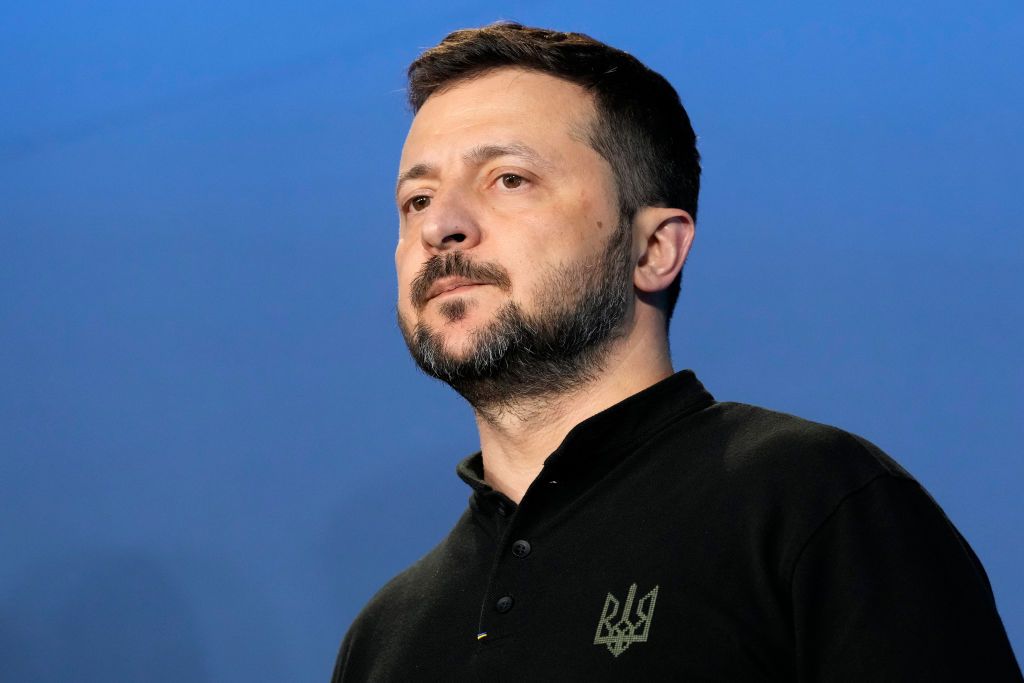
President Volodymyr Zelensky on June 15 condemned Russia's latest mass attack against Ukraine, calling the strikes on energy infrastructure "a spit in the face of everything the international community is trying to do to stop this war."
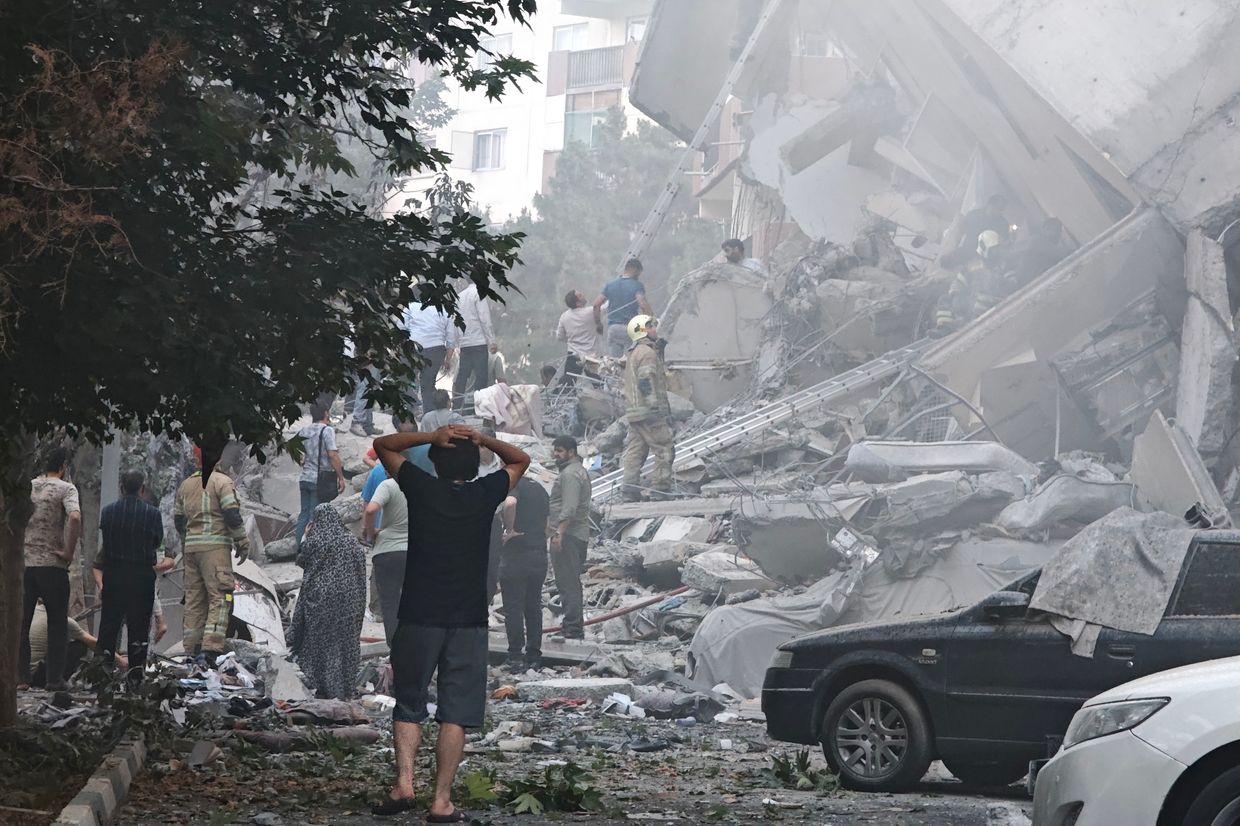
Earlier in the day, Russia targeted the city of Kremenchuk in Poltava Oblast with a combined missile and drone attack, damaging energy and agricultural facilities. The strike involved nearly 200 drones and missiles, including both cruise and ballistic missiles. The attack came shortly after a phone call between U.S. President Donald Trump and Russian President Vladimir Putin.
In his nightly address, Zelensky said the attack on Kremenchuk was "deliberately and treacherously planned to target our civilian infrastructure" and that Russia intended to damage energy facilities.
"This is Russia's spit in the face of everything the international community is trying to do to stop this war," Zelensky said in his nightly address.
"It happened right after Putin's conversation with Trump. After the Americans asked us not to strike Russian energy facilities. At the same time as Putin tries to portray himself as a mediator for the Middle East ... The level of cynicism is staggering."
Following his call with Putin, Trump claimed he would be "open" to the Russian president acting as a mediator in the rapidly escalating conflict between Israel and Iran. Zelensky rejected the idea of Putin — who has waged war against Ukraine for over 10 years and has taken no steps towards a lasting ceasefire — playing the role of peacemaker.
Putin "is war itself," Zelensky said, urging the international community not to fall for "Russian manipulation and lies."
Zelensky also warned that Russia may be planning additional attacks on Ukraine's energy sector, including nuclear power infrastructure. According to the president, Ukrainian intelligence agencies have obtained evidence of Russia's threat and shared the information with the International Atomic Energy Agency (IAEA) and the Trump administration.
"Russia is planning further attacks on our energy sector — attacks that may be less visible to the world right now because all eyes are on the situation in the Middle East," he said.
Throughout the full-scale war, Russia has attempted to disrupt Ukraine's power grid through targeted attacks on energy infrastructure. After rejecting a U.S. proposal for a 30-day unconditional ceasefire in March, Moscow instead agreed to a month-long ceasefire on energy attacks.
Russia subsequently violated the partial ceasefire, which ended in in April. The Kremlin continues to refuse calls for an unconditional truce.
President Volodymyr Zelensky's office has confirmed plans for a high-stakes meeting with U.S. President Donald Trump at the upcoming G7 summit on June 17, according to the Kyiv Independent journalist who attended a closed-door briefing with Zelensky on June 13.
"Both teams are working to ensure we meet," Zelensky said.
The meeting would mark the third in-person encounter between the two leaders during Trump's second term in the White House. Their most recent meeting took place on April 26 at St. Peter's Basilica in the Vatican, where they spoke privately on the sidelines of Pope Francis' funeral. Both sides described the meeting as productive and constructive, though details remained sparse.
Earlier in February, Zelensky met Trump and Vice President JD Vance in the White House when the infamous tense Oval Office exchange erupted, with Trump criticizing Kyiv's perceived lack of gratitude for U.S. support
Zelensky said his priority is to discuss with Trump sanctions against Russia, peace talks, weapons purchase, and U.S.-Ukraine economic cooperation.
"The United States communicates with the EU on sanctions at the level of senators and congressmen. But I want to raise this issue personally with President Trump," Zelensky said.
"There are steps forward we can take — but we need the political will of the U.S. president, if he wants."
He added that Ukraine has long prepared a "strong" weapons package to purchase from Washington. "Only at the presidential level can we finalize it," Zelensky said ahead of the G7 summit.
Russian offensives in Sumy, Dnipropetrovsk oblasts
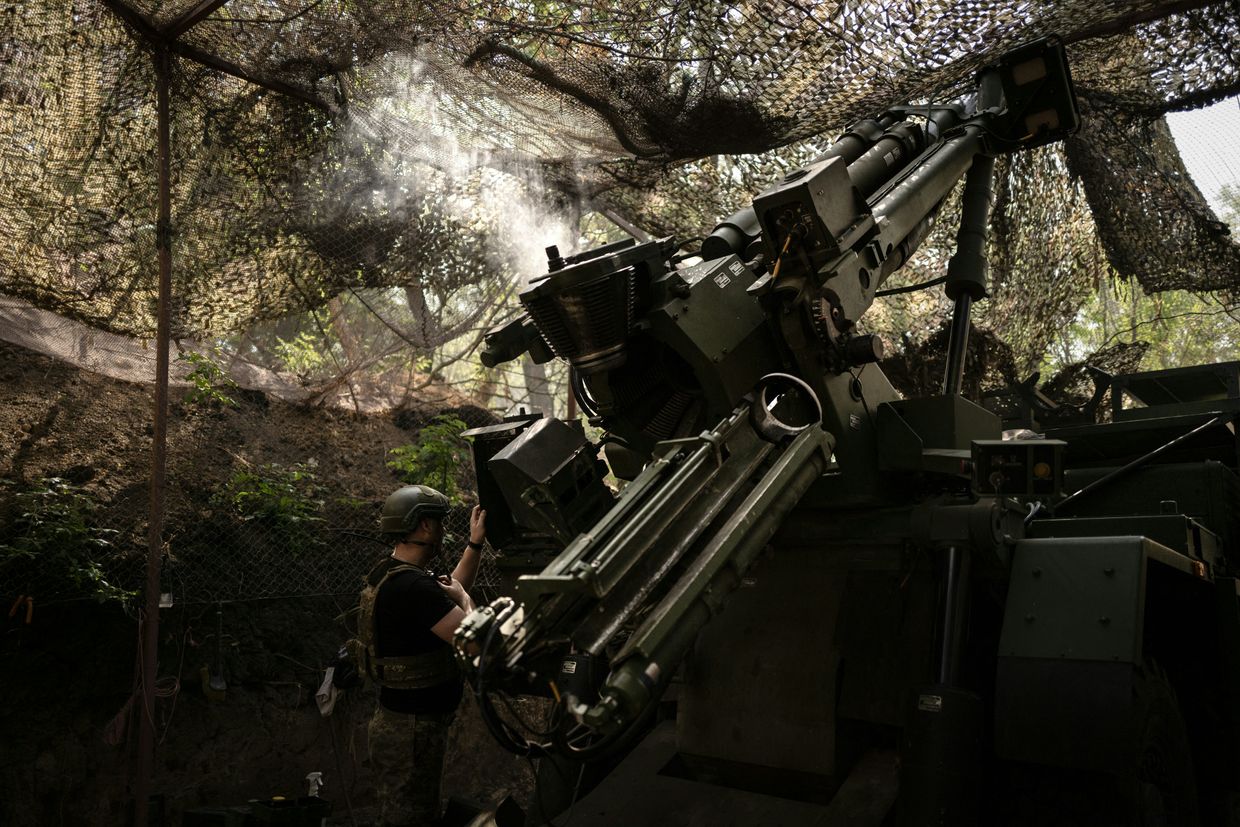
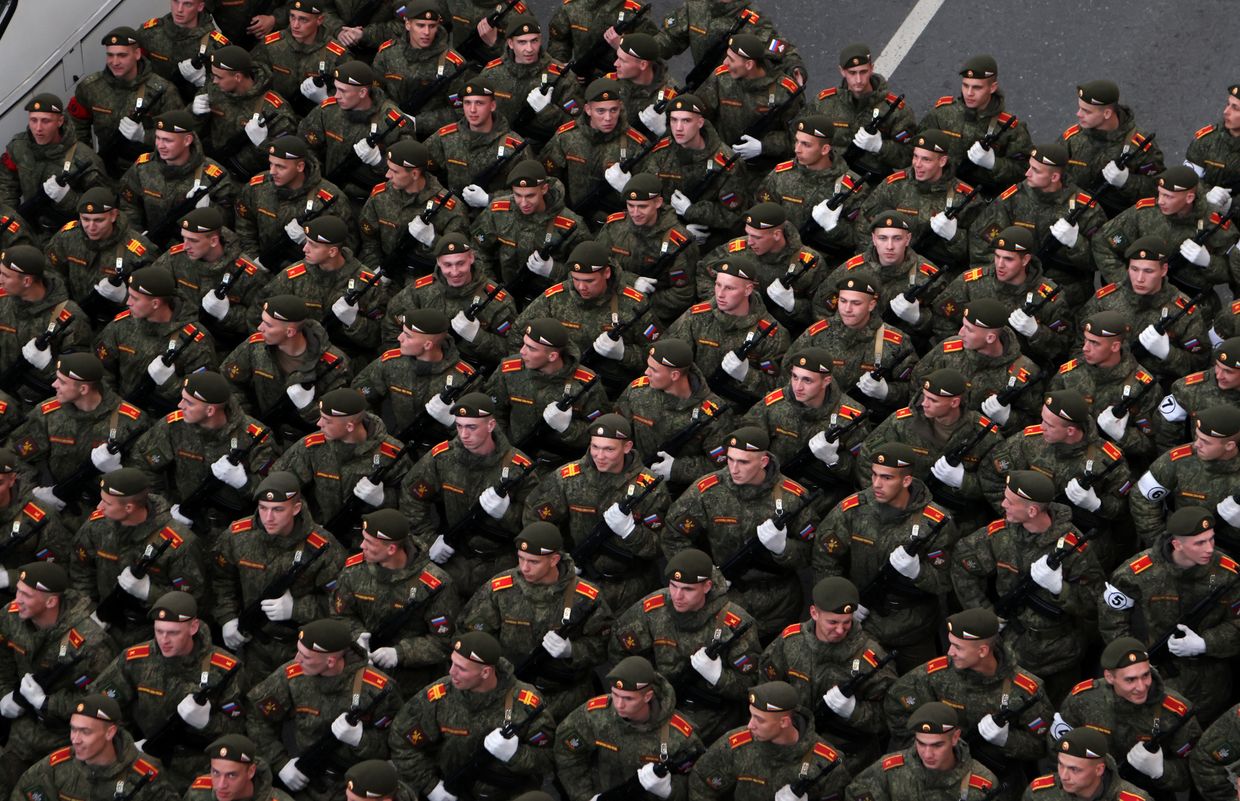
Zelensky said that heavy fighting is ongoing along Ukraine's northeastern border. Russian forces have concentrated around 53,000 troops in the Sumy sector, pushing into multiple settlements such as Andriivka, Kindrativka, and Oleksiivka.
According to the open-source monitoring group DeepState, Russian troops have been advancing along the border in Sumy Oblast, with the current front line lying just about 20 kilometers away from the regional capital of Sumy.
According to media reports, Russia exploited a thinning of Ukraine's front-line forces, which were later replaced by newer, under-equipped formations.
Zelensky said that Russia only pushed seven kilometers deep into Sumy, adding that the Russian army "has been stopped there."
Zelensky added that Ukrainian forces had successfully struck Russian positions in the neighboring Russian Kursk Oblast, near Tyotkino, to stall Russian momentum and split their offensive groups.
In Dnipropetrovsk Oblast, Zelensky confirmed that small Russian reconnaissance groups had briefly crossed into Ukrainian territory — likely for propaganda purposes. One six-man unit was reportedly eliminated one kilometer from the administrative border.
"For them (Russia), it's an important story, to take a photo, video," Zelensky said. "That's why they are launching small working groups to do just that."
Earlier, the Kremlin has claimed the operations in Dnipropetrovsk are part of an effort to create a so-called "buffer zone." Ukrainian officials have rejected these claims as disinformation.
When speaking about the recent escalation between Israel and Iran in the Middle East, Zelensky said that the subsequent regional tension had driven up oil prices, enhancing Russia's war financing through energy exports.
"This factor clearly doesn't help us," he said, adding that Ukraine will urge Washington to implement stricter price caps on Russian oil at the G7.
He further revealed that U.S. weapons previously allocated to Ukraine, including 20,000 air-defense interceptors used to counter Iranian-designed Shahed drones, were redirected to support Israel ahead of its recent strikes on Iran.
"That was a serious blow... We were counting on these missiles," Zelensky said.
Zelensky warned that Ukraine must not become "a bargaining chip" in larger geopolitical negotiations involving the U.S., Russia, and the Middle East. Russia and Iran have deepened their cooperation since 2022, with Iran supplying weapons and technology to boost Moscow's war machine.
"I was constantly afraid that we could become a bargaining chip, just one factor in the negotiations between the United States and the Russians. So, along with the situation with Iran, the situation with Ukraine was also a factor. They are really dependent on each other," he said.
Zelensky voiced concerns about a slowdown in Western diplomatic momentum, particularly around the "coalition of the willing" initiative led by France and the UK.
Earlier, media reported that the "coalition of the willing," aimed at offering post-ceasefire security guarantees to Ukraine, has faced delays due to the absence of U.S. commitment.
"Europe hasn't yet decided what to do if America steps back," he said. "Their energy depended on U.S. resolve. Without it, things slow down."
Still, Zelensky made clear that Ukraine would not accept any ultimatums from Moscow amid the uncertainty of Western support. He described the latest Russian ceasefire proposals as capitulation.
"They pretend to be ready for talks, but all they offer is an ultimatum," Zelensky said. "We won't go along with that. Not now, not ever."
Zelesnky also expressed optimism that the European Union's 18th sanctions package would pass later this month and said he would personally push for closer U.S.-EU coordination at the G7.
Zelensky confirmed that prisoner exchanges with Russia are continuing and that another round of direct peace talks with Moscow may take place soon after.
"We expect that they (prisoner swaps) can be completed on the 20th or 21st (of June)," he said.
Over the week, Ukraine and Russia held a series of exchanges under an agreement reached during peace talks in Istanbul. Most recently, on June 12, Ukraine brought home another group of severely wounded and seriously ill service members.
The June 12 operation followed a similar swap two days earlier, both conducted without immediate disclosure of the number of released prisoners.
The June exchanges are part of a phased prisoner swap arrangement agreed during the second round of direct talks between Ukrainian and Russian delegations in Istanbul on June 2. While no political breakthroughs emerged from the discussions, both sides agreed to continue exchanging POWs and repatriating the remains of fallen soldiers.
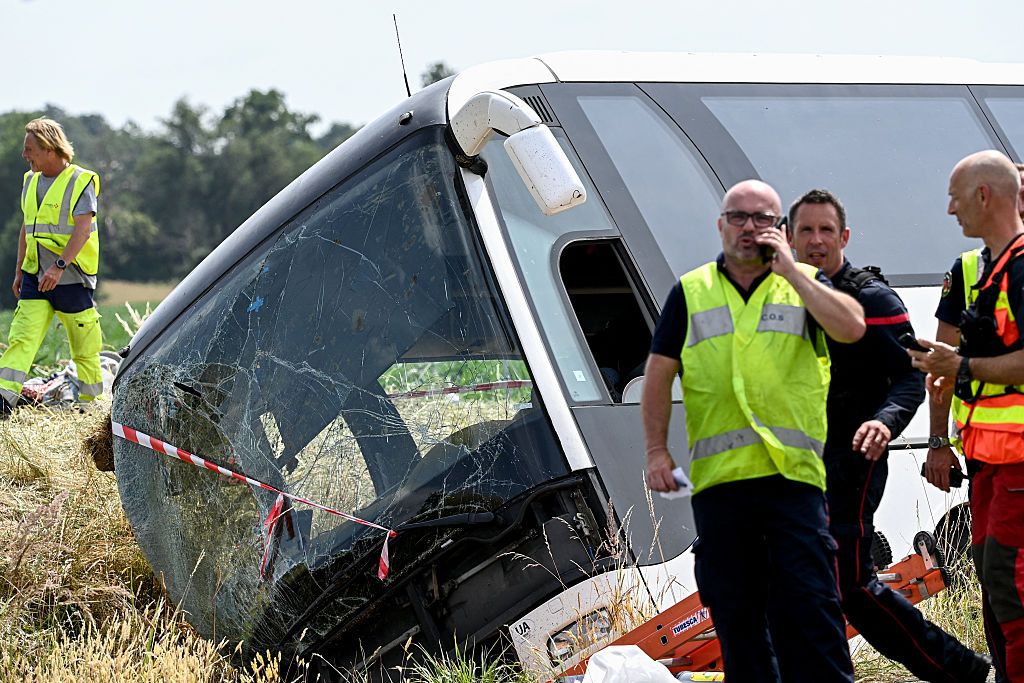
Three Ukrainian nationals were killed in a bus accident in France on June 13, President Volodymyr Zelensky confirmed in a statement on Telegram.
"Terrible news about the tragic bus accident in France," Zelensky wrote.
The accident occurred in the morning of June 13, near the Sarthe department of France. The bus was reportedly carrying Ukrainian nationals, including adults and children, who were returning from an educational exchange.
While en route to Paris, the bus lost control and flipped into a ditch.
Four adults were killed in total – three of whom were Ukrainian nationals. French media reported that nine people sustained serious injuries, while an additional 18 suffered minor injuries.
Zelensky added that Ukraine's Foreign Ministry promptly sent a team of diplomats and consuls, led by the ambassador to France, to assist survivors and support the victims’ families. The team is coordinating with French authorities and emergency services at the scene.
Foreign Minister Andrii Sybiha and Interior Minister Ihor Klymenko are providing regular updates on the victims' conditions and emerging details regarding the accident.
Zelensky thanked the French authorities, noting that "more than 50 emergency teams were deployed" in what he called "a true expression of French solidarity."
He also expressed his "condolences to all the families of the victims" and wished for a "speedy recovery of the injured children."
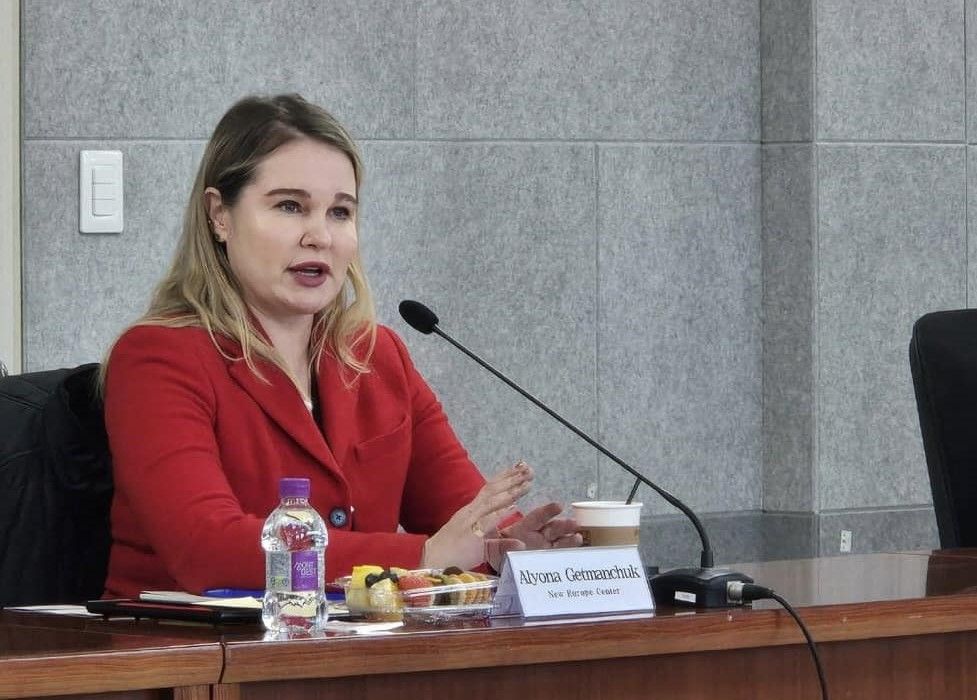
President Volodymyr Zelensky on June 13 appointed Aliona Hetmanchuk as the head of Ukraine's mission to NATO, replacing Nataliia Halibarenko.
The appointment came "at a critical time for the future of Ukraine, for the future of NATO itself, and, of course, for Ukraine's future in NATO. I realize the responsibility," Hetmanchuk said on her Facebook page on June 13.
"As for this moment, we will be fully immersed in preparations for the summit in The Hague," she added, referring to the upcoming NATO summit that will take place in the Netherlands on June 24 and 25, with Ukraine participating.
Hetmanchuk is a leading Ukrainian foreign policy expert with a background in journalism. She is the founder and director of the New Europe Center and a nonresident senior fellow at the Atlantic Council's Eurasia Center.
Previously, Hetmanchuk co-founded and directed the Institute of World Policy and has advised the Presidential Consultation Committee between Ukraine and Poland since 2016.
Ukraine applied for alliance membership in September 2022, several months after Russia launched its full-scale invasion. While NATO has repeatedly affirmed that Kyiv will eventually join, it has yet to extend a formal invitation.
NATO Secretary General Mark Rutte said on June 9 that the political commitment to Ukraine's future membership in NATO remains unchanged, even if it is not explicitly mentioned in the final communique of the upcoming summit in The Hague.
"The irreversible path of Ukraine into NATO is there, and it is my assumption that it is still there after the summit," Rutte said at Chatham House in London.
Rutte's comments follow reporting that this year's summit communique, set for release after the June 24–25 meeting, may exclude references to Ukraine. This would mark a notable departure from previous gatherings, where Kyiv's future in NATO took center stage.
Ukrainian forces are gradually driving Russian troops back from parts of Sumy Oblast, President Volodymyr Zelensky said on June 12, amid escalating cross-border assaults in the region.
"Today, there was a report from Commander-in-Chief (Oleksandr) Syrskyi — the front and, above all, the Pokrovsk direction, the Kursk operation, the border area of Sumy Oblast," Zelensky said in a video address.
"Our units in Sumy Oblast are gradually pushing back the occupiers. Thank you to each of our soldiers, sergeants, and officers for this result."
The statement follows weeks of intensified Russian offensives along the northeastern border. Russian troops have advanced into Sumy Oblast since Ukraine's withdrawal from most of its positions in Russia's Kursk Oblast in March.
Since March, Russia has reportedly taken control of about 200 square kilometers (80 square miles) in northern Sumy Oblast, including roughly a dozen small villages. As of May 31, mandatory evacuations were ordered for 213 settlements.
In May, Russian President Vladimir Putin ordered his military to create a so-called "security buffer zone" along the border with Ukraine, while Zelensky said on May 28 that Moscow had massed 50,000 troops near Sumy.
In a separate interview with Bild on June 12, Zelensky dismissed Moscow's claims of significant territorial gains as "a Russian narrative" aimed at shaping global perceptions. He stressed that Ukrainian forces have managed to hold off a renewed offensive for nearly three weeks.
Sumy Oblast, which shares a long border with Russia, has been under near-constant attack since the start of the full-scale invasion in 2022.
On June 3, Russian strikes on the city of Sumy killed six people and injured 28 others, including children.
Editor's note: This story has been updated to include Germany's announcement to supply Ukraine with $2.2 billion in additional military aid.
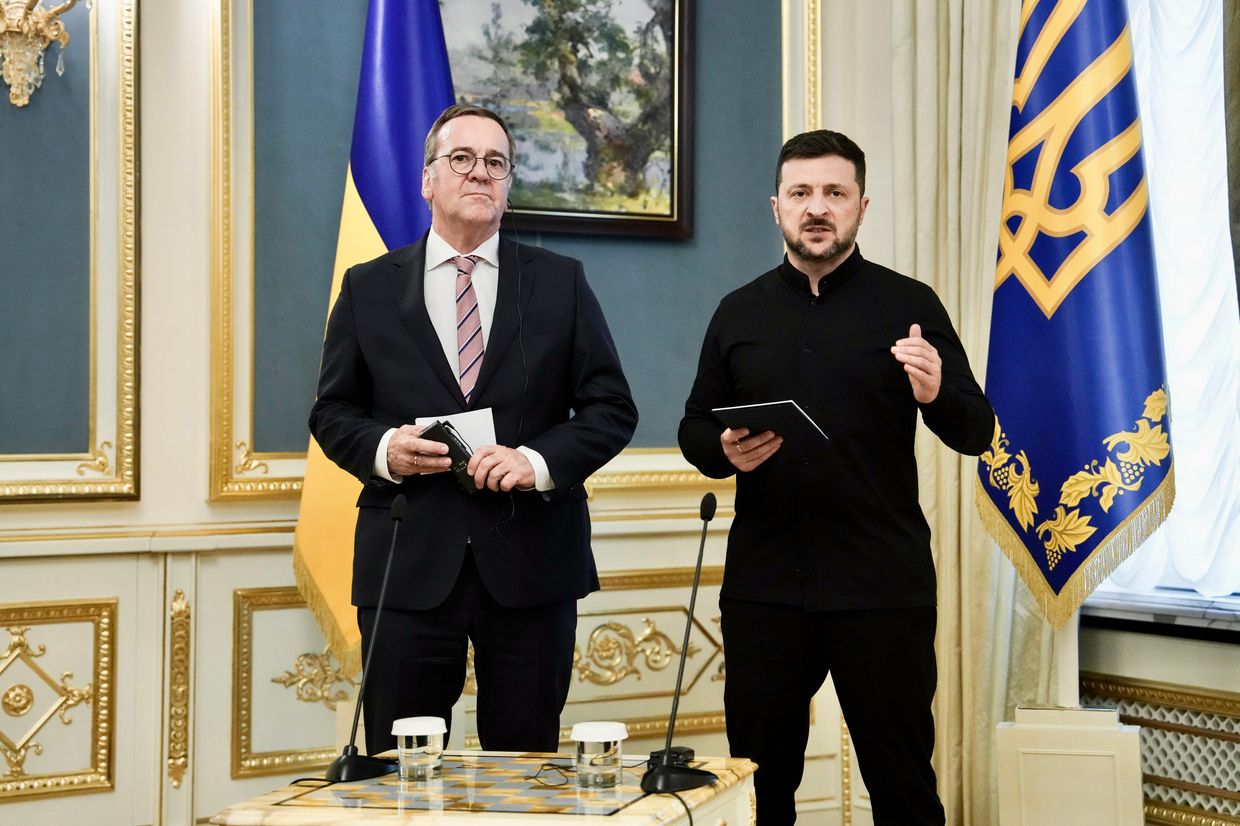
Germany will deliver new IRIS-T air defense systems to Ukraine under a three-year supply plan, President Volodymyr Zelensky said during a joint press conference with German Defense Minister Boris Pistorius, who added Berlin has no plans to provide Taurus long-range missiles.
The announcement comes amid escalating Russian aerial assaults, including a June 10 missile and drone strike on Kyiv, one of the largest since the start of the full-scale invasion.
"We are grateful for the supply of IRIS-T air defense systems," Zelensky said on June 12. "We understand that deliveries are currently being planned... for the next three years. This is very important assistance."
The IRIS-T is a German-made medium-range surface-to-air missile system capable of intercepting drones, aircraft, and cruise missiles.
Pistorius confirmed the delivery timeline but firmly ruled out the possibility of sending Taurus missiles — weapons Kyiv has repeatedly requested to strike deep into Russian territory.
"You asked me whether we are considering this, and my answer is no," Pistorius said.
Before taking office, German Chancellor Friedrich Merz signaled openness to lifting former Chancellor Olaf Scholz's ban on the missiles. That stance has not yet resulted in a policy shift.
Ukraine has already received long-range missiles — including ATACMS from the U.S. and Storm Shadow and SCALP from the U.K. and France. Initially restricted to use within Ukrainian territory, Western allies only began easing those limitations in late 2024.
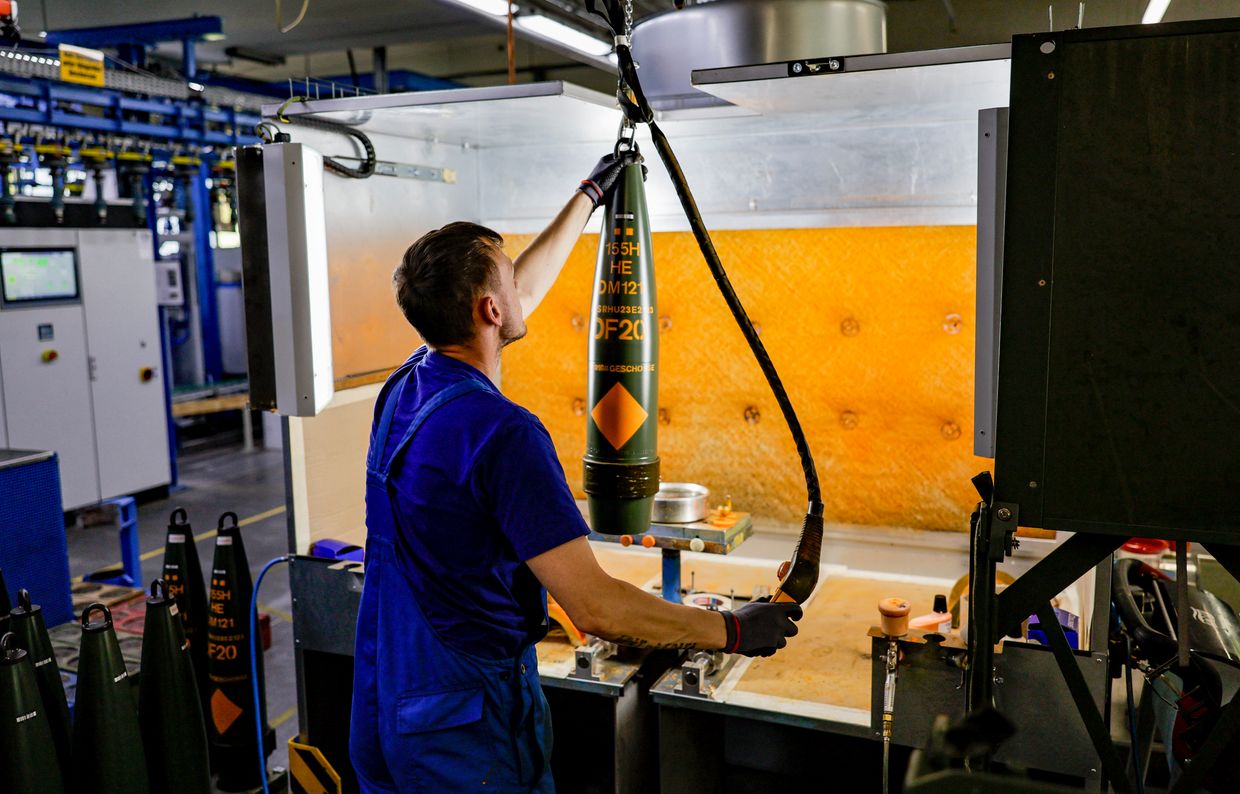
Germany is Ukraine's largest military donor in Europe. Pistorius said that Berlin will provide 9 billion euros ($10.4 billion) in aid this year, with investments in defense production being considered. The total includes an additional commitment in military aid worth 1.9 billion euros ($2.2 billion).
"Today, we discussed that this aid will continue," he said. "We agreed on additional investments in production... both in Ukraine and in Germany."
Zelensky visited Berlin on May 28 for talks with Merz, part of an ongoing effort to bolster Ukraine's defense industry amid uncertainty over U.S. support under President Donald Trump.

 Connexion
 The Kyiv IndependentDmytro Basmat