❌

Vue lecture

Donald Trump has sold out Ukraine. He makes appeaser Chamberlain look like a man of iron principle | Simon Tisdall

Europe’s leaders can no longer trust a word that comes out of Washington. No more slaps on the wrist – we need concrete steps to punish Trump

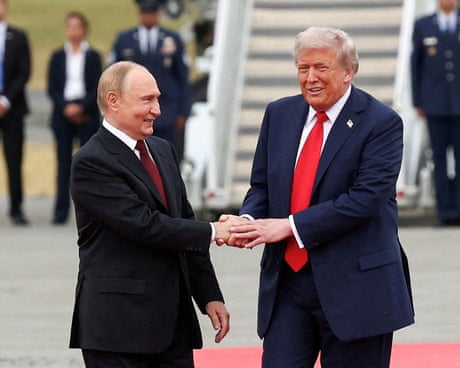
Historical comparisons are always inexact. No one conflict precisely mirrors another. Yet Donald Trump’s shameless appeasement of Vladimir Putin carries more than a noxious whiff of Neville Chamberlain’s failed attempt in Munich in 1938 to head off war with Nazi Germany. To be fair to the former UK prime minister – and history largely hasn’t been – his peacemaking efforts had the enthusiastic backing of most people in Britain and France who, like him, were desperate to avoid a repeat of the horrors of the first world war. Trump enjoys no equivalent public support for his treachery. Nor does he face the prospect of a US war with Russia. His betrayal of Ukraine is cynically self-interested, globally dangerous and utterly contemptible.

US-Russian talks on agreeing the shoddy terms of a precedent-setting American sell-out of Ukraine are at an advanced stage, after meetings in St Petersburg this week. Trump has zigzagged over the war ever since returning to office. Now, panicked by record-low poll ratings, he seems determined to scapegoat Ukraine and force its de facto capitulation. Recent steps – his shocking decision to fund Putin’s war machine by buying Russian diesel, his waiving of tougher sanctions, his mysterious, lethal interruptions in US satellite and intelligence sharing with Kyiv, and his renewed attempt to oust Ukraine’s president, Volodymyr Zelenskyy – mark Trump out as the skulking Judas, the craven Brutus of the modern age. He makes Chamberlain look like a man of iron principle. All that’s lacking is an umbrella.

Simon Tisdall is a Guardian foreign affairs commentator

Continue reading...
© Photograph: Kevin Lamarque/Reuters
© Photograph: Kevin Lamarque/Reuters
© Photograph: Kevin Lamarque/Reuters
  •  

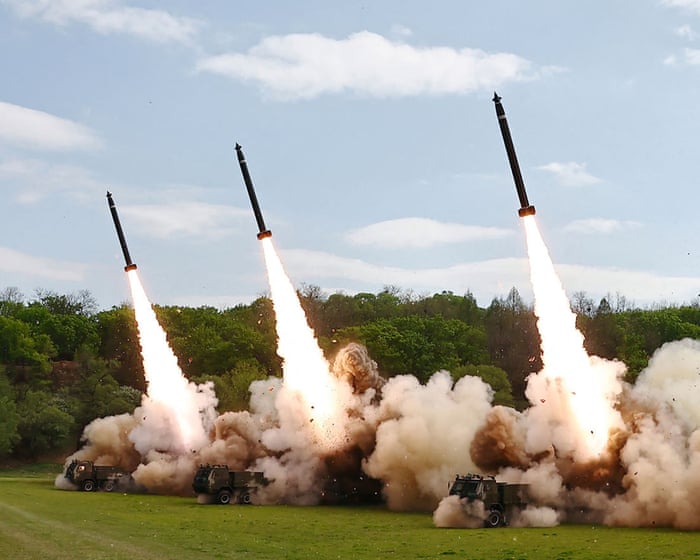
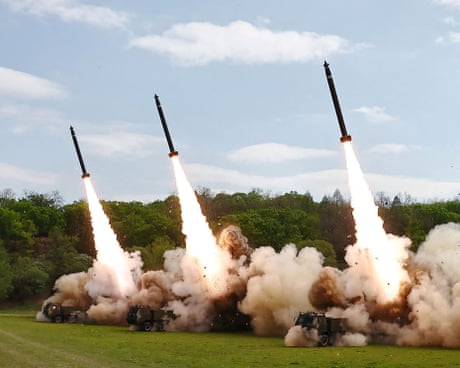
Fixated on AI, the world has forgotten what is staring it in the face: nuclear annihilation | Simon Tisdall

This is no scoffing matter. The accelerating proliferation of advanced nuclear weapons is bringing ‘end times’ closer by the day

Humankind has fearfully and sometimes joyfully anticipated the end of the world ever since it began. The Bible’s Book of Revelation speaks of “end times”, a period of tribulation, war, famine, plague, floods and environmental catastrophe that may seem a less absurd prospect today than perhaps it once did. Islam, too, posits a fateful day of judgment or day of reckoning. Christian evangelicals believe that, in the final rapture, a chosen few – the righteous or the “elect” – will be saved while sinners burn. It’s a minority view. Matthew’s gospel predicts most people will defy, ignore or ridicule warnings of imminent Armageddon. Peter, another of Jesus’s disciples, agreed: “In the last days, scoffers will come, scoffing and following their own evil desires.” Yet such worldly scepticism does not mean a universal cataclysm is less likely. It may make it more probable.

Donald Trump’s blanket denials of the dangers ostensibly posed by artificial intelligence, whose uncontrolled development is seen by some as the latest harbinger of apocalypse, could be interpreted as fulfilling Peter’s prophecy. This US president, the nearest thing the world has to a one-man doomsday machine, is a great one for scoffing and evil desires. In Robert Harris’s 2019 novel, The Second Sleep, a worried scientist lists half a dozen ways the world might end. They include devastating climate change, pandemic disease, a giant asteroid collision with Earth, or some other overwhelming calamity. Few heed the fictional scientist’s fears. In the event, what destroys him and almost everybody else is a disturbingly plausible cyber crash – a global digital and internet meltdown.

Simon Tisdall is a Guardian foreign affairs commentator

Continue reading...

© Photograph: KCNA VIA KNS/AFP/Getty Images

© Photograph: KCNA VIA KNS/AFP/Getty Images

© Photograph: KCNA VIA KNS/AFP/Getty Images

  •  
❌