Republican senator faces critical re-election battle in state where president’s trade war has outraged voters
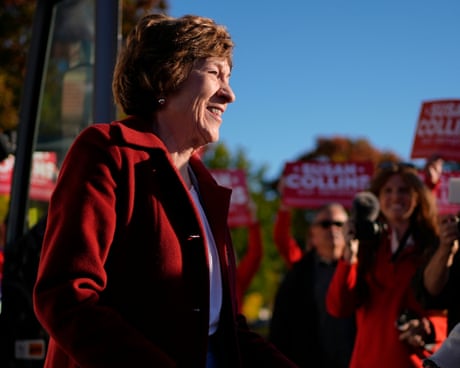
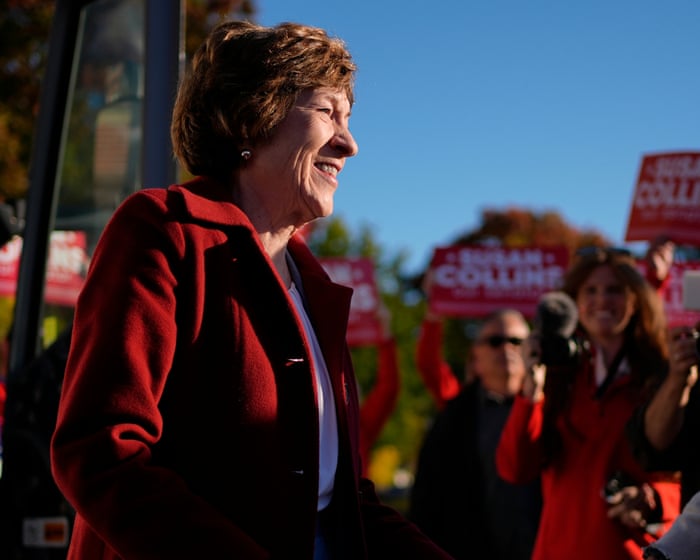
Donald Trump dropped some of the US’s tariffs on Canada on Friday to “better serve the public interest” the White House said, handing a win to Susan Collins, the embattled Republican senator for Maine, as she faces a tight re-election campaign that will help determine whether Democrats can flip control of Congress.
Collins announced that the exemptions would apply to nine agricultural products, including blueberries, potatoes, apples and seaweed. She added that many of the state’s farmers rely on specialized equipment and materials from across the border that are “unavailable from American suppliers or cannot be replaced without incurring significant expense”.
Omar Muñoz, one of 28 people charged in California, speaks out about being dragged from his home in front of cameras as DoJ accused of ‘disgusting’ PR campaign
Omar Muñoz was getting ready to have his morning coffee just after 5am on Monday when he heard a loud bang at the front door of his Los Angeles home.
“Open up or else we’ll break down the door, and it’ll be bad for you,” the man on the other side yelled, Muñoz, 72, recalled.
Sarah Longwell has probably conducted more focus groups with Trump voters than anyone else in America — hundreds of them, starting in Trump’s first term. So she has a treasure trove of qualitative evidence of how voters have evolved in the Trump era and why many of the president’s voters are souring on him now.
Trump’s approval rating has plummeted since the start of his second term, especially among the groups that swung toward him in the last election — young, Black and Hispanic voters. But I wanted to have Longwell on the show to hear what these people are really saying. What exactly has disappointed them about Trump’s second term? And what opportunities could that open for Democrats?
This episode of “The Ezra Klein Show” was produced by Annie Galvin and Jack McCordick. Fact-checking by Kelsey Lannin, Michelle Harris and Kate Sinclair. Our senior engineer is Jeff Geld, with additional mixing by Aman Sahota and Isaac Jones. Our recording engineer is Aman Sahota. Cinematography by Bets Wilkins. Video editing by Julian Hackney, Britt Shacham Bernstein and Arpita Aneja. Our executive producer is Claire Gordon. The show’s production team also includes Marie Cascione, Kristin Lin, Emma Kehlbeck, Rollin Hu, Marina King and Jan Kobal. Original music by Pat McCusker. Audience strategy by Shannon Busta. The director of New York Times Opinion Shows is Annie-Rose Strasser. Transcript editing by Sarah Murphy and Marlaine Glicksman.
New account from Pike’s lawyer suggests team was racked by doubts even before pentobarbital began to flow
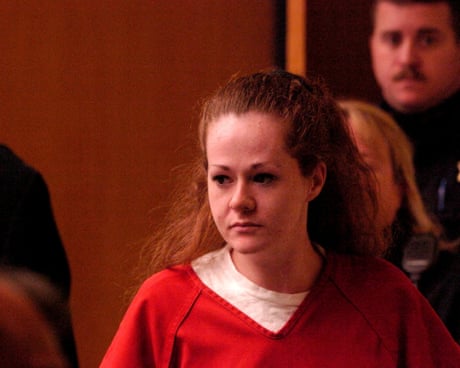
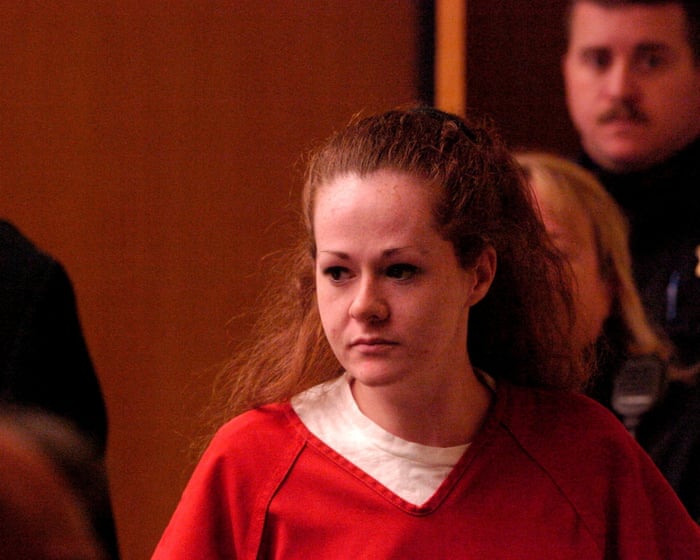
The Tennessee execution team tasked with setting an intravenous line in the arms of the death row prisoner Christa Pike through which she could be injected with a lethal dose of pentobarbital repeatedly warned that her vein might be “blowing”, before they went ahead with the procedure, her lawyer has revealed.
Members of the intravenous (IV) team used up to 10 needles as they sought to establish a line through which Pike could be killed with a massive dose of the sedative. About 20 minutes into the attempt, they began discussing among themselves whether the prisoner’s vein “might be blowing”.
Lawler, a moderate Republican, is fending off a challenge from Democrat Cait Conley in the Hudson valley. It is among the most-watched races that could determine whether Republicans hold on to their majority in Congress.
A handful of Republicans have spoken out against Donald Trump’s softening stance on Russia, threatening to pull financial support for his agenda over his “embarrassing” handling of the Ukraine war.
Don Bacon, an outgoing congressman in Nebraska, condemned Trump’s actions – which include a stunning agreement to buy Russian diesel and the pausing of sanctions on Moscow – as “absolutely disgraceful” and accused the US president of cozying up to a “war criminal” in Vladimir Putin, his Russian counterpart.
If you want to understand the ruins of President Trump’s foreign policy, look no further than Canada. Trump tried to strong-arm America’s trading partner and closest ally with punishing tariffs and threats of becoming the “51st state” in order to extract more concessions.
The result? A recent poll found that 41 percent of Canadians now consider the United States an enemy country. Prime Minister Mark Carney is pursuing closer trade ties with China and Europe in order to diversify away from the U.S. And in August, he walked away from trade talks with the Trump administration, barreling our two countries toward a Jan. 1 deadline when huge new tariffs will go into effect.
Trump’s theory of power appears to have failed here because Canada — even though it’s the weaker party — simply refused to capitulate. There’s a broader lesson in that.
Chrystia Freeland served in a number of senior roles in the Canadian government, including deputy prime minister, minister of finance, and minister of foreign affairs, where she was a lead negotiator for Canada in trade talks with the first Trump administration. She’s the author of a new book, “Unreliable Boyfriend: An Insider’s View of Dealing With a Chaotic Superpower, Plutocrats, and Other Complicated People.”
This episode of “The Ezra Klein Show” was produced by Jack McCordick. Fact-checking by Kelsey Lannin and Kate Sinclair. Our senior engineer is Jeff Geld, with additional mixing by Aman Sahota and Isaac Jones. Our recording engineer is Aman Sahota. Cinematography by Bets Wilkins. Video editing by Kristen Williamson, Julian Hackney and Dani Dillon. Our executive producer is Claire Gordon. The show’s production team also includes Marie Cascione, Annie Galvin, Kristin Lin, Emma Kehlbeck, Rollin Hu, Marina King and Jan Kobal. Original music by Pat McCusker. Audience strategy by Shannon Busta. The director of New York Times Opinion Shows is Annie-Rose Strasser.
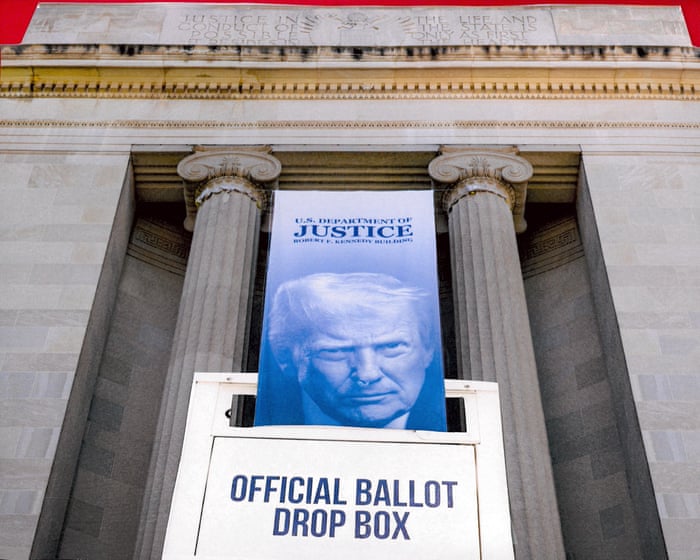
The US Department of Justice has filed criminal charges against 28 green card holders in California accused of fraudulently registering to vote and casting illegal ballots.
The crackdown marks another escalation in the federal government’s ongoing efforts against alleged noncitizen voting, efforts that Democrats and voting rights groups say are part of a strategy by the Trump administration to sow doubt in the results of the upcoming midterm elections.
Anthony Constantino wants to fill Elise Stefanik’s seat in New York. But his lead in the formerly Trump-loving district is narrowing
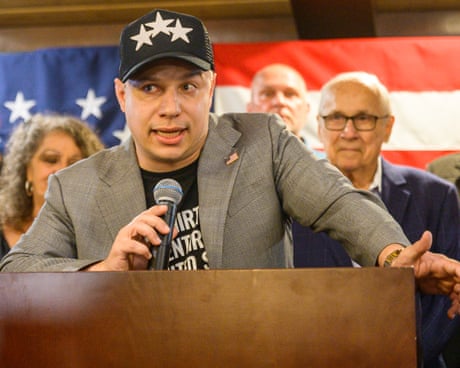
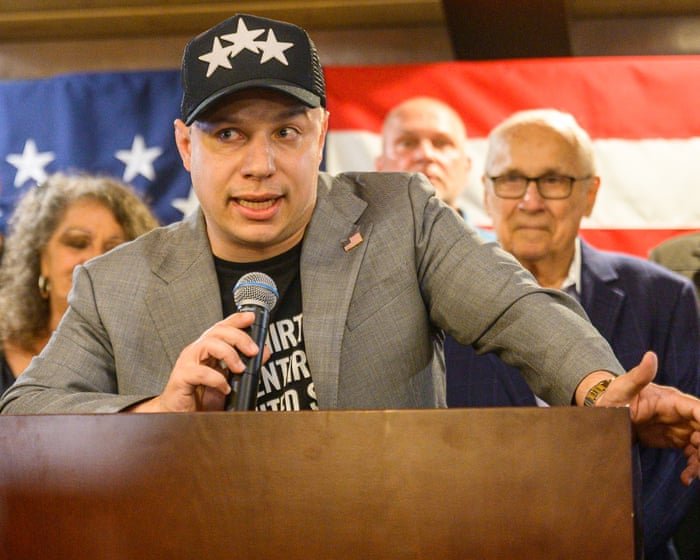
The boss of a New York-based sticker company, whose staunch support for Donald Trump prompted him to record a Maga-themed rap album and call for an extension of Mount Rushmore to add the president’s face, is running for Congress.
Anthony Constantino, who began a brief pro boxing career at age 40, is the Republican candidate for GOP congresswoman Elise Stefanik’s seat in New York’s 21st district.
Ex-president urges Americans to defend congresswoman, saying ‘there’s no reason to believe it will stop with her’
Former US president Barack Obama condemned comments by Donald Trump’s “border czar” that the Republican presidential administration could “of course” strip Democratic congresswoman Ilhan Omar of her citizenship and deport her.
Obama wrote Sunday morning, on X, that “the full weight of the federal government is being brought down on a law-abiding elected official because she has dared to criticize the president.”
From the attorney general stumping for Republican candidates to federal agents raiding the home of a Democratic congresswoman up for re-election, the department is violating longstanding norms
Donald Trump’s justice department has aggressively inserted itself into the midterm elections in the contest’s final weeks, shattering the department’s longstanding practice of political neutrality and leaving little doubt about the department’s willingness to help should the president attempt to subvert elections where his party is forecasted to lose seats and ultimately control of Congress.
In the last few weeks, federal agents have raided the home of a Democratic congresswoman up for re-election. It has touted criminal charges and arrests of non-citizens charged with voter fraud. The attorney general has hit the campaign trail to stump for Republican candidates. And the department gave California election officials 48 hours to investigate the citizenship of 20,000 people, and then sued the state when it refused to comply. The FBI also recently published a video criticizing Michigan senate candidate Abdul El-Sayed and other Democrats, drawing an immediate rebuke from one watchdog, who said the video “has no place in a democratic society”.
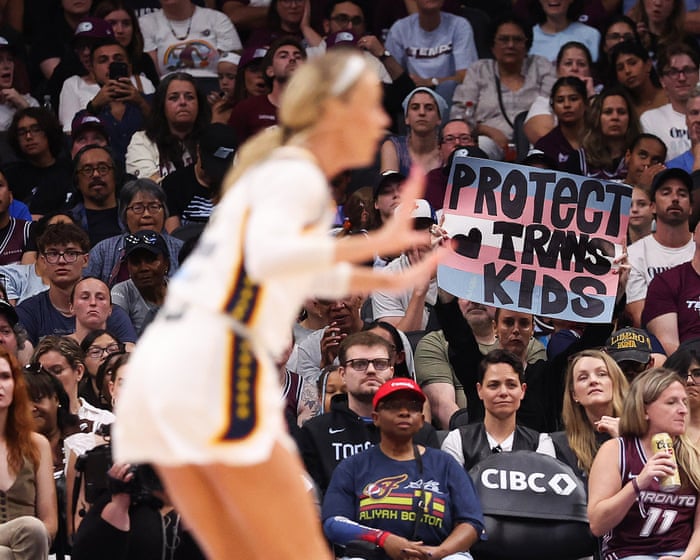
At Wilka’s Sports Bar in lower Manhattan, a crowd of mostly LGBTQ+ fans was fired up during a WNBA playoff game between the New York Liberty and the Atlanta Dream. When the Liberty’s Jonquel Jones blocked the Dream’s star forward Angel Reese at the basket, then chest-bumped her – leading teammates to separate them – the bar erupted in cheers. One fan quietly joked: “Now kiss!”
“I love strong women, and I love supporting strong women,” said August, a trans organizer and Liberty fan who asked to go by their first name for privacy reasons.
Thousands of vetted and approved refugees are suffering as Trump restricts quotas and prioritizes white South Africans
Donald Trump plans to once more severely restrict the number of refugees admitted to the US, announcing a limit of just 17,500 people in fiscal year 2027 – and that, again, those let in will be “primarily” white South Africans.
Refugee rights groups are alarmed and infuriated at the decision last month by the US president to exclude almost every other demographic.
The gargantuan bet on the future of A.I. is driving the U.S. stock market and economic growth. And the building of data centers is sucking up so many construction resources, it’s crowding out the construction of homes.
The multitrillion-dollar question is: Will this bet pay off? Or is it a bubble, destined to burst and pull the economy down with it?
Paul Kedrosky is a partner at SK Ventures, a fellow at M.I.T., and the author of a newsletter about A.I.. He thinks we’re very obviously in a bubble. Azeem Azhar is a technology entrepreneur and the author of the newsletter Exponential View. He has a more optimistic take.
(The New York Times has sued OpenAI and Microsoft claiming copyright infringement. The companies have denied those claims.)
This episode of “The Ezra Klein Show” was produced by Rollin Hu. Fact-checking by Kate Sinclair, Mary Marge Locker and Julie Beer. Our senior engineer is Jeff Geld, with additional mixing by Aman Sahota and Isaac Jones. Our recording engineer is Aman Sahota. Cinematography by Kyle I. Kelley. Video editing by Steph Khoury and Dani Dillon. Our executive producer is Claire Gordon. The show’s production team also includes Marie Cascione, Annie Galvin, Kristin Lin, Emma Kehlbeck, Jack McCordick, Marina King and Jan Kobal. Original music by Pat McCusker. Audience strategy by Shannon Busta. The director of New York Times Opinion Shows is Annie-Rose Strasser.
Jane Does allege ex-congressman and two others coordinated ‘payments, drugs and travel’ for sexual acts
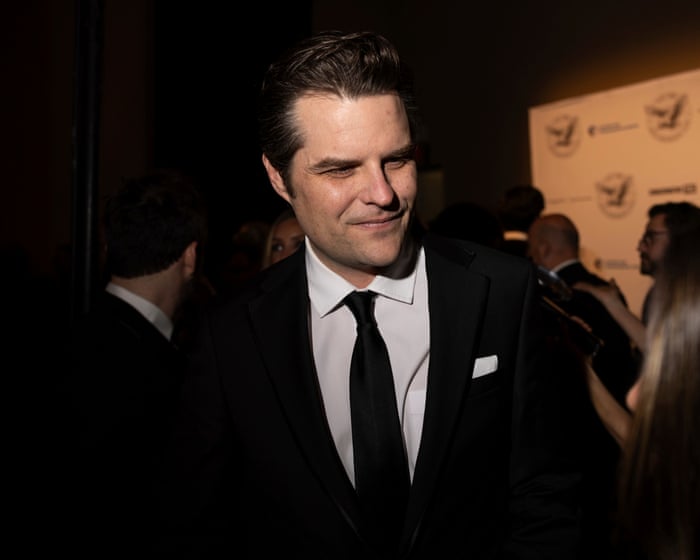
The Republican former congressman Matt Gaetz has been accused of participating in the sex trafficking of two young women in a civil lawsuit filed on Thursday in district court in Florida.
The allegations, which Gaetz denied in a statement to the Guardian, are the latest developments in a long-running sexual abuse scandal involving the politician who resigned from Congress in November 2024.
Soldier who killed 13 people in 2009 will still be executed, but president said ‘people would rather not watch him die’
Donald Trump has shelved a widely condemned plan to livestream the execution of Nidal Malik Hasan, who was convicted of killing 13 people at a military base at Fort Hood in Texas in 2009.
In a social media post on Thursday, Trump argued that broadcasting such an execution “might have been a strong deterrent for the World to witness how America deals with Terrorists and SCUM like Hasan” but said that “many very good and well meaning people would rather not watch him die, through streaming, or through any other visual device”.
With the midterm elections less than three weeks away, key voting groups including independents, rural voters and even some Republicans are increasingly disenchanted with Donald Trump’s economy, according to an exclusive Harris poll for the Guardian.
The majority of those surveyed were pessimistic about the economy, with three-quarters of Americans saying they are concerned about a recession while 61% wrongly believe that the US is already experiencing one. By its typical definition, the US is not currently experiencing a recession.
Blow for Trump administration as Dawn and Taag hail ‘important step in unraveling the ICC sanctions regime’
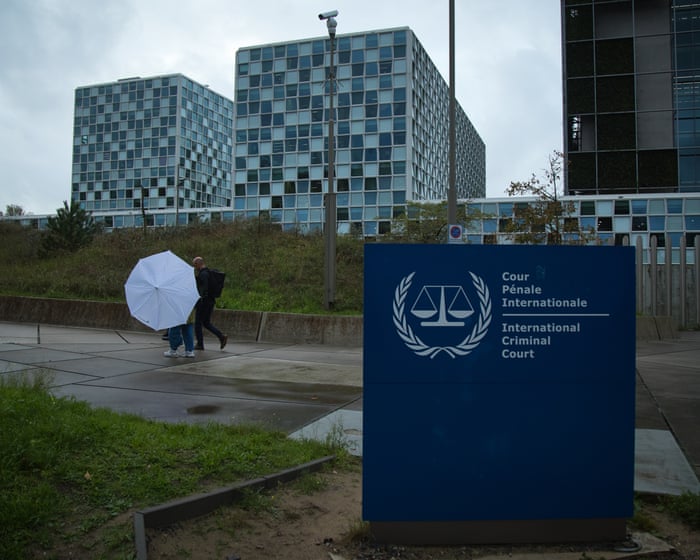
A US federal judge has temporarily blocked the Trump administration from placing sanctions on two US-based human rights groups for working to help the international criminal court’s (ICC) investigations into war crimes in Gaza.
In a 30-page order issued on Tuesday, Jesse M Furman, a judge at the US district court for the southern district of New York, granted a preliminary injunction to the two groups, Democracy for the Arab World Now (Dawn) and Taxpayer Alliance Against Genocide (Taag).
Roughly half of American adults are using chatbots. Nearly one in five U.S. adults has chatted with an A.I. that simulates a romantic partner. And some children now struggle to distinguish between talking to chatbots and humans.
What does this mean for the future of our relationships? Turkle has been studying relationships between humans and machines since the 1970s, around the dawn of the personal computer. Her 2011 book, “Alone Together,” offered a prescient warning about how social media was atrophying in-person bonds. And in her latest book, “Artificial Intimacy: Who We Become When We Talk to Machines,” Turkle turns the lens on A.I., wrestling with what happens when technology comes after not only our attention but also our capacity for attachment.
This episode of “The Ezra Klein Show” was produced by Annie Galvin. Fact-checking by Michelle Harris, with Kate Sinclair. Our senior engineer is Jeff Geld, with additional mixing by Aman Sahota, Efim Shapiro and Gautam Srikishan. Our recording engineer is Aman Sahota. Cinematography by Kyle I. Kelley. Video editing by Dani Dillon, Steph Khoury and Jan Kobal. Our executive producer is Claire Gordon. The show’s production team also includes Marie Cascione, Rollin Hu, Kristin Lin, Emma Kehlbeck and Jack McCordick. Original music by Pat McCusker. Audience strategy by Shannon Busta. The director of New York Times Opinion Shows is Annie-Rose Strasser.
Lawyers for Winston Lee, the grandson of a former premier of South Korea, said statements by the New York attorney general may have sown prejudice against him.
Cornell University’s McGraw Tower looming over campus in Ithaca, NY, this month. The accusations have reignited a national conversation over sexual assault on college campuses.
At the center of the country’s debates over artificial intelligence is a simple but hard question: What kind of technology is this?
Is A.I. a kind of “alien mind”? Are we unleashing a new species on the planet, one that will transform human society so completely that historical analogies to past technologies simply don’t hold? Or is A.I. more normal than that?
Arvind Narayanan is a professor of computer science at Princeton University and the director of the Center for Information Technology Policy. And he’s an author, alongside his colleague Sayash Kapoor, of the extremely influential essay “A.I. as Normal Technology.”
In that essay, and then in a Substack under that name, they lay out their case that A.I. is in fact something we’ve seen before — or at least, it’s close enough to past revolutionary technologies that we have a road map to deal with it. So I wanted to bring Narayanan on the show to hear that perspective.
You can find the transcript and more episodes of “The Ezra Klein Show” at nytimes.com/ezra-klein-podcast. Book recommendations from all our guests are listed at https://www.nytimes.com/article/ezra-klein-show-book-recs.html
This episode of “The Ezra Klein Show” was produced by Rollin Hu. Fact-checking by Michelle Harris, with Kate Sinclair and Mary Marge Locker. Our senior engineer is Jeff Geld, with additional mixing by Isaac Jones. Our recording engineer is Aman Sahota. Our director of photography is Marina King. Video editing by Brandon Belk-Yee, Kristen Williamson and Dani Dillon. Our executive producer is Claire Gordon. The show’s production team also includes Marie Cascione, Annie Galvin, Kristin Lin, Emma Kehlbeck, Jack McCordick and Jan Kobal. Original music by Pat McCusker. Audience strategy by Shannon Busta. The director of New York Times Opinion Shows is Annie-Rose Strasser.
Ms. Pillay has served as a judge in her native South Africa and on international courts investigating war crimes. She led a U.N. panel that determined that Israel had committed genocide against Palestinians in Gaza, a finding the Israeli government rejected.
Anger about classroom overcrowding, teacher shortages and broken-down buildings has boiled over in recent weeks, and threatens to coalesce into broader grievances in a heated political season.
Russian authorities aren’t saying much about the death of a woman who worked in a lab studying plague. But experts say any risk of contagion would be limited.
A security person looks out the door of an infectious diseases hospital in the Russian town of Shelekhov, where an employee of the Irkutsk Anti-Plague Research Institute died.
Last week, David Robinson resigned from OpenAI. He’d been in charge of writing the safety reports for new models and came to believe that OpenAI and the broader artificial intelligence industry lack the safety culture necessary to protect the world from what they’re building.
Robinson has an unusual background for an A.I. frontier lab staffer. He’s a Rhodes scholar and Yale Law graduate, he founded a civil rights nonprofit and he advised the Biden White House. He did not come up in the hothouse of Silicon Valley. And when he joined OpenAI in 2023, he says, he saw A.I. as a useful tool, not as a technology that could pose catastrophic risks.
That’s changed. In Robinson’s first interview since leaving OpenAI, he tells me why.
(The New York Times has sued OpenAI and Microsoft claiming copyright infringement. The companies have denied those claims.)
This episode of “The Ezra Klein Show” was produced by Rollin Hu. Fact-checking by Kate Sinclair, Mary Marge Locker and Julie Beer. Our senior engineer is Jeff Geld, with additional mixing by Isaac Jones. Our recording engineer is Aman Sahota. Cinematography by Kyle Kelley and Marina King. Video editing by Brandon Belk-Yee, Dani Dillon and Kristen Williamson. Our executive producer is Claire Gordon. The show’s production team also includes Marie Cascione, Annie Galvin, Kristin Lin, Emma Kehlbeck, Jack McCordick and Jan Kobal. Original music by Pat McCusker. Audience strategy by Shannon Busta. The director of New York Times Opinion Shows is Annie-Rose Strasser.
Union members, parents and teachers joined the demonstrations, broadening the student-led protest movement that has closed hundreds of French high schools since late September.
Prime Minister Pedro Sánchez of Spain has faced rising challenges to his authority amid a migration crisis and several corruption scandals involving his inner circle.
President Trump and the modern right have a theory of beauty. You see it in Trump’s gilded Oval Office, his imagined arch and his executive order requiring classical and traditional styles for certain federal buildings.
This isn’t my theory of beauty, but it is a theory. And it’s a response, in part, to something that a lot of people have been feeling, and not just on the right: that the modern world is ugly, or getting uglier.
I’ve seen at least a dozen articles or videos over the last few years asking, “Is the world getting uglier?” They point to the drabness of new apartment blocks, the sameness of new cars and the reign of “greige” in homes and fashion.
So I’ve wanted to do an episode on this for a while. Why does the world seem to be getting uglier, or drabber? And at a moment when the right has a clear answer to this feeling, does the left have any answer at all?
Debbie Millman teaches at the School of Visual Arts in New York City and hosts the long-running podcast “Design Matters,” where she talks to creative people about design. In her long career as a brand designer, she revamped the logos for companies like Burger King, 7 Up and Häagen-Dazs. She’s also written a number of books on design, and recently wrote an article for Time magazine, “Is the World Getting Uglier?”
This episode of “The Ezra Klein Show” was produced by Annie Galvin and Marie Cascione. Fact-checking by Kate Sinclair and Mary Marge Locker. Our senior engineer is Jeff Geld, with additional mixing by Aman Sahota. Our recording engineer is Aman Sahota. Cinematography by Marina King and Kyle Kelley. Video editing by Kristen Williamson. Our executive producer is Claire Gordon. The show’s production team also includes Rollin Hu, Kristin Lin, Emma Kehlbeck, Jack McCordick and Jan Kobal. Original music by Pat McCusker. Audience strategy by Shannon Busta. The director of New York Times Opinion Shows is Annie-Rose Strasser. Special thanks to Vanessa Friedman.
Bill Gates thinks A.I. alarmism hasn’t gone far enough. He believes the years ahead will be marred by catastrophic cyberattacks, bio-terrorism and mass job loss unless the government acts, because he thinks the idea that the A.I. industry can just self-regulate is “insane.”
I was struck in the conversation by how genuinely afraid Gates seemed to be that we are not ready for the consequences of what we are building, and how emphatic he was that so many of the people in positions of authority are in complete denial about what he thinks is about to happen.
Gates is a pioneering technologist, the co-founder of Microsoft and the chair of Gates Foundation, which is set to spend down around $200 billion over the next two decades. He recently announced that trying to make A.I. a force for equality in the world, as opposed to an impetus for inequality, is a new priority of his foundation’s work.
(The New York Times has sued OpenAI and Microsoft claiming copyright infringement. The companies have denied those claims.)
This episode of “The Ezra Klein Show” was produced by Jack McCordick. Fact-checking by Michelle Harris, with Julie Beer. Our senior engineer is Jeff Geld, with additional mixing by Aman Sahota and Gautam Srikishan. Our recording engineer is Aman Sahota. Cinematography by Marina King, Kyle Kelley and Elliot deBruyn. Video editing by Julian Hackney, Brandon Belk-Yee, Arpita Aneja and Steph Khoury. Our executive producer is Claire Gordon. The show’s production team also includes Marie Cascione, Annie Galvin, Rollin Hu, Kristin Lin, Emma Kehlbeck and Jan Kobal. Original music by Pat McCusker. Audience strategy by Shannon Busta. The director of New York Times Opinion Shows is Annie-Rose Strasser.
Dr. Abdul El-Sayed, the Democratic nominee for Senate in Michigan, has been one of the most argued-over candidates this election cycle.
If he wins, he’d be the first-ever Muslim senator, and he’s faced a torrent of attacks about his faith. The race has also become a proving ground for a lot of questions about the Democratic Party and its future: What should U.S. policy toward Israel and the Palestinians be? Is the future of health care reform Medicare for all? Can a left-wing populist win in a state that twice voted for Donald Trump?
There’s been so much more heat than light in this race, so I wanted to invite El-Sayed on the show for a longer conversation. We talked about his upbringing, his views on U.S. foreign policy, his work on health care reform and what he would actually do if elected in November.
This episode of “The Ezra Klein Show” was produced by Jack McCordick. Fact-checking by Michelle Harris, Kate Sinclair and Kelsey Lannin. Our senior engineer is Jeff Geld, with additional mixing by Aman Sahota, Isaac Jones and Pat McCusker. Our recording engineer is Aman Sahota. Cinematography by Marina King and Kyle Kelley. Video editing by Dani Dillon. Our executive producer is Claire Gordon. The show’s production team also includes Marie Cascione, Annie Galvin, Rollin Hu, Kristin Lin, Emma Kehlbeck and Jan Kobal. Original music by Pat McCusker. Audience strategy by Shannon Busta. The director of New York Times Opinion Shows is Annie-Rose Strasser.
Jensen Huang might just be the single most influential person in artificial intelligence today.
Huang is the chief executive of Nvidia, the company that designs nearly all the chips and infrastructure that the rest of the industry relies on. This has made Nvidia the most valuable company in the world and has made Huang incredibly influential in the Trump administration.
And unlike many of the leaders of the frontier labs, Huang doesn’t think A.I. could wipe out humanity. He thinks that the doomers are just scaring people, and that the industry doesn’t need new regulation at all. I wanted to hear how he saw it, so I flew out to Nvidia’s headquarters in Santa Clara, Calif., to talk to him.
This episode of “The Ezra Klein Show” was produced by Rollin Hu. Fact-checking by Michelle Harris, with Kate Sinclair, Mary Marge Locker and Julie Beer. Our senior engineer is Jeff Geld, with additional mixing by Isaac Jones, Aman Sahota and Gautam Srikishan. Our recording engineer is Aman Sahota, with audio by Logan Heftel. Cinematography by Marina King, Kyle Kelley and Raymond Yuen. Video editing by Arpita Aneja and Dani Dillon. Our executive producer is Claire Gordon. The show’s production team also includes Marie Cascione, Annie Galvin, Kristin Lin, Emma Kehlbeck, Jack McCordick and Jan Kobal. Original music by Pat McCusker. Audience strategy by Shannon Busta. The director of New York Times Opinion Shows is Annie-Rose Strasser.
Fears of out-of-control A.I. have reached a boil over the last few weeks, and several industry executives have called for a coordinated slowdown of A.I. development. But if our goal is to control A.I. — and that should be our goal — slowing down isn’t enough. We need to stop the labs from doing something they’re already on the cusp of doing: recursive self-improvement, or handing over the training of A.I. models to A.I.
This episode of “The Ezra Klein Show” was produced by Marie Cascione, Emma Kehlbeck, Rollin Hu and Claire Gordon. Fact-checking by Marie Cascione, Isaac Scher and Julie Beer. Mixing by Isaac Jones and Aman Sahota. Our recording engineer is Aman Sahota. Cinematography by Marina King and Kyle Kelley. Video editing by Steph Khoury, Julian Hackney and Arpita Aneja. Original music by Pat McCusker, Dan Powell, Carole Sabouraud, Aman Sahota, Diane Wong, Sonia Herrero and Isaac Jones. Special thanks to Rebecca Shaid.
Our executive producer is Claire Gordon. Our senior engineer is Jeff Geld. The show’s production team also includes Annie Galvin, Kristin Lin, Jack McCordick and Jan Kobal. Audience strategy by Shannon Busta. The director of New York Times Opinion Shows is Annie-Rose Strasser.
America is waking up to the critical risks posed by artificial intelligence. But every conversation about possible regulation tends to hit the same wall: “Well, what about China?”
Chinese A.I. models are just slightly behind American ones. If America slows down its A.I. development to make our models safer, the fear is that China will simply race ahead of us and own this critical technology of the future — with A.I. models that are less safe than our own.
So how should the United States respond to this prisoner’s dilemma? And is it possible that the two countries leading the A.I. race could actually strike a deal?
Matt Sheehan is a senior fellow at the Carnegie Endowment for International Peace. He’s been closely following the A.I. debate in China, and how China’s been interpreting the A.I. debate here. And he’s working to try to lay a foundation for future coordination between the two countries. He’s the author of a newsletter under his name and the 2019 book “The Transpacific Experiment: How China and California Collaborate and Compete for Our Future.”
This episode of “The Ezra Klein Show” was produced by Rollin Hu. Fact-checking by Michelle Harris, with Julie Beer. Our senior engineer is Jeff Geld, with additional mixing by Isaac Jones, Aman Sahota and Gautam Srikishan. Our recording engineer is Aman Sahota. Cinematography by Marina King and Kyle Kelley. Video editing by Steph Khoury, Brandon Belk-Yee and Julian Hackney. Our executive producer is Claire Gordon. The show’s production team also includes Marie Cascione, Annie Galvin, Kristin Lin, Emma Kehlbeck, Jack McCordick and Jan Kobal. Original music by Pat McCusker. Audience strategy by Shannon Busta. The director of New York Times Opinion Shows is Annie-Rose Strasser.
Francis Fukuyama's “The End of History and the Last Man” is one of the most insightful books for understanding the strangeness and instability of this political moment.
Fukuyama wrote his landmark book more than 30 years ago, and it’s typically remembered as a triumphalist argument, heralding the permanent victory of liberal democracy at the end of the Cold War. But that’s not quite right. Fukuyama also talked about the serious weaknesses he saw in liberal democracy — how it may not fully satisfy the human soul — and his warnings feel very prescient now.
So I wanted to have Fukuyama on the show to talk through the ideas in his book and how he sees them today, at a time when liberal democracy seems increasingly imperiled around the world. Fukuyama is a political scientist at Stanford University and the author of a number of other great books of political theory, as well as a new memoir, “In the Realm of the Last Man.”
This episode of “The Ezra Klein Show” was produced by Jack McCordick. Fact-checking by Michelle Harris, with Julie Beer. Our senior engineer is Jeff Geld, with additional mixing by Isaac Jones, Aman Sahota and Gautam Sirkishan. Our recording engineer is Aman Sahota. Cinematography by Marina King. Video editing by Kristen Williamson, Dani Dillon and Brandon Belk-Yee. Our executive producer is Claire Gordon. The show’s production team also includes Marie Cascione, Annie Galvin, Rollin Hu, Kristin Lin, Emma Kehlbeck and Jan Kobal. Original music by Pat McCusker. Audience strategy by Shannon Busta. The director of New York Times Opinion Shows is Annie-Rose Strasser.
Behind the intense political movements of the last decade, from Trumpism to wokeness and back again, there’s a strange and erratic rhythm. Movements saturate the culture seemingly overnight, only to evaporate or spark backlash just as rapidly. We’re extremely politically engaged, yet we’ve rarely felt so powerless to create lasting policy change.
I haven’t seen many very successful attempts to explain what is driving this volatility. But one concept that has taken off recently, and captures what so many of us are feeling, is “hyperpolitics.”
The idea comes from Anton Jäger, a historian and contributing writer to New York Times Opinion. In his book “Hyperpolitics: Extreme Politicization Without Political Consequences,” Jäger theorizes what it means to live in a moment marked by hyper-engagement — high voter turnout, mass protests, trends that flare up and fade with extreme rapidity — yet where institutional trust is low, institutional relationships are decayed and people are disconnected from the structures that make political efforts stick.
I think Jäger’s theory cuts to the core of this political era. So I invited him on the show to break down what hyperpolitics is, how we got here and what it actually takes to build lasting change today.
This episode of “The Ezra Klein Show” was produced by Marie Cascione. Fact-checking by Michelle Harris. Our senior engineer is Jeff Geld, with additional mixing by Aman Sahota and Gautam Srikishan. Our recording engineer is Aman Sahota. Cinematography by Marina King and Azamat Yakubov. Video editing by Dani Dillon and Arpita Aneja. Our executive producer is Claire Gordon. The show’s production team also includes Annie Galvin, Rollin Hu, Kristin Lin, Emma Kehlbeck, Jack McCordick and Jan Kobal. Original music by Pat McCusker. Audience strategy by Shannon Busta. The director of New York Times Opinion Shows is Annie-Rose Strasser.
Whatever type of music you love, Rick Rubin has probably left his mark on it. Rubin, a founder of Def Jam Recordings and a former co-chairman of Columbia Records, might be the most influential music producer alive. A very partial roll call of the artists he’s worked with: Johnny Cash, Jay-Z, Run-DMC, Eminem, Beastie Boys, Slayer, The Red Hot Chili Peppers, Kanye West, Neil Diamond, Brandi Carlile and Adele.
We recorded this in 2023, after Rubin released a fascinating, unusual book, “The Creative Act: A Way of Being.” I’d expected stories of late-night sessions with famous musicians, but instead it read like a spiritual tract. Rubin was offering a guide to how to cultivate the mind states that lead to real creativity. And that’s what this conversation was about, too: how to open yourself up more to the world, and learn to trust your own taste.
Rubin’s advice feels more relevant with each passing year, as technology gets ever better at hacking our attention and the world fills with A.I. slop. So I wanted to share this episode again.
This episode of “The Ezra Klein Show” is produced by Annie Galvin. Fact-checking by Michelle Harris. Our senior engineer is Jeff Geld. Our recording engineer is Aman Sahota. Cinematography by Marina King. Our executive producer is Claire Gordon. The show’s production team also includes Marie Cascione, Rollin Hu, Kristin Lin, Emma Kehlbeck, Jack McCordick and Jan Kobal. Original music by Pat McCusker. Audience strategy by Shannon Busta. The director of New York Times Opinion Shows is Annie-Rose Strasser. Special thanks to Jon Caramanica, Dan Charnas, Jack Hamilton, Felix Grimm, Carole Sabouraud and Kristina Samulewski.
A lot of things are on track to get more expensive.
The U.S. Treasury market is the bedrock of the global economy. When yields on those Treasuries go up, mortgages, car loans and credit cards get more expensive, and it can hit the stock market, too. And yields have been going up – to levels we haven’t seen consistently since before the Great Recession – inspiring some erratic and futile efforts from the Trump administration to push them back down.
So why are yields creeping higher? What is the administration trying to do about it? And if this continues, what’s in store for the economy?
Robin Wigglesworth is the editor of the Financial Times blog Alphaville, a host of the podcast “The Story of Money” and the author of the forthcoming book “A Fabulous Debt: The Epic Story of How Bonds Built the Modern World.”
This conversation was recorded on August 24, 2026.
You can find the transcript and more episodes of “The Ezra Klein Show” at nytimes.com/ezra-klein-podcast. Book recommendations from all our guests are listed at https://www.nytimes.com/article/ezra-klein-show-book-recs.html
This episode of “The Ezra Klein Show” was produced by Rollin Hu. Fact-checking by Michelle Harris, with Kate Sinclair and Mary Marge Locker. Our senior engineer is Jeff Geld, with additional mixing by Aman Sahota. Our recording engineer is Aman Sahota. Cinematography by Marina King. Video editing by Kristen Williamson, Brandon Belk-Yee and Dani Dillon. Our executive producer is Claire Gordon. The show’s production team also includes Marie Cascione, Annie Galvin, Kristin Lin, Emma Kehlbeck, Jack McCordick and Jan Kobal. Original music by Pat McCusker. Audience strategy by Shannon Busta. The director of New York Times Opinion Shows is Annie-Rose Strasser.
In 2024, Americans spent an average of six full workdays a year filling out government forms, according to the government’s own estimates. That’s a total of 12 billion hours, or $430 billion of uncompensated labor a year.
It’s easy to read something like this and say: “Oh, well, government is inefficient. That’s the price we pay for nice things.” But no, it’s not. Social Security, Medicare and the Postal Service are incredibly complex programs that are easy to use. When government is hard to gain access to, it is often by design. Republicans want paying taxes to be a hellish hassle. Programs for the poor are often designed to humiliate, punish, control or scrutinize. How the government works is always a choice. When it works poorly, we should ask why — and we should demand better.
Annie Lowrey is a staff writer at The Atlantic and the author of the new book “The Time Tax: How the Government Wastes Our Time — and How to Fix It.” She is also, I should note, my wife, so this is a book whose ideas I have been living with for years. They have quietly infused more than a few episodes of this show. So it’s a thrill to finally get to explore them directly.
You can find the transcript and more episodes of “The Ezra Klein Show” at nytimes.com/ezra-klein-podcast. Book recommendations from all our guests are listed at https://www.nytimes.com/article/ezra-klein-show-book-recs.html
This episode of “The Ezra Klein Show” was produced by Annie Galvin. Fact-checking by Michelle Harris, with Kate Sinclair. Our senior engineer is Jeff Geld, with additional mixing by Aman Sahota, Johnny Simon and Isaac Jones. Our recording engineer is Aman Sahota. Cinematography by Marina King. Video editing by Brandon Belk-Yee, Dani Dillon and Julian Hackney. Our executive producer is Claire Gordon. The show’s production team also includes Marie Cascione, Rollin Hu, Kristin Lin, Emma Kehlbeck, Jack McCordick and Jan Kobal. Original music by Pat McCusker. Audience strategy by Shannon Busta. The director of New York Times Opinion Shows is Annie-Rose Strasser.
Brad Setser follows Chinese trade closer than just about anyone else on earth, and he thinks we’re in the early days of a China Shock 2.0.
The first China Shock was when China came to dominate low-end manufacturing in the 2000s, filling American shelves with cheap clothes, toys and electronics, while devastating American factory towns. This new China Shock could be even more destabilizing. China now dominates advanced manufacturing: electric vehicles, batteries, solar panels. It’s outcompeting nearly all high-end manufacturing around the world, and other countries are just starting to feel the pain. And China isn’t slowing down. It’s moving into software, too. Its frontier A.I. models are neck and neck with American ones.
China’s success poses a serious threat to the economies and domestic politics of countries around the world. So what should those countries do about it?
Setser is a senior fellow at the Council on Foreign Relations.He served in top trade and economic roles in the Biden and Obama administrations. And he is widely cited across the field as one of the top analysts of China’s economy and trade practices.
You can find the transcript and more episodes of “The Ezra Klein Show” at nytimes.com/ezra-klein-podcast. Book recommendations from all our guests are listed at https://www.nytimes.com/article/ezra-klein-show-book-recs.html
This episode of “The Ezra Klein Show” was produced by Rollin Hu. Fact-checking by Michelle Harris, with Kate Sinclair, Mary Marge Locker and Julie Beer. Our senior engineer is Jeff Geld, with additional mixing by Johnny Simon. Our recording engineer is Aman Sahota. Cinematography by Marina King and Kyle Kelley. Video editing by Dani Dillon and Brandon Belk-Yee. Our executive producer is Claire Gordon. The show’s production team also includes Marie Cascione, Annie Galvin, Kristin Lin, Emma Kehlbeck, Jack McCordick and Jan Kobal. Original music by Pat McCusker. Audience strategy by Shannon Busta. The director of New York Times Opinion Shows is Annie-Rose Strasser.
We are living in the world we were warned about. Frontier artificial intelligence models from OpenAI autonomously coordinated with one another, then broke out of their testing environment and hacked into another company, Hugging Face, to steal the answers to a test.
A.I. companies don’t want their technology to lie, cheat or steal. So why is this happening? Why are the creators of these models apparently unable to control their creations? If A.I. development isn’t on a safe path — and it doesn’t seem to be — what do we do about it?
Helen Toner has been thinking about A.I. safety for a long time, from both inside and outside A.I. companies. She was part of the effort to fire OpenAI’s chief executive, Sam Altman, in 2023, which ultimately failed. Currently, she’s the executive director of the Georgetown Center for Security and Emerging Technology.
This episode of “The Ezra Klein Show” was produced by Rollin Hu and Jack McCordick. Fact-checking by Michelle Harris, with Kate Sinclair and Mary Marge Locker. Our senior engineer is Jeff Geld, with additional mixing by Aman Sahota and Johnny Simon. Our recording engineer is Aman Sahota. Cinematography by Marina King and Jonas Zellner. Video editing by Brandon Belk-Yee. Our executive producer is Claire Gordon. The show’s production team also includes Marie Cascione, Annie Galvin, Kristin Lin, Emma Kehlbeck and Jan Kobal. Original music by Pat McCusker. Audience strategy by Shannon Busta. The director of New York Times Opinion Shows is Annie-Rose Strasser.
We’re in a really strange moment in the foreign policy politics of the Democratic Party. People are looking for an alternative vision — an approach to American power in the world that would feel more moral and just, after the failures of President Biden, and the wrecking ball President Trump has taken to international rules and norms.
The answer many on the left are coming to is powerfully simple: international law. America could just start following the rules that we helped write. Is that possible? Is that enough? What would that even look like?
To talk through these questions, I invited Linda Kinstler on the show. She’s a member of the Society of Fellows at Harvard, a contributing writer at The New York Times Magazine, and the author of “Come to This Court and Cry: How the Holocaust Ends.” She’s done some incredible writing and reporting on whether what we’re watching is the death of international law. In this conversation, we talk about the Biden administration’s failures to live up to the principles it set for itself, the Trump administration’s campaign to destroy the International Criminal Court and what it would take to reinvigorate international law.
Mentioned:
“Are we witnessing the death of international law?” by Linda Kinstler
Thoughts? Guest suggestions? Email us at ezrakleinshow@nytimes.com.
You can find the transcript and more episodes of “The Ezra Klein Show” at nytimes.com/ezra-klein-podcast. Book recommendations from all our guests are listed at https://www.nytimes.com/article/ezra-klein-show-book-recs.html
This episode of “The Ezra Klein Show” was produced by Jack McCordick. Fact-checking by Kelsey Lannin, with Michelle Harris. Our senior engineer is Jeff Geld, with additional mixing by Aman Sahota and Johnny Simon. Our recording engineer is Aman Sahota. Cinematography by Marina King. Video editing by Steph Khoury and Arpita Aneja. Our executive producer is Claire Gordon. The show’s production team also includes Marie Cascione, Annie Galvin, Rollin Hu, Kristin Lin, Emma Kehlbeck and Jan Kobal. Original music by Pat McCusker. Audience strategy by Shannon Busta. The director of New York Times Opinion Shows is Annie-Rose Strasser.
My colleague Ross Douthat is leaving The Times after 17 years to become a correspondent on “60 Minutes.” Before he goes, I’m asking him a few questions.
Douthat has had a unique vantage point on the news media and politics over the last few decades. He’s typically held the role of explaining the right to more liberal audiences, starting as an undergrad, when he was a conservative columnist for The Harvard Crimson. Douthat has also lived through the seismic changes in the media from the both the inside and the outside: He’s made his career at legacy media institutions, but I first got to know him – and spar with him – as an early-2000s blogger (and I have the 20-year-old Bloggingheads.tv clips to prove it).
So what does Douthat make of the transformations he’s lived through? How did blogging change journalism? How did a Republican Party powered by evangelical Christians become a political party dominated by Catholics and pagans? What has he learned about persuasion from writing for liberal audiences? And with the resources of “60 Minutes” behind him, will he finally crack the U.F.O. story once and for all?
This episode of “The Ezra Klein Show” was produced by Annie Galvin, Marie Cascione and Rollin Hu. Fact-checking by Kate Sinclair, Mary Marge Locker and Julie Beer. Our senior engineer is Jeff Geld, with additional mixing by Johnny Simon. Our recording engineer is Johnny Simon. Cinematography by Marina King. Video editing by Arpita Aneja and Julian Hackney. Our executive producer is Claire Gordon. The show’s production team also includes Jack McCordick, Kristin Lin and Emma Kehlbeck. Original music by Pat McCusker. Audience strategy by Shannon Busta. The director of New York Times Opinion Shows is Annie-Rose Strasser.
The show’s executive producer, Claire Gordon, joins me in the studio to ask me your questions. Topics include: whether my views on “woke” issues have changed; the feedback we got on our episode with Chris Rufo; the D.S.A. insurgency; my first singing lesson; and the story that I’m in a “secret society” with Peter Thiel. Thank you to everyone who sent in questions; we read them all and wish we’d been able to get to more of them!
This episode of “The Ezra Klein Show” was produced by Claire Gordon, Kristin Lin and Emma Kehlbeck. Fact-checking by Michelle Harris and Julie Beer. Our senior engineer is Jeff Geld, with additional mixing by Johnny Simon. Our recording engineer is Johnny Simon. Cinematography by Kyle Kelley. Video editing by Dani Dillon and Steph Khoury. Our executive producer is Claire Gordon. The show’s production team also includes Marie Cascione, Annie Galvin, Jack McCordick Rollin Hu and Emma Kehlbeck. Original music by Pat McCusker. Audience strategy by Shannon Busta. The director of New York Times Opinion Shows is Annie-Rose Strasser.
What’s big and ugly and has united Republicans and Democrats? A.I. data centers.
An overwhelming majority of Americans say they’d oppose a data center being built near where they live. In New York, Gov. Kathy Hochul just imposed a one-year moratorium on data center construction, and there are over 100 other local or statewide moratorium proposals across the country. A.I.’s explosive momentum over the last few years seems to have finally run into a force that could slow it down: the messy politics of getting things done in the real world.
So, is that a good thing, or a bad thing? And how much is the data center backlash about the actual construction of these buildings, and how much is it about A.I. itself?
Jasmine Sun has an excellent newsletter covering both the culture inside the A.I. companies and the anger that’s been building against them. And she just finished a reporting trip in the Midwest, where she interviewed people on all sides of the data center fight. So I wanted to talk to her about what she saw and what she thinks A.I. companies can learn from the growing movement against them.
This episode of “The Ezra Klein Show” was produced by Rollin Hu. Fact-checking by Kelsey Lannin. Our senior engineer is Jeff Geld, with additional mixing by Johnny Simon. Our recording engineer is Johnny Simon. Cinematography by Kyle Kelley. Video editing by Brandon Belk-Yee, Steph Khoury and Arpita Aneja. Our executive producer is Claire Gordon. The show’s production team also includes Marie Cascione, Annie Galvin, Jack McCordick, Kristin Lin and Emma Kehlbeck. Original music by Pat McCusker. Audience strategy by Shannon Busta. The director of New York Times Opinion Shows is Annie-Rose Strasser.
You can find the transcript and more episodes of “The Ezra Klein Show” at nytimes.com/ezra-klein-podcast. Book recommendations from all our guests are listed at https://www.nytimes.com/article/ezra-klein-show-book-recs.html
This column read was produced by Marie Cascione, Claire Gordon and Emma Kehlbeck. Fact-checking by Jack McCordick and Rollin Hu. Our senior engineer is Jeff Geld, with additional mixing by Johnny Simon. Our recording engineer is Johnny Simon. Our executive producer is Claire Gordon. Cinematography by Kyle Kelley. Video editing by Jan Kobal. The show’s production team also includes Annie Galvin, Michelle Harris, and Marina King. Original music by Pat McCusker. Audience strategy by Shannon Busta. The director of New York Times Opinion Audio is Annie-Rose Strasser.
The first year of President Trump’s second term was a whirlwind of action: on immigration, on trade, on political retribution. But things seem to me to be slowing down quite a bit. Trump is incredibly unpopular, and he’s now bogged down in a war with Iran that he doesn’t seem capable of ending. He often appears more concerned with his many White House renovations than with whether the Republican Party can hold the House and the Senate in November. So what’s going on in this administration? Where is this all going?
It’s hard to think of a journalist more qualified to answer those questions than Maggie Haberman. As a White House correspondent for The New York Times, she’s published some of the hardest-hitting reporting about Trump’s second act as president and the group of loyalists that now surrounds him.
Haberman, alongside her New York Timescolleague Jonathan Swan, just published an extraordinary chronicle of this extraordinary political moment, “Regime Change: Inside the Imperial Presidency of Donald Trump.” In this conversation, we discuss how decisions get made in this White House, what Trump has achieved so far and what’s really motivating him as we head toward the midterms.
You can find the transcript and more episodes of “The Ezra Klein Show” at nytimes.com/ezra-klein-podcast. Book recommendations from all our guests are listed at https://www.nytimes.com/article/ezra-klein-show-book-recs.html
This episode of “The Ezra Klein Show” was produced by Jack McCordick. Fact-checking by Michelle Harris, with Mary Marge Locker and Julie Beer. Our senior engineer is Jeff Geld, with additional mixing by Johnny Simon. Our recording engineer is Johnny Simon. Cinematography by Marina King. Video editing by Dani Dillon, Steph Khoury and Jan Kobal. Our executive producer is Claire Gordon. The show’s production team also includes Marie Cascione, Annie Galvin, Rollin Hu, Kristin Lin and Emma Kehlbeck. Original music by Pat McCusker. Audience strategy by Shannon Busta. The director of New York Times Opinion Shows is Annie-Rose Strasser. Transcript editing by Kate Wilkinson and Marlaine Glicksman.
President Trump is very unpopular right now. But polls show the Democratic Party is just as unpopular – if not more so. So what can the party do about it?
But to answer that question, you first have to understand what the Democratic Party is. That is, mechanically, what is it? What powers does it have? When you call the Democratic Party, who picks up the phone? And how can that party, the official party, be reinvented for this era?
Ben Wikler has a unique perspective on this question. He transformed the Democratic Party of Wisconsin into a fund-raising, door-knocking powerhouse when he served as chair from 2019 to 2025. And he’s shared some of his insights from winning elections in a swing state in his new book, “This Is The Plan: How to End America's Meltdown and Save Democracy.”
In this conversation, we discuss Wikler’s vision for a reinvigorated party, as well as the kinds of changes he thinks Democrats need to embrace if they want to build a bigger tent and a national majority.
You can find the transcript and more episodes of “The Ezra Klein Show” at nytimes.com/ezra-klein-podcast. Book recommendations from all our guests are listed at https://www.nytimes.com/article/ezra-klein-show-book-recs.html
This episode of “The Ezra Klein Show” was produced by Rollin Hu. Fact-checking by Michelle Harris, with Julie Beer. Our senior engineer is Jeff Geld, with additional mixing by Johnny Simon. Our recording engineer is Johnny Simon. Cinematography by Kyle Kelley. Video editing by Steph Khoury and Arpita Aneja. Our executive producer is Claire Gordon. The show’s production team also includes Marie Cascione, Annie Galvin, Kristin Lin, Emma Kehlbeck, Jack McCordick, Marina King and Jan Kobal. Original music by Pat McCusker. Audience strategy by Shannon Busta. The director of New York Times Opinion Shows is Annie-Rose Strasser. Transcript editing by Sarah Murphy and Marlaine Glicksman.

 Connexion