
 Connexion

Detectives say the darkest part is still hidden. Ukraine’s president is already rushing to open security officers’ wealth to checks
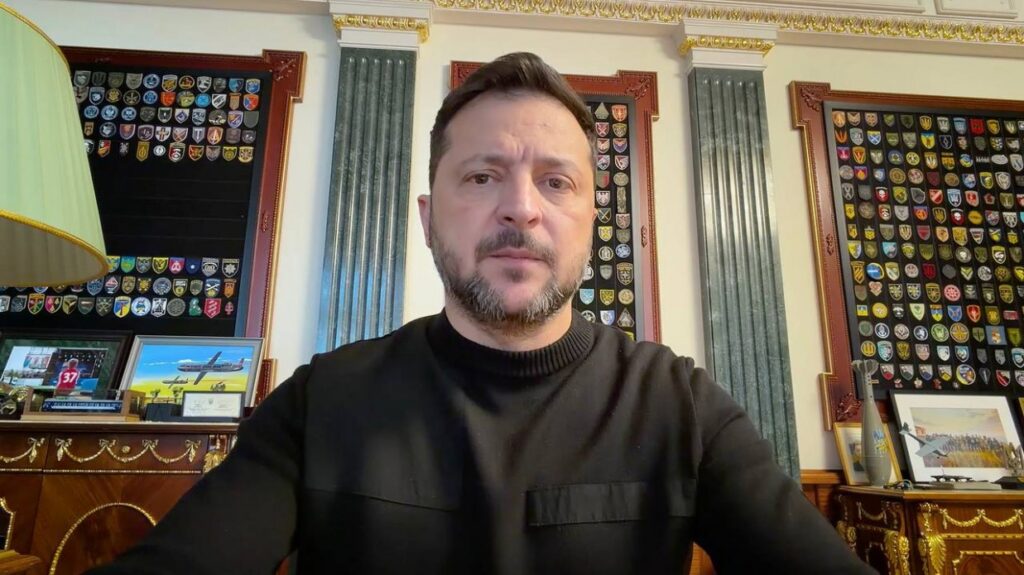
Ukrainian President Volodymyr Zelenskyy has sent parliament an urgent bill that would make security service officers declare their wealth again, the Verkhovna Rada's website shows. It follows a week of anti-corruption wiretaps in which investigators linked senior security and police officers to a criminal gang. The detectives behind the case now say the public has seen only a small part of it.
Russia's war has put Ukraine's security and police agencies at the heart of national defense, from catching Russian agents to keeping order far from the front. How clean those agencies are also shapes Ukraine's road into the European Union. Brussels ties membership talks to rule-of-law reforms, and its latest roadmap set no date for Kyiv to join. Ukraine and the EU have set up a joint task force to speed up the anti-corruption reforms that gate accession. Watchdogs, though, have warned that the independent anti-corruption agencies Brussels insists on are under strain.
Zelenskyy calls the news shameful and asks for a fast vote
Zelenskyy first spoke about the case in his evening video on 7 November. He called that week's news about the Security Service of Ukraine (SBU) "frankly unpleasant, frankly shameful, absolutely unacceptable things." The service had already dismissed officials, and more personnel decisions would follow, he said. He added that Kyiv had raised the Khimprom drug cartel at the center of the case with the United States. He also asked lawmakers to pass the declarations bill without delay, so that officers' lifestyles and assets are open to checks.
The bill rewrites the anti-corruption law's wartime rules for servicemembers, its text shows. Troops of the Armed Forces, the National Guard, the Border Guard Service, and several other forces could still file within 90 days after martial law ends or they leave the service. For servicemembers in other state bodies, the delay would apply only while they take part in combat. They would have to file within 90 days of leaving it, and a return to combat would not restart that clock.
Some posts would get no delay at all. They include draft offices, military medical boards, and defense procurement, as well as senior jobs such as heads of law enforcement agencies and their deputies. The bill also spells out whose declarations may stay hidden for security reasons and when they must become public, Liga reported, citing its explanatory note. Some servicemembers who haven't filed since 2021 would get 90 days to do so, the outlet said.
Ukraine’s prosecutor general resigns as the watchdogs he was appointed to leash close in
Restoring declarations for officers who don't fight is a condition of IMF, EU, and G7 support, and Zelenskyy first promised it on 16 September.
Detectives say the darkest part is still hidden
Oleksandr Abakumov, head of a detective unit at the National Anti-Corruption Bureau of Ukraine (NABU), wrote on Facebook on 9 November that the published material is only the tip of the iceberg, Hromadske Radio reported.
"We showed only what we could show without harming the investigation. A significant part of the materials cannot be made public for now. And believe me, the darkest part of this corruption iceberg still remains under water," Abakumov wrote.
He said that in the case's second stage, investigators served notices of suspicion on the first five members of a new criminal organization. Investigators believe it involved at least 12 people.
On 10 November, acting Prosecutor General Anton Kovalskyi ordered an internal inquiry into whether prosecutors helped return property seized from scam call centers and the U420 drug-shop network, his office said.

Investigators say prosecutors shielded scam call centers. Their office has now fired eight people and is checking how its ex-chief left Ukraine
Lawmakers want security chiefs to explain themselves
In parliament, former president and opposition leader Petro Poroshenko backed faction leaders who demanded a hearing of the law enforcement chiefs tied to the case, his European Solidarity party said. "It is no longer corruption, it is no longer theft of money, it is state power growing together with bandits," he told lawmakers.

Fedir Venislavskyi, a member of parliament's national security committee, said the committee would question acting SBU head Oleksandr Poklad behind closed doors on 9 November, Espreso reported. He said the SBU's role in the case posed "a direct threat to Ukraine's national security."
Opposition lawmaker Mykola Kniazhytskyi told Radio NV that his European Solidarity faction would back the bill. He argued that the real trouble lies in how officials are appointed. "The problem is largely in personnel policy, in the absence of competitions," he said.
Security service staff chip in for a jailed general's bail
On 6 November, the High Anti-Corruption Court ordered SBU Major General Serhii Duka, suspected of shielding the group, held for 60 days or released on UAH 65 million ($1.4 million) bail. Two days later, Ukrainska Pravda reported that SBU officers in the regions were being told to pay toward it. Operatives were to send UAH 50,000 ($1,100), and section and department heads UAH 150,000 ($3,300), the outlet's law enforcement sources said. The outlet also noted that UAH 15 million ($330,000) in bail for another suspect, police colonel Volodymyr Tsenov, was paid on 6 November.

By early afternoon on 9 November, 800 payments totaling UAH 22 million ($484,000) had reached the court's account, Slidstvo.Info reported, citing court sources. Duka's lawyer, Yurii Sukhov, confirmed the collection but said there was no fixed sum for the "voluntary donation." By the morning of 10 November, the bail had been paid only in part, the court told Interfax-Ukraine.
Tsenov lives in a mansion with a pool and a gym outside Kyiv, bought by his father, a former senior Interior Ministry official, Hromadske found. The family owns three houses, three apartments, and four hectares of land, most of which Tsenov and his relatives attributed to years of savings.
Slidstvo.Info also found a 2018 photo of Vitalii Rybalko, known as Boxer and suspected of taking part in attacks on people, relaxing with police officer Oleksandr Demianchuk in what appears to be Alanya, Türkiye. Rybalko posted it on Russian social network VKontakte.

A 2017 photo on the same page shows him with Andrii Osipov, whom investigators consider the group's leader.
Read also
-
“If you’re gonna f*ck, f*ck a queen, if you’re gonna steal, steal a million”: Ukraine’s anti-corruption bureau says senior official ran criminal ring inside Prosecutor General’s Office
-
Ukraine’s chief prosecutor fled. Politicians still choose the man who can prosecute them.
-
Russian national known as “Mexican” built 105-store drug network across Ukraine. It was even advertised in Kyiv metro

