Ski-Mojo
— Permalien

Poland will recover hundreds of millions of euros from a shared European Union fund for weapons it handed to Ukraine, the defense outlet Militarnyi reported. The money had been frozen for two years and only started moving after a change of government in Hungary lifted a veto.
Europe's ability to keep weapons moving to Ukraine rests on members trusting they will be paid back for what they give away. When that cost-sharing seizes up, national governments face the full bill alone, and the case for the next donation gets harder. A single member's veto can jam that machinery for years.
Poland will receive up to $500 million in 2027 from the European Peace Facility (EPF), an EU fund that reimburses member states for military aid to Ukraine. Deputy Defense Minister Paweł Zalewski told the Polish news agency PAP that the ceiling combines the $465 million now secured with a possible $12–35 million more, depending on which of the two payout options the European Commission picks. Warsaw had already collected $960 million earlier, bringing its total EU reimbursement to roughly $1.4 billion.
The reimbursements had stalled in 2024, when Hungary blocked a $7.7 billion tranche. Budapest dropped the veto in June 2026 after a new government took over, unfreezing the funds. The bloc is now steering part of the money toward joint arms purchases and its training mission for Ukraine, rather than just reimbursement.
By Militarnyi's tally of Kiel Institute figures, total Polish aid has reached $6.8 billion, with $5.2 billion of that military. That ranks Poland 11th among donors by raw volume. When weighed against each country's economy, it ranks 9th, equal to 1.021% of Polish GDP, with the military share at 0.775%.
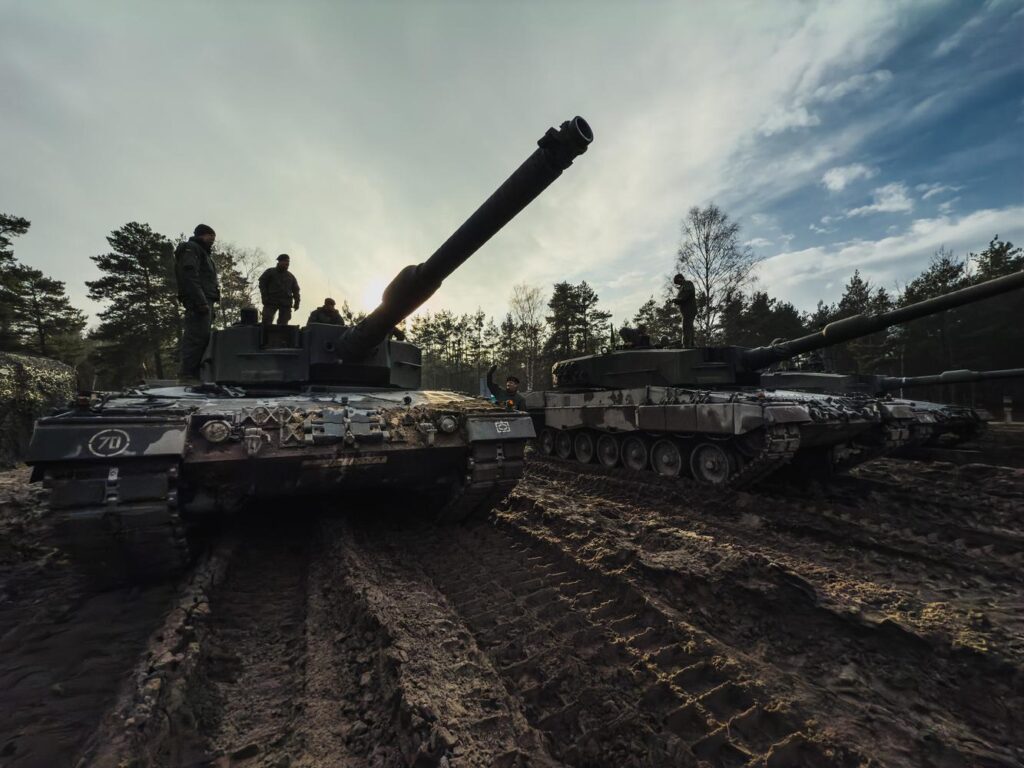
Poland has supplied ammunition and other weapons since early 2022, before the full-scale invasion, and has since handed over more than 350 tanks—14 Leopard 2A4, about 60 PT-91 Twardy, and roughly 280 Soviet-era T-72 variants. Warsaw also sent Krab self-propelled howitzers, Piorun shoulder-fired air-defense missiles, and Grad rocket launchers. Alongside Slovakia, it was among the first NATO states to send Ukraine fighter jets, delivering 14 MiG-29 jets and 10 Mi-24 attack helicopters between 2022 and 2024.

Former Polish prime minister Jarosław Kaczyński accused groups in western Ukraine of desecrating remains and stealing WWII-era victims’ jewelry. The leader of the national-conservative Law and Justice (PiS) wrote on X on 14 August 2026 that his party would demand Polish government intervention.
Kaczyński’s claim comes amid growing anti-Ukrainian sentiment in Poland and a dispute with Kyiv over how Polish wartime victims are remembered. However, Kaczyński’s X post named no location and provided no public evidence, while authorized Polish-Ukrainian teams continue exhuming and reburying Polish victims.
“Illegal excavations at the sites of former Polish villages in Eastern Galicia are turning out to be real,” Kaczyński wrote, referring to a historical region now largely in western Ukraine.
He called the alleged looters “black diggers,” a term for people who dig through burials or archaeological sites for valuables. He said they were pilfering the graves of Poles killed in the World War II-era Volhynia massacres and alleged that local Ukrainian officials were allowing it.
Kaczyński said PiS would appeal to Poland’s state authorities, including the Foreign Ministry, and demand “explanations and a response.”
The evidence described by PiS has not been made public. Onet reported that it was unclear which incidents he meant and that neither government had responded at the time. PiS spokesperson Rafał Bochenek later told the publication Interia that citizens had sent photographs allegedly showing damaged graves and listings for excavated objects. Interia published neither.
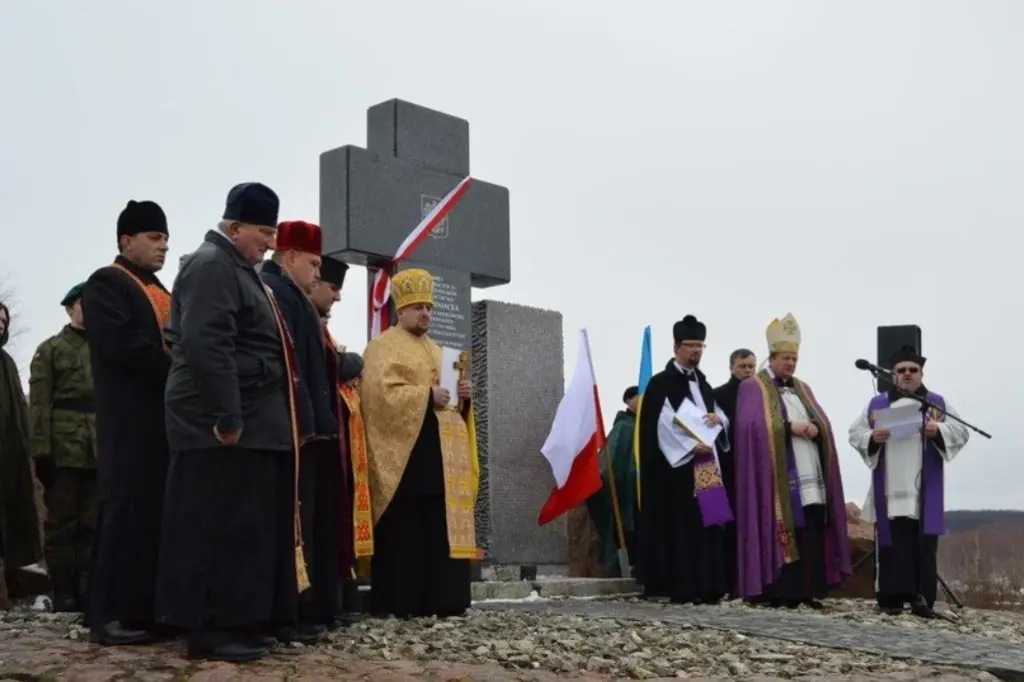
Meanwhile, Poland’s Institute of National Remembrance (IPN), the country's state historical institute, said Ukraine authorized its latest excavations at Ostrówki and Wola Ostrowiecka in Volyn.
From 13 July to 7 August, Polish and Ukrainian specialists recovered 55 victims, including 26 children. They also secured more than 300 personal items and pieces of clothing. The remains are due to be buried at Ostrówki cemetery on 30 August.
The excavation followed a wider thaw. Ukraine lifted its moratorium on Polish searches, while joint teams exhumed and reburied 42 people at Puźniki in 2025. Both countries have exchanged lists of sites for further searches.
Relations between Kyiv and Warsaw worsened after Ukraine gave a military unit the honorary title “Heroes of the Ukrainian Insurgent Army (UPA)."
The UPA fought for Ukrainian independence but is held responsible in Poland for the World War II-era massacres of Polish civilians. Polish President Karol Nawrocki later stripped President Volodymyr Zelenskyy of the Order of the White Eagle, Poland’s highest state honor.
Violence is also rising on the Polish streets. Reports of suspected hate crimes against Ukrainians in Poland rose by more than 30% in the first half of 2026, even as anti-xenophobic voices became more visible online. Kaczyński’s claim adds an unverified criminal allegation to the dispute.

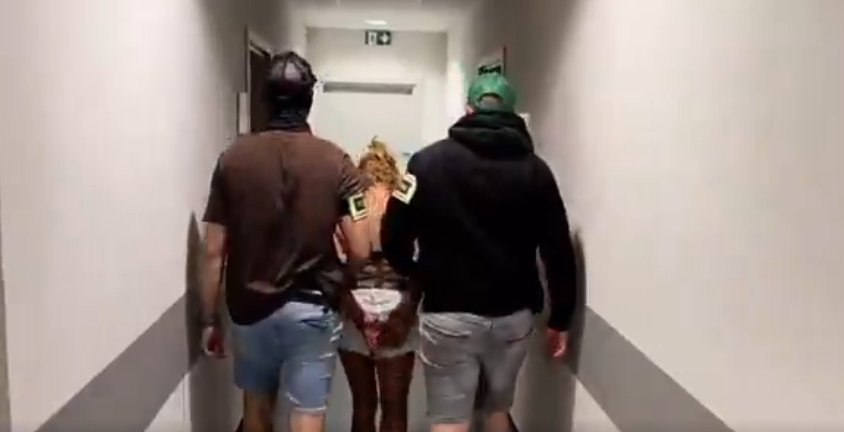
Polish police detained two women in connection with an attack on Ukrainian men outside a Poznań restaurant, Interior Minister Marcin Kierwiński announced. The incident comes as Polish-Ukrainian relations grow more strained and public attitudes toward Ukrainians worsen. The incident occurred shortly after midnight on 13 August on Półwiejska Street.
Police data obtained by Rzeczpospolita show 180 hate-crime reports involving Ukrainian citizens in the first half of 2026, over 30% more than a year earlier. Police have not said whether they are treating the Poznań case as a hate crime, although the recording includes nationality-based abuse.
One woman insulted two Ukrainian men, spat at one, knocked over a restaurant parasol, and struck one of the men, the Polish radio station RMF FM reported.
Półwiejska core pic.twitter.com/n2KGfyDRA7
— poznan_moment (@poznan_moment) August 13, 2026
Regional police spokesperson Iwona Liszczyńska said officers responded to reports of two apparently intoxicated women. However, the women had left before officers arrived. Police contacted the restaurant manager, who filed a formal complaint on the morning of 14 August. Officers had already begun identifying the women before the complaint was filed.
Kierwiński first reported that police had detained one woman and identified the other. He later announced the second woman’s detention and declared “zero tolerance for aggression and hatred.”
Kierwiński’s warning followed a series of attacks against Ukrainians in Poland this year. In July, three men allegedly beat a Ukrainian couple in Wrocław after asking whether the woman was Ukrainian. Police detained two suspects and treated the assault as a nationality-motivated hate crime.
In May, police detained five suspects aged 15 to 18 after an attack on three Ukrainian teenagers in Warsaw. One of them, 16-year-old Artem, suffered a fractured skull.
Earlier in July, two men linked to Poland’s far right confronted a Ukrainian woman at her legal-aid office in Poznań. They demanded entry and asked whether she supported Stepan Bandera, a WWII-era Ukrainian nationalist disliked by many Poles.
The Poznań incident comes as anti-Ukrainian themes have gained ground in Polish far-right politics, while Warsaw and Kyiv remain divided over the WWII-era Ukrainian Insurgent Army. Many Ukrainians honor the UPA for resisting Soviet rule. Poland holds it responsible for massacring Polish civilians.
Poland and Ukraine’s dispute over the Volhynia massacres, exhumations, and UPA symbols has prompted protests and a diplomatic clash over state honors. Police have not linked the Poznań attack to that dispute.