❌

Vue lecture

Civil society is Ukraine’s superpower. A free course traces how it grew from Euromaidan to the front

Ukrainian civil society euromaidan official art

I remember the day Euromaidan started. For months before it, the country had felt like it was going the wrong way, and I felt powerless to stop it. My life was one rally after another: against the pressure on small entrepreneurs, in defense of the Ukrainian language, against the plan to turn Hostynnyi Dvir, a historic arcade in Kyiv, into a shopping mall. The authoritarian pressure kept rising, and so did the helplessness.

Then, on 21 November 2013, the journalist Mustafa Nayem wrote a Facebook post calling people to the square after President Viktor Yanukovych's government suspended preparations to sign the association agreement with the EU. Nobody knew how to stop what was happening. But we knew we had to act.

Thirteen years later, a free online course, Ukraine: History of Civil Society, tells the story of what was born on that square: a civil society that has carried Ukraine through revolution and war. Among its authors is Oleksandra Matviichuk, who co-founded Euromaidan SOS; one of its presenters, the researcher Kateryna Zarembo, now serves as a combat medic.

A country inside a country

Explore further

Meet the Hard-Working Ukrainians Helping to Keep Euromaidan Alive

The regime's reach felt total. It extended to the courts and the police; we even wondered whether it extended to the army. It was like tentacles spreading everywhere, and you were one small, frightened person watching them close in. But then you get together with others and start thinking, and start doing even silly little acts of resistance. That is what the Maidan was: a microcosm of resistance, a city inside a city, a country inside a country.

It was an alchemist's laboratory where initiatives were born, some funny, some silly, some very useful. The Maidan had its own newspaper and its own self-defense: guys trained by former security officers to patrol its edges and by former army officers to hold defensive formations behind wooden shields. Farmers delivered food so the protesters would have something to eat, and one man boiled a huge pot of borscht every day. Artists formed their own art sotnia, a unit named after the Cossack "hundreds" the protest was organized into. There was an Open University of the Maidan with lectures on civil society, and a library. Girls dressed as angels handed flowers to the Berkut riot police, to warm their hearts.

Euromaidan SOS searched for the protesters who went missing: abducted, jailed, or dragged through the courts. AutoMaidan drivers rescued activists from hospitals, because the regime could order hospitals to hand over anyone with visible signs of a Berkut beating. Volunteer medics built a parallel health care system. And there were the initiatives to tell the world what was happening, one of which became Euromaidan Press.

If you came, you found a job. First I cooked and brought food, made sandwiches. Then I started in the kitchen, got bored, and found my way to a translating job. At Christmas, I took my small daughter to the Maidan, and we sang carols to the activists in the tents.

I didn’t think of it then, but I was doing what the course’s last lecture describes: passing it on. The course follows Myroslava Barchuk, who went to the Revolution on Granite in 1990 as a student with her mother, then to the Orange Revolution, and whose son Nestor came to the Euromaidan chanting “Ukraine is Europe!” Freedom in Ukraine, the course argues, is carried from one generation to the next, often by hand.

A hand-painted poster from the Euromaidan protests reading "I am a drop in the ocean which will change Ukraine"
"I am a drop in the ocean which will change Ukraine." Art that kept the spirits of the protesters up during the 2013-2014 Euromaidan Revolution

Everyone brought what they could. "I am a drop in the ocean," went one of the mottos. We didn't know what to do, but we knew we had to do something, and suddenly there was this acute sense that it depends on you. Even if you're one drop, your effort matters.

The more pressure there was, the more people came. In January 2014, the activist Ihor Lutsenko was abducted together with Yurii Verbytskyi. Lutsenko was beaten and left in a forest; Verbytskyi was found dead. And still more people came.

The course’s lecture on the Revolution of Dignity describes what we lived through from the outside.

Its lecture on the Revolution of Dignity describes what we lived through. After the failed attempt to clear the square on 11 December, it says, the Maidan turned into "Maidan Sich," a fortified island "with its own system of governance," from security to garbage collection. "For thousands of Ukrainians, for whom the state had become a threat and an instrument of violence, the Maidan became a space of security."

Explore further

Eleven films about Euromaidan you can watch online

Not self-expression, but survival

Yevhen Hlibovytskyi, director of the Frontier Institute

This is what the West tends to miss about Ukrainian civil society, says Yevhen Hlibovytskyi, director of the Frontier Institute and one of the course's authors, whom I interviewed for Euromaidan Press.

"The state in Ukraine is far more threatening, it carries more dangers, and the relationship between the citizen and the state is far more strained. It is mostly a zero-sum game," he says. "That is why civil society in Ukraine flourished as an instrument of security, an instrument to protect society from the arbitrariness of the state."

Seen through Western eyes, he says, it looks baroque, a strange, unnecessary splendor. "In Ukraine, this splendor was a requirement of life, a condition of survival."

The West, he says, doesn't understand why Ukraine needs its civil society at all, "or that activism is not a form of self-expression. Activism is rather a form of service. It is a need, not some optional leadership."

Ukrainians are still too traumatized by their past to hand the state full power, he says: "We want the state to be weaker, more limited, so that if at some point it becomes arbitrary, it cannot harm people or take their lives."

Explore further

13 years since Euromaidan sparked Ukraine’s fight for Europe

From the Maidan to the front

For many years, Ukrainians had lived in a passive belief that they could not change anything. The course opens on that problem: countries that lived through totalitarianism, it says, "might have millions of residents but not many citizens." In 2013, the lecture says, only 8% of Ukrainians said they were involved in public affairs.

After the Euromaidan Revolution, that changed. Activists lobbied for the anti-corruption institutions that exist today. Lawyers keep pushing judicial reform. Come Back Alive, founded in 2014 to buy helmets and body armor, is now one of the largest charities supplying the army. In 2017, the course notes, over half of Ukrainians trusted volunteers, against 5.3% who trusted parliament.

Not all the reforms are done. What keeps them going are the people who feel they cannot stop.

Many of those people went into the state itself.

  • Mustafa Nayem, whose post started it all, and Ihor Lutsenko both served in parliament.
  • Tamila Tasheva, founder of CrimeaSOS to help those displaced by Russia's occupation of Crimea, became the president's representative in Crimea and is now an MP.
  • Maria Tomak, who began on the Maidan as a volunteer with Euromaidan SOS and co-founded the Media Initiative for Human Rights, headed the department of the Crimea Platform at the president's mission for Crimea.
  • Olha Reshetylova, a journalist who co-founded Come Back Alive in 2014, became Ukraine's first military ombudsman in December 2024.
  • Oleksandra Matviichuk, co-founder of Euromaidan SOS, heads the Center for Civil Liberties, which received the Nobel Peace Prize in 2022.

Some stopped. Many kept going, all these 13 years, exhausted to the bone. They make themselves by building the Ukraine they want to see.

Christine Eliashevsky-Chraibi was one of them. Her mother survived Ravensbrück, the Nazi concentration camp for women, where she was imprisoned as a young Ukrainian political activist; the family later settled in Canada. Christine answered the call for translators on the Maidan and never left. She stayed with Euromaidan Press for 12 years, because she felt it was her duty to keep telling the world what she could about Ukraine. She died this year. We wrote about her in our tribute.

Many others now defend Ukraine with their lives. Lutsenko, the activist who was almost killed during the Euromaidan Revolution, is serving his fifth year in this war, in drone units, and now helps train new drone pilots. Kateryna Zarembo, too, traded research for a medic’s kit.

Roman Ratushnyi was beaten by the Berkut on the first night the police attacked the protesters. He went on to defend the Protasiv Yar neighborhood in Kyiv from illegal construction, and was killed near Izium in June 2022. "The less people fight for changes, the less they are citizens," he said, in words the course's final lecture quotes. His older brother Vasyl was killed in February 2025. Their father is still serving, and their mother is left without her sons.
Explore further

Ukraine: from the middle ages to a new world

What the West could learn

Hlibovytskyi's point now reads less like theory than like a warning. "The Western world has learned to combine freedom and a high quality of life," he says. "Ukraine adds resilience to this mix. And this resilience will be needed in the West too, in time. The world has become dangerous. The sense of security turned out to be deceptive."

It doesn't matter which ocean you live behind, he says, "if cyberterrorists are acting against you or identity politics is destroying solidarity." Look at Russia's hybrid warfare spreading across Europe: disinformation, drones over airports, sabotage. Ukrainians didn't wait for their government to act.

In the West, governments work, so criticizing them can be a form of self-expression. In Ukraine, you have to build the state yourself. "No state can protect citizens who do not want to be protected," Hlibovytskyi says. "The state of democracy depends directly on how citizens carry out their duties."

Bruised, but not broken

Ukraine is taking blow after blow. Millions have left, and many have been killed. We are exhausted. And still the drive keeps going forward, still it tries to reform, even as so many reformers are at the front and the pace has slowed. It is bleeding and bruised, but it is still there: the drive toward a life in which justice and dignity are honored. It is the soul of the country.

That is what is underestimated. Euromaidan is too often described as a product of outside forces. That is a lie. What fed it was the quest for justice and dignity that drove all those people onto the square. "Justice is a fundamental archetypal feature of Ukrainians," the dissident Myroslav Marynovych says in the course's final lecture. "If it is violated, Ukrainians rise to revolt."

About the course

Ukraine: History of Civil Society is free on Coursera: 12 lectures of 9 to 13 minutes, from the Revolution on Granite through Euromaidan to the full-scale war. It was created by the East Europe Foundation and the Ukrainian Institute with EU funding. Its authors include Oleksandra Matviichuk, Olha Onuch, Sevgil Musayeva, and Yevhen Hlibovytskyi, and it is presented by Kateryna Zarembo and Tymofii Brik.
  •  

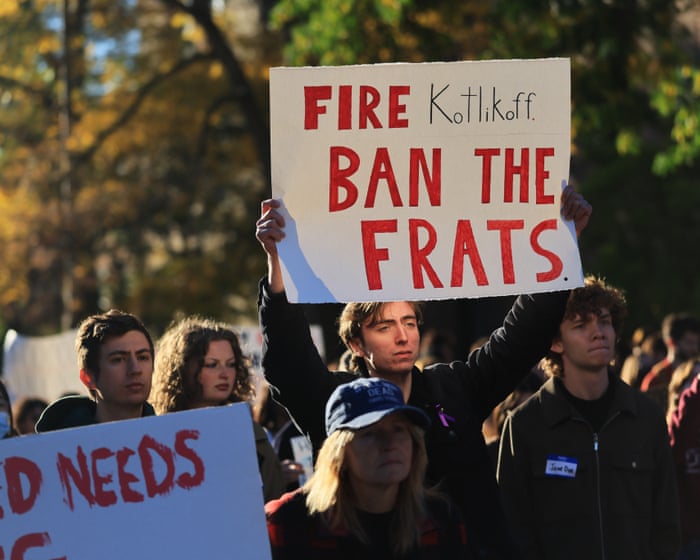
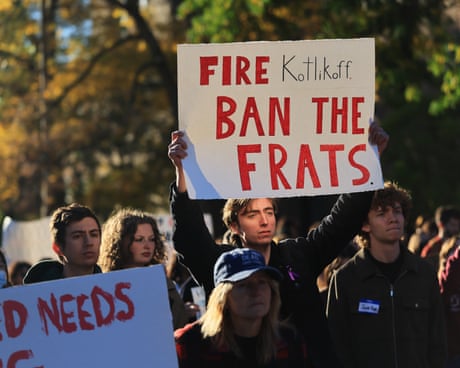
Cornell announces full review of Greek life after scrutiny over sexual assault case

The university will conduct a series of measures after a former student was gang-raped at a fraternity house two years ago

Cornell University is set to announce a “full review” of fraternities and sororities determining their future on campus after an alleged sexual assault there has brought scrutiny to the system at the Ivy League school.

University president Michael Kotlikoff announced the review on Monday in an update outlining several steps the institution has taken after a woman said she was gang raped at an on-campus fraternity’s house.

Continue reading...

© Photograph: Spencer Platt/Getty Images

© Photograph: Spencer Platt/Getty Images

© Photograph: Spencer Platt/Getty Images

  •  

Brussels’ new roadmap puts Moldova ahead of Russia-attacked Ukraine and names no EU joining date for Kyiv

EU Enlargement Commissioner Marta Kos speaks at a press conference on the EU enlargement package, with Montenegro's flag on the screen behind her, Brussels, Belgium, 4 November 2026

The European Commission's new plan for Ukraine's EU membership talks sets no joining date and asks Kyiv to finish only a handful of policy areas in 2027, Politico reported. Moldova, which applied alongside Ukraine but is not at war, is expected to move more than three times faster. Brussels wants Kyiv to speed up court and anti-corruption reforms that its parliament must pass while fighting Russia.

Russia keeps striking Ukrainian cities and power plants, and the country is rebuilding its laws to European standards at the same time. EU rules do not bar a country at war from joining. Yet a member at war raises hard questions about borders, security, and the mutual defense duties EU states owe each other. That makes every month of slower reform a widening gap between Ukraine and the neighbors on the same path.

Seven chapters for Ukraine, 25 for Moldova

Countries joining the EU must align their laws with EU rules in dozens of policy areas, called chapters, and close each one. The Commission's roadmap lists seven that Ukraine could provisionally close in 2027. Education and culture come first, in the first half of the year. Intellectual property, employment, industrial policy, science and research, external relations, and foreign and security policy follow in the second half.

Moldova could close nine chapters in the first half of 2027 and 16 more by year's end, Yevropeiska Pravda, Ukrainska Pravda's EU-affairs site, reported. Both countries applied in 2022 and opened talks on the same day in June 2024. Ukrainian President Volodymyr Zelenskyy has argued they should keep moving in step. “Moldova and Ukraine are certainly stronger when we move forward on this track together,” he said on 26 October.

Moldovan President Maia Sandu stands at a podium, positioned between the flag of Moldova and the flag of the European Union
Explore further

Sandu ties Moldova’s fate to Ukraine despite Hungary blocking both EU paths

No date for Kyiv, a timetable only for Montenegro

Presenting the package on 4 November, EU Enlargement Commissioner Marta Kos confirmed it sets no date for Ukraine's accession, Interfax-Ukraine reported. The roadmaps run only to the end of 2027. Ukraine could close up to seven chapters if it meets interim rule-of-law benchmarks, and she called its chances high. The plan describes itself as a “living document” that can add chapters if reforms move faster.

Montenegro, a small Balkan country, is the exception. It has closed 21 chapters and could close the rest by the end of this year, the Commission said. Brussels envisages June 2027 as the target for signing its accession treaty.

EU foreign policy chief Kaja Kallas and EU Enlargement Commissioner Marta Kos present the 2026 enlargement package in Brussels, Belgium, 4 November 2026
EU foreign policy chief Kaja Kallas and EU Enlargement Commissioner Marta Kos present the 2026 enlargement package in Brussels, Belgium, 4 November 2026. Photo: European Union

Courts first, while the war strains parliament

No chapter can close before Ukraine meets key rule-of-law requirements in the first half of 2027. The Commission admits these reforms take extensive consultations, time, and money. It also notes that the war places extraordinary demands on Ukraine's government and parliament. Kyiv and Brussels set up a joint task force in October to speed those benchmarks up.

Ukraine's ambassador to the EU, Taras Kachka, sees no lag behind Moldova, only different assessments of how ready each chapter is. He put the burden on lawmakers. “The success of our negotiations now depends 90% on the speed and pro-European commitment of parliament,” he told Radio Svoboda. The Commission's annual report had already flagged that Ukraine's parliament slowed its lawmaking over the past year, though it also found that reforms have recently picked up pace.

The two countries still share one obstacle. Hungary has held up the last two blocks of talks for both, and they are now expected to open in December, the Kyiv Independent reported. Kachka told Euronews that Budapest has raised no new substantive objections and only wants more time to study the documents. Moldovan President Maia Sandu has argued that holding Moldova back does nothing to help Ukraine.

  •  

Ukraine aims to finish EU talks by 2028. Brussels agrees—on one condition: Ukraine’s lawmakers stop dragging their feet

EU Enlargement Commissioner Marta Kos (right) and EU foreign policy chief Kaja Kallas present the 2026 Enlargement Package in Brussels, Belgium, 4 November 2026

Ukraine is ready to open all remaining rounds of EU membership talks but must speed up reforms its parliament keeps putting off, the European Commission said in its annual report on 4 November. Brussels backs Kyiv’s goal of finishing the talks by the end of 2028. It also found that no law passed in the past year significantly strengthened Ukraine’s anti-corruption framework.

Russia’s war has made Ukraine dependent on foreign money to pay salaries, pensions, and repairs while its own revenue goes to defense. Next year’s financing gap runs to tens of billions of dollars, and Brussels ties more aid to reforms. That makes the speed of Kyiv’s legislature a question of cash as well as membership. In October, lawmakers passed a tax on cheap foreign parcels only on the third attempt, to unlock a €3.7 billion EU payment. The EU wants reforms before it pays more.

Every remaining cluster ready, a deadline that needs speed

Accession talks are split into six clusters of chapters. Ukraine opened four of them over the past year, and the Commission assessed the remaining two as ready to open. Brussels supports Kyiv’s aim to close negotiations by the end of 2028, but “it is important that Ukraine continues to accelerate the pace of reforms” to get there, the Commission stated.

Moldova, which applied alongside Ukraine, got a different message. Brussels urged it to keep its current pace and called its goal of finishing talks by early 2028 ambitious but achievable. “Albania, Moldova and Ukraine could join the European Union in the coming years if they sustain the reform efforts,” Enlargement Commissioner Marta Kos said.

Incidents involving NABU staff listed in the Shadow Report
Explore further

Days before the EU grades Ukraine, watchdogs flag trouble with a condition Brussels set for its membership

The 119-page report grades each chapter. Ukraine has a good level of preparation in energy and in foreign, security and defense policy, where it made “very good progress.” It is at an early stage on the free movement of workers, social policy and employment, and its future payments into the EU budget.

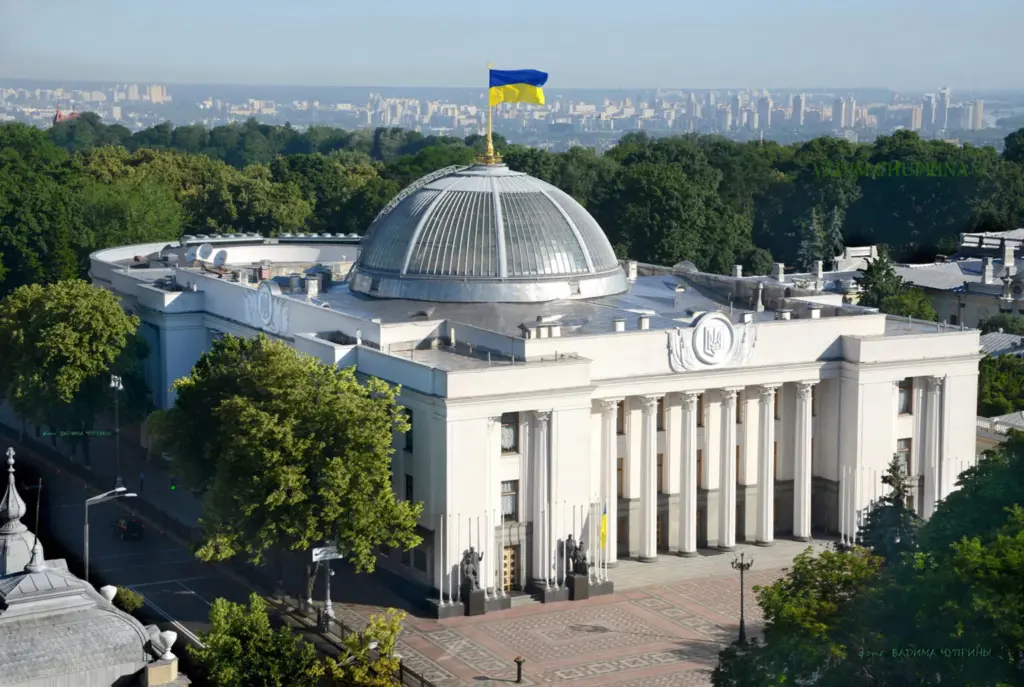
Aerial view of Ukraine’s Verkhovna Rada building in Kyiv, topped by the Ukrainian flag.
Ukraine’s parliament, the Verkhovna Rada, in Kyiv. Photo: Vadim Chuprina / Wikimedia Commons

Ahead of the release, Ukrainian news site Liga reported, citing a single unnamed Foreign Ministry source, that the Commission would raise Ukraine’s readiness in 10 chapters and see progress in all of them. The published report explicitly raises the overall level only in the fight against corruption, and records limited progress in several chapters.

A parliament that slowed down, then turned to reforms when EU money was at stake

Parliament passed 133 laws between September 2025 and September 2026, at a slower pace than the year before, the report notes. It calls the slowdown in legislative decision-making “a point of concern.” Since the end of the summer, Kyiv has focused more on reforms and on meeting the conditions attached to the EU’s Ukraine Facility and the Ukraine Support Loan, two programs that pay out in step with reforms.

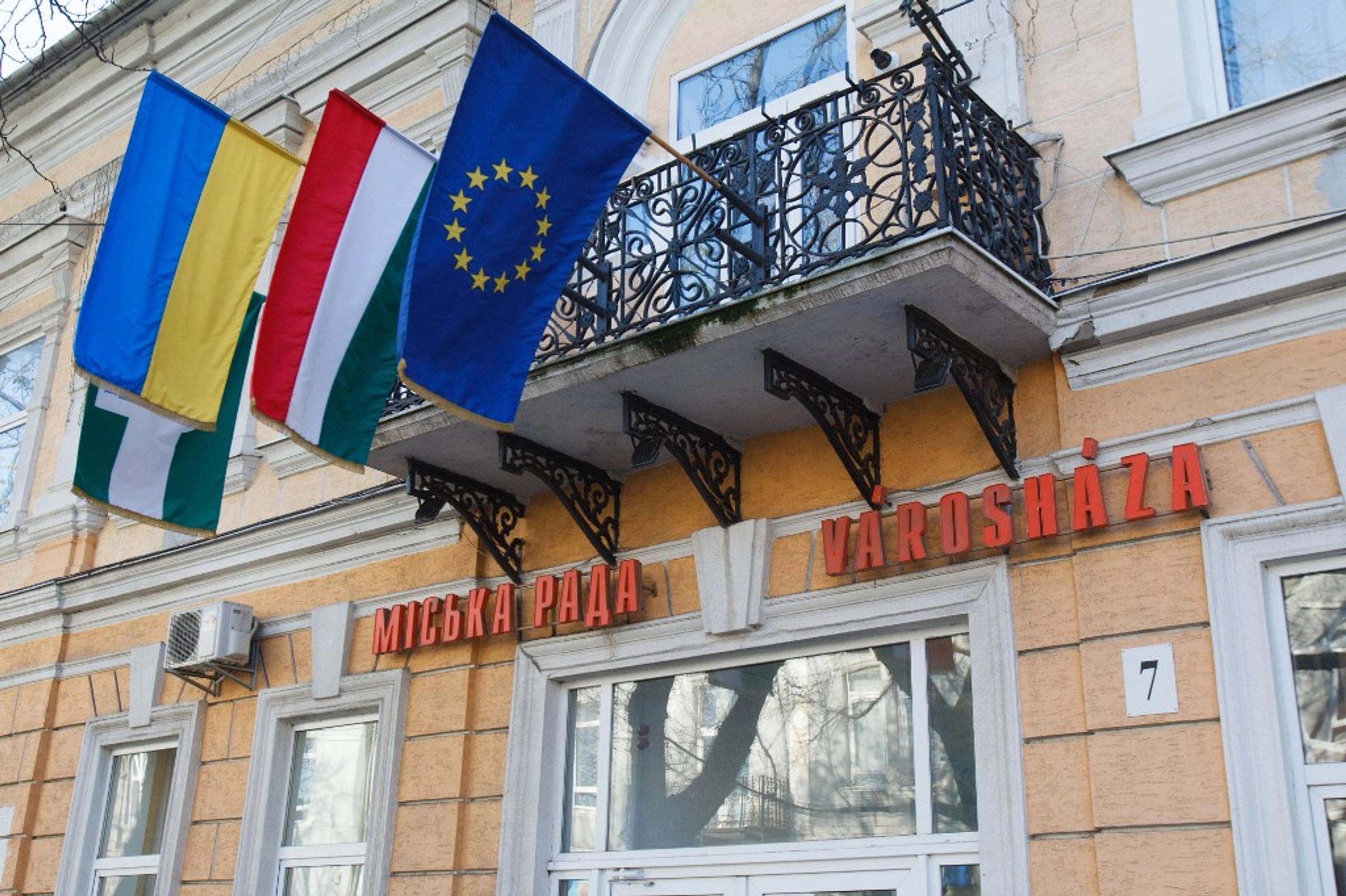
russia faked ukrainian phone numbers threaten hungarians ukraine — help orbán win hungary's election kyiv says · post local hungarian eu flags city hall building zakarpattia oblast's town berehove home
Explore further

For years, Hungary tied Ukraine’s whole EU course to ethnic Hungarians’ language rights. Kyiv has now passed the schooling law meant to lift the block

Several votes the Commission needs are still waiting. A new anti-corruption strategy for 2026–2030 awaits adoption by parliament. The terms of two members of the High Council of Justice, the body that governs Ukraine’s judges, expired in August, and the report urges lawmakers to fill the seats “without delay.” Two seats on the Constitutional Court that parliament must fill have stayed empty since it failed to appoint judges in October 2025. Why lawmakers keep stalling bills they later pass, the report does not say.

Anti-corruption agencies work, the laws stall

The Commission credits Ukraine’s anti-corruption agencies with a better grade. The National Anti-Corruption Bureau, the Specialized Anti-Corruption Prosecutor’s Office, and the High Anti-Corruption Court brought more high-level corruption cases to investigation, trial, and final conviction, reaching top officials and judges. Yet “no laws were adopted to significantly advance the anti-corruption legal framework,” the report states, calling the slow adoption of the reforms Brussels recommended “a major concern, requiring urgent action.”

The 10 priority reforms Kyiv agreed with Brussels on 10 December 2025 “remain mostly outstanding.” Progress on the rule of law roadmap was limited, and law enforcement reforms were slow, with many delayed. Ukrainian watchdogs rated anti-corruption progress as limited in their own report in October.

These reforms decide when Ukraine can finish. No chapter can close until EU governments confirm that Kyiv has met interim benchmarks on the rule of law and democratic institutions, Interfax-Ukraine reported. In October, Ukraine and the Commission set up a joint task force to speed up those benchmarks.

  •  

Ukraine's parliament passes state asset agency reform crucial for EU funding

Ukraine's parliament passes state asset agency reform crucial for EU funding

Ukraine's parliament passed a reform of the Asset Recovery and Management Agency (ARMA) on June 18, a key step toward European integration and a condition listed in the EU's Ukraine Facility plan.

The legislation passed with the support of 253 lawmakers "after months of obstructions... unblocking 600 million euros ($690 million) in EU funds," lawmaker Yaroslav Zhelezniak said.

The ARMA is Ukraine's national agency tasked with locating, recovering, and managing assets seized in criminal proceedings, namely during corruption cases.

Proposed reforms include stricter integrity and qualification standards for leadership candidates and merit-based hiring through open competitions involving civil society. They also call for independent external audits, clear deadlines for appointing asset managers, and the use of certified professionals held legally accountable for mismanagement.

The Ukraine Facility, an EU program providing Ukraine with 50 billion euros ($58 billion) in multi-year financial support contingent on reforms, set the end of March as the deadline for the ARMA's reform.

Anti-corruption experts, lawmakers, and Transparency International in Ukraine have backed the reforms, but discussions have dragged on for months since several versions of the bill were introduced in December 2024 and January.

The ARMA has long criticized the proposed legislation, arguing it had already carried out substantial and "transformative" reforms since 2023.

Transparency International reacted by saying that the ARMA's "public communication suggests that the agency’s primary concern is not the introduction of meaningful reforms, but ensuring that its current leadership can continue operating as it has."

Ukraine has embarked on extensive reforms as part of its efforts to join the EU and other Western structures, though Russia's full-scale invasion has presented fresh challenges to this effort.

Ukraine’s parliament passes bill on multiple citizenship
Ukraine’s parliament on June 18 supported a bill allowing Ukrainian citizens to hold passports of foreign countries, lawmaker Yaroslav Zhelezniak said.
Ukraine's parliament passes state asset agency reform crucial for EU fundingThe Kyiv IndependentMartin Fornusek
Ukraine's parliament passes state asset agency reform crucial for EU funding
  •  
❌