❌

Vue lecture

Ukraine retakes ground in a region Russia has fought for years to capture. “Vivaldi” is only getting started but is already “one of the most important victories for Ukraine in 2026”
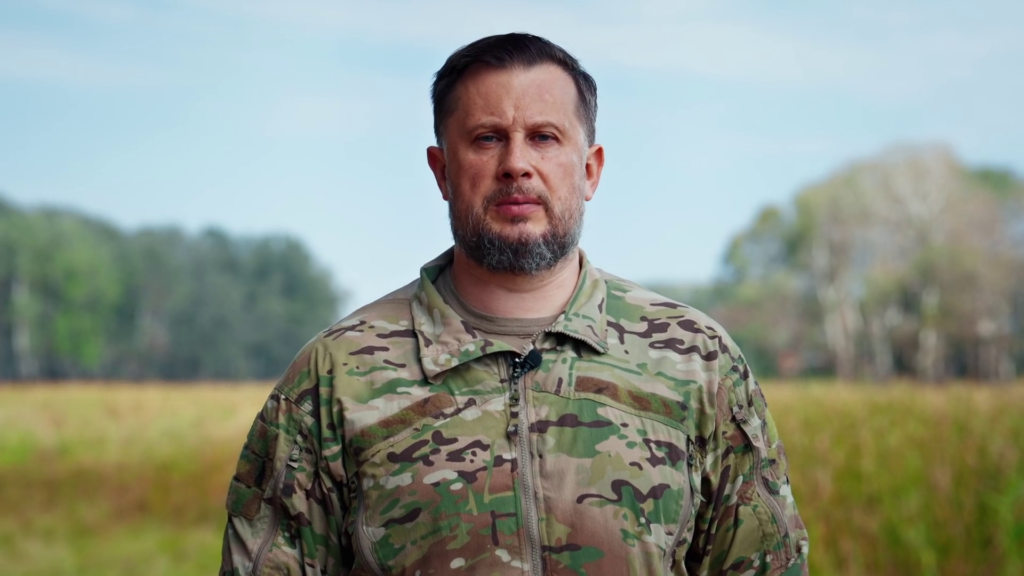
Ukraine's Third Army Corps commander Brigadier General Andrii Biletskyi announcing new developments in "Operation Vivaldi," 20 September 2026. Screenshot from video: Ukraine's Third Army Corps

Ukraine’s Third Army Corps says its forces have liberated Shandryholove and Derylove and established full control over Drobysheve in Donetsk Oblast as part of its ongoing “Vivaldi” offensive.

Ukraine is taking the initiative in northern Donetsk, where Russia has spent years trying to seize the remaining Ukrainian-held territory. By retaking ground and disrupting Russian logistics, the “Vivaldi” counteroffensive could complicate Moscow’s plans for a broader offensive in the Donbas.

According to the corps, Ukrainian forces and attached units have regained control of 125 square kilometers during the first two phases of the operation, including 50 square kilometers that had been under Russian occupation.

The corps said the operation has also inflicted more than 3,000 Russian personnel losses across the two phases, including 800 more during the latest phase. 

Ukraine expands gains in “Vivaldi” offensive

The Third Army Corps said its forces captured Shandryholove and Derylove and established full control over Drobysheve during the second phase of the offensive.

The offensive is aimed at degrading Russian forces operating in the area, with the corps saying it is targeting elements of Russia’s 20th and 25th Combined Arms Armies and 1st Guards Tank Army.

Brigadier General Andrii Biletskyi, commander of the Third Army Corps, said Ukrainian assault groups are preceded by drones and unmanned ground vehicles.

The corps said its heavy bombers have been used to deliver kamikaze ground robots more than 10 kilometers behind Russian lines. Artillery and drone units have targeted Russian command posts, communications nodes, logistics, crossings, and reserves.

Ukrainian air defense and electronic warfare units have also helped shield the area of operations, according to the corps.

The operation involved units from the 60th Mechanized Brigade, 125th Heavy Mechanized Brigade, 3rd Assault Brigade, KRAKEN, the 3rd Separate Reconnaissance Battalion, and the corps’ 25th Anti-Tank Battalion, along with attached units.
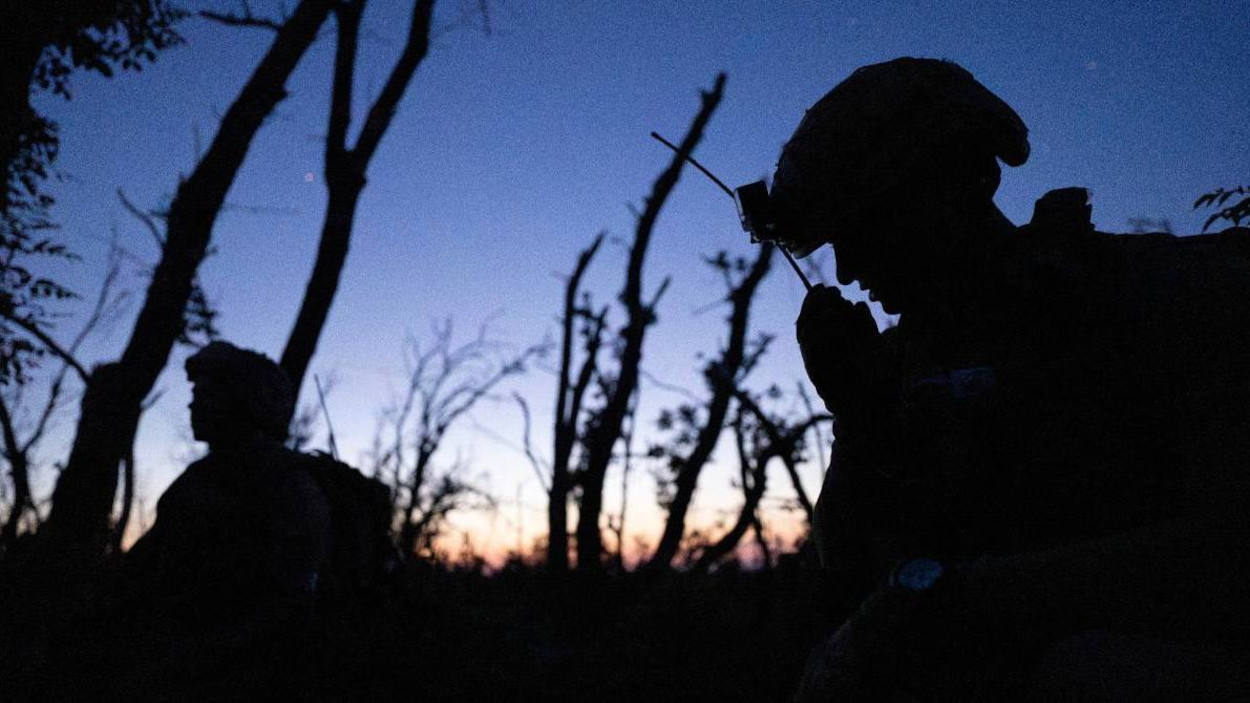
Soldiers of Ukraine's Third Army Corps. Photo: Ukraine's Third Army Corps
Explore further

“Only the first season” – Ukraine unveils secret counteroffensive in a region Russia has been trying to seize for 12 years

“One of the most important victories for Ukraine in 2026”

Open-source analyst Clément Molin, who has tracked the offensive using publicly available information, described the developments as highly significant.

“This is one of the most important victories for Ukraine in 2026, which will delay the offensive on northern Donbas,” Molin said.

After 4 months of the Lyman counter-attack, Ukraine 🇺🇦 3rd Army Corps managed to cut Russian 🇷🇺 salient north of Lyman and liberate more than 200 km2

This is one of the most important victory for Ukraine in 2026 which will delay the offensive on northern Donbas

🧵THREAD🧵1/20⬇ pic.twitter.com/PybB6jO9DO

— Clément Molin (@clement_molin) September 8, 2026

He also cautioned against claims that a large Russian grouping had been encircled, while assessing that Ukrainian advances had put pressure on Russian positions and supply routes.

The information surrounding the operation has remained limited, with Ukrainian forces maintaining operational security around their movements.

The Third Army Corps said the offensive is continuing and that further developments are expected soon.

  •  

“Huge increase” in Russian assault groups trying to break through to Dobropillia, but they are using familiar tactics, staff sergeant says

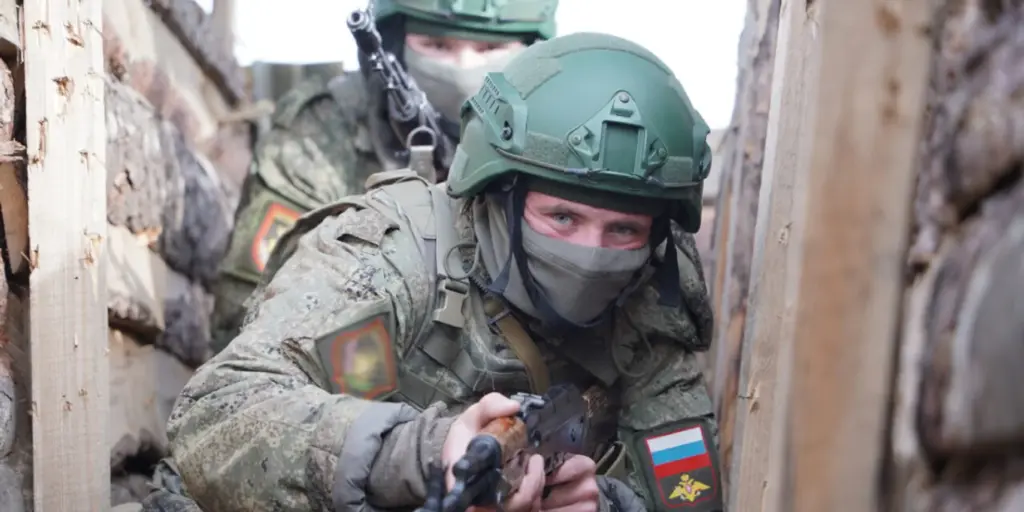
Russian Armed Forces assault troops, illustrative photo. Photo: Russian Ministry of Defense

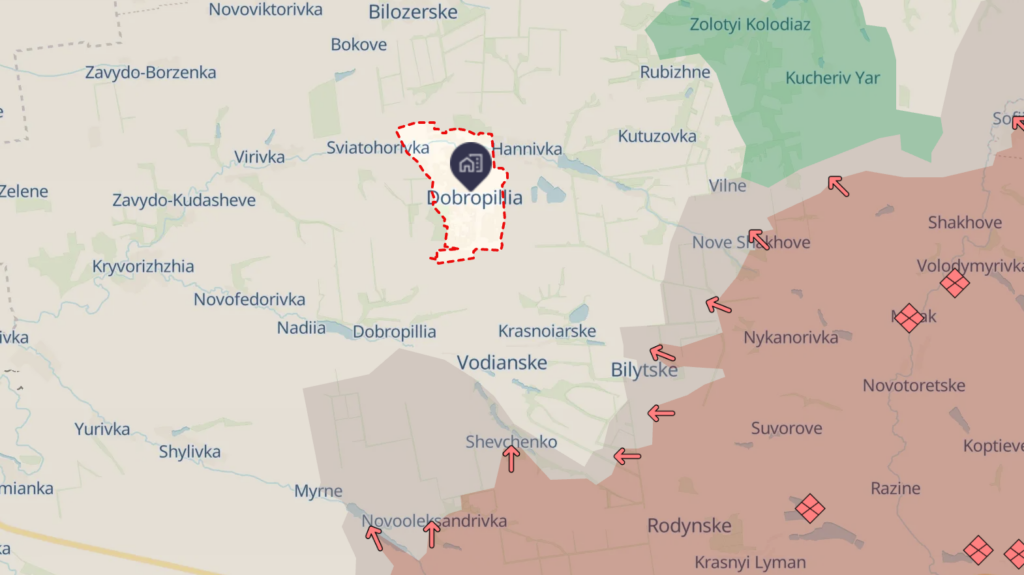
Russian forces have stepped up their attempts to break through toward Dobropillia in recent weeks, staff sergeant Dmytro Davydenko of the Svoboda Battalion headquarters said on the Suspilne Studio broadcast on 14 September.

Dobropillia is an important transportation hub in northern Donetsk Oblast, with a key road connecting it to Kramatorsk. Russian forces are using every possible factor, including weather conditions, to seize Dobropillia as part of their efforts to capture the entire Donetsk Oblast.

He noted that Russian forces may be taking advantage of the “greenery” to move as many troops as possible closer to the settlement and then enter Dobropillia when the weather deteriorates, potentially leading to urban combat.

The actions may be part of a tactic Russia has used before, but Ukraine has taken it into account

“Right now, there is a huge increase in the number of mobile groups moving in this direction. Sometimes we simply cannot keep up with engaging those we detect because there is a very large number of movements advancing in all directions right now,” Dmytro said.

Russian forces may use poor weather conditions to attempt something similar to what they did in Pokrovsk, when they tried to bring in a large number of troops using mechanized columns, the staff sergeant said. He added that the Ukrainian military had “drawn certain conclusions” and created obstacles for Russian forces along the routes to Dobropillia: the roads have either been destroyed, mined, or blocked.

The city of Dobropillia in Donetsk Oblast and Russian forces advancing toward it on the DeepState analytical project's map on 14 September 2026. Screenshot from the DeepState map

The number of assault troops has increased, but Russia faces limitations

Russia can increase the number of troops in the area, but its capabilities are limited, Davydenko said. He explained that one drone operator cannot simultaneously support 20–30 assault groups on different axes, so an increase in the number of Russian troops is unlikely to result in a “critical onslaught.”

“To bring in an even larger number of fighters, I don’t know how well they will manage that, because there is the factor of the physical ability to bring this number of people to the staging point and then lead this large number of people along the route,” Davydenko said.

The Kremlin revives its push toward Dobropillia

Russia prioritized offensive operations toward Pokrovsk and Dobropillia to encircle Ukraine’s fortress belt in Donetsk Oblast from the southwest, but the timeline for such an encirclement is “extremely unrealistic,” the Institute for the Study of War (ISW) said in its 7 August report.

The fortress belt consists of four fortified cities that have formed the backbone of Ukraine’s defense in Donetsk Oblast since 2022: Kostiantynivka, Druzhkivka, Kramatorsk, and Sloviansk. Dobropillia sits at its southwestern corner.

The city initially became a target of Russian strikes as Russian forces advanced toward Pokrovsk, and later became a target for capture. On 11 August 2025, Russian forces managed to approach Dobropillia and cut the Dobropillia–Kramatorsk highway in the opening days of their offensive. Ukrainian forces later reported that they had encircled and eliminated these troops.

In spring and summer 2026, Russia would “almost certainly” attempt to repeat its success in Dobropillia, predicted Francis Farrell for the Kyiv Independent. That is what happened. On 26 July, reports emerged that Russia was once again massing around Dobropillia, using quad bikes and motorcycles, following the same infiltration pattern as in 2025.

  •  

“Sometimes I forget I don’t have a leg”: how two Ukrainian infantry soldiers returned to war behind screens

Bilyi.

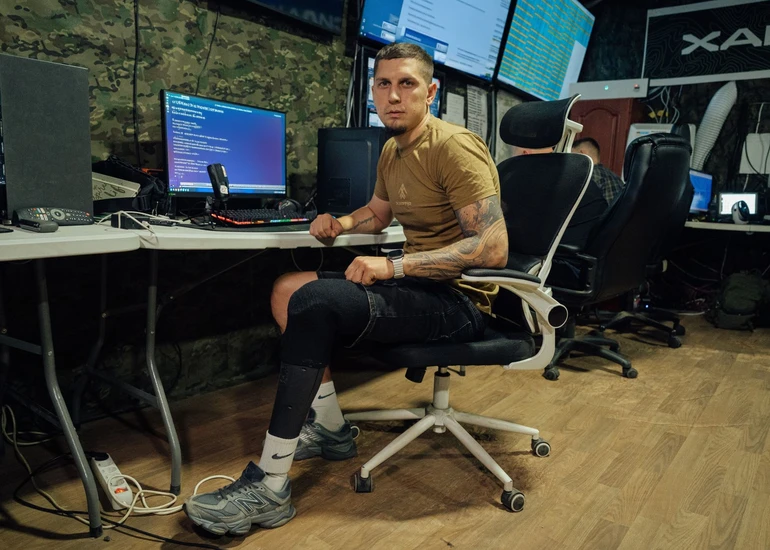
Callsign Bilyi, a former air-assault soldier, stepped on a PMN-2 anti-personnel mine in July 2025 during a combat mission in Kharkiv Oblast. Callsign Terri, a former industrial worker from Kharkiv Oblast, lost part of his lower leg after stepping on a petal mine near a position in the same oblast shortly before. Both underwent amputations, rehabilitation, and prosthetic fitting, then chose to return to Khartiia, the National Guard formation they had served with, according to Ukrainska Pravda.

Over 100,000 amputations have been performed in Ukraine over four years of war, and the fighting has added as many as 390,000 disabilities, according to the World Health Organization. While the figure does not distinguish soldiers from civilians, these two men show one route back into the war for soldiers who cannot return to the ground: the screens of a drone-saturated battlefield, where what they learned on foot still counts.

Both men could have been discharged, they told Ukrainska Pravda, and chose instead to keep serving in ISTAR (intelligence, surveillance, target acquisition, and reconnaissance). The operator watches drone feeds, tracks friendly and enemy positions, and passes targets to strike teams. 

Bilyi's path back to service

Bilyi says the job needs what he already had: "An ISTAR operator should have combat experience, to understand where things are, to know what a position looks like. If you come in without it, they show you a picture. But if you have never felt what that is, it is not the same."

He moved to Khartiia at the end of 2024 and was wounded on his first mission with the unit. His tourniquet remained on his leg for two days before scouts carried him out. Bilyi returned to Khartiia on 12 May 2026, less than a year later, fitted with an electronic Allux prosthesis.

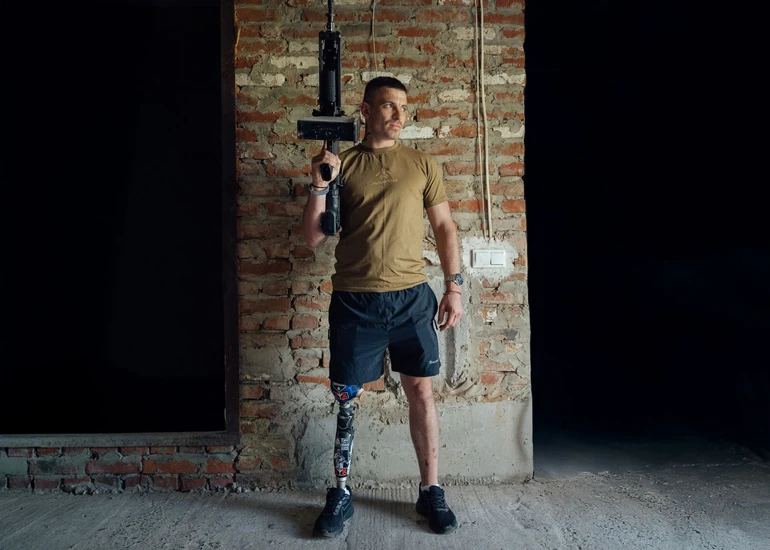
Bilyi
Bilyi. Photo: Vladyslav Klymenko / Khartiia

"I've gotten used to it. Sometimes I forget I don't have a leg," Bilyi said.

Part of why he returned was to set an example for the men in his unit: "He serves on a prosthetic, so why should I be down? You can keep moving forward."

From the trenches to the monitors: Terri's shift in perspective

Terri was wounded on his third frontline mission at the end of June 2025. His tourniquet was on for 25 hours before his amputation, and the next day, he refused when a doctor suggested removing his knee as well. He returned this summer, choosing ISTAR over a posting with ground robots.

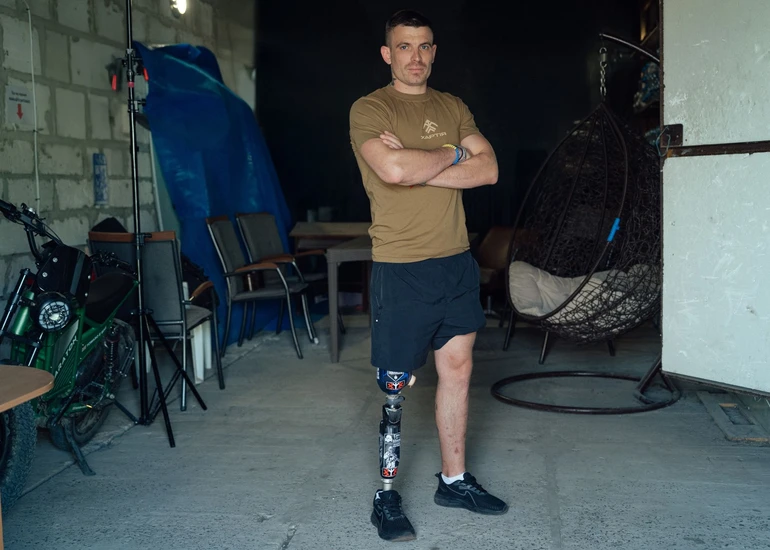
Terri
Terri. Photo: Vladyslav Klymenko / Khartiia

Sitting at the screens changed how he understood the war. As a foot soldier, he had felt frustrated with drone crews when resupply failed.

"Back then I thought, why aren't they dropping us water," he said. "But when I sat down at the monitors and saw how it all works, I realized we'd blamed the guys for nothing."

  •  
❌