❌

Vue lecture

First time since 2018: NATO’s top military body went to Kyiv to study the war it may one day face
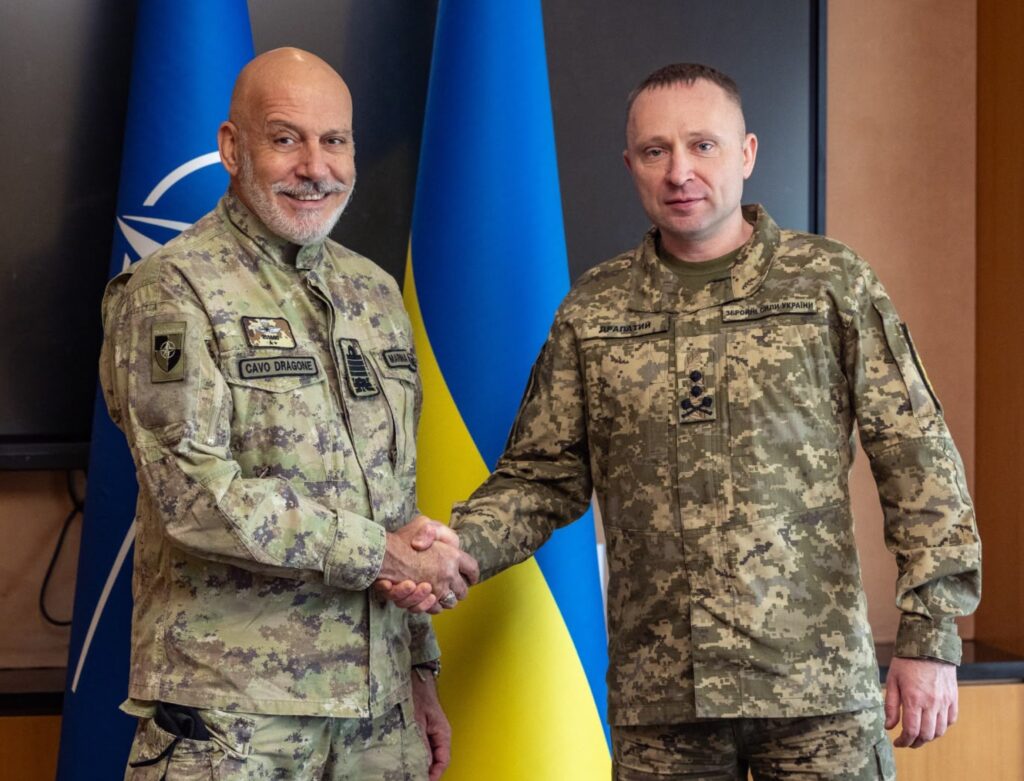
first time since 2018 nato's military chiefs went kyiv study war one day face · post chair nato committee admiral giuseppe cavo dragone (left) commander-in-chief ukraine's armed forces mykhailo drapatyi

NATO's Military Committee, the Alliance's highest military body, visited Kyiv on 6 October to reaffirm support for Ukraine, its chair, Admiral Giuseppe Cavo Dragone, said. It was the committee's first official visit to Ukraine's capital in eight years. The officers came to hear how Ukraine is fighting Russia and to draw lessons for NATO's own defense, and Dragone used the visit to warn Moscow.

Russia's war no longer stays inside Ukraine: its drones, saboteurs, and pressure campaigns increasingly reach NATO members. That turns Ukraine, the only European army facing Russia in combat, from a country the Alliance helps into one it learns from.

All 32 allies at the table

Dragone brought the military representatives of all 32 member states to hear the latest battlefield assessment directly from Ukraine's commander-in-chief, Mykhailo Drapatyi, and his staff. They also came to learn what more NATO can do to support Ukraine, he said in an address recorded in Kyiv.

"After eight years, the NATO Military Committee comes back to Kyiv for an official visit. But while we were not physically present here, Ukraine is in our thoughts, in our discussions, in our decisions and following action every single day," Dragone said.

The visit fulfilled a promise he made to Drapatyi during their last conversation in August, the admiral said. It also follows a June visit to Kyiv by the North Atlantic Council, NATO's main political decision-making body. "We are here in full strength with a clear message. The bond between NATO and Ukraine is stronger and stronger," he said.

With the whole NATO Military Committee, we visited Kyiv, yesterday, to reaffirm unwavering support for #Ukraine.

Discussions with Major General Drapatyi, Commander-in-Chief of the 🇺🇦 Armed Forces, focussed on Ukraine’s military priorities and lessons learned to strengthen… pic.twitter.com/kar2l1Xlq4

— Admiral Giuseppe CAVO DRAGONE - NATO CMC (@CMC_NATO) October 7, 2026

Lessons from Ukraine's commanders

The talks with Drapatyi focused on Ukraine's military priorities and lessons learned to strengthen Allied preparedness for current and future threats, Dragone wrote on X. The delegation also paid respects at the Wall of Remembrance of the Fallen for Ukraine in Kyiv.
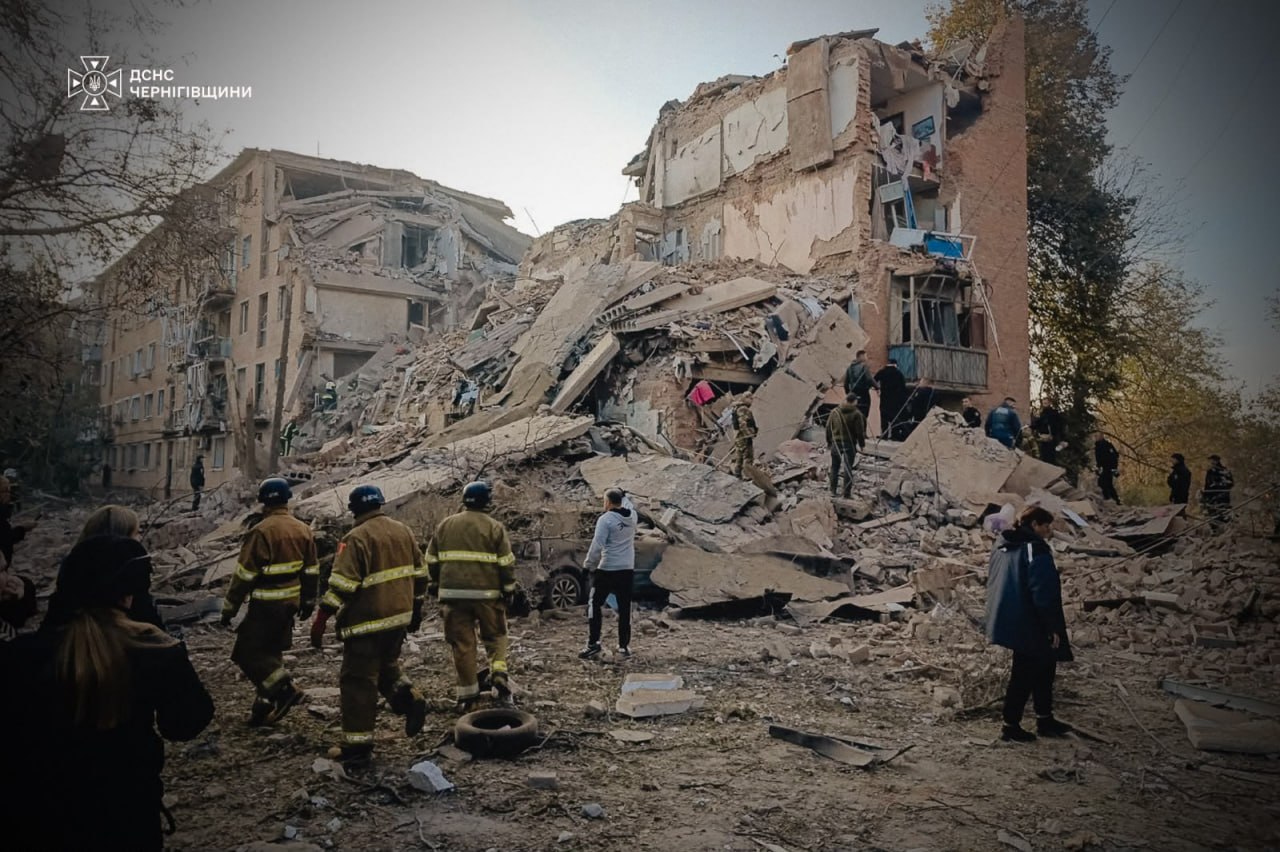
five dead pryluky two each kyiv kremenchuk oleksandriia russia's night 70 missiles · post rescuers collapsed section apartment building chernihiv oblast after russian missile strike 7 2026 ukraine news ukrainian
Explore further

14 dead in Pryluky, two each in Kyiv, Kremenchuk, and Oleksandriia: Russia’s night of 70 missiles

In his address, Dragone said Ukraine's courageous and resilient spirit remains unbreakable and serves as an example to other nations.

"An example that combines with all the lessons we can learn from your commanders, from their experience, which will ultimately help our Alliance too to better face today's and tomorrow's threats," he said.

To Russia: "You are failing"

Dragone also addressed Russia directly. NATO stands unwavering with Ukraine in the face of Russia's continued aggression and its reckless hybrid activities in member countries, he said.

"To those who think that by perpetrating acts of sabotage, cyberattacks, and violation of the airspace in national NATO territory they will undermine this support and our resolve, I will respond: You are failing. NATO support for Ukraine continues to grow, and our unity is stronger than ever."

Commander-in-Chief of Ukraine's Armed Forces Mykhailo Drapatyi (right) speaks at talks with the NATO Military Committee as its chair, Admiral Giuseppe Cavo Dragone (center), listens, Kyiv, 6 October 2026
Commander-in-Chief of Ukraine's Armed Forces Mykhailo Drapatyi (right) speaks at talks with the NATO Military Committee as its chair, Admiral Giuseppe Cavo Dragone (center), listens, Kyiv, 6 October 2026. Photo: Admiral Giuseppe Cavo Dragone/X

Russia bears full responsibility for such dangerous and unacceptable behavior, and allies will keep sharpening their tools and strengthening deterrence and defense, the admiral added.

Drapatyi became Ukraine's commander-in-chief in July, when President Volodymyr Zelenskyy replaced Oleksandr Syrskyi after a week of political turmoil.

Kyiv under fire, Russian troops pushed back near Lyman

The day after the visit, Russia struck Kyiv and 12 oblasts with about 70 missiles. In recent weeks, Russian attacks have cratered the capital's bridges and hit a school, a café, and warehouses, as well as a maternity hospital. Ukrainian troops also retook ground near Lyman in the Vivaldi counteroffensive.

  •  

Ukraine is third in world for cyberattacks after US and Israel, and first in Europe. Machine-speed assaults run continuously and without fatigue

Illustrative photo. Credit: Philippe HUGUEN / AFP

Only the US and Israel were hit by more cyberattacks than Ukraine this year. Ukraine ranked third in the world and first in Europe among the countries whose organizations and users were most often targeted by cyberattacks in the first half of 2026, accounting for 4.8% of all victims worldwide, up from fifth in the world and third in Europe a year earlier, Microsoft said in its Digital Defense Report 2026.

Microsoft processes more than 165 trillion security signals a day, which lets it show how often attackers go after customers in each country. Russian state hackers aimed 14% of their recorded activity at Ukraine, more than at any country except the US.

The era of machine-speed cyberattacks is here

Government agencies and services were the most targeted sector worldwide at 27%, up from 17% in 2025. Phishing drove 23% of intrusions Microsoft investigated, up from 7% a year earlier, and the median time from finding a vulnerability to weaponizing it has fallen well below 24 hours.

The use of artificial intelligence is pushing cyberspace into an era of “machine-speed” attacks that operate continuously and without fatigue, according to Dev.

“Many AI agents act on behalf of users and with their access rights, so a compromised agent combines user-level access with machine-scale actions,” Natalia Burlakova, Security Sales and Engineering Lead at Microsoft, says.

Deception beats code in attacks on Ukraine

Ukraine's own agency data show a similar pattern. Malware accounted for 33% of cyber incidents in the first half of 2026, and social engineering 31%, the State Service of Special Communications and Information Protection reported on 30 September. System infections made up 15%, and system compromises 4.5%.

Attackers rely less on technical complexity than on trust, according to the report by Ukraine's computer emergency response team, CERT-UA. Hacker groups create fake pages that mimic CERT-UA, Ukraine's Parliament's document management system, and the Brave1 defense technology platform.

Microsoft urges five government steps

Microsoft asks governments to prepare for faster-moving threats by assigning roles and coordinating agencies in advance of a crisis, and to treat AI security as part of national resilience. It also asks them to plan for incidents that spread, noting that 52.2% of intrusions involving valid accounts led to additional credential theft.

  •  

OpenAI hands Ukraine a free AI system to guard its hospitals and power plants from hackers

Open AI logo

OpenAI, the US company behind ChatGPT, will hand Ukraine's government free access to a cyber-defense system and its most powerful artificial-intelligence (AI) model, Ukrainian defense outlet Militarnyi reported. The company unveiled the deal alongside the UN General Assembly, pitching it as a cyber shield for the hospitals and power plants Russia keeps targeting.

Russia's war on Ukraine runs through wires as much as skies. Its hackers have hammered energy, transport, and defense networks for years, on top of the blackouts its missiles already force on Ukrainian cities—and Western tech firms have kept stepping in to help hold the line.

What the Daybreak system does

The tool is called Daybreak. It scans digital systems, finds their weak points fast, and helps specialists close them, the report said. Daybreak handles the whole job on its own—a loop of inventory, detection, verification, assignment, remediation, and confirming the fix held.

The system is meant to shield civilian infrastructure, hospitals and power stations among it, from cyberattacks, BBC reported. Ukraine's Computer Emergency Response Team (CERT-UA) logged nearly 6,000 cyberattacks in 2025.

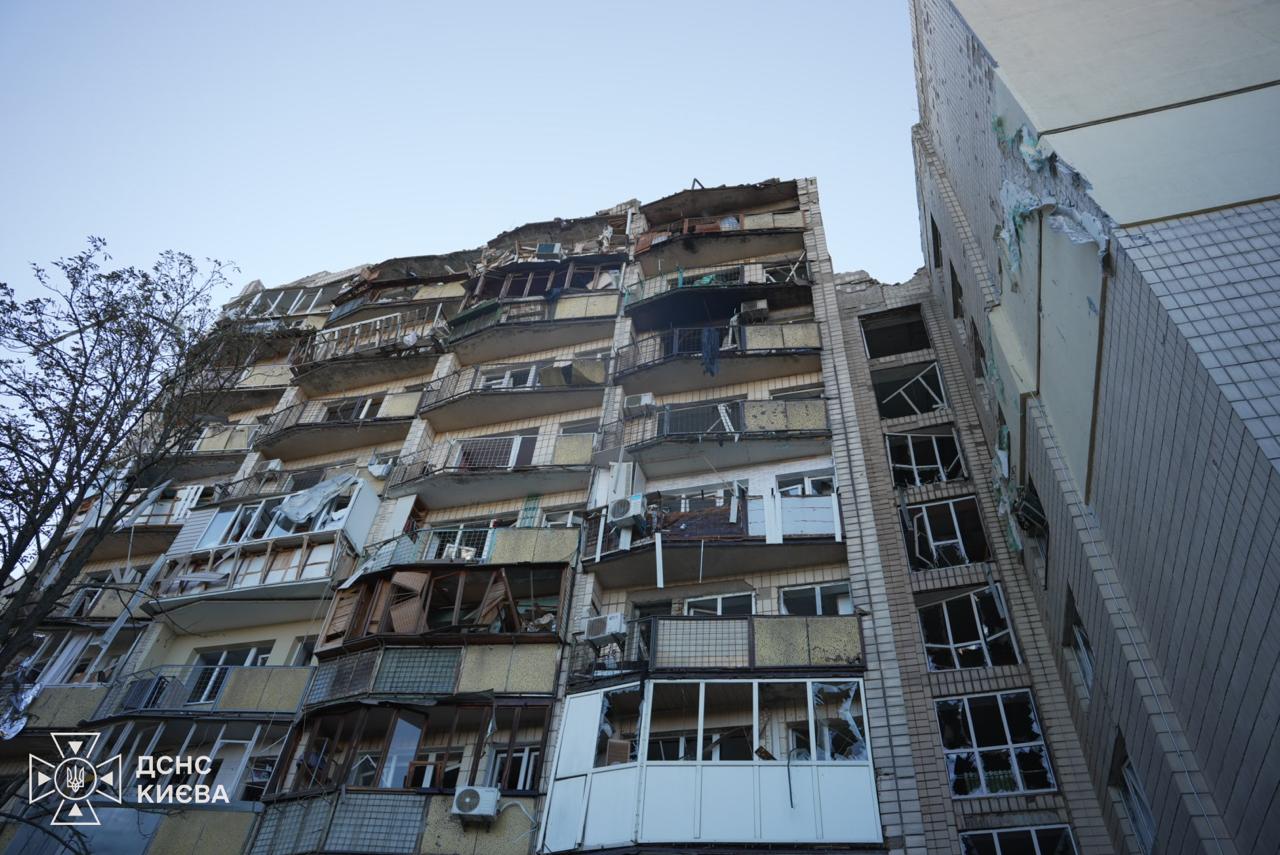
Apartment building damaged from a massive Russian aerial attack on Kyiv, Ukraine, 20 August 2026. Photo: Ukraine's State Emergency Service
Explore further

14 killed as Russia unleashes massive overnight barrage on unprotected Kyiv, striking homes, hospital, school and railway infrastructure

Ukraine also gets OpenAI's top model

The agreement opens access to GPT 5.6 Sol, OpenAI's flagship and strongest model. The company built it for complex professional work—programming, research, science, and cybersecurity, the report said. Both come as part of one agreement between OpenAI and Kyiv.

George Osborne—Britain's former chancellor and now Head of OpenAI for Countries—put the aim plainly.

"Protecting civilian infrastructure means defending it against both physical and digital attacks, so people can continue to live, work and access essential services," he said.

Independent analysts called the deal useful but not unprecedented. Rafe Pilling of cyber firm Sophos said it could serve as a force multiplier for a Ukrainian cyber defense that is already highly capable but heavily burdened. Jamie MacColl of the Royal United Services Institute noted that Western tech firms have been supporting Ukraine for some time, partly altruistically but also because they gain valuable intelligence from an active conflict, and that Ukraine already has access to AI tools from OpenAI's competitors, including Google. The same frontier AI capabilities cut both ways—spotting weaknesses helps defenders block hackers and attackers find a way in.

OpenAI's rival Anthropic has restricted access to its most powerful cyber models on those grounds, while OpenAI has opened them to some European firms and UK banks, BBC reported.

  •  
❌