Vue lecture

Russian Aerospace Forces officer killed by a bomb in his own car in St. Petersburg

russian aerospace forces officer killed bomb own car st petersburg · post which explosion lieutenant colonel cordoned off slavyanka micro-district russia 27 2026 blown up ukraine news ukrainian reports

A car bomb killed a lieutenant colonel of Russia's Aerospace Forces in St. Petersburg on the morning of 27 August, the local outlet Fontanka reported. His wife survived and reached hospital in serious condition. Russia's Investigative Committee opened a criminal case, and nobody has claimed responsibility for the attack.

Ukraine's war reaches deep into Russia's rear, where officers, arms-industry figures, and quisling officials keep dying in blasts far from the front. Who put the bomb in this car is a separate question. It could be Kyiv, or it could be a criminal score being settled — Russia has no shortage of those.

A bomb inside the car

Witnesses said the officer and his wife were pulling away from their house in a southern suburb of the city at around 10 a.m. when an improvised explosive device went off inside the car, Militarnyi reportedThe officer died on the spot, and the blast tore off the legs of both spouses. Fontanka placed the dead officer in Russia's Air Force and Air Defense branches, which sit within the Aerospace Forces.

Russian channel Ren TV published a video of the wreckage and said the explosion followed the driver starting the engine. The Geely lost its rear window, hood, and rear bumper, and its body was badly deformed, and parts landed dozens of meters away, according to the channel. Footage from the site shows debris across the roadway and emergency crews arriving.

A car bomb killed a Russian Aerospace Forces lieutenant colonel in St. Petersburg

The unnamed officer died where he sat on the morning of 27 August. The Geely's hood and rear bumper ended up on the road, and parts landed dozens of meters away. Investigators opened the case as… pic.twitter.com/g132U7Oaft

— Euromaidan Press (@EuromaidanPress) August 27, 2026

Witnesses told the Russian news Telegram channel Ostorozhno Novosti that the blast wave badly deformed the driver's door and damaged cars parked alongside. Ukrainian monitoring Telegram channel Exilenova+ posted several clips from the site and described the dead man as a military pilot.

The Investigative Committee's St. Petersburg directorate said it had opened a criminal case over the burning of a car in which two people were hurt. It confirmed that one of them died and one was hospitalized, and it did not name the article of the criminal code. 

Russia's Defense Ministry bought a significant share of the housing in that part of the city for servicemen and their families, according to available information.

russian aerospace forces officer killed bomb own car st petersburg · post which explosion lieutenant colonel cordoned off slavyanka micro-district russia 27 2026 blown up ukraine news ukrainian reports

Russian Aerospace Forces officer killed by a bomb in his own car in St. Petersburg

Bombings in Russia's rear

The killing follows a run of blasts against people tied to Russia's war. Earlier this month, a bomb under the car of Vladimir Tkachuk, who heads the plant making Upyr first-person-view drones, killed his bodyguard and put Tkachuk in intensive care. Major General Valery Plokhotnyuk reportedly died on 1 August in a blast at an Italian restaurant in Moscow.


GRAU
Explore further

Car bomb kills Russian general who armed Russia’s war on Ukraine—fourth top officer assassinated near Moscow since late 2024

At least four senior officers have died in bombings in and around the capital since late 2024, including chemical defense chief Igor Kirillov, General Staff officer Yaroslav Moskalik, military planner Fanil Sarvarov, and Damir Davydov, who ran missile and shell deliveries for the Defense Ministry. Ukraine's security service claimed the Kirillov operation openly and, through a source, a 2024 Sevastopol car bombing that killed a Black Sea Fleet brigade commander. Kyiv has stayed silent on most of the rest.

  •  

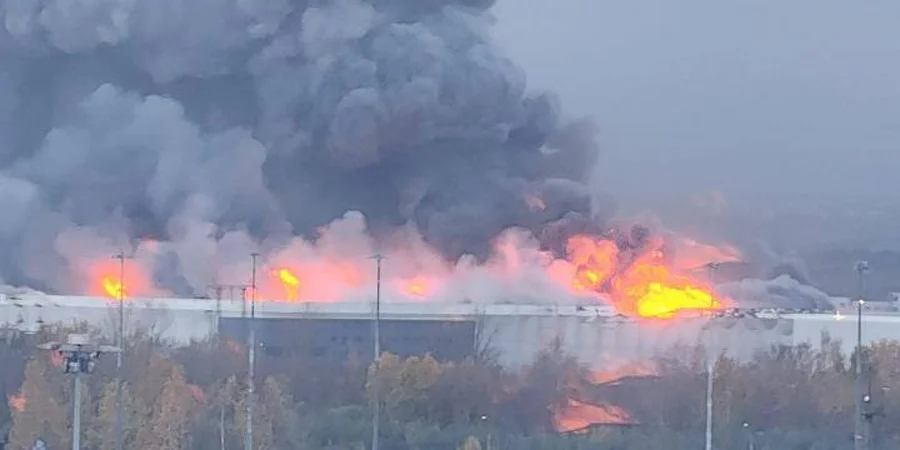
One Russian warehouse smolders near Kazakhstan while a bigger fire rages near St. Petersburg

one russian warehouse smolders near kazakhstan while bigger fire rages st petersburg · post ukrainian drone over ozon logistics complex orenburg russia 23 2026 fp-1 hitting ozone exilenova ukraine news

Ukrainian drones struck a logistics complex belonging to Russian online retailer Ozon in Orenburg on 23 August, the second Ozon warehouse hit in two days, monitoring Telegram channels reported. The site sits about 1,200 km from the war zone, near Russia's border with Kazakhstan. Hours earlier, a large fire tore through a separate warehouse outside St. Petersburg, roughly 900 km north of Ukraine, though local authorities declared no drone or missile threat.

Kyiv's long-range drone program has pushed its reach ever deeper into the Russian rear, turning fuel depots, factories, and delivery hubs far behind the lines into routine targets, and retail networks have drawn special attention because their warehouses double as arteries for the wider war economy. Each strike this far inside Russia forces Moscow to stretch air defenses across a country too vast to shield everywhere at once. Disrupted e-commerce warehouses also add to pressure already showing at the pumps, where fuel shortages have brought rationing to major cities.

Drones hit Russia's biggest Ozon warehouse

Ukrainian monitoring channel Exilenova+ published video of the strike moment, after which a fire took hold on the site. Independent Russian outlet Astra analyzed eyewitness footage showing an emergency vehicle racing toward the depot. The complex spans more than 200,000 m² and was designed to hold over 31 million items, ranking among Ozon's biggest in Russia.

one russian warehouse smolders near kazakhstan while bigger fire rages st petersburg · post smoke rising over ozon logistics complex orenburg russia 23 2026 заявлено як задимлення на території складу
Smoke rising over the Ozon logistics complex in Orenburg, Russia, 23 August 2026. Photo: Exilenova+

The warehouse stands inside the city's special economic zone, a tax-favored industrial park on the eastern edge of European Russia. The first phase opened in August 2024, and a second building followed in 2025.

Orenburg mayor Albert Yumadilov claimed several drones were downed over the special economic zone and that debris fell on the Ozon complex, starting a fire that crews quickly put out with no one hurt. 

Ozon confirmed the strike, saying it evacuated more than 300 workers, pulled its goods from the marketplace and stopped taking new deliveries while the site sat idle. 

A second fire near St. Petersburg, with no air-raid alert

Overnight, a large blaze hit a warehouse in the Kolpino area south of St. Petersburg. Astra established that the warehouse stood about 350 m from an Ozon site, and witnesses said they heard no drones or air defense. Ukrainian Telegram channel Exile+ identified the burning facility as a storage warehouse run by Logistera.

one russian warehouse smolders near kazakhstan while bigger fire rages st petersburg · post large complex kolpino area russia 23 2026 saint astra ukraine news ukrainian reports
A large fire at a warehouse complex in the Kolpino area of St. Petersburg, Russia, 23 August 2026. Photo: Astra

Part of a widening campaign on Russian marketplace logistics

The Orenburg hit followed the first-ever Ozon strike a day earlier, at a warehouse in Chapaevsk, Samara Oblast. Before turning to Ozon, Ukrainian drones had struck more than 10 warehouses belonging to the larger Russian marketplace Wildberries. Such marketplace hubs move not only consumer goods but dual-use items like electronics and drone components that can reach Russia's military.

  •  

Russia’s most-used map app is erasing a Baltic missile site that Western maps still show

berlin weighs closing russian house spying yet federal ministry just moved beside · post left yandex maps right planet labs pbc imagery 4 2026 undated yle uses because societal significance

Russia's most-used mapping service has digitally hidden a military missile site near Finland by copying a fake forest over it on satellite imagery, Finnish public broadcaster Yle reported. Western map services still show the same position, and a Finnish military analyst called the concealment careless and self-defeating. The clumsy edit points to Moscow's growing fear of Ukrainian drones.

Ukraine's drones now reach thousands of kilometers into Russia, striking refineries, defense plants, and naval yards once thought safe. That expanding reach has upended Moscow's sense of a protected rear across the war.

What Yandex tried to erase

The concealed site sits beside the Kronstadt naval base, on Kotlin Island off St. Petersburg in the Gulf of Finland. Editing software copied trees from another image and laid them over the missile position. Until now, Russia mostly blurred sensitive locations rather than deleting them, but this edit tries to hide the target's existence outright. The same battery still appears on Google, Apple, and Microsoft satellite maps. In the covered zone, Russia has previously kept Bastion anti-ship missiles and their radar and reconnaissance systems.

berlin weighs closing russian house spying yet federal ministry just moved beside · post yandex's service electronic warfare base near kronstadt kuvakaappaus yandexin karttapalvelusta kronstadtin lähellä sijaitsevasta elektronisen sodankäynnin tukikohdasta
A screenshot from Yandex's map service showing an electronic warfare base near Kronstadt. Photo: Yandex

A cover-up that gives itself away

Marko Eklund, a military expert and former Finnish intelligence officer, called the secrecy pointless. Western and Ukrainian analysts read their own satellite images, not Yandex, so the edit protects nothing in practice. He believes an administrative order drove it, and that the work was done sloppily. Anyone who knows what to look for can spot the seams and repeating patterns. 

Ukrainian drones struck Russia's Baltic Fleet base at Kronstadt near St. Petersburg overnight, flying nearly 1,000 km. Source: Zelenskiy
Explore further

Kronstadt, Russia’s major naval Base after Black Sea Fleet losses, gets hit by Ukrainian drones (VIDEO)

A pattern set by Ukraine's drones

Russia's map cover-ups have tracked Ukraine's deep strikes. A Moscow court ordered Yandex to mask an oil refinery in Ryazan in 2024 after repeated Ukrainian strikes, and a Nordic-Baltic investigation later counted 119 blurred sites near Russia's northwestern border. Blurring shows up at once, while cloned forest hides the tampering itself.

Kronstadt gives Russia one of its main Baltic Fleet bases, and Ukraine's drones have already reached it. In early June, they set a Russian missile corvette ablaze in dry dock there.

  •  

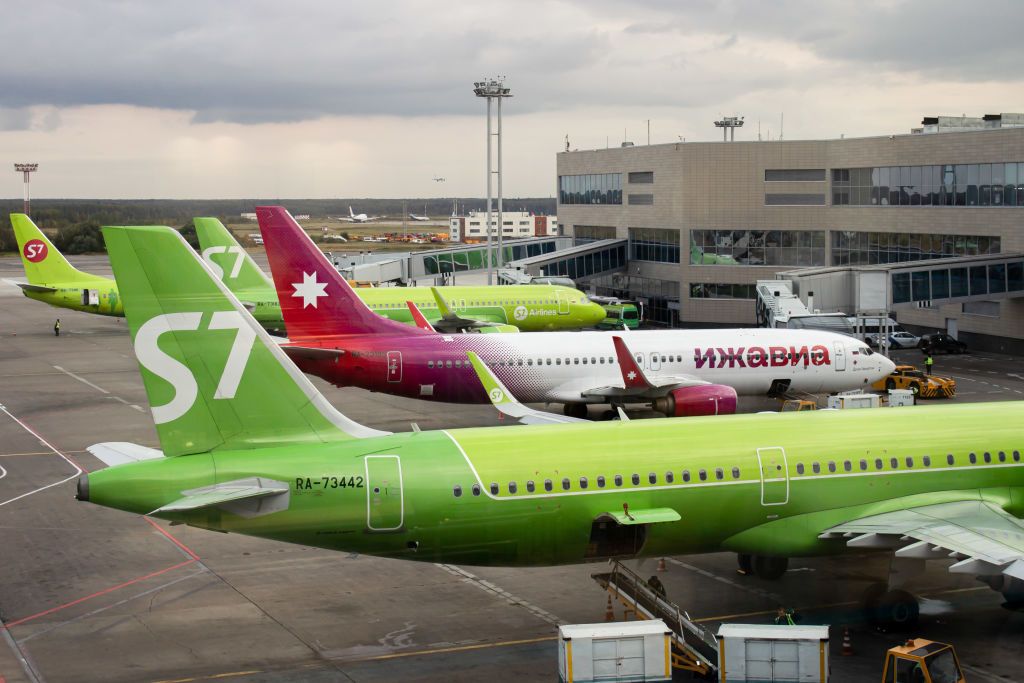
Russian airlines face $254 million losses from just 2 days of Ukrainian drone strikes, Kremlin media reports

Russian airlines face $254 million losses from just 2 days of Ukrainian drone strikes, Kremlin media reports

Major shutdowns at Russia's key airports on July 5–6 caused by Ukrainian drone attacks could cost Russian airlines around 20 billion rubles ($254 million), the pro-Kremlin outlet Kommersant reported on July 7, citing airline representatives and industry experts.

Since the start of mass disruptions on July 5, a total of 485 flights were canceled, 88 were diverted to alternate airports, and another 1,900 were delayed across major hubs, according to Russia's aviation agency Rosaviatsiya.

The drone attacks prompted operational shutdowns that triggered widespread logistical and economic consequences. Over 94,000 passengers were housed in hotels, 43,000 refunds were processed, and hundreds of thousands of vouchers for food and drinks were issued.

The estimated financial toll includes direct airline losses from canceled Boeing 737-800 flights, which can run between 15 million and 23 million rubles ($190,000–$292,000) each depending on the route, as well as costs for delays, diversions, and passenger care.

Experts say the true cost could be far higher. Dmitry Datsykov of EXPO.UAV estimated tens of billions of rubles in additional indirect losses, including missed connections, taxi and hotel losses, and supply chain disruptions.

Ukraine has not publicly claimed responsibility for the disruptions but has acknowledged that its drone strategy aims to undermine Russian logistics and force the war's consequences closer to the Russian public.

The economic fallout comes amid growing scrutiny of Russia's transport sector. On July 7, President Vladimir Putin dismissed Transport Minister Roman Starovoit following the aviation chaos and a high-profile ammonia leak at the Ust-Luga port.

The Kremlin has increasingly struggled to protect critical infrastructure from Kyiv's deep-strike drone campaign, which in recent months has expanded to include refineries, radar plants, and now Russia's busiest airports.

Russian transport minister fired by Putin reportedly shoots himself dead
According to Russian media, ex-Transport Minister Roman Starovoit’s body was found near Moscow. Preliminary findings suggest that the suicide may be linked to a possible criminal case.
Russian airlines face $254 million losses from just 2 days of Ukrainian drone strikes, Kremlin media reportsThe Kyiv IndependentTim Zadorozhnyy
Russian airlines face $254 million losses from just 2 days of Ukrainian drone strikes, Kremlin media reports
  •  

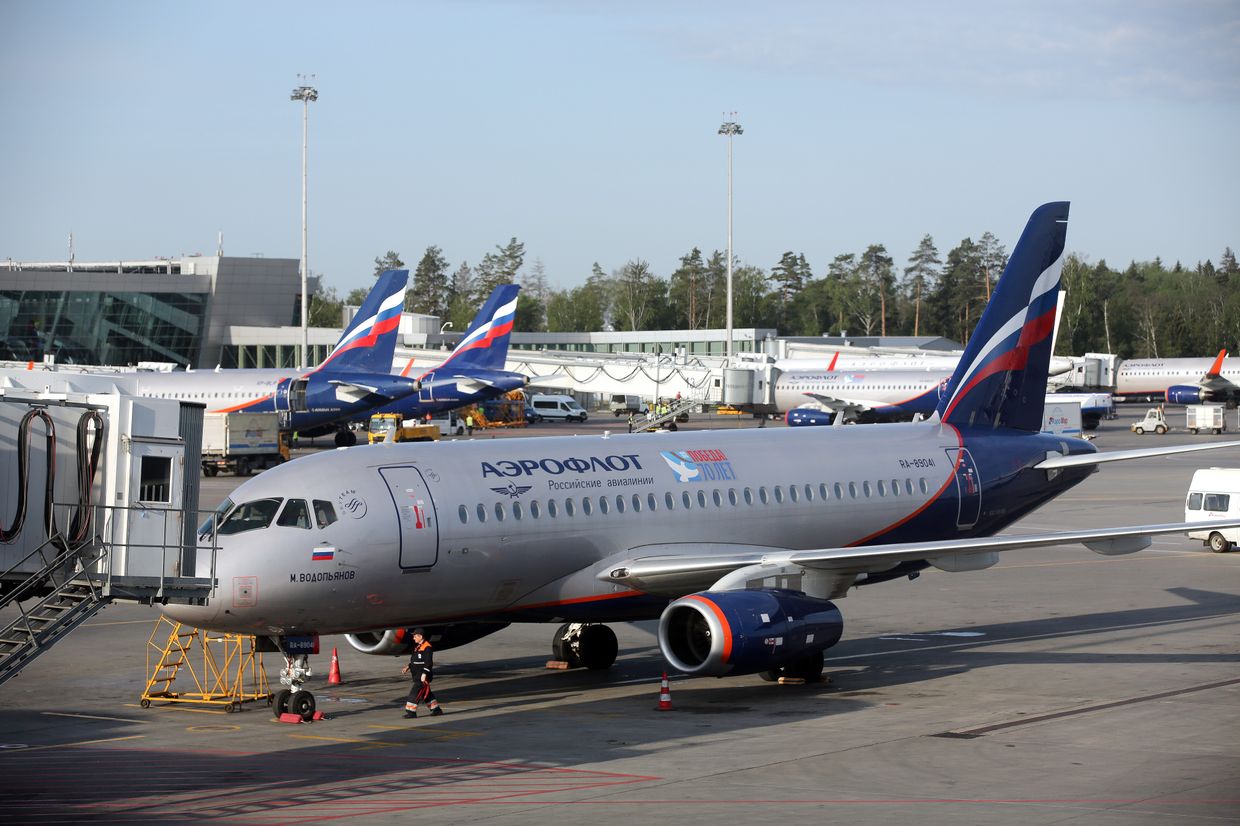
Drone threat reportedly causes mass flight delays in Russia's Moscow, St. Petersburg airports

Drone threat reportedly causes mass flight delays in Russia's Moscow, St. Petersburg airports

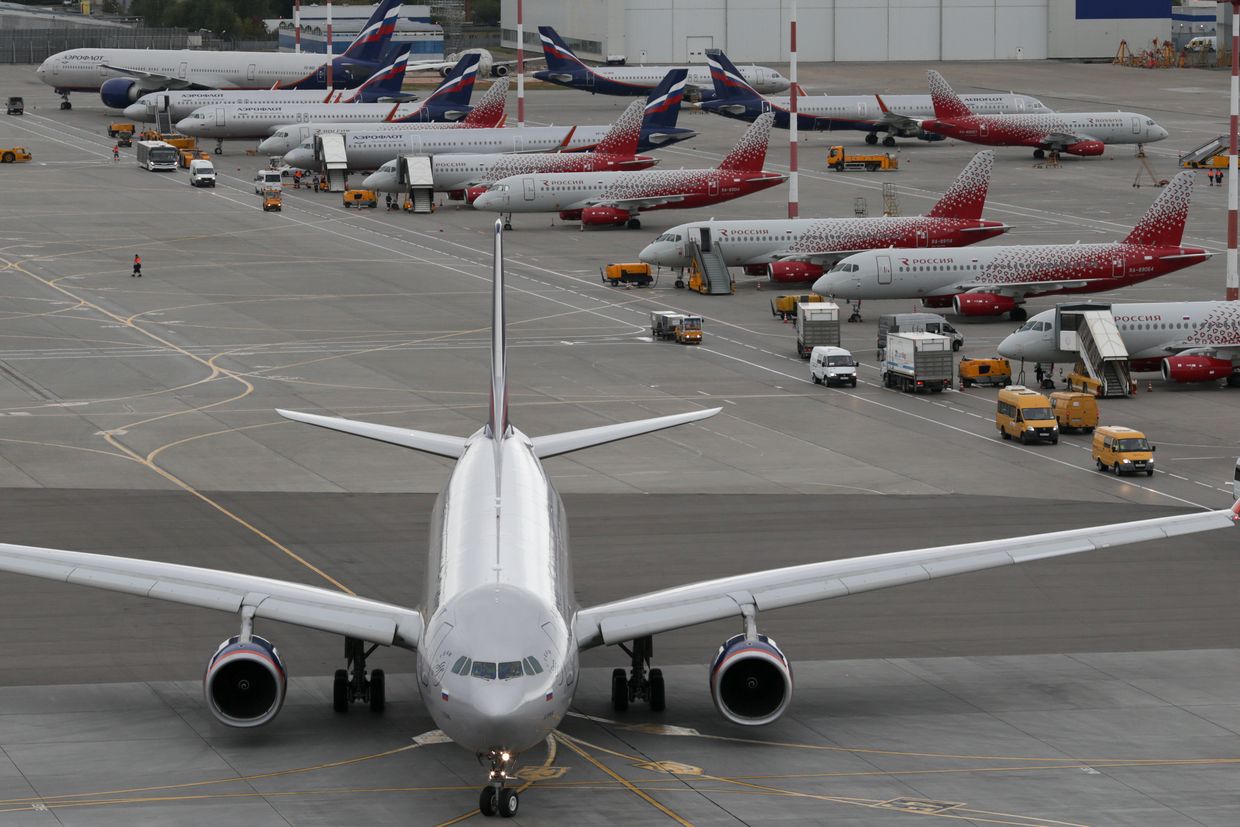
Russia's largest airports experienced hours-long flight delays and cancellations on July 5, as authorities imposed temporary restrictions due to a reported threat of Ukrainian drone attacks, the pro-Kremlin Telegram channel Shot reported.

Ukraine hasn't commented on the report. Kyiv's drone campaign, which has increasingly disrupted civilian air travel in Russia, is part of Ukraine's broader strategy to undermine Russia's logistics far beyond the front line.

Some passengers in Russia reported waiting more than 10 hours on July 5 as their flights were being delayed, according to Shot.

Departures at Moscow's Sheremetyevo Airport were halted for several hours, delaying over 20 flights. At St. Petersburg's Pulkovo Airport, roughly 50 flights were delayed and more than 20 canceled.

Leningrad Oblast Governor Alexander Drozdenko said that two drones were shot down south of St. Petersburg, prompting a temporary suspension of operations at Pulkovo Airport.

The disruptions followed a wave of Ukrainian drone attacks overnight, which targeted military and industrial infrastructure in at least six Russian regions.

The Russian Defense Ministry said it intercepted 42 drones within three hours, mainly over the Belgorod, Bryansk, and Kursk oblasts near the Ukrainian border.

Novaya Gazeta Europe reported in May that at least 217 temporary airport closures have occurred across Russia since Jan. 1 due to drone threats, more than in 2023 and 2024 combined.

A similar wave of strikes ahead of Russia's Victory Day in May led to massive delays, affecting an estimated 60,000 travelers.

Ukraine’s new drone strategy — cripple Moscow’s airports, make Russian population ‘pay’
Hundreds of Ukrainian kamikaze drones have flown towards Moscow in recent weeks. None appear to have even reached the Russian capital, yet the effect on the city — and the wider country — has been hugely significant. Ukrainian drones have forced at least 217 temporary airport closures across Russia since Jan. 1,
Drone threat reportedly causes mass flight delays in Russia's Moscow, St. Petersburg airportsThe Kyiv IndependentTim Zadorozhnyy
Drone threat reportedly causes mass flight delays in Russia's Moscow, St. Petersburg airports
  •  

Ukrainian drone strike on Russian airfield hits bomb depot, aircraft

Ukrainian drone strike on Russian airfield hits bomb depot, aircraft

Ukraine targeted the Borisoglebsk airfield in Russia's Voronezh Oblast overnight on July 5, damaging a warehouse with guided bombs, aircraft, and other military assets, Ukraine's General Staff reported.

The airfield hosts Su-34, Su-35S, and Su-30SM jets thatRussia regularly uses in air strikes against Ukraine, according to the military. The strike may have destroyed a training and combat aircraft, with further assessments underway.

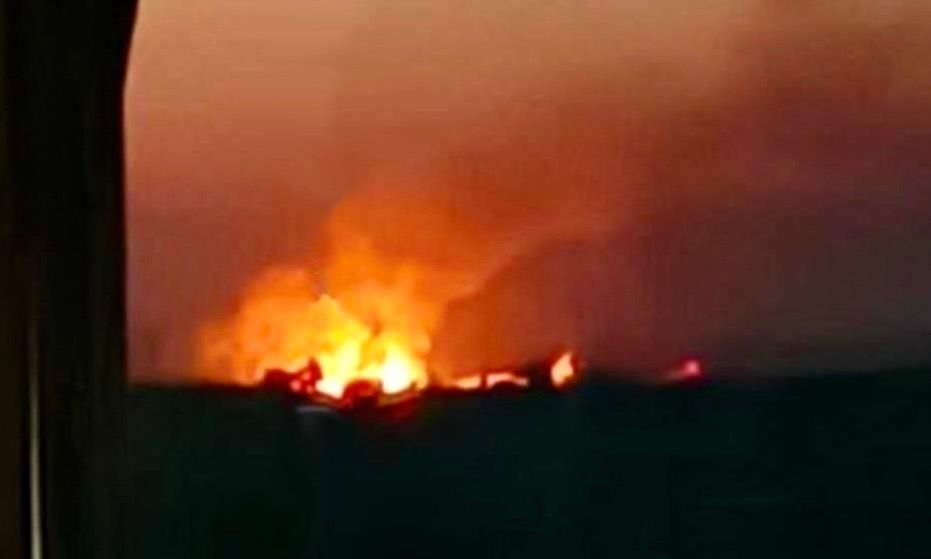
The NASA Fire Information for Resource Management System (FIRMS) detected a fire near the Borisoglebsk military airfield shortly after the strike. Residents in the area reported 8–10 powerful explosions around 2 a.m. local time, according to Russian independent outlet Astra.

The strike was part of a broader overnight drone campaign across Russia, with explosions and fires reported in at least six regions.

The Russian Defense Ministry said 42 drones were intercepted within a three-hour period, most of them over Belgorod, Bryansk, and Kursk oblasts, which border Ukraine.

Leningrad Oblast Governor Alexander Drozdenko said two drones were downed south of St. Petersburg, prompting a temporary suspension of flights at Pulkovo airport. No casualties or damage were reported.

The governor of the Smolensk Oblast in western Russia said anti-aircraft units downed three drones without casualties or damage. The governor of the Voronezh Oblast, bordering Ukraine, also confirmed the destruction of several drones.

Explosions were also heard overnight in Cheboksary, the capital of the Chuvash Republic, where video footage shared online showed a fire reportedly at a local industrial site.

Additionally, explosions were heard during the night in Engels, Saratov Oblast, with some Telegram channels suggesting a military airfield was likely targeted.

The attacks come as Russia escalates aerial assaults on Ukraine, prompting Kyiv to increase long-range drone strikes on Russian military targets.

Ukrainian officials say these drone operations aim to undermine Russia's strike capabilities and bring the war closer to those enabling the Kremlin's campaign.

  •  

Russian economy recession warnings 'greatly exaggerated,' Putin claims, denies war in Ukraine 'killing' growth

Russian economy recession warnings 'greatly exaggerated,' Putin claims, denies war in Ukraine 'killing' growth

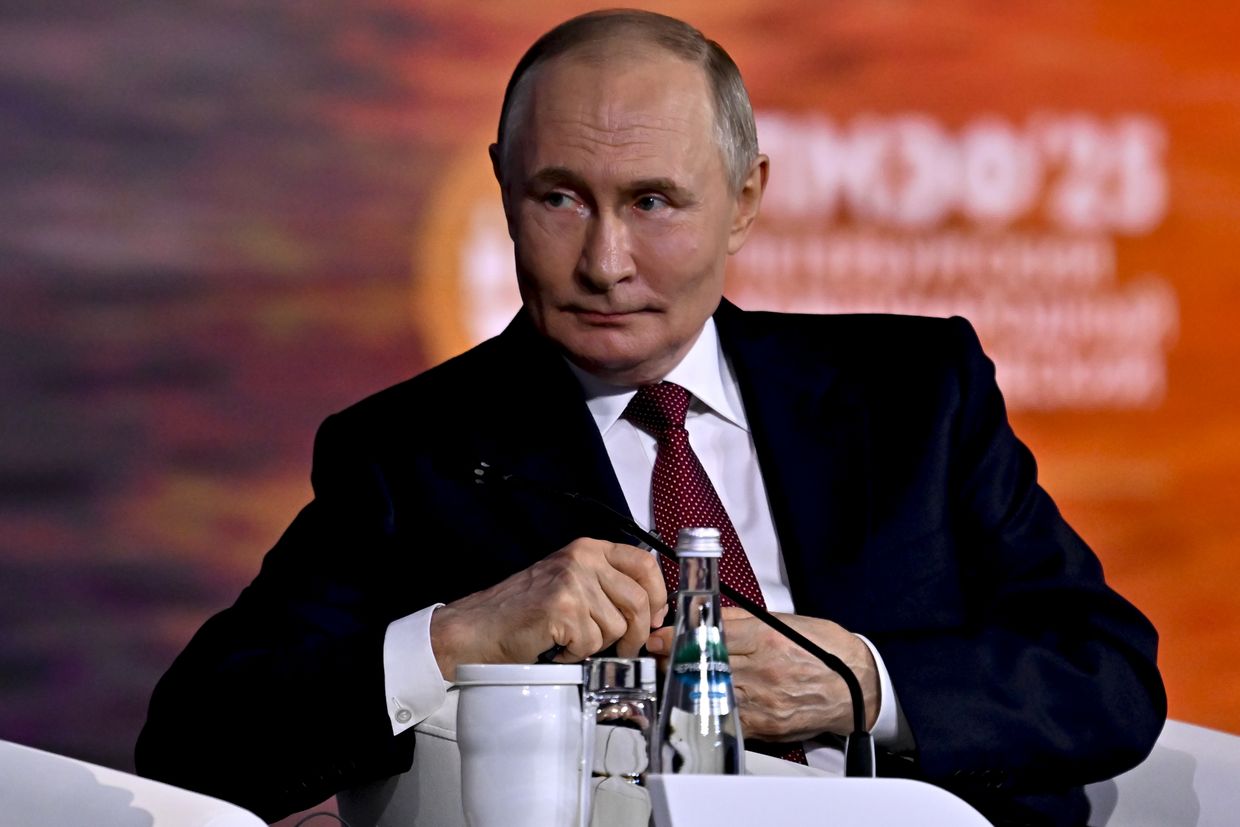
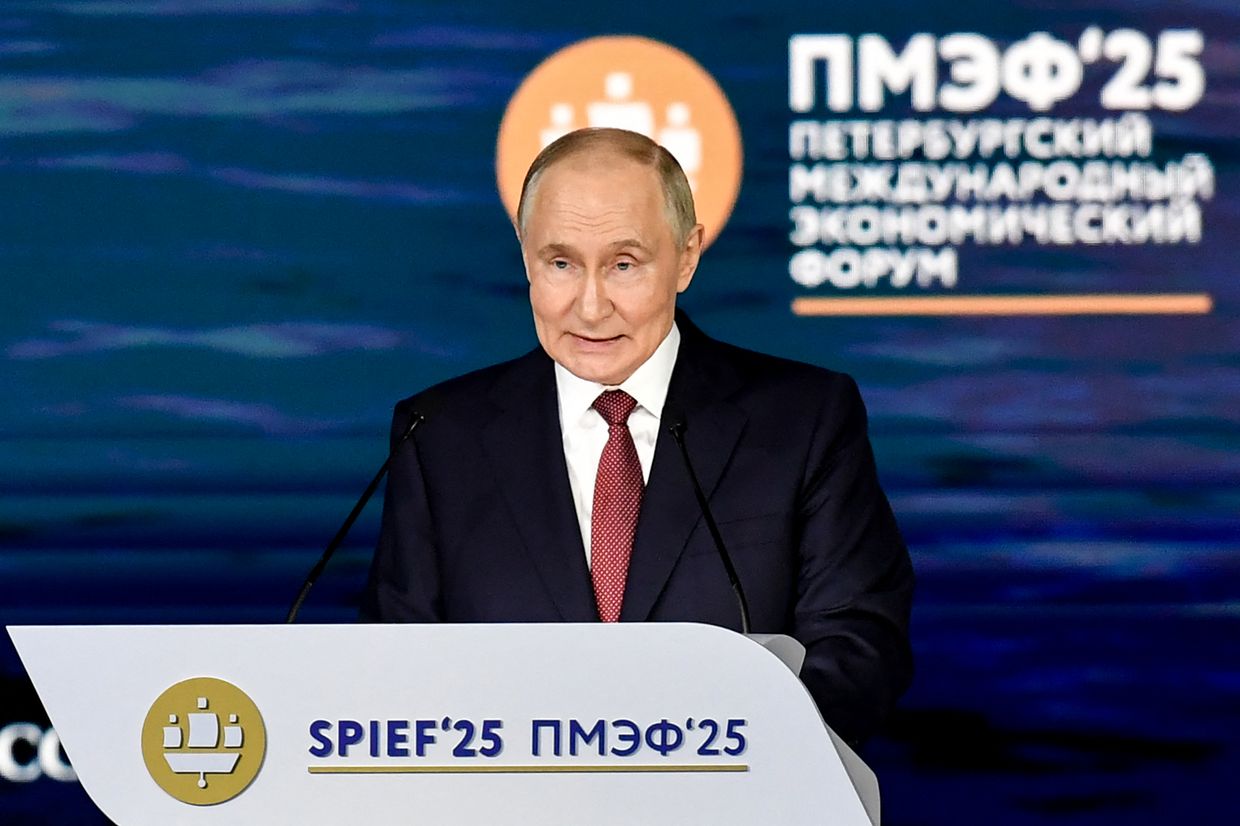
President Vladimir Putin claimed on June 20 that Russia's economy is strong despite war and sanctions, brushing off mounting warnings from his own officials about stagnation and looming recession.

Speaking at the St. Petersburg International Economic Forum, Putin was asked about reports that the ongoing war in Ukraine was "killing" the Russian economy.

"Rumors of my death are greatly exaggerated," he replied, quoting American writer Mark Twain.

The president claimed that Russia has outpaced global economic growth over the past two years, allegedly expanding by over 4% annually.

"Our most important task is to ensure the economy's transition to a balanced growth trajectory," Putin said. "At the same time, some specialists and experts point to the risks of stagnation and even recession. This should not be allowed under any circumstances."

The statement came just a day after Central Bank Governor Elvira Nabiullina warned on that Russia's wartime economic momentum is fading fast. She said the economy is approaching the limits of its growth potential, adding that previously effective tools are now exhausted.

Economy Minister Maxim Reshetnikov echoed the concerns, telling a separate forum audience on June 19 that Russia is "on the verge of a transition to recession." He emphasized that recession is not inevitable and that "everything depends on our decisions."

Moscow has experienced rapid inflation and historically high interest rates amid its full-scale invasion of Ukraine. The central bank raised rates repeatedly to combat inflation, but on June 6, it made its first cut in nearly two years, from 21% to 20%.

Putin has criticized the central bank's tight monetary policy for choking off private investment, especially in non-defense sectors.

Despite Putin's optimistic rhetoric, analysts attribute Russia's economic slowdown to sustained international sanctions, falling oil prices, rising wartime spending, and supply disruptions.

Russia's ever-mounting losses on the battlefield which recently passed the 1 million mark are also likely contrbuting to the economic turmoil as the Kremlin is having to pay people to sign up to fight rather than introduce what would be a hugely unpopular mass mobilization.

According to an analysis by economist Janis Kluge, Russia's daily bill just for sign-up bonuses is $24 million.

The ballooning bills come at a time when Russia's economy is already under huge strain from Western sanctions and falling oil and gas revenues.

"The implications for Russia are grave," energy security analyst Wojciech Jakobik wrote in an op-ed for the Kyiv Independent this week.

‘All of Ukraine is ours’ — Putin on Russia’s territorial ambitions in Ukraine
Editor’s Note: This story was updated with comments from Foreign Minister Andrii Sybiha. Russian President Vladimir Putin said “all of Ukraine” belonged to Russia in a speech on June 20 at the St. Petersburg International Economic Forum, amid increasingly aggressive official statements about Moscow’s final territorial ambitions in Ukraine. Putin’s
Russian economy recession warnings 'greatly exaggerated,' Putin claims, denies war in Ukraine 'killing' growthThe Kyiv IndependentKateryna Hodunova
Russian economy recession warnings 'greatly exaggerated,' Putin claims, denies war in Ukraine 'killing' growth
  •  
❌