Vue lecture

Ukrainian drones took Ryazan’s blending unit after knocking out two of its four crude units
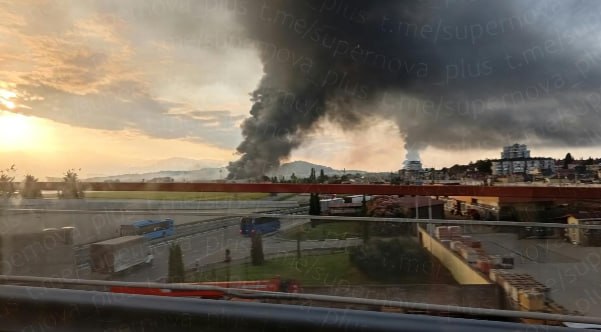
ukrainian drones took ryazan's blending unit after knocking out two its four crude units · post black smoke rising over ryazan oil refinery drone strike russia 6 2026 пожежа на

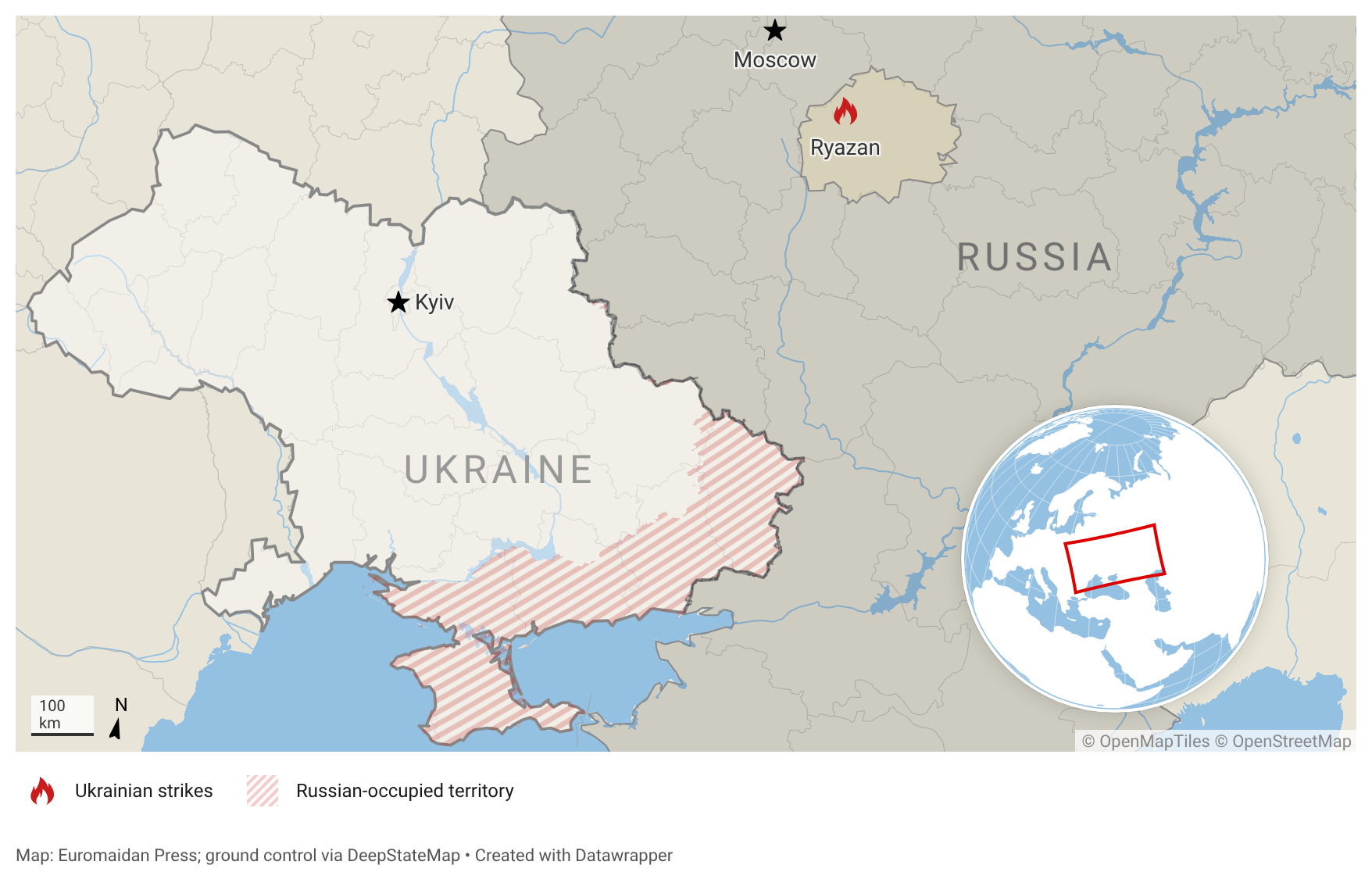
Ukrainian drones struck the Ryazan oil refinery in Russia on the morning of 6 September and set one of its core units on fire, Ukrainian defense outlet Militarnyi reported. The unit produces the high-octane component the Rosneft plant needs for its higher grades of gasoline. Russian regional authorities acknowledged a fire without naming the site. Ryazan is situated southeast of Moscow, about 470 km from Ukraine.

Ukraine has spent this year pushing long-range drones deeper into Russia, working methodically through refineries, pipelines, and export terminals to cut the fuel that moves Russian armies and the oil income that pays for the war. The pressure now runs deep past Russia's borders, with the shortage reaching Central Asian markets.

What burned at Ryazan

Drones hit the low-temperature isomerization unit for pentane-hexane fractions, designated Izomalk-2-LIN-800, according to Militarnyi's analysis. The unit sits on the refinery's grounds and is one of the critically important links in the plant's production cycle.

It converts low-octane straight-run oil fractions into a cleaner high-octane blending component. That component is what allows the refinery to produce gasolines of the higher environmental classes, Euro-5 among them, without adding harmful additives. 
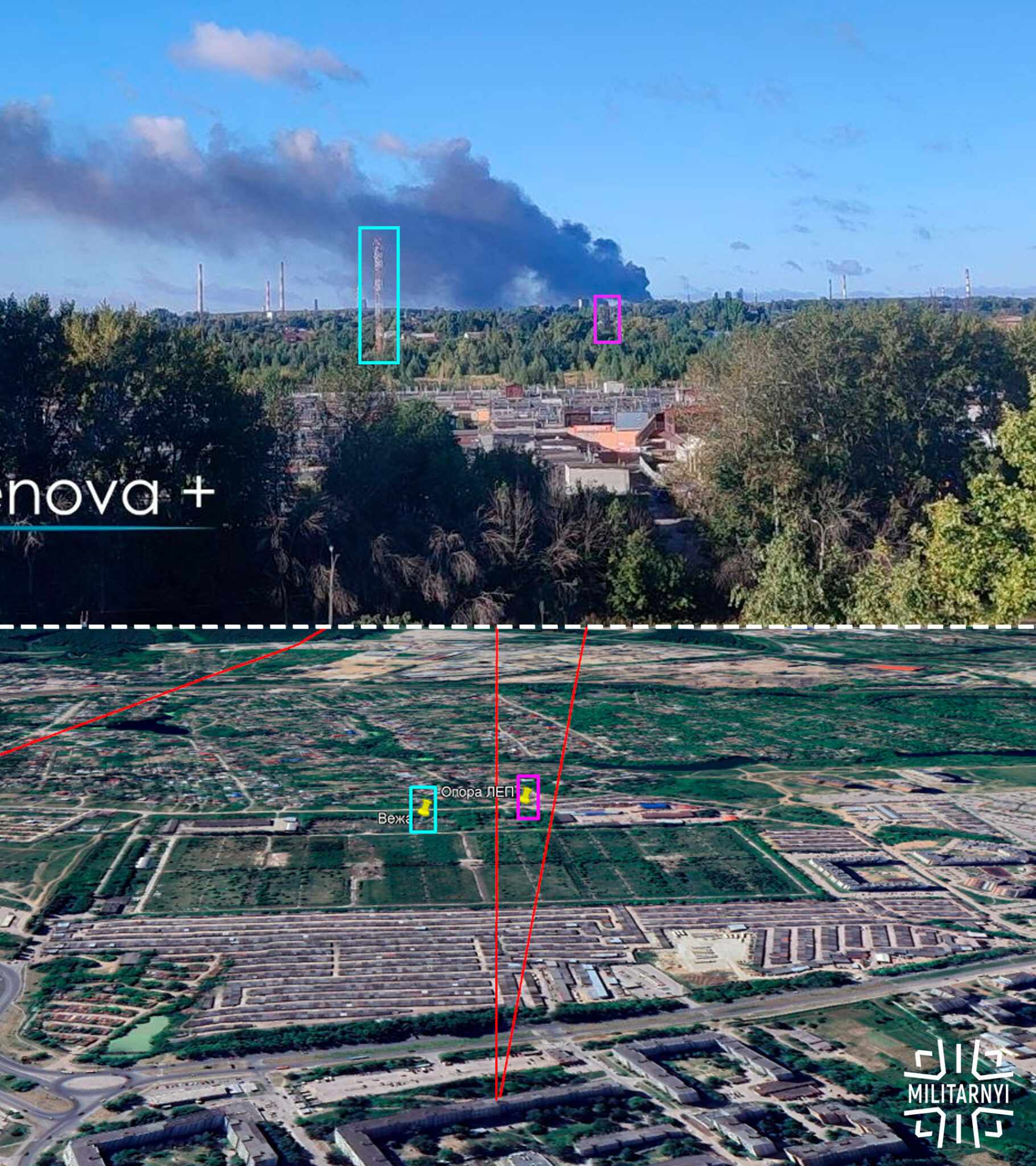
ukrainian drones took ryazan's blending unit after knocking out two its four crude units · post geolocation fire ryazan oil refinery drone strike russia 6 2026 sss ukraine news reports
Geolocation of the fire at the Ryazan oil refinery after a Ukrainian drone strike, Ryazan, Russia, 6 September 2026. Graphic: Militarnyi, imagery: ESRI
The refinery belongs to Rosneft and ranks among Russia's largest refining enterprises, with a capacity of about 17 million tons of crude a year. It makes motor gasolines of all grades, diesel, aviation kerosene, fuel oil, liquefied gases, bitumen, and petrochemical feedstock. Four crude distillation units sit on the site, along with equipment for vacuum gasoil hydrotreating, cracking, and catalytic reforming.

Ukrainian monitoring channel Exilenova+ published videos of the strike.

Ryzan Oil refinery pic.twitter.com/VcPfnSGgi4

— Exilenova+ (@Exilenova_plus) September 6, 2026

The same unit was hit in December

Drones already attacked this unit in December 2025 and damaged it. Earlier waves targeted the plant's ELOU-AVT-3, ELOU-AVT-6, and AVT-1 units.

By May 2026 the refinery had lost 90–100% of its refining capacity. Satellite imagery from 3 August 2026 showed Ukraine's Defense Forces had disabled two of the four crude distillation units on site.

Ukrainian drones struck the refinery in May, and FP-1 drones set it and a nearby warehouse burning in July.
Russian officials report a fire, not a target

Ryazan Oblast governor Pavel Malkov confirmed the region came under drone attack. Drone debris damaged residential buildings in Ryazan and Sapozhkovsky district, he stated, and a fire broke out at an enterprise he did not name. He said there were no casualties and that emergency services were working.

Russian news Telegram channel Astra said its analysis of photographs taken by residents established that the fire was on the grounds of the Ryazan refinery. Ukrainian channel Exilenova+, which tracks such attacks, also reported a hit on the plant.

Ryazan, locals report oil refinery is on fire after attack pic.twitter.com/0Dqhjo5FNI

— Exilenova+ (@Exilenova_plus) September 6, 2026

Russia's fuel squeeze

Ukraine's General Staff said strikes on 26 August and 1 September fully stopped two large refining enterprises: Lukoil-Nizhegorodnefteorgsintez in Kstovo, Nizhny Novgorod Oblast, and the Novatek-Ust-Luga complex in Leningrad Oblast. Both supply the Russian army.

Short of gasoline, Russia has been buying more fuel abroad. Moscow discussed importing gasoline from Kazakhstan in June, and a Kazakh refinery deal would cover 0.3% of Russian demand. Belarus increased its gasoline supplies to Russia nearly 20-fold in the first half of the year.
  •  

Drones hit fuel depots in Sochi and an explosives plant 1,300 km away on the same night

drones hit fuel depots sochi explosives plant 1300 km away same night · post fires russian city after ukrainian drone strike 4 2026 пожежі у російському місті сочі внаслідок удару

Ukrainian drones set fire to two fuel depots around Sochi and hit a Russian air defense position overnight on 4 September, according to monitoring channels. They also reported that drones struck an explosives factory and a petrochemical plant in Bashkortostan the same night, more than a thousand kilometers from Ukraine. Russian officials acknowledged the depot fire and said nothing about the air defense site.

The strikes are part of Ukraine's long-range campaign against Russian refineries, fuel depots, and military plants, run with cheap drones deep inside Russia. Oil proceeds fuel Russia's war machine and its whole economy.

Two depots burned behind their anti-drone screens

Astra's OSINT analysts geolocated the fires to the Rosneft-Kubannefteprodukt depot in Sochi's Adler district and to the Lukoil-Yugneftprodukt depot on the federal territory of Sirius. Sochi mayor Andrei Proshunin confirmed a fire at a depot. The regional operational headquarters claimed there were no casualties. Sochi is a Russian resort city on the eastern Black Sea coast, about 600 km from the frontline in Ukraine.

Fires broke out at two fuel depots in and beside Sochi, southern Russia, after drones struck overnight

One is a Rosneft depot in the resort's Adler district, the other a Lukoil site on the federal territory of Sirius, reported the Russian news Telegram channel Astra, which… pic.twitter.com/JqXiw2pRYG

— Euromaidan Press (@EuromaidanPress) September 4, 2026

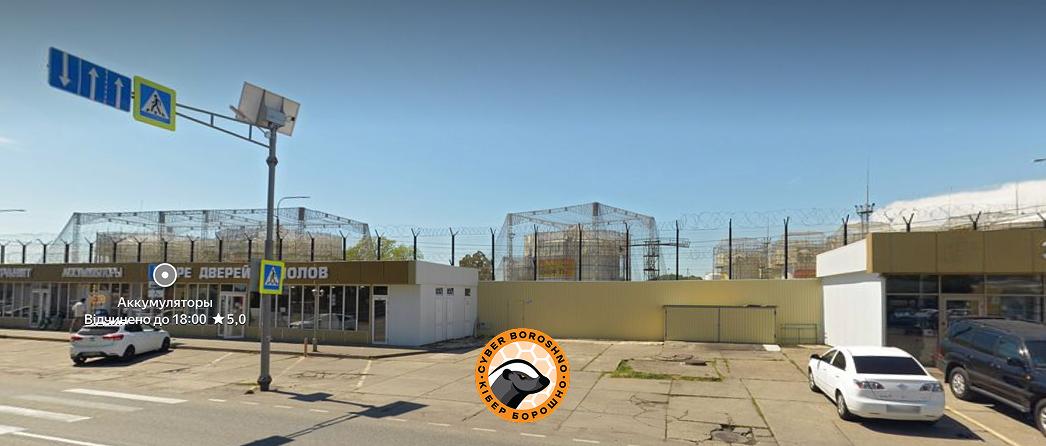
The Ukrainian OSINT channel Cyberboroshno identified one of the hit sites as the BATO aviation fuel terminal, which fuels aircraft at airports across Krasnodar Krai. Every tank there stood behind purpose-built protective structures, Militarnyi reported, and the Lukoil site holds 12 tanks with a combined volume of about 8,400 m³. The burning depot sits roughly 100 meters from Sochi international airport, Russia's fifth-busiest by passenger traffic in 2024, the Russian outlet Agentstvo found.

drones hit fuel depots sochi explosives plant 1300 km away same night · post protective structures around tanks bato aviation terminal russia 2026 захист резервуарів на тзк тов “базовий авіатопливний
Protective structures around the fuel tanks at the BATO aviation fuel terminal in Sochi, Russia, September 2026. Photo: Cyberboroshno

Panoramic imagery from this year shows anti-drone netting around the tanks at both depots. Two days before the strikes, Russian Deputy Prime Minister Aleksandr Novak claimed Russian refineries were better protected than those in the UAE, and Russian President Vladimir Putin said their protection level was now completely different.

sochi sterlitamak map

An air defense position caught fire near the Abkhazia border

Astra analyzed eyewitness footage and placed a detonation and fire at a launch position near the settlement of Sirius, by the Psou river on the Abkhazia border, where an S-300 or S-400 system is based. The Ukrainian monitoring channels Exilenova+ and Supernova+ said drones struck the air defenses directly. Russia's Defense Ministry and local authorities reported nothing about it.

drones hit fuel depots sochi explosives plant 1300 km away same night · post site strike russian air defense positions russia 4 2026 місце ураження позицій російської ппо в сочі
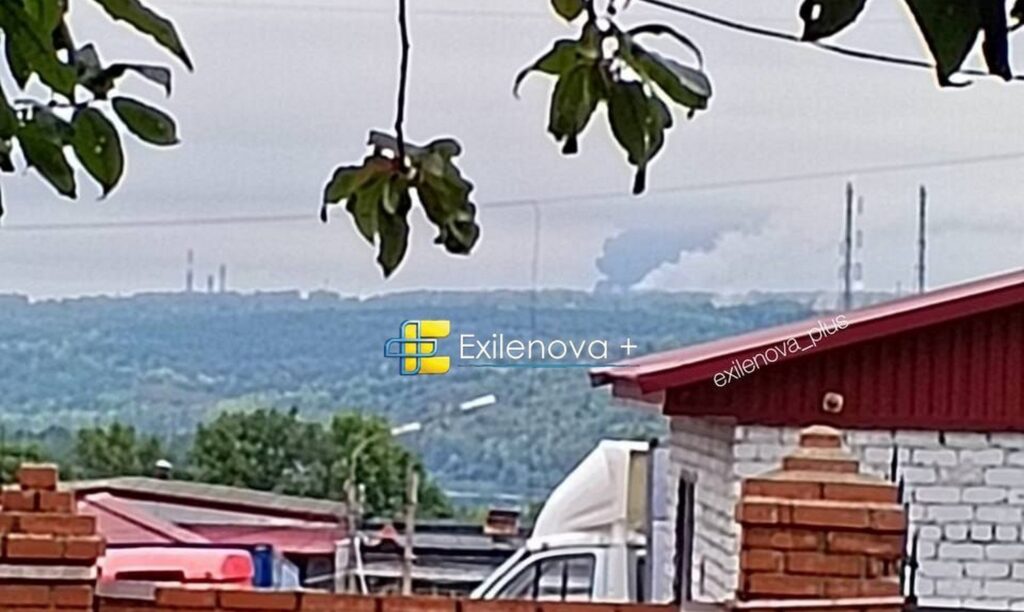
The site of the strike on Russian air defense positions in Sochi, Russia, 4 September 2026. Photo: Exilenova+

Drones had tried the same area in May. A Ukrainian sea drone struck the Russian supply vessel Nefrit at Sochi port the previous day.

pic.twitter.com/V31JXjqaTD

— Exilenova+ (@Exilenova_plus) September 3, 2026

Explosives and petrochemicals hit in Bashkortostan

Drones reached Sterlitamak on the morning of 4 September, hitting the Avangard plant and the Sterlitamak Petrochemical Plant, footage published by Supernova+ shows. Residents reported a series of explosions, and one man said on video that about a dozen drones had already flown toward the petrochemical works. The frames show Ukrainian FP-1 strike drones. 

drones hit fuel depots sochi explosives plant 1300 km away same night · post smoke over sterlitamak russia after strike avangard 4 2026 наслідки ураження заводу фкп «авангард» у російському
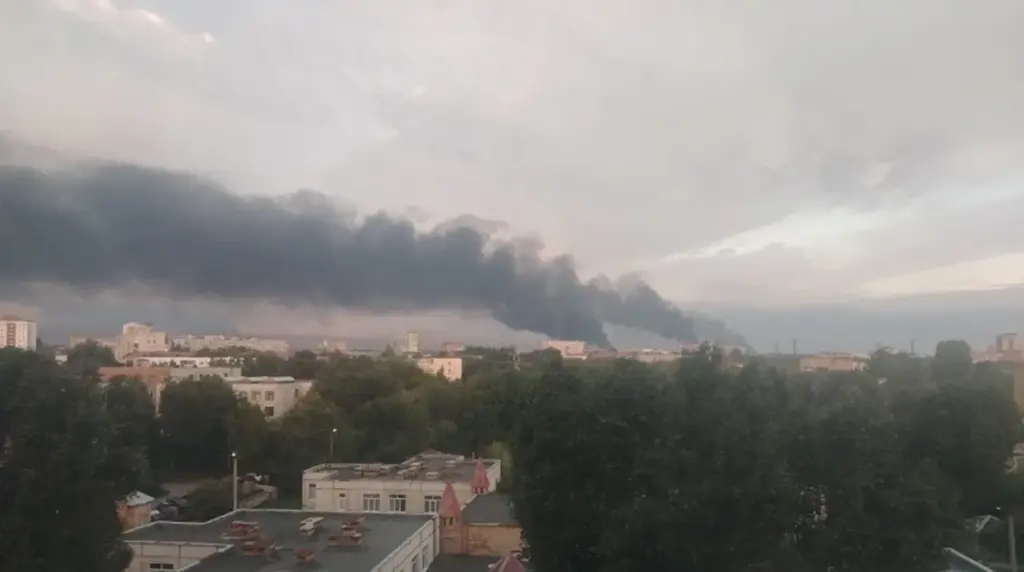
Smoke over Sterlitamak, Russia, after the strike on the Avangard plant, 4 September 2026. Photo: Supernova+

 Russia's Defense Ministry claimed it downed 490 drones overnight across several regions, occupied Crimea, and the Black Sea.

Avangard makes explosives, ammunition, and casings on Russian state defense orders, and also disposes of ballistic missile solid fuel. It belongs to Rostec and sits on the sanctions lists of several countries. The petrochemical plant, about 1,300 km from Ukraine's border, produces rubber, aviation gasoline, and the additive ionol for Russian industry, Militarnyi said. Drones have hit it in November 2025 and in January and April 2026.
  •  

Russia’s number two online retailer reports drone attacks on logistics hubs in two regions

russia's number two online retailer reports drone attacks logistics hubs regions · post smoke rising beyond residential area blagoveshchensk bashkortostan russia 27 2026 exilenova ukraine news ukrainian

Ukrainian drones attacked two Ozon logistics centers overnight on 27 August, one in Ufa and one in Orenburg Oblast, Russia's second-largest online store said. Staff were evacuated at both sites, and preliminary information indicated no casualties. Video published by Ukrainian monitoring channel Exilenova+ shows a drone reaching the Bashkortostan warehouse and exploding.

Ukraine's deep-strike campaign has spread across Russian refineries and fuel depots, chemical plants, arms factories, railways, and the warehouses that move consumer goods. Together the strikes take refining capacity, storage space, and freight throughput out of service repeatedly, and sanctions leave Russia fewer parts and crews to restore them with.

The strike on camera

Exilenova+ reported in the morning that an Ozon warehouse was burning after impacts in Blagoveshchensk, a town north of Ufa. The Bashkortostan capital lies roughly 1,300 kilometers from the war zone in Ukraine. Around midday the channel published eyewitness video of what it called the moment of a drone attack on the site, and said the warehouse had not caught fire. The footage shows a drone reaching the site and detonating there.

Drone hit another Russian warehouse

Eyewitness video from Blagoveshchensk in Bashkortostan shows the moment a Ukrainian drone reached Ozon's fulfillment center — the largest logistics complex the online retailer runs in the Volga area — and detonated. The channel that published… pic.twitter.com/oHUgjRz0v0

— Euromaidan Press (@EuromaidanPress) August 27, 2026

Earlier, the channel reported that residents of Sterlitamak, Bashkortostan's second-largest city, about 120 kilometers from Ufa, had written about explosions, with nothing then known about impacts. Astra later placed smoke over what it said was probably the Bashkir Soda Company works there.


Ozon said the Orenburg site—about 1,200 kilometers from the war zone—has resumed work. The one it placed in Ufa sustained what it called minor damage but remains closed, because the grounds need a thorough inspection. It is not accepting deliveries.

Russian news Telegram channel Astra identified the damaged facility from the eyewitness footage as Ozon's UFA_RFC fulfillment center in Blagoveshchensk. When it opened in late 2024 it was billed as the largest Ozon logistics complex in Russia's Volga federal district, with a total area of 93,000 square meters.

Smoke over the Ufa refineries

Astra also traced smoke in eyewitness footage to the Bashneft-Ufaneftekhim refinery in Ufa. The plant is one of Rosneft's leading refineries and a dual-use site: it supplies specialized fuel to Russia's armed forces and petrochemical feedstock for defense-grade materials. It burned after a strike on 1 August.

Bashneft runs three refineries side by side in Ufa's northern industrial zone—Ufaneftekhim, Novoil, and UNPZ—forming one of Russia's largest refining complexes, with a combined capacity of up to 23.5 million tons of feedstock a year.
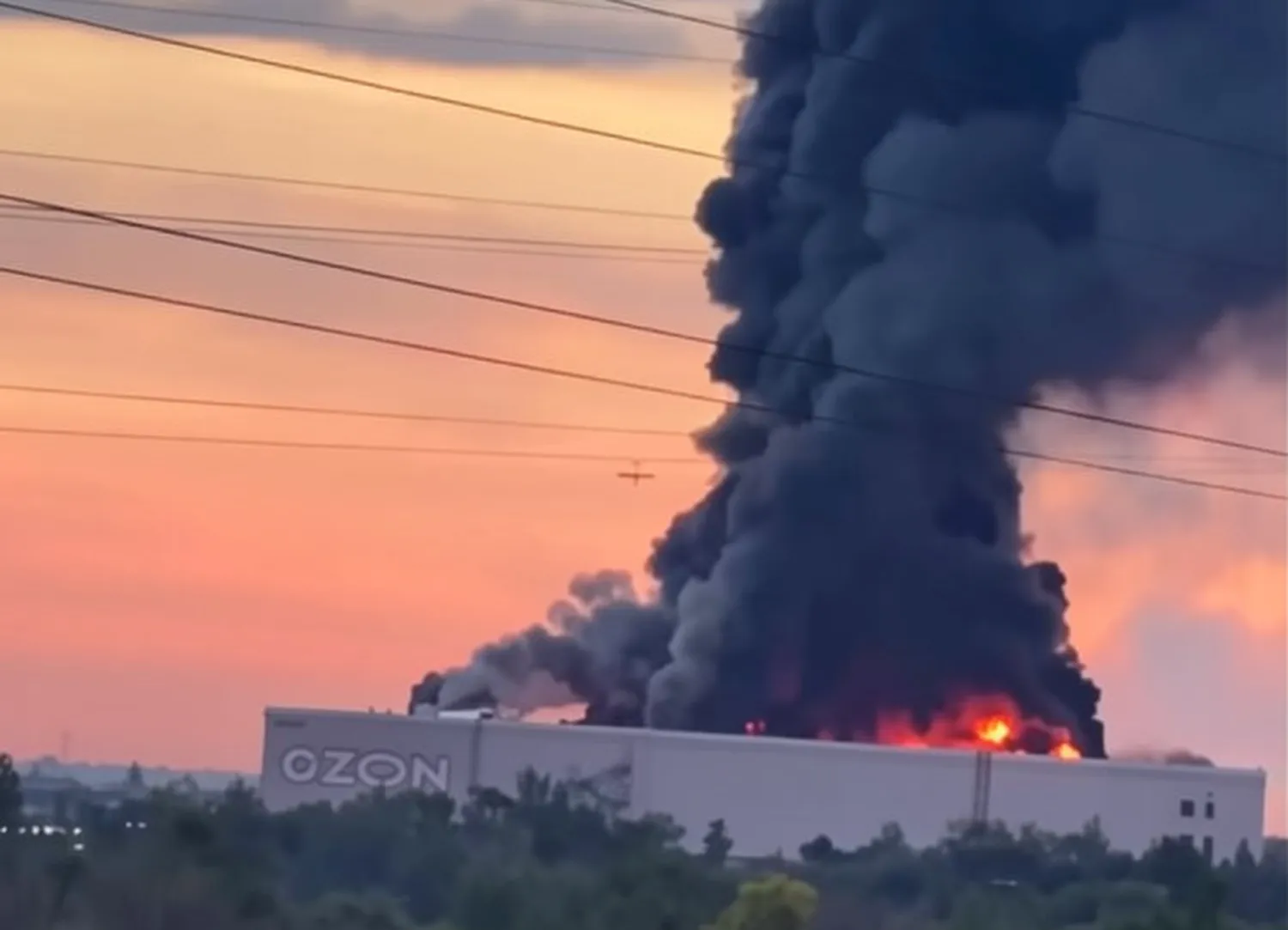
Thick black smoke and flames rise from an Ozon warehouse in Chapayevsk, Russia, at sunset.
Explore further

Ukrainian drones hit warehouse belonging to Russian online retailer Ozon for the first time

What officials said, and didn't

Bashkortostan's authorities did not report the attack. Orenburg Oblast governor Yevgeny Solntsev mentioned drone danger in his region but gave no account of consequences. Ufa closed its airport.

Russia's Defense Ministry claimed air defenses destroyed 267 Ukrainian fixed-wing drones overnight across Russian regions, Bashkortostan among them.

The campaign so far

Ukraine's warehouse campaign began with Wildberries, Russia's largest online marketplace, which lost eight warehouses and roughly 860,000 square meters of storage in July alone. It reached Ozon for the first time on 22 August at Chapayevsk in Samara Oblast, where more than 500 employees evacuated and people were hurt. Four more Ozon hubs were hit across southern Russia two nights later.

  •  

Ukraine says its drones hit major Russian refinery amid deepening fuel shortages

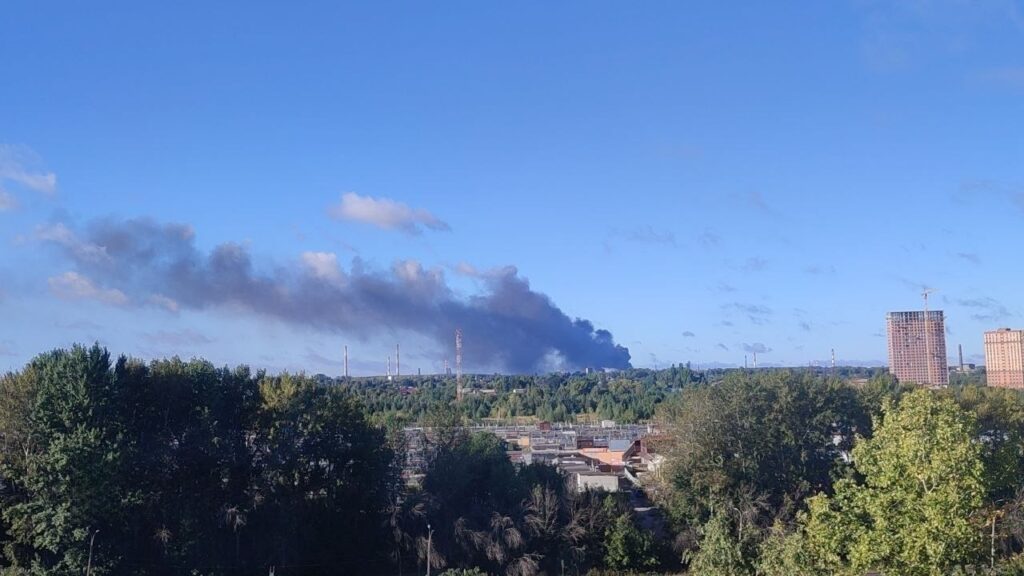
Thick black smoke rises over Novokuybyshevsk following a reported Ukrainian strike on the city’s oil refinery on 22 August 2026.

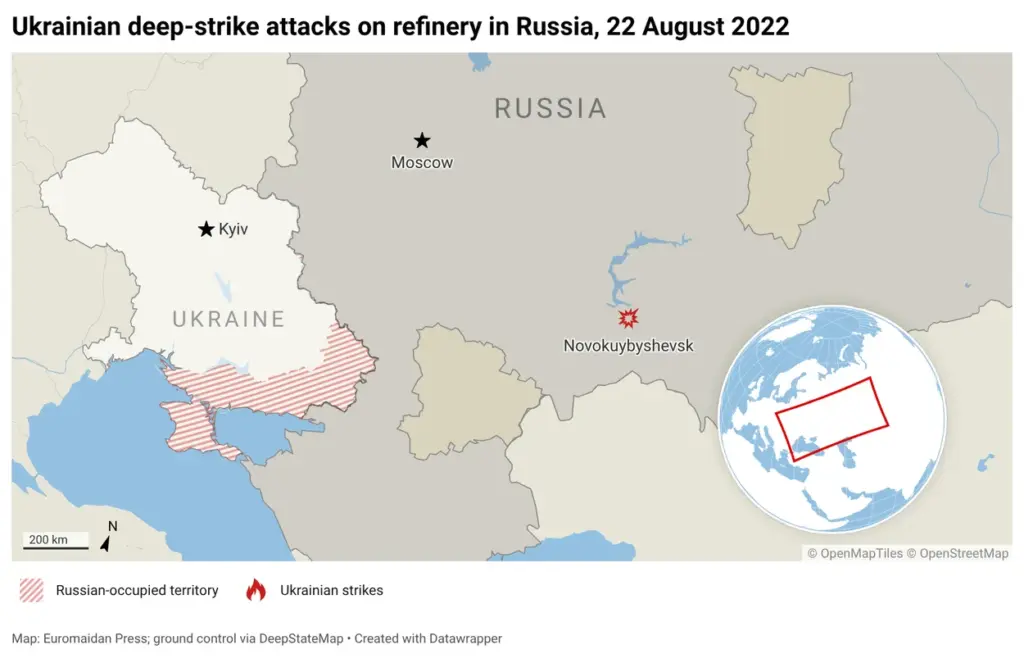
Ukrainian forces struck production facilities at the Novokuybyshevsk oil refinery in Russia’s Samara Oblast overnight on 22 August, sparking a fire at the Rosneft-owned plant, Ukraine’s General Staff said. The extent of the damage remains under assessment.

Ukraine has repeatedly targeted Russia’s oil refineries to restrict military fuel supplies and reduce the energy revenues supporting Moscow’s war. The latest strike came as gasoline rationing returned to Moscow and St. Petersburg, and Rosneft capped nationwide purchases. Militarnyi described the plant as one of Russia’s 10 largest refineries.

The Rosneft-owned refinery can process about 8.8 million metric tons of crude annually and produces more than 20 petroleum products, including aviation fuel and diesel, Ukraine’s General Staff said.

Fire Point said FP-1 long-range drones were used to strike the refinery.

Map of Ukrainian strike on Novokuybyshevsk

The same overnight wave also hit an Ozon logistics center in Chapayevsk, where people were injured, and work was halted, Reuters reported, citing the company.

Novokuybyshevsk Oil Refinery last night and now. pic.twitter.com/aZmL7M8wBe

— Exilenova+ (@Exilenova_plus) August 22, 2026

Neither the damage to the refinery nor any interruption to production has been independently confirmed.

Ukraine keeps pressure on Russian fuel supplies

The strike came one day after Ukraine confirmed hitting Lukoil’s Perm refinery, approximately 1,530 kilometers from Ukraine’s northern border. That attack also caused a fire, according to the General Staff.

At least four Russian refineries went offline during August amid continuing Ukrainian attacks.

By mid-August, filling stations in at least 12 Russian regions were experiencing hours-long lines. Some areas had reintroduced purchase limits or rationing based on license-plate numbers, according to the same report.

Gasoline limits had also been reinstated in Moscow and St. Petersburg, while Rosneft had capped sales at 30 liters per vehicle across its nationwide filling-station network. Diesel purchases remained unrestricted.

  •  
❌