Vue lecture

Indonesia is examining whether traffickers put its citizens into Russia’s war on Ukraine
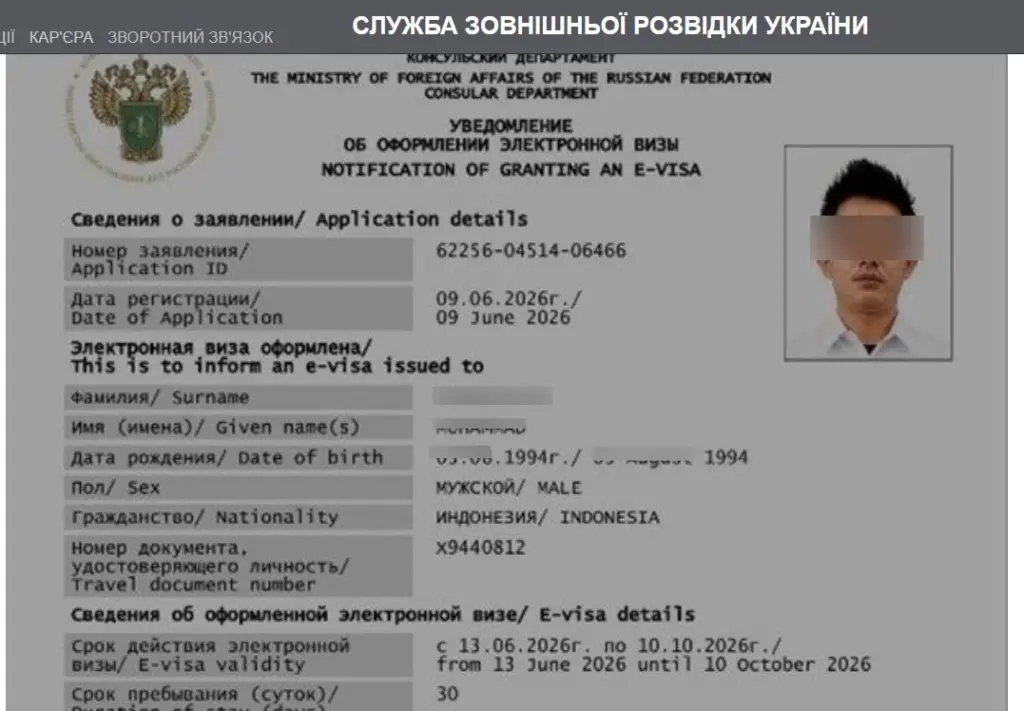
indonesia examining whether traffickers put its citizens russia's war ukraine · post notification russian foreign ministry's consular department granting e-visa indonesian citizen valid 13 10 2026 holder's name eyes obscured

Indonesia's Foreign Ministry is verifying reports that Russia recruited one of its citizens into its armed forces to fight against Ukraine, the Indonesian state news agency Antara reported on 31 August. Ukraine named eight Indonesians serving in the Russian army.

Russia is fighting a war it can no longer man from its own population—losses have outrun replacement for months, and the Kremlin keeps publicly denying that a new mass mobilization is coming, which leaves foreign recruits the option that costs it least at home. Moscow keeps filling the ranks of its illegal war with local contract soldiers and foreign nationals, and Jakarta is now establishing how its citizens entered that pipeline. 

Jakarta cannot yet name the citizen in the Russian ranks

Indonesian diplomatic missions are running the verification together with other government agencies, Foreign Ministry spokesperson Yvonne Mewengkang said on 31 August. She said information on the man's identity, citizenship status, and recruitment process "still requires further confirmation." Mewengkang added that Indonesia would not treat a confirmed enlistment as anything the state endorsed or authorized.

Russia feeds foreign recruits into the illegal war it started against Ukraine. The Indonesian government is checking whether its nationals were trafficked, misled, or hired through fake vacancies before they ended up in uniform. Anyone shown to have been deceived that way will get whatever protection Indonesian law allows, Mewengkang said.

A Kenyan man holds two printed photographs of his son killed fighting for Russia.
Explore further

Nearly 500 Africans recruited into Russia’s army have died, Ukraine says

Indonesian law contains clear provisions on citizens who join foreign militaries, and the consequences are severe, including the potential loss of Indonesian citizenship once the facts have been fully verified, according to the ministry. 

Ukraine's intelligence traced the scheme into Southeast Asia

Ukraine's Foreign Intelligence Service reported on 27 August that it has obtained documents on at least eight Indonesian citizens recruited into the Russian army. Recruiters offer high pay, non-combat work, and fast-tracked Russian citizenship, and many of those who sign have no idea where they will be sent, the service said.
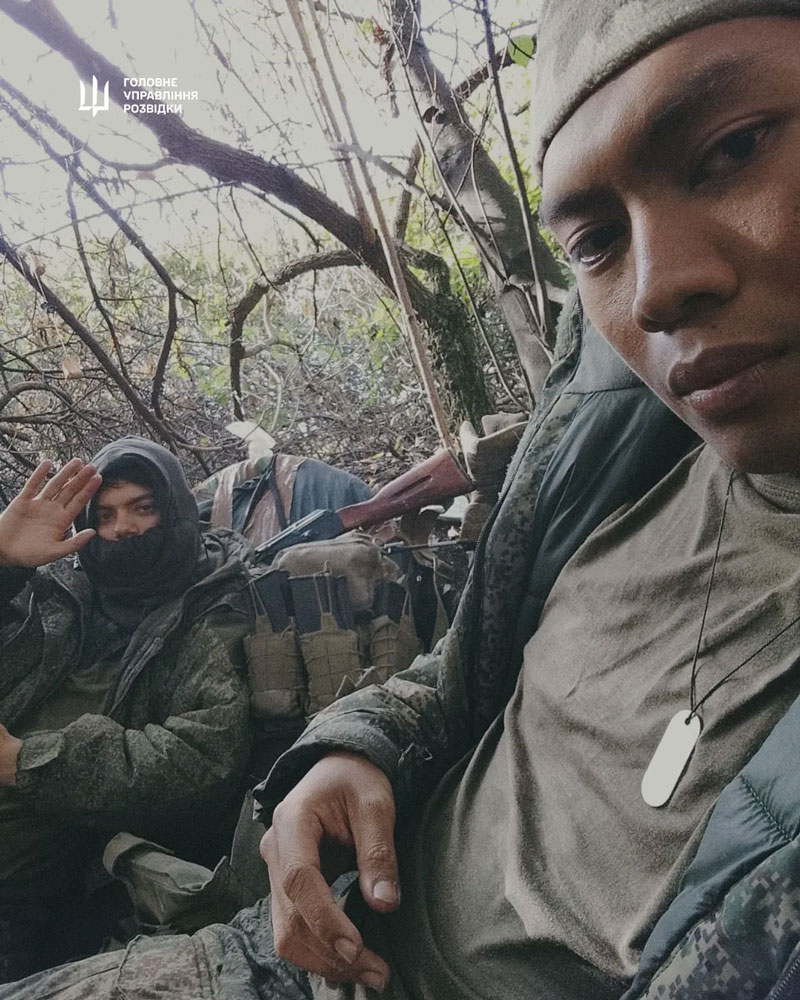
extends russian-oil waiver second time — one bessent had told allies wouldn't make · post filipino mercenary john patrick other russian soldiers forest belt donetsk oblast philippines- mercenary-john-patrick-killed-near-donetsk has extended
Filipino mercenary John Patrick with other Russian soldiers in a forest belt in Donetsk Oblast. Photo: HUR

Each foreigner fills a personnel gap at the front and doubles as propaganda about supposed global support for the war, according to the same report. 

Kyiv had documented the identical model working earlier on citizens of Nepal, Cuba, Kenya, and India.
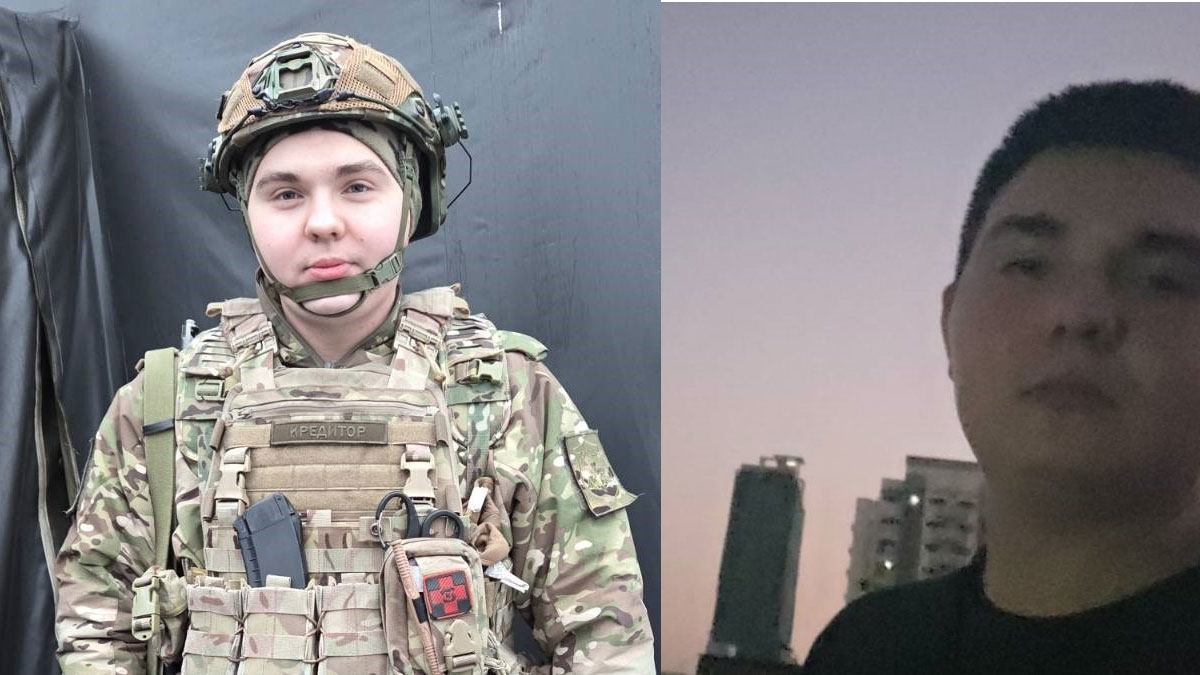
signed up kill africa refused die ukraine russia's corps recruit flees philippines after gru unit rerouted front · post left russian mercenary georgy kochkin full gear training base mulino nizhny
Explore further

Signed up to kill in Africa, refused to die in Ukraine: Russia’s Africa Corps recruit flees to Philippines after GRU unit rerouted him to the front

Governments elsewhere are counting their dead and missing

Ukrainian intelligence data show that Russia uses the recruitment of foreigners to fill out its personnel. Russia has taken in at least 27,000 foreign nationals from more than 130 countries since February 2022, a joint report by the International Federation for Human Rights and Truth Hounds found in April.

More than a quarter of the 459 Peruvians who joined Russian forces are dead or unaccounted for, official figures show, with the missing far outnumbering the confirmed dead. A Colombia-registered recruiter sent Peruvians into the war on a welcome bonus that never arrived. 
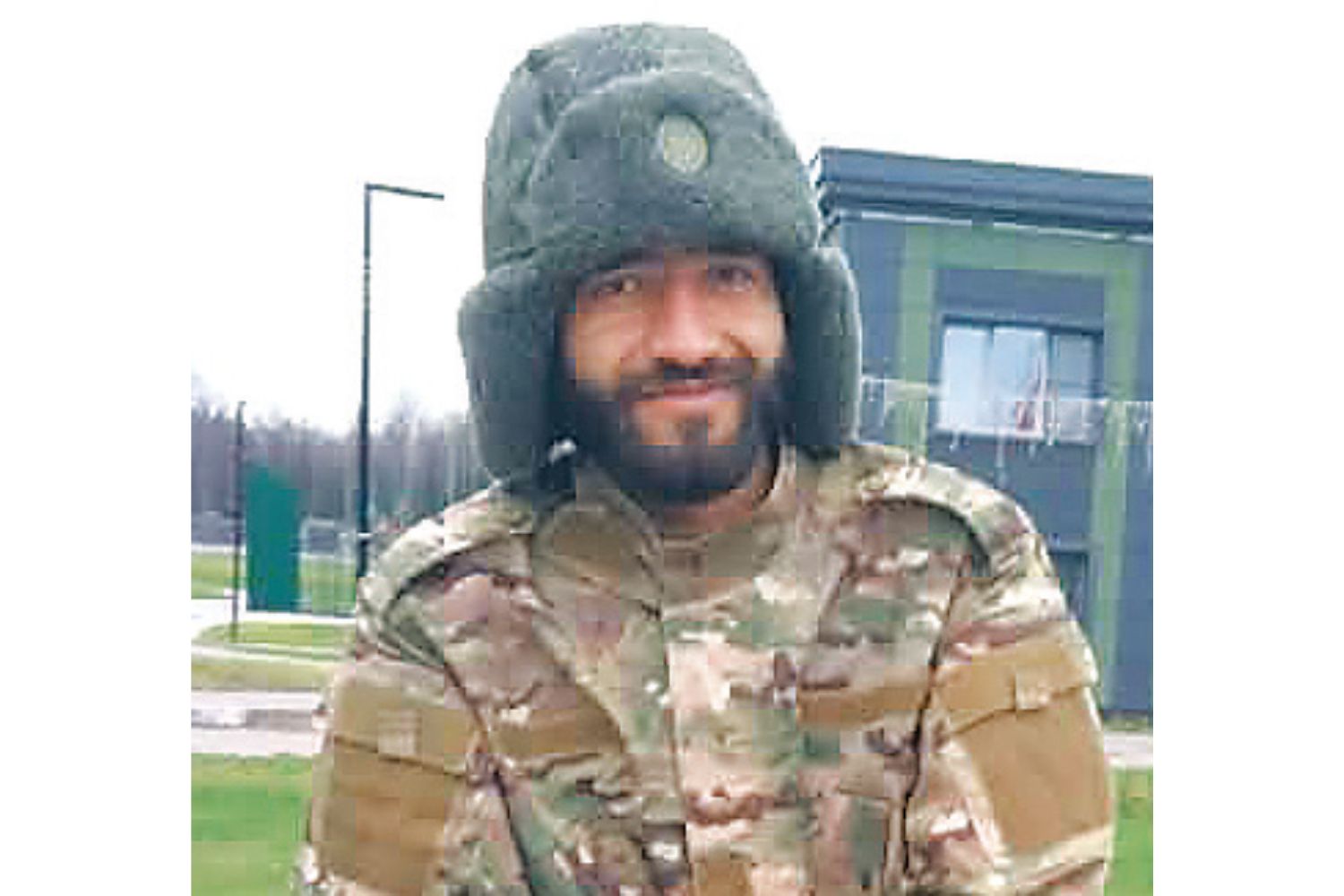
extends russian-oil waiver second time — one bessent had told allies wouldn't make · post nepali man manoj singh bhatta russian military uniform date location unspecified provided kathmandu has extended
Nepali man Manoj Singh Bhatta in Russian military uniform, date and location unspecified. Photo: Provided to The Kathmandu Post.

India has confirmed cases among its own nationals, and Ukrainian intelligence has counted hundreds of dead Africans in Russian units. Ghana accused Russia of luring its citizens into the war after Kenya and South Africa raised the same complaint.

  •  

Echoing Trump, Latin America’s Leaders Boost Allies Across Borders

With cheers, endorsements and insults for rivals and “wokismo,” a new crop of right-wing leaders are openly stepping into one another’s elections.

© Ettore Chiereguini/Associated Press

President Javier Milei of Argentina, left, with Flávio Bolsonaro, who hopes to be Brazil’s next president, last month. Mr. Milei’s strident support of Mr. Bolsonaro’s candidacy led to a rift with the current Brazilian president.
  •  

A $20,000 “welcome bonus” that was never paid: how a Colombia-registered recruiter sent Peruvians into Russia’s war

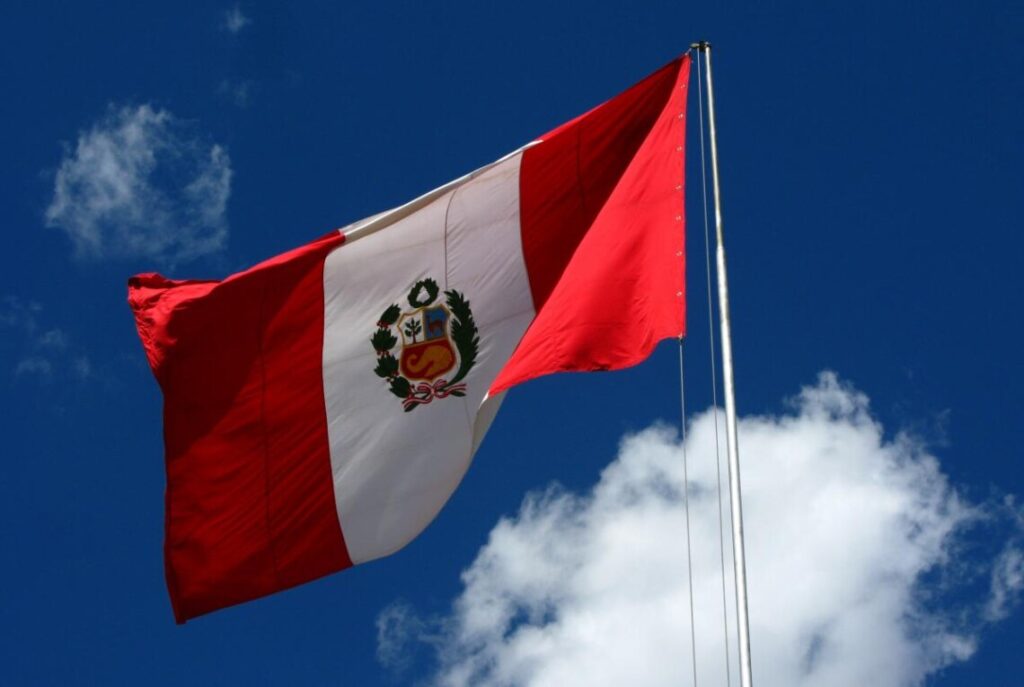
Illustrative photo. The flag of Peru. Photo: Getty Images

On 9 August, Peru's foreign ministry officially reported that 459 Peruvians had been recruited into the Russian army. Of these soldiers, 11 have been killed, 114 are missing, and three have been captured by the Ukrainian army. Another 31 Peruvians were evacuated: three of them chose to stay in Europe, and the rest returned home.

As of 29 April 2026, Russia had drawn in at least 27,000 foreign nationals from more than 130 countries to take part in its war against Ukraine, the International Federation of Human Rights reports. The Peru case is part of Russia's systematic recruitment of foreigners into its military, often through deception. Some men were offered civilian jobs or roles far from the front, only to end up in the thick of the fighting.

Relatives of the recruited men held demonstrations in Peru

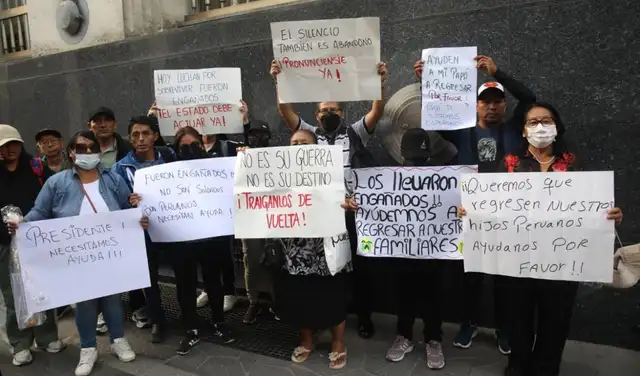
On 29 April 2026, relatives of men recruited into the Russian army demonstrated outside Peru's foreign ministry in Lima, urging the authorities to help bring their family members home, according to SwissInfo.

Relatives of Peruvians affected by Russia's war against Ukraine demand urgent repatriation. 2026. Photo: Carlos Félix/LR

On 30 April, the Russian embassy in Peru responded that it agreed some Peruvian men were taking part in the war on Russia's side, but said this was their own voluntary choice. La República, however, reports that before leaving for Russia, the men were made to sign papers in Russian.

On arrival, their documents were taken, after which they underwent brief military training and were ultimately sent to the front. According to media reports, most were former military and police personnel lured by promises of jobs as security guards or civilian specialists, with salaries of $2,600–4,000 a month and bonuses of up to $20,000.

A “rear position” — until it isn’t

First, recruiters promise foreigners high salaries, signing bonuses, and “rear” or civilian positions. Debt traps and threats of deportation are also used. They lure people even through video games and chats. Once in Russia, recruits are forced to sign contracts, after which their documents are confiscated to keep them at the front. The contracts are often written in Russian, a language the foreign recruit does not understand.

Instead of the promised “rear positions,” recruits are thrown into infantry “meat assaults” after just a few days or a week of training. Mercenaries are killed while carrying out missions, while the wounded are often left on the battlefield without evacuation. Some men go missing or flee. Russia treats foreign mercenaries as “expendable labor,” according to leaked recordings cited by Radio Free Europe/Radio Liberty.

This is not an isolated case

Facing losses that now outpace its own mobilization, Russia has turned to citizens of other countries to keep its ranks filled in its war against Ukraine.

Kenya has become one of the largest sources of people recruited through deception. At first, Nairobi believed the number was only a few hundred, but the scale proved much larger. Nairobi thought Russia had recruited around 200 Kenyan citizens, but a new report says the figure is over 1,000. The scheme relied on fake job and education offers, after which recruits had their documents confiscated to keep them on the front line. The European Parliament found that Russia confiscates African recruits' documents and sends them to the front line in Ukraine.

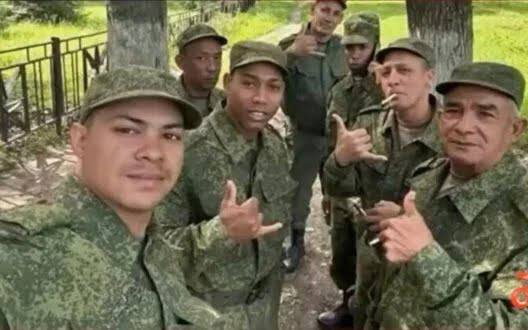
In Cuba, recruiters promised people lucrative jobs, only to lure them into a trap. A Cuban captured near Kupiansk said he joined Russia's war effort under threat of deportation. The scale of the recruitment has been enormous. Ukrainian intelligence estimates that around 20,000 Cuban mercenaries have fought on Russia's side against Ukraine.

ukrainian intel nearly 20000 cuban mercenaries fighting russia’s side against ukraine nationals wearing russian military uniform 2023 video x/pstyle0ne1 florida lawmakers officials highlighted threat regional security news reports
Cuban nationals wearing Russian military uniforms. 2023. Screenshot from a video, via X/PStyle0ne1

The Philippines case shows what awaits the recruited at the end of this pipeline. Ukrainian military intelligence identified a Filipino named John Patrick among Russian soldiers killed in Donetsk Oblast. He was sent into a "meat assault" after just one week of training. He did not speak Russian and carried only a piece of paper with his unit number and his commander's name. After he was wounded, he was left to die in a tree line without evacuation, and Ukrainian intelligence warned that any work in Russia now carries a real risk of forced deployment into an assault unit. The deception relied on promises of high salaries, non-combat positions in the rear, and fast-tracked Russian citizenship, after which recruits were sent into infantry assaults.

  •  
❌