Vue lecture

Russian-occupied nuclear plant ran on diesel for almost three weeks. Ukraine ended that, and the UN’s nuclear watchdog calls it a crucial step against an accident
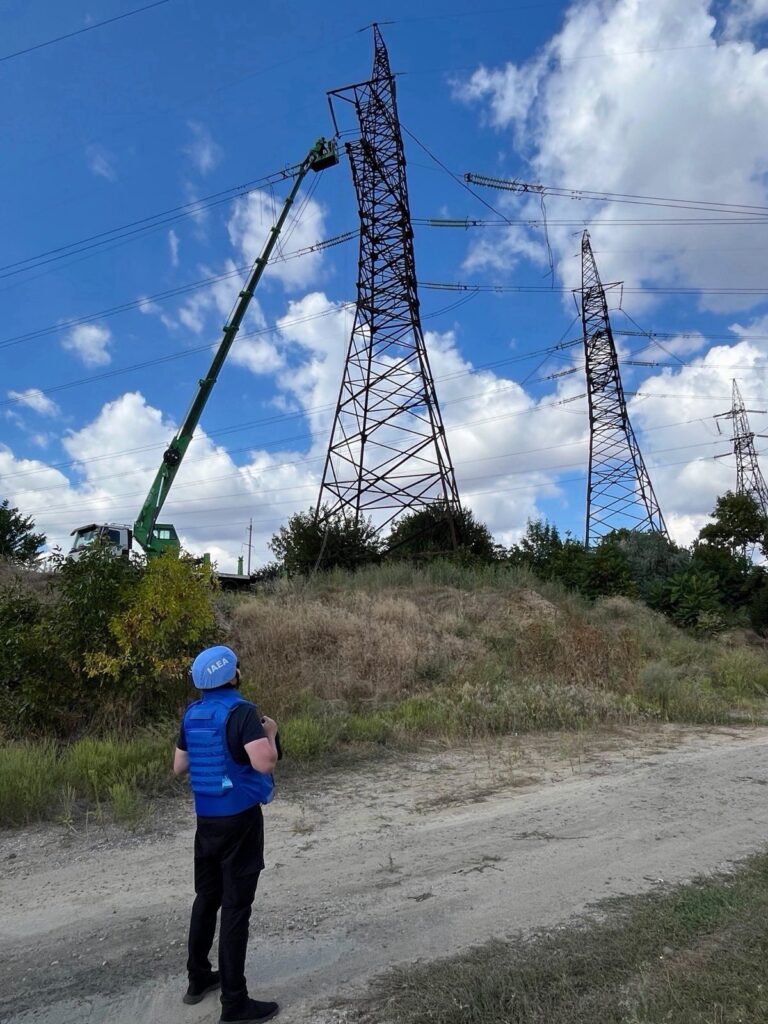
ukrainian technicians restored external power occupied zaporizhzhia nuclear plant after almost three weeks diesel · post iaea staff member watches repairs ferosplavna-1 line supplies 7 2026 hroczxbaoaa0tpe ukraine news reports

Ukrainian power engineers restored the Ferosplavna-1 line and put the Russian-occupied Zaporizhzhia Nuclear Power Plant (ZNPP) back on external electricity after almost three weeks, Ukraine's state nuclear operator Energoatom reported. The repairs took three days and were carried out during a local ceasefire brokered by the International Atomic Energy Agency (IAEA), the UN's nuclear watchdog.

Russia has held Europe's largest nuclear plant for four and a half years, failing to restart it while working to wire it into its own grid, while the cooling of six shut-down reactors and their spent fuel depends on wires crossing the front line and on diesel brought in from outside. One repaired line counts as news because the plant has been cut off from external power more than two dozen times since 2022.

The line is back, and the plant is drawing 11 MW

The plant's own needs were energized from the 330-kV Ferosplavna-1 overhead line on 7 September, Energoatom said. Consumption stood at 11 MW.

The work of Ukrainian power engineers and the agreed local ceasefire made the restoration possible, the company said. Ukrainian specialists reconnected the plant to Ukraine's unified power system under constant security risks and what the company called the unpredictable actions of Russian forces, according to Energoatom. It was the seventh local truce IAEA Director General Rafael Grossi has negotiated in this war, the IAEA said.

The plant can now power the pumps cooling its reactors and spent fuel again, along with its other safety systems, the IAEA said.

Almost three weeks on emergency generators

The ZNPP had been without external power since 20 August, Energoatom said. Its critically important systems ran on diesel generators throughout, a mode that created additional risks to nuclear and radiation safety at Europe's largest nuclear plant, the company said.

The plant lost Ferosplavna-1, its sole remaining power line, to military activity north of the Dnipro on 20 August, the IAEA said. The plant had been facing a possible station blackout as the diesel reserves for those generators diminished. The site had cut its running generators to two and begun cycling its cooling pumps to save fuel.
Full assurance of nuclear and radiation safety at the plant is possible only after its de-occupation and return to Ukraine's control and to Energoatom, the single legitimate operator, the company said.
  •  

Ukraine to receive $46 million for repairs to Chornobyl sarcophagus after Russian strike

Ukraine to receive $46 million for repairs to Chornobyl sarcophagus after Russian strike

Ukraine will receive €42.5 million ($45.7 million) from international partners to repair the protective arch over the Chornobyl nuclear plant's destroyed reactor, Environment and Natural Resources Minister Svitlana Hrynchuk announced on June 26.

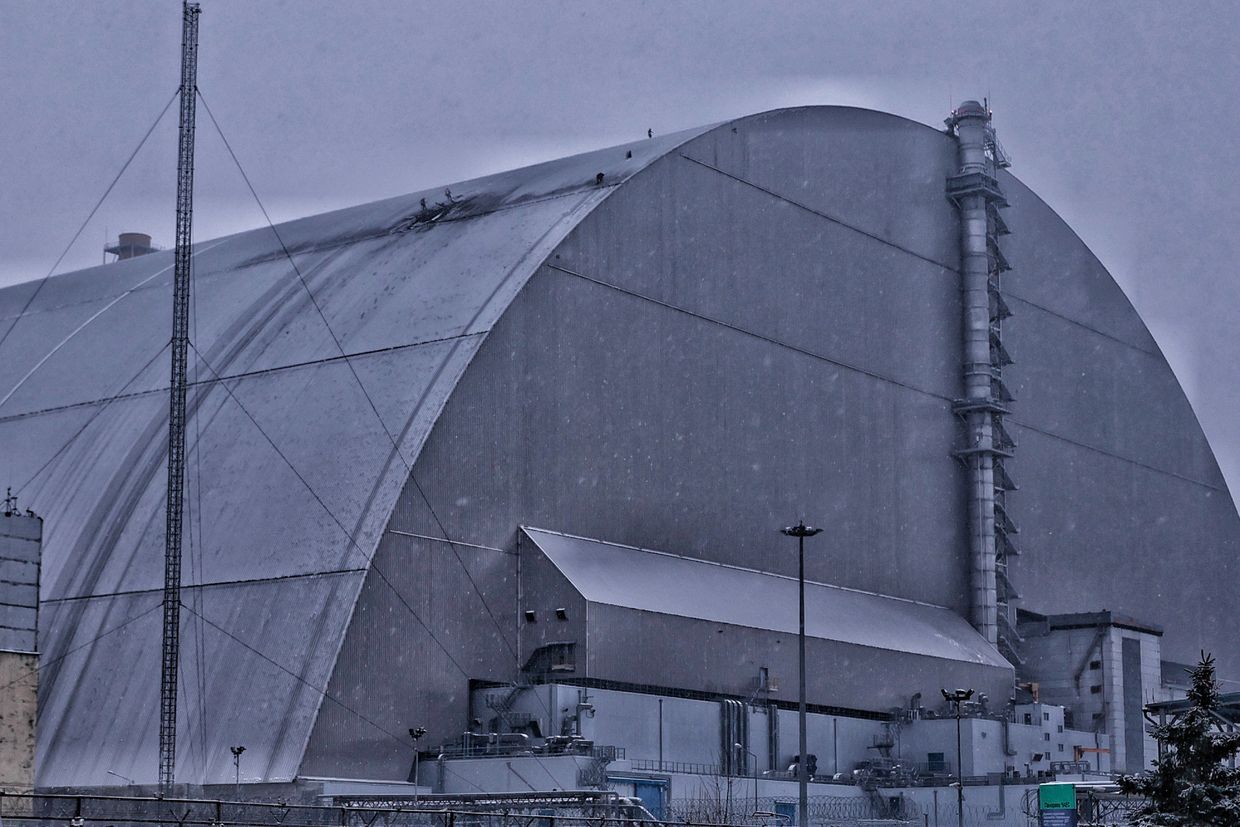
A Russian Shahed-type drone struck the New Safe Confinement over Chornobyl's destroyed 4th reactor on February 14.

The structure built to contain radioactive material was damaged, no serious radiation leaks were caused.

France pledged €10.6 million ($11.4 million), the United Kingdom committed €6.9 million ($7.4 million), and the European Commission contributed €25 million ($26.9 million) toward the repairs.

"This is further evidence that Ukraine does not face its challenges alone, but has reliable friends," Hrynchuk wrote on Facebook.

The funding was announced at the European Bank for Reconstruction and Development (EBRD) headquarters in London during a meeting of the Chornobyl International Cooperation Account Assembly of Contributors – the governing body of the fund created to address Chornobyl Nuclear Power Plant issues.

Ukraine has already surveyed the building's structure and completed preparatory work, Hrynchuk said. In March, €400,000 ($430,000) was allocated from the special fund for this purpose.

The assembly discussed plans for temporary repairs and further work to fully restore the arch's integrity and functionality.

Chornobyl was the site of the world's worst nuclear disaster in 1986, contaminating areas across Ukraine, Belarus, and Russia.

After an protective structure was built over the destroyed reactor to contain radioactive material in the months following the disaster, the current arch, an international project built as a more permanent solution, was completed in 2017.

Chornobyl isn’t safe anymore... again
Chornobyl disaster occurred in the early hours of April 26, 1986, in Soviet Ukraine. Nearly 39 years after the worst nuclear disaster in history, Russia’s brazen attack on the $2 billion New Safe Confinement (the sarcophagus enclosing the destroyed reactor) in February 2025 poses a new potential radioactive danger as engineers race to repair the damage. The Kyiv Independent’s Kollen Post dives into why the restoration is not as simple as it may seem.
Ukraine to receive $46 million for repairs to Chornobyl sarcophagus after Russian strikeThe Kyiv IndependentKollen Post
Ukraine to receive $46 million for repairs to Chornobyl sarcophagus after Russian strike
  •  
❌