
 Connexion

Poland discloses why it didn’t shoot down Russian cruise missile, even though Swedish pilot had NATO’s green light
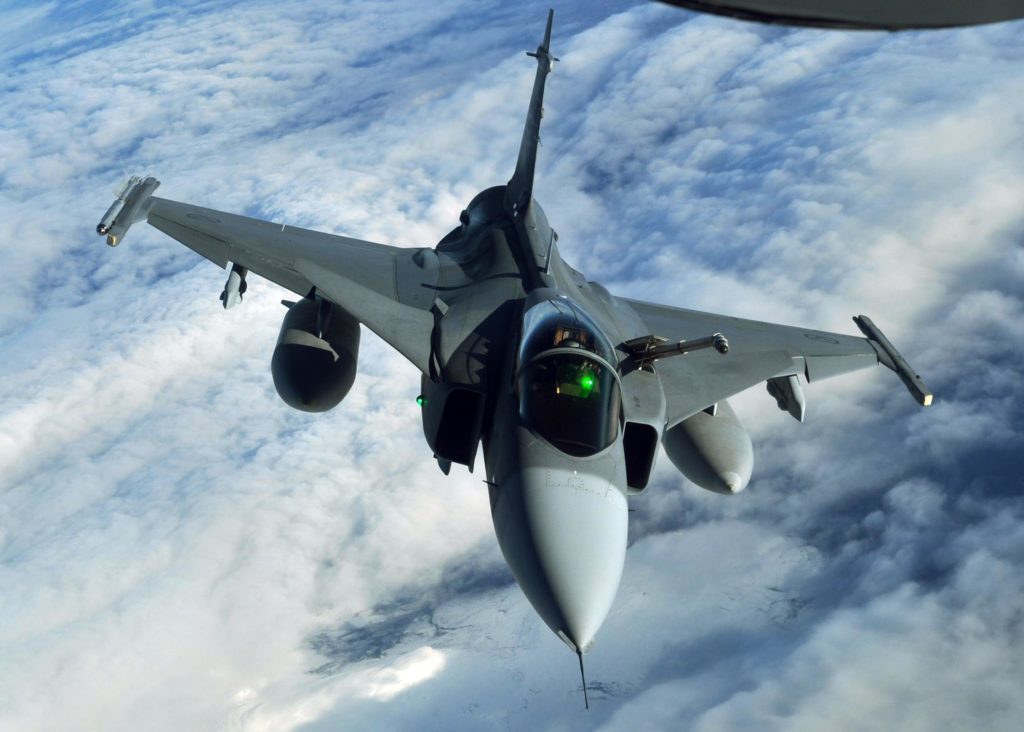
A Swedish fighter pilot had NATO’s permission to shoot a Russian cruise missile out of Poland’s sky. He never pulled the trigger. Weather too thick to identify the Kh-101 stopped the Gripen pilot during Russia’s 20 November barrage, Lieutenant General Ireneusz Nowak, commander of Poland’s Operational Command, told Rzeczpospolita.
On 1 October, Poland introduced procedures that allowed it to shoot down Russian targets without waiting for visual confirmation. However, the country has likely now returned to peacetime protocols, said military expert Serhii Zhurets. He added that the situation has become a serious challenge to Poland's security and demonstrated the need to maintain a high level of air defense effectiveness, Espreso reports.
The incident occurred during the Coalition of the Willing drills on Polish territory, which includes countries united to coordinate security guarantees, military and financial aid, and post-war stabilization plans for Ukraine, under the leadership of the UK and France.
The green light that went unused
The Swedish Gripen pair flew under NATO’s Combined Air Operations Center in Uedem, Germany, which issued a condition-based order, an authorization letting the pilots decide for themselves to fire once set conditions were met.
One pilot moved on an object his systems flagged as a probable Kh-101 but could not confirm it, by eye or through the jet’s optoelectronic sensors. The obstacle was “extremely difficult weather conditions” in the interception area, Nowak explained, and the pilot held fire despite the NATO clearance.
Eleven objects, three across the border
Poland tracked 11 objects that could threaten its airspace simultaneously. Three crossed the border, and none caused deaths or injuries, Nowak said.
To guard the sky, Poland put up two F-16s from Łask and the two Swedish Gripens, backed by a Saab 340 early-warning plane, a Dutch MRTT tanker, and ground-based air defenses.
A “yellow” alert declared at 1:40 a.m. gave way to the top “red” level at 5:49 a.m. and held until noon. After 7 a.m., as Russian bombers loosed fresh cruise missiles on their way home, more F-16s went up from Krzesiny, and territorial-defense teams fanned out to find where the objects fell.
Drones first, then the missiles
The attack unfolded in two phases: Russian forces sent drones, including fast jet-powered ones, then followed with Kalibr and Kh-101 cruise missiles. Poland knew the launch sites, the numbers, and the flight paths, helped by data Ukraine passed through its Wiraż air-situation system.
Read also
-
“Big bosses” can’t decide world’s fate, Zelenskyy says, after Trump, Putin and Xi meet in China
-
Hong Kong firm became majority owner of a Russian titanium maker’s UK arm in October, yet neither is on US Treasury, EU, UK, or Ukrainian sanctions lists
-
Ukraine’s drone forces beat their daily record for Russian troops hit, by two
