 Connexion
Un drone suspect survole une base militaire américaine en Angleterre
13 novembre 2026 à 18:09
Téhéran a menacé de frapper des bases américaines en Europe si elles servaient à attaquer l’Iran.


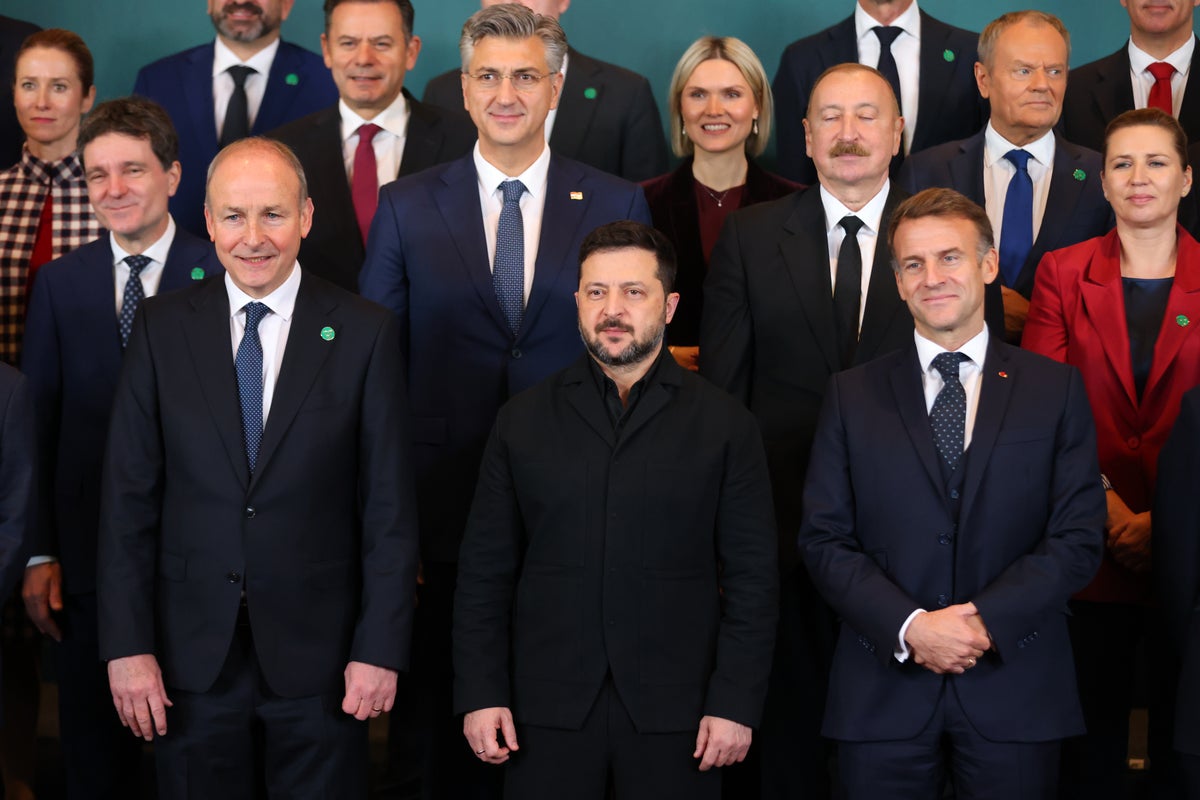
Forty European countries, including Ukraine, signed a declaration on 12 November reaffirming that states have the right to choose their own alliances and that any decisions affecting European security must involve Europeans.
The declaration comes as Russia pushes for broader negotiations on Europe's security architecture, including its longstanding demands to limit NATO's expansion and military presence near Russian borders. European leaders have warned that such discussions must not come at the expense of Ukraine's sovereignty or allow Moscow to dictate the security arrangements of other countries.
The Dublin Declaration on key principles of European security was adopted at the ninth European Political Community summit in Ireland. It also links future discussions on European security arrangements to the end of Russia's war against Ukraine, reinforcing the position that a ceasefire and peace must come before negotiations over the continent's wider security architecture.
The signatories reaffirmed that every state has the right to determine its own relations with other countries and freely choose whether to join treaties, alliances, or international organizations.
The document also reiterates support for Ukraine's independence, sovereignty, and territorial integrity within its internationally recognized borders. It calls for robust and credible security guarantees to prevent another Russian attack.
The declaration states that Ukraine's security is an integral part of Euro-Atlantic security and that future developments in European strategic stability will depend on the conclusion of Russia's war against Ukraine.
It also says that discussions on additional risk-reduction and risk-management mechanisms should take place once the conditions are met and peace is restored in Europe. At the same time, signatories commit to strengthening their defense capabilities, military cooperation, and European defense industry.
The document further reaffirms NATO's role as the foundation of collective security for its members, including their commitment to Article 5, and calls for a stronger European Union capable of responding to security threats.
EU foreign policy chief Kaja Kallas said a ceasefire must come before discussions about Europe's wider security architecture. She made the remarks on arrival at the informal EU summit in Dublin, according to European Pravda.
Kallas welcomed US envoy Jared Kushner's statement that Europeans would take part in upcoming peace talks, saying she hoped the EU would have meaningful influence over the negotiations.
However, she warned that shifting the focus to Russia's demands for a new security architecture would play into Moscow's hands.
"If we start to talk about what Russia is asking regarding the security architecture, we actually walk into the traps that Russia is setting us," Kallas said.
She argued that such discussions risk diverting attention from the absence of a ceasefire and Russia's responsibility for the war.
"We have one aggressor and one victim," she said, urging European leaders to keep the focus on ending Russia's aggression.
The Dublin declaration gives that position a collective political expression: European security cannot be negotiated over Ukraine's head, and Russia cannot dictate the alliances or security choices of sovereign European states.

© Peter Morrison/Associated Press

Europeans are less supportive of more EU countries having nuclear weapons
© AFP/Getty

© Atul Loke for The New York Times
© Copyright 2026 The Associated Press. All rights reserved

