❌

Vue normale

Russia attacked Ukrainian retailer Epicentr’s warehouse 10 times in one day, destroying about 85% of goods, company says
14 octobre 2026 à 09:53

Epicentr’s attack 13 october

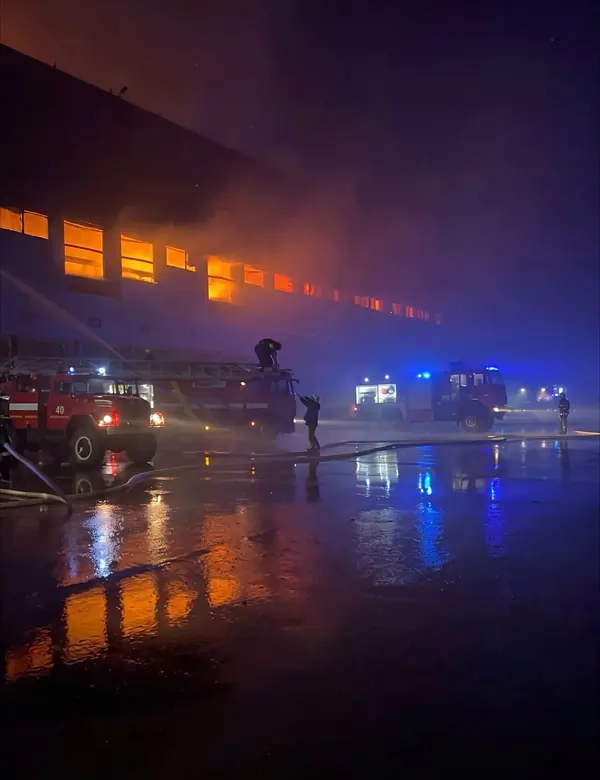
Russian forces attacked Epicentr’s hub in Khmelnytskyi, a city in western Ukraine, 10 times on 13 October, starting five large fires that destroyed about 85% of the goods stored inside, the company said.

Epicentr is a Ukrainian chain of home-improvement and household-goods stores. The attack adds pressure to Ukraine’s logistics network, already damaged by Russian strikes. On 10 September, Ukrainian entrepreneur Ruslan Shostak, co-owner of the popular retail chains Eva and Varus, said that 2.1 million square meters of Ukraine’s modern warehouse space had been destroyed since Russia’s full-scale invasion began. He put the country’s total modern warehouse space at approximately 5 million square meters. The strike on the hub came the same day Russia opened a barrage of 39 ballistic missiles on Ukraine’s power grid.

About 30 drones in the sky kept the fire from being put out, and the hub burned down completely overnight, Epicentr said. None of its people were hurt, the company said.

“The most important thing is that all our people are alive,” Epicentr wrote.

Russia had earlier completely destroyed Epicentr’s two largest logistics complexes, in Kyiv and Kyiv Oblast, the company said. The Khmelnytskyi hub had remained effectively its only surviving large warehouse complex. Goods were sent from there to the company’s shopping centers, and people worked there every day “so that millions of Ukrainians could buy what they need,” it wrote. Epicentr described every such attack as a blow to Ukrainian businesses’ ability to operate, pay wages, preserve jobs, and support the country’s economy.

Epicentr’s earlier losses

Epicentr said in August that 10 of its shopping centers had been completely destroyed since February 2022. Another 13 retail sites had been damaged, and one in Melitopol remained under Russian occupation, it said. At the time, the company operated 70 shopping centers, down from 80 at the end of 2021.

Earlier, during a Russian missile attack overnight on 5 August, Epicentr’s logistics center in Kyiv burned down completely, Epicentr’s Yulia Chudnovets said. The company’s ceramic tile plant in Kalynivka, one of the largest in Ukraine, was effectively lost, she said. One employee was killed and three were injured, she added.

fourth ukrainian pharmaceutical warehouse has burned russian strike since start month · post fire damage medicine distributor badm after odesa ukraine 14 2026 росіяни зруйнували вже четвертий склад ліків за
Explore further

A fourth Ukrainian pharmaceutical warehouse has burned in a Russian strike since the start of the month

On 25 May 2024, Russian airstrikes on an Epicentr hypermarket in Kharkiv killed 19 people, Interior Minister Ihor Klymenko said.

Attacks across Khmelnytskyi Oblast

Fires broke out at enterprises in Khmelnytskyi and Shepetivka districts on 13 October, Serhii Tiurin, head of the Khmelnytskyi Oblast Military Administration, reported. He did not name the enterprises. On 14 October, Tiurin said one of the fires had been put out, and crews were still fighting the other. Khmelnytskyi Mayor Oleksandr Symchyshyn said six people were injured in Khmelnytskyi district that day, where Russian strikes damaged private enterprises, a gas station, and a medical facility.

1,125 Kyiv residents injured in Russian attacks since the start of 2026, more than a third of them in five weeks from late August, Kyiv health chief says

14 octobre 2026 à 09:03

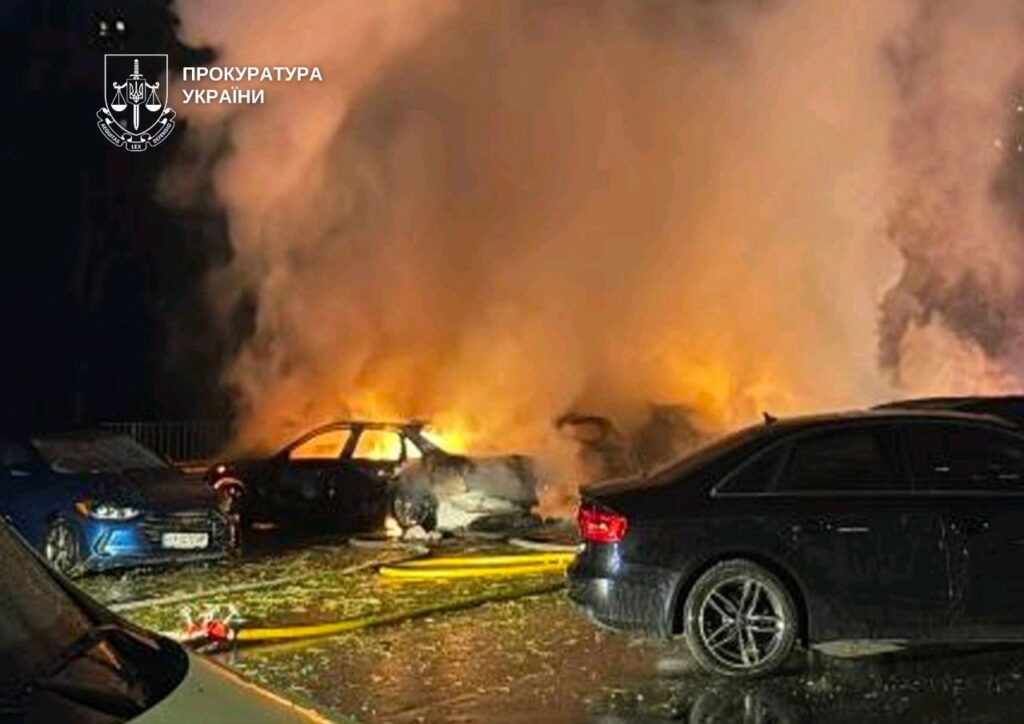
Cars burning outside a 25-story apartment building in Kyiv after a Russian drone strike

Russian attacks have injured 1,125 Kyiv residents since the start of 2026. Of these, 379 people, or nearly 34%, were injured in just five weeks, from 27 August to 7 October, Tetiana Mostepan, director of the Kyiv City State Administration’s Department of Health, said in an interview published on 13 October.

Russian air attacks on Kyiv have intensified since late August. Air attacks occur both day and night, and Russian drones target not only military facilities but also civilian buildings, including apartments. As a result, the number of casualties is also increasing. More than 40% of emergency medical responses to attacks this year occurred between late August and early October, Mostepan noted.

During this period, the capital’s emergency medical teams responded to 782 calls related to the attacks, the department director said. She also released data showing that 138 medical facilities in Kyiv have been damaged since the start of Russia’s full-scale invasion, including 47 this year.

“And when we talk about statistics, I always emphasize that behind every number is a human life. These are people who have been injured, as well as medical workers who respond to attack sites to save them,” Mostepan said.

People giving first aid to two women injured in a Russian drone strike in Kyiv
People giving first aid to two women injured in the Russian drone strike, Kyiv, 8 September 2026. Photo: Zelenskyy's Telegram

Russian attacks on Kyiv have become more frequent

Russia attacked Kyiv with drones throughout the day, Suspilne Kyiv reported on 27 August. Air raid alerts were issued 12 times in the capital, drone debris was found in five districts, and at least four people were injured, the report said. Russian forces used about 140 attack drones against Ukraine throughout the day, more than 100 of them jet-powered, the Ukrainian Air Force reported at the time.

At least 38 people were killed and dozens injured in a Russian drone strike on an ammunition depot in the Bucha district near Kyiv, triggering a massive fire and hours of explosions in a residential area, CNN reported. The attack in the Bucha district came amid near-constant Russian airstrikes, which continued into Sunday, the outlet reported.

Russian forces were likely seeking to exhaust Ukraine’s air defenses, disrupt civilians’ daily lives, and increase the scale of destruction, analysts at the Institute for the Study of War (ISW) said, citing CNN’s reporting.

On 8 September, NATO Secretary General Mark Rutte stressed the urgent need to strengthen support for Ukraine, particularly by providing air defense systems. Delays in delivering assistance cost human lives, he said.

On 1 October, a Russian drone struck a school in Kyiv’s Solomianskyi district while 104 children were inside, Suspilne reported. Students and school staff took shelter, so no one was injured, the report said.

Aftermath of the Russian attack on a school in Kyiv’s Solomianskyi district, 1 October 2026. Suspilne News/Oleksandr Mahula
Aftermath of the Russian attack on a school in Kyiv’s Solomianskyi district, 1 October 2026. Photo: Suspilne News/Oleksandr Mahula

Russian attacks continue after Trump’s announcement of an energy ceasefire

Following US President Donald Trump’s announcement of an energy ceasefire, Russia continued striking Ukraine’s energy infrastructure, including in Kyiv. On 13 October, Russian ballistic missiles struck Kyiv, hitting a thermal power plant in the second attack in 24 hours without advance warning from Ukraine’s allies, Zelenskyy said. The evening and morning strikes killed four people in Kyiv, three of them women in a high-rise in Desnianskyi district, Kyiv prosecutors said.

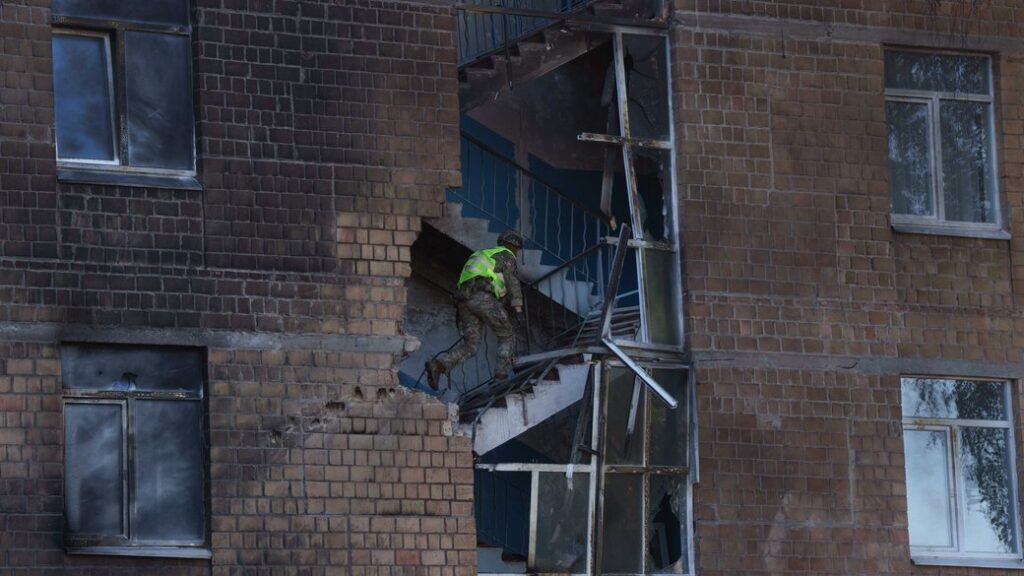
Aftermath of the Russian attack on Kyiv overnight into 14 October 2026
Aftermath of the attack on Kyiv on the night of 14 October 2026. Photo: Kyiv State Emergency Service

Russia attacked energy and critical infrastructure in Kyiv, Kyiv Oblast, and Kharkiv with 39 ballistic missiles and more than 120 attack drones, Ukrainian President Volodymyr Zelenskyy said on 14 October. At least 600,000 people were left without electricity, he said. Later that day, an accident on the grid cut power to part of Kyiv’s right bank, energy company DTEK said.

  • ✇Euromaidan Press
  • Ukraine warns of “a new type of humanitarian crisis” as Russia aims at its biggest cities
    Ukraine is drafting crisis scenarios for November to March as Russian strikes target the country’s biggest cities, Head of the Presidential Office Kyrylo Budanov said on 13 October after chairing a meeting with donor-country diplomats and humanitarian organizations. His deputy Iryna Vereshchuk warned the same day that this winter may bring a new type of humanitarian crisis. She asked donors to be ready with fast extra funding. Russia has struck Ukraine’s grid deep into winter before: la
     

Ukraine warns of “a new type of humanitarian crisis” as Russia aims at its biggest cities

14 octobre 2026 à 06:32

kyiv strike

Ukraine is drafting crisis scenarios for November to March as Russian strikes target the country’s biggest cities, Head of the Presidential Office Kyrylo Budanov said on 13 October after chairing a meeting with donor-country diplomats and humanitarian organizations. His deputy Iryna Vereshchuk warned the same day that this winter may bring a new type of humanitarian crisis. She asked donors to be ready with fast extra funding.

Russia has struck Ukraine’s grid deep into winter before: last February, it launched more than 500 missiles and drones as temperatures fell below −20°C. Strikes have continued despite a US-announced energy truce Moscow has not confirmed. Kyiv now wants donors ready to pay for the humanitarian fallout in advance.

Crisis scenarios for November to March

The core task is clear crisis scenarios and synchronized response plans for that period, Budanov wrote. The government is building a baseline threat scenario through the State Emergency Service, while the military and intelligence will provide a risk assessment.

“The available resource must be concentrated where people will have the hardest time,” Budanov wrote.

Ukraine, he added, must hold its rear as reliably as the Defense Forces hold the front line.

What officials mean by a new type of crisis

A war of rear areas is underway, Vereshchuk wrote. Russia is changing tactics in an attempt to deepen the humanitarian crisis, especially in Kyiv, Kharkiv, Odesa, and Dnipro, she added.

Vereshchuk did not define what makes the crisis new, but she tied her warning to the big cities.

“This winter, it is the big cities that may become the testing ground of our national resilience,” she wrote.

Humanitarian organizations must adapt their plans to protect and support civilians, Vereshchuk wrote. Donors, she said, must be ready to provide additional crisis-response funding quickly.

The capital lags behind

Ukrainian President Volodymyr Zelenskyy wrote on 13 October that even border and frontline oblasts were ahead of Kyiv on resilience plans as of mid-October. Even single hits by Shahed attack drones can cut power and water across much of the capital, he noted. He also began consultations on urgent security and management steps to fix the situation in the city.

Aftermath of the Russian attack on Kyiv overnight into 14 October 2026
Explore further

Three days after Washington announced an energy ceasefire, Russia fires 39 ballistic missiles at Ukraine’s grid

Russia carried out more than 200 strikes on Ukraine’s power generation and transmission in the week to 11 October, Zelenskyy said. Overnight on 14 October, Russia fired 39 ballistic missiles and more than 120 drones at energy and critical infrastructure. The barrage left at least 600,000 people without power, Zelenskyy said.

  • ✇Euromaidan Press
  • Three days after Washington announced an energy ceasefire, Russia fires 39 ballistic missiles at Ukraine’s grid
    Russia fired 39 ballistic missiles and more than 120 drones at Ukraine’s energy system overnight into 14 October, President Volodymyr Zelenskyy said. The barrage came three days after US President Donald Trump announced an energy ceasefire, which the Kremlin never confirmed, saying on 12 October only that contacts were continuing. Ukraine held off strikes on Russian energy for two days after the announcement, Zelenskyy wrote on 13 October. Russia’s barrage opened that evening with a bal
     

Three days after Washington announced an energy ceasefire, Russia fires 39 ballistic missiles at Ukraine’s grid

14 octobre 2026 à 04:19

Aftermath of the Russian attack on Kyiv overnight into 14 October 2026

Russia fired 39 ballistic missiles and more than 120 drones at Ukraine’s energy system overnight into 14 October, President Volodymyr Zelenskyy said. The barrage came three days after US President Donald Trump announced an energy ceasefire, which the Kremlin never confirmed, saying on 12 October only that contacts were continuing.

Ukraine held off strikes on Russian energy for two days after the announcement, Zelenskyy wrote on 13 October. Russia’s barrage opened that evening with a ballistic strike on Kyiv. For the second time in two days, it came without a launch warning from partners.

How the night unfolded

The Air Force described one massive combined strike that began at 18:00 on 13 October. By 09:00 the next day, it had counted 39 missiles on ballistic trajectories and 128 drones, aimed mainly at Kyiv, Kyiv Oblast, and Kharkiv Oblast. Air defenses downed or suppressed four missiles and 115 drones, but missiles and drones hit 22 locations, the Air Force said.

just power plants russia’s drones also went after warehouses groceries hardware chain · post firefighter puts out fire warehouse burned food drink stock hit russian attack bucha district kyiv oblast
Explore further

Russian ballistic missiles hit Kyiv before sirens, gap that lands hard amid fears that Washington could cut data that warns of launches

The first wave hit Kyiv late on 13 October. Its primary target was CHP-4, a key power plant in the city, and there were hits, Zelenskyy said. Ukrainian systems spotted the missiles only on approach, with no warning from partners. After a call with Canadian Prime Minister Mark Carney, Zelenskyy wrote that Ukraine had not been warned for the second time. On 13 October, Trump said the US was still sharing intelligence with Ukraine.

A Russian strike also hit a high-rise in Desnianskyi district. Rescuers saved 16 residents, the State Emergency Service reported, and three women were killed there, the Kyiv City Prosecutor’s Office said. The prosecutor’s office counted 19 injured in the building, including a girl officials described as seven or eight, and five more hurt by shattered windows next door. Across Kyiv, the evening and morning attacks killed four people and injured 25, the prosecutor’s office said, while Suspilne counted 32 injured.

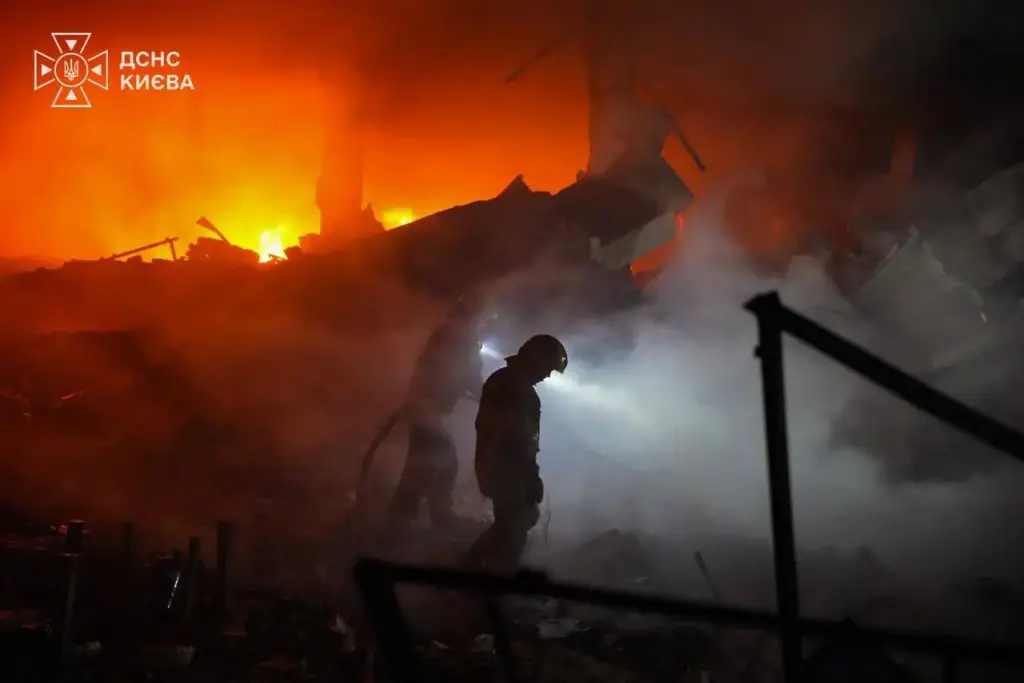
A rescuer helps a person evacuate a building in Kyiv after a Russian strike
A rescuer helps a person evacuate a building in Kyiv after Russia’s 13–14 October 2026 attack. Photo: Kyiv State Emergency Service

The second wave came early on 14 October and hit several of the capital’s energy facilities, Kyiv Mayor Vitali Klitschko reported. It killed one person in Holosiivskyi district, he added. Russia attacked all three of Kyiv’s combined heat and power plants and key facilities in Kyiv Oblast that power the capital, Prime Minister Serhii Koretskyi said. Energy company DTEK reported emergency outages in five Kyiv districts.

Damage and demands

Zelenskyy reported damage to facilities and equipment at 26 elements of the power system and at four oil and gas facilities. At least 600,000 people lost electricity, he said, and outages could grow. He called the strike deliberate and said Russia had never before shown such demonstrative disrespect toward America.

A rescuer at the site of a Russian strike in Kyiv
A rescuer at the site of a Russian strike in Kyiv, 13–14 October 2026. Photo: Kyiv State Emergency Service

He asked Trump for strong sanctions under the Lindsey Graham sanctions law, which he said was recently passed and signed. He also asked for additional Patriot interceptors.

❌