Aviation is one of the most effective ways to counter Russia’s jet-powered drones. Its effectiveness continues to grow due to pilots’ skill and better coordination, Defense Minister Yevhenii Khmara says, Glavcom reports.
Russia’s jet-powered Gerans fly several times faster than the propeller Shaheds Ukraine learned to shoot down, and they remain the main challenge for its air defense. Ukraine downs more than 90% of the slow drones but only about 55% of the jet ones.
“Due to them, ou
Aviation is one of the most effective ways to counter Russia’s jet-powered drones. Its effectiveness continues to grow due to pilots’ skill and better coordination, Defense Minister Yevhenii Khmara says, Glavcom reports.
Russia’s jet-powered Gerans fly several times faster than the propeller Shaheds Ukraine learned to shoot down, and they remain the main challenge for its air defense. Ukraine downs more than 90% of the slow drones but only about 55% of the jet ones.
“Due to them, our aviation now uses fewer munitions per aerial target. We plan to improve this further,” Khmara states.
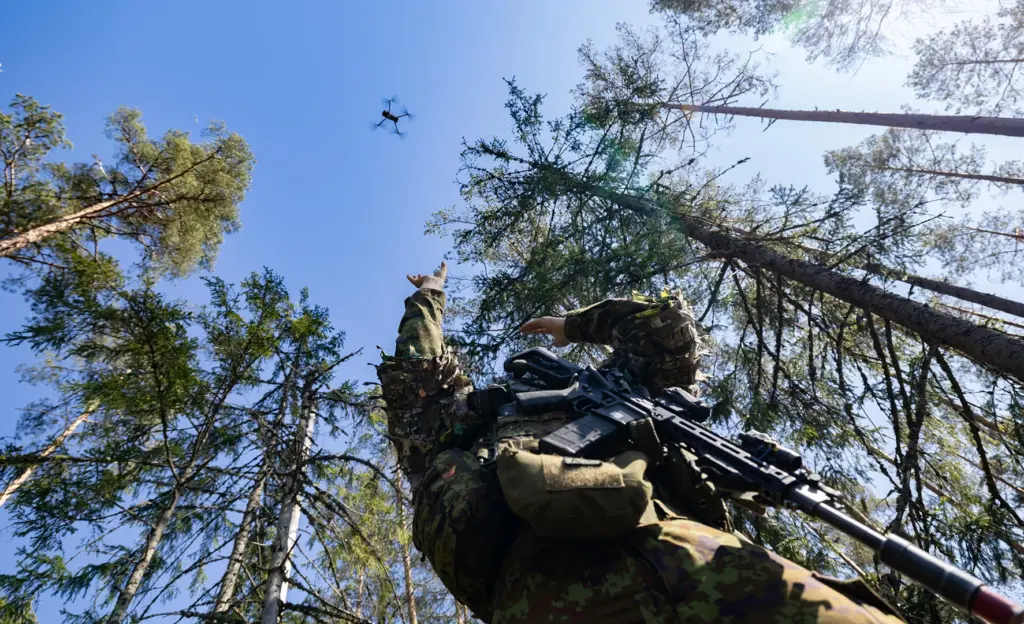
Air defense works as a layered system because no single type of weapon is enough, he explains. The layers run from surface-to-air and shoulder-fired missiles to turrets, electronic warfare, interceptor-drone crews, and small-scale air defense, topped by aircraft including Mirage and F-16 jets.
Scaling what works against jet drones
Ukraine already has combat results against the jet drones, Khmara notes. In one engagement, five Bars interceptors destroyed five aerial targets, a 100% hit rate in that case, and the task now is to raise the overall destruction rate and quickly scale the solutions that prove themselves.
Heavy-caliber turrets are adding to that. Their number in service already runs into the hundreds, he adds.
“This direction is being scaled, and systems with greater range are being worked on. In parallel, surface-to-air and shoulder-fired missile systems are also proving effective,” he says.
Preparing for the next generation
Ukraine is also looking past today’s threats, the minister stresses. The ministry is working to supply interceptor drones, aviation and its munitions, missile and artillery systems, turrets and electronic warfare gear, and to plan several steps ahead with enough stock in reserve.
“We also know what solutions Russia is developing, which concern jet drones with a speed of 800 kilometers per hour. We are working on finding countermeasures to the next generation of threats,” Khmara says.
Producers have been tasked with offering proposals and prototypes, he concludes.
Ukraine’s Defense Procurement Agency has contracted about 5.5 times as many drones of various types in recent months as in the same period of 2025. It is roughly 300% more over the year as a whole, the Defense Ministry said.
Drones are the weapons this war runs on, from short-range strikes to hits deep inside Russia, and Ukraine has raced to build and buy more of them while sparing its troops. The agency contracted for about $8 billion worth of drones in the first half of 2026 alone, do
Ukraine’s Defense Procurement Agency has contracted about 5.5 times as many drones of various types in recent months as in the same period of 2025. It is roughly 300% more over the year as a whole, the Defense Ministry said.
Drones are the weapons this war runs on, from short-range strikes to hits deep inside Russia, and Ukraine has raced to build and buy more of them while sparing its troops. The agency contracted for about $8 billion worth of drones in the first half of 2026 alone, double the amount for the same period last year.
The ministry wants to arm the force at every level, Defense Minister Yevhenii Khmara stresses. Deep-strike drones hit targets far inside Russia, while middle-strike drones kill enemy drone crews and burn logistics and command posts, lowering the risk to Ukrainian soldiers.
“Technology and having enough of these systems raise combat effectiveness and at the same time reduce the risks for our soldiers,” Khmara said.
FPV drones lead the surge
The sharpest growth is in FPV drones, the cheap first-person-view quadcopters that do much of the killing on the front. Contracting for them in 2026 already exceeds the total for all of 2025 by 54%, and deliveries have risen almost 3.7 times, the ministry notes.
International support and the scaling of Ukraine’s own defense industry made the jump possible, Khmara adds. Much of the buying now runs through the DOT-Chain Defense marketplace, where units select what they need, and the agency handles contracts and logistics, cutting the average delivery time for in-stock items to 9 days.
Making supply predictable
The ministry is trying to make deliveries steadier, Khmara explains. It is aligning the front’s needs, purchase planning, and the production capacity of the Ukrainian industry, making supply more predictable.
Predictable contracting lets manufacturers build their production lines step by step, plan logistics and order components in advance, he says. The ministry frames the push as a larger order book for the domestic industry and a way to scale the solutions that work in combat.
Norwegian nonprofit Fritt Ukraina is allocating NOK 10 million (about $1 million) to strengthen air defenses around Chornomorsk, a key Ukrainian port on the Black Sea, the organization announced on 9 October.
Russian attacks on port infrastructure and civilian vessels are threatening Ukraine’s maritime trade and agricultural exports, putting pressure on a vital source of revenue for the country and disrupting shipments of food to international markets.
The funding will support Ukrain
Norwegian nonprofit Fritt Ukraina is allocating NOK 10 million (about $1 million) to strengthen air defenses around Chornomorsk, a key Ukrainian port on the Black Sea, the organization announced on 9 October.
Russian attacks on port infrastructure and civilian vessels are threatening Ukraine’s maritime trade and agricultural exports, putting pressure on a vital source of revenue for the country and disrupting shipments of food to international markets.
The funding will support Ukrainian State Border Guard Service and Armed Forces units defending the region against Russian attack drones. It is being delivered through Dronefall, a project run by the Ukrainian Come Back Alive Foundation, which equips military units with interceptor drones and the equipment needed to operate them.
Fritt Ukraina, whose name means “Free Ukraine,” is a Norwegian nonprofit organization that supports Ukraine’s defense against Russia’s full-scale invasion. The donation is part of its Odins Ravner 2.0 fundraising campaign, which provides military assistance to Ukrainian forces.
Interceptor drones and equipment to protect port infrastructure
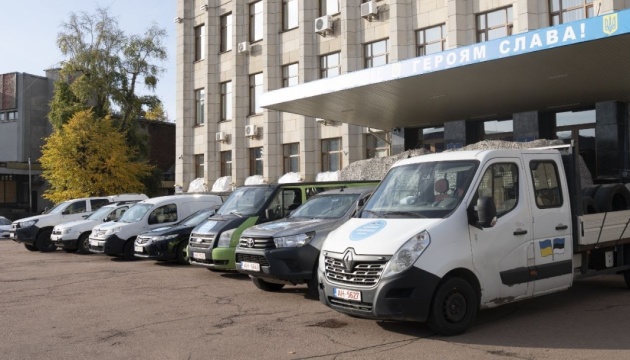
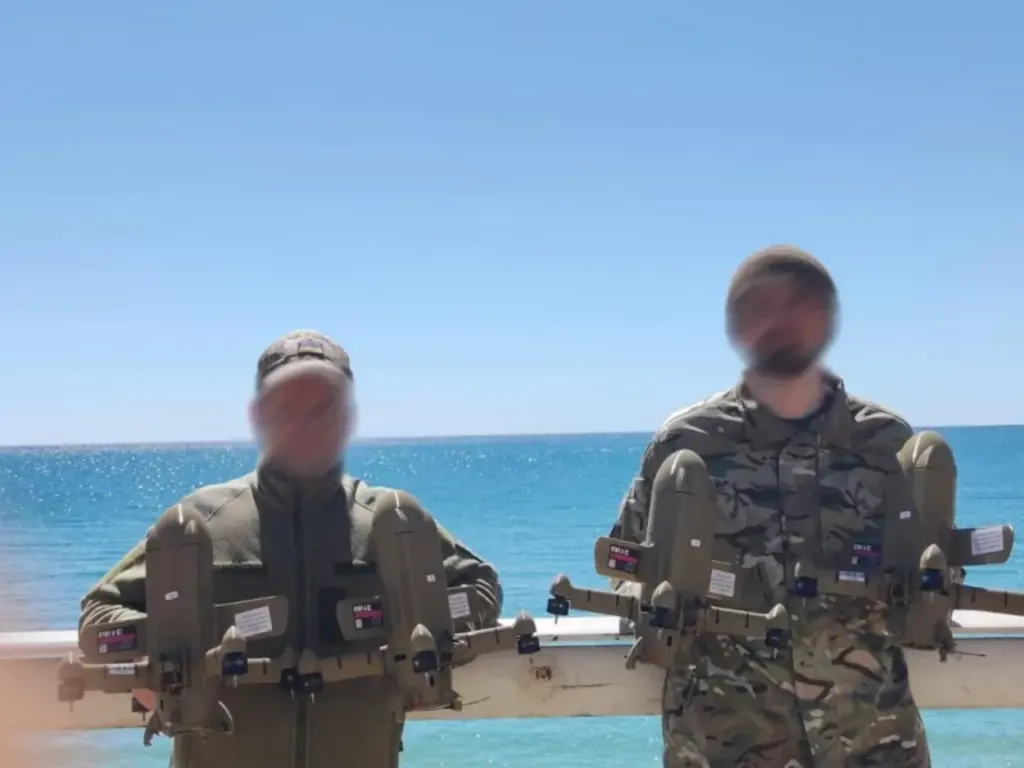
The support includes STING, Blyskavka and P1-SUN interceptor drones, alongside ground control stations, communications equipment, generators, charging stations, laptops, tablets and vehicles, according to the organization.
The interceptor drones are already operational, according to Fritt Ukraina. The equipment helps Ukrainian personnel detect and intercept Russian attack drones, while vehicles allow crews to move quickly and operate from different positions.
Fritt Ukraina Secretary General Natalia Golis said effective air defense requires more than interceptor drones alone. Communications systems, reliable power supplies and mobility are also essential to ensure units can use their equipment effectively.
The organization is supporting Dronefall for the third consecutive year and has become the Come Back Alive Foundation’s largest foreign partner. The latest donation was matched by a donor affiliated with the Ukrainian foundation.
STING interceptor drones funded by Norwegian nonprofit Fritt Ukraina to Ukrainian forces to help counter Russian attack drones near the Black Sea ports. Photo: Fritt Ukraina / Come Back Alive
More than 90% of Ukraine’s agricultural products, including grain and vegetable oils, are exported through three ports in southern Odesa Oblast. Russian attacks have targeted port infrastructure and civilian vessels, increasing security risks for commercial shipping and driving up freight and insurance costs.
Since the start of Russia’s full-scale invasion in February 2022, more than 1,000 Ukrainian port facilities and over 200 civilian vessels have been damaged or partially destroyed, Fritt Ukraina reports. The disruption threatens Ukrainian export revenue and international food supplies.
“The attacks on Ukraine’s ports do not only undermine the country’s defense capabilities. They also threaten a vital part of its economy and its ability to export food to the rest of the world,” Golis said.
Dronefall aims to expand Ukraine’s ability to intercept Russian drones using dedicated interceptor aircraft and supporting equipment. According to Fritt Ukraina, participating units have destroyed more than 53,000 Russian drones, accounting for approximately one in five unmanned aerial vehicles entering Ukrainian airspace.
The NOK 10 million contribution is part of Fritt Ukraina’s broader Odins Ravner 2.0 campaign, which provides more than NOK 60 million in support to Ukrainian forces.
 Connexion