❌

Vue normale

Ukraine suffered 10 times fewer casualties than Russia in Vivaldi counteroffensive, veteran says. Ukraine’s innovations in drone and ground robot tactics are changing frontline warfare
9 octobre 2026 à 12:10

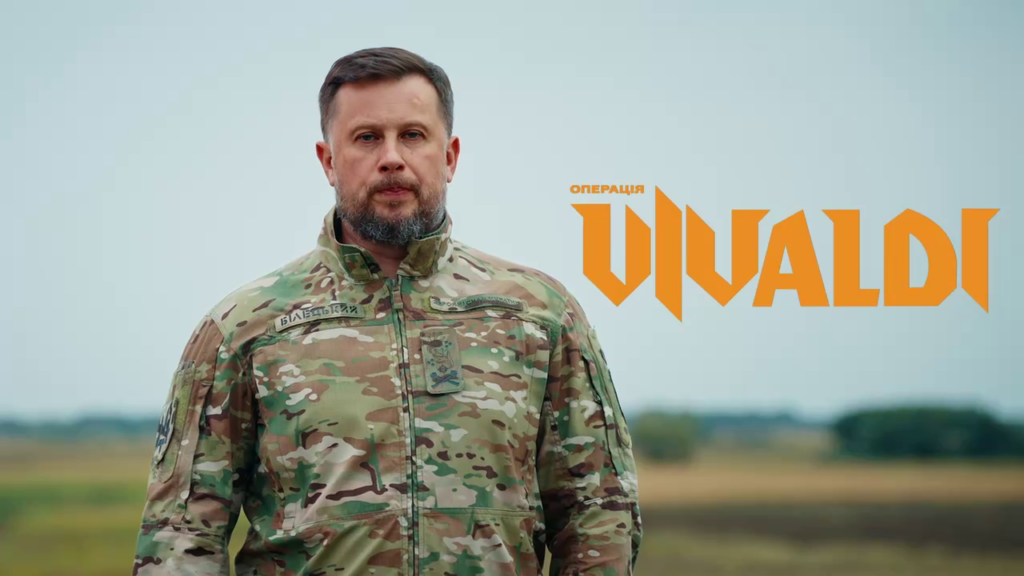
Ukraine's Third Army Corps commander Brigadier General Andrii Biletskyi announcing "Operation Vivaldi," 15 September 2026. Screenshot from video: Ukraine's Third Army Corps

Ukrainian assault troops suffered more than 10 times fewer casualties than Russian forces during Operation Vivaldi, a Ukrainian military veteran said on 9 October, describing the ratio as unprecedented and highlighting Ukraine’s improved ability to protect its soldiers during offensive operations.

The counteroffensive has been a significant Ukrainian success, reclaiming territory in northern Donetsk Oblast and disrupting Russia’s plans to advance toward Sloviansk and Kramatorsk. The reported casualty ratio points shows Ukraine’s ability to make offensive gains while reducing the human cost of assaulting fortified positions.

Yevhen Dykyi made the remarks in an interview with Radio NV, saying the results showed how Ukrainian forces had learned to limit losses while attacking defended Russian positions.

Protecting troops during offensive operations

Dykyi said the casualty ratio was one of the operation’s most important outcomes.

He said that Ukrainian assault troops suffered more than 10 times fewer casualties than Russian forces during the counteroffensive.

“That speaks volumes. We have learned how to protect our people, and that is extraordinarily vital,” he added.

Operation Vivaldi disrupted Russia’s advance in Donetsk

The Third Army Corps launched Vivaldi in mid-September in northern Donetsk Oblast, near Lyman, where Russian forces had spent months trying to advance toward Ukraine’s fortified cities of Sloviansk and Kramatorsk.

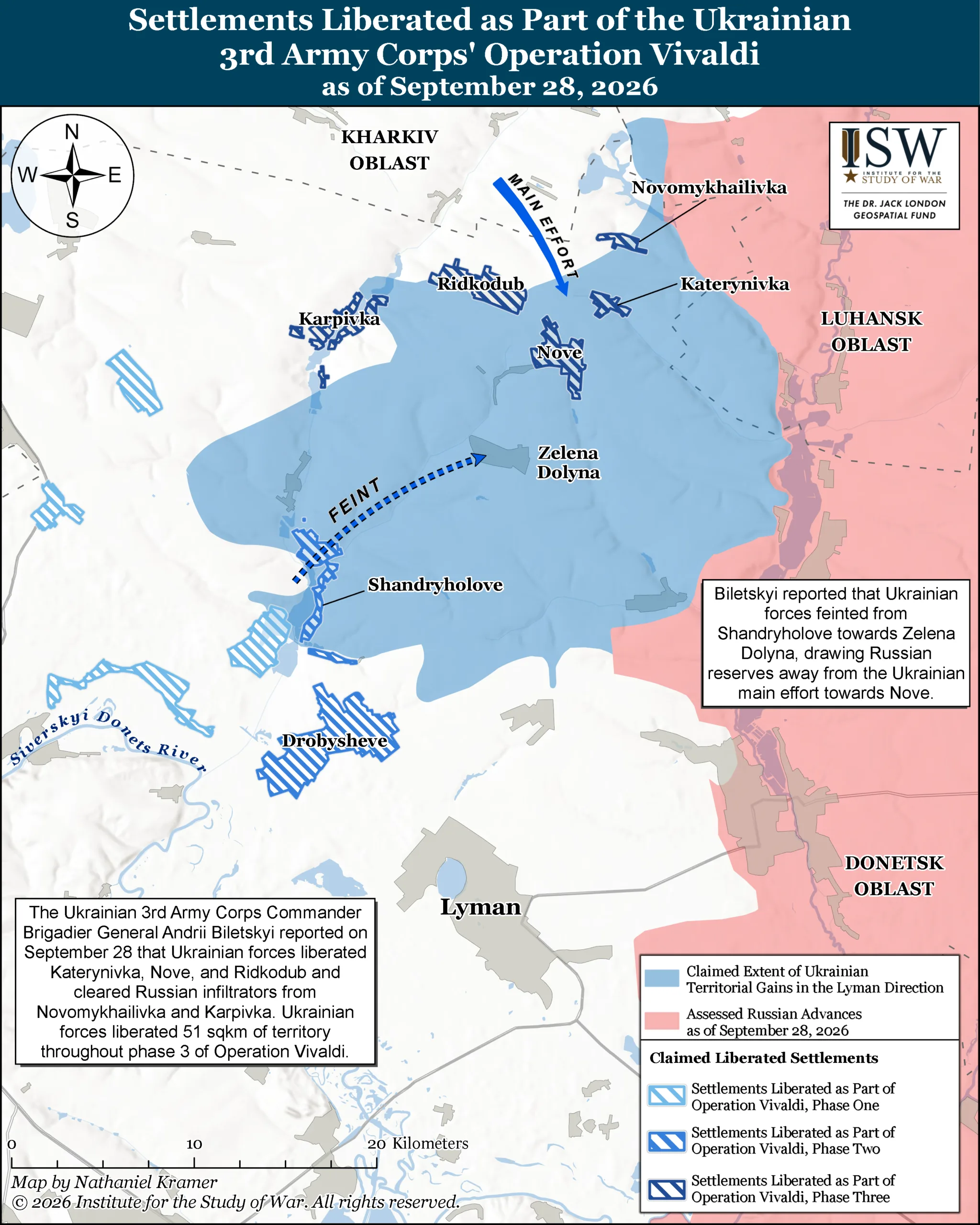
The operation aimed to clear Russian troops from positions north of Lyman and disrupt Moscow’s plans to encircle the remaining Ukrainian-held parts of Donetsk Oblast. Ukraine’s Third Army Corps announced the counteroffensive on 15 September, initially reporting that its forces had cleared Russian infiltrators from several settlements and liberated Serednie.

By 30 September, Ukraine had regained 176 square kilometers of territory during the operation, according to figures cited by the Ukrainian presidential office. Ukrainian authorities also reported that their forces had captured around 250 Russian soldiers and inflicted more than 5,000 Russian casualties, including killed and wounded. 

The counteroffensive also disrupted Russia’s effort to advance behind Ukraine’s fortified defensive line. By threatening Russian positions north of Lyman, Ukrainian forces complicated Moscow’s plans to encircle the Sloviansk-Kramatorsk area rather than attack its defenses head-on.

Unmanned systems help limit casualties

A key feature of Vivaldi has been the use of unmanned systems to attack fortified Russian positions before Ukrainian infantry moves in. Ukrainian forces deployed ground robots carrying grenade launchers to fire into Russian shelters, while explosive ground vehicles were used to destroy bunkers and strongpoints.

In one reported tactic, heavy drones delivered kamikaze ground robots more than 10 kilometers behind Russian lines, allowing Ukrainian operators to attack positions without exposing infantry to direct fire.

For the first time, Ukraine has dropped ground robots behind Russian lines from the air amid the Operation Vivaldi, protecting Ukraine's fortress cities in Donetsk Oblast. Source: The scheme by the 3rd Army Corps
Explore further

Ukraine is saving Donetsk Oblast with world’s first-of-its-kind operation: Vivaldi counteroffensive drops robots directly from heavy bombers 10 kilometers behind Russian lines

Ukraine reruns its Vivaldi playbook outside Kramatorsk and pushes Russia back across the Siverskyi Donets, ISW says

9 octobre 2026 à 04:14

after vivaldi near lyman ukraine pushes across siverskyi donets east sloviansk kramatorsk · post assessed control terrain direction 8 2026 slovyansk-direction-october-8-2026 news ukrainian reports

Ukrainian forces are advancing east of Sloviansk and Kramatorsk, and even Russian milbloggers now acknowledge it, the Institute for the Study of War (ISW) said on 8 October. The gains may follow months of groundwork like the one that preceded Operation Vivaldi near Lyman, which Ukraine says returned 176 km² to its control. Russian commentators are already doubting that Moscow can reach the two cities.

Russia's years-long push on the Fortress Belt, the chain of cities anchoring Ukraine's defense in Donetsk Oblast, has been stalling since Vivaldi began. Unable to take those cities, Russia keeps hitting them from the air. On 8 October, a Russian bomb killed 30 people on two buses in Kramatorsk.

Across the Siverskyi Donets

Russian milbloggers said Ukrainian forces liberated Ozerne and advanced east of Pyskunivka toward Kryva Luka, ISW reported. They also acknowledged that Ukrainian troops drove Russian forces out of Pyskunivka. Ukrainians are now counterattacking toward Kryva Luka from the west and northwest, from across the river.

vivaldi counteroffensive worked because ukraine took russia's drones out fight isw assesses · post settlements ukraine's 3rd army corps says liberated during operation north lyman donetsk oblast 28 2026 settlements-liberated-during-operation-vivaldi-phase-3-as-of-september-28-2026-scaled
Explore further

Vivaldi counteroffensive advanced after Ukraine took Russia’s drones out of the fight, ISW assesses

ISW called the repeated Russian claims of a river crossing notable, because the Siverskyi Donets is a significant natural obstacle. Kryva Luka is a dominant height just south of the river. From there, Ukraine could launch further counterattacks. Ukrainian forces appear to have pushed Russian troops off both banks in this area, ISW assessed.

The heights Russia wanted

After Vivaldi cleared ground near Lyman in September, Russia shifted its push south toward Mykolaivka and Sloviansk. Russian forces likely see Mykolaivka, just east of Sloviansk, as a primary objective, ISW said. Its heights would favor an offensive on the city. Ukrainian pushes northeast and southeast of the town now deny Russia that terrain.

East of Kramatorsk, milbloggers claimed Ukrainians liberated Malynivka and advanced between Fedorivka Druha and Holubivka. They also reported gains into southern Minkivka and near Fedorivka. The lines remain tangled. Geolocated footage shows Ukrainian forces striking a Russian position in central Tykhonivka after what ISW assesses was a Russian infiltration.

ISW said the counterattacks may point to a broader Ukrainian goal: pushing Russian forces east, away from the Sloviansk–Kramatorsk area and toward the Siverskyi Donets–Donbas Canal.

The Vivaldi playbook

The counterattacks have run for weeks. On 29 September, Ukrainian military observer Kostiantyn Mashovets reported them in the same areas, saying Russia's 3rd Combined Arms Army had failed to make significant gains. ISW assesses that the attacks build on months of shaping meant to wear down Russia's offensive capacity.

vivaldi's secret weapon targeting robots third corps reconnaissance mapped russian command nodes hit cause panic · post graphic ukraine's army / telegram під час операції вівальді нрк десантували щоб порушити
Explore further

Vivaldi’s secret weapon was the targeting, not the robots: Third Corps reconnaissance mapped Russian command nodes, then hit them to cause panic

Before Vivaldi, Ukrainian forces targeted Russian drone operators, gaining drone superiority before the counteroffensive. They used the same approach ahead of their Oleksandrivka counterattacks in early 2026.

Moscow appears to see the pattern. A Ukrainian military official said on 7 October that Russia is moving drone units and Spetsnaz from quieter sectors to the Sloviansk–Kramatorsk direction. Ukraine also reorganized its command in and around Donetsk Oblast in early September, which may be blunting Russian attacks from the east, ISW said.

"Distant" and "doomed"

One Russian milblogger called an advance toward the Sloviansk–Kramatorsk area a "distant" prospect, ISW reported. A Russian offensive from Siversk toward Sloviansk may be "doomed" to failure or heavy losses unless Russia retakes the forests south of Lyman, he said.

The counterattacks east of the two cities appear to support Vivaldi, ISW assessed. Together with Russia's defeat north of the river, they could disrupt Russia's offensive toward Sloviansk from the east entirely.

If Ukraine holds Kryva Luka and keeps Russia off the Mykolaivka heights, Moscow's pincer on Sloviansk and Kramatorsk loses the ground it was built on.

❌