❌

Vue normale

Ukraine squeezes more defense out of Soviet-era stock, pairing Kub launcher and American RIM-7 interceptors to catch Russia’s jet-powered drones

7 octobre 2026 à 14:33

Ukraine's 156th Maksym Kryvonis Anti-Aircraft Missile Regiment has downed about 20 air targets using a Kub launcher firing under the radar and fire control of a Buk unit.

Kyiv is bolting two Soviet-era missile systems together to knock down Russia's fastest Geran-4 and Geran-5 drones. Ukraine's 156th Maksym Kryvonis Anti-Aircraft Missile Regiment has downed about 20 air targets using a Kub launcher firing under the radar and fire control of a Buk unit.

Russia has switched to jet-powered Gerans, faster drones that Ukraine's cheap interceptors struggle to catch, so more of them reach their targets. The damage from Russian strikes is set to reach up to $10 billion this year, according to Ukraine's Economy Ministry.

Meanwhile, Western resupply has thinned too. Deliveries of air defense missiles from partners fell threefold in the first half of 2026 against 2025, even though those partners hold the missiles, President Volodymyr Zelenskyy says.

So crews stretch what they have. In the Kub-Buk hybrid, a Kub launcher cannot aim on its own, lacking a radar to light up a target for its missile, according to Militarnyi. A Buk has that radar, so the two fire together, the Kub sending its 3M9 missile where the Buk points. The pairing is possible because both come from the same Soviet design line.

Western missiles in Soviet launchers

The same regiment reaches for a second workaround as Buk missiles run short. Its crews have rewired launchers to fire American RIM-7 interceptors, a Soviet-Western mongrel that troops nicknamed Frankenstein and the US calls FrankenSAM.

The patchwork earns its keep. One crew commander said some of these machines have more than 34 air kills each, and a single launcher has sent up RIM-7s 131 times, Ukrainian troops said.

A layered answer

The hybrids are one thread in a wider web. Ukraine is stitching together a layered defense against the jet-powered Gerans, leaning on electronic jamming, fighter jets, and a new class of homegrown interceptor drones. Each tool has limits, and the newest interceptors still bring down only the occasional jet drone.

The bet now is on numbers. Ukraine aims to build up to 400 interceptor drones a month by the end of October to chase the faster Gerans, Zelenskyy said on 2 October. Until that scale arrives, improvised launchers like the 156th Regiment keep filling the gap.

  • ✇Euromaidan Press
  • Ukraine adds Kyiv trains, prepares pontoon crossings after Russian bridge attacks
    Ukraine's state railway, Ukrzaliznytsia, has added 18 Kyiv City Express shuttle runs between Vydubychi and Darnytsia for 5–9 October, while the government has begun preparatory work on temporary crossings over the Dnipro River after Russian strikes disrupted bridge traffic. Minister for Restoration, Infrastructure and Transport Mykola Kalashnyk outlined the backup plan in an interview with Suspilne on 3 October. About 600,000 vehicles cross the Dnipro in Kyiv each day, making the river
     

Ukraine adds Kyiv trains, prepares pontoon crossings after Russian bridge attacks

7 octobre 2026 à 07:57

Damage on the Southern bridge in Kyiv after Russian Shahed drone strikes, 2 October 2026

Ukraine's state railway, Ukrzaliznytsia, has added 18 Kyiv City Express shuttle runs between Vydubychi and Darnytsia for 5–9 October, while the government has begun preparatory work on temporary crossings over the Dnipro River after Russian strikes disrupted bridge traffic. Minister for Restoration, Infrastructure and Transport Mykola Kalashnyk outlined the backup plan in an interview with Suspilne on 3 October.

About 600,000 vehicles cross the Dnipro in Kyiv each day, making the river crossings critical to movement across the capital, Kalashnyk said. Russia's attacks on the Southern and Northern bridges have disrupted traffic, with the Southern Bridge fully closed to cars and metro on 2 October and restrictions introduced on other crossings. The risk of further damage is heightened by Russia's upgraded jet-powered Geran-4, which now carries a specialized warhead designed to cut through bridge structures and power-line supports, according to presidential adviser Serhii Beskrestnov.

Jams, restrictions, and extra trains

On 6 October, large traffic jams formed between Kyiv's left and right banks, with the heaviest queues on approaches to the Southern Bridge, Obozrevatel reported. The jams followed Russian strikes that cratered the Northern Bridge.

Green-line metro trains resumed carrying passengers between the banks during the yellow threat level on 4 October, Radio Svoboda reported. Under the current restrictions, traffic on the Southern and Podilskyi bridges is stopped in certain directions for at most the first 15 minutes after an air alert begins.

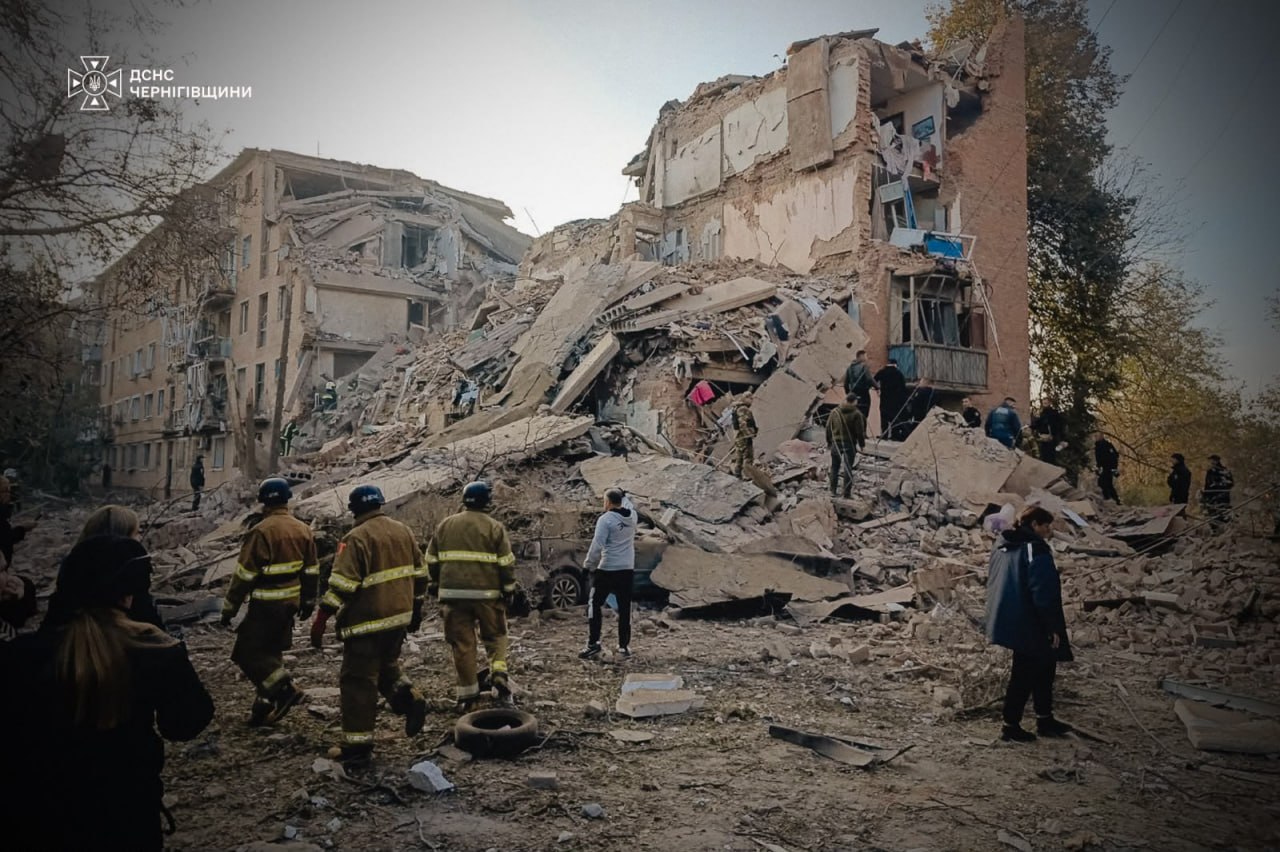
five dead pryluky two each kyiv kremenchuk oleksandriia russia's night 70 missiles · post rescuers collapsed section apartment building chernihiv oblast after russian missile strike 7 2026 ukraine news ukrainian
Explore further

14 dead in Pryluky, two each in Kyiv, Kremenchuk, and Oleksandriia: Russia’s night of 70 missiles

The additional Kyiv City Express shuttles run during the busiest hours, 06:00–09:00 and 16:00–21:00. Together with scheduled suburban and regional trains, they bring the number of peak-hour runs between the banks to up to six, Ukrzaliznytsia said.

Pontoons first, tunnel later

Kalashnyk said the government plans to build several backup crossings over the Dnipro. The sites have already been chosen, and he named a combination of earth embankments and pontoon crossings as measures that can be built quickly. He said construction could take up to three months and that the backup crossings should provide at least 50% of the capacity of the existing bridges. The government is also considering quick-build concrete structures and, in the longer term, a tunnel under the Dnipro, he told Suspilne.

Volodymyr Kreidenko, deputy head of the parliamentary committee on transport and infrastructure and an MP from the Servant of the People party, proposed reversible traffic across the bridges: "in the morning from the left bank to the right, in the evening from the right to the left." He also suggested hubs near the bridges where people could take a bicycle or e-scooter, and passenger ferry crossings, Radio Svoboda reported.

Andrii Koretskyi, an associate professor in the department of bridges, tunnels and hydraulic structures at the National Transport University, cautioned that temporary crossings cannot substitute for a permanent bridge.

"The only alternative to a bridge is a bridge as a permanent structure," he told Radio Svoboda.

He said a tunnel under the Dnipro is technically possible but "not a quick solution at all." He pointed to the scale involved: where the Irpin River requires spanning a few dozen or, in places, a few hundred meters, the Dnipro within Kyiv is "roughly 400 to 1,500 meters" wide.

❌