Connexion

“A warning to companies that remain”: Russia takes control of Nestlé and Auchan’s assets – companies that stayed in Russia following the full-scale invasion of Ukraine
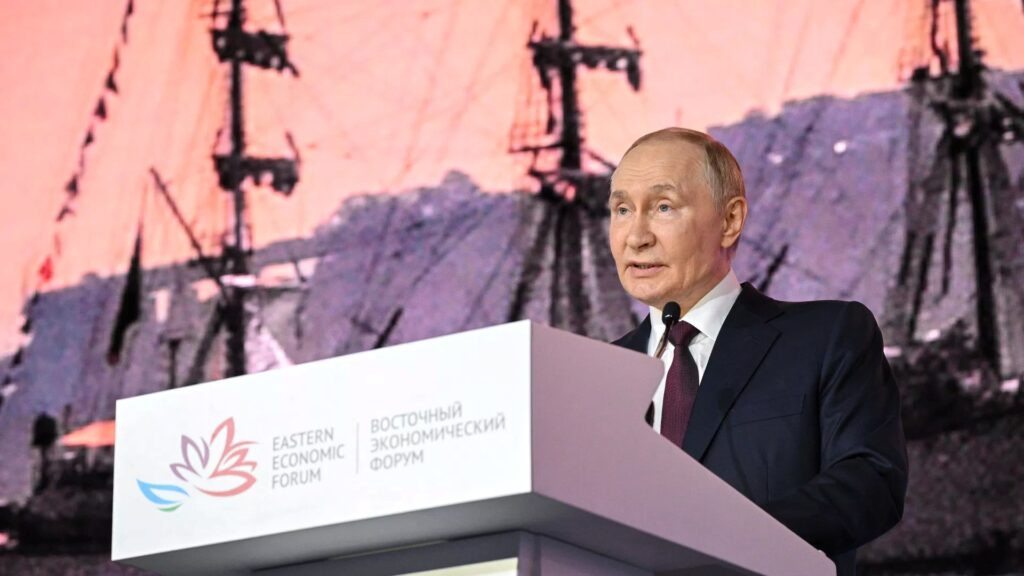
Russia has placed the Russian assets of French retailer Auchan, Swiss food giant Nestlé, and the former Leroy Merlin chain under temporary management, stripping the companies of effective control over their businesses in the country.
Foreign companies have long been urged to leave Russia because their continued operations generate revenue for a state waging war against Ukraine. They also face growing risks of asset seizure, legal and financial liabilities, and reputational damage as the Kremlin increasingly uses foreign-owned businesses as political leverage.
Russian President Vladimir Putin signed the decree on 17 September, transferring the assets to L.E.V. Management, a little-known Russian company. The decree also covers Russian assets linked to French logistics companies FM Logistic and Bati Logistics.
The measure does not formally change ownership. However, the companies' Russian assets are now controlled by the Kremlin-appointed administrator, and similar temporary-management arrangements have previously preceded forced sales or transfers to Russian buyers.
L.E.V. Management is headed by Andrei Krayushkin, a Russian Interior Ministry major general who previously served as first deputy head of the ministry's migration department.
According to Reuters, the Kremlin justified the move by pointing to the companies' ties to countries Russia considers "unfriendly." Kremlin spokesperson Dmitry Peskov said the countries involved are actively supporting Ukraine and participating in actions against Russia.
Companies warned they could lose their assets
The move comes after years of warnings to Western companies that remained in Russia carried an increasing risk of expropriation.
Denys Svyrydenkov, a representative of the B4Ukraine coalition, told Euromaidan Press that the organization had repeatedly contacted Auchan, Nestlé, and Leroy Merlin, warning them that their Russian assets could be seized.
"We repeatedly warned these companies about the serious and growing risks of continuing to operate in Russia, including the possibility of losing their businesses through nationalisation," Svyrydenkov said.
According to Svyrydenkov, the companies defended their continued presence in Russia by arguing that they provided essential goods and protected the livelihoods of Russian employees.
He rejected both arguments, saying Russia is largely self-sufficient in food and that Western sanctions do not prevent food or humanitarian goods from reaching the country. He also pointed to Russia's severe labor shortage and historically low unemployment, arguing that alternative employment opportunities are widely available.
"By staying, they were effectively running businesses that were no longer truly theirs," Svyrydenkov said.
Auchan and Nestlé remained in Russia
The three companies took different approaches after Russia launched its full-scale invasion of Ukraine in February 2022.
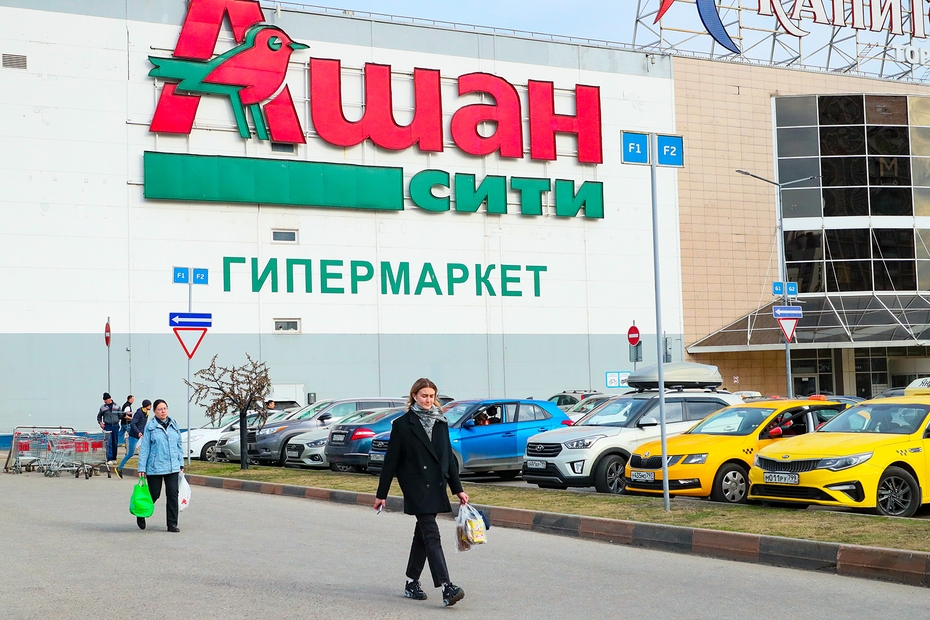
Auchan did not leave Russia and continued operating its large retail network. It currently has around 230 stores across 100 Russian cities. The chain's Russian turnover reached 127 billion rubles ($1.5 billion) in the first half of 2026, according to The Moscow Times.
Nestlé also remained, but reduced its Russian operations. The company halted investments, withdrew some brands including KitKat and Nesquik, and said it did not intend to profit from its Russian business. It still operates six production sites in Russia, making products including coffee, confectionery, baby food, and pet food.
Leroy Merlin's owner announced its departure from Russia in 2023. Its Russian legal entity was renamed Le Monlid, while its stores now operate under the Lemana Pro brand.
Nestlé said on 18 September that it was assessing its options and would take "all necessary steps" to protect its rights and ensure business continuity, particularly for its employees.
A warning to companies still operating in Russia
The seizure reflects a broader pattern that has emerged since Russia began using temporary administration to take control of Western-owned businesses.
Companies including Danone, Carlsberg and Finnish energy firm Fortum have previously seen their Russian assets placed under state control. Reuters reported that Russia had seized more than $50 billion in foreign assets by 2025.
Svyrydenkov said the latest move was "more than predictable," arguing that Russia has repeatedly used Western companies' exposure to its domestic market as leverage.
"The Kremlin's seizure of the Russian assets of Auchan, Nestle and the former Leroy Merlin reinforces a reality that has been evident for years: Russia is a hostile and unpredictable environment where foreign companies' assets remain at the mercy of an authoritarian regime," he said.
He warned that companies remaining in Russia face the possibility of sudden expropriation while also continuing to generate economic activity inside a country waging war against Ukraine.
"The latest asset seizures should serve as a warning to all companies still operating in Russia: waiting for the Kremlin to decide the fate of your business is not a risk-management strategy," Svyrydenkov said.
Read also
-
“I can travel back to Finland and be safe. That is a luxury”: Sanna Marin on the Russian strike that stopped her train from Kyiv
-
Ukraine put its own peace proposals on the table as two US envoys reached Kyiv for the first time
-
Ukraine logged impacts at 11 sites while the American peace delegation was still in Moscow