❌

Vue normale

Ukraine keeps hitting the fuel that Russia’s war runs on. Its latest target is the Slavyansk-EKO refinery, with an annual processing capacity of at least 3 million tonnes
14 septembre 2026 à 15:15

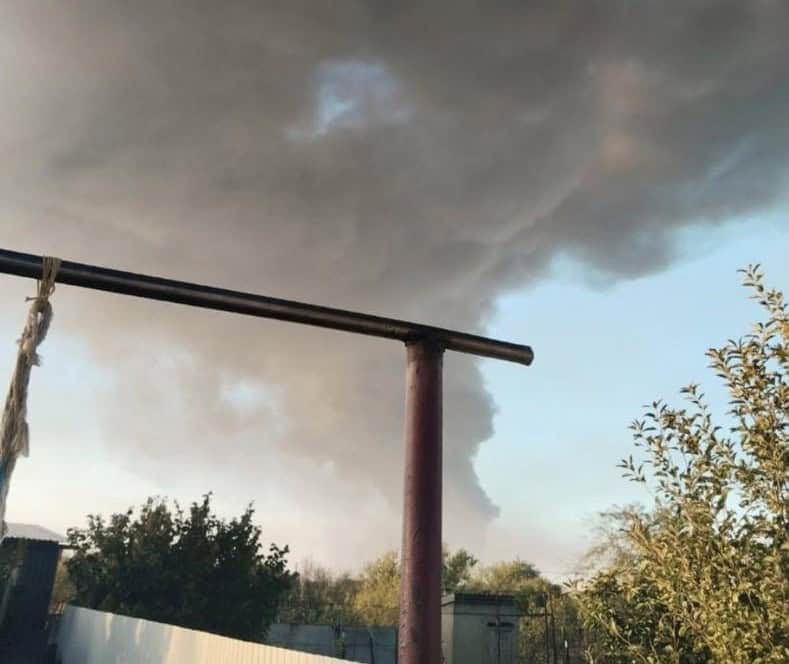
Smoke from a fire at the oil refinery in Slavyansk-on-Kuban. 13 September, 2026. Photo: Exilenova+

An oil refinery in Slavyansk-on-Kuban in southern Russia was attacked overnight on 13 September, Astra reported. By morning, residents began posting videos showing smoke over the refinery and nearby areas. That same morning, Ukraine’s Defense Intelligence (HUR) reported that Ukrainian drones had struck the Slavyansk-EKO refinery.

Ukrainian strikes on Russian oil refineries have become systematic, aimed in part at reducing the Russian military’s access to fuel, which is critical for waging the war. Ukrainian forces have been striking strategic facilities located hundreds of kilometers from the front line.

The design capacity of Slavyansk-EKO is approximately 5.2 million tonnes per year, though actual volumes are lower by about one to two million tonnes, Militarnyi reports.

Thick smoke visible for dozens of kilometers

The Ukrainian strike hit a key oil-processing unit and the facility’s oil storage tank farm, which “fuels the criminal war against Ukraine,” HUR reported.

Two oil storage tanks were destroyed in the strike, according to photos published by Dnipro Osint. Militarnyi noted that the photos also show damage to neighboring tanks.
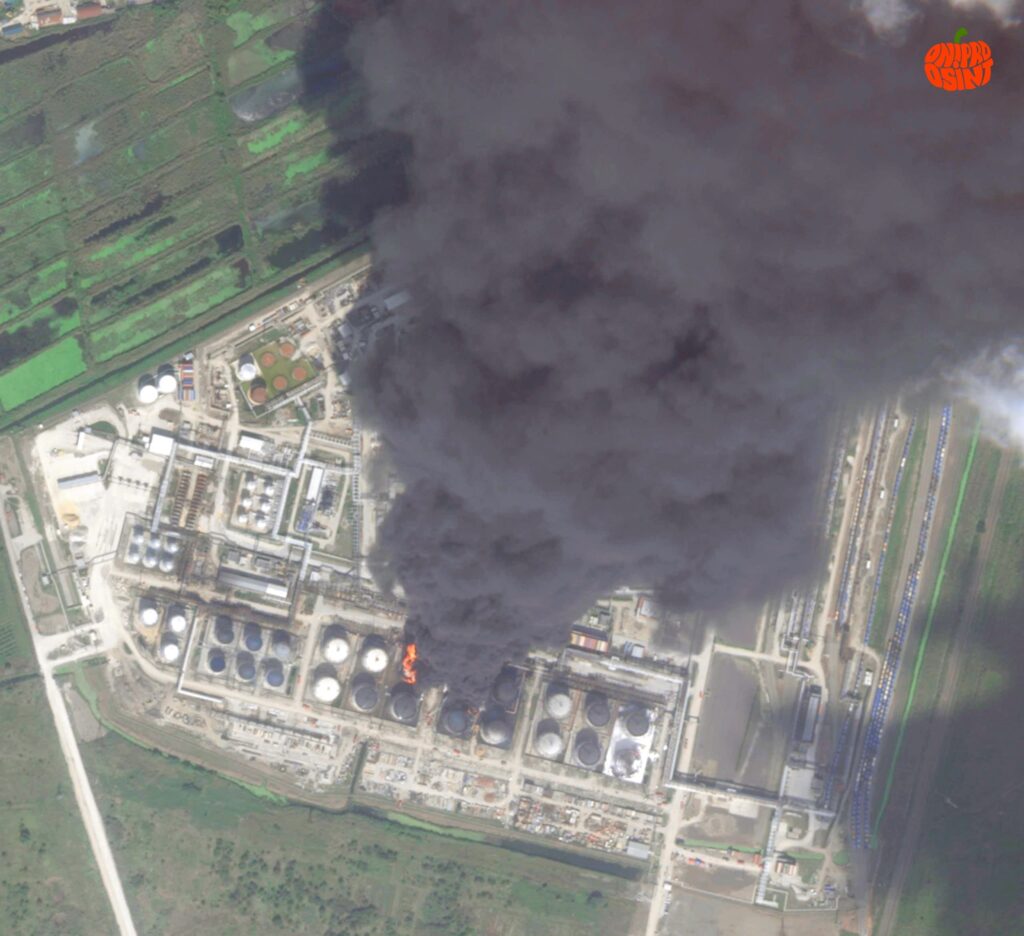
Satellite imagery of the Slavyansk oil refinery after a nighttime UAV attack on 13 September. Part of the refinery is obscured by thick smoke from a fire in the tank farm, Krasnodar Krai, Russia. Photo: Dnipro Osint


The strike reportedly hit the area containing the facility’s largest storage tanks. The refinery operates using purchased or tolling crude oil because it does not have its own crude oil production base.
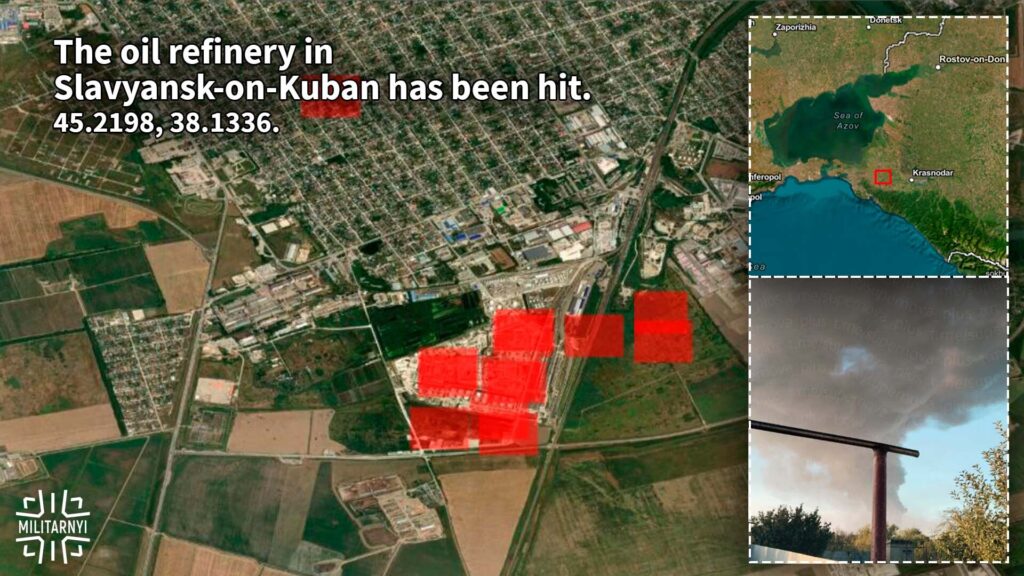
Fire broke out at the oil refinery in Slavyansk-on-Kuban following an attack by Ukrainian drones on September 13, 2026. Analysis by Militarnyi, with an Esri map and NASA FIRMS data

The refinery has been targeted before

Slavyansk-EKO is one of the largest independent oil refineries in southern Russia. The facility is located in Slavyansk-on-Kuban, about 69 kilometers northwest of Krasnodar.

Ukraine’s General Staff said that the refinery is “part of the energy rear of the Russian Federation and involved in supplying the armed forces of the aggressor.”

Before the 13 September strike, Ukrainian drones had struck the refinery at least four times, starting in 2024:

  • 27 April 2024 — a Ukrainian drone attack damaged the Slavyansk refinery, after which a fire broke out at the facility.
  • 19 May 2024 — SBU drones attacked the Slavyansk refinery, after which the facility suspended operations.
  • 26 January 2026 — Ukrainian Defense Forces struck infrastructure at the Slavyansk-EKO refinery. According to preliminary data, elements of the primary oil refining unit were damaged.
  • Five months later, on 28 June, Ukraine struck the Slavyansk refinery again, causing a large fire at the facility. EP noted that the refinery supplies fuel, including to occupied Crimea.
  • ✇Euromaidan Press
  • Belarus trains troops to fight saboteurs as Minsk puts its military on a war footing
    Belarus' Defense Ministry said a command-staff exercise will run from 14 to 16 September in the Cherven and Berezino districts of Minsk Oblast. It closes a reservist training camp that began there on 25 August, part of a wider round that also took in the Vawkavysk district of Hrodna Oblast from 26 August, the ministry announced. Under Alyaksandr Lukashenka's rule, Belarus remains Russia's closest ally in the war against Ukraine, supplying weapons, intelligence, and industrial capacity w
     

Belarus trains troops to fight saboteurs as Minsk puts its military on a war footing

14 septembre 2026 à 11:05

belarus trains troops fight saboteurs minsk puts its military war footing · post belarusian territorial defense soldier malaryta district brest oblast 2026 belarusian_soldier_2026_2 ukraine news ukrainian reports

Belarus' Defense Ministry said a command-staff exercise will run from 14 to 16 September in the Cherven and Berezino districts of Minsk Oblast. It closes a reservist training camp that began there on 25 August, part of a wider round that also took in the Vawkavysk district of Hrodna Oblast from 26 August, the ministry announced.

Under Alyaksandr Lukashenka's rule, Belarus remains Russia's closest ally in the war against Ukraine, supplying weapons, intelligence, and industrial capacity while Moscow fights. That alliance is what makes drills inside Belarus a question for its neighbors: Russia may again use Belarus to launch an attack on Ukraine or a NATO member state.

The Belarusian army is "preparing for war so that there will be no war," Belarusian ruler Lukashenka said during a visit to a military training ground in Brest Oblast on 11 September. He said the whole armed forces would be checked, up to mobilization, with some units deployed to wartime norms, while denying any intention to attack, since Belarus could not win a war against its neighbors.

Belarus prepares reservists for military missions

The exercise is meant to sharpen officers' command of subordinate territorial defense forces and drill personnel in coordinated action, and the deputy chairman of the Minsk oblast executive committee will lead it.

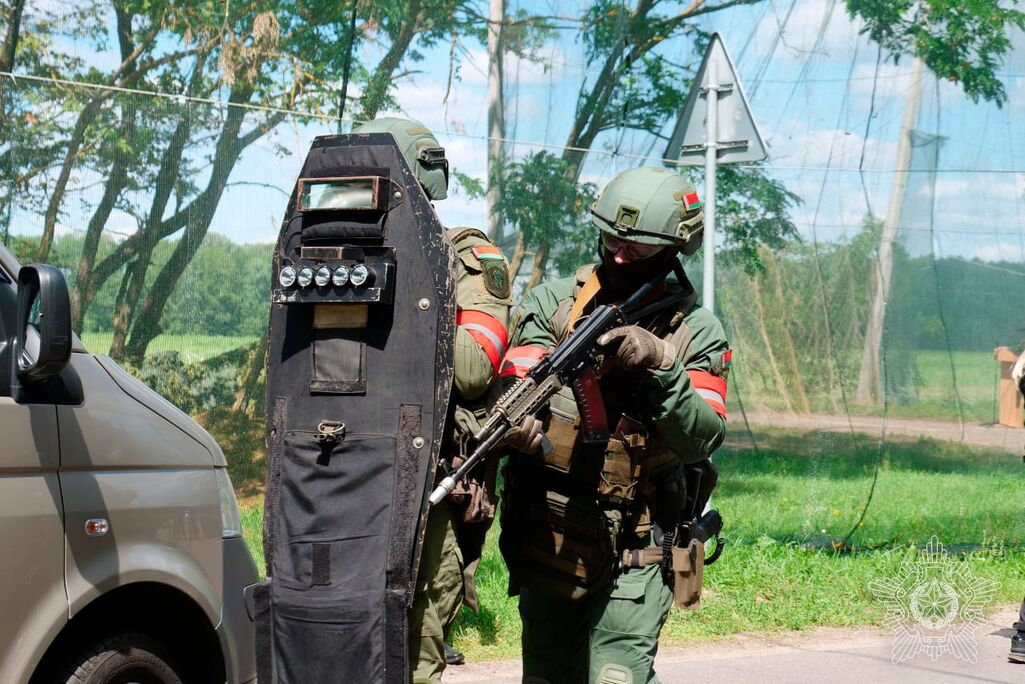
"Particular attention will be paid to the interaction of territorial troops with internal affairs bodies, internal troops, as well as people's militia units in the protection of important facilities, ensuring martial law and fighting enemy sabotage groups," the ministry said.

The people's militia is a volunteer reserve, and the internal troops are the Interior Ministry's own armed formations rather than part of the army.

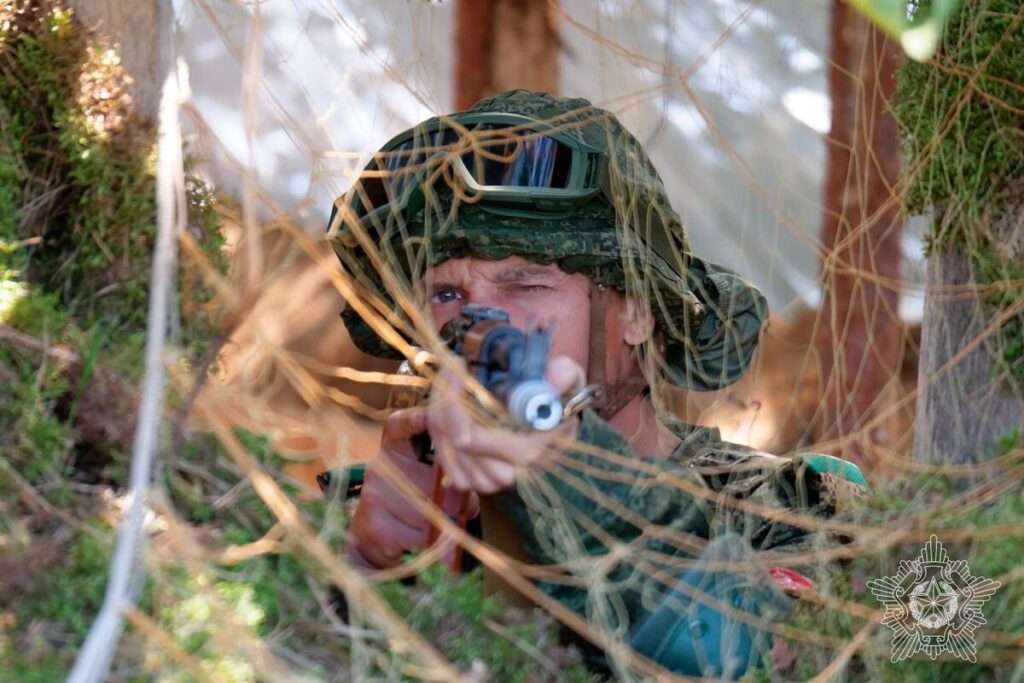
Belarusian reservists take part in military exercises during a training camp for territorial defense command staff in Malaryta District in July 2026. Photo: modmilby / Telegram
Belarusian reservists take part in military exercises during a training camp for territorial defense command staff in Malaryta District, Brest Oblast, Belarus, in July 2026. Photo: Belarusian Defense Ministry / Telegram

Minsk steps up territorial defense training as Lithuania launches military drills

Since late March 2026, Belarus' Defense Ministry has announced at least 11 events involving territorial troops, Poland-based Belarusian broadcaster Belsat reported. Most of them were training camps, but command-and-staff exercises and drills were also held, the media outlet said.

Uladzimir Zhyhar, a representative of BELPOL, an association of former Belarusian security officers opposing Lukashenka's regime, highlighted in comments to Belsat the exercises conducted for Belarus' Interior Ministry. The Interior Ministry is preparing to suppress internal protests, while the Defense Ministry wants to conduct exercises that would, among other things, practice responding to saboteurs entering Belarus and breaches of the state border, he said.

"Why can this happen? BELPOL representatives have repeatedly said that there is currently no threat from either NATO countries or Ukraine to Belarus. Therefore, something must change around the country as a whole," Zhyhar said, adding: "And that change would bring both possible destabilization inside Belarus, meaning a threat to the regime, and the likelihood of a breach of the state border."

One scenario he sees is Belarus being drawn into a war against Ukraine or NATO countries, which would prompt a response. The skills currently being practiced by the Defense Ministry and Interior Ministry could then be needed, the expert said.

On 14 September, military exercises began in 12 municipalities in Lithuania and run until 18 September, LRT reported. The NATO member shares a 679-kilometer border with Belarus, and its troops are training to act together against military threats of various kinds, using drones, boats, and weapons.

Belarus has been militarizing steadily since 2022, holding exercises almost without pause, including joint drills with Russian forces.

❌