Vue normale

  • ✇Euromaidan Press
  • Russia’s attack drones now jam the cheap interceptors sent to kill them
    Ukraine's cheap interceptor drones have been knocking Russia's nightly attackers out of the sky, so Russia has now bolted a jammer onto some of its own drones to blind them, according to Serhii "Flash" Beskrestnov, an adviser to Ukraine's President on defense technology. He examined the system, found in drone wreckage, and mapped how it strikes back at the interceptor sent to hunt it. Russia batters Ukrainian cities with long-range drones most nights, and Ukraine has le
     

Russia’s attack drones now jam the cheap interceptors sent to kill them

25 août 2026 à 12:39

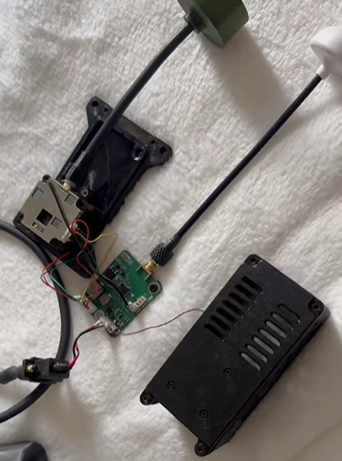
Electronic warfare equipment from Shahed drones.

Ukraine's cheap interceptor drones have been knocking Russia's nightly attackers out of the sky, so Russia has now bolted a jammer onto some of its own drones to blind them, according to Serhii "Flash" Beskrestnov, an adviser to Ukraine's President on defense technology. He examined the system, found in drone wreckage, and mapped how it strikes back at the interceptor sent to hunt it.

Russia batters Ukrainian cities with long-range drones most nights, and Ukraine has leaned on a cheap shield—drones costing a few thousand dollars—instead of burning through far pricier missiles. Anything that dulls that shield pushes the cost of defending the sky back up.

A jammer that waits for the interceptor

The unit rides on a Geran, Russia's version of the Iranian Shahed one-way drone. It listens for the video signal an approaching Ukrainian interceptor beams back to its pilot. Its receiver reads the interceptor's working frequency, then orders a transmitter to bury that same channel in noise, Beskrestnov found.
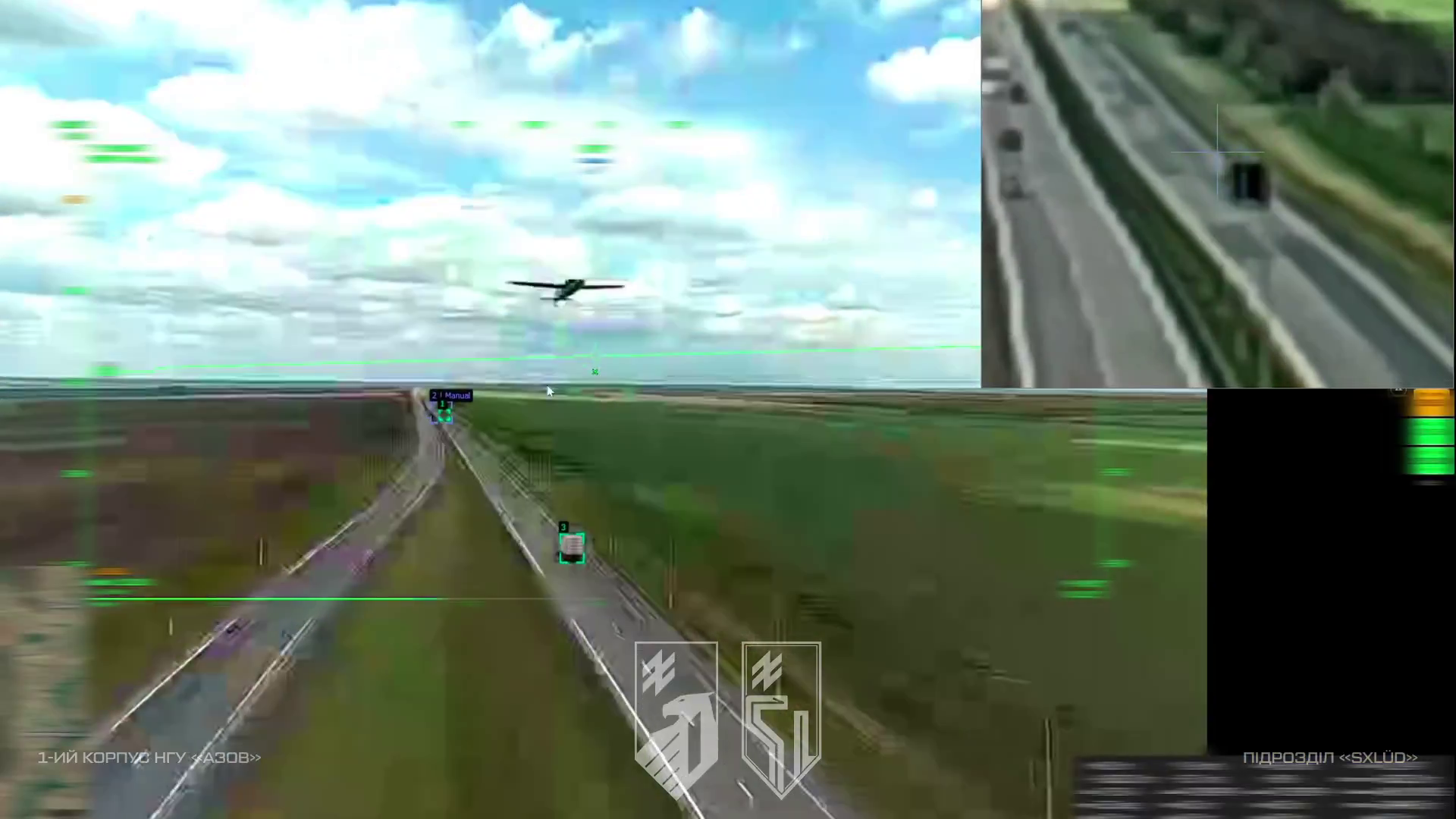
A Ukrainian Hornet drone spots another Hornet. Photo: Ukraine's 1st Azov Corps
Explore further

How Ukraine uses AI to guide long-range drone strikes through electronic warfare and deep into Russian-controlled rear areas

By his first estimate, the jammer's signal runs about five times stronger than the interceptor's video link—enough to wipe the picture and any chance of steering the drone onto its target.

Seconds decide it

In Beskrestnov's account, the system detected a test transmitter and switched on jamming after about three seconds, and the feed cut out. The device stays nearly idle until a hunter comes close, then jumps to full power to smother the signal. It targets the ordinary analog video band around 5.8 gigahertz that many cheap interceptors still use.

Possible answers, include interceptors with terminal-guidance homing for the final stretch of flight, digital communication links, or transmitters set to non-standard frequencies.
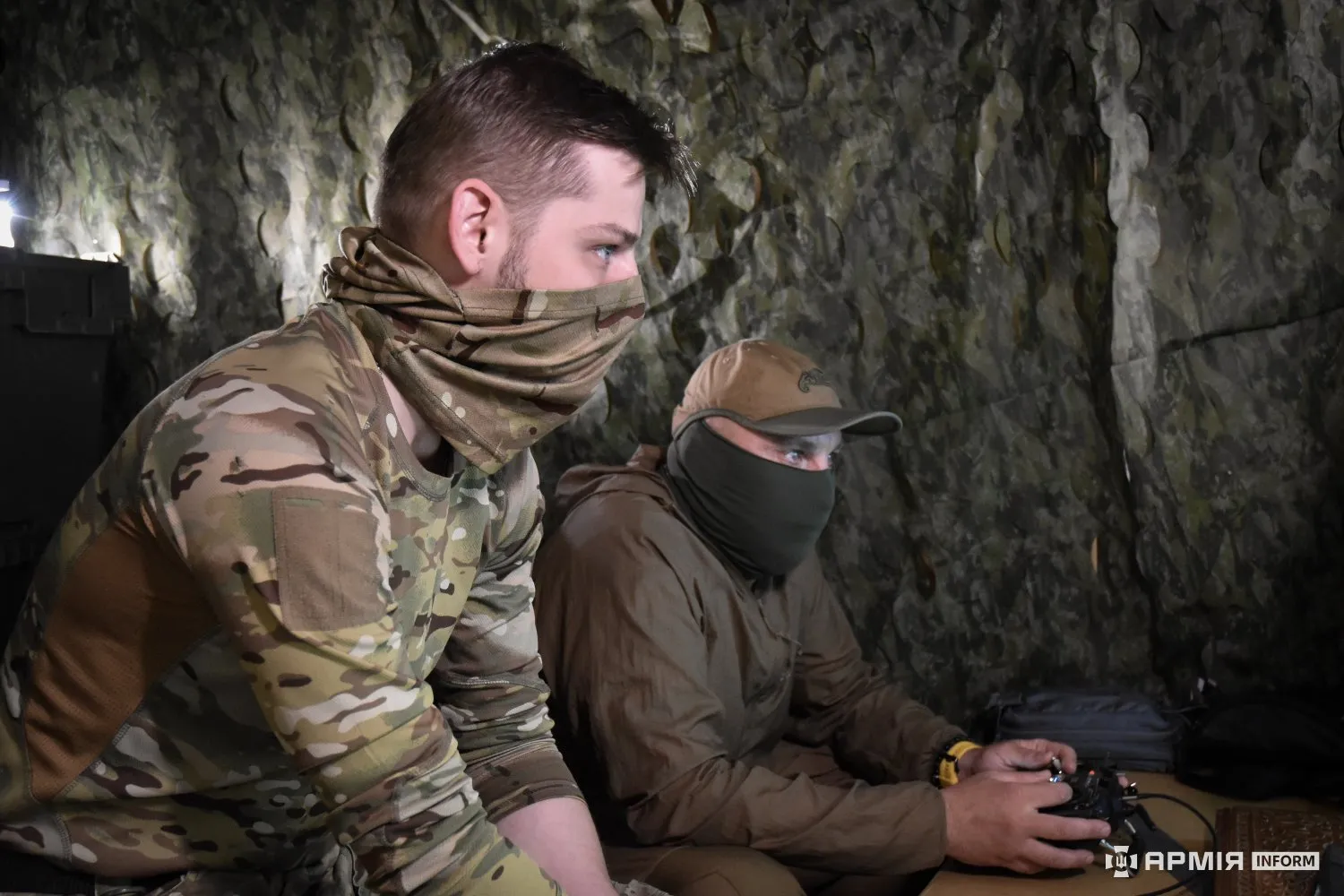
“two targets ammo one drone” how ukrainian drone crew hunts russian transport behind front line · post arti schultz daria moskalets/ armiyainform ukraine news reports
Explore further

“Two targets and ammo with one drone”: How a Ukrainian drone crew hunts Russian transport behind the front line

An old problem for Russia's drones

Russia has tried again and again to keep its one-way drones alive against Ukraine's defenses, including wiring jammers into some Shaheds earlier this year. Spending weight and power to protect a drone from a far cheaper interceptor shows how well those cheap drones work.

  • ✇Euromaidan Press
  • Ukrainian drone maker is pitching its new five-inch strike FPV as assault squad’s mortar
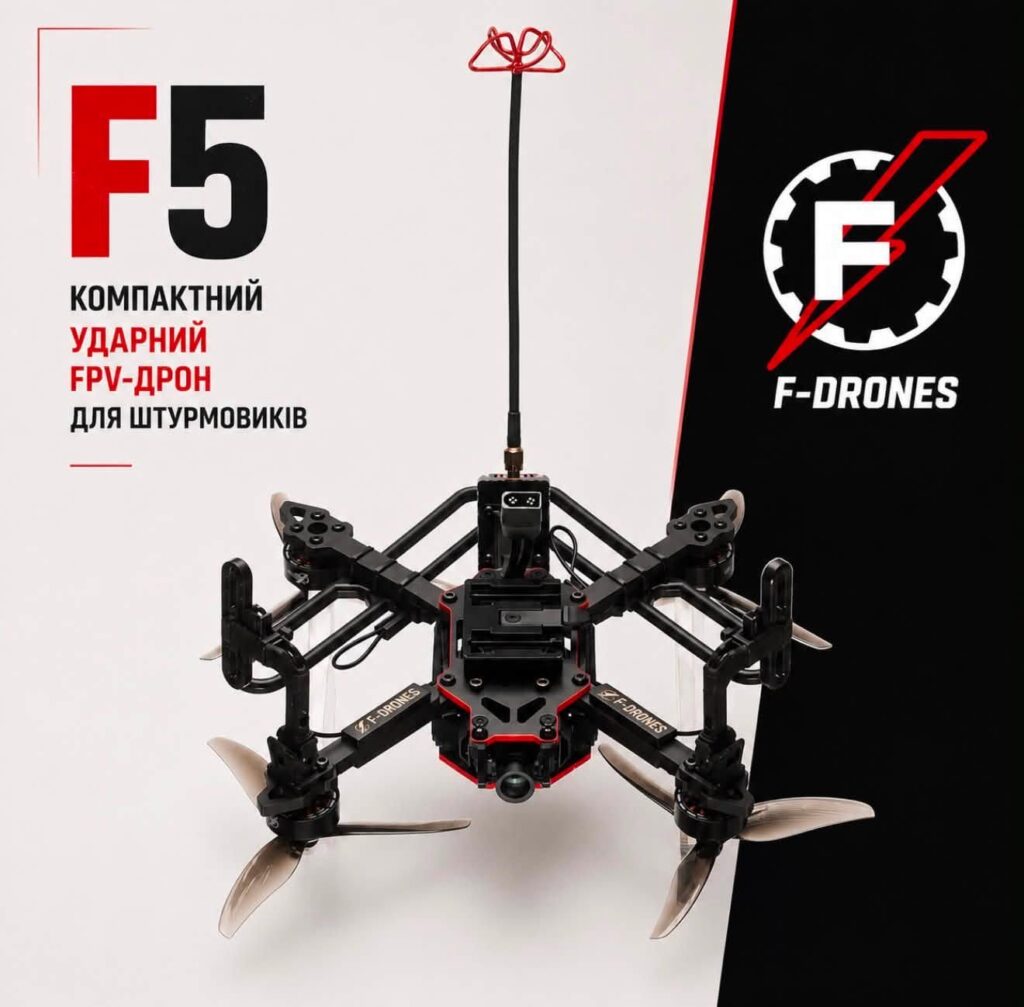
    A Ukrainian drone maker is pitching a weapon that works like a mortar, not a drone. F-Drones has unveiled the F5, a compact five-inch strike FPV built for assault units working treelines, built-up areas, and position support at short range, according to the company's announcement. Fiber-optic drones are now a bulk consumable. Ukraine's military received 374,000 under state contracts in 2025 and nearly as many again in the first four months of 2026, the Defense Ministry
     

Ukrainian drone maker is pitching its new five-inch strike FPV as assault squad’s mortar

25 août 2026 à 12:24

F-Drones has unveiled the F5, a compact five-inch strike FPV built for assault units. Source: F5

A Ukrainian drone maker is pitching a weapon that works like a mortar, not a drone. F-Drones has unveiled the F5, a compact five-inch strike FPV built for assault units working treelines, built-up areas, and position support at short range, according to the company's announcement.

Fiber-optic drones are now a bulk consumable. Ukraine's military received 374,000 under state contracts in 2025 and nearly as many again in the first four months of 2026, the Defense Ministry reported in April.

The F5 arrives three days after Ukraine's Defense Procurement Agency launched its first purchase of fiber-optic FPV drones, in line with ministry-set specifications rather than individual manufacturers.

The specifications come from the manufacturer

F-Drones describes a lightweight five-inch carbon frame that carries up to one kilogram and is supplied in two control configurations.

The fiber-optic version flies about six kilometers. The radio version reaches roughly twice that, up to 13 kilometers. Several drones fit in one backpack, and a ground robot can deliver nine to a position at once, compared with the six FPVs per carrier on the Black Widow ground system.

Fiber optics buys immunity at a cost

F-Drones calls the fiber version fully invulnerable to electronic warfare. Fiber-optic control does defeat jamming because the drone emits no radio signal, but the cable restricts range and maneuverability and can snap or tangle mid-flight, cutting control. Ukrainian crews have also tracked Russian operators by following reflective fibers in sunlight back to the launch point.

The company compares its drone to a mortar

The pitch is about availability, not reach.

"In its role, the F5 is closer to an 82mm mortar than to a classic long-range FPV: always nearby and ready to close out the task here and now," the company said.

The F5 ships with a codified Opera electronic initiation board, and F-Drones says the aircraft has been tested and codified by Ukraine's Defense Ministry.

  • ✇Euromaidan Press
  • Ukraine destroys depot that occupiers filled with generators, after Russian state TV filmed them
    Russian propagandists filmed the target for Ukraine themselves. Operators of Ukraine's 422nd Separate Unmanned Systems Regiment "Luftwaffe", part of the 17th Army Corps, have destroyed a Russian logistics hub that occupation forces had set up inside a former Epicentr hardware store in occupied Melitopol, regiment commander Major Mykola Kolesnyk told Army TV. Melitopol sits on Russia's land corridor to occupied Crimea. The city was occupied on the second day of Russia's
     

Ukraine destroys depot that occupiers filled with generators, after Russian state TV filmed them

25 août 2026 à 09:41

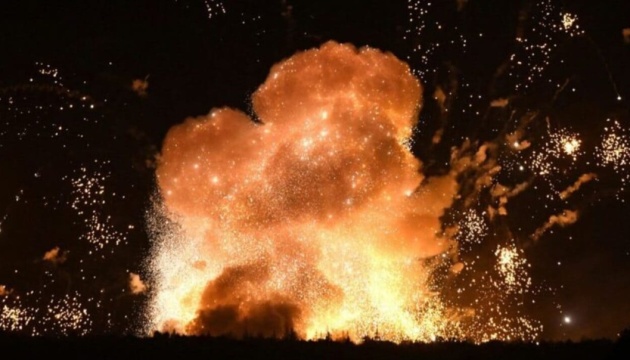
An explosion. Credit: UkrInform

Russian propagandists filmed the target for Ukraine themselves. Operators of Ukraine's 422nd Separate Unmanned Systems Regiment "Luftwaffe", part of the 17th Army Corps, have destroyed a Russian logistics hub that occupation forces had set up inside a former Epicentr hardware store in occupied Melitopol, regiment commander Major Mykola Kolesnyk told Army TV.

Melitopol sits on Russia's land corridor to occupied Crimea. The city was occupied on the second day of Russia's full-scale war in 2022.

Russian occupation forces had moved a large consignment of generators and other equipment into the building for military use. Russian state television broadcast footage of the delivery.

Propaganda footage exposed the shipment

The video gave the regiment its confirmation. Russian channels posted footage showing many generators that had not been there before, Kolesnyk said, that had been brought in deliberately.

"The hub was used, above all, to supply the people fighting directly against us, as their forward positions are not far from there. Calling it a civilian facility would be a considerable stretch, because this really was a hub whose services were used directly by Russian troops," Kolesnyk explained.

Operators tracked the target before striking

The regiment watched the site before hitting it, and no civilian was harmed, according to Kolesnyk. He set the operation against the Russian strike on Kryvyi Rih on 21 August, when two waves of drones, half an hour apart, killed 16 people and injured 130, including 23 children.

The UN Human Rights Monitoring Mission in Ukraine visited the site and a hospital and said the shopping center was operational and full of civilians when it was struck, and that the attack appears to breach international humanitarian law.

Generators feed the drone war

The hub's destruction will narrow Russian capacity to equip shelters, Kolesnyk said. The generators mattered for a more specific reason.

"A generator is what makes it possible to charge batteries for the unmanned component that then flies at us. So it is an absolutely legitimate target, and I am sure we will not stop here," the commander added.

A logistics hub in occupied Melitopol just got hit right after Russia stocked it with generators for its army

Anything feeding Russia's war machine is a legitimate target, and this was one
🎥 22nd Unmanned Systems Regiment "Luftwaffe" pic.twitter.com/B9UjZlJJTj
— Euromaidan Press (@EuromaidanPress) August 25, 2026

  • ✇Euromaidan Press
  • A Russian drone chose its own target and killed three. The code that told it what to look for was readable
    Ukrainian investigators recovered an unencrypted American AI module from a Russian Molniya drone that killed three civilians near a Zaporizhzhia gas station on 6 July, and read the code that guided its targeting, the New York Times reported. No human operator made the final call. Commercially sold AI boards have been turning up inside Russian strike weapons for more than a year, and autonomy is the direction both armies are moving in. What changed is the evidence rather
     

A Russian drone chose its own target and killed three. The code that told it what to look for was readable

25 août 2026 à 08:21

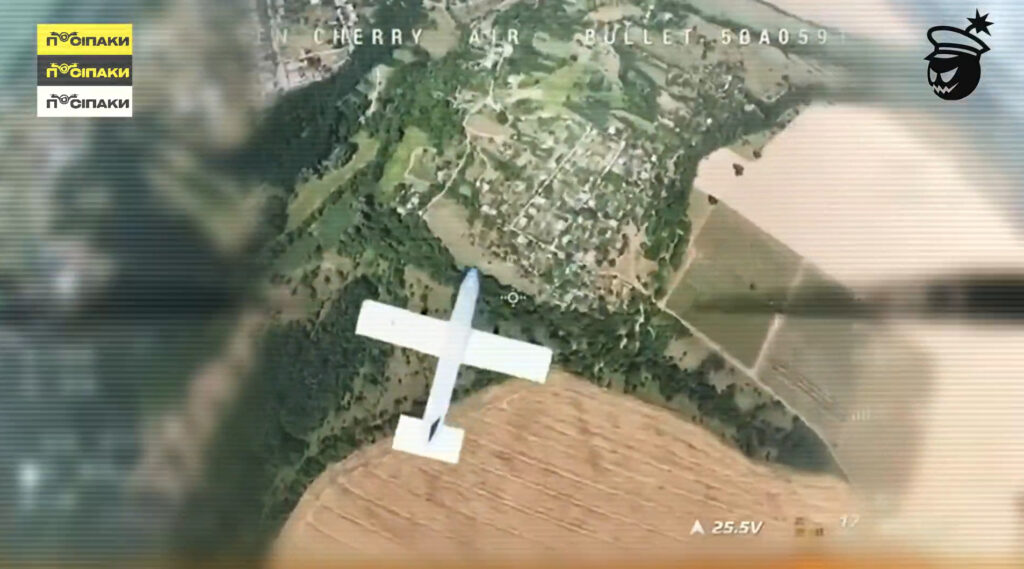
russian drone chose its own target killed three code told what look readable · post molniya general cherry video equipped artificial intelligence shot down over zaporizhzhia ukraine news ukrainian reports

Ukrainian investigators recovered an unencrypted American AI module from a Russian Molniya drone that killed three civilians near a Zaporizhzhia gas station on 6 July, and read the code that guided its targeting, the New York Times reported. No human operator made the final call.

Commercially sold AI boards have been turning up inside Russian strike weapons for more than a year, and autonomy is the direction both armies are moving in. What changed is the evidence rather than the technology. Until now, autonomy had to be inferred from what a wreck lacked—an antenna, a radio trace.

Tetiana Bubynets, a 19-year-old accounting student at Zaporizhzhia National University, was declared dead at a hospital, one of her professors said. Oleksii Svirin, 41, and Roman Karpii, 48, later died of their injuries. The drone had attempted to navigate around an apartment building toward the gas station's propane tanks but struck a wall and detonated near people sheltering there.

What investigators found in the wreckage

The wreckage contained an Nvidia Jetson Orin minicomputer, an off-the-shelf AI module that costs a few hundred dollars. The chip was not encrypted. Ukrainian officials said they could read the terrain imagery loaded for visual navigation and the object-detection code that defined what the drone was trained to target, NYT reported. The drone carried no radio antennas and was flying in a wave of approximately six, none of them transmitting. A missing antenna alone would not prove self-targeting—a drone flying a preprogrammed route needs no antenna either, but it would have no use for an Nvidia chip.

Human operators had programmed the drone to fly toward the gas station and set the general target area before launch. Once near the site, the onboard system identified and selected the specific object—most likely propane tanks it had been trained to recognize—on its own, drone experts and military officials said. Vadym Kushnikov, a drone expert at the Kharkiv Aviation Institute, described the drone as "a preprogrammed tool trained in virtual reality to track specific objects," NYT reported.

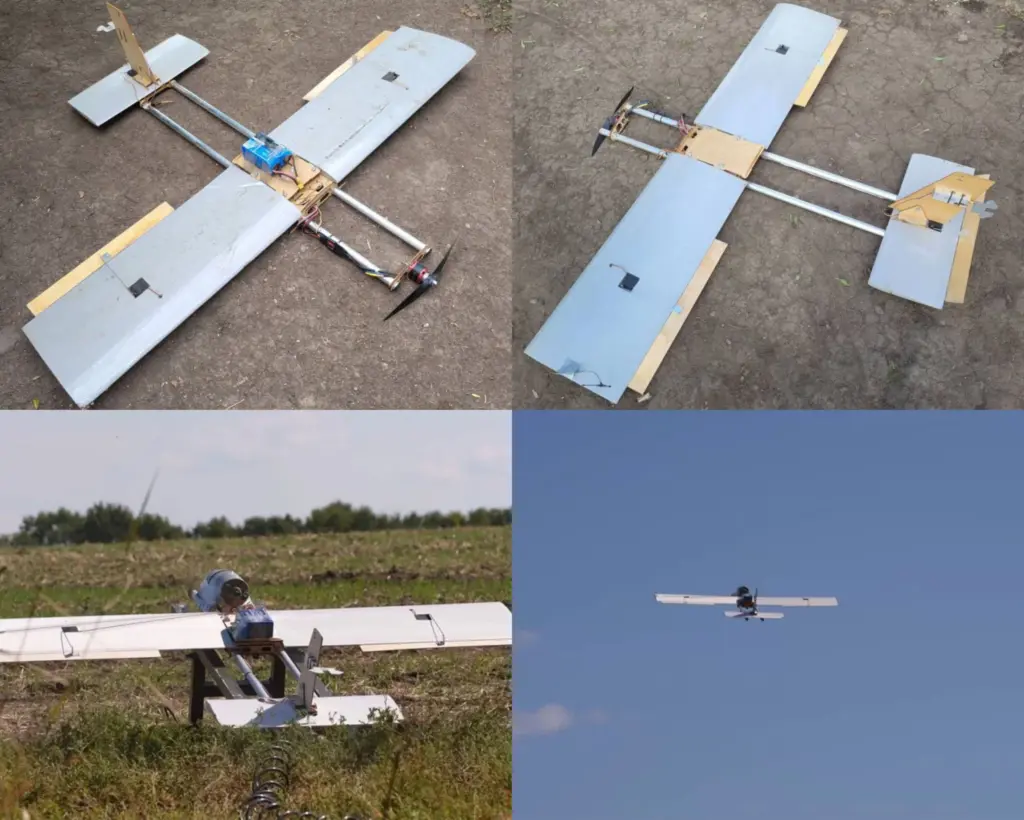
russian drone chose its own target killed three code told what look readable · post molniya kamikaze photos sources militarnyi ukraine news ukrainian reports
Russian Molniya kamikaze drones. Photos from Russian sources via Militarnyi

Where else the Nvidia module has turned up

Kateryna Bondar, a senior fellow at the Wadhwani AI Center at the Center for Strategic and International Studies in Washington, told NYT that no earlier Russian strike by a self-targeting drone has been documented killing civilians, which would make 6 July the first such case on record. She called the Nvidia module "the best proof" that Russia was experimenting with autonomous AI.

The Jetson Orin is not new to the battlefield. The module is made by the American chipmaker Nvidia. Ukraine's sanctions on Russia's AI drone supply networks, imposed in August 2025, hit Russian, Chinese, and Belarusian drone developers and component suppliers—not Nvidia.

Ukrainian intelligence first identified the module in the V2U autonomous strike drone in June 2025, mounted in a Chinese Leetop A203 minicomputer. It has since reported Jetson-based AI modules in Russia's Lancet and Klin drones—the Klin an older Jetson TX2—and, most recently, in the S-71 Monokhrom cruise missile.

In those cases, the finding was the hardware, and what Ukrainian intelligence inferred from it. This time, the code itself was legible.

Nvidia confirmed to NYT that the photographed board was a Jetson Orin. The company said the minicomputer is a consumer-grade product "sold to students, developers and start-ups for a wide range of beneficial applications," that it does not sell the computer in Russia, and that it is widely available through resellers.

Zaporizhzhia as testing ground

Russia began test flights of AI-guided Molniya drones in May, and had begun testing self-targeting systems in the V2U several months earlier, some of those for last-mile guidance only, Ukrainian air defense experts told NYT. Local air defense officials said Russia has been aiming at civilian objects—pumps and propane tanks at gas stations—along with military recruitment centers while trying out autonomous drones in Zaporizhzhia. Why those targets were chosen for the tests is not clear.

Gas stations have been under sustained attack independently of the AI trials. Russia has destroyed approximately 200 across Ukraine since spring, around 50 in June alone, by UNITED24 Media's count.

In Zaporizhzhia, gas stations now prop plastic sheeting at odd angles around propane tanks to confuse the drones' image recognition, and Ukraine has turned to shooting down drones that electronic warfare cannot jam.

❌