Vue normale

  • ✇The Kyiv Independent
  • Russia fails to meet OPEC+ oil production target in June, Bloomberg reports
    Russia's crude oil production in June fell below its agreed-upon OPEC+ target, according to individuals familiar with the data interviwed by Bloomberg. Russian producers reportedly pumped 9.022 million barrels per day last month, a figure 28,000 barrels per day below the required level, including compensation cuts. This marks the largest gap between Russia's output and its monthly quota this year, based on Bloomberg's calculations.Historically, Russia, which co-leads the OPEC+ alliance with Saud
     

Russia fails to meet OPEC+ oil production target in June, Bloomberg reports

7 juillet 2025 à 17:47
Russia fails to meet OPEC+ oil production target in June, Bloomberg reports

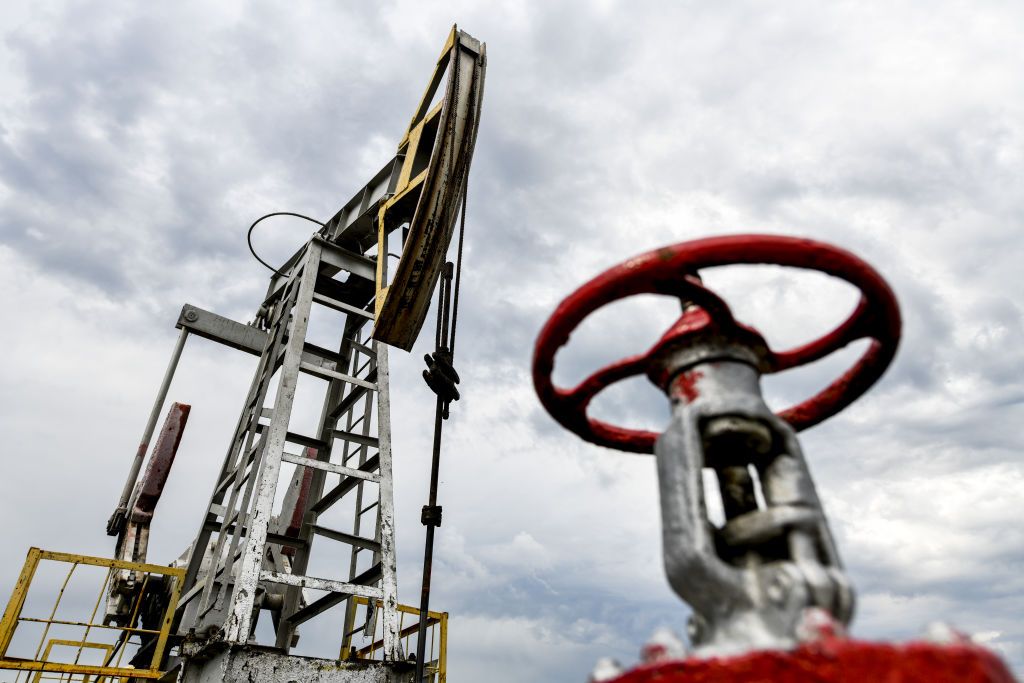
Russia's crude oil production in June fell below its agreed-upon OPEC+ target, according to individuals familiar with the data interviwed by Bloomberg.

Russian producers reportedly pumped 9.022 million barrels per day last month, a figure 28,000 barrels per day below the required level, including compensation cuts. This marks the largest gap between Russia's output and its monthly quota this year, based on Bloomberg's calculations.

Historically, Russia, which co-leads the OPEC+ alliance with Saudi Arabia, has faced criticism for poor compliance with production quotas. However, the nation has shown improved adherence for most of 2025, often pumping below its required levels, according to analysis of Russian data. This increased focus on production discipline follows earlier critiques from Riyadh.

Under the terms of the OPEC+ agreement, Russia's daily production quota for June had increased by 78,000 barrels to 9.161 million barrels. However, Moscow had also committed to a 111,000 barrel-a-day compensation cut for the month, bringing its actual output target to 9.050 million barrels per day.

On July 5, eight OPEC+ nations collectively agreed to raise production by 548,000 barrels per day in August, aiming to capitalize on strong summer consumption. Analysts suggest these additional barrels may be quickly absorbed but could contribute to a crude surplus later in the year.

Independent verification of Russia's oil output data has become challenging since Moscow classified official figures after Western sanctions targeting the nation's energy industry following its full-scale invasion of Ukraine. Consequently, market watchers now largely rely on indicators such as seaborne exports and domestic refinery runs to track trends in Russia's oil production.

Russia striking NATO while China invades Taiwan ‘plausible’ scenario, experts say
If Beijing moves against Taiwan, NATO might soon find itself in a two-front war with China and Russia — or so the alliance’s secretary general believes. “If Xi Jinping would attack Taiwan, he would first make sure that he makes a call to his very junior partner in all of this, Vladimir Vladimirovich Putin… and telling him, ‘Hey, I’m going to do this, and I need you to to keep them busy in Europe by attacking NATO territory,’” Secretary General Mark Rutte said in a July 5 interview with the New
Russia fails to meet OPEC+ oil production target in June, Bloomberg reportsThe Kyiv IndependentMartin Fornusek
Russia fails to meet OPEC+ oil production target in June, Bloomberg reports
  • ✇The Kyiv Independent
  • EBRD to unlock $1 billion in credit for Ukraine's key sectors, considers mineral projects
    The European Bank for Reconstruction and Development (EBRD) will enable Ukrainian banks to provide up to 900 million euros ($1.05 billion) in new loans by sharing credit risks, the EBRD announced in a press release on July 7.The loans will target companies in agribusiness, manufacturing, pharmaceuticals, transport and logistics, as well as energy security projects.The mechanism will be announced at the Ukraine Recovery Conference (URC) in Rome on July 10-11. This represents the largest risk-shar
     

EBRD to unlock $1 billion in credit for Ukraine's key sectors, considers mineral projects

7 juillet 2025 à 13:59
EBRD to unlock $1 billion in credit for Ukraine's key sectors, considers mineral projects

The European Bank for Reconstruction and Development (EBRD) will enable Ukrainian banks to provide up to 900 million euros ($1.05 billion) in new loans by sharing credit risks, the EBRD announced in a press release on July 7.

The loans will target companies in agribusiness, manufacturing, pharmaceuticals, transport and logistics, as well as energy security projects.

The mechanism will be announced at the Ukraine Recovery Conference (URC) in Rome on July 10-11. This represents the largest risk-sharing facility implemented in Ukraine since the war began, according to the EBRD's press release.

Due to destructive Russian attacks on Ukrainian energy infrastructure, the EBRD will also focus on supporting distributed generation and renewable energy projects.

Russian forces have damaged most of Ukraine's thermal power plants and about 30% of power stations, disrupting nearly two-thirds of the country's total electricity generation, the bank says.

The EU, together with other EBRD donors, has developed plans to de-risk renewable energy investments to attract more private capital, which they will announce at the URC.

Nearly one-third of EBRD's wartime financing to Ukraine — 2.4 billion euros ($2.8 billion) — has gone to the energy sector. This includes support for state-owned electricity transmission and gas companies, as well as financing for hydropower and small-scale distributed generation.

In a pre-URC press release, the EBRD also expressed interest in supporting the development of a natural graphite deposit in Ukraine following the U.S.-Ukraine minerals agreement. Graphite is a strategic material used in batteries and defense applications.

The bank will launch the second phase of digitizing Ukraine's paper-based geological data archive to make information about mineral deposits more accessible, the EBRD reports.

Since Russia's full-scale invasion in 2022, the EBRD has invested over 7.2 billion euros ($8.4 billion) in Ukraine's economy.

Zelensky, Trump discussed replacement of Ukraine’s US ambassador, source says
Oksana Markarova has held the post since April 2021, and played a central role in coordinating U.S. military and financial support during the early phases of Russia’s full-scale invasion.
EBRD to unlock $1 billion in credit for Ukraine's key sectors, considers mineral projectsThe Kyiv IndependentTim Zadorozhnyy
EBRD to unlock $1 billion in credit for Ukraine's key sectors, considers mineral projects
  • ✇The Kyiv Independent
  • Russian airlines face $254 million losses from just 2 days of Ukrainian drone strikes, Kremlin media reports
    Major shutdowns at Russia's key airports on July 5–6 caused by Ukrainian drone attacks could cost Russian airlines around 20 billion rubles ($254 million), the pro-Kremlin outlet Kommersant reported on July 7, citing airline representatives and industry experts. Since the start of mass disruptions on July 5, a total of 485 flights were canceled, 88 were diverted to alternate airports, and another 1,900 were delayed across major hubs, according to Russia's aviation agency Rosaviatsiya.The drone a
     

Russian airlines face $254 million losses from just 2 days of Ukrainian drone strikes, Kremlin media reports

7 juillet 2025 à 10:23
Russian airlines face $254 million losses from just 2 days of Ukrainian drone strikes, Kremlin media reports

Major shutdowns at Russia's key airports on July 5–6 caused by Ukrainian drone attacks could cost Russian airlines around 20 billion rubles ($254 million), the pro-Kremlin outlet Kommersant reported on July 7, citing airline representatives and industry experts.

Since the start of mass disruptions on July 5, a total of 485 flights were canceled, 88 were diverted to alternate airports, and another 1,900 were delayed across major hubs, according to Russia's aviation agency Rosaviatsiya.

The drone attacks prompted operational shutdowns that triggered widespread logistical and economic consequences. Over 94,000 passengers were housed in hotels, 43,000 refunds were processed, and hundreds of thousands of vouchers for food and drinks were issued.

The estimated financial toll includes direct airline losses from canceled Boeing 737-800 flights, which can run between 15 million and 23 million rubles ($190,000–$292,000) each depending on the route, as well as costs for delays, diversions, and passenger care.

Experts say the true cost could be far higher. Dmitry Datsykov of EXPO.UAV estimated tens of billions of rubles in additional indirect losses, including missed connections, taxi and hotel losses, and supply chain disruptions.

Ukraine has not publicly claimed responsibility for the disruptions but has acknowledged that its drone strategy aims to undermine Russian logistics and force the war's consequences closer to the Russian public.

The economic fallout comes amid growing scrutiny of Russia's transport sector. On July 7, President Vladimir Putin dismissed Transport Minister Roman Starovoit following the aviation chaos and a high-profile ammonia leak at the Ust-Luga port.

The Kremlin has increasingly struggled to protect critical infrastructure from Kyiv's deep-strike drone campaign, which in recent months has expanded to include refineries, radar plants, and now Russia's busiest airports.

Russian transport minister fired by Putin reportedly shoots himself dead
According to Russian media, ex-Transport Minister Roman Starovoit’s body was found near Moscow. Preliminary findings suggest that the suicide may be linked to a possible criminal case.
Russian airlines face $254 million losses from just 2 days of Ukrainian drone strikes, Kremlin media reportsThe Kyiv IndependentTim Zadorozhnyy
Russian airlines face $254 million losses from just 2 days of Ukrainian drone strikes, Kremlin media reports
❌