Vue normale

  • ✇The Kyiv Independent
  • EU postpones lowering price cap for Russian oil amid tensions in Middle East, Politico reports
    The European Union has postponed a move to lower the existing price cap on Russian oil, after concerns that the Iran-Israel conflict could lead to higher prices, Politico reported on June 20, citing unnamed diplomatic sources.The price cap, introduced in December 2022 as a measure to limit the Kremlin's ability to finance its war against Ukraine, prohibits Western companies from shipping, insuring, or otherwise servicing Russian oil sold above $60 per barrel.Ukraine has been calling on Western p
     

EU postpones lowering price cap for Russian oil amid tensions in Middle East, Politico reports

20 juin 2025 à 11:41
EU postpones lowering price cap for Russian oil amid tensions in Middle East, Politico reports

The European Union has postponed a move to lower the existing price cap on Russian oil, after concerns that the Iran-Israel conflict could lead to higher prices, Politico reported on June 20, citing unnamed diplomatic sources.

The price cap, introduced in December 2022 as a measure to limit the Kremlin's ability to finance its war against Ukraine, prohibits Western companies from shipping, insuring, or otherwise servicing Russian oil sold above $60 per barrel.

Ukraine has been calling on Western partners to lower the price cap on Russian oil from $60 to $30 per barrel. Meanwhile, two diplomats told Politico that the escalation of the conflict between Iran and Israel would make it impossible to impose new restrictions.

"The idea of lowering the price cap is probably not going to fly because of the international situation in the Middle East and the volatility," said one diplomat on the condition of anonymity.

The issue of reducing the price cap on Russian oil was discussed during the Group of Seven (G7) summit, which was held June 15-17 in Canada. However, the participants failed to reach a consensus.

"At the G7 meeting this week, it was agreed by all the countries they would prefer not to take the decision right now," the diplomat added. "The prices were quite close to the cap; but now the prices are going up and down, the situation is too volatile for the moment."

European Commission President Ursula von der Leyen said during the G7 summit that the existing measures on Russian oil exports "had little effect," while noting that oil prices had risen in recent days, so "the cap in place does serve its function. "

Global oil prices spiked on June 13, after Israeli strikes on Iran triggered a long-range war between the two countries that has continued for over a week.

Brent and Nymex crude prices surged more than 10% before stabilizing around 7.5% higher, with Brent at $74.50 a barrel and Nymex at $73.20 as of June 20, the BBC reported.

The spike threatens to undermine Western efforts to restrict the wartime revenue of the Russian state, which depend heavily on oil exports.

EU High Representative Kaja Kallas previously urged the European Union to pursue lowering the oil price cap on Russian oil, even without U.S. support, warning that Middle East tensions could otherwise drive prices up and boost Russia's revenues.

After 3 years of full-scale war in Ukraine, Europe finally lays out road map to detox from Russian oil and gas
After three years of limited measures and political hangovers, the European Union has laid out a legal roadmap to finally end its long-standing addiction to Russian oil and gas. Under a new legislative proposal announced in Strasbourg on June 17, Brussels aims to cut off all remaining imports of Russian
EU postpones lowering price cap for Russian oil amid tensions in Middle East, Politico reportsThe Kyiv IndependentAlex Cadier
EU postpones lowering price cap for Russian oil amid tensions in Middle East, Politico reports
  • ✇The Kyiv Independent
  • Ukraine imposes new sanctions on Russian, Chinese, Belarusian companies involved in drone production
    President Volodymyr Zelensky signed a decree on June 20, imposing sanctions on 56 individuals and 55 Russian, Chinese, and Belarusian companies involved in the production of Russian drones and sanctions circumvention.Ukraine introduced new restrictions as Russia has escalated drone attacks against Ukrainian cities over the past weeks, launching record 400-500 unmanned aerial vehicles (UAVs) per night.Individuals and legal entities subject to Ukrainian sanctions cannot do business and trade in Uk
     

Ukraine imposes new sanctions on Russian, Chinese, Belarusian companies involved in drone production

20 juin 2025 à 10:15
Ukraine imposes new sanctions on Russian, Chinese, Belarusian companies involved in drone production

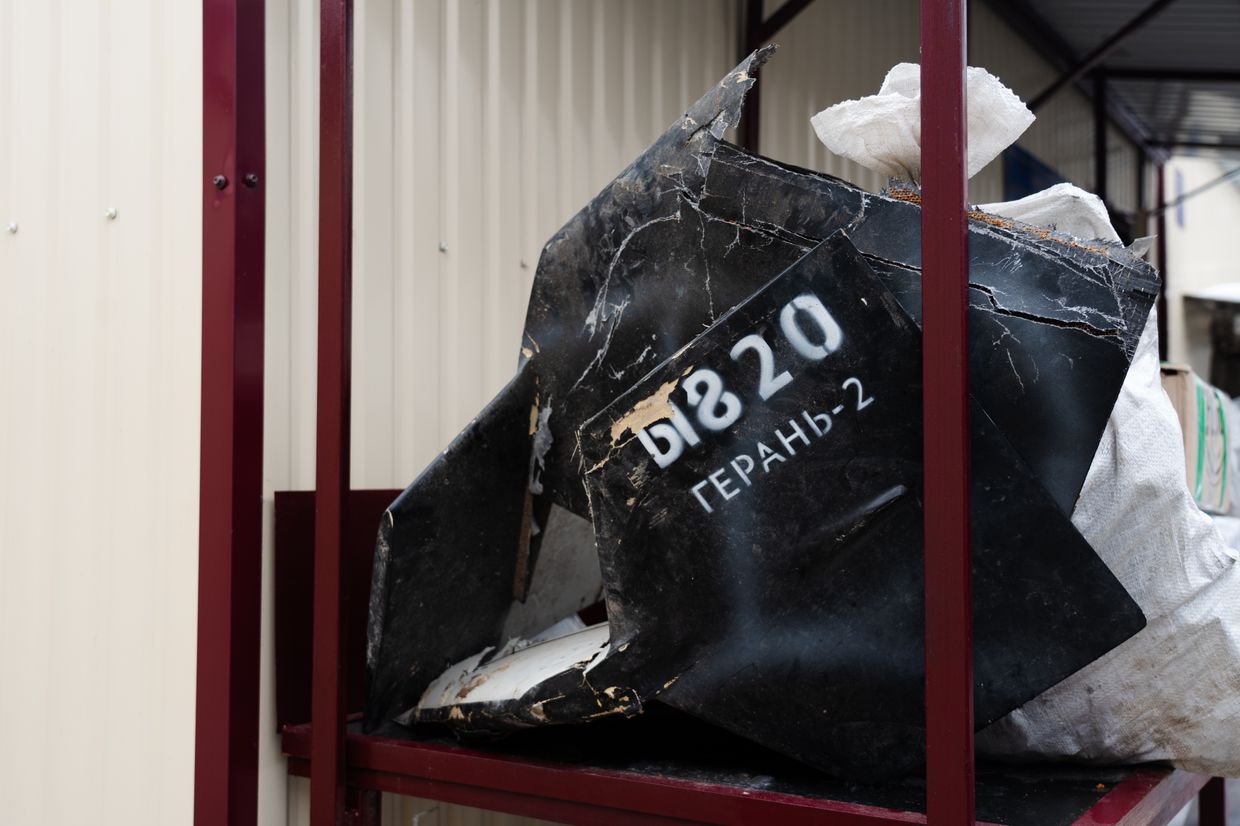
President Volodymyr Zelensky signed a decree on June 20, imposing sanctions on 56 individuals and 55 Russian, Chinese, and Belarusian companies involved in the production of Russian drones and sanctions circumvention.

Ukraine introduced new restrictions as Russia has escalated drone attacks against Ukrainian cities over the past weeks, launching record 400-500 unmanned aerial vehicles (UAVs) per night.

Individuals and legal entities subject to Ukrainian sanctions cannot do business and trade in Ukraine, cannot withdraw their capital from the country. In the meantime, their assets are blocked, as well as their access to public and defense procurement, and entry into the territory of Ukraine, among other restrictions.

The new package of sanctions targets individuals and entities involved in the development and production of Russian drones such as Geran, Orlan-10, SuperCam, and first-person-view (FPV) drones, according to a decree published on the Presidential Office's website.

The Belarusian Precision Electromechanics Plant and six Chinese enterprises located in Hong Kong and in the provinces of Shandong and Shenzhen are among the sanctioned entities.

The sanctions list includes equipment suppliers to Alabuga Machinery, a Russian manufacturer of machine tools and gears, and individuals who import components for the sanctioned Kronshtadt JSC, a drone producer that developed Banderol UAVs with jet engines.

Russia has repeatedly targeted Ukrainian cities with waves of attack drones, often striking energy infrastructure and residential buildings overnight. Ukraine's defense forces use a mix of electronic warfare, air defense systems, and drone-on-drone interception to repel the assaults.

Drones have become one of the defining tools of the full-scale war, used extensively by both Ukraine and Russia for surveillance, long-range strikes, and tactical battlefield advantage.

❌