Vue normale

  • ✇The Kyiv Independent
  • EU proposes integrating Ukraine into bloc's mobile roaming area

    The European Commission has proposed that Ukraine join the European Union's mobile roaming area starting January 1, 2026, providing Ukrainian users the ability to make phone calls, texts, and use mobile data in the bloc's 27 countries at no extra charge. "We want Ukrainian citizens to stay connected to their loved ones across the EU, as well as in their home country. That's why we propose that Ukraine join our roaming family," European Commission President Ursula von der Leyen said in a statemen
     

EU proposes integrating Ukraine into bloc's mobile roaming area

19 juin 2025 à 21:29
EU proposes integrating Ukraine into bloc's mobile roaming area

The European Commission has proposed that Ukraine join the European Union's mobile roaming area starting January 1, 2026, providing Ukrainian users the ability to make phone calls, texts, and use mobile data in the bloc's 27 countries at no extra charge.

"We want Ukrainian citizens to stay connected to their loved ones across the EU, as well as in their home country. That's why we propose that Ukraine join our roaming family," European Commission President Ursula von der Leyen said in a statement.

The proposal, first announced on June 16, will serve as a means of integration into the European Union's "Roam like at Home" provision in affect between all EU nations. The proposed change will impact the over four million Ukrainian refugees living in the EU.

Ukraine's full integration in the roaming provisions will replace voluntary measures that "allowed for roaming without surcharges and affordable international calls for EU and Ukrainian citizens abroad," according to the European Commission. The current measure will extend to December 31, 2025, ahead of the planned integration.

If approved, Ukraine will become the only country outside of the EU to join the bloc's "Roam like at Home" policy.

The move, which awaits European Council approval, comes as Ukraine continues to implement reforms in pursuing membership in the European Union.

Ukraine applied for EU membership at the onset of Russia's full-scale invasion in 2022. The country has made quick progress, achieving candidate status within months, with the initial negotiations formally launching in June 2024.

Since the start of 2025, Ukraine has opened three negotiation clusters under Poland's rotating presidency.

Poland lead the EU Council's presidency until June, and Denmark will take over the role in July. Ukraine aims to open the remaining three negotiation clusters in the second half of 2025 under the Danish chairmanship, the President Volodymyr Zelensky said.

There are six accession negotiation clusters, consisting of several individual chapters. Negotiations prepare a candidate country to become an EU member.

The EU’s Commissioner for Enlargement, Oliver Varhelyi, said that Ukraine could potentially join the bloc by 2029 if it successfully implements necessary reforms.

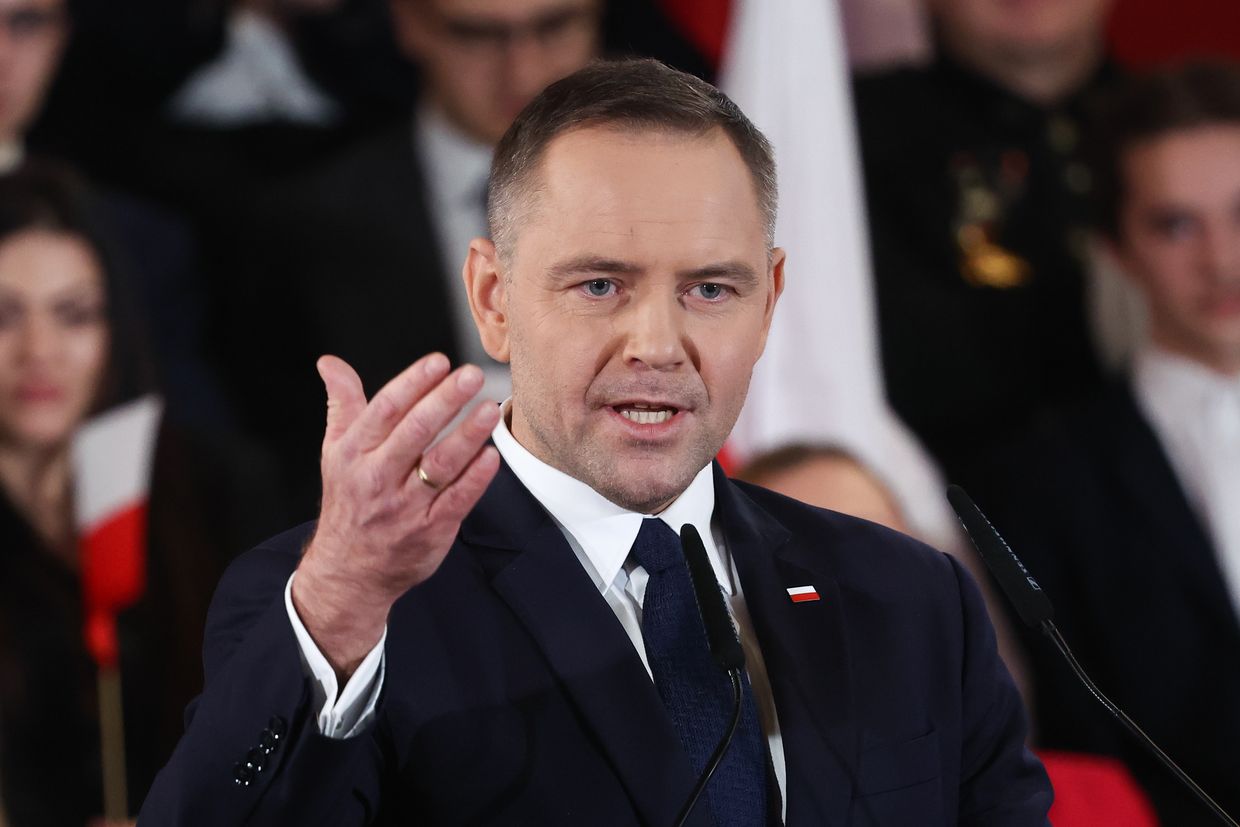
‘I am against Ukraine’s entry into the European Union,’ Polish president-elect Nawrocki says
“Ukraine must understand that other countries, including Poland, Hungary, and other European countries, also have their own interests,” Polish President-elect Karol Nawrocki said.
EU proposes integrating Ukraine into bloc's mobile roaming areaThe Kyiv IndependentVolodymyr Ivanyshyn
EU proposes integrating Ukraine into bloc's mobile roaming area


  • ✇The Kyiv Independent
  • Spain rejects NATO 5% defense spending push, calls proposal 'unreasonable'
    Spain has rejected a U.S.-backed proposal for NATO members to raise defense spending to 5% of GDP, becoming the first alliance country to oppose the plan, Reuters reported on June 19.The rejection adds pressure to the transatlantic debate ahead of the NATO summit in The Hague on June 24–25, which has beenreduced to a single session focused on defense spending and alliance capabilities.  In a letter to NATO Secretary General Mark Rutte, Spanish Prime Minister Pedro Sanchez called the proposed tar
     

Spain rejects NATO 5% defense spending push, calls proposal 'unreasonable'

19 juin 2025 à 10:51
Spain rejects NATO 5% defense spending push, calls proposal 'unreasonable'

Spain has rejected a U.S.-backed proposal for NATO members to raise defense spending to 5% of GDP, becoming the first alliance country to oppose the plan, Reuters reported on June 19.

The rejection adds pressure to the transatlantic debate ahead of the NATO summit in The Hague on June 24–25, which has beenreduced to a single session focused on defense spending and alliance capabilities.  

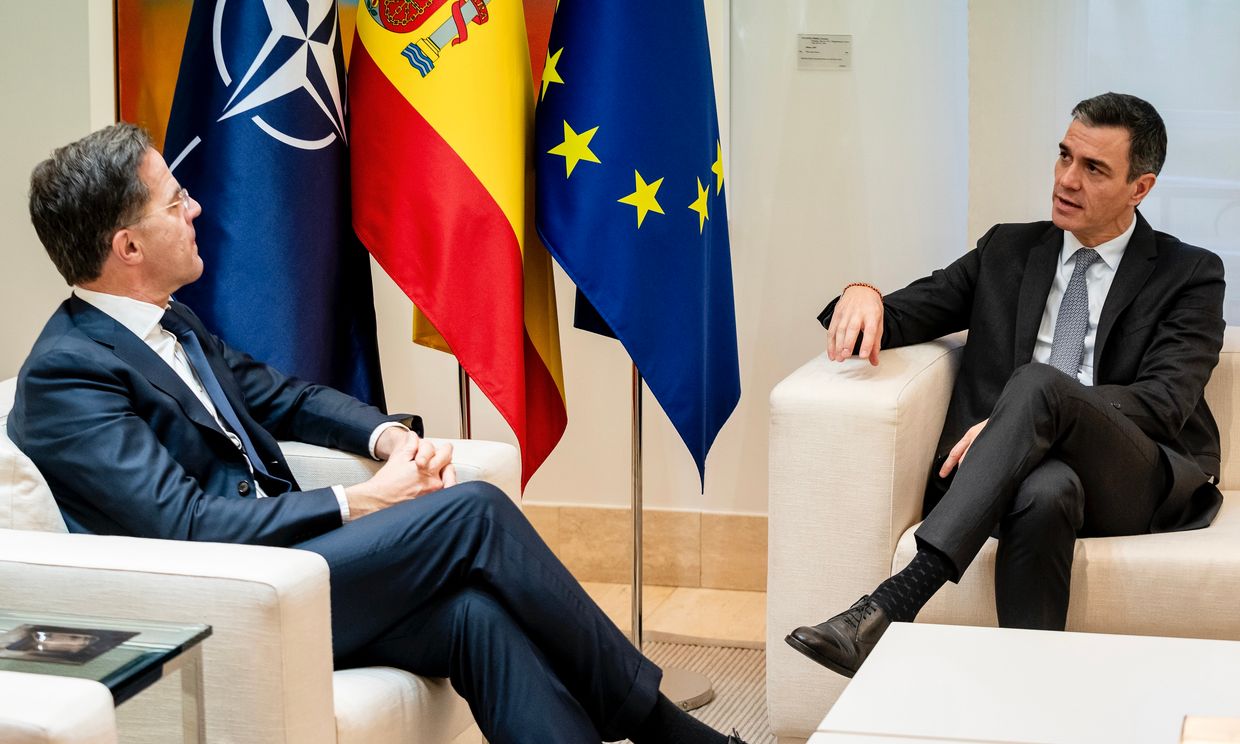
In a letter to NATO Secretary General Mark Rutte, Spanish Prime Minister Pedro Sanchez called the proposed target "unreasonable" and warned it would undermine broader European efforts to build an integrated defense ecosystem.

"Committing to a 5% target would not only be unreasonable, but also counterproductive," Sanchez wrote, arguing it would "move Spain further away from optimal spending."

Spain estimates that its armed forces require spending equal to 2.1% of GDP to meet national military objectives, below the U.S.-endorsed threshold but above NATO's 2% benchmark.

U.S. President Donald Trump has repeatedly accused NATO members of underfunding their militaries, pushing for raising defense spending benchmark to 5% of GDP.

While no other NATO members have formally rejected the proposal, most have remained noncommittal. Poland, the Netherlands, and Sweden have expressed willingness to consider the 5% target.

In 2024, only 23 alliance members met the 2% target, according to NATO estimates. Poland was ahead of all members with 4.12% of GDP allocated to defense, followed by Estonia (3.43%) and the U.S. (3.38%).

Rutte said on June 17 that all NATO countries are on track to meet the 2% threshold in 2025.

Spain, governed by a Socialist-led coalition, maintains a sharply different defense posture than the U.S. administration.

While Madrid supports Ukraine, it has taken a more cautious stance on the Middle East, including distancing itself from U.S. policy on Israel.

Diplomacy in crisis: G7 letdowns reveal limits to Western solidarity on Ukraine
KANANASKIS, Canada — The Group of Seven (G7) Leaders’ Summit ended on June 17 with no joint statement in support of Ukraine, no commitments to provide desperately needed U.S. weapons, and no meeting between President Volodymyr Zelensky and U.S. President Donald Trump. The Ukrainian delegation headed into the summit,
Spain rejects NATO 5% defense spending push, calls proposal 'unreasonable'The Kyiv IndependentDmytro Basmat
Spain rejects NATO 5% defense spending push, calls proposal 'unreasonable'
❌