❌

Vue normale

Russia is now wiring its attack drones into one network in flight, so a single drone can scout, strike, and relay for the rest

30 septembre 2026 à 15:20

Geran-5 in the sights of a STING S interceptor drone.

Russia is wiring its long-range attack drones together by a mesh network in flight and buying pricier, higher-resolution cameras for them, Ukraine's Air Force reported on 29 September. Its spokesperson said one drone could serve as a scout, strike drone, and relay for the rest, which is why they often fly one behind another over long distances. Chains of them keep crossing near the Belarus border, UkrInform reports.

For Ukraine, the danger in each such upgrade is arithmetic: the more Russia networks cheap, once-disposable drones and pushes its control links away from the front, the harder they become to jam or shoot down, and the more of them reach the cities they are aimed at.

Sharper, pricier eyes

Ihnat said on a national broadcast that Russia is sourcing higher-quality materials and raising the resolution of its drone cameras. The cameras it buys are increasingly expensive and higher-quality, he said, which lets its operators study the ground in fine detail and use each drone for a specific purpose.

On a mesh network, he said, the drones talk to each other and hand the control signal back toward the operator, so no single link has to carry it alone.

Aftermath of a massive Russian ballistic missile attack in Kyiv's Lukianivka district, 19 July 2026. Photo: Suspilne
Explore further

Russia is mapping everyday targets across Kyiv, from trolleybus depots to Zhuliany airport, top monitoring channel says, ahead of next ballistic strike

Chains along the Belarus border

Asked about relays operating out of Belarus and about Russia's guidance of jet-powered Shaheds, the exploding drones it fires in swarms, Ihnat said Moscow had already claimed its satellite network was ready. He confirmed mesh networks are in use and said their use was quite dangerous. Ukraine has no information yet on whether Russia is using towers, he said.

It often sees drones crossing long distances in chains along the Ukrainian-Belarusian border, so nothing can be ruled out, but intelligence would have to confirm whether such relays exist. Asked whether Russia is preparing a fresh ballistic strike, he said intelligence would warn when extra vigilance is needed.
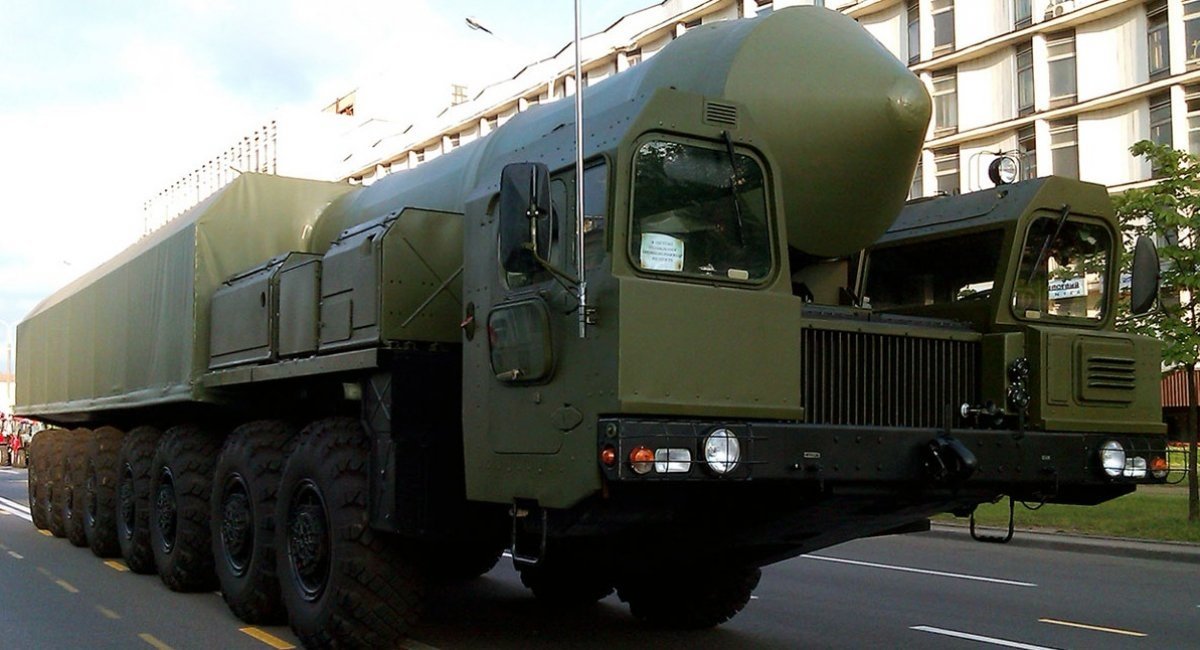
isw kremlin continues its nuclear threats while dangling economic carrots sway washington russia's rs-26 intercontinental ballistic missile rubezh oreshnik militarnyi appears focused reshaping ties through mix promises all refusing engage
Explore further

Russia deploys missile brigade to Belarus as fears grow over new threat to Kyiv

Ukraine's countermeasures

Ihnat has also said Russia launched more attack drones in September than in August, counting 3,177 jet-powered drones so far this month against 2,850 in August. To knock them down, Ukraine leans mainly on tactical aviation, including F-16 fighters, and on ground-based air defense when missiles are available, he said, with shoulder-fired man-portable air-defense systems (MANPADS) working well against jet drones inside their range. He said Ukraine needs more missiles for both Patriot systems and ground-based launchers, plus faster domestic solutions it can scale up.

  • ✇404 Media
  • USPS To Put Cameras in Trucks That Scan Roads for ‘Community Safety’
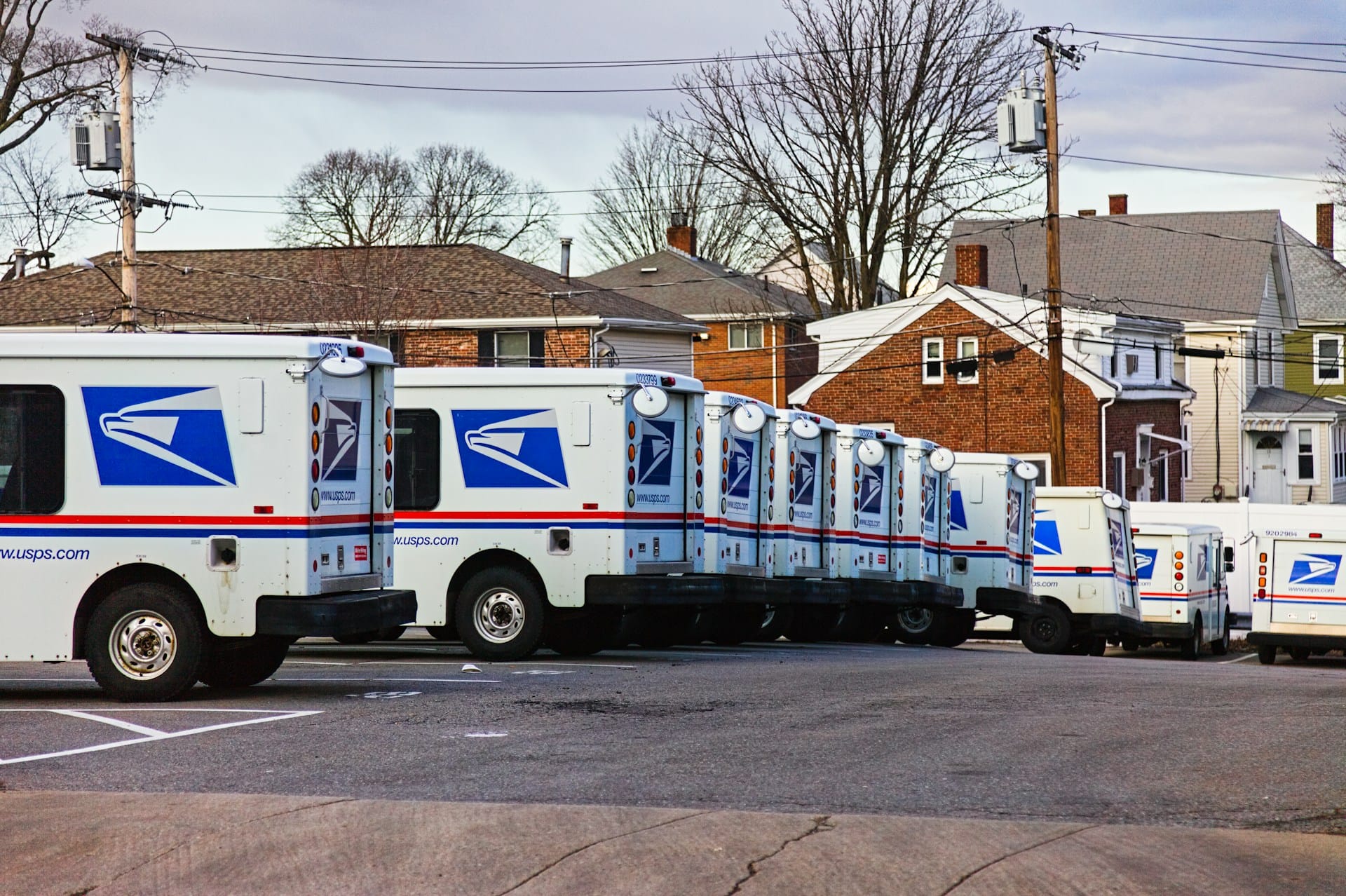
    The United States Postal Service is running a pilot program to put cameras in its mail carrier trucks that continuously scan roads and signs, map roadways and sidewalks, and improve “community safety,” according to a letter posted by a labor union and a statement from the agency to 404 Media. The idea is that, since the trucks are constantly traveling anyway, they can be used as a way to collect data, eventually potentially across the nation.“The purpose of this pilot is to leverage the Posta
     

USPS To Put Cameras in Trucks That Scan Roads for ‘Community Safety’

30 septembre 2026 à 12:15
USPS To Put Cameras in Trucks That Scan Roads for ‘Community Safety’

The United States Postal Service is running a pilot program to put cameras in its mail carrier trucks that continuously scan roads and signs, map roadways and sidewalks, and improve “community safety,” according to a letter posted by a labor union and a statement from the agency to 404 Media. The idea is that, since the trucks are constantly traveling anyway, they can be used as a way to collect data, eventually potentially across the nation.

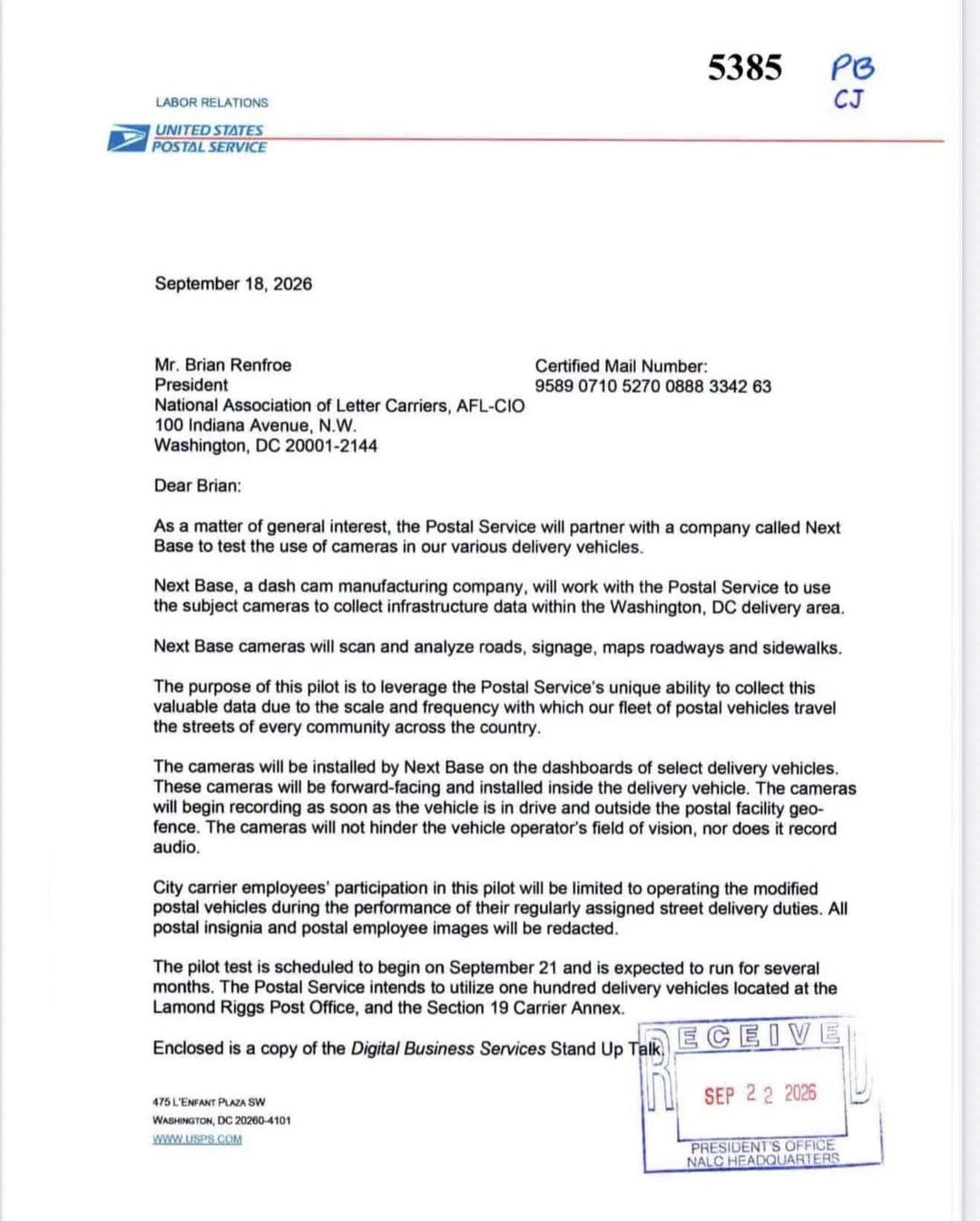
“The purpose of this pilot is to leverage the Postal Service’s unique ability to collect this valuable data due to the scale and frequency with which our fleet of postal vehicles travel the streets of every community across the country,” the letter, posted by NALC Branch 238 to Facebook, reads.

The letter, written by the United States Postal Service (USPS) Labor Relations to Brian Renfroe, the president of the National Association of Letter Carriers, says the USPS will partner with Next Base, a dashcam company, for the pilot. At the moment, the cameras will be used in the Washington, DC area, and will be installed on a hundred vehicles, the letter says.

On its website, Next Base offers a variety of dash cams, marketed to ordinary drivers, fleet operators, and ride share drivers. Its website says Next Base’s cameras record in up to 4K, and can capture every “license plate” with precision. The cameras don’t run automatic license plate reader (ALPR) software, though.

USPS To Put Cameras in Trucks That Scan Roads for ‘Community Safety’
A company of the letter from NALC Branch 238.

The letter continues, “Next Base cameras will scan and analyze roads, signage, maps roadways [sic] and sidewalks.” It says the cameras will be forward-facing, installed inside the trucks, and will begin recording as soon as the vehicle is in drive and away from the postal facility. “The cameras will not hinder the vehicle operator’s field of vision, nor does it record audio,” it adds.

The pilot was slated to start on September 21, and is expected to last several months, the letter says.

A spokesperson for the USPS told 404 Media in an email “The Postal Service is conducting a limited pilot to assess whether vehicle-mounted cameras can help identify roadway conditions and support community safety. The pilot includes privacy safeguards and requires no additional action from employees. Findings will inform any future decisions.”

USPS trucks already have 360 degree cameras that capture the outside of the vehicle for a period of time.

❌