Mass protests over decrepit schools and absent teachers are in their third week, with more planned. Officials have failed so far to quell a movement drawing many adult supporters.
Mass protests over decrepit schools and absent teachers are in their third week, with more planned. Officials have failed so far to quell a movement drawing many adult supporters.
The grand jury report, which was never released publicly but was leaked to a Miami news station, wrongfully “impugned” private individuals, an appeals panel found.
The grand jury report, which was never released publicly but was leaked to a Miami news station, wrongfully “impugned” private individuals, an appeals panel found.
Casey DeSantis, Florida’s first lady, started the Hope Florida charity in 2021. A grand jury report found that Gov. Ron DeSantis’s administration had “misappropriated” $10 million in taxpayer money by diverting it to the charity.
Chaos in schools, on the streets and in the markets is rooted in France’s struggles to fund its social welfare state, with a presidential election approaching.
Chaos in schools, on the streets and in the markets is rooted in France’s struggles to fund its social welfare state, with a presidential election approaching.
Chaos in schools, on the streets and in the markets is rooted in France’s struggles to fund its social welfare state, with a presidential election approaching.
Chaos in schools, on the streets and in the markets is rooted in France’s struggles to fund its social welfare state, with a presidential election approaching.
Hundreds of schools will suspend some or all classes on Monday, the education minister said, as students protest conditions in the education system. Thousands of protesters have been arrested and hundreds of people injured.
Hundreds of schools will suspend some or all classes on Monday, the education minister said, as students protest conditions in the education system. Thousands of protesters have been arrested and hundreds of people injured.
The French government soured on a reciprocal deal that allowed the British authorities to return some migrants who crossed the English Channel illegally in small boats.
The French government soured on a reciprocal deal that allowed the British authorities to return some migrants who crossed the English Channel illegally in small boats.
Gali Baharav-Miara, Israel’s attorney general, at a cabinet meeting in Jerusalem. As the country heads into elections next month, she is bracing for what could be her biggest battle yet.
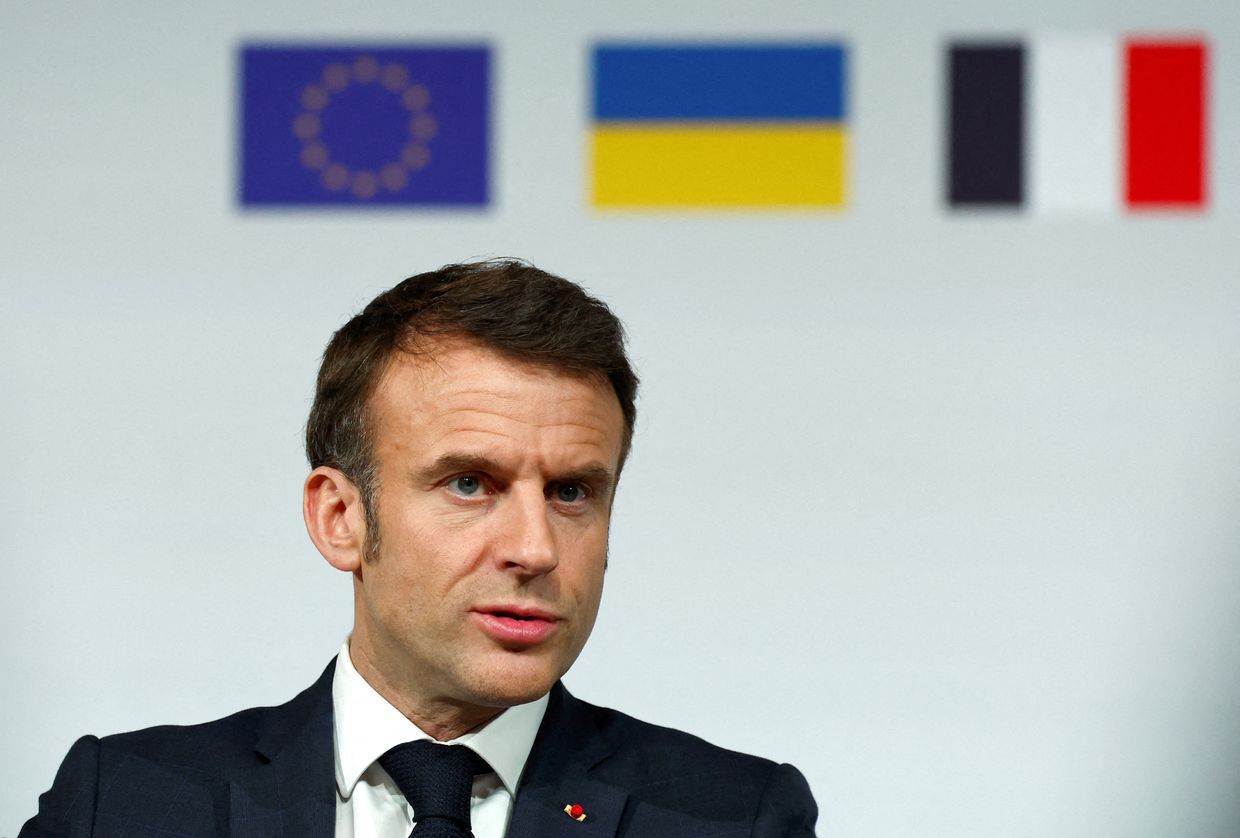
French President Emmanuel Macron said French services received no CIA warning about a possible Russian drone attack from Mediterranean merchant ships, pushing back on an El Mundo report that US intelligence had alerted France, Italy, and Spain, RTL reported.
Macron’s denial comes amid drone attacks and sabotage cases that European governments have linked to Russia. France is preparing stronger defenses against that wider threat, even as Macron says its services received no specific CIA
French President Emmanuel Macron said French services received no CIA warning about a possible Russian drone attack from Mediterranean merchant ships, pushing back on an El Mundo report that US intelligence had alerted France, Italy, and Spain, RTL reported.
Macron’s denial comes amid drone attacks and sabotage cases that European governments have linked to Russia. France is preparing stronger defenses against that wider threat, even as Macron says its services received no specific CIA warning. Italy’s defense minister has also cautioned against fueling alarm over an unconfirmed report.
Asked about the report during a televised interview on 24 September, Macron said: “The CIA did not inform French services of such an attack.” He said Russia was multiplying hostile and sometimes criminal acts against European countries. Covert acts such as sabotage and cyberattacks are often described as hybrid warfare. Asked whether France itself could be attacked, Macron answered yes.
Italian Defense Minister Guido Crosetto separately wrote on X that El Mundo’s alert “finds no confirmation.” He said it served no one to add “more fuel to the fire” at an already tense time.
The Spanish newspaper reported that the possible operation would use Gerbera drones, small Russian aircraft capable of carrying several kilograms of explosives. The drones would be hidden in shipping containers aboard merchant ships and launched toward targets along Europe’s southern coast. El Mundo cited a source close to Lithuania’s Defense Ministry, and analysts familiar with a CIA report said to have circulated among European foreign ministries. Euromaidan Press covered the account on 24 September. Bythe time of publication, neither Spain’s government nor the CIA had publicly addressed it.
Macron pointed to the failed attack at Leipzig/Halle Airport in eastern Germany in August. A drone carrying explosives was found near a Ukrainian cargo aircraft. German officials attributed the attempt to Russia. Macron said France had not experienced a comparable incident.
The wider hybrid warfare threat
Beyond the disputed Mediterranean alert, authorities have investigated other incidents throughout Europe as possible Russian sabotage.
Germany followed its accusation over Leipzig with diplomatic measures against Moscow. Berlin ordered Russia’s last consulate in Germany closed and ended an agreement permitting a Russian cultural center. German investigators also identified two suspects, including a Russian man they linked to military intelligence. Moscow denied involvement.
Poland’s justice and interior ministers said Russian intelligence ordered the May 2024 arson of Warsaw’s Marywilska 44 shopping center.
Finnish President Alexander Stubb said Russia would continue such attacks to frighten Ukraine’s allies into reducing support. He urged vigilance without overreacting, saying Finnish intelligence saw no imminent military threat.
Editor's note: The story was updated as the President's Office confirmed that following the call with Vladimir Putin, Emmanuel Macron also called Volodymyr Zelensky.French President Emmanuel Macron and his Russian counterpart Vladimir Putin held a call on July 1 for the first time since 2022, discussing Russia's war against Ukraine and the conflict in the Middle East, the Kremlin's press service reported.The conversation between the two leaders took place as the Russian army continues to advance
Editor's note: The story was updated as the President's Office confirmed that following the call with Vladimir Putin, Emmanuel Macron also called Volodymyr Zelensky.
French President Emmanuel Macron and his Russian counterpart Vladimir Putin held a call on July 1 for the first time since 2022, discussing Russia's war against Ukraine and the conflict in the Middle East, the Kremlin's press service reported.
The conversation between the two leaders took place as the Russian army continues to advance along the front line, trying to gain a foothold in Sumy Oblast and enter Dnipropetrovsk Oblast.
Moscow has repeatedly rejected the U.S.-backed ceasefire proposal, stalling peace talks with Ukraine.
Following the call with Putin, Macron also called Zelensky to discuss his conversation with the Russian president, a source in the President's Office told the Kyiv Independent.
The call between Zelensky and Macron was "constructive," the source added. Putin's position remained unchanged: he does not show any willingness to end the war in Ukraine, according to the source.
The call between Putin and Macron lasted over two hours, BFM TV reported, citing the Elysee Palace.
During the conversation with Macron, Putin called Russian war "a direct consequence of the policy of Western powers" that "ignored Russia's security interests, created an anti-Russian bridgehead in Ukraine," the Kremlin said.
Macron, in turn, noted France's unwavering support for Ukraine's sovereignty and territorial integrity, Suspilne reported, citing the Elysee Palace.
The French president also called for "a ceasefire to be established as soon as possible and for negotiations to begin."
The leaders will continue to discuss Russia's war in Ukraine, according to the Elysee Palace.
The presidents also discussed the situation in the Middle East regarding the Iranian-Israeli conflict and the U.S. strikes on Iranian nuclear facilities.
Macron frequently called Putin in the first year of Russia's full-scale invasion of Ukraine. Their previous call took place in September 2022.
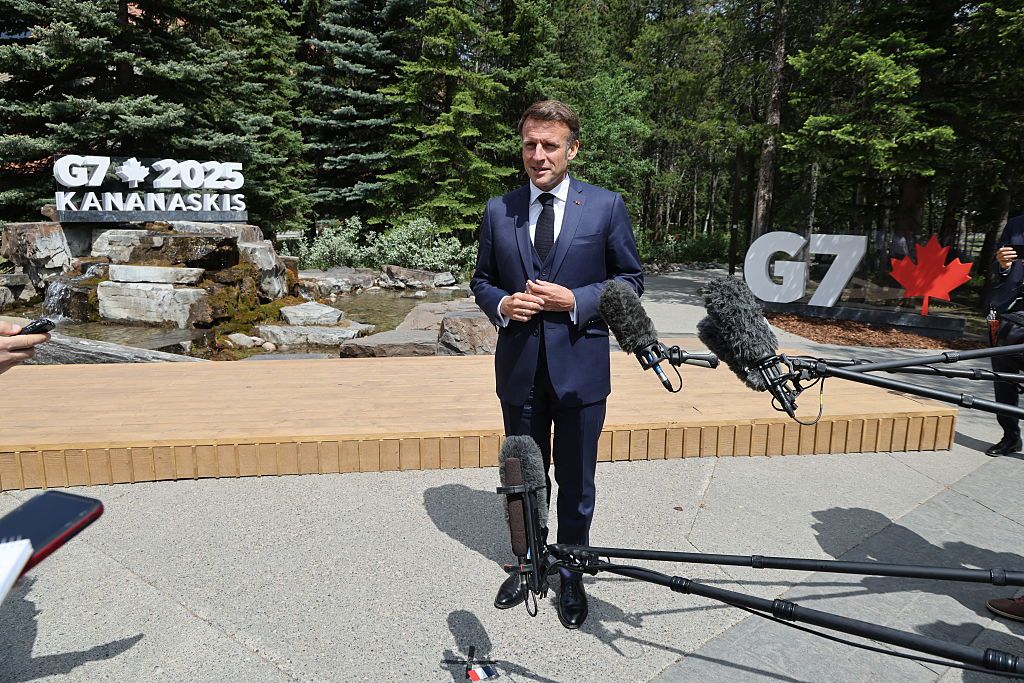
The European Union and its allies are ready to toughen sanctions on Russia, French President Emmanuel Macron said on the sidelines of the Group of Seven (G7) summit on June 17."With President (Volodymyr) Zelensky at the G7. We stand in solidarity with the Ukrainian people after last night’s massive Russian strikes," Macron said in a post to social media."We are determined to increase pressure on Russia to accept the immediate and unconditional ceasefire that Ukraine is ready for," he added.Macro
The European Union and its allies are ready to toughen sanctions on Russia, French President Emmanuel Macron said on the sidelines of the Group of Seven (G7) summit on June 17.
"With President (Volodymyr) Zelensky at the G7. We stand in solidarity with the Ukrainian people after last night’s massive Russian strikes," Macron said in a post to social media.
"We are determined to increase pressure on Russia to accept the immediate and unconditional ceasefire that Ukraine is ready for," he added.
Macron attended the G7 summit in Kananaskis, Canada, from June 15-17. Global leaders discussed a wide range of topics, including Russia's war against Ukraine.
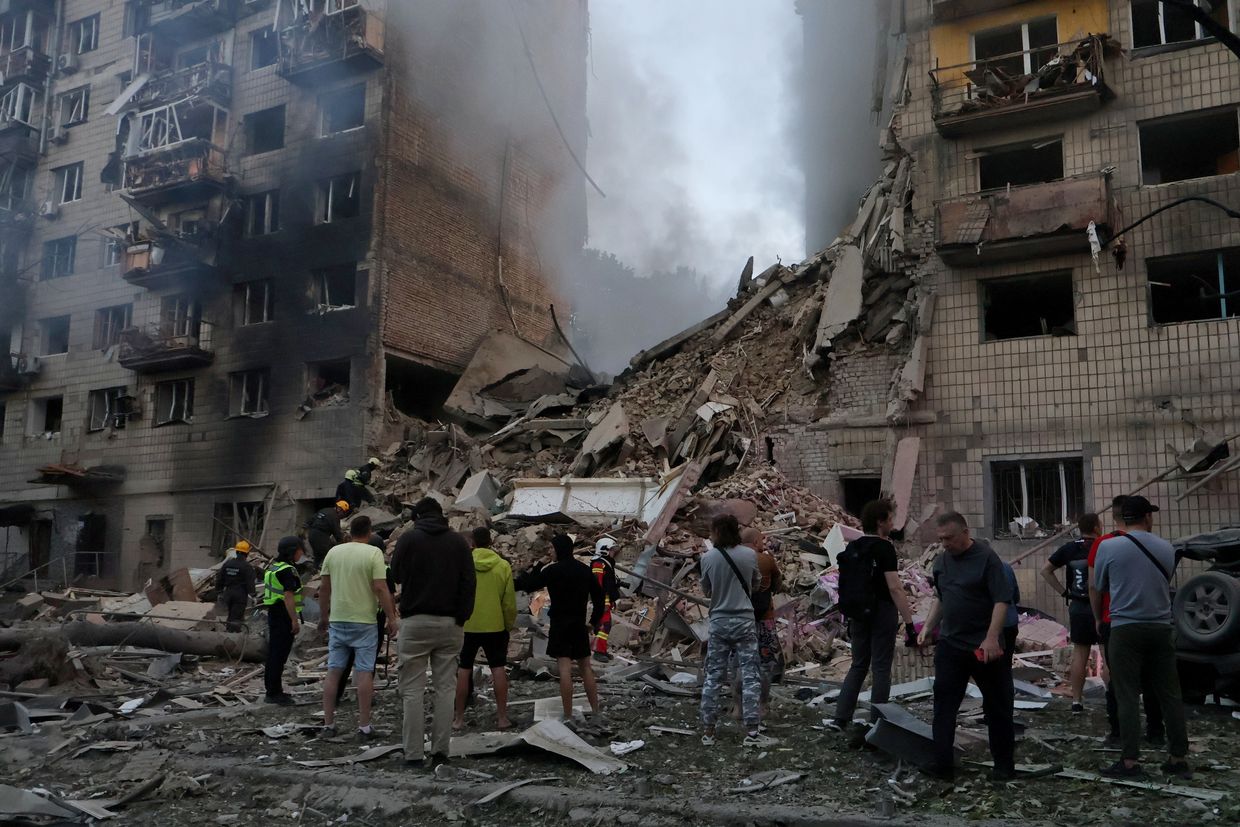
As the G7 leaders met in Canada, Russia launched one of its worst drone and missile attacks on Kyiv since it began its full-scale war against Ukraine in February 2022, killing 16 people and injuring at least 134.
"The common position that is emerging is to say, 'We need to strengthen sanctions,'" CBC News reported, citing Macron.
Europe is proposing much tougher sanctions than the U.S. has imposed on Russia, Macron said, adding that the EU is in "very close co-ordination" with Canada, Japan, and the U.K.
Several countries, including Canada and the U.K., introduced additional sanctions on Russia as the G7 summit was ongoing.
Canada introduced a new military aid package for Ukraine in addition to its sanctions against Russia.
"In our view, this has changed the situation because it will allow us to bring Russia back to the negotiating table, as (U.S.) President (Donald) Trump has been demanding," Macron said, according to CBC News.
Zelensky attended the summit and met with various leaders, including Macron and Canadian Prime Minister Mark Carney.
Zelensky left the summit early, citing Russia's attack on Kyiv. The nearly nine-hour-long attack saw Moscow's forces launch large numbers of drones and missiles at Ukraine's capital.
Foreign Minister Andrii Sybiha condemned the attack, calling it a "massive and brutal strike" timed deliberately to coincide with the G7 summit.
Zelensky described the drone and missile assault as "one of the most horrifying attacks on Kyiv."

 Connexion