President Trump made the offer to Xi Jinping, China’s leader, said David Perdue, the ambassador to China. The White House later said the U.S. had no plans for such a sale.
President Trump made the offer to Xi Jinping, China’s leader, said David Perdue, the ambassador to China. The White House later said the U.S. had no plans for such a sale.
Ukraine's arms industry wants the government to scrap a steep fee on weapons exports, warning it undercuts their prices just as Europe's defense market opens, RBC-Ukraine reported. The same fee has opened a second fight in Kyiv, where parliament this week declined to turn its revenue into money for the army.
Russia's war on Ukraine has pushed Europe into rearming, and Ukraine's battle-tested arms makers are among the few that can deliver at scale right now—an opening that domestic red t
Ukraine's arms industry wants the government to scrap a steep fee on weapons exports, warning it undercuts their prices just as Europe's defense market opens, RBC-Ukraine reported. The same fee has opened a second fight in Kyiv, where parliament this week declined to turn its revenue into money for the army.
Russia's war on Ukraine has pushed Europe into rearming, and Ukraine's battle-tested arms makers are among the few that can deliver at scale right now—an opening that domestic red tape could blunt, handing the advantage to competitors just as the market grows.
A €60 billion European window—and a fee in the way
The push comes as Europe opens a major market for Ukrainian weapons. The EU's €90 billion Ukraine Support Loan for 2026-2027 reserves €60 billion for defense purchases, and partners increasingly want weapons built on their own soil. International partners report more than 200 cooperation approaches to Ukrainian firms still without a decision, according to the industry's press release. Producers link the fee fix to Build with Ukraine, a co-production push they consider strategically significant.
Explore further
Ukraine’s Build with Ukraine has 200-plus foreign cooperation bids pending decision. Its arms industry, representing 400-plus firms, wants to help fix mechanism
Parliament won't route the money to the army
On 15 September, the Verkhovna Rada—Ukraine's parliament—rejected a bill in first reading that would have sent fee revenue collected from 1 August 2026 into a special budget fund for the Defense Ministry, half for buying, modernizing, and repairing weapons, half for soldiers' pay. The vote left the fee itself untouched, since it rests on the Cabinet resolution, and settled only that its revenue will not be earmarked for the army.
The fee producers want gone
The Ukrainian Council of Arms Manufacturers, joined by other defense and employer groups, prepared proposals to rework the July government resolution, No. 875. They want the fee—20% on finished goods and technologies, 30% on parts—cut to zero, or capped at 5%. Firms must also pay upfront, before any foreign payment lands, with no refund guaranteed if a deal collapses. A UAH 15 million (about $337,000) threshold shuts out the small test shipments new clients often begin with.
Explore further
Ukraine put an Italian-Swiss Skyguard into combat duty. The missile inside is a Cold War design derived from the American Sparrow
The fee has drawn complaints since the resolution took effect in early July. Ihor Fedirko, the council's executive director, earlier said the 30-day review window was welcome but warned it could clog into a bureaucratic queue as staff leave the agencies running it. One of the associations behind the submission calls the 30% rate on parts prohibitive, since Europe is where Ukrainian firms would undercut Chinese suppliers on price.
Ukraine has swung from banning weapons sales abroad to courting foreign buyers, and its defense sector now ranks among the country's fastest-growing industries. Wartime certification to NATO standards is turning that output into something European militaries can actually buy.
The European Union has reached a long-term trade agreement with Ukraine, marking the end of wartime trade liberalisation measures, though key details of the deal remain undisclosed.EU Trade Commissioner Maros Sefcovic and Agriculture Commissioner Christophe Hansen announced the agreement on June 30, calling it a "predictable" and "reciprocal" framework. However, they did not reveal the final quotas or volumes included in the deal. Sefcovic noted that the finer points would be finalised "in the c
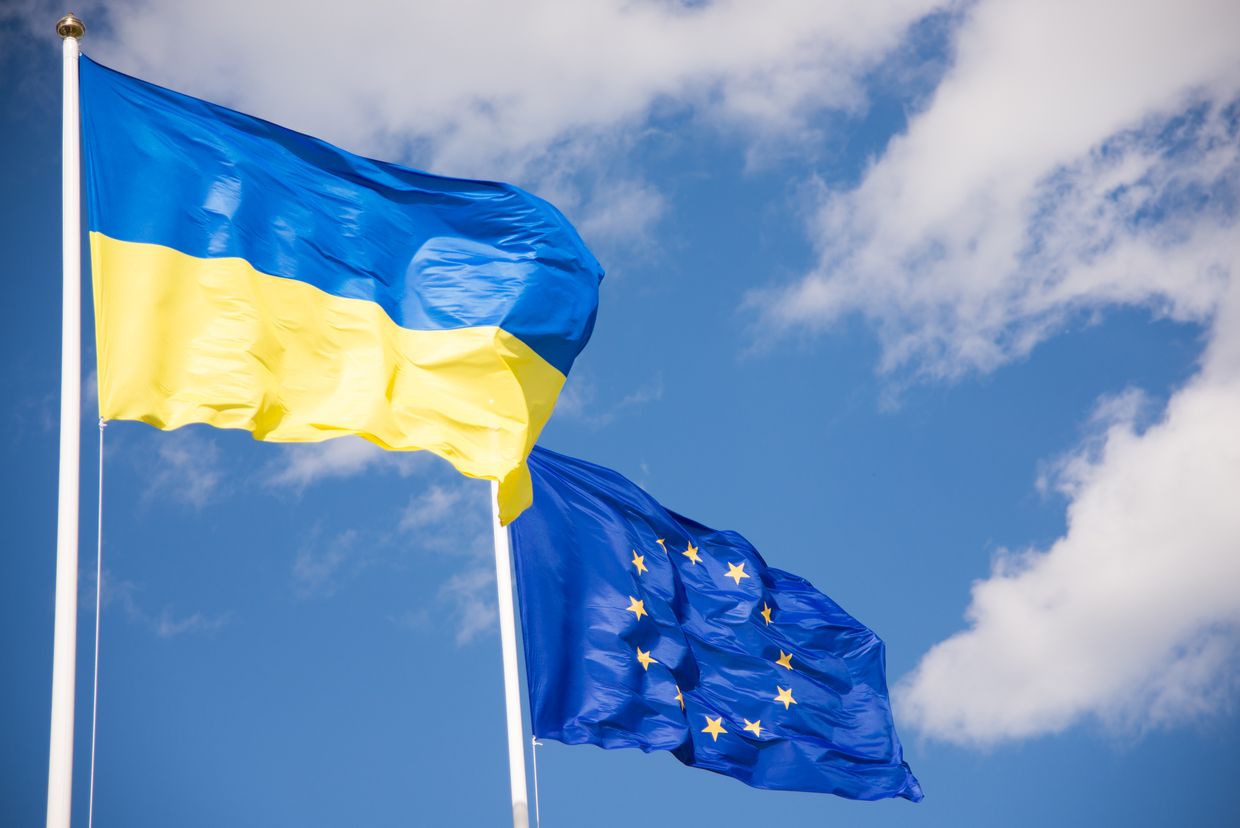
The European Union has reached a long-term trade agreement with Ukraine, marking the end of wartime trade liberalisation measures, though key details of the deal remain undisclosed.
EU Trade Commissioner Maros Sefcovic and Agriculture Commissioner Christophe Hansen announced the agreement on June 30, calling it a "predictable" and "reciprocal" framework. However, they did not reveal the final quotas or volumes included in the deal. Sefcovic noted that the finer points would be finalised "in the coming days."
The new deal replaces the autonomous trade measures (ATMs) that allowed Ukrainian agri-food exports to enter the EU tariff-free since 2022. Those temporary measures expired on June 5, reinstating pre-war trade conditions for a brief period.
Structured in three tiers, the new framework introduces modest increases in quotas for products considered sensitive by EU member states, such as eggs, poultry, sugar, wheat, maize, and honey. A second group of products—including butter, skimmed milk powder, oats, barley, malt, and gluten—will see their quotas adjusted to reflect peak import levels reached since the start of the war. A third category, which includes items such as whole milk powder, fermented milk, mushrooms, and grape juice, will be fully liberalised.
Once finalised, the text of the agreement will be submitted to the Council for ratification.
Sefcovic said negotiations concluded over the weekend, less than a month after formal talks began. However, some critics claim the EU delayed the process to avoid backlash from farmers ahead of Poland’s presidential election.
The agreement also benefits EU producers, granting them greater access to the Ukrainian market for goods like pork, poultry, and sugar. But Hansen made it clear that expanded access for Ukrainian exports will depend on Ukraine’s compliance with EU agricultural standards by 2028, including rules on animal welfare and pesticide use. "This commitment also fits perfectly with Ukraine's EU accession path," he said.
The deal includes safeguard provisions, allowing the EU or individual member states to restrict imports if domestic markets face serious disruptions. “Both EU and Ukrainian producers deserve a stable and predictable basis for the future development of bilateral trade,” Hansen added.

 Connexion