❌

Vue normale

New Vivaldi tactic: Ukraine’s ground robots, each carrying two Bullspike grenade launchers, attack Russian positions and then detonate inside their shelters
27 septembre 2026 à 10:43

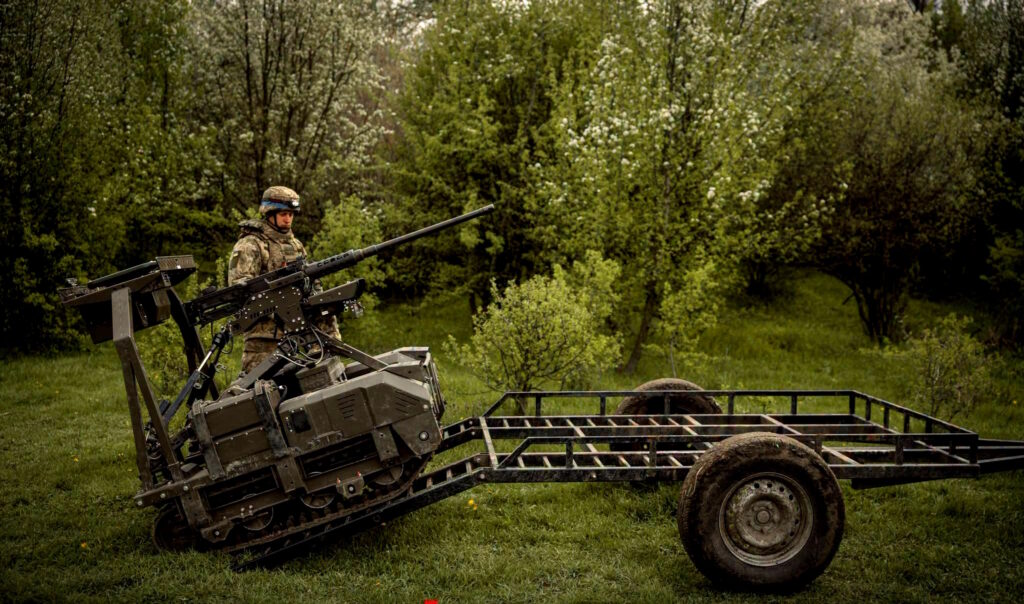
The image shows a Ukrainian soldier standing next to an unmanned ground robotic vehicle. Source: The General Staff

Ukraine has employed a new tactic during its major Operation Vivaldi in Donetsk Oblast. During the 3rd Army Corps' offensive, fighters from the world's first experimental unit of unmanned ground-strike vehicles, "NC13", have upgraded their kamikaze ground drones with grenade launchers.

Vivaldi is the counteroffensive the corps is running near Lyman in northern Donetsk Oblast. Over its first two "seasons," the 3rd Army Corps and attached units have retaken more than 125 square kilometers, half of it de-occupied outright, and inflicted more than 3,000 casualties on Russian forces.

Through this offensive operation, the 3rd Army Corps, commanded by Brigadier General Andrii Biletsky, disrupted Russian forces' plans to encircle the fortress-belt cities in Donetsk Oblast from the north and south. Among them are Sloviansk, Kramatorsk, Druzhkivka, and Kostiantynivka. These cities have helped hold back Russian forces since 2014.

From intensive training to the world-first operations

The NC13 unit has been through Bakhmut, Avdiivka, and other of the toughest sections of the front.

Among its achievements: the world's first robotic assault carried out without infantry involvement, resulting in the capture of two Russian soldiers, a sabotage operation in the enemy's rear — blowing up a crossing and disrupting an offensive — using UGVs alone, and Ukraine's first fully robotic defense of a position for 45 days without involving infantry.

"No one in the history of warfare has used this kind of tactic before," the soldiers commented on the offensive.

The defenders say that a lack of combat experience is no barrier to joining the unit. Every recruit goes through an intensive training course led by experienced instructors.

Grenade launchers were developed based on the Soviet RPG-22

During the operation, UGVs equipped with two Bullspike grenade launchers attacked Russian positions, then detonated directly inside their shelters. The occupiers believed they were being attacked by an entire assault group. In reality, they were being torn apart by robots from the 3rd Assault Corps.

Ukrainian troops armed ground robots with grenade launchers and sent them to storm Russian positions during Operation Vivaldi near Lyman

The robots fired into Russian shelters at close range, then detonated inside them
🎥 3rd Army Corps, NC13 Unit pic.twitter.com/rjekIYxPbA

— Euromaidan Press (@EuromaidanPress) September 27, 2026

"Yes, the UGVs carry out three tasks at once: they strike, they exert psychological pressure, and they clear the position. And most importantly, this happens without risk to our infantry," the force says.

The Bullspike grenade launchers were developed based on the Soviet RPG-22 anti-tank grenade launcher, which was previously manufactured under license by a Bulgarian defense company.

According to data from the manufacturer's website, the Bullspike RPG has a maximum aimed firing range of 350 meters, a direct-fire range of 150 meters, and armor penetration of 400 mm, Militarnyi reports.

The total weight of the launch unit, together with the 72.5 mm PG-22 grenade, is 3.4 kg. The length of the launcher is 780 mm.

The manufacturer states that the Bullspike-AT round is designed to destroy tanks, self-propelled artillery, and other armored vehicles, as well as to target enemy personnel located in bunkers, field fortifications, and urban-type brick fortifications.

The robots were controlled by operators from a safe shelter dozens of kilometers from the line of contact.

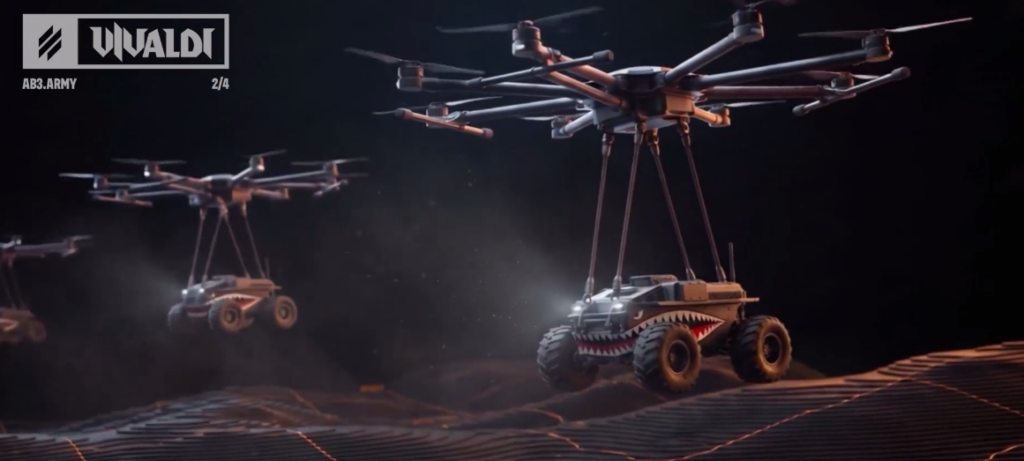
Earlier, for the first time in the world's history, the 3rd Army Corps dropped ground robots behind Russian lines from the air. The soldiers behind the mission say their heavy drones delivered kamikaze unmanned ground vehicles more than 10 kilometers into the Russian rear during the "second season" of Operation Vivaldi, letting Ukrainian troops flank them and clear another 40 square kilometers.
Ukraine is saving Donetsk Oblast with world’s first-of-its-kind operation: Vivaldi counteroffensive drops robots directly from heavy bombers 10 kilometers behind Russian lines

21 septembre 2026 à 10:11

For the first time, Ukraine has dropped ground robots behind Russian lines from the air amid the Operation Vivaldi, protecting Ukraine's fortress cities in Donetsk Oblast. Source: The scheme by the 3rd Army Corps

For the first time, Ukraine has dropped ground robots behind Russian lines from the air. The 3rd Army Corps, behind the mission, says its heavy drones delivered kamikaze unmanned ground vehicles more than 10 kilometers into the Russian rear during the "second season" of Operation Vivaldi, letting Ukrainian troops flank them and clear another 40 square kilometers.

Vivaldi is the counteroffensive the corps is running near Lyman in northern Donetsk. Over its first two "seasons," the 3rd Army Corps and attached units have retaken more than 125 square kilometers, half of it de-occupied outright, and inflicted more than 3,000 casualties on Russian forces.

The operation, run under an information blackout for months, has also disrupted Russia's push and, the Institute for the Study of War found, its plan to encircle the fortified belt of Donetsk cities.

Brigadier General Andrii Biletskyi, corps commander, has said the operation, which he named after Vivaldi's Four Seasons, will run through four phases, and only two have been completed. The air-dropped robot is the newest report on how the corps fights.

Machines go first, infantry follows

The corps casts the tactic as a means of expending robots rather than people.

"In assault operations, drones and ground robots always go ahead of the infantry," Biletskyi says.

The 3rd Army Corps was the first in the world to begin air-dropping ground robotic systems. Our heavy bombers deliver kamikaze robots more than 10 kilometers into the Russian rear.

Wars are won by infantry, one of the corps' soldiers added, "but we protect ours, so the robots go to the enemy first."

A dome hides the assault

As the assault groups advanced amid the operation, Ukrainian air defense and electronic warfare threw a protective dome over the battle area, blinding Russian drones so they could not read the operation's design.

Meanwhile, artillery and strike drones hit command posts, communications nodes, logistics, crossings, and reserves, letting Ukrainian units dig in on the ground they had taken.

On the Lyman axis, the corps says it freed the villages of Shandryholove and Derylove and took control of Drobysheve, and that Vivaldi has kept Russia from shifting significant forces to the Kupiansk front.

Ukraine’s Vivaldi operation cleared 85 square kilometers near Lyman. A soldier who fought it says one thing was hardest of all

19 septembre 2026 à 11:22

The image shows a Ukrainian soldier standing next to an unmanned ground robotic vehicle. Source: The General Staff

A soldier of Artan, a special unit of Ukraine's Defense Intelligence, known by the callsign Derun, described the fighting during important Ukraine's Operation Vivaldi, according to Novyny.Live. He says the hardest part of Ukraine's counteroffensive in the northern part of Donetsk Oblast is prying Russian troops out of positions they have fortified so well that they see every approach coming.

Vivaldi is bigger than any one assault. It is the counteroffensive that the Third Army Corps is running near Lyman. The Institute for the Study of War says it has disrupted Russia's plan to encircle the fortified "Fortress Belt" of Donetsk cities, as the corps says its first phase cleared 75 square kilometers of Russian infiltrators and de-occupied another 10.

Dug-in Russians see every approach

The problem is Russia's preparation, when "the enemy has made his positions very well fortified," Derun said.

"The hardest is to knock him out of there, because when a position is competently prepared, they see everything," he explained.

A well-sited position lets the defenders watch the open ground an assault group has to cross, spot the attackers early, and fight them at a distance, which is the worst way for the attacker to come.

A lapse opens the way in

When Russian troops stop watching the approaches to their position, the assault group can close the gap unseen, Derun said.

"When Russian troops are distracted, it can play into our hands: we can approach under cover, when he does not see us, and work him from close range," he added.

Once the attackers are in close, he added, the defenders can start to panic and make mistakes.

Vivaldi runs to four seasons

Artan fought as part of a larger force. Alongside the Third Army Corps' own brigades, the operation drew in Ukraine's Special Operations Forces, the border guard, and the military-intelligence unit, all under a single tactical command, and it ran for months under an information blackout before the corps disclosed it.

The corps commander, Andrii Biletskyi, said the phase revealed so far is only the first of four, naming the operation for Vivaldi's Four Seasons.

"This is only the first," he said, promising more.

  • ✇Euromaidan Press
  • Russia was sure the terrain made this village impossible to take—Ukraine walked in anyway
    Ukrainian troops pushed into a front-line village Russian forces were sure they could never reach, an officer from the assault force told Army TV. He described a methodical, house-by-house clearing—then a Russian response that, once the village fell, called the footage an AI fake. Through 2026 Russia has pressed on this stretch of the eastern front, creeping toward the fortress belt, the chain of fortified cities anchoring Donetsk Oblast. Retaking Serednie is one move in a quiet Ukraini
     

Russia was sure the terrain made this village impossible to take—Ukraine walked in anyway

18 septembre 2026 à 08:40

Soldiers of Ukraine’s 425th Separate Assault Regiment Skelia. Photo: Skelia

Ukrainian troops pushed into a front-line village Russian forces were sure they could never reach, an officer from the assault force told Army TV. He described a methodical, house-by-house clearing—then a Russian response that, once the village fell, called the footage an AI fake.

Through 2026 Russia has pressed on this stretch of the eastern front, creeping toward the fortress belt, the chain of fortified cities anchoring Donetsk Oblast. Retaking Serednie is one move in a quiet Ukrainian counteroffensive that has clawed back ground on this axis—which is why this village changing hands lands harder than the map suggests.

The terrain Russia trusted

Serednie sits on the Lyman direction in eastern Ukraine, an axis where Russian forces have been pressing toward Ukrainian-held Sloviansk and Kramatorsk. Troops from Ukraine's 66th Separate Mechanized Brigade entered the village during Operation Vivaldi, said the deputy commander of its first mechanized battalion, Kassta, callsign Timokha.

Ukraine's Third Army Corps commander Brigadier General Andrii Biletskyi announcing "Operation Vivaldi," 15 September 2026. Screenshot from video: Ukraine's Third Army Corps
Explore further

Ukraine’s Vivaldi counteroffensive disrupts Russia’s plan to encircle Donetsk Fortress Belt – ISW

Sitting on their own gains there, the Russians assumed no counterattack could follow and were certain the terrain itself ruled out any move into the village.

"The enemy, having success in this direction, did not expect that any counterattack or offensive could come in response," Timokha said.

Preparing for the operation took more than a day or two, he added, because the village was full of basements and buildings that each had to be checked. Reconnaissance came first, then fire from drones, heavy bomber drones, and artillery to grind down a garrison he put at at least a platoon, before assault groups moved in with friendly units alongside.

Operation Vivaldi as a whole, run under an information blackout, has cleared 75 km² of enemy infiltration pockets and de-occupied another 10.

Then the Russians called it AI

Small Russian attempts to retake the village broke apart on the approaches, Timokha said. The louder reaction came online: Russians claimed the Ukrainian liberation videos were made with artificial intelligence.

He likened it to Sviatohirsk, where Vladimir Putin announced the town's capture before the commander of Ukraine's Third Army Corps, Brigadier General Andrii Biletskyi, publicly denied it, Timokha said.

❌