Des coups de feu ont été tirés vers une résidence de Terrebonne, jeudi soir. L’évènement n’a fait aucun blessé, précise le service de police de la ville.
Des coups de feu ont été tirés vers une résidence de Terrebonne, jeudi soir. L’évènement n’a fait aucun blessé, précise le service de police de la ville.
Aurélie Turcotte, une adolescente âgée de 15 ans, manque à l’appel. Le Service de police de la Ville de Montréal (SPVM) est à sa recherche, et sa famille et ses proches s’inquiètent pour sa sécurité.
Aurélie Turcotte, une adolescente âgée de 15 ans, manque à l’appel. Le Service de police de la Ville de Montréal (SPVM) est à sa recherche, et sa famille et ses proches s’inquiètent pour sa sécurité.
U.S. intelligence agencies have warned in internal reports that China could acquire or steal U.S. warplane technology if F-35 jets are sent to Saudi Arabia.
U.S. intelligence agencies have warned in internal reports that China could acquire or steal U.S. warplane technology if F-35 jets are sent to Saudi Arabia.
If the production and delivery of the planes is completed, which would take years, Saudi Arabia would be only the second country in the Middle East to have F-35 jets, after Israel.
U.S. intelligence agencies have warned in internal reports that China could acquire or steal U.S. warplane technology if F-35 jets are sent to Saudi Arabia.
U.S. intelligence agencies have warned in internal reports that China could acquire or steal U.S. warplane technology if F-35 jets are sent to Saudi Arabia.
If the production and delivery of the planes is completed, which would take years, Saudi Arabia would be only the second country in the Middle East to have F-35 jets, after Israel.
The officer, a Customs and Border Protection agent at a Chicago airport, was accused of assaulting and threatening four women, all of Chinese descent, at hotel rooms in 2022.
The officer, a Customs and Border Protection agent at a Chicago airport, was accused of assaulting and threatening four women, all of Chinese descent, at hotel rooms in 2022.
La levée partielle de la censure numérique a commencé jeudi au Venezuela, alors que pouvoir et opposition ont entamé un deuxième cycle de négociations. Au moins 188 sites, dont 79 médias, restent toutefois bloqués selon une ONG de défense des droits numériques, et un ancien maire d'opposition a été arrêté.
La levée partielle de la censure numérique a commencé jeudi au Venezuela, alors que pouvoir et opposition ont entamé un deuxième cycle de négociations. Au moins 188 sites, dont 79 médias, restent toutefois bloqués selon une ONG de défense des droits numériques, et un ancien maire d'opposition a été arrêté.
La défense anti-aérienne russe a détecté 350 drones ukrainiens volant vers Moscou dans la nuit vendredi, premier jour des élections législatives et locales en Russie, a indiqué le maire de la ville, Sergueï Sobianine. La plupart des engins ont été détruits sur le trajet, dont 64 alors qu'ils étaient à l'approche de la capitale. Suivez notre direct.
La défense anti-aérienne russe a détecté 350 drones ukrainiens volant vers Moscou dans la nuit vendredi, premier jour des élections législatives et locales en Russie, a indiqué le maire de la ville, Sergueï Sobianine. La plupart des engins ont été détruits sur le trajet, dont 64 alors qu'ils étaient à l'approche de la capitale. Suivez notre direct.
Multiple shooter-for-hire attacks in the Greater Toronto Area last year allegedly trace back to Toronto Police Constable Timothy Barnhardt, who investigators say repeatedly used police databases to leak information to suspected organized crime figures, according to warrant applications that led to the Project South takedown.
Multiple shooter-for-hire attacks in the Greater Toronto Area last year allegedly trace back to Toronto Police Constable Timothy Barnhardt, who investigators say repeatedly used police databases to leak information to suspected organized crime figures, according to warrant applications that led to the Project South takedown.
The United Nations’ top official acknowledges the world is deeply divided and the U.N.’s most powerful body is paralyzed when it comes to ending conflicts
The United Nations’ top official acknowledges the world is deeply divided and the U.N.’s most powerful body is paralyzed when it comes to ending conflicts
President Trump’s name was adhered to the Institute of Peace building in December in large, silver letters alongside engraved letters identifying the institute.
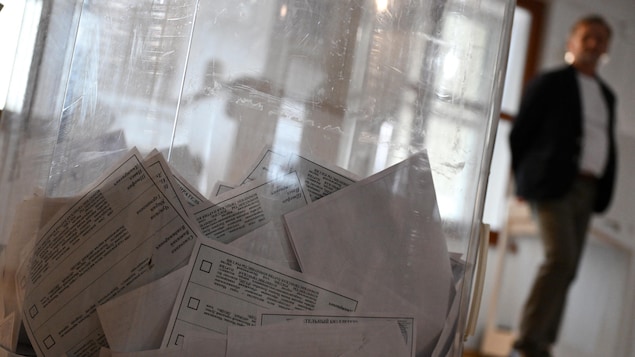
En Russie, à partir de vendredi, les électeurs sont appelés à renouveler la chambre basse du Parlement, la Douma. Il s'agit du premier scrutin de l'institution depuis le début de l'invasion russe à grande échelle de l'Ukraine. Pour autant, le seul parti opposé à la guerre, Iabloko, n'a pas été autorisé à présenter sa liste.
En Russie, à partir de vendredi, les électeurs sont appelés à renouveler la chambre basse du Parlement, la Douma. Il s'agit du premier scrutin de l'institution depuis le début de l'invasion russe à grande échelle de l'Ukraine. Pour autant, le seul parti opposé à la guerre, Iabloko, n'a pas été autorisé à présenter sa liste.
Le président américain Donald Trump a déclaré jeudi que des "progrès majeurs" avaient été "réalisés en vue de la mise en place d'une base de l'armée de terre américaine en Pologne", où environ 10 000 soldats américains sont actuellement stationnés. En Lituanie, le ministre des Affaires étrangères a déclaré qu'il s'attendait à des annonces imminentes de la part de Washington sur la présence américaine sur son sol.
Le président américain Donald Trump a déclaré jeudi que des "progrès majeurs" avaient été "réalisés en vue de la mise en place d'une base de l'armée de terre américaine en Pologne", où environ 10 000 soldats américains sont actuellement stationnés. En Lituanie, le ministre des Affaires étrangères a déclaré qu'il s'attendait à des annonces imminentes de la part de Washington sur la présence américaine sur son sol.
Prosecutors said the driver was impaired by drugs and ran a red light before ramming a city bus on Tuesday. Two people died. Compounding the tragedy, a news helicopter also crashed.
Prosecutors said the driver was impaired by drugs and ran a red light before ramming a city bus on Tuesday. Two people died. Compounding the tragedy, a news helicopter also crashed.
Bailee Lynn Rios, 36, accused of driving on wrong side of road to cause fatal crash NBC news helicopter was coveringA California woman was allegedly driving under the influence when she sped down the wrong side of the road, ran a red light and plowed her SUV into a Los Angeles metro bus on Tuesday, killing two passengers, prosecutors say, in a tragedy compounded when a news helicopter covering the crash plummeted from the sky, killing three.Bailee Lynn Rios, 36, has been charged with two counts
Bailee Lynn Rios, 36, accused of driving on wrong side of road to cause fatal crash NBC news helicopter was covering
A California woman was allegedly driving under the influence when she sped down the wrong side of the road, ran a red light and plowed her SUV into a Los Angeles metro bus on Tuesday, killing two passengers, prosecutors say, in a tragedy compounded when a news helicopter covering the crash plummeted from the sky, killing three.
Bailee Lynn Rios, 36, has been charged with two counts of murder over the deaths of the two people on the bus, identified as Daniel Castillo, 46, and Gage Weida, 31. Rios was being held on $4.1m bail and is set to be arraigned on 18 September. Online court records did not list a lawyer who might speak on her behalf, and the public defender’s office did not immediately return a message about whether it was representing her.
The department has pulled hundreds of agents from their regular duties to find noncitizens on the voter rolls, despite decades of evidence that widespread voter fraud is exceptionally rare in the United States.
The department has pulled hundreds of agents from their regular duties to find noncitizens on the voter rolls, despite decades of evidence that widespread voter fraud is exceptionally rare in the United States.
Jeffery Lee had raised concerns about use of nitrogen gas and the legacy of an abandoned practice that allowed judges to override juries on death sentences.
Jeffery Lee had raised concerns about use of nitrogen gas and the legacy of an abandoned practice that allowed judges to override juries on death sentences.
Le gouvernement de Terre-Neuve-et-Labrador a voté pour un accord de plusieurs milliards de dollars visant à partager l’énergie produite au Labrador avec Hydro-Québec, bien que ce vote ait été adopté à une très faible majorité.
Le gouvernement de Terre-Neuve-et-Labrador a voté pour un accord de plusieurs milliards de dollars visant à partager l’énergie produite au Labrador avec Hydro-Québec, bien que ce vote ait été adopté à une très faible majorité.
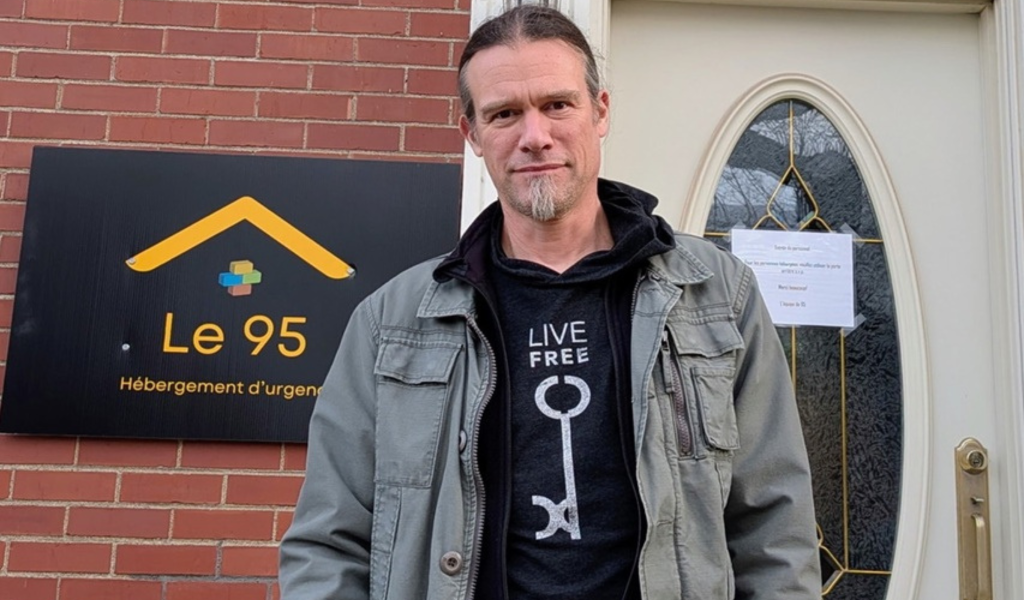
Le Centre d’hébergement d’urgence de Rimouski, le 95, fête son premier anniversaire. Depuis le 17 septembre 2025, le refuge a offert 2 235 hébergements, un nombre assez considérable selon le directeur de l’organisme d’En tout C.A.S., Luc Jobin, qui rappelle que la situation idéale demeure de régler le problème de l’itinérance.
Pour monsieur Jobin, les statistiques de la première année d’opération du refuge prouvent qu’il y avait un besoin, mais ça ne règle évidemment pas le problème de l’itin
Le Centre d’hébergement d’urgence de Rimouski, le 95, fête son premier anniversaire. Depuis le 17 septembre 2025, le refuge a offert 2 235 hébergements, un nombre assez considérable selon le directeur de l’organisme d’En tout C.A.S., Luc Jobin, qui rappelle que la situation idéale demeure de régler le problème de l’itinérance.
« Nous sommes une partie de la réponse aux besoins d’urgence, mais pour corriger la situation en matière d’itinérance, il faudra que ça passe par du logement », commente-t-il.
« C’est très bien d’offrir un centre d’hébergement d’urgence aux itinérants. Ça répond aux besoins d’urgence, mais ce serait encore mieux de ne plus avoir d’itinérance et pour ce faire, ça va prendre la construction de logements, surtout des logements abordables. On peut colmater des brèches pour les situations d’urgence, mais on ne peut pas toujours être dans l’urgence », poursuit monsieur Jobin.
Luc Jobin rappelle qu’une personne en situation d’itinérance coûte plus cher à la société que de lui trouver un logement.
« Nous avons tout intérêt à poursuivre les efforts qui sont déployés dernièrement à Rimouski pour avoir davantage de logements ».
Presque plus d’itinérance dans la Ville
La présence du centre d’hébergement d’urgence a presque complètement annulé l’itinérance dans les rues de Rimouski.
« Il n’y a pratiquement plus d’itinérants dehors, même s’il y aura toujours des gens qui veulent rester dans des tentes. Il y a des gens qui sont réfractaires à tout ce qu’on peut leur proposer. Les gens ont le droit de vivre comme ils le veulent. C’est très caché, un peu comme il y a 10-15 ans », souligne monsieur Jobin.
Le Centre d’hébergement d’urgence est situé au 95, rue de l’Évêché Ouest, en face des Ateliers Saint-Louis. (Photo Le Soir.ca – Annie Levasseur)
Cet été, le centre a développé un service de halte-douche pour que les personnes puissent répondre à certains besoins d’hygiène et peut-être venir passer une nuit ou deux au refuge.
« Ce service a été relativement occupé. On essaie d’offrir des choses, et non pas de les imposer, pour favoriser une réaffiliation aux services ».
19 autres anniversaires
Luc Jobin souhaite qu’il ne reste pas plus de 19 autres anniversaires au centre d’hébergement d’urgence.
« Parce que pour moi, on ne devrait plus être dans une situation d’urgence. Les personnes en situation d’urgence devraient avoir accès à une stabilité résidentielle qui ne passe pas par un centre d’hébergement d’urgence. Il faut se donner des objectifs et être ambitieux. L’objectif n’est pas d’ouvrir un 2e centre d’urgence. Il faut faire en sorte que les gens puissent avoir accès à du logement, ce que nous n’offrons pas. Nous sommes là pour combler des besoins d’urgence ».
Est-ce réaliste de penser atteindre l’itinérance zéro?
Une tente installée au parc de la Gare à Rimouski. (Photo archives Le Soir.ca)
« Il faut certainement se donner ça comme objectif. Le Québec tend vers une approche Housing first que la province n’avait pas adoptée, contrairement au reste du Canada. On avait opté, au Québec, pour une approche plus étapiste, c’est-à-dire de passer dans des refuges, pour ensuite aller dans des ressources intermédiaires, pour ensuite avoir accès à du logement. C’était une réhabilitation de la personne, mais dans toutes les sphères de sa vie. Cette approche a présenté certains écueils. On revient vers le Housing first qui vise à fournir d’abord un logement et ensuite à déployer des services auprès de la personne. La Norvège a utilisé ce modèle et elle est presqu’à itinérance zéro », affirme monsieur Jobin.
Anthony Kazmierczak agreed plea deal over January town-hall attack that came amid Minneapolis ICE crackdownThe man who sprayed vinegar at the Democratic US House member Ilhan Omar during a Minneapolis town hall was sentenced Thursday to 14 months in prison after reaching a deal with prosecutors.The sentencing of 56-year-old Anthony Kazmierczak came nearly eight months after the 27 January assault. At the time, Minneapolis was facing an immigration crackdown that led to angry protests, arrests an
The sentencing of 56-year-old Anthony Kazmierczak came nearly eight months after the 27 January assault. At the time, Minneapolis was facing an immigration crackdown that led to angry protests, arrests and the killing of two US citizens by federal officers.
A new sanctions bill is meant to pressure President Vladimir V. Putin of Russia to end the war in Ukraine. But President Trump is doubling down on a different approach: offering enticements to Russia.
A new sanctions bill is meant to pressure President Vladimir V. Putin of Russia to end the war in Ukraine. But President Trump is doubling down on a different approach: offering enticements to Russia.
Exclusives
“I can travel back to Finland and be safe. That is a luxury”: Sanna Marin on the Russian strike that stopped her train from Kyiv. The former Finnish prime minister has visited Ukraine around ten times since the full-scale invasion. This trip, she says, had more air-raid alarms than any of them, and a Russian drone hit the train travelling beside hers to the Polish border.
Military
No missiles intercepted again: Russia strikes Kyiv water infrastructure amid warnings of har
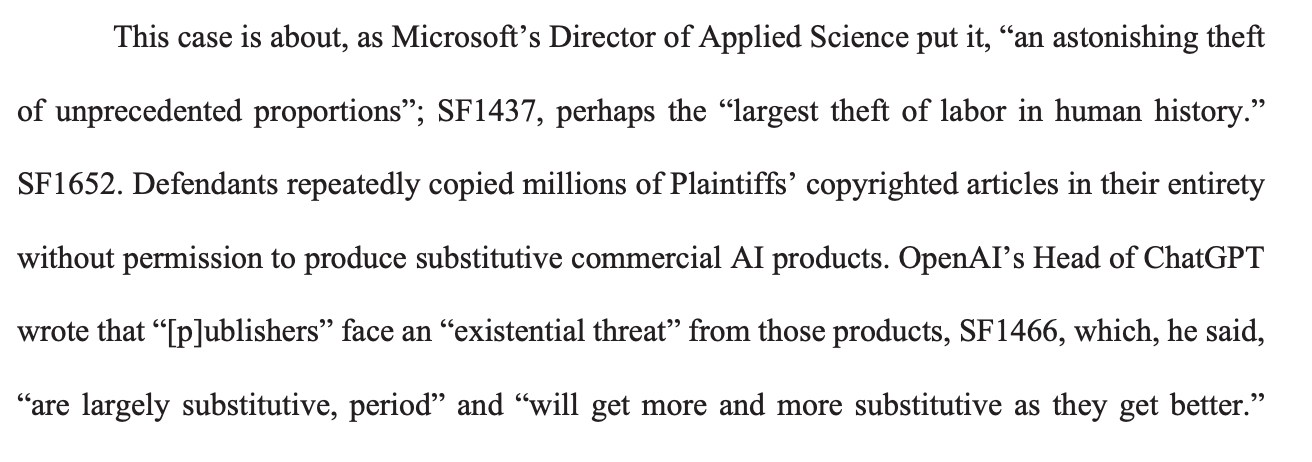
Executives working on AI at Microsoft and OpenAI admitted what its critics have been saying all along: Large language models are predatory pieces of technology that have been built on what a Microsoft executive called “an astonishing theft of unprecedented proportions,” and the “largest theft of labor in human history.” An internal Microsoft document said generative AI products have created a “doom loop” that is killing “the entire web.” Those statements and a series of other mask-off moments fe
Executives working on AI at Microsoft and OpenAI admitted what its critics have been saying all along: Large language models are predatory pieces of technology that have been built on what a Microsoft executive called “an astonishing theft of unprecedented proportions,” and the “largest theft of labor in human history.” An internal Microsoft document said generative AI products have created a “doom loop” that is killing “the entire web.”
Those statements and a series of other mask-off moments feature heavily in an unredacted court filing that was unsealed Thursday in the behemoth New York Times vs OpenAI copyright lawsuit that has been winding its way through the court system for years. In a filing asking for summary judgment (basically, a filing with the court asking it to rule), lawyers for the New York Times laid out a series of admissions made by Microsoft and OpenAI executives in documents and depositions that until now had remained either sealed or redacted at the request of Microsoft and OpenAI.
It’s easy to see why the AI companies wanted to hide this from the public. The statements, taken together, are some of the most damning indictments of the ways LLMs were trained, how they worked, and the immediate threat they pose to human labor. It is a reminder that even as AI becomes more powerful and companies try to shift the narrative to the supposed existential risk of “superintelligent” AI, the tools they have already built were created by stealing from human creativity and labor and are by definition existential threats to the human labor market.
“Millions of people around the world will soon consider large models ‘hoovering up’ all their work to be an astonishing theft of unprecedented proportions,” an internal Microsoft document cited in the case read, adding “almost no one intended for content they created to be used in this fashion, nor are they compensated for its use.”
The filing was written by lawyers for the New York Times but is largely comprised of statements and interviews with big tech executives that admit both that LLMs are largely trained on stolen content, that they represent an existential risk for the human writers, artists, and media companies that they stole from, and that their products have started a “doom loop” that is eating the web and destroying the businesses that these companies stole from.
The unredacted filing was found by Jason Kint, the CEO of Digital Content Next, a trade organization that represents digital media companies. Kint has been closely following and posting about massive AI copyright lawsuits.
The court filing cites an internal Microsoft document that found that AI products steal from human content creators, then cannibalize clicks from the people and websites they’ve stolen from, thereby destroying their business models.
“Our AI content strategy has started a ‘doom loop’ that will hurt the performance of our models and the entire web at the same time: It is highly unusual that an end-product threatens the economic foundations of its essential suppliers, but that is the situation we have created for our LLM business with respect to its ‘content supply chain,’” the document said.
Microsoft executives, including CEO Satya Nadella, testified under oath that after ripping content from the New York Times and other news sites, clicks to those news sites fully cratered, falling by more than 90 percent on Bing.
Documents obtained during the court proceedings found that OpenAI created “a hack to get around nytimes paywall,” to which OpenAI cofounder Greg Brockman said “ah, nice.” Microsoft executive Brent Hecht wrote that LLMs steal content “without ways of distributing economic value down the supply chain, [which] necessarily threatens the economic stability of those who create the content.”
OpenAI’s policy director Jack Clark wrote that the company was “creating systems that substitute for the labor of the people that define the ‘culture’ of society” and Microsoft, in a policy document, wrote that generative AI could “significantly disrupt the employment of the very people who generated the data on which the foundation model was trained […] LLMs are a product that destroys its supply chain.” OpenAI called itself an “existential threat” to news publishers, and an OpenAI software engineer testified that “no matter how prominently we show the links, users won’t click.”
None of this is at all surprising to anyone who has been paying attention to the development of generative artificial intelligence, but the document, taken in whole, is a real they-admit-it situation. OpenAI’s and Microsoft’s lawyers have been trying to argue that their model training is fair use and transformative under copyright law and that they are building something that is fundamentally different from the human labor that it was trained on. But internally, these executives know that what they have built has been built on stolen content and that the products they’ve made are cannibalizing the sources they’ve stolen from and destroying the internet as we know it.
 Connexion