❌

Vue normale

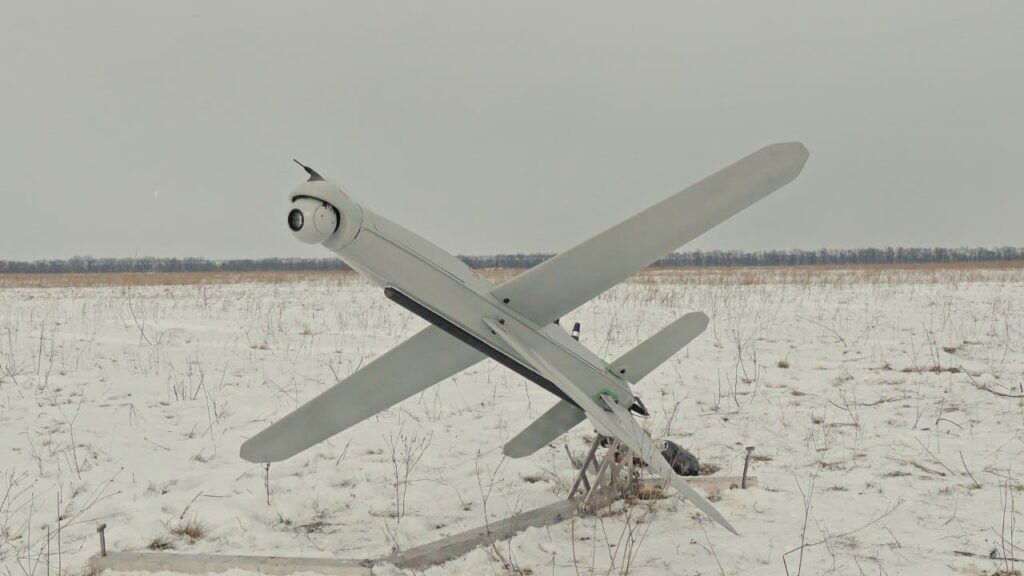
Ukraine’s FLYCAT strike drone is built to fly without satellite signals. Its bigger new sibling is designed to reach 200 km behind the front
14 septembre 2026 à 07:45

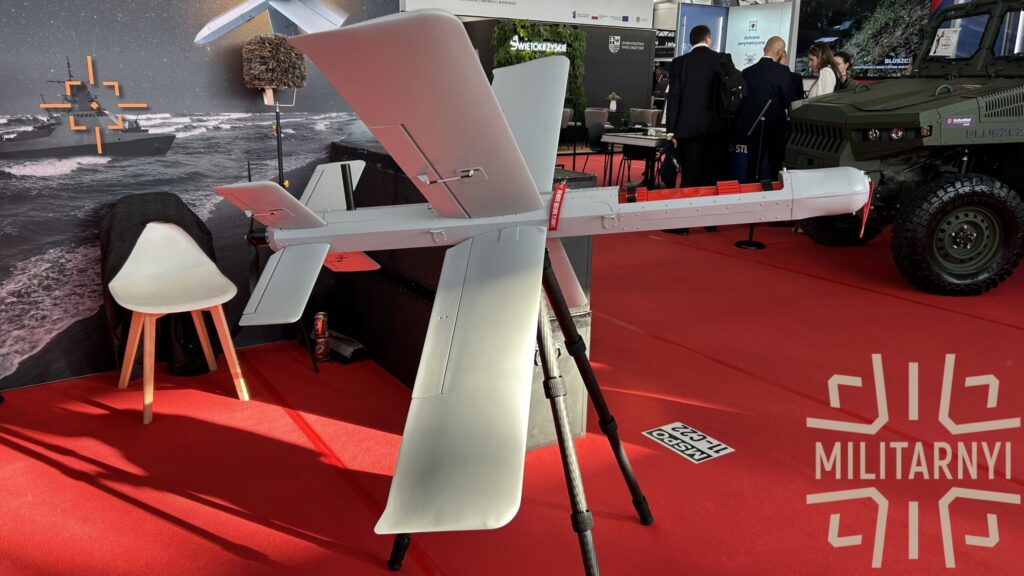
Updated FLYCAT strike UAV at MSPO 2026.

A Ukrainian company has unveiled a homegrown strike drone built to fly deep behind Russian lines, Militarnyi reported on 13 September. Octava Defence showed the new long-range aircraft—a bigger version of a drone already used in combat—at the MSPO 2026 defense expo in Kielce, Poland. The company says the smaller drone is built to keep working in electronic warfare conditions without a reliable satellite signal.

Russian jamming is one of the biggest obstacles to Ukrainian strikes deep in the rear, which is why Ukrainian makers keep building guidance that does not depend on satellite signals.

The workhorse is already in the fight

The base FLYCAT, presented in January 2026 by another Ukrainian firm, Venator Technologies, is a strike drone Ukrainian forces have used in combat since March. An improved model went into action in July and August and is now undergoing codification—entry into Ukraine's official weapons register.

Ukraine is approaching to the Project 1100M "Sargan" patrol boat in Kerch. Source: Ukraine's Defense Intelligence
Explore further

Watch first naval battle in history fought entirely by drones: Ukrainian uncrewed boat spots, fires on, and sinks Russian one in Black Sea

The company says the updated drone can fly more than 80 km, stay in the air for an hour, and carry a warhead weighing up to 3.7 kg. It is built to hunt armored vehicles, artillery, radars, and air-defense systems, as well as lighter shelters and communications gear. It can pair with a scout drone that finds the target and passes the coordinates. Several FLYCATs can also strike a single target together or hit multiple targets at once.

Nearly everything on it is built in Ukraine—the communications, navigation, guidance, and warhead. Only the engines come from abroad. Its two cameras—day-only or day-and-night—feed a terminal-guidance module that picks out the target from 2,000 m as it closes in.

The one that reaches deeper

The FLYCAT SL is a bigger, longer-range version, and it is still in testing. The company says it is built to fly more than 200 km, stay airborne for over two and a half hours, and carry a heavier load of up to 7 kg.

One of the warhead variants of the FLYCAT strike UAV.
One of the warhead variants of the FLYCAT strike drone, shown at MSPO 2026 in Kielce, Poland. Photo: Militarnyi

That range is meant to let it go after command posts, armored vehicles, artillery, and air defenses far behind the front line.

  • ✇Euromaidan Press
  • Ukraine’s Bulava drone can now hunt in the dark—one camera handles day and night
    Ukraine's Bulava strike drone can now hunt around the clock, its crews no longer switching optics between day and night. Its maker, DeViRo, showed the upgraded drone at a defense exhibition in Poland, the Military news outlet Militarnyi reported. The overhaul brings a new camera and lengthens the drone's flight time, and the developers say they substantially improved its flight characteristics. The company said every future production batch will carry the new optics. Uk
     

Ukraine’s Bulava drone can now hunt in the dark—one camera handles day and night

10 septembre 2026 à 09:49

ukraine's bulava drone can now hunt dark—one camera handles day night · post kamikaze “bulava” ukraine news ukrainian reports

Ukraine's Bulava strike drone can now hunt around the clock, its crews no longer switching optics between day and night. Its maker, DeViRo, showed the upgraded drone at a defense exhibition in Poland, the Military news outlet Militarnyi reported. The overhaul brings a new camera and lengthens the drone's flight time, and the developers say they substantially improved its flight characteristics. The company said every future production batch will carry the new optics.

Ukraine's war effort increasingly runs on small private firms that keep sharpening cheap drones in months, reworking weapons already in the fight rather than waiting years for a new model. A drone that sees in the dark can work the same targets after sunset that it hunts by day.

One camera for day and night

The updated loitering munition carries a multispectral optical station that lets it operate at any hour, a company representative told Militarnyi at the MSPO defense exhibition in Poland. The station packs a daytime channel and a thermal-imaging channel into one body, so crews no longer swap in different camera modules depending on the time of day. Operators flip between the two modes in the control station's software while the drone is already in the air.

A display model of the "Koral" short-range anti-aircraft missile at the MSPO 2026 international defense exhibition. Source: Militarnyi
Explore further

Ukraine shows a home-built missile designed to hit ballistic targets for the first time, the Koral, at Poland’s MSPO

Longer in the air, 120 to 130 km out

Bulava now stays aloft for up to 110 minutes, and its guaranteed working range runs from 120 to 130 km, with room to grow depending on conditions and crew training.

DeViRo tied the drone to a summer campaign against Russian logistics, in which it says Bulava crews cleared the way for deeper strikes.

"We knocked out enemy radars and air defenses so that deep strikes could fly as deep as possible," the company representative said.

The company says its crews took a very active part in that campaign, which hit Russian supply routes across the south.

An interceptor in the same family

DeViRo builds more than strike drones. In March, it introduced the Sokyra interceptor, a prototype built to shoot down Russian attack drones. The prototype was listed at 240 km/h, a 45 km range, 30 minutes aloft, and a 750-gram warhead at the alpha-testing stage.

  • ✇Euromaidan Press
  • 20% to 70%: Ukraine’s National Guard rewired its drone war around cables
    Ukraine's National Guard now uses fiber-optic control for 70% of its drones, its commander said in an interview reported by Ukrinform on 9 September. Russian jamming cannot touch that link. On a front where both sides jam radio signals around the clock, cable-guided drones have become some of the most effective weapons in the war—and Russia has turned to them too. From radio signals to a cable National Guard Commander Oleksandr Pivnenko gave that share on the YouT
     

20% to 70%: Ukraine’s National Guard rewired its drone war around cables

9 septembre 2026 à 08:52

The fiber optic drone flying, showcasing the wire attached. Photo via Ukraine's Ministry of Defense.

Ukraine's National Guard now uses fiber-optic control for 70% of its drones, its commander said in an interview reported by Ukrinform on 9 September. Russian jamming cannot touch that link.

On a front where both sides jam radio signals around the clock, cable-guided drones have become some of the most effective weapons in the war—and Russia has turned to them too.

From radio signals to a cable

National Guard Commander Oleksandr Pivnenko gave that share on the YouTube channel LB Live. Earlier, the split ran the opposite way—about 20% fiber-optic, 80% radio-controlled.

These drones swap the radio link for a hair-thin cable that unspools as they fly, leaving Russian jammers no signal to block. The change was not smooth. Pivnenko said the National Guard first wrestled with the cable's quality and the way the drones handled. Crews have since learned to fly them for reconnaissance and strikes.

Twice as many drone-hunting crews

The force has also doubled its number of interceptor-drone crews over the past six months, Pivnenko said.

The National Guard plans to keep building those capabilities, Pivnenko added, calling the development of unmanned systems units one of its priorities. Ukraine's Defense Procurement Agency has also opened its first competitive tenders for fiber-optic and deep-strike drones, bought to Defense Ministry specifications rather than by product name. Since the full-scale invasion began, the force's drone crews had struck more than 243,000 enemy targets, Pivnenko said in late July.

❌