Vue normale

Russia’s air war has cost the average Ukrainian mall 166.8 working days since 2022, about eight months of closed floors
2 septembre 2026 à 15:37

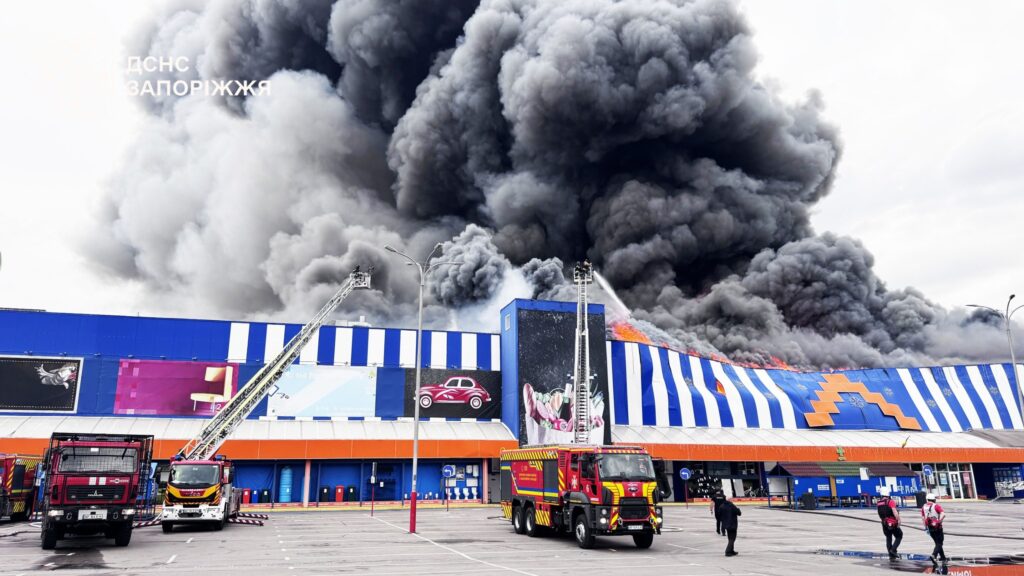
Fire at a shopping center in Zaporizhzhia, Ukraine, following a Russian drone strike on 28 August 2026. Photo: Ukraine’s State Emergency Service

Air-raid alerts covered a record share of working hours at shopping centers across Ukraine in August. Sirens ran for 21.8 percent of the hours malls were open, the Ukrainian Council of Shopping Centers reported.

For more than a fifth of the hours malls were open to serve customers, sirens instead sent staff and shoppers to shelters. The share has more than doubled in a year. The climb is related to Russia's escalating air campaign: Moscow ran a seven-day barrage of ballistic missiles and jet-powered drones against Kyiv into early September, the kind of assault that keeps sirens running through the business day.

Every tracked measure rose

The council considers four figures: the number of alerts, the number during mall working hours, the total alert duration, and the duration during working hours. All four climbed from July to August, it says.

Five regions bear the worst of it

The five regions with the most daytime alert time, between 10 a.m. and 9 p.m., barely changed over the month, the council says. Donetsk Oblast led at 82.0 percent, followed by Sumy at 76.4, Zaporizhzhia at 71.4, Kharkiv at 60.3, and Chernihiv at 40.1.

The sharpest monthly jump fell in Kyiv and Kyiv Oblast.

Faster drones drive the sirens

Russia has switched to jet-powered drones that fly more than three times faster than the propeller Shaheds Ukraine spent three years learning to shoot down. The faster a drone reaches a city, the less time defenders have to catch it.

That is what fills the sirens. Alerts sound earlier and stay on longer, which is the shared council measure.

Ukraine races to answer them

Ukraine has four interceptor systems in field testing, built to take down jet drones, Defense Minister Yevhenii Khmara said on 30 August. The country now wants to bring them to standard and build them in the thousands.

Until that layer works, every jet-drone raid costs Ukraine a long air alert that empties a shopping center.

Downtime piles up over years

Since the full-scale war began, the average Ukrainian mall has lost 166.8 working days to air-raid alerts, according to the report. August 2026 alone accounted for 6.4 of them.

That is more than eight working months of shuttered trading floors, and it is still climbing.

42,020 troops, 1,827 artillery systems, 89 tanks: Ukraine’s tally of what it cost Russia to keep fighting in August

2 septembre 2026 à 14:13

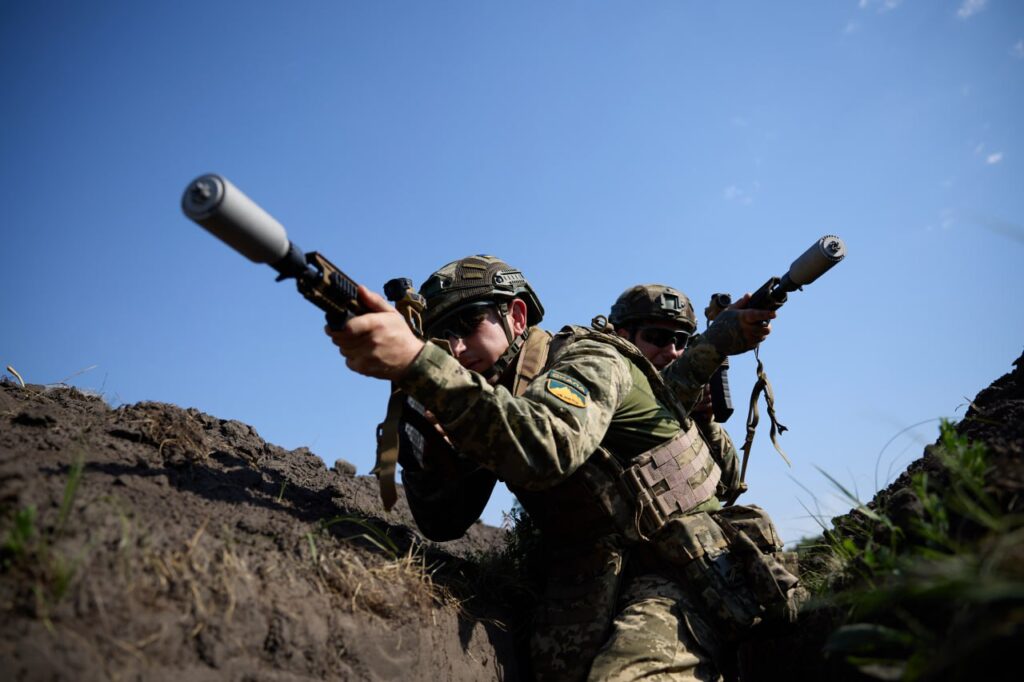
Soldiers of Ukraine’s 425th Separate Assault Regiment Skelia. Photo: Skelia

Russian losses reached one of the highest of the entire full-scale war in August, Ukraine's Defense Ministry says, citing General Staff data. Last month, Ukraine killed or wounded 42,020 invaders.

As its frontline losses climb, Russia is escalating its terror against Ukraine's civilians. Moscow uses large numbers of ballistic missiles and new jet-powered drones to do it. Russia opened its latest drone assault on 27 August, two days after CIA director John Ratcliffe arrived in Moscow, and has kept it up since.

For comparison, Russia lost 42,860 soldiers in July, 33,760 in May, and 39,290 in June, the ministry says.

Ukraine takes another step toward its goal

Ukraine's Defense Ministry states that effectively destroying Russian manpower and logistics is among its priorities, so that Russia's losses reach a level that forces it to abandon its plans of conquest.

"August's losses for the Russian army were another step toward reaching that goal," the Defense Ministry says.

Ukraine began its logistics lockdown late this May. It is a coordinated campaign to scale up medium-range drone strikes against Russian supply convoys, depots, command nodes, and air-defense systems 20 to 200 kilometers behind the front.

Russia loses more than men

Ukraine's Defense Forces also struck 13,835 vehicles and fuel tankers in August.

Over the month they hit an estimated:

  • 89 tanks;
  • 197 armored combat vehicles.
  • On top of that, 1,827 Russian artillery systems were destroyed or disabled.

"Inflicting such losses systematically raises the cost of continuing the war for Russia and forces it to spend ever more resources replacing manpower, equipment, and weapons," the ministry says.

How does Russia answer the losses?

Ukraine's Office of the President has said Russia is preparing an additional mobilization wave in 2026–2027, aiming to draft 300,000 people this year and 300,000 next. Those figures are a response to the steady rise in frontline losses, the office adds.

Meanwhile, Russian President Vladimir Putin called that information "nonsense" after the Shanghai Cooperation Organization summit in Bishkek.

At the same time, legal-aid organizations report a covert mobilization across Russia's regions and occupied territories. Over the past month and a half, residents of at least 17 Russian regions have complained of forcible detention, beatings, and coercion into signing contracts with the Russian Defense Ministry.

  • ✇Euromaidan Press
  • 800 jet drones in four days: Russia is now firing type Ukraine’s interceptors cannot catch
    More than half the drones Russia fired at Ukraine over the past four days were jet-powered, and Kyiv was the main target. Of the more than 1,500 drones launched, about 800 were jet-powered, Colonel Yurii Ihnat, head of the communications department of Ukraine's Air Force Command, said, UNIAN reports. A massive attack on Kyiv and the Kyiv region began on 27 August, two days after US Central Intelligence Agency (CIA) Director John Ratcliffe’s visit to Moscow. According t
     

800 jet drones in four days: Russia is now firing type Ukraine’s interceptors cannot catch

31 août 2026 à 15:36

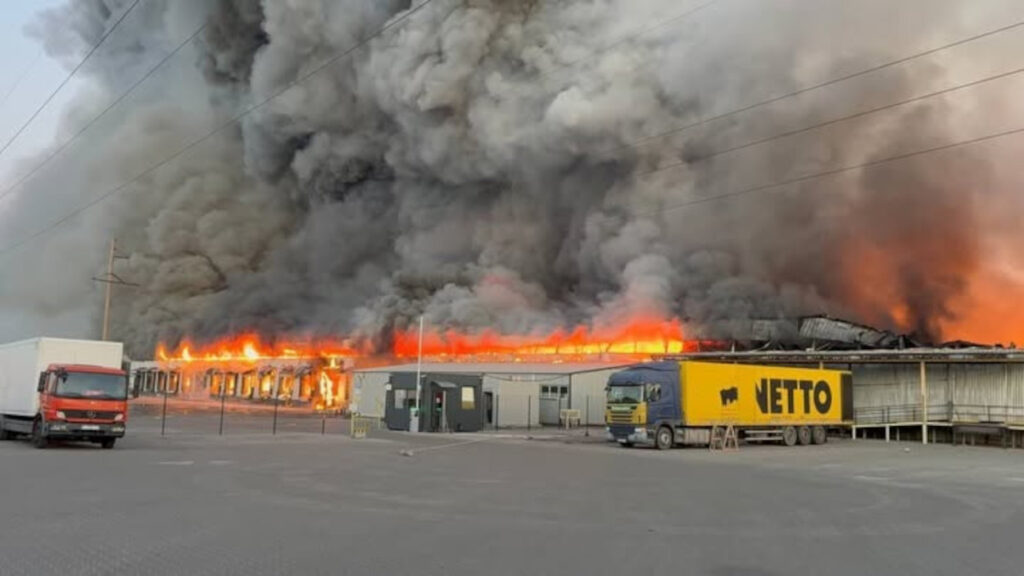
A fire burns at a Nova Poshta fulfillment and sorting center in Sviatopetrivske, Kyiv Oblast, after a Russian drone strike on 28 August 2026. More than 60,000 books were destroyed in the attack. Photo: Readeat

More than half the drones Russia fired at Ukraine over the past four days were jet-powered, and Kyiv was the main target. Of the more than 1,500 drones launched, about 800 were jet-powered, Colonel Yurii Ihnat, head of the communications department of Ukraine's Air Force Command, said, UNIAN reports.

A massive attack on Kyiv and the Kyiv region began on 27 August, two days after US Central Intelligence Agency (CIA) Director John Ratcliffe’s visit to Moscow. According to President Donald Trump, the visit was related to efforts to broker an end to Russia’s war against Ukraine, per Sky News.

Previous interceptors won't work

The attack on Kyiv and the surrounding region, accompanied by repeated air-raid alerts, has continued for all five days since then.

A jet-powered Shahed is a version of the strike drone fitted with a turbojet engine in place of a propeller, which makes it three times faster and far harder to shoot down.

Ukraine intercepts about 88 to 90 percent of all drones, but the rate against jet-powered ones is lower precisely because of their speed, Ihnat noted.

The problem is structural: Ukraine's interceptor drones reach roughly 300 kilometers per hour and physically cannot catch a target moving faster and flying at about five kilometers' altitude, beyond the reach of mobile fire teams and portable SAM systems.

Russia adds jet drones every month

Moscow began using jet-powered UAVs in large numbers in July, launching five times as many as in June, Ihnat noted. Their number may rise further by the end of August, he added.

The jet-drone attacks come from every direction. Ihnat said the debris of recovered Shaheds shows they were manufactured just two weeks earlier, meaning production is running without pause.

Banderols fly like cruise missiles

Russia has also stepped up its use of Banderols, systems that combine features of drones and missiles and fly at up to 600 kilometers per hour, Ihnat said. They are harder to shoot down, so short-range surface-to-air missile systems and aircraft with air-to-air missiles are used against them.

Jet-powered drones are significantly more expensive than conventional ones, Ihnat noted.

The strikes hit specific targets

Russia's attacks are aimed not only at psychological pressure on the capital's residents but at specific targets, Ihnat said. These are logistics and shopping centers, postal terminals, critical infrastructure, and other strategic sites.

Strikes of this kind have destroyed about 90 percent of Ukraine's modern warehouse space in recent weeks and slowed grain exports through the Black Sea corridor.

❌