Vue normale

  • ✇Euromaidan Press
  • Russia occupied Anton’s home when he was 10. At 18, he volunteered to fight against Ukraine
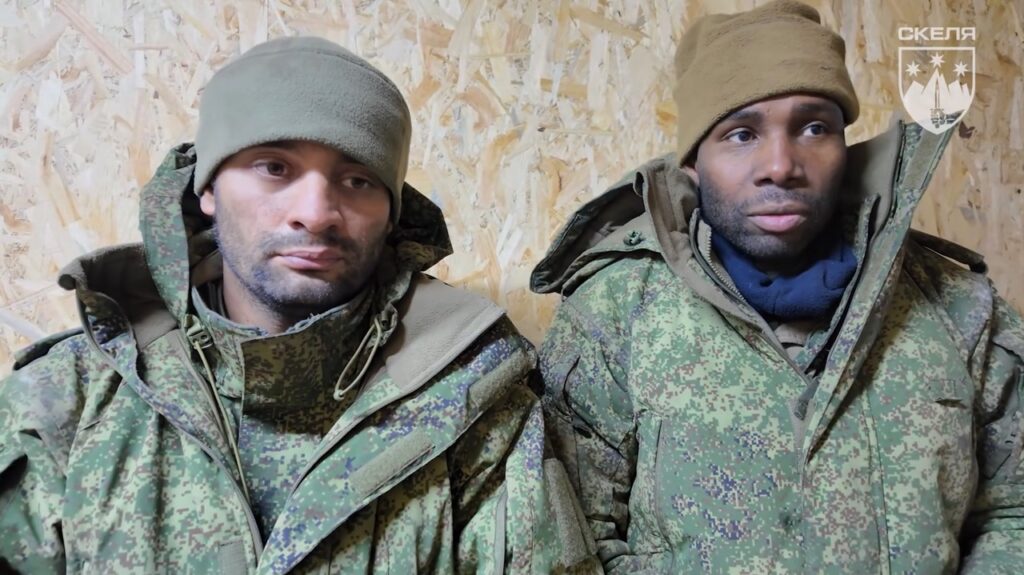
    Now held in a POW camp in western Ukraine, Anton does not consider himself a traitor. He calls Putin “my President” and said he joined Russia’s army to defend “my land,” the BBC reported. The BBC interviews show what more than a decade of Russian rule has produced in occupied Donbas. Moscow has replaced Ukrainian schools, media, and public institutions while presenting the occupied regions as permanent parts of Russia. It also recruits residents or forces them to fight
     

Russia occupied Anton’s home when he was 10. At 18, he volunteered to fight against Ukraine

21 août 2026 à 06:32

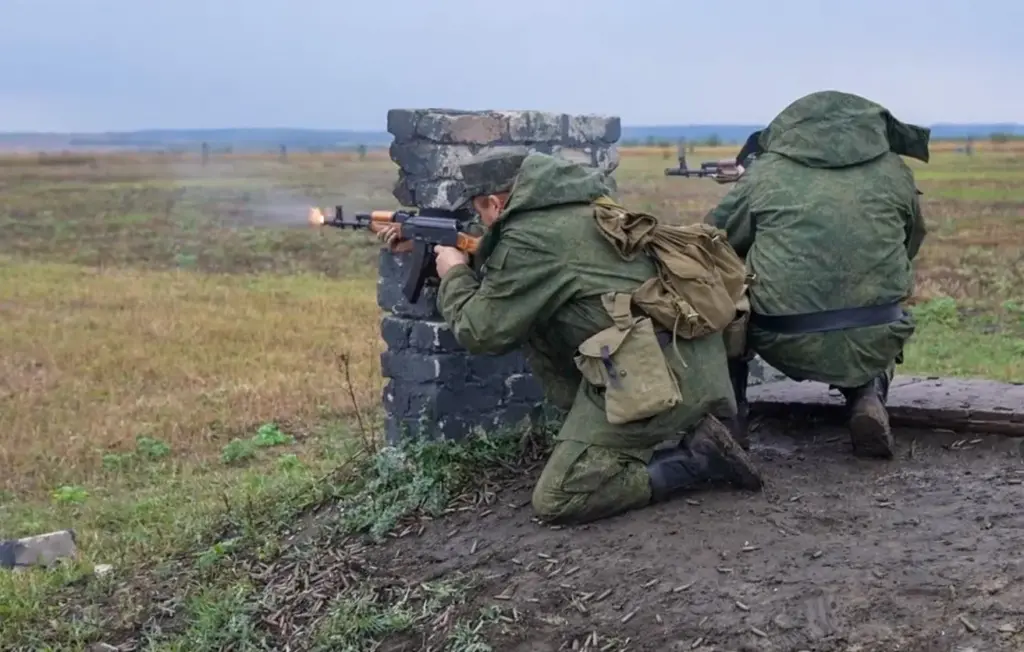
Two soldiers kneel behind a low brick barrier and fire rifles across an open training field.

Now held in a POW camp in western Ukraine, Anton does not consider himself a traitor. He calls Putin “my President” and said he joined Russia’s army to defend “my land,” the BBC reported.

The BBC interviews show what more than a decade of Russian rule has produced in occupied Donbas. Moscow has replaced Ukrainian schools, media, and public institutions while presenting the occupied regions as permanent parts of Russia. It also recruits residents or forces them to fight against Ukraine.

The BBC said prisoners could refuse and were interviewed without guards or cameras.

Almost all its Ukrainian-born interviewees from territories occupied since 2014 said they had enlisted willingly. Anton said he was not a traitor and called Vladimir Putin “my President.”

His friends also volunteered. Messages announcing their deaths followed: “Dead, dead, dead.”

Forced conscription of Ukrainians in occupied territory

One prisoner from Donetsk Oblast told the BBC he had been forced to fight. He wanted only to return to his wife and children.

The BBC cited an official intelligence-based estimate that Russia forcibly conscripted more than 50,000 Ukrainians in occupied areas. It noted that other estimates were higher.

Ukrainian veteran Pavlo Pshenychnyi told Hromadske that occupation authorities used planted drug evidence to push him into Russia’s army. They threatened him with up to 12 years in prison.

Article 51 of the Fourth Geneva Convention prohibits occupying powers from compelling protected residents to serve in their armed forces.

Anton and the Russification of occupied Ukrainian territory

Russia took control of Anton’s home while he was still in primary school. By adulthood, he called himself Russian and dismissed his Ukrainian surname as irrelevant.

Putin’s 2025 policy decree set a 95% target for “all-Russian civic identity” by 2036 and ordered the integration of occupied Ukrainian regions into Russian education, culture, and media.

Kherson-based outlet MOST reported that Russia will introduce compulsory textbooks on 1 September, presenting four occupied Ukrainian regions as historically Russian.

Ukraine’s Center for Countering Disinformation reported in 2025 that more than 100 teenagers from occupied Luhansk attended a Russian military camp. They received firearms, drill, and guard-duty training.

The center described the camp as part of a wider effort to spread Russian war propaganda and hostility toward Ukraine.

Petro Yatsenko of Ukraine’s POW Coordination Headquarters told the BBC that these prisoners were strongly pro-Russian. He said their national identity was “very blurred.”

Ukraine still considers them Ukrainian and treats Russia’s control of their home regions as temporary, the BBC noted.
  • ✇Euromaidan Press
  • Nearly 500 Africans recruited into Russia’s army have died, Ukraine says
    486 Africans recruited into Russia’s armed forces are dead, while Ukraine is holding 35 citizens from 17 African countries as prisoners of war, Ukraine’s Ministry of Foreign Affairs (MFA) told Ukrainian public broadcaster Suspilne in findings published on 16 August 2026. Its overall tally rose only slightly from May, climbing from 2,965 recruits from 36 countries to at least 2,982 from 37. Russia’s recruitment in Africa is part of a broader effort to enlist foreigners f
     

Nearly 500 Africans recruited into Russia’s army have died, Ukraine says

17 août 2026 à 08:16

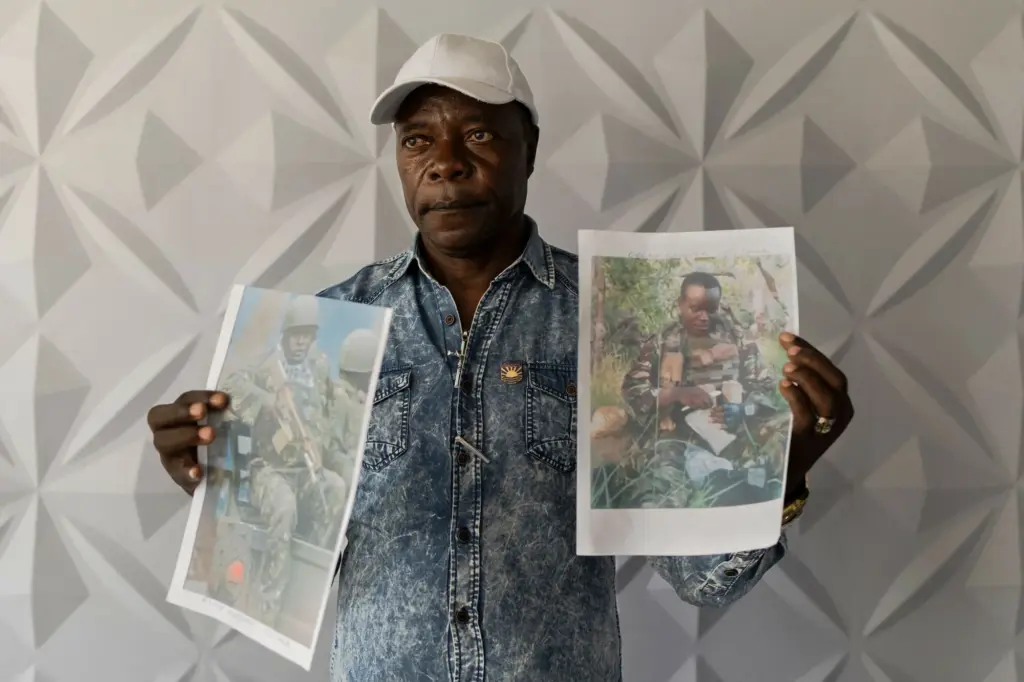
A Kenyan man holds two printed photographs of his son killed fighting for Russia.

486 Africans recruited into Russia’s armed forces are dead, while Ukraine is holding 35 citizens from 17 African countries as prisoners of war, Ukraine’s Ministry of Foreign Affairs (MFA) told Ukrainian public broadcaster Suspilne in findings published on 16 August 2026. Its overall tally rose only slightly from May, climbing from 2,965 recruits from 36 countries to at least 2,982 from 37.

Russia’s recruitment in Africa is part of a broader effort to enlist foreigners for its war. A joint human-rights investigation found that Russia had recruited at least 27,000 people from more than 130 countries since 2022. The system helps Moscow replenish its forces while shifting battlefield risk onto foreigners, many of whom are drawn in by financial pressure, deception, or coercion.

The largest groups of recruits came from Kenya, Egypt, Cameroon, Ghana, Nigeria, Uganda, Algeria, and Mali, the ministry told Suspilne.

Russia’s wider recruitment pipeline in Africa

Russian security services use a “broad arsenal of manipulative methods,” the Ukrainian MFA said. Recruiters promise civilian jobs, education, high salaries, Russian citizenship, or migration benefits. In many cases, foreigners must sign Russian-language military contracts under threat of deportation or imprisonment.

The FIDH–Truth Hounds–KIBHR report found recruiters using social media and intermediaries to advertise civilian jobs. Of 16 foreign POWs interviewed, 13 said they had been promised they would not fight. Most reached combat positions within weeks.

The human toll on African recruits

Kenyan engineer Francis told journalist Dmytro Karpenko, who interviews prisoners captured while fighting for Russia, that he thought he had accepted a security job. In Russia, he received a military uniform instead. After two weeks of training, he reached the front and was captured.

Nigerian recruits Hamzat Kazeen Kolawole and Mbah Stephen Udoka died in an assault after receiving little or no training, Ukrainian military intelligence said. Botswana reported “heartbreaking calls” from its citizens describing “perilous conditions” at the front.

Ukraine’s response to Russia's recruitment campaign

Ukraine’s diplomatic missions regularly inform African officials about the recruitment of their citizens and run awareness campaigns, according to the ministry.

The MFA and Ukraine’s POW Coordination Headquarters also launched Stop Russian Recruiters, a website that explains recruitment methods, shares victims’ accounts, advises people at risk and their families, and accepts reports about recruiters.

A $20,000 “welcome bonus” that was never paid: how a Colombia-registered recruiter sent Peruvians into Russia’s war

10 août 2026 à 14:58

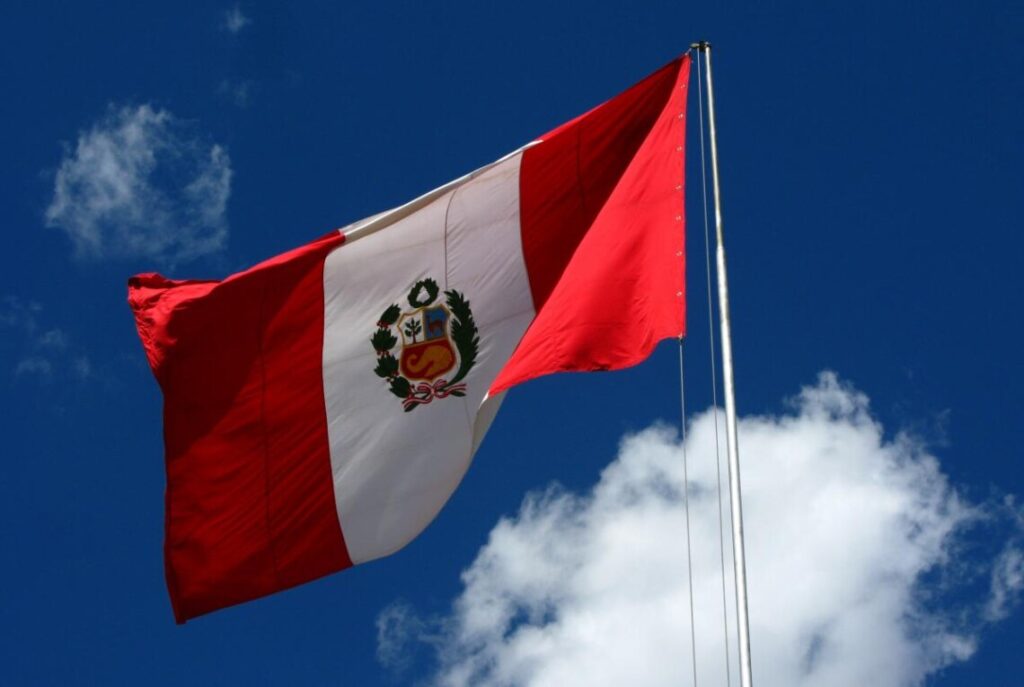
Illustrative photo. The flag of Peru. Photo: Getty Images

On 9 August, Peru's foreign ministry officially reported that 459 Peruvians had been recruited into the Russian army. Of these soldiers, 11 have been killed, 114 are missing, and three have been captured by the Ukrainian army. Another 31 Peruvians were evacuated: three of them chose to stay in Europe, and the rest returned home.

As of 29 April 2026, Russia had drawn in at least 27,000 foreign nationals from more than 130 countries to take part in its war against Ukraine, the International Federation of Human Rights reports. The Peru case is part of Russia's systematic recruitment of foreigners into its military, often through deception. Some men were offered civilian jobs or roles far from the front, only to end up in the thick of the fighting.

Relatives of the recruited men held demonstrations in Peru

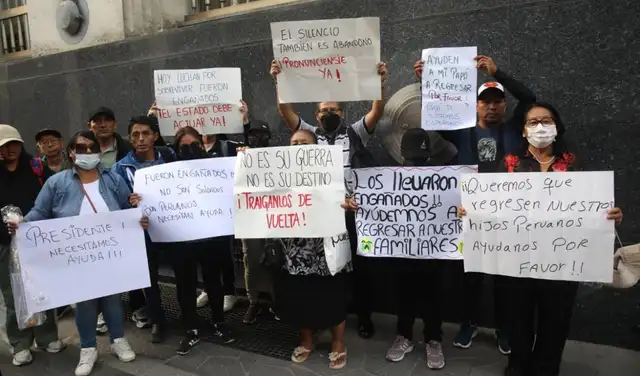
On 29 April 2026, relatives of men recruited into the Russian army demonstrated outside Peru's foreign ministry in Lima, urging the authorities to help bring their family members home, according to SwissInfo.

Relatives of Peruvians affected by Russia's war against Ukraine demand urgent repatriation. 2026. Photo: Carlos Félix/LR

On 30 April, the Russian embassy in Peru responded that it agreed some Peruvian men were taking part in the war on Russia's side, but said this was their own voluntary choice. La República, however, reports that before leaving for Russia, the men were made to sign papers in Russian.

On arrival, their documents were taken, after which they underwent brief military training and were ultimately sent to the front. According to media reports, most were former military and police personnel lured by promises of jobs as security guards or civilian specialists, with salaries of $2,600–4,000 a month and bonuses of up to $20,000.

A “rear position” — until it isn’t

First, recruiters promise foreigners high salaries, signing bonuses, and “rear” or civilian positions. Debt traps and threats of deportation are also used. They lure people even through video games and chats. Once in Russia, recruits are forced to sign contracts, after which their documents are confiscated to keep them at the front. The contracts are often written in Russian, a language the foreign recruit does not understand.

Instead of the promised “rear positions,” recruits are thrown into infantry “meat assaults” after just a few days or a week of training. Mercenaries are killed while carrying out missions, while the wounded are often left on the battlefield without evacuation. Some men go missing or flee. Russia treats foreign mercenaries as “expendable labor,” according to leaked recordings cited by Radio Free Europe/Radio Liberty.

This is not an isolated case

Facing losses that now outpace its own mobilization, Russia has turned to citizens of other countries to keep its ranks filled in its war against Ukraine.

Kenya has become one of the largest sources of people recruited through deception. At first, Nairobi believed the number was only a few hundred, but the scale proved much larger. Nairobi thought Russia had recruited around 200 Kenyan citizens, but a new report says the figure is over 1,000. The scheme relied on fake job and education offers, after which recruits had their documents confiscated to keep them on the front line. The European Parliament found that Russia confiscates African recruits' documents and sends them to the front line in Ukraine.

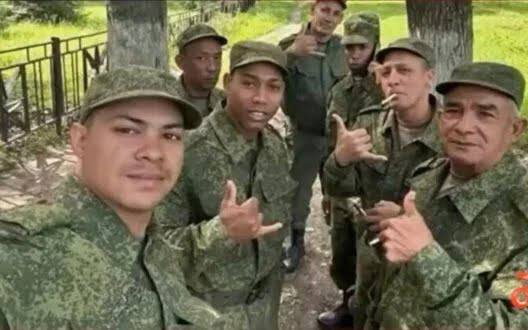
In Cuba, recruiters promised people lucrative jobs, only to lure them into a trap. A Cuban captured near Kupiansk said he joined Russia's war effort under threat of deportation. The scale of the recruitment has been enormous. Ukrainian intelligence estimates that around 20,000 Cuban mercenaries have fought on Russia's side against Ukraine.

ukrainian intel nearly 20000 cuban mercenaries fighting russia’s side against ukraine nationals wearing russian military uniform 2023 video x/pstyle0ne1 florida lawmakers officials highlighted threat regional security news reports
Cuban nationals wearing Russian military uniforms. 2023. Screenshot from a video, via X/PStyle0ne1

The Philippines case shows what awaits the recruited at the end of this pipeline. Ukrainian military intelligence identified a Filipino named John Patrick among Russian soldiers killed in Donetsk Oblast. He was sent into a "meat assault" after just one week of training. He did not speak Russian and carried only a piece of paper with his unit number and his commander's name. After he was wounded, he was left to die in a tree line without evacuation, and Ukrainian intelligence warned that any work in Russia now carries a real risk of forced deployment into an assault unit. The deception relied on promises of high salaries, non-combat positions in the rear, and fast-tracked Russian citizenship, after which recruits were sent into infantry assaults.

  • ✇Euromaidan Press
  • Fighters from 51 countries now held in Ukraine after fighting for Russia, ombudsman says
    Ukraine now holds prisoners of war (POWs) from 51 countries who fought for Russia, Dmytro Lubinets, the Ukrainian parliament’s human rights commissioner, said on 4 August.  The figure illustrates the global reach of Moscow’s efforts to replenish its forces with foreign recruits. Russia has targeted people abroad with promises of well-paid jobs, university places, and military salaries. Some enlist knowingly. Others report being deceived or pressured into service. Spe
     

Fighters from 51 countries now held in Ukraine after fighting for Russia, ombudsman says

6 août 2026 à 07:52

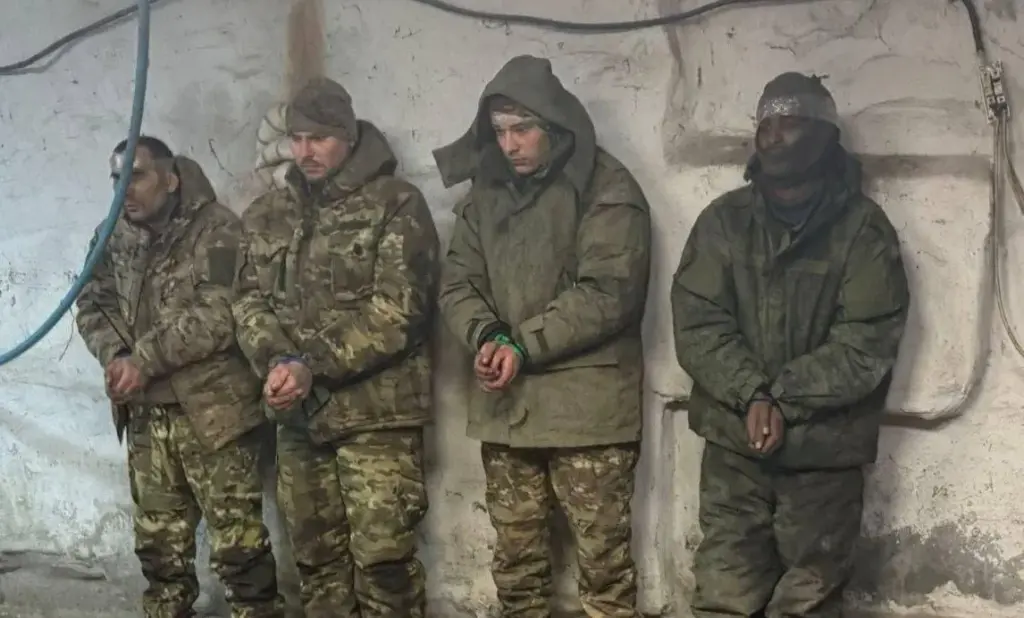
Four captured fighters who fought for Russia stand against a wall with their hands bound.

Ukraine now holds prisoners of war (POWs) from 51 countries who fought for Russia, Dmytro Lubinets, the Ukrainian parliament’s human rights commissioner, said on 4 August. 

The figure illustrates the global reach of Moscow’s efforts to replenish its forces with foreign recruits. Russia has targeted people abroad with promises of well-paid jobs, university places, and military salaries. Some enlist knowingly. Others report being deceived or pressured into service.

Speaking at a meeting of heads of Ukraine’s foreign diplomatic missions, Lubinets said joining Russia’s war carries “real legal consequences.” He did not disclose the prisoners’ nationalities or their total number.

The human cost extends beyond those captured. A July 2026 BBC Russian Service/Mediazona investigation documented at least 3,589 foreign nationals who had died fighting for Russia. The total comprised 1,285 people from more than 40 countries and 2,304 North Korean troops. 

Russia throws its recruitment net across the globe

Moscow has increasingly looked abroad for soldiers as its invasion consumes manpower. Recruiters focus heavily on Africa, Asia, and Latin America, offering civilian work, education, high salaries, or military service. 

A human rights investigation covered by Euromaidan Press found that Russia had recruited at least 27,000 people from more than 130 countries since February 2022. Researchers said recruits often received Russian-language contracts they could not understand, while some faced threats or rapid deployment to combat. 

china asks ukraine treat chinese pows well doesn't say wants back · post 2025 untitled asked 6 follow international law two captured fighters mfa spokesman lin jian said did whether
Explore further

China asks Ukraine to treat Chinese POWs well, but doesn’t say if it wants them back

In Africa, recruitment operates within a broader Russian soft power influence network. Russian Houses offer language courses and routes into Russian universities. Ukraine’s military intelligence describes Russian Houses as a pipeline through which some young Africans reach Russia as students or workers and later enter Moscow’s army. 

Beyond Africa, Russia preys upon the disadvantaged with promises of work. An Associated Press investigation found that Bangladeshi men promised cleaning jobs in Russia were instead sent into combat.

Foreign recruits abandoned after capture

For those captured, neither Russia nor their home governments offer a clear route home. Ukraine’s POW Coordination Headquarters said Moscow had excluded foreign recruits from prisoner exchanges, although some embassies had visited their citizens. 

Two Colombian men in Russian military uniforms after being captured by Ukrainian forces near Pokrovsk
Two Colombian citizens captured by Ukrainian forces near Pokrovsk recount their ordeal. Screenshot: @skala_ukraine/YouTube

A Kenyan Foreign Ministry official stated the government was following reports of several trafficked Kenyans held as POWs in Ukraine. Yet Ukrainian POW official Petro Yatsenko said most African governments showed little interest in bringing their citizens home. 

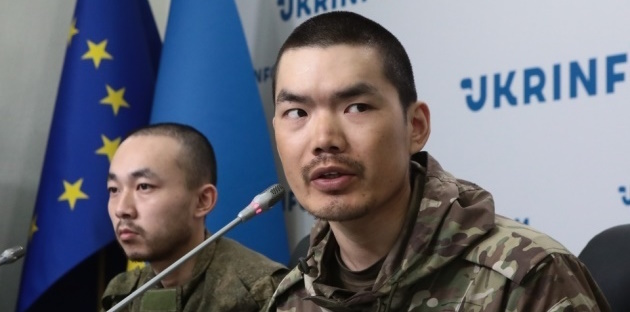
China likewise asked Ukraine to treat two captured Chinese fighters humanely, but did not say whether it sought their return. Ukrainian officials said Russia had inquired only about captured North Korean soldiers, showing little interest in other foreign fighters in captivity. 

❌