❌

Vue normale

  • ✇Euromaidan Press
  • Mavic vs Slavic: Ukrainian developers adapt reconnaissance drones to the modern battlefield
    Ukrainian company Vyriy Industries is bringing a new tactical reconnaissance drone, Slavic, to the market, Oboronka reports, citing information from the manufacturer. The control system of the new drone will be familiar to DJI Mavic operators, the company also said. Mavic has long been one of the main reconnaissance tools used by Ukrainian forces, with Ukraine relying heavily on supplies of these drones from abroad. After Ukrainian President Volodymyr Zelenskyy said China had stopped se
     

Mavic vs Slavic: Ukrainian developers adapt reconnaissance drones to the modern battlefield

29 septembre 2026 à 14:43

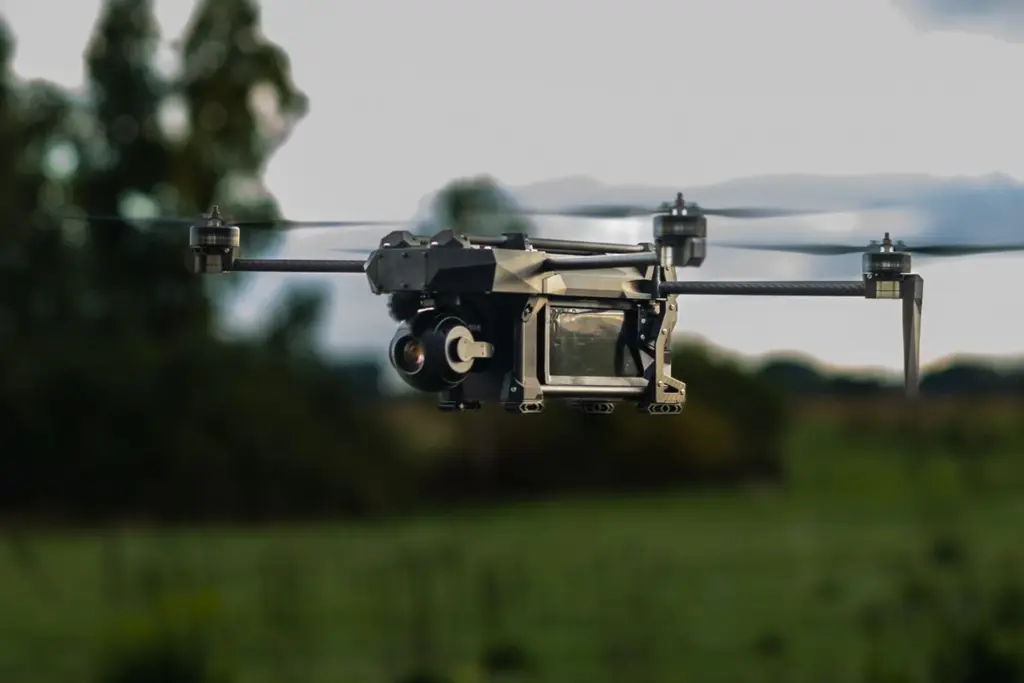
Slavic drone by Vyriy Industries. Photo: Vyriy Industries

Ukrainian company Vyriy Industries is bringing a new tactical reconnaissance drone, Slavic, to the market, Oboronka reports, citing information from the manufacturer. The control system of the new drone will be familiar to DJI Mavic operators, the company also said.

Mavic has long been one of the main reconnaissance tools used by Ukrainian forces, with Ukraine relying heavily on supplies of these drones from abroad. After Ukrainian President Volodymyr Zelenskyy said China had stopped selling drones to Ukraine, the country began seeking alternatives. Slavic is one of these domestic alternatives, designed not only to replace Mavic but also to adapt its capabilities to current battlefield conditions, allowing reconnaissance crews to operate farther from the line of contact and reducing risks to personnel.

Slavic has a tactical range of up to 30 kilometers without GPS

Slavic can remain airborne for up to 1.5 hours because it is equipped with a 40,000 mAh solid-state battery, the media outlet notes. The drone has a tactical range of up to 30 kilometers, the report says.

Illustration showing the positions of the Slavic pilot (left) and Mavic pilot (farther to the right), as well as the drones’ flight ranges relative to enemy positions (shown in red). Illustration: Vyriy Industries

The aircraft can operate without GPS, as Slavic uses optical positioning for navigation. The pilot can also select a less congested channel and operate more effectively in difficult terrain because the communications system operates across a wide range of channels.

The manufacturer notes that for surveillance, Slavic is equipped with a daytime 2K digital camera mounted on a three-axis stabilized gimbal, with 10x optical and 30x hybrid zoom.

Part of the drone with the camera. Photo: Vyriy Industries

The system is supplied as a ready-to-use package “out of the box,” with all the equipment needed for operation without additional field modifications.

The drone is designed to keep crews farther from the front line

The company said its new drone has successfully completed initial combat trials with seven units of the Ukrainian Defense Forces and is preparing for scale-up, the media outlet notes.

“The war has changed, and so have the working conditions for crews. The kill zone has expanded, while available commercial drones have a limited tactical range. The main task now is to provide the military with a specialized platform that can fly longer and farther, so crews can operate farther from the line of contact. This is exactly why we began developing Slavic,” said Oleksii Babenko, founder and CEO of Vyriy Industries.

At the same time, the team is working on new Slavic configurations, including testing thermal imaging modules for nighttime reconnaissance. The manufacturer is also preparing the platform for scaled-up production and deliveries to the Ukrainian Defense Forces, the company told the media.

“Frankensteins” and Ukrainian-made drones are among the options for replacing scarce Mavics

The Ukrainian military had widely used Chinese DJI Mavic 3 drones, including to adjust artillery fire, monitor infantry positions and conduct surveillance, prompting Ukraine to seek ways to replace the shortage. More than five alternatives to the Chinese drone had already been developed in Ukraine, the Ministry of Strategic Industries of Ukraine confirmed to RBC-Ukraine in July 2025.

DJI Mavic 3 in use by a Ukrainian servicemember. Photo: Ministry of Defense of Ukraine

There are also other options for replacing them. The main work in military units is being done with “Frankensteins,” drones assembled from two or three damaged aircraft, Mavic UAV pilot instructor “Dobryi” said in an interview with Militarnyi in July this year. At the same time, such drones are less reliable than new ones, he added.
Seventeen makers head to Michigan to test bomber drones for the Pentagon, and Ukrainian firms are back in field, some under US partners

25 septembre 2026 à 13:58

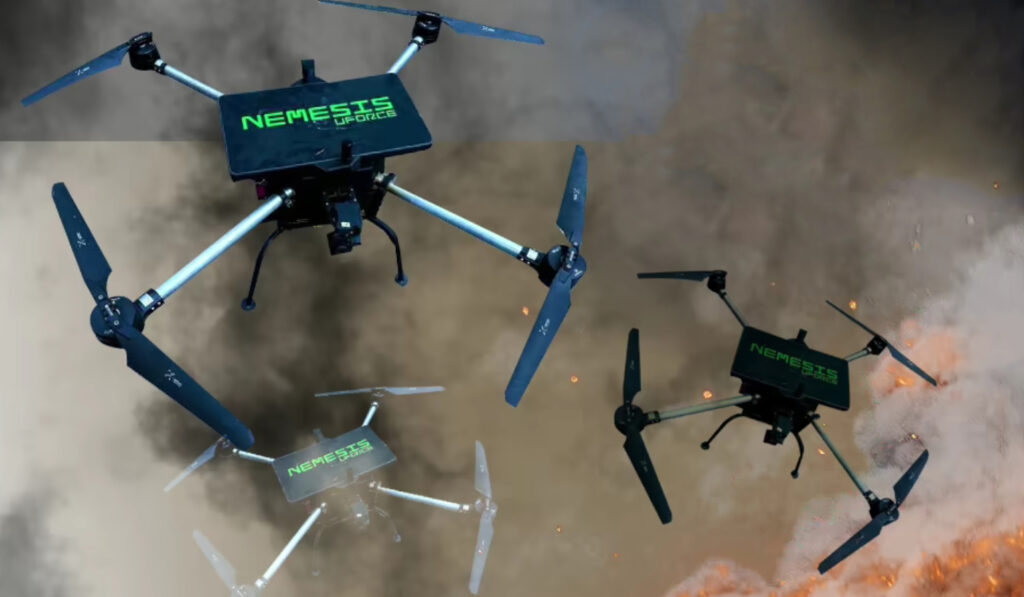
Ukrainian Nemesis heavy drone. Source: Militarnyi

Ukrainian drone makers are getting another shot at a Pentagon contract, this time for bomber drones. Seventeen companies, including Ukrainian firms and Western partners fielding Ukrainian designs, will test bomber drones at Camp Grayling in Michigan in October, the next stage of the Pentagon's Drone Dominance program, Defender Media reported.

The Phase 2.5 Bomber Qualifier is the latest round of the Pentagon's drive to buy combat-tested drones at scale, and Ukrainian makers are again in the field, some through US-registered partners, because Pentagon rules bar direct sales from foreign firms.

This time, the target is bombers, the drones that drop munitions on what is below them.

Seventeen makers head to Michigan

The contest runs at Camp Grayling, a Michigan training range, and organizers call it the hardest and fastest-paced stage of the program yet. Each company must bring at least six fully built systems.

The testing splits into two parts: a Bomber Qualifier, which the makers conduct themselves, and a Bomber Gauntlet run by US soldiers. Organizers have not published details of a third mission. Winners of the wider program earn Pentagon supply contracts.

Ukrainian bombers make the list

The invited firms include UFORCE USA Services, Grim Tech, Gurzuf Defence, UA Defense Tech, Skycutter, and UDD Tech Corp. Which models they will bring is not yet clear.

UFORCE is known for its Nemesis bombers. Grim Tech showed a light bomber, the Grim-18, at the MSPO defense expo in Poland this month, and Gurzuf builds heavy bombers, including the Ayudag-6, which recently set a Ukrainian payload record for multirotor drones at 130 kilograms.

A second try after a US sweep

In the program's last phase, the Pentagon picked five winners in each of two categories, and all were American, though a Ukrainian firm had reached the second round and, by industry accounts, Ukrainian designs were incorporated into some Western entries. For Ukraine's makers, the bomber round is another chance to turn battlefield-proven hardware into a US contract.

Defender Media: Ukraine’s battle-tested drone makers reach no top slot in Pentagon’s $1.1 billion Drone Dominance program, but some Ukrainian technology wins anyway

19 septembre 2026 à 11:46

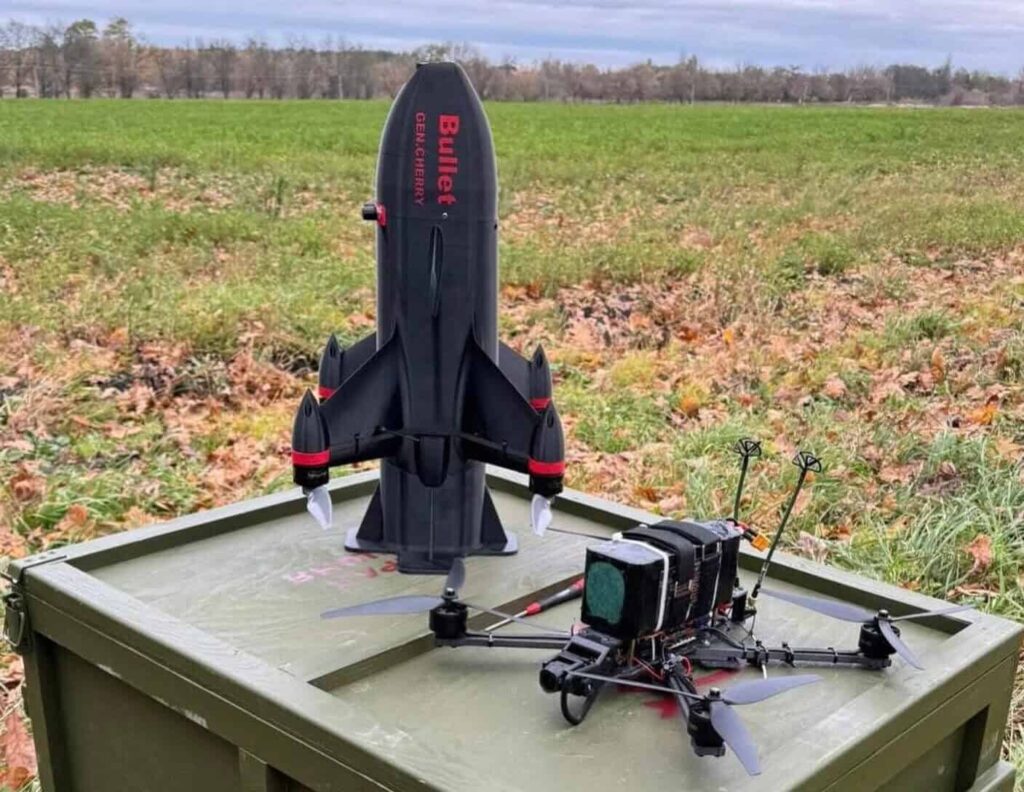
interceptor drones General Cherry (Chereshnia)

Ukraine's battle-tested drone makers did not win a single top slot in the Pentagon's latest drone contest. But some Ukrainian technology won anyway, competing quietly under the names of Western partners, The Defender Media reports.

The Pentagon's $1.1 billion Drone Dominance program does not allow direct purchases from Ukrainian firms, which must set up a US legal entity to bid.

The Ukrainians who competed under their own names were hampered by export licenses, the hunt for non-Chinese components, and visa issues, and none of the four cracked the top five in either category.

American firms sweep the top slots

The Pentagon picked five winners each in two categories, long-range strikes out to 15 kilometers and close-in assault. Eric Schmidt's Perennial Autonomy topped the long-range field with its Hornet drone, on 80.1 points, and Neros led the close-in category with 88.1. Neros already supplies Ukraine with 6,000 of its Archer FPV drones.

The rest of the winners, from ORQA's US arm to XTEND and ModalAI, were American as well. All will receive Pentagon supply contracts, with order sizes to be set later.

Ukrainians win under other flags

The Ukrainian firms that announced their entries, F-Drones, General Chereshnya, Grim Tech, and Stellarion, all missed the cut, though General Chereshnya had reached the program's second round earlier in the year.

Bureaucracy tripped the open entrants

Stellarion laid out what went wrong. Getting export permits and moving hardware took so long that integrating American parts, including warheads, and adapting the finished system on schedule became "complicated," its representatives said.

Finding NDAA-compliant, non-Chinese components ate up more time, and visa delays kept its specialists from fixing technical problems on site.

Firms that missed the top five can enter later rounds: a Gauntlet 2.5 contest for bomber drones is set for October, and a third phase begins in February 2027, with missions built to test control of several drones at once.

❌