Vue normale

  • ✇Euromaidan Press
  • Spain keeps arming Ukraine against Russia’s ballistic missiles—and promises even more
    Spain will send Ukraine more Patriot interceptor missiles, Foreign Minister José Manuel Albares confirmed, according to Le Monde. Patriot interceptors are among the few weapons Ukraine has that can stop Russian ballistic missiles. The specialized rounds are scarce worldwide, and manufacturer Raytheon cannot build them fast enough to meet demand. Each costs $3 million to $4 million. Spain confirms the flow will grow Albares spoke at an informal meeting of European
     

Spain keeps arming Ukraine against Russia’s ballistic missiles—and promises even more

4 septembre 2026 à 08:42

Patriot ukraine air defense

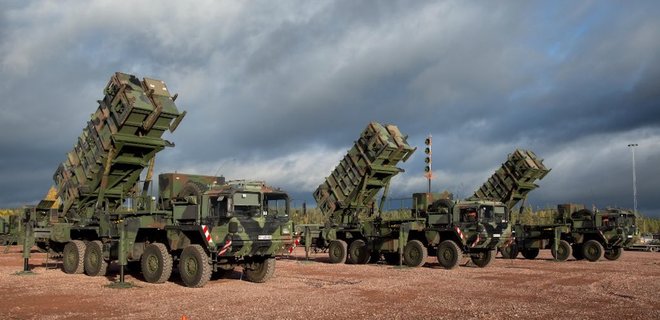
Spain will send Ukraine more Patriot interceptor missiles, Foreign Minister José Manuel Albares confirmed, according to Le Monde.

Patriot interceptors are among the few weapons Ukraine has that can stop Russian ballistic missiles. The specialized rounds are scarce worldwide, and manufacturer Raytheon cannot build them fast enough to meet demand. Each costs $3 million to $4 million.

Spain confirms the flow will grow

Albares spoke at an informal meeting of European Union foreign ministers in Ireland on 2 September. He reaffirmed Madrid's support as Kyiv pressed for more interceptors. "We have been doing this for a long time, and we will continue to do so," he said. He confirmed that Madrid is preparing a new batch. EU foreign policy chief Kaja Kallas said the bloc is also working with non-member states to lift Ukraine's air defenses.

Madrid and Kyiv meet in Wicklow

The confirmation followed talks with Ukrainian Foreign Minister Andrii Sybiha. They met on the sidelines of the same EU gathering, in Wicklow. Sybiha said he pressed Ukraine's urgent need to strengthen its air and ballistic missile defenses. He also thanked Spain for its solidarity. Albares reaffirmed Spain's role as a founding member of the Integrated Anti-Ballistic Missile Coalition, which ten countries launched in Paris on 13 July. The group aims to build a shared anti-ballistic capability, and its declaration calls the coalition purely defensive. Spanish military instructors are training Ukrainian technicians to maintain the systems.

What Spain has promised so far

Spain is not just giving—it is also buying. In December 2025, Madrid signed a $1.7 billion contract with US arms maker Raytheon for four new Patriot systems. It was Spain's largest Patriot order yet. The deal covers radars, launchers, command-and-control stations, and training. Spanish firm Sener builds the control system for the GEM-T interceptor those launchers fire. Spain is one of only a handful of European countries that operate Patriots.

What Spain has already sent

Spain has supplied Ukraine with Patriot missiles before. In March, Madrid pledged five older PAC-2 interceptors from an air-defense artillery regiment at Marines, near Valencia. Madrid has pledged €1 billion ($1.16 billion) in military aid for 2026. Ukraine has spent months urging partners to release interceptors from their stockpiles.

  • ✇Euromaidan Press
  • 190 or 580 Patriot missiles? What Ukraine’s EU-loan request could buy—and why Washington still decides
    Ukraine has asked the EU to spend billions from its support loan on Patriot air-defense missiles, a request European Commission President Ursula von der Leyen confirmed the bloc is weighing. How far the money would stretch depends on a price only Washington controls. Russia keeps firing more ballistic missiles at Ukrainian cities than the country can shoot down, the warheads hardest for its air defenses to stop. Only a US-made Patriot system can catch them, and their in
     

190 or 580 Patriot missiles? What Ukraine’s EU-loan request could buy—and why Washington still decides

2 septembre 2026 à 15:10

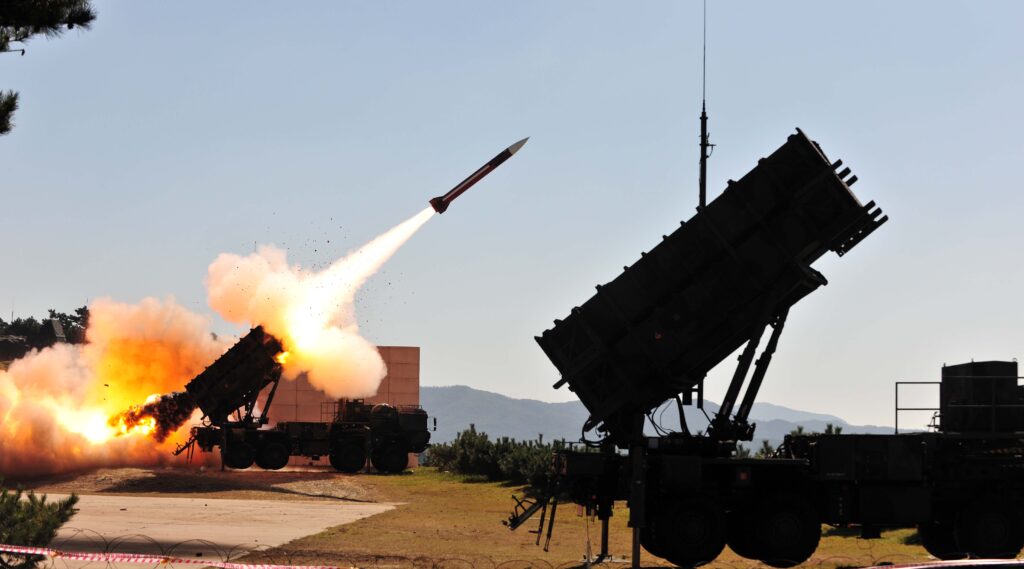
A Patriot air defense missile launcher. Photo: South Korean defense ministry.

Ukraine has asked the EU to spend billions from its support loan on Patriot air-defense missiles, a request European Commission President Ursula von der Leyen confirmed the bloc is weighing. How far the money would stretch depends on a price only Washington controls.

Russia keeps firing more ballistic missiles at Ukrainian cities than the country can shoot down, the warheads hardest for its air defenses to stop. Only a US-made Patriot system can catch them, and their interceptors remain in short supply worldwide, so who pays for them and Washington that agrees or disagrees to sell them now shapes how many cities stay covered.

The exemption Kyiv needs

The European Commission has already received a payment request covering Ukraine's air defenses, including the PAC-3 interceptors that arm Patriot systems. Von der Leyen put it at "several billion euros" and said member states were reviewing it, without naming a figure.

Suspilne, citing its own sources, reported that the request seeks just over $2.3 billion, with another $4.6 billion from the loan's defense tranche going to arms manufactured in Ukraine and the EU, mostly drones.

The money would come from the EU's $104 billion support loan for 2026–27. Because PAC-3 is US technology, spending loan money on it needs an EU exemption. National representatives will take up the decision on 7 September.

What the money actually buys

Defense Express has calculated how many interceptor missiles Ukraine can get with the loan. At the $4–5 million per round the US Army pays, $2.3 billion would fund 460-580 interceptors. At the $6.61 million export price Germany paid in late 2024, about 315. At up to $12.3 million each, the US cleared for Saudi Arabia on 30 January 2026, just 190.

Why money isn't the real problem

For Ukraine, the harder question is not price but whether it can get the missiles at all. Even 315 rounds would equal about half the world's current yearly output, which the sole producer, Lockheed Martin, is straining to lift from around 600 a year to 2,000 by 2030.

Kyiv has been short of interceptors for months. In August, Zelenskyy said Ukraine reached a deal with the US for monthly Patriot deliveries, but that it still needs at least around 5% of American output to get through winter. EU Foreign Policy Chief Kaja Kallas has urged member states to hand over interceptors, especially those with shelf lives nearing their end.

Russia is secretly building a mortar-launched drone-killer—and a resistance group just leaked the blueprints

28 août 2026 à 09:44

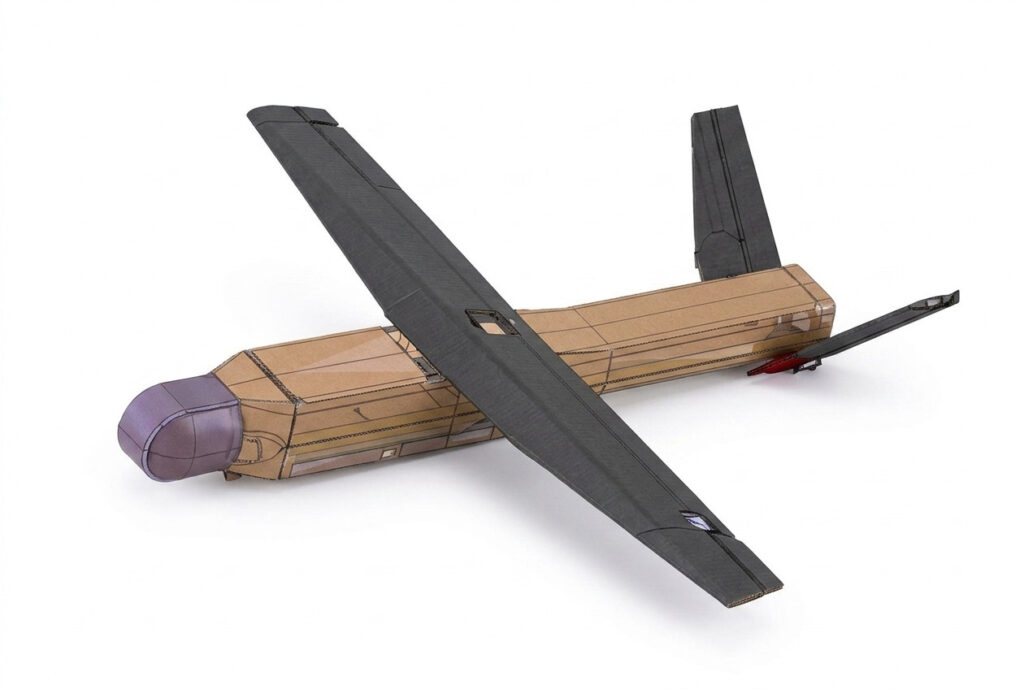
Modified UBB-M drone adapted for interceptor missions.

A Russian drone company is developing an interceptor drone—the cheap counter-drone weapon Ukraine has fielded at scale against Russian attack drones—internal documents published by the Russian resistance group Black Spark describe, the defense outlet Militarnyi reported. The documents describe two designs under consideration, and Black Spark alleges the company cooperated with Boeing before the full-scale invasion and spied on European companies.

Interceptor drones—unmanned aircraft that hunt other drones—scaled up out of Ukraine's need to shoot down Russia's mass Shahed attacks without spending million-dollar missiles on them. Ukraine now fields them from dozens of licensed makers, and their spread has pushed Russia toward faster jet-powered attack drones. Russia already flies anti-drone interceptors of its own—Ukrainian troops downed one in July—and the leaked designs would fly far faster than that machine.

Mortar-launched drone-killer

NIK is considering two interceptor designs. The first modifies the company's existing UBB-M, a folding-wing loitering munition that launches from a 160 mm container by mortar-style ejection. For the interceptor role, designers changed the wing from straight to swept, shrank the wingspan, installed a larger battery, and fitted a more powerful motor.

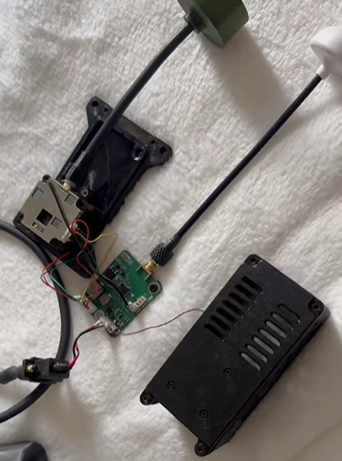
Electronic warfare equipment from Shahed drones.
Explore further

Russia’s attack drones now jam the cheap interceptors sent to kill them

The modified drone weighs 15-16 kg, carries a 3 kg payload—likely a warhead—and flies at 250-300 km/h with a 20 km operating radius and up to 10 minutes of flight time, operating between 20 meters and 4.5 km altitude. NIK's second design has a cone-shaped fuselage with four electric motors. Its specifications remain unknown.

Espionage claim comes with no documents

Black Spark says the documents came from someone inside the company, not a break-in, and that it holds evidence the firm spied on European companies. It gave no details on the Boeing cooperation beyond dating it before the invasion.

The leak is Black Spark's latest operation against Russia's defense industry. The group, which operates inside Russia, says it infiltrated the Alabuga factory where Russia assembles Shahed-derived Geran drones and copied personnel databases. Ukraine's Special Operations Forces have acknowledged joint missions with Black Spark, including attacks on Russian oil infrastructure.

❌