❌

Vue normale

Russia ends free bottled gas for 13 groups of Crimeans before winter. In one village, a gas cylinder costs up to four times the official price—a local resident

3 novembre 2026 à 06:19

Gas stove burner. Illustrative photo: Ka23 13/Wikimedia Commons

Russian authorities have stopped providing residents of occupied Crimea with subsidized liquefied gas in cylinders, Krym.Realii, the Crimea service of Radio Free Europe/Radio Liberty, reported on 2 November. The fuel has become scarce in the region amid Ukrainian strikes on Russian logistics in response to Russia’s full-scale invasion of Ukraine.

Since summer, Ukrainian drones have been hitting the Russian trucks and ships that supply occupied Crimea. A year after Russia occupied Crimea, on 23 July 2015, the occupation authorities wanted to provide gas connections to 100% of Crimean settlements within 2 years, Neftegaz reported. Crimea is still not fully connected to gas, Krym.Realii notes. Social media users are now discussing whether the policy reversal could be linked to Russia cutting costs amid its full-scale invasion of Ukraine, the media outlet reports.

Previously, 13 categories of eligible Crimean residents living in homes or apartments without gas connections were entitled to receive liquefied gas free of charge, Krym.Realii reported. They will now have to pay for it.

Dmitry Nadtochaev, head of the occupation’s state gas company Krymgazseti, announced the end of free bottled gas in October. Eligible groups will still get priority, he said.

The emergency rule remains in place, but the promise of free gas does not

The decision came as a surprise to many residents. In July, Russian-installed Crimean leader Sergey Aksyonov had promised to provide residents with free bottled gas for the duration of the state of emergency declared in the region due to fuel and energy shortages, Krym.Realii reported.

“I know that a large number of Crimeans currently need bottled gas. I have decided that bottled gas will be distributed to the population free of charge for as long as the state of emergency remains in effect,” Aksyonov said.

The state of emergency remains in effect. Yet free gas has been replaced by cylinders sold at market prices, the media outlet reports. Officials have not explained why their approach to meeting residents’ needs has changed so abruptly.

Gas prices vary widely, and one village has had no delivery for months

The cost of bottled gas varies significantly across Crimea. Nadtochaev announced a social price of 1,486 rubles (about $18) per cylinder from 19 October. In Yalta, however, bottled gas was offered for 1,155 rubles (around $14), while residents of Vityne village in the Saky district reported prices of 5,000–6,000 rubles ($62–74) per cylinder, Krym.Realii said.

“Gas was delivered about three months ago, so it has already run out. People are left without gas: pensioners, large families, and families of participants in the [so-called] ‘special military operation’,” Tatyana Yakovleva wrote on behalf of Vityne residents.

She said the price was unaffordable for local households and that the district administration had been unable to make a decision for two weeks.

For people with disabilities and other eligible residents, the problem extends beyond the price. According to complaints cited by Krym.Realii, local Russian-installed authorities provide no information about the order in which households will receive supplies or when deliveries are expected. Officials say eligible residents may still receive free gas in limited quantities, with a quota of one cylinder per household every two months.

Ukraine expands its deep-strike units

Ukrainian President Volodymyr Zelenskyy said on 30 October that new decisions had been made for Ukraine’s Foreign Intelligence Service and the Security Service of Ukraine (SBU) to expand their units conducting deep-strike missions. He described Ukraine’s long-range capabilities as a long-term security guarantee and a means of protecting the country’s independence.

In October, Ukrainian forces carried out 20 documented strikes on facilities in Russia’s oil and gas sector, Ukrainian military outlet Militarnyi reports, citing data from its map.

Fire Point says its drones hit a Russian refinery’s diesel unit hours after WSJ reported Ukraine had paused such strikes under Trump’s pressure

30 octobre 2026 à 04:55

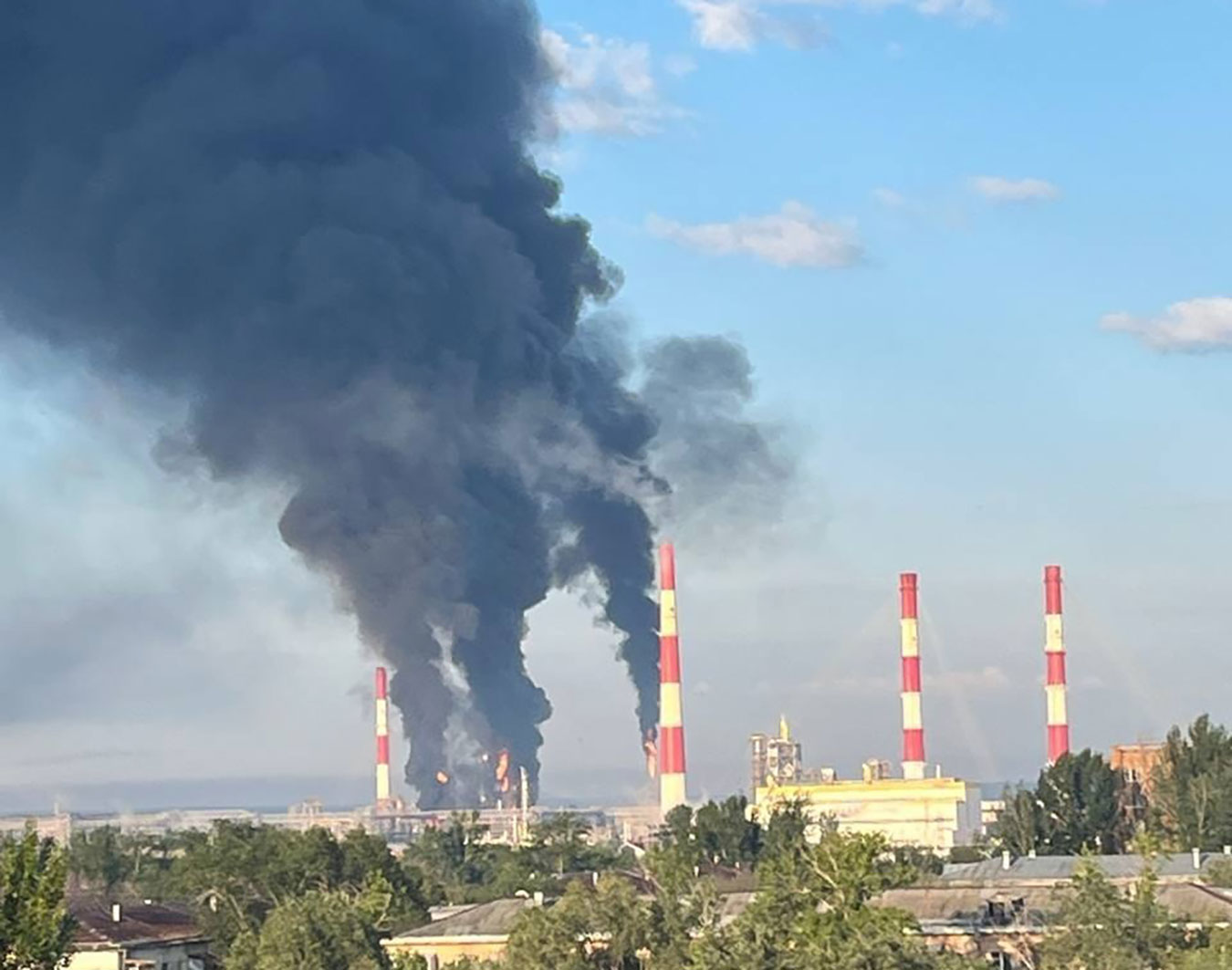
Smoke rising from the Novokuibyshevsk oil refinery in Samara Oblast, Russia, 30 October 2026

Ukraine's Defense Forces hit the Novokuibyshevsk oil refinery in Russia's Samara Oblast with FP-1 drones early on 30 October, Ukrainian drone maker Fire Point said, adding that one of the units hit hydrotreats diesel fuel. The strike came hours after WSJ reported that Ukraine had paused strikes on Russian refineries under pressure from US President Donald Trump until after the US midterm elections on 3 November.

Russia is pounding Ukraine's power grid and cities ahead of winter, with a mounting civilian toll, including 14 people killed on a Dnipro railway platform on 29 October. Ukraine's long-range drone strikes on Russian refineries, one of its most effective operations against Moscow, target the oil money that pays for that war. Trump has pressed Kyiv for weeks to stop them, blaming them for high global fuel prices, and Ukraine went quiet without saying so and without getting what it asked for in return, WSJ reported. The Samara strike is the first on Russian oil since then. Kyiv has not said whether the pause is over.

Fires spread across a refinery that makes jet fuel for Russia's military

Residents of Novokuibyshevsk reported drones, explosions, and a fire before dawn. Ukrainian Telegram channel Exilenova+ posted the first photos on Telegram at 05:24 Kyiv time, and Russian Telegram channel Astra geolocated the fire to the refinery, citing its open-source analysis of residents' photos.

Novokuybyshevsk, Samara region: locals report an attack and a fire. pic.twitter.com/9UEgqmkAOU

— Exilenova+ (@Exilenova_plus) October 30, 2026

By morning, Exilenova+ counted at least 11 separate fires at the refinery. Samara Governor Vyacheslav Fedorishchev said air defense and mobile fire groups were repelling an attack, Astra reported. The region had declared a drone alert and closed its airport.

Smoke rising from the Novokuibyshevsk oil refinery in Samara Oblast, Russia, 30 October 2026
Smoke rising from the Novokuibyshevsk oil refinery in Samara Oblast, Russia, 30 October 2026. Photo: Exilenova+

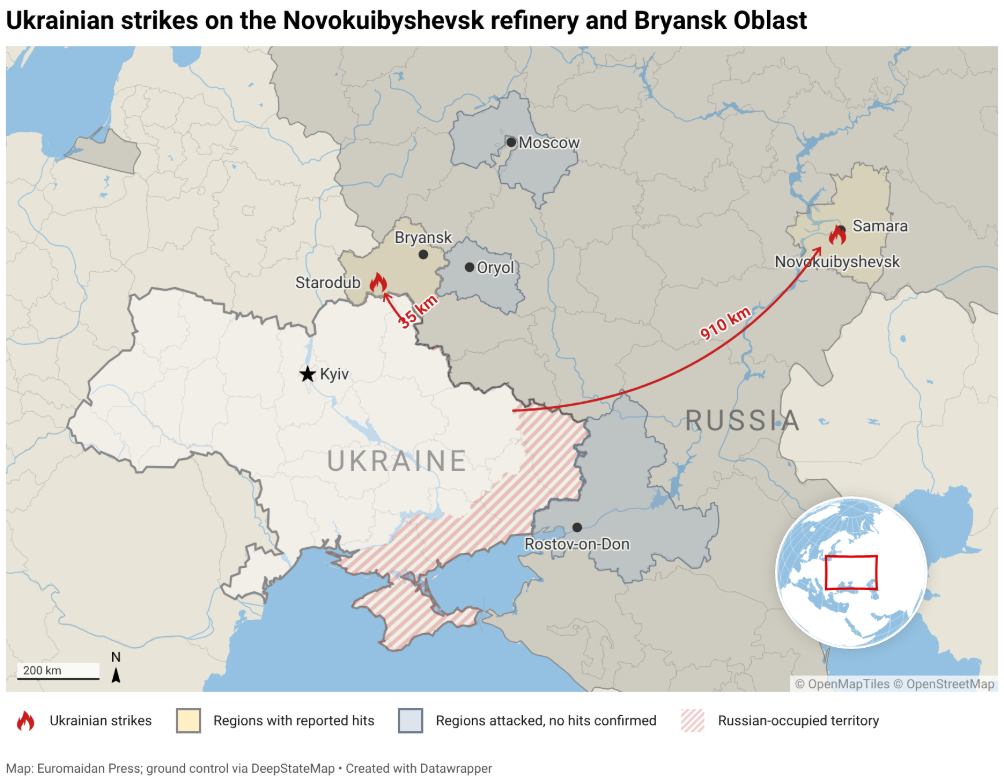
Fire Point said its FP-1 drones scored numerous hits on the refinery grounds, and that one of the units hit hydrotreats diesel fuel. The footage published so far shows several smoke columns over the plant but does not show which units burned. The Rosneft-owned refinery has a design capacity of 8.8 million tons of oil a year and is one of the main producers of jet fuel, according to its website. Astra says it supplies jet fuel to Russia's military. The plant lies about 910 km from the front line. Ukraine's General Staff has not commented.

pic.twitter.com/Ku6KRCKJ6v

— Exilenova+ (@Exilenova_plus) October 30, 2026

Ukrainian drones have hit the plant before. Ukraine's military said its forces hit it in August and caused a fire.

Map showing the Novokuibyshevsk refinery in Samara Oblast, about 910 km from the front line, and Starodub in Bryansk Oblast

It is the first fire at a Russian refinery since 15 October, when Ryazan's governor reported one at the city's refinery. It is also the first reported strike on Russia's oil industry since 20 October, when Ukrainian drones hit a Druzhba pipeline pumping station in Tambov Oblast. WSJ called that strike the last before the pause.

rosneft's kuibyshev refinery joins syzran novokuibyshevsk offline after ukrainian drone strike yesterday · post fires raging kuybyshevsky oil samara russia 10 2026 fires-rage-at-samara-kuybyshevsky-oil-refinery ukraine news reports
Explore further

All three Rosneft Samara refineries now offline or reduced as drones halt Kuibyshevsky operations yesterday

WSJ claims: Ukraine paused refinery strikes until after the US midterms

Ukraine's military paused its strikes on Russian refineries after weeks of pressure from Trump shook Kyiv's confidence in US support, people with knowledge of the operations told WSJ. The unofficial pause began early last week and is expected to last until after the midterms, and possibly deeper into November. Units carrying out long-range strikes were told in mid-October that the refinery campaign was effectively on hold once missions already under way were completed, two military officials said. Hours after the report, the Novokuibyshevsk strike called that account into question.

Smoke columns rise over residential buildings in Novokuibyshevsk, Samara Oblast, Russia, at dawn on 30 October 2026
Smoke columns rise over residential buildings in Novokuibyshevsk, Samara Oblast, Russia, at dawn on 30 October 2026. Photo: Astra

Ukraine's government has not announced a pause. Zelenskyy told reporters in Kyiv on 27 October that “our guys tried to be a little more careful during these days. But they do not have an order” not to hit refineries, according to WSJ. He said drone units were hitting other kinds of targets in Russia.

Trump's envoy Jared Kushner repeated the demand to stop the strikes at a meeting with Zelenskyy in Oslo on 20 October, two US officials told WSJ. One of them called the conversation “very tough.” Kushner, who joined remotely, said he and envoy Steve Witkoff were spending a lot of time, energy, and jet fuel on mediating with Moscow, and that a 30-day pause on refineries would be a way for Ukraine to show gratitude, the official said.

again trump presses zelenskyy stop russian refinery strikes · post ukrainian president volodymyr meets donald ankara türkiye 8 2026 presidentgovua ukraine news reports
Explore further

Energy truce with strings attached: Kyiv reportedly told to spare Russian refineries or lose US intelligence and arms

Zelenskyy had asked for something in return, WSJ reported: a mutual energy ceasefire with Russia, Patriot missiles for Ukraine's grid, or permission to use Starlink inside Russia so drones could destroy Russian missile launchers. None of those ideas got far. Some of Kyiv's European backers also nudged Zelenskyy to pause until after the midterms, a senior European official said.

The pause showed in Russia's oil industry. Russian refinery utilization at the end of October was 25% higher than at the start of the month as drone attacks subsided, Reuters reported, according to The Moscow Times.

Russia claims over 1,000 drones for a second night as Moscow's airports close again

Russia's Defense Ministry said it downed 1,043 Ukrainian drones overnight over 19 regions, including Samara Oblast, the Moscow region, and Tatarstan. The night before, it claimed 1,214.

Moscow Mayor Sergei Sobyanin stated that 862 drones flew toward the Moscow region between 20:30 on 29 October and 07:30 on 30 October, that most were downed on the far approaches, and that 170 were downed on approach to the capital. Russia's aviation agency restricted flights at all four Moscow airports, Astra reported. A day earlier, more than 460 flights were delayed or canceled at Moscow and St. Petersburg airports, Astra counted.

A building on fire at night in Starodub, Bryansk Oblast, Russia, 30 October 2026
A building on fire at night in Starodub, Bryansk Oblast, Russia, 30 October 2026. Readers who sent the footage to Astra identified it as the Konservsushprod food plant. Photo: Astra

In Starodub, in Russia's Bryansk Oblast, about 35 km from the Ukrainian border, a building of the Konservsushprod plant, which makes canned food for the Russian army, appeared to be on fire in readers' photos and videos, Astra reported, saying the plant was presumably attacked and that its open-source analyst had not verified the footage. The Atesh partisan movement reported a blast in Aleksandrovka in Rostov Oblast, and air defense fire and an explosion in Orel.

A diesel tank burns at Transneft’s Druzhba hub as Ukraine keeps striking Russian energy despite Trump’s pressure

20 octobre 2026 à 09:40

diesel tank burns transneft’s druzhba hub ukraine keeps striking russian energy despite trump’s pressure · post fire nikolskoye oil fuel pumping station russia’s tambov oblast after drone attack 20 2026

Drones attacked an oil and fuel pumping station of Russia’s Druzhba pipeline system in Tambov Oblast overnight on 20 October, setting a diesel tank on fire, Ukrainian monitoring channel Exilenova+ reported, citing locals. Druzhba, Russian for “friendship,” is a Soviet-era oil pipeline, about 4,000 km long, that carries Russian crude west to Europe, including through a branch that crosses Ukraine. The struck station is on its Russian section. Tambov Oblast Governor Yevgeny Pervyshov confirmed a fire at an unnamed enterprise in Michurinsk district after what he called a Ukrainian drone attack. The station lies about 400 km from the front line.

Ukraine has spent months striking the refineries, terminals, and pipelines that fund Russia’s war, and its Defense Ministry says the strikes have knocked out more than half of Russia’s refining capacity. Washington wants them stopped. US officials reportedly tied intelligence sharing to a halt in refinery strikes, and US President Donald Trump called their resumption “a disgrace.”

Hours of attack before dawn

Russia’s regional alert system declared a drone threat at 03:38, Ukrainian military outlet Militarnyi reported. By 06:25, Exilenova+ said the Nikolskoye station was under attack, after Michurinsk had been under attack for several hours.

The Nikolskoye fuel pumping station in Russia’s Tambov region is under attack. pic.twitter.com/cA64vMgjsM

— Exilenova+ (@Exilenova_plus) October 20, 2026

Pervyshov said four Ukrainian drones were shot down over the region and no one was hurt. He did not name the site.

More footage from the Nikolskaya oil pumping station. Locals report that a tank containing diesel is on fire. pic.twitter.com/1jvbxSuGHo

— Exilenova+ (@Exilenova_plus) October 20, 2026

Ukraine has not commented. The General Staff’s 20 October list of overnight strikes does not mention Tambov Oblast.

The Nikolskoye oil and fuel pumping station in Russia’s Tambov Oblast, which drones attacked on 20 October 2026.
The Nikolskoye oil and fuel pumping station in Russia’s Tambov Oblast, which drones attacked on 20 October 2026. Map: Militarnyi/ESRI

A Druzhba fuel hub hit before

The Nikolskoye station belongs to Transneft, Russia’s state pipeline operator. It stores and pumps crude oil and refined fuels, including diesel, gasoline, and jet fuel. The complex has three tank farms and two pumping stations, and it can move up to 300,000 tonnes a day, according to Current Time.

Ukrainian drones hit a station of the same hub in August 2025, and Ukraine’s General Staff said then that pumping on the pipeline had stopped completely.

Strikes resume despite US pressure

Ukraine paused refinery strikes for three days after Trump announced an “energy ceasefire” on 11 October, while Russia fired 39 ballistic missiles at Ukraine’s grid. Since Kyiv resumed the strikes, drones have also hit an oil terminal and a fuel depot in St. Petersburg.

Kyiv reads other US moves as pressure too, from missed warnings of Russian ballistic launches to a Starlink cap that slows Ukrainian drones. President of Ukraine Volodymyr Zelenskyy told US senators he had offered a 30-day halt on refinery strikes in exchange for Patriot interceptors, but Trump’s envoys showed no openness.

  • ✇Euromaidan Press
  • Russia’s war against Ukraine sends the bill to its own companies: bond defaults head for a 17-year high
    More than 50 Russian companies could default on their bonds this year, the most since 2009, a rating-agency analyst told Russian newspaper Izvestia, which reported it on 6 October. Russia's wartime economy is straining under high interest rates, and the budget is too: the 2026 deficit has nearly doubled from the earlier forecast to a record $88 billion, with more deficits planned for the next three years as Moscow raises taxes to fund the war and plans its biggest defense budget since t
     

Russia’s war against Ukraine sends the bill to its own companies: bond defaults head for a 17-year high

7 octobre 2026 à 11:31

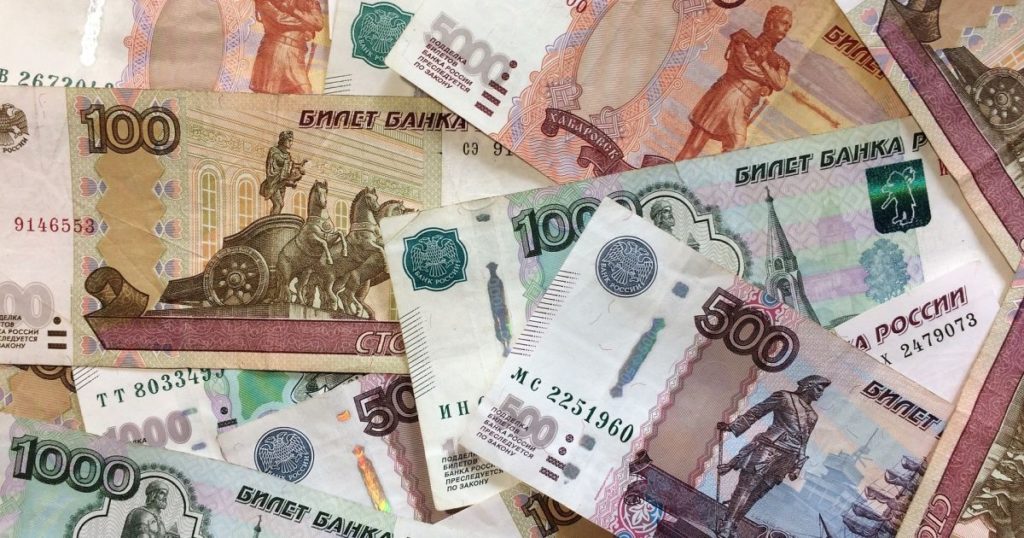
russia facing record number corporate defaults second time decade one main causes being same—waging war against ukraine · post russian rubles tsn money news ukrainian reports

More than 50 Russian companies could default on their bonds this year, the most since 2009, a rating-agency analyst told Russian newspaper Izvestia, which reported it on 6 October.

Russia's wartime economy is straining under high interest rates, and the budget is too: the 2026 deficit has nearly doubled from the earlier forecast to a record $88 billion, with more deficits planned for the next three years as Moscow raises taxes to fund the war and plans its biggest defense budget since the full-scale invasion began.

A default is a situation in which a company cannot make promised interest payments to investors on time or repay borrowed money. If a payment is not made by the agreed deadline, the company becomes delinquent, which under certain conditions is recognized as a default.

So far this year, 20 companies have defaulted for the first time, compared with 24 in all of 2025, said Mikhail Nikonov of the Expert RA rating agency. Most of the companies that missed payments are small issuers of high-yield bonds, Izvestia reported.

In 2026, Russian companies have missed payments totaling 41 billion rubles (about $490 million), compared with 34 billion rubles (about $410 million) the previous year, according to investment bank Sinara.

Russia faces a new wave of corporate defaults

By the end of 2026, the number of Russian companies unable to service their ruble-denominated debt on time could reach 40–50, the highest level since 2010, said Pavel Zholobov, junior managing director at the NRA rating agency.

The number of bond defaults in 2026 has already reached its highest level in a decade, Zholobov said. Similar figures were recorded in the mid-2010s: in 2014, 35 companies missed payments; in 2015, 52 did so; and in 2016, there were 44 issuers. This occurred in part after Western sanctions were imposed on Russia over its annexation of Crimea and its war in Donbas, as well as amid a halving of oil prices and a sharp weakening of the ruble.

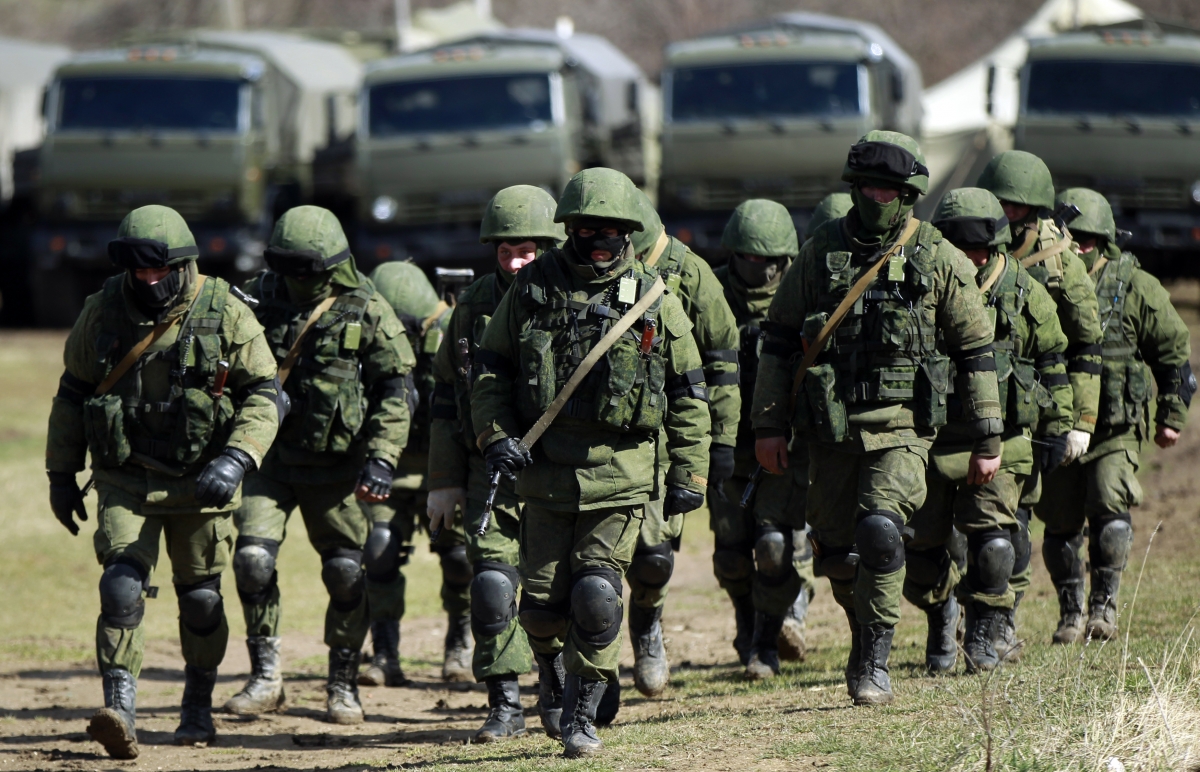
So-called "little green men" (the Russian occupation troops comprised special forces who removed insignia, wear face masks to prevent identification and call themselves a "Crimean self-defense force") surround a Ukrainian military base in Perevalne, Crimea, during the Russian annexation of the peninsula in February-March 2014.

There were more defaults only in 2009. At the time, amid the fallout from the global financial crisis, more than 100 issuers faced payment problems, while the volume of distressed debt reached nearly 200 billion rubles, Zholobov noted.

High interest rates put pressure on companies

This time, the main reason for companies' difficulties in making bond payments has been the prolonged period of high interest rates, which has continued since 2023. Companies are raising financing at high interest rates but are unable to refinance their debt on more favorable terms, explained Ekaterina Sidorova, head of the Foreign Exchange, Commodities and Debt Markets Department at SberCIB Investment Research.

At the same time, the situation does not yet resemble a systemic debt crisis: defaults are primarily being recorded among companies with low credit ratings and high debt burdens, Sidorova said.

If a company fails to repay bond debt, it is given 10 business days to meet its obligations. If it fails to do so, the company may offer investors a restructuring—for example, by postponing payments in exchange for a higher interest rate.

The number of defaults will remain high in 2027, Sidorova believes.

High interest rates were a response to accelerating inflation in Russia. Domestic demand was outpacing production, Russia's Central Bank said in October 2023. Sanctions over the war and rising defense spending had also hit the economy and the ruble, which had lost about 25% against the dollar that year. The bank raised its key rate from 7.5% in the first half of 2023 to 15% by the fall.

Ukraine targets Russia's oil industry to weaken its war economy

Ukraine is also seeking to weaken Russia's economy as part of efforts to reduce its ability to finance the war. In particular, Defense Minister Yevhenii Khmara said strikes on oil refineries are aimed at "bleeding the Russian war machine" and destroying its military and economic potential. According to the ministry, the attacks have knocked out more than 51% of Russia's oil refining capacity.

In the first half of July, Russian oil refineries processed about 3.9 million barrels of oil per day—the lowest level since March 2005. Due to the production cuts, Moscow was also forced to restrict fuel exports.

❌