Vue normale

Reçu — 14 juillet 2026 Euromaidan Press
  • ✇Euromaidan Press
  • Ukrainian pilots opened the Bastille Day flypast from French fighter jets
    Two French Mirage 2000B fighters opened the Bastille Day flypast over Paris on 14 July, each with a Ukrainian co-pilot in the cockpit, Militarnyi reported. It was the first time Ukrainian pilots had taken part in France's national parade. French pilots flew the aircraft; the Ukrainians served as second pilots. The Mirage 2000-5F that France sends to Ukraine is a single-seat aircraft, so there is no room for a passenger. The two-seat 2000B was flown instead—the trainer versi
     

Ukrainian pilots opened the Bastille Day flypast from French fighter jets

14 juillet 2026 à 11:04

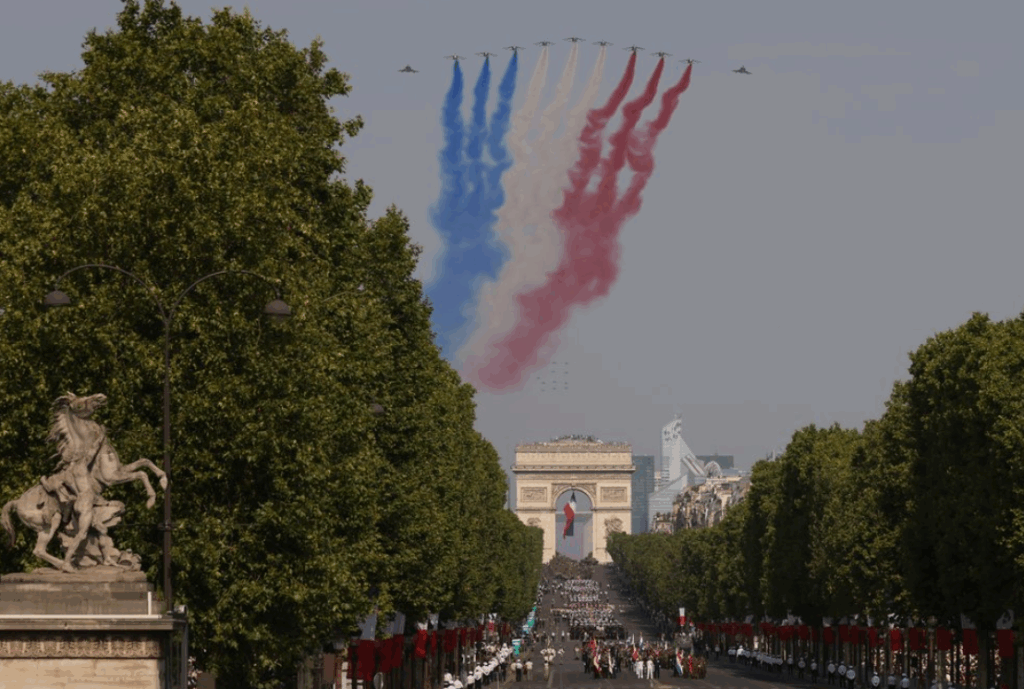
The French Air and Space Force's national aerobatic team performs a flypast during the annual Bastille Day military parade on the Champs-Élysées, with the Arc de Triomphe in the background, Paris, France, 14 July 2026. Photo: AP/Thomas Padilla

Two French Mirage 2000B fighters opened the Bastille Day flypast over Paris on 14 July, each with a Ukrainian co-pilot in the cockpit, Militarnyi reported. It was the first time Ukrainian pilots had taken part in France's national parade. French pilots flew the aircraft; the Ukrainians served as second pilots.

The Mirage 2000-5F that France sends to Ukraine is a single-seat aircraft, so there is no room for a passenger. The two-seat 2000B was flown instead—the trainer version. Ukrainian pilots and aircraft technicians are still training on the type at Luxeuil air base in eastern France, ahead of further Mirage deliveries.

What France put in the air

The flypast began at 10:21 a.m. in Paris, ahead of the ground columns. Ninety-five aircraft crossed the sky over Paris—84 French and 11 from other European countries, along with 32 helicopters.
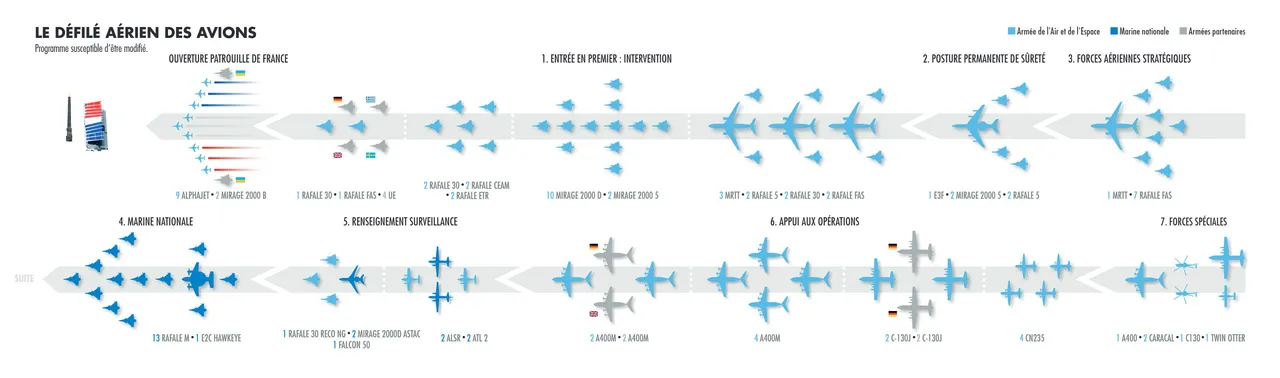
Flight plan for France's Bastille Day air parade on 14 July 2026. Source: Armée de l'Air et de l'Espace
Flight plan for France's Bastille Day air parade on 14 July 2026. Photo: Armée de l'Air et de l'Espace

For the first time at a Bastille Day parade, French fighters flew with weapons mock-ups fixed under their wings, among them the Scalp cruise missile France supplies to Ukraine for strikes on Russian targets, France 24 reported. The Élysée called it an unprecedented demonstration of how France's land and air forces now work together.

It was the largest parade France has staged: 6,686 troops on foot and 315 vehicles, with 98 aircraft and 31 helicopters listed in the official program the day before—a handful fewer flew on the day. Around 500 soldiers from 35 Coalition of the Willing countries opened the march. Twenty-five Ukrainian soldiers followed them.

What leaders said

The parade was French President Emmanuel Macron's tenth and last as commander-in-chief, as he leaves office in 2027. The Élysée gave it a theme: the strategic awakening of Europe.

"The message we send to the world is this: Yes, peace is our goal. Yes, we cherish freedom and the rule of law. And yes, we stand ready to fight to defend them. Always, and at the cost of blood if necessary," Macron said in his address to the armed forces on the eve of the parade.

President of Ukraine Volodymyr Zelenskyy echoed that message and told the French news channel BFMTV that this parade, this idea of inviting Ukraine, of bringing together the coalition of the willing, of staging this demonstration—all of it is a very good signal. 

Then he added that people only realize the war is close, he said, when it comes within 50 km of their border. He thanked the French for understanding—and noted that the problem is not France's alone: if the war is not in your country, not on your land, not in your house, you cannot feel it.

Macron: "Proud to see the Ukrainian military marching alongside our forces." https://t.co/2f44QwAZyN

— Euromaidan Press (@EuromaidanPress) July 14, 2026

What Bastille Day is

France's national holiday marks 14 July 1789, when Parisians stormed the Bastille fortress and prison— the event that started the French Revolution and brought down the monarchy. The military parade on the Champs-Élysées is its centerpiece, and the guest list is always a statement.

The symbolism extended beyond the parade itself. It came a day after Macron hosted the Coalition of the Willing summit in Paris, where European governments discussed a new air-defense initiative built around a Ukrainian interceptor.

  • ✇Euromaidan Press
  • Ukraine is building a flight school under fire—and the simulator delivery shows how fast
    Ukraine's Air Force has received a second batch of mobile F-16 flight simulators, the Defense Ministry announced on 13 July. The machines let pilots rehearse combat without taking off—and, unlike an ordinary simulator, they can be packed up and driven somewhere else when the airfield gets hit. Ukraine fights a war in which its most valuable equipment is the hardest to replace, and Russia targets the bases where that equipment sits. Anything that generates combat capability
     

Ukraine is building a flight school under fire—and the simulator delivery shows how fast

14 juillet 2026 à 08:52

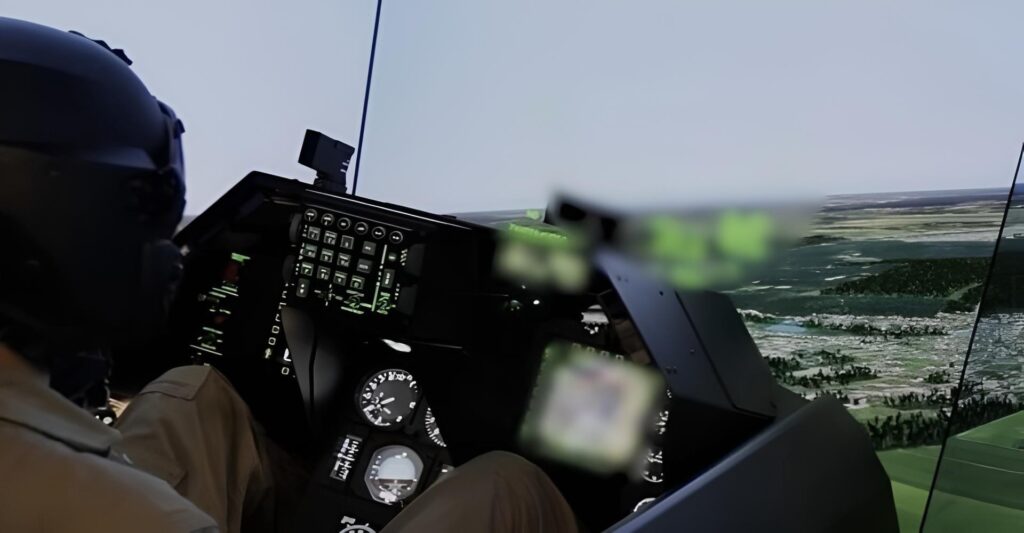
F-16 simulator of the Ukrainian Air Force. Still from a video by Ukraine's Ministry of Defense

Ukraine's Air Force has received a second batch of mobile F-16 flight simulators, the Defense Ministry announced on 13 July. The machines let pilots rehearse combat without taking off—and, unlike an ordinary simulator, they can be packed up and driven somewhere else when the airfield gets hit.

Ukraine fights a war in which its most valuable equipment is the hardest to replace, and Russia targets the bases where that equipment sits. Anything that generates combat capability without exposing an aircraft —or a runway—is worth more here than the same thing would be worth to any NATO air force in peacetime.

Why a simulator matters more here than anywhere else

Ukraine has taken delivery of roughly half of the fighter jets its European partners promised. The ones that fly are in the air defending Ukraine each night. None can be quickly replaced, and each has a finite number of flight hours in its airframe before it requires deep maintenance.

That makes training expensive in a way it isn't for other air forces. Every hour a Ukrainian pilot spends learning to intercept a cruise missile is an hour of wear on a jet that should be intercepting cruise missiles. A simulator hour costs less, risks no aircraft, and uses none of the fleet's life.

"More training means faster preparation, preserved aircraft service life, and significantly higher effectiveness in the air. Protecting the sky is our top priority." Defense Minister Mykhailo Fedorov said when the first mobile units arrived in April.

The part that moves

A conventional flight simulator is a building, it has an address, and Russia knows the addresses of Ukraine's airbases.

These simulators don't, because they were built to Ukraine's own specifications—the software models Ukrainian terrain and weather—and they can be relocated within days. Training stops for nobody's missile strike. It resumes next week somewhere else. Fedorov called mobility critical to pilot safety amid constant attacks. The Ministry says only a handful of such systems exist anywhere, because they are expensive to build.

The Netherlands, Czechia, and Austria supplied this batch through the Air Force Capability Coalition, the group of countries that has spent the last three years building Ukraine's F-16 force — jets, pilots, and the training to fly them

  • ✇Euromaidan Press
  • Europe’s answer to the Patriot costs $700,000 a shot—and no foreign government can switch it off
    Ten countries launched a coalition in Paris on 13 July around Freya, a Ukrainian-made interceptor meant to shoot down Russian ballistic missiles at a fraction of a Patriot's cost. President of Ukraine Volodymyr Zelenskyy told the meeting he hopes to see Freya working within a year. Its maker does not expect to intercept a ballistic missile until the end of 2027. Ukraine shoots down four out of ten Russian ballistic missiles. Only the American Patriot reliably kills them, Uk
     

Europe’s answer to the Patriot costs $700,000 a shot—and no foreign government can switch it off

14 juillet 2026 à 06:52

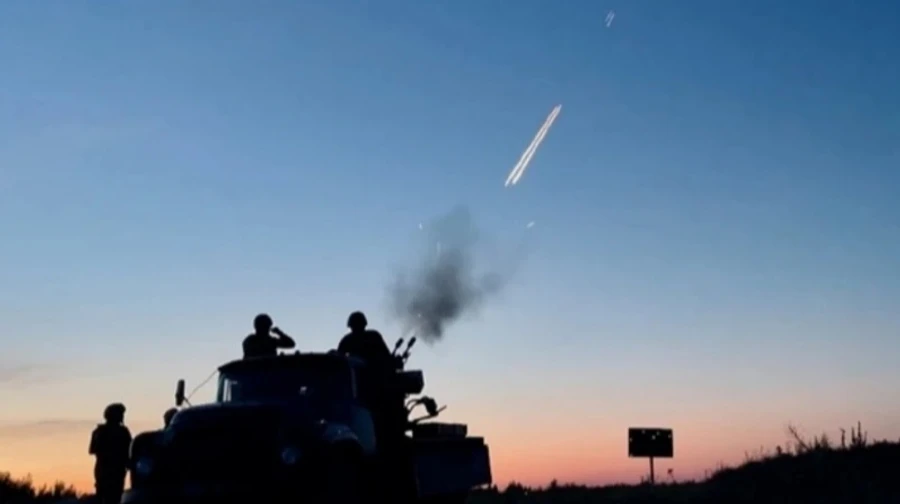
Ukrainian air defense unit. Photo: Western Operational Territorial Command of the National Guard of Ukraine

Ten countries launched a coalition in Paris on 13 July around Freya, a Ukrainian-made interceptor meant to shoot down Russian ballistic missiles at a fraction of a Patriot's cost. President of Ukraine Volodymyr Zelenskyy told the meeting he hopes to see Freya working within a year. Its maker does not expect to intercept a ballistic missile until the end of 2027.

Ukraine shoots down four out of ten Russian ballistic missiles. Only the American Patriot reliably kills them, Ukraine burns through about 60 of those interceptors a month on what its Air Force calls a "starvation ration," and there is one company on Earth that builds them.

What Freya is

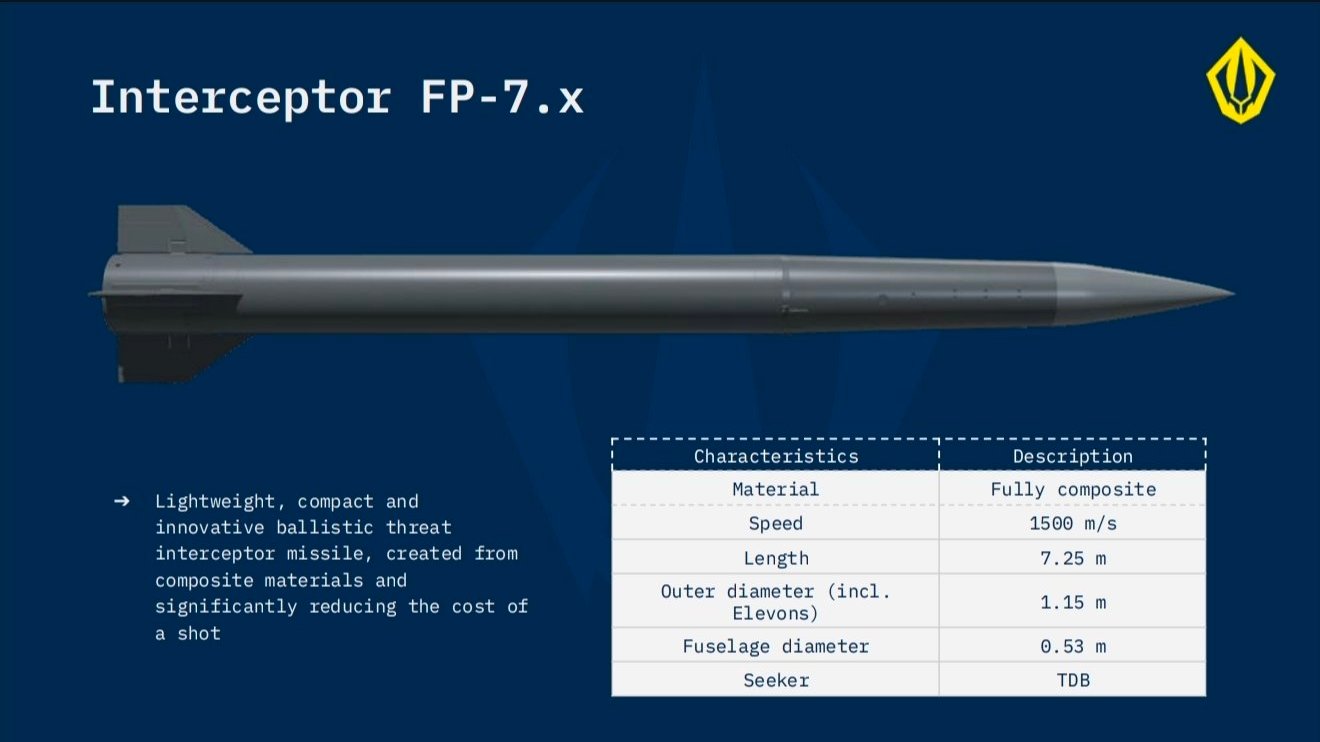
It is not a new weapon. Kyiv arms maker Fire Point is converting a ground-attack ballistic missile it already builds into an interceptor, reusing the airframe of a Soviet-era missile Ukraine's air force has flown for decades.

Freya's shot costs around $700,000. A Patriot interceptor costs $3.8 million—more than five times as much. The idea is a missile cheap enough to fire at everything Russia launches.

It is also slower than its target, a Russian Iskander comes down at roughly 2,100 meters per second; the Freya tops out near 2,000 meters per second. It does not win a chase. It gets to the right piece of sky first and waits.


Freya system missile.

Freya system missile. Chart: Fire Point.

A missile alone is not an air defense system. It needs radar to see the incoming missile, radar to steer the interceptor, and a command center to run the intercept. Ukraine is buying it all in Europe: Fire Point has signed a memorandum with Germany's Hensoldt for the detection radar—its CEO says the radar gap is now closed—while firms in Denmark, Italy, and Norway remain candidates for the rest.

The part nobody has

What turns a rocket into an interceptor is the seeker—the eye that finds a missile falling at six times the speed of sound. Fire Point wants it from Germany's Diehl Defense. There is a cooperation agreement, signed in April. As of the company's last public account, there was no supply contract.

The plan is to start serial production of missile bodies in August, at up to three per day, and to store the airframes until German seekers arrive. Ukraine will spend the autumn filling a warehouse with half-finished missiles. Diehl has published no delivery schedule.

Freya system missile.
Explore further

The Freya air defense system could take down Russian ballistic missiles. Can Ukraine build it?

The missile itself works, the first flight test reached 25 km—Patriot's altitude—and steered mid-flight. It has still never met a ballistic missile.

What Paris did and didn't do

The coalition produced a declaration and a flagship project, but no money for either. Marc DeVore, a St Andrews scholar of arms production, told Euromaidan Press he would be "very happy" if Freya were truly operational by December 2027, and is "fairly doubtful" about December 2026. Intercepting ballistics, he noted, is harder than anything Ukraine has already mastered—drones included.

❌