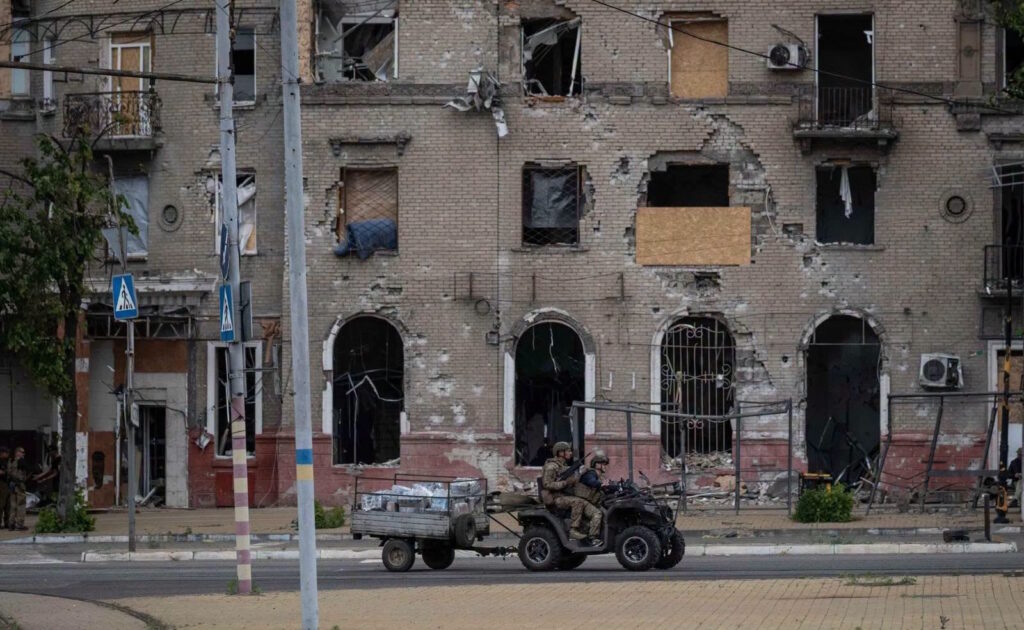
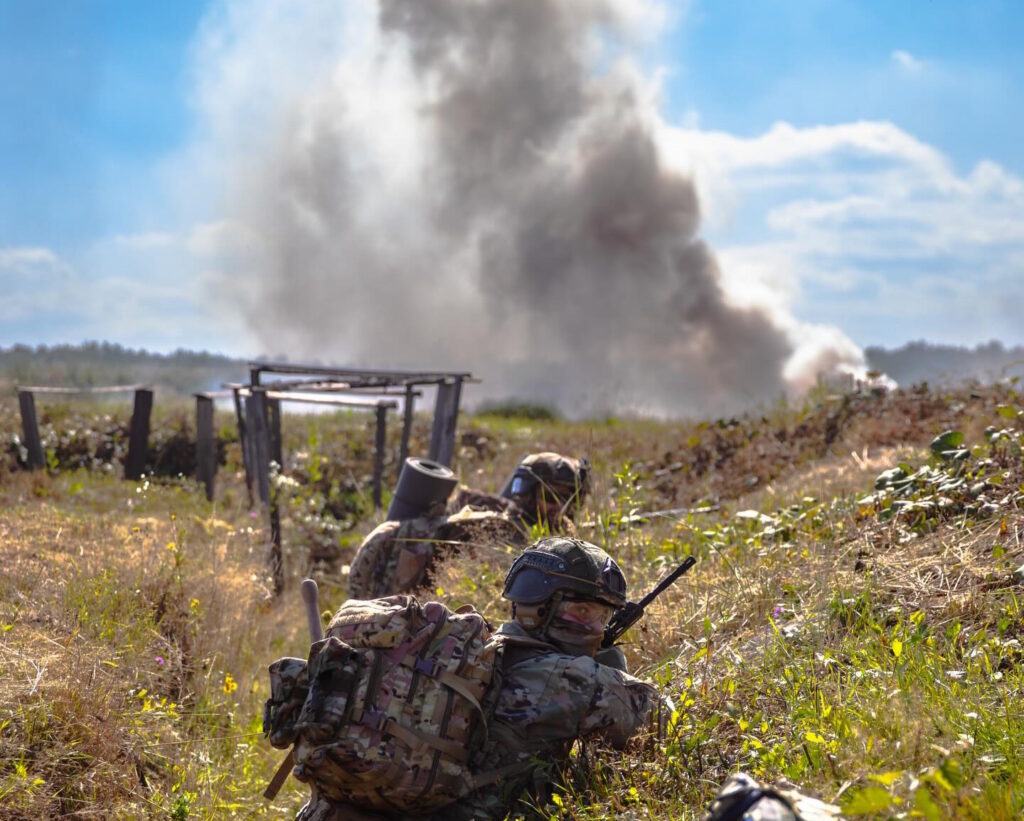
DeepState assesses that Russia would need about two years to seize the entire Donetsk Oblast. OSINT project's co-founder Roman Pohorilyi estimates that Russian forces would suffer "a colossal number of losses" to achieve it at the current pace of advance, in a comment to LIGA.net.
The assessment quantifies the gap between Russia's diplomatic demands and its military capacity. Moscow has used US-mediated talks to push for territorial concessions it cannot win on the battlef
DeepState assesses that Russia would need about two years to seize the entire Donetsk Oblast. OSINT project's co-founder Roman Pohorilyi estimates that Russian forces would suffer "a colossal number of losses" to achieve it at the current pace of advance, in a comment to LIGA.net.
The assessment quantifies the gap between Russia's diplomatic demands and its military capacity. Moscow has used US-mediated talks to push for territorial concessions it cannot win on the battlefield, while Pohorilyi's two-year estimate roughly aligns with NATO's February 2026 view that Ukraine's Donbas front would not collapse for at least 18 months.
"At the current pace, we estimate that capturing the Kramatorsk-Sloviansk agglomeration and the rest of Donetsk Oblast would take Russia approximately two years, with a colossal number of losses," Pohorilyi believes.
Russia demands what it cannot militarily take
Russia regularly demands that Ukraine cede Donbas as part of negotiations to end the Russo-Ukrainian war. The DeepState assessment puts the actual military cost of fulfilling that demand at roughly two more years of attritional warfare.
The figure is itself "an answer to the question of whether we should give up our territory just like that," Pohorilyi said.
The Institute for the Study of War concluded in May 2026 that Russia's "exaggerated territorial ambitions and aggressive territorial demands run completely counter to battlefield reality," and that the experts could no longer forecast when Russia might seize the rest of Donetsk Oblast, or whether it can at all.
Russian forces first infiltrated Kostiantynivka, the southernmost city of Ukraine's Fortress Belt, in October 2025 and produced no meaningful battlefield progress in the six months that followed.
NATO and DeepState assessments converge
A NATO official told LIGA.net in February 2026 that the alliance does not expect a collapse of the Ukrainian Donbas front for at least the following 18 months.
Pohorilyi told LIGA.net he agrees that "Russians won't have it so easily," adding that the timeline may take perhaps a bit more time than NATO said.
ISW assessed on 10 June 2026 that Russian forces remain unlikely to seize Ukraine's Fortress Belt, the 50-kilometer chain of fortified cities from Sloviansk through Kramatorsk to Druzhkivka and Kostiantynivka, reinforced since 2014 — in 2026, though they will likely make tactical gains at high cost.
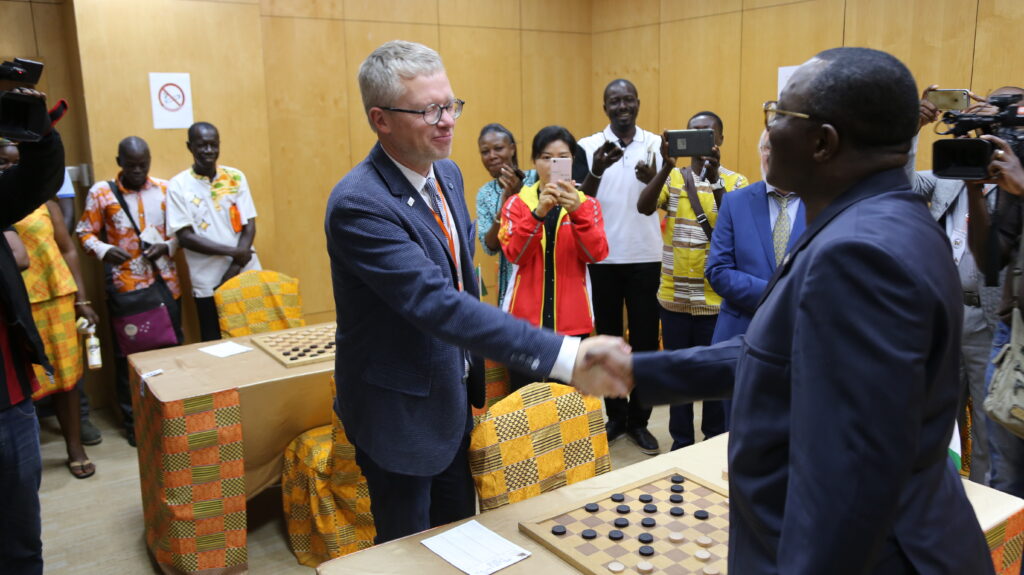
Sport keeps quietly letting Russia and Belarus back in, and the officials who take those decisions seldom explain why out loud. Janek Mäggi is an exception. The president of the World Draughts Federation (FMJD)—whose board has just cleared Belarusian players to return from 1 July—lays out the case plainly: the sport has lost half of its elite, the standard has dropped sharply, and a federation this small cannot run a foreign policy of its own.
Tennis never removed them
Sport keeps quietly letting Russia and Belarus back in, and the officials who take those decisions seldom explain why out loud. Janek Mäggi is an exception. The president of the World Draughts Federation (FMJD)—whose board has just cleared Belarusian players to return from 1 July—lays out the case plainly: the sport has lost half of its elite, the standard has dropped sharply, and a federation this small cannot run a foreign policy of its own.
Tennis never removed them at all.
His federation is one of many. Four years into Russia’s full-scale war, international bodies are easing Russian and Belarusian athletes back through a now-familiar route.
It is not a public reversal of sanctions but a “neutral athlete” pathway—competing without flag or anthem—that widens by degrees until the exclusion has all but ended. Tennis never removed them at all. Judo, aquatics, gymnastics, equestrian sport, several winter sports, and ice hockey have settled into versions of the same arrangement.
The argument has narrowed as it has spread. In 2022, the question was whether Russian athletes belonged in world sport while their state invaded a neighbor. By 2026, many governing bodies have swapped it for a smaller one: on what terms should they be allowed back?
This interview is the other chair at the table.
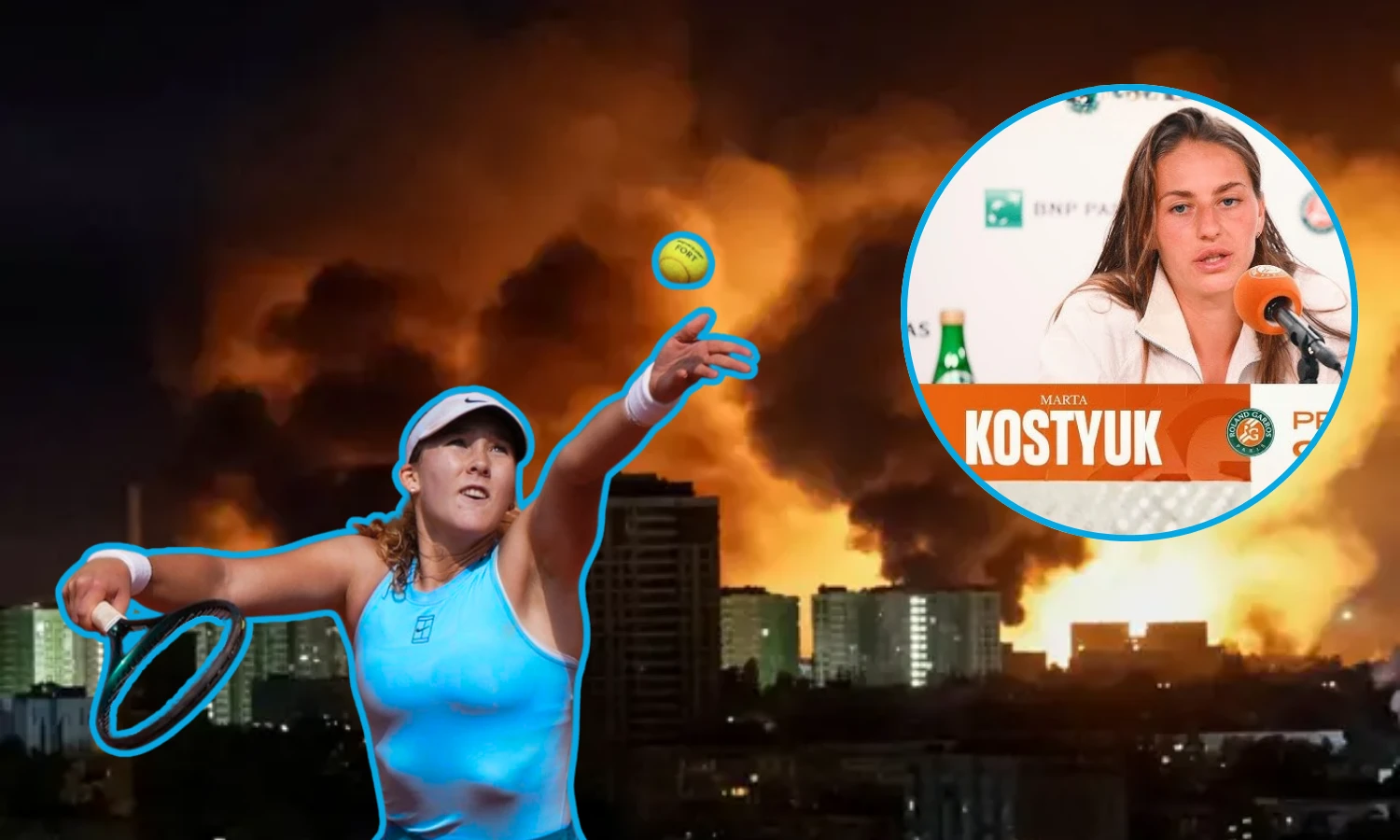
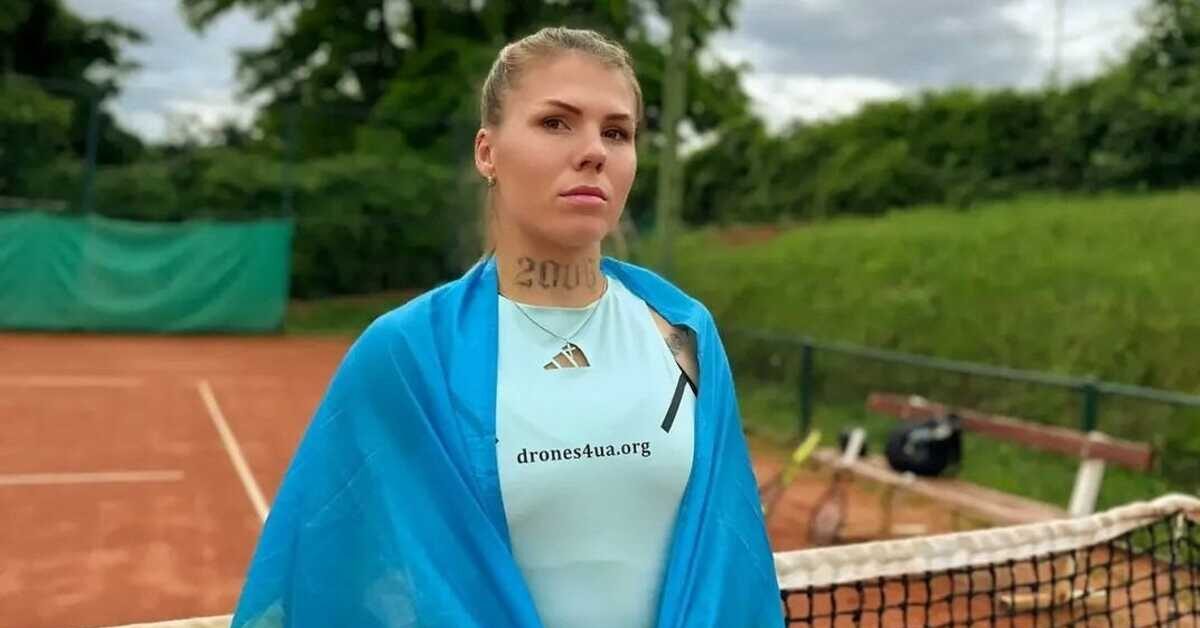
Euromaidan Press has reported the athletes’ side of that argument—Ukrainian players who refuse the handshake, who read out overnight casualty counts before walking on court, who say that playing as though nothing is happening is itself a political act. This interview is the other chair at the table.
Explore further
Ukraine plays Russia today for a French Open final. The Russian stays mum on war; the Ukrainian doesn’t
Euromaidan Press spoke with Mäggi on 8 June 2026—days before the FMJD board voted unanimously to readmit Belarusian players, both youth and adults, from 1 July under neutral status, without flag or anthem. That was the cautious route Mäggi forecasts below: short of the full return the IOC recommended on 7 May, and with no decision on Russia.
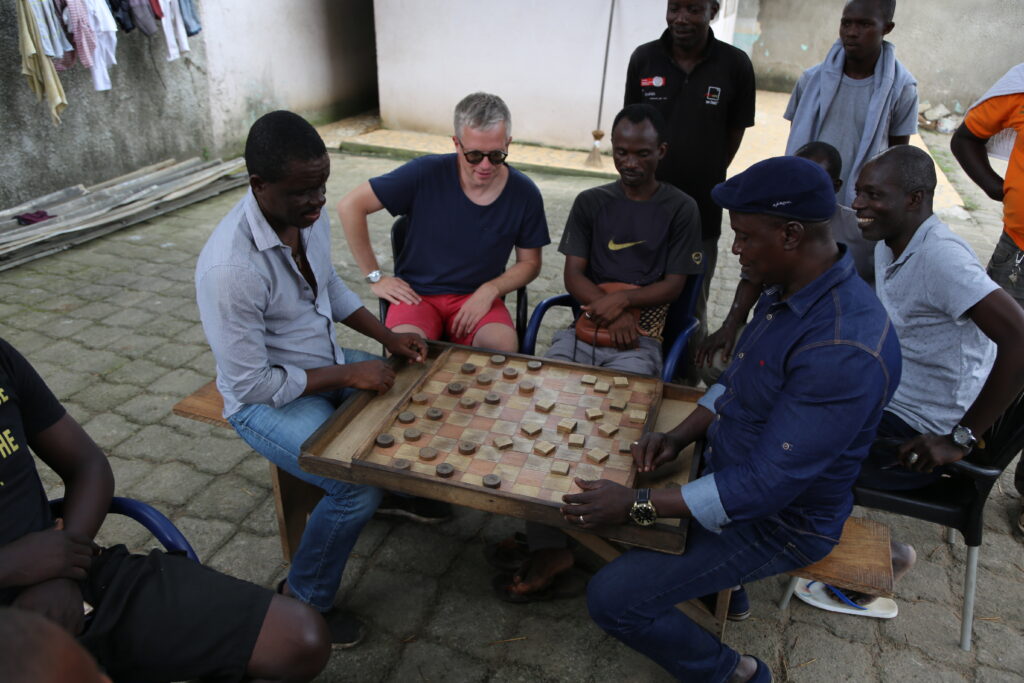
Janek Mäggi plays members of a draughts club in Abidjan, Ivory Coast. Photo: Janek Mäggi’s private collection.
Peeter Helme:Various world sports federations have started letting Russia, and Belarus too, back into their ranks to compete under their own flag. Can you describe what the reasons are—and, if it isn’t a secret, whether you in the Draughts Federation are discussing this, and what the arguments are?
Janek Mäggi: It is actually very simple. The overwhelming share of top athletes are Russian and Belarusian—and not only in draughts, which has some 200 million players worldwide, or chess, with around 600 million. Both rank among the world’s ten largest sports by participation, and the same pattern is taken for granted almost everywhere.
There are 125 sports federations recognized by the International Olympic Committee, and in many of them, the very best players have come from these two countries.
The sport has two, really three, core disciplines: checkers, played by about 100 million people.
In draughts this is completely the case—essentially half the world has been removed. The sport has two, really three, core disciplines: checkers, played by about 100 million people; international draughts, about 40 million; and Russian draughts, around 50 million. Add Brazilian draughts and a few smaller variants, perhaps 10 million more.
Take last year’s World Championship in Yaoundé, Cameroon. Nine of the 12 finalists were Dutch, three-quarters of the final. That is completely abnormal; it looked like a Dutch national championship.
With the Russians and Belarusians gone, a great many strong players were simply not there, and chance had more room. So, point one: over these four years, the level of tournaments has dropped sharply. That is a very big problem.
The Russians, of course, immediately poured their energy into their own international body and many countries are in it.
The second thing that has happened is alarming: the standard among young players has fallen. The Russians, of course, immediately poured their energy into their own international body—the International Draughts Federation (IDF)—and many countries are in it. The Western draughts world we imagine as the whole universe is, in fact, very small.
Compare it with Africa: the European Union fits into the continent more than seven times over, the population is far larger, and the standard of play is high there too. Their young players keep developing in their own environment, undisturbed.
China alone has 542,000 draughts players competing in title events.
And the Russian grandmasters? They all work in China now—every one of them, because the Chinese pay enormous salaries. China alone has 542,000 draughts players competing in title events, and those are only the ones in title tournaments.
Explore further
Sport is letting Russia back in. This Ukrainian tennis player says no.
Helme:The Ukrainian athletes make a different argument—that this is not about the standard of play, but about competing alongside people representing a state that is waging war on Ukraine. What do you say to that?
Mäggi: On the players themselves: they are certainly not warmongers—at least in draughts; I do not know other sports as closely. In chess, it is the same story, and I sit on the International Mind Sports Association too. They really are not.
Most of them are close friends of mine—friends of 30 years. They are exactly like you: they sit down, we play, we talk. Some views differ, and there is the odd madman, but a great many genuinely good players have now been shut out.
Belarus has met all of the IOC’s requirements, and Russia has not.
On 7 May, the International Olympic Committee decided that Belarus, for one, should be readmitted. The underlying reason is the one I described, but the important part was the wording: Belarus has met all of the IOC’s requirements, and Russia has not. So between the two, there is, by now, quite a large difference.
There is also a contradiction that the sports world cannot resolve. Some countries argue that the United States should be barred from every competition for attacking Iran, and that any tournament with Israeli participants should be banned outright—and that, measured against them, Belarus is a very peaceful country.
Helme:You see a clear difference between Russia and Belarus. But why does that judgment fall to the IOC—why shouldn’t, for example, the draughts federation set its own line?
Mäggi: What guides a world federation? Firm principles. We want to be part of the international sports community, and that is the key point: we do not run an independent foreign policy. We cannot.
Setting our own geopolitics is simply out of the question.
We are about 10 middle-aged people—some Black, some women, everyone represented—who decide what line to take. Setting our own geopolitics is simply out of the question; we follow the directions that come from the IOC.
Unfortunately, the IOC’s core policy is decided by the big powers. So I cannot say that everything they agree on is black-and-white good. I cannot say that at all.
Helme:So, where does that leave draughts right now?
Mäggi: In draughts, the position now is this: we have Belarus’s application to return—fully and immediately, as the IOC put it—and the Russians’ application for their juniors to play at once. We discuss it next Friday [12 June, when the board voted to readmit Belarus—EP]. I can guess the outcome, but I will not speculate before it is decided.
And there is a further problem—whether federations should weigh states’ decisions at all.
I will say this much: some easing toward Belarus will certainly come, though I am not sure it will be as fast as the IOC recommends. And there is a further problem—whether federations should weigh states’ decisions at all.
Take the European Championships in Tallinn in August. We may clear young Belarusians to play, but whether Estonia gives them visas and they actually turn up is a separate question.
But I think the end of the war is near, and if it comes, the Russians will also have a fast, wide-open path to return to most sports.
We cannot factor in national politics—that is their problem to solve, not ours, because there are about 200 countries in the world. As for the Russians, while the war continues, I do not see all 125 federations cheerfully letting them back. But I think the end of the war is near, and if it comes, the Russians will also have a fast, wide-open path to return to most sports, for the reasons I have given.
This interview is part of Euromaidan Press’s series on how international sport is negotiating sanctions and Russia’s war on Ukraine.
A French factory that builds drones for Ukraine became the target of a sabotage attempt and a suspected spying operation in early June, according to Le Parisien. French investigators treat foreign interference, possibly Russian, as their leading explanation. The case lengthens a list of European states where plants arming Kyiv have come under attack.
Russia has opened a second front inside Europe, where quiet sabotage and reconnaissance try to slow the arms being reaching K
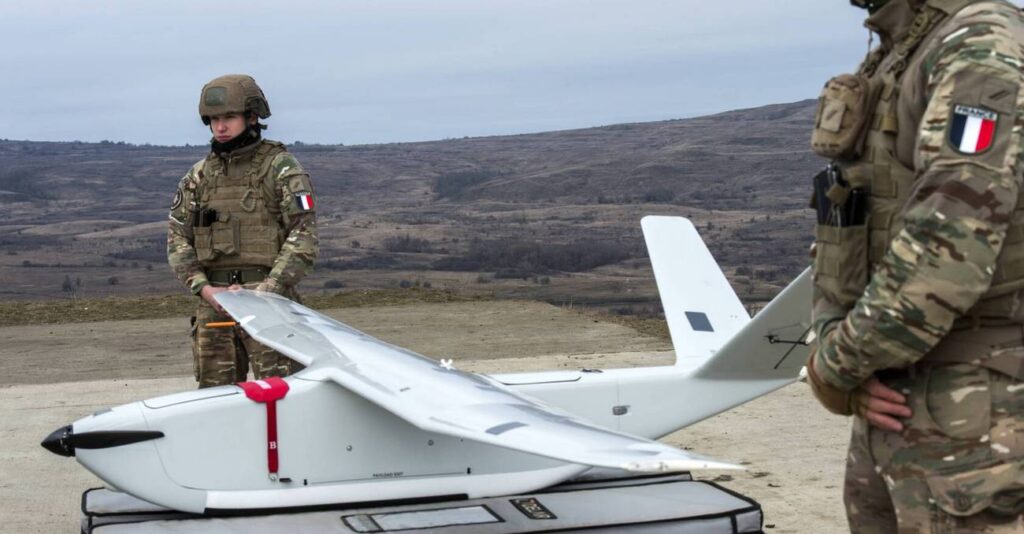
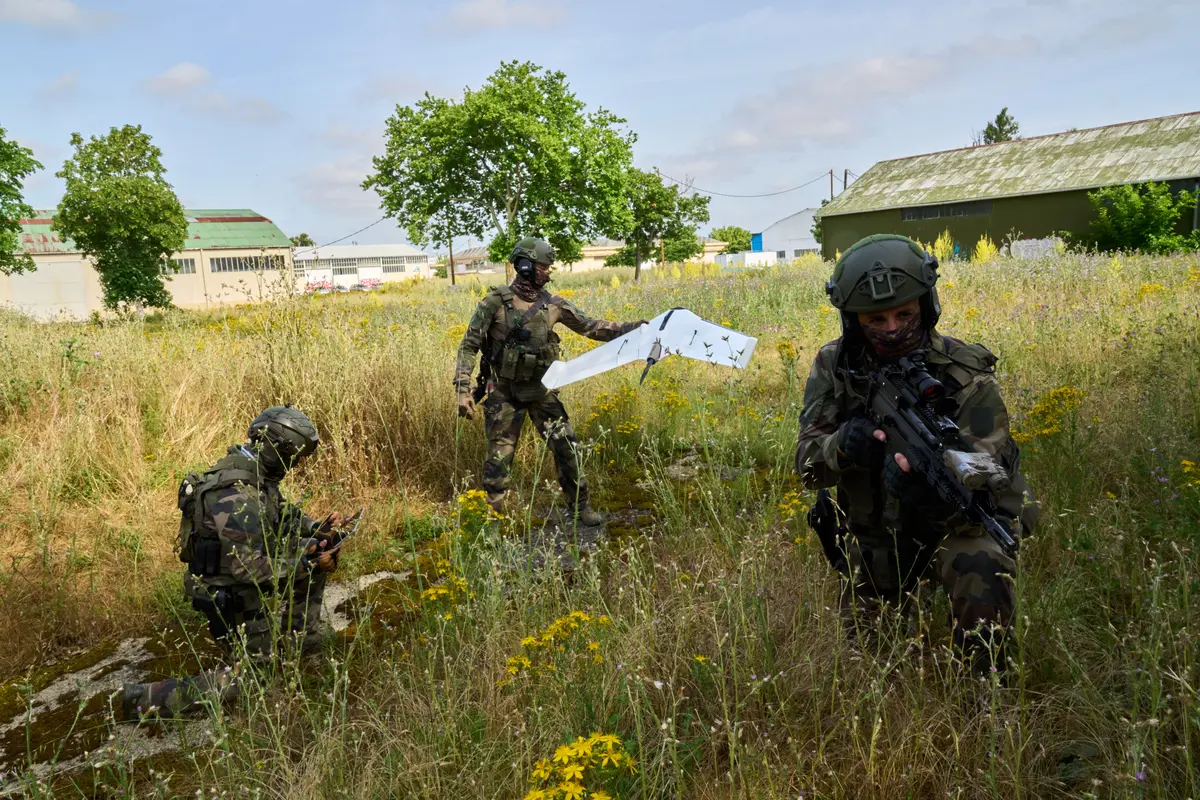
A French factory that builds drones for Ukraine became the target of a sabotage attempt and a suspected spying operation in early June, according to Le Parisien. French investigators treat foreign interference, possibly Russian, as their leading explanation. The case lengthens a list of European states where plants arming Kyiv have come under attack.
Russia has opened a second front inside Europe, where quiet sabotage and reconnaissance try to slow the arms being reaching Kyiv without a shot being fired. Each attempt probes how far the Kremlin can push before allies push back.
Since Russia's all-out invasion in 2022, France has supplied Ukraine with SCALP cruise missiles, Caesar howitzers, AMX-10has RC armored vehicles, and AASM guided bombs. In 2024, Defense Minister Sébastien Lecornu announced new kamikaze drones for Kyiv. In 2025, Franceinfo reported that carmaker Renault would open drone production inside Ukraine, planned tens to hundreds of kilometers from the front.
A firebombing that fizzled
Le Parisien reported that in early June, attackers hurled Molotov cocktails at the Delair plant in Labège, near Toulouse in southwestern France. The incendiary mixture never caught fire, so the site escaped almost any damage. Surveillance cameras still captured several people taking part. Prosecutors in Toulouse opened a criminal case for destroying property by means dangerous to people.
A Belarusian arrested filming a prototype
Three days later, police detained a Belarusian national near the same plant. He was filming a drone prototype, prosecutors said, and officers found "advanced equipment" on him. He had been spotted near the site several times before. He allegedly sent the footage to a contact in Russia, and France arrested him on suspicion of espionage. Whether the firebombing and the arrest are connected stays unclear. The arrested man is 48 and has been living in Spain.
Explore further
Ukraine deploys new French MV-25 Oskar drone in battlefield use
French security services see an outside operation, possibly Russian, as the leading theory. Only Moscow gains from choking off the weapons reaching Ukraine. Le Parisien has tracked how Russian interference, from jammed satellite signals to disrupted aircraft, keeps straining Europe.
Delair, headquartered in Toulouse, is one of France's foremost drone companies, with a lineup spanning civilian work and military use. Its orders surged after Russia's full-scale invasion of Ukraine, turning it into an important supplier for Kyiv. The company says it controls its entire production chain and built the world's first commercially certified beyond-visual-line-of-sight drone.
A pattern across Europe
Espionage and sabotage are rising across EU countries that support Ukraine. Among the latest cases were these:
In March 2026, arsonists struck a Czech plant in Pardubice that made drones and thermal sights for Ukraine, and Czech intelligence asked whether Russia hid behind a pro-Palestinian front-linked attackers.
In January, Lithuania charged six people over a GRU-directed attempted arson on a factory supplying Ukraine's forces.
Last autumn, Latvia caught a Russian-linked group filming sensitive sites and sending the images to Russia.
Moldova’s Information and Security Service (SIS) says Russian special services are mass-collecting personal data of Moldovan citizens for use in cross-border fraud operations, according to a statement cited by Noi.md.
The agency warned the activity is coordinated and part of broader hybrid pressure tactics that Moldova has repeatedly linked to Russian influence operations in recent years, particularly since the start of Russia’s full-scale invasion of Ukraine in 2022.
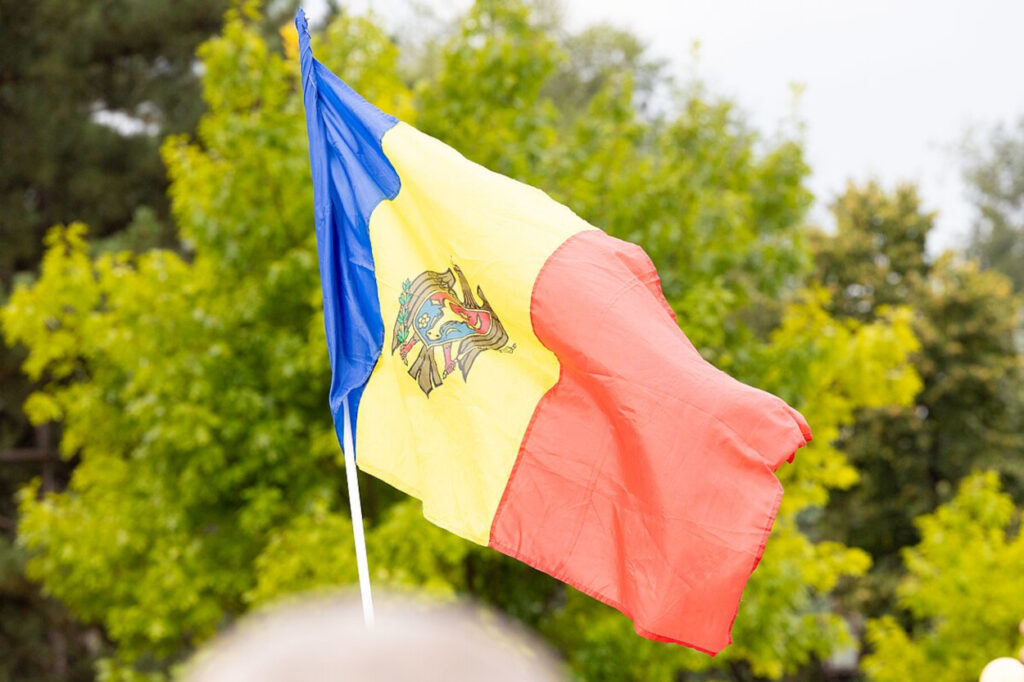
Moldova’s Information and Security Service (SIS) says Russian special services are mass-collecting personal data of Moldovan citizens for use in cross-border fraud operations, according to a statement cited by Noi.md.
The agency warned the activity is coordinated and part of broader hybrid pressure tactics that Moldova has repeatedly linked to Russian influence operations in recent years, particularly since the start of Russia’s full-scale invasion of Ukraine in 2022.
Moldova has regularly reported exposure to hybrid threats including disinformation campaigns, cyber activity, and attempts to destabilise domestic politics. Authorities have previously accused Moscow-linked networks of exploiting political divisions and using criminal channels to exert influence inside the country.
Large-scale personal data pools used in fraud networks
SIS said the data collection involves multiple sources, including illegally traded databases on the dark web and unauthorized access to private servers. It also referenced data linked to the “Șor” criminal network, which allegedly contains information on around 145,000 citizens.
According to the agency, the datasets include names, phone numbers, email addresses, home addresses, and copies of identity documents.
SIS said this information is later passed to transnational organized crime groups, which use it in financial fraud schemes, including bank card theft and other online scams.
Officials described the system as a structured pipeline from data collection to exploitation rather than isolated incidents.
Hybrid pressure and long-running fraud risks
The agency said the activity should be viewed in the context of sustained hybrid pressure on Moldova, where cybersecurity incidents, political influence operations, and financial scams often overlap.
Moldova’s security institutions have previously warned that criminal fraud networks and influence operations can intersect, using the same datasets, communication channels, and recruitment pools.
SIS said the goal of these coordinated actions is to undermine public trust and create a sense of insecurity in society.
Rising fraud cases and public warnings
Authorities urged citizens not to share personal data with unknown callers or unverified companies offering fast investment returns, and not to disclose passwords or security codes over the phone.
Moldovan police continue to report daily cases of phone and online fraud, with victims losing significant sums of money. On 15 June alone, authorities registered 22 cases, with total losses exceeding one million lei ($57,000 USD), according to figures cited by Noi.md.
One of the most serious recent cases involved a 63-year-old woman in Ribnita who reportedly lost more than 500,000 lei ($28,600 USD) in a scam.
Officials say investigations and public warnings are ongoing as fraud networks continue to evolve.
A Russian military court in Rostov-on-Don has sentenced two Ukrainian prisoners of war from the Azov Regiment to 17 and 20 years in strict-regime penal colonies. Among the charges are participation in a terrorist organization and undergoing training in terrorist activities, per Mediazona.
The charges stem from the POWs' service in Azov, which Russia's Supreme Court designated a terrorist organization on 2 August 2022, three months after Mukhin's May 2022 capture durin
A Russian military court in Rostov-on-Don has sentenced two Ukrainian prisonersof war from the Azov Regiment to 17 and 20 years in strict-regime penal colonies. Among the charges are participation in a terrorist organization and undergoing training in terrorist activities, per Mediazona.
The charges stem from the POWs' service in Azov, which Russia's Supreme Court designated a terrorist organization on 2 August 2022, three months after Mukhin's May 2022 capture during the Mariupol defense.
Russia's prosecution of Ukrainian POWs for participation in hostilities violates Article 99 of the Third Geneva Convention, which prohibits prosecuting POWs for acts that were not prohibited under domestic or international law at the time of commission.
The sentences got 29-year-old Dmytro Lebedev and 45-year-old Vasyl Mukhin, who joined Azov in 2015 and were captured during the May 2022 Mariupol defense.
Southern District Military Court continues batch prosecutions of captured Azov fighters
The court in Rostov-on-Don has become Russia's primary venue for Azov POW prosecutions. Throughout 2025 and 2026, the court has sentenced dozens of Azov POWs to 13-23 years in strict-regime colonies in batch trials throughout 2025 and 2026.
The court has continued issuing sentences in smaller batches throughout 2025 and 2026, including three POWs sentenced to 5.5, 18, and 19 years in March 2026 and two POWs sentenced to 18 years each in April 2026, per Ukrainska Pravda.
Defendants in the March 2025 batch case told the court the charges required no evidence beyond the four letters of the Azov regiment's name. One Azov POW, Oleksandr Ishchenko, died at the Rostov pre-trial detention center from what Russian authorities described as a closed blunt chest injury.
Azov Regiment defended Mariupol before becoming National Guard special forces brigade
The Azov Regiment was founded in May 2014 as a volunteer battalion to defend Ukraine against Russian-backed forces in Donbas, becoming part of Ukraine's National Guard in November 2014.
The unit played a central role in defending Mariupol against Russian forces from February to May 2022, with most surviving Azov fighters captured following the surrender of the Azovstal steel plant on 16-20 May 2022.
Russia has invested heavily in framing Azov as a "neo-Nazi" organization to justify its 2022 full-scale war, with the Russian Supreme Court's terrorism designation forming part of that framing. The US Department of State cleared Ukraine's 12th Special Forces Brigade Azov of all training and weapons restrictions in 2024 following Leahy Law vetting, per The Washington Post.
Azov now operates as the 12th Special Purpose Brigade Azov under Ukraine's National Guard under Colonel Denys "Redis" Prokopenko.

 Connexion