Vue normale

“Poland and Ukraine need each other more than their leaders admit”— a Polish advocate for Ukraine on why the memory feud helps Moscow
18 juin 2026 à 06:36

Polish-Ukrainian Memory Conflict Protests

On 26 May, Volodymyr Zelenskyy signed a decree honoring a special forces unit as "Heroes of the UPA" — the Ukrainian Insurgent Army, which fought both Nazi Germany and the Soviet Union in WWII. In Ukraine, the UPA is often seen as an anti-Soviet resistance movement. In Poland, it is remembered for the 1943-1945 Volhynia massacres, in which the UPA killed up to 100,000 ethnic Poles.

Within two weeks, the decree handed Poland's nationalist right a lever it had sought for years. The timing could hardly be worse. Poland is the land corridor for Western weapons, the host of some 1.5 million Ukrainian refugees, and one of the votes Kyiv needs to enter the EU. The quarrel over the decree now strains all three at once: weapons to Kyiv, Ukrainian refugees in Poland, and Ukraine's EU ambitions.

The damage is already visible where you would least expect it. Polish and Ukrainian forensic teams exhuming the Volhynia dead now keep cameras away from the graves, fearing images of the remains will be fed into Russian propaganda or AI deepfakes.

Citing Zelenskyy's decree naming a special operations unit for the "Heroes of the UPA," Polish President Karol Nawrocki announced on 29 May that he would seek to strip Zelenskyy of the Order of the White Eagle, Poland's highest state distinction, and put the question to the Order's Chapter. It took up the request on 8 June but broke up without deciding, leaving the dispute open.

The far-right Confederation party's Krzysztof Bosak called for blocking Ukraine's EU accession outright. Even Lech Wałęsa, the former Solidarity leader, publicly removed his Ukrainian flag pin, saying he would keep helping the Ukrainian people but would no longer support Zelenskyy.

Polish polls show strong support for President Nawrocki. Anti-Ukrainian graffiti has appeared on the walls of Drunken Cherry bars in Poland, calling them "zones infected with Banderism." The graffiti refers to Stepan Bandera, a Ukrainian nationalist whose name many Poles associate with wartime massacres. Attacks on Ukrainian youth are also rising: in May, five Polish teenagers were detained over a brutal Warsaw assault, which the city's mayor blamed on right-wing rhetoric.

On 3 June, Ukrainian Foreign Minister Andrii Sybiha urged restraint, asking Ukrainians and Poles not to "spin the flywheel of hatred."

Euromaidan Press spoke with Jerzy Wójcik, a Polish journalist and Ukraine advocate who co-founded Sestry.eu, a Polish-Ukrainian media platform for Ukrainian women, and co-organized Warmth from Poland for Kyiv, a winter 2025-2026 campaign that raised more than $2.8 million for generators after Russian strikes on Ukraine's power grid.

Wójcik discussed the shift in Polish opinion, Warsaw's pressure on Kyiv, and why joint work to identify and rebury Volhynia victims may still offer a way out, even as political pressure complicates it.

    Interview edited for length and clarity.
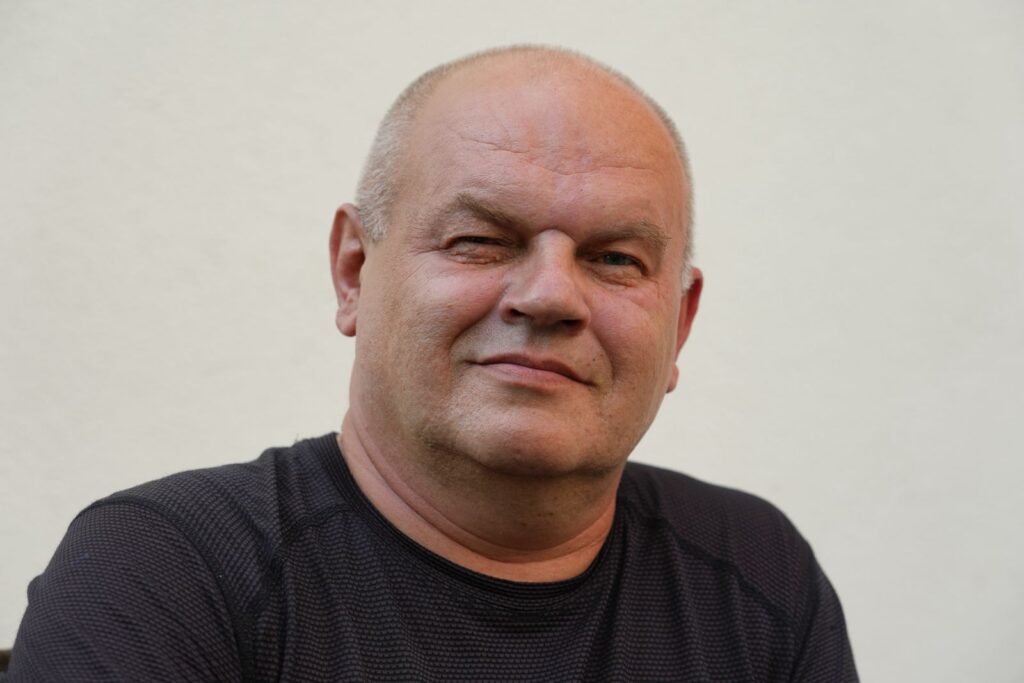
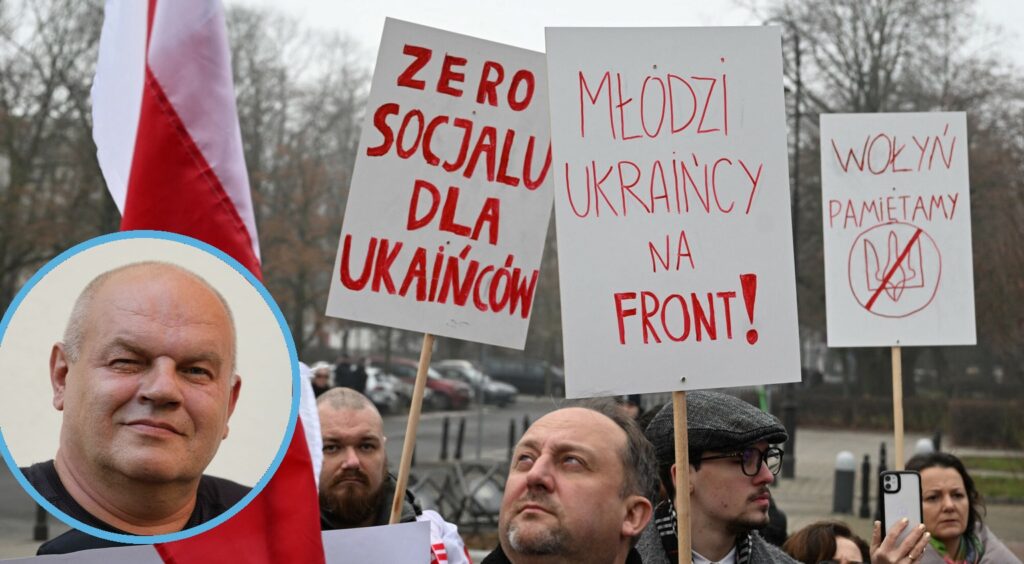
    Jerzy Wójcik, Polish journalist, Ukraine advocate, co-founder of Sestry.eu, and co-organizer of Warmth from Poland for Kyiv. Source: Journalist's personal archives

    "I don't want to let this happen: a repeat of what happened in Germany before the Second World War."

    — Jerzy Wójcik

    "I feel like I woke up in another country": how Polish public opinion flipped overnight

    Daniel Thomas: The Polish Institute of National Remembrance, which Nawrocki led, called the killing of Belarusian civilians genocidal in 2005 but walked back that characterization in 2019. Does that flip prove your hypocrisy charge against Nawrocki and other Polish right-wing nationalists, or does it just prove that every memory institution, Ukraine's included, bends history to current politics?

    Jerzy Wójcik: I think there is something wrong with all these kinds of institutions, because they cannot be completely independent from current politics. There is no such thing as neutral history.

    With the Polish IPN, it's a tragedy from the beginning, because they use the institution and history itself to win political battles.

    I don't like Nawrocki. I think he is a cynical guy. Still, most Polish voters chose him, so I have no choice. But I remain very critical.

    I got the results of the public opinion poll yesterday, and there is such a mental rush in the internet polls: 75% or something like that support Nawrocki's decision to strip Zelenskyy of the Order of the White Eagle [the Wprost / SW Research poll showed 52.3% support; the Res Futura social media analysis showed 97.4%].

    I feel like I woke up in another country. It's scary. This could have a real impact on the lives of real people.

    I mean Ukrainians in Poland. There have already been so many attacks on Ukrainian boys, beaten almost to death [during this war]. And now there's Nawrocki's statement, plus the right-wing supporters of [Grzegorz] Braun and Confederation.

    It could have a tangible negative impact in the real world. Nobody normal-headed in Poland wakes up thinking about Bandera.

    [The Ukrainian nationalist massacres were] 80 years ago. Who cares? It shouldn't be a concern.

    So I think it's a very dangerous game, not in symbolic terms, but in real-life aggression. I feel like anything could go wrong at any hour.

    Can you imagine a Russian operation, a false flag provocation on Polish ground, pretending they are Ukrainian or some Bandera boys? It's easy to implement now because the social and mental priming is in place.

    *Confederation is a far-right Polish alliance with anti-Ukrainian currents. Braun, a far-right MEP who leads the breakaway Confederation of the Polish Crown, is known for Ukrainophobic, antisemitic, and pro-Russian rhetoric.
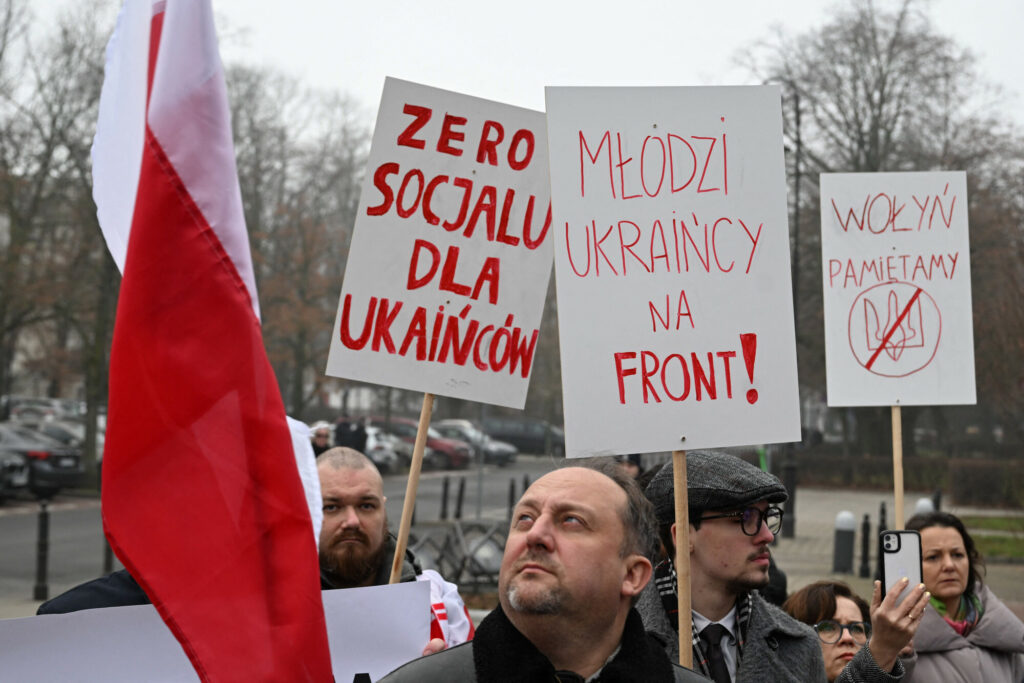
    Demonstrators hold placards reading, from left, “No social benefits for Ukrainians,” “Ukrainian youth, go to the front!” and “We remember Volhynia,” a reference to the World War II-era Volhynia massacre, during a rally against the Polish government’s policy toward Ukraine outside the Sejm, Poland’s parliament, in Warsaw on December 19, 2025. During a visit to Poland, Ukrainian President Volodymyr Zelensky urged unity between Ukraine and Warsaw and warned that Moscow would attack Poland if Russia’s invasion was not stopped. (Photo by Sergei Gapon / AFP)

    "There is no such thing as neutral history."

    — Wójcik

    "Reality will win": why Poland and Ukraine need each other more than either side admits

    Thomas: You say Poland won't drop Dmowski [an interwar Polish nationalist leader] or the Holy Cross Brigade [a Polish WWII partisan unit accused of Nazi collaboration] as heroes under outside pressure. So, on what grounds can Warsaw demand Kyiv drop Bandera?

    Wójcik: Reality will win. As a society and as political entities, Poland and Ukraine need each other much more than both of these guys [Zelenskyy and Nawrocki] pretend. It's all theater now.

    It's in Poland's interest to help Ukraine win the war, to protect Poland. Zelenskyy and the Ukrainian politicians could underestimate this. They have other potential partners: Germany, Scandinavia, New Zealand, and Australia. But Poland is the closest neighbor. You cannot send military tools via Romania or Slovakia at the same scale.

    Ukraine has its citizens living in Poland. We cannot allow relations between our countries to fracture over one symbol, one word: “Bandera.” The two governments have to find a solution.
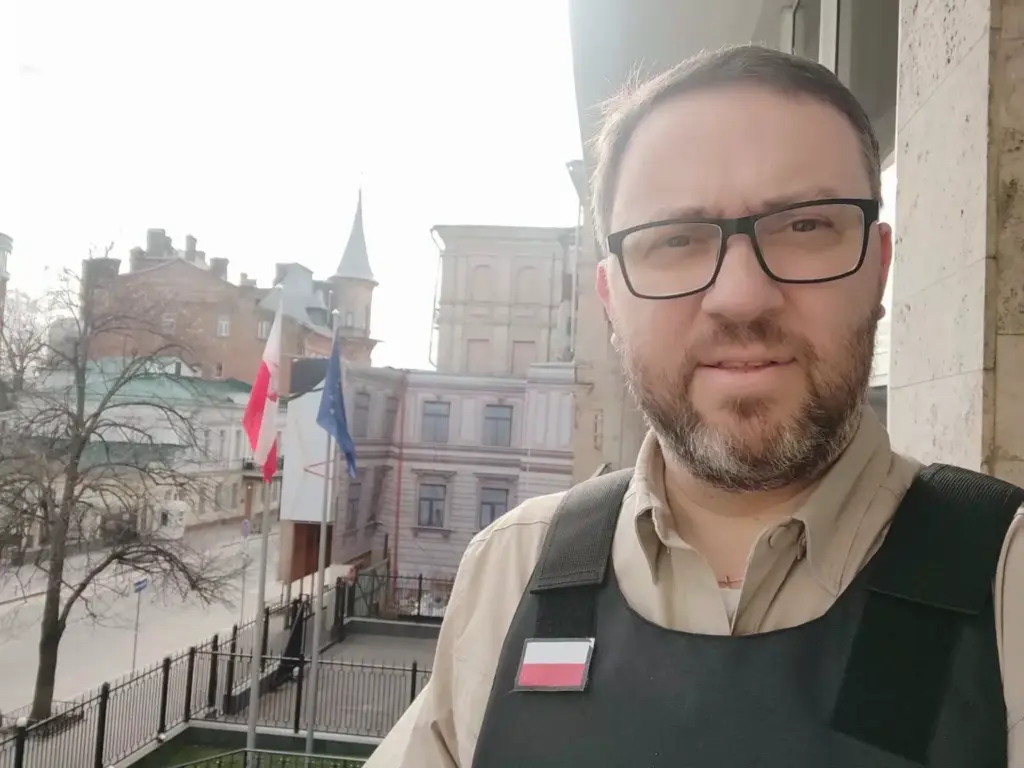
    Bartosz Cichocki, Poland’s wartime ambassador to Ukraine; Cichocki returned the Order of Merit awarded to him by Zelenskyy on 1 June 2026. Source: Vikna Novyny

    "Behaving like smugglers": How political weaponization affects Polish-Ukrainian archaeologists exhuming Volhynia massacre victims

    Thomas: Could the symbolic fight endanger practical cooperation on exhumations and identification work?

    Wójcik: This is the part that should worry everyone, because the symbolism and the work are moving in opposite directions. The work is quietly winning. Look at what's already happened.

    Puźniki, spring last year. At least forty-two people were exhumed and reburied at the Puźniki cemetery in September. Last autumn, Ukraine granted further exhumation permits.

    Forensic specialists from Ukraine and Poland work in the same pit, and yet there are no incidents. They are reconciling faster than the politicians.

    The danger isn't that the digging stops; it's that every reburial gets dragged in front of a microphone and turned into a demand, while the families want one thing: a name on the stone before they die themselves.

    You can see it best in a single detail. The archaeologist running the Puźniki dig kept the press away from the site because she feared provocations. They had to hide the most healing thing happening between our two countries so nobody could turn it into a weapon.

    And that's exactly where the symbolic fight does its damage: it doesn't stop the work; it forces the people doing it to behave like smugglers.

    "Forensic specialists from Ukraine and Poland work in the same pit, and yet there are no incidents. They are reconciling faster than the politicians."

    — Wójcik

    Why linking Polish support for Ukraine to Kyiv’s rejection of Bandera risks turning into “blackmail”

    Thomas: If Poland should support Ukraine for hard-security reasons regardless of history, should Kyiv avoid symbols that complicate support for Ukraine abroad?

    Wójcik: I won't tell President Zelenskyy what to do, and still less the citizens of Ukraine. They're free people, in the middle of a war for their own existence, and the choice of whom they honor belongs to them. What I can do is describe the mechanics, because they work whether or not anyone likes them.

    Symbols aren't decoration; they're strategy. Every hero a state puts on a pedestal is a sentence in a story other people read: a voter in Berlin, a congressman in Washington, a Pole deciding whether the man at the next desk is a guest or a threat.

    Bandera on a street sign reads differently in those capitals than it reads in Kyiv. That's a fact about the world, not a verdict on Ukraine. Moscow sees it and uses it; that's simply how it is.

    But elsewhere, Warsaw gets it wrong, and here I'm entirely sure which side I'm on: you cannot demand that a nation renounce its founding myths while it's bleeding, on someone else's schedule, as the price of help. The moment memory becomes a precondition, it stops being an argument and becomes blackmail. Any country with a shred of honor will dig in.

    I am not telling Kyiv what to strike from its own memory. I am telling Warsaw what not to put a price on. Once you make someone else’s identity a condition, you do not weaken it. You harden it.
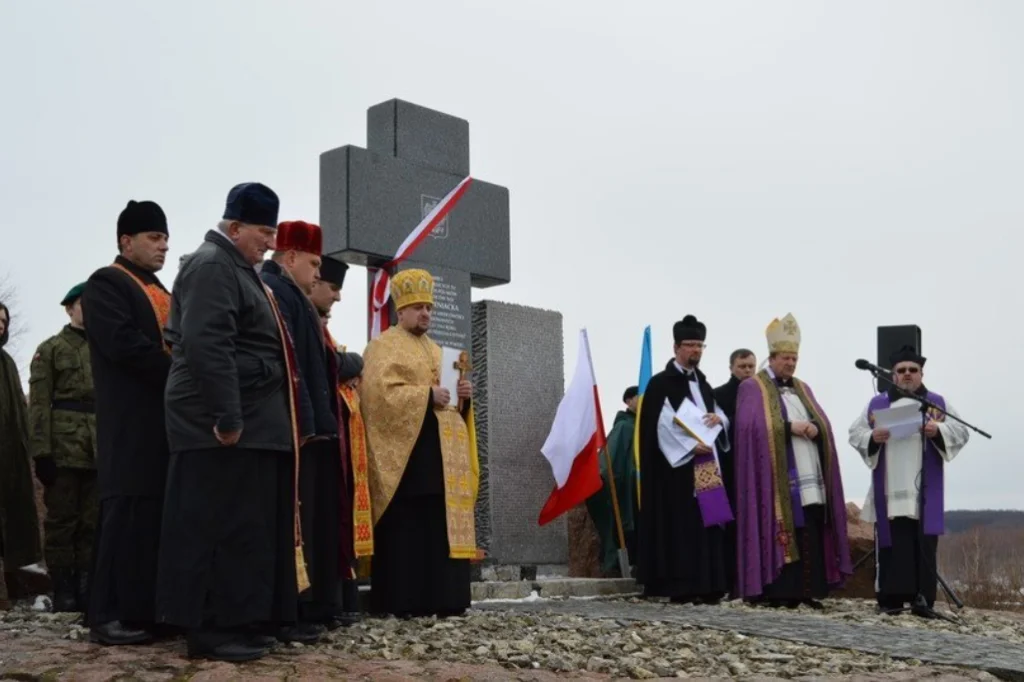
    The monument to murdered Polish civilians in Huta Peniatska in Ukraine’s Lviv Oblast was restored in 2017. Photo: NV

    How the memory conflict could endanger Poland's 1.5 million Ukrainians

    Thomas: Where does elite rhetoric become a real risk for Ukrainians living in Poland?

    Wójcik: The moment it stops being about 1943 and starts being about the woman cleaning an office tonight. Historians arguing over the UPA? Fine, that's their job; let them fight.

    The risk starts where "Banderite" stops, describing a man who died in 1959, and starts describing the nineteen-year-old in the back row. [Mateusz] Morawiecki floated the idea of deporting people for displaying Bandera symbols.

    Think about how that lands on a teenager who fled a missile. She can't always tell you where the symbol ends and where she begins, and neither can the official ruling on her case.

    So the line is simple: the risk appears where memory politics turns a million guests into a million suspects.

    You don't even need a law for it. It's enough for the word "Ukrainian" to quietly start doing the work the word "Banderite" used to do.

    "Few Ukrainians want to be told to rethink [their nation's history] while their country is under attack."

    — Wójcik
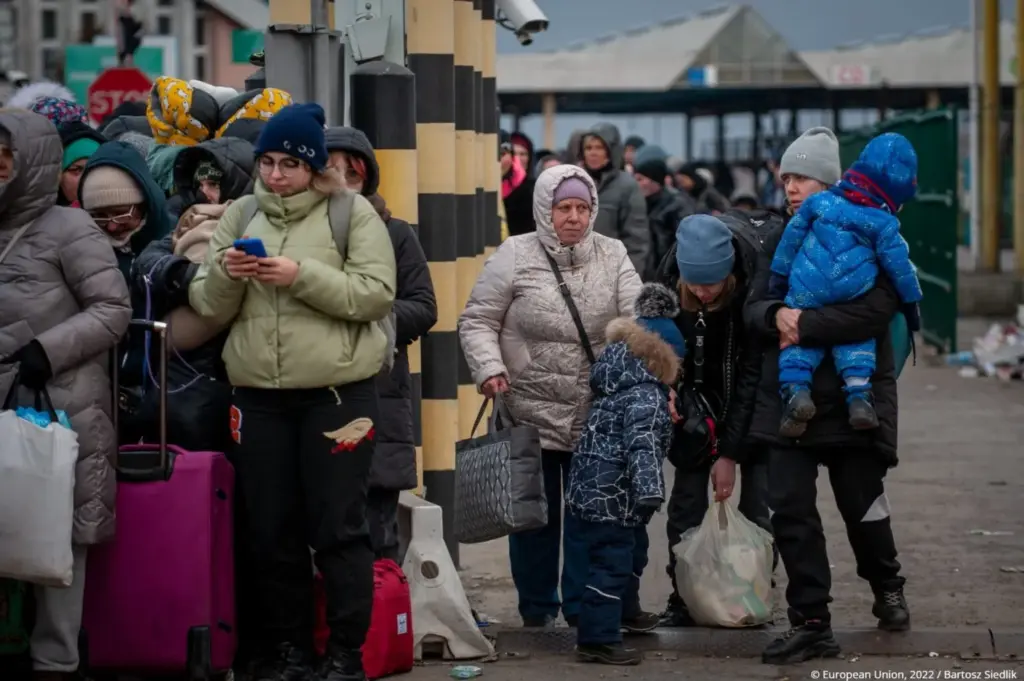
    Ukrainian refugees near the Polish border, 7 March 2022. Source: EC Commission / BARTOSZ SIEDLIK

    Separating hands from mouths: what a realistic off-ramp looks like

    Thomas: Is there a realistic off-ramp from this dispute, or is it now built into both countries' domestic politics?

    Wójcik: The off-ramp exists — it's happening right now in the forensic teams' tents — but it's blocked, because both sides have found the quarrel too useful to give up.

    For Nawrocki, Volhynia is both national identity and electoral politics. For some in Kyiv, the heroic story of Ukrainian nationalism has become part of wartime morale, and few Ukrainians want to be told to rethink that story while their country is under attack.

    That is why goodwill alone will not solve the dispute. Neither government has much political space to back down.

    The more realistic answer is to separate the issues. Let historians and forensic teams continue exhumations and reburials without political interference, and do not make Ukraine’s EU path depend on a dispute over 1943 that no summit can resolve.

    The off-ramp isn't reconciliation. That word is too big and too soon. The off-ramp, for now, is separating what can be done with hands from what we quarrel over with mouths.

    And further out, over a generation, the real prize: a shared founding story for a new Central Europe, where Poland and Ukraine are co-authors rather than prosecutor and defendant. Except that only becomes possible the day we stop letting the worst chapter of the shared past [Volhynia] write the next one [Polish-Ukrainian relations going forward]. Why do we let the worst chapter of [Ukraine and Poland's] shared past write the next one?

    • ✇Euromaidan Press
    • Russia plans to open eight new cultural centers in Africa to court a loyal generation, HUR says
      Russia plans to add eight countries to its network of Russian Houses in Africa, Ukraine's military intelligence agency, HUR, said this week. The goal, the agency says, is to win over the young. New centers would open in Nigeria, Senegal, Liberia, Sierra Leone, Togo, Mali, Mozambique, and São Tomé and Príncipe. The plan adds a cultural layer to a push built on arms deals, mercenaries, and a fast-growing diplomatic footprint. Euromaidan Press has reported that Moscow keep
       

    Russia plans to open eight new cultural centers in Africa to court a loyal generation, HUR says

    17 juin 2026 à 16:04

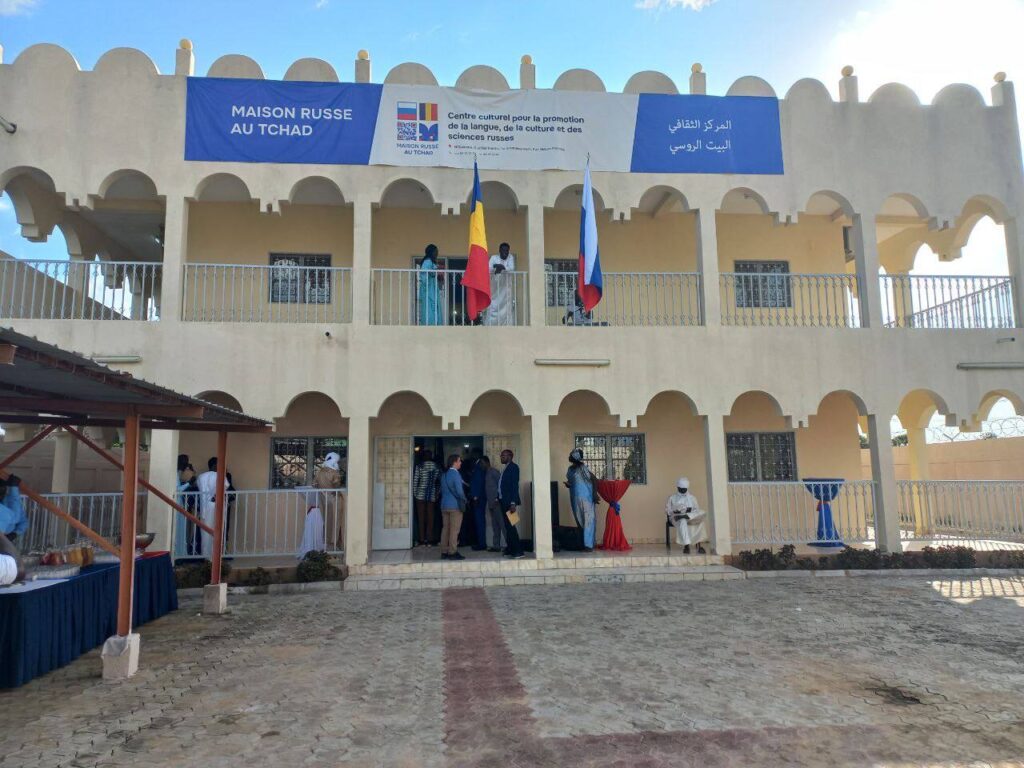
    Beige two-story building with arched arcades and a blue "Maison Russe au Tchad" banner; the flags of Chad and Russia fly from the balcony as guests gather in the paved courtyard for the opening.

    Russia plans to add eight countries to its network of Russian Houses in Africa, Ukraine's military intelligence agency, HUR, said this week. The goal, the agency says, is to win over the young. New centers would open in Nigeria, Senegal, Liberia, Sierra Leone, Togo, Mali, Mozambique, and São Tomé and Príncipe.

    The plan adds a cultural layer to a push built on arms deals, mercenaries, and a fast-growing diplomatic footprint. Euromaidan Press has reported that Moscow keeps about 40 embassies and 350 Orthodox parishes across 34 African states. Meanwhile, the independent Moscow Times found Russian Houses in Africa already operating or opening in at least 22 countries.

    The HUR calls these centers a pipeline that funnels young Africans into fighting in Russia's war on Ukraine.

    Russian Houses in Africa target the young

    HUR calls the network part of "a war for the minds of Africans," aimed above all at the young. Inside, the centers would screen Soviet and Russian films and hand out ideologically vetted literature. They would also teach the Russian language and coach young people to move to Russia as students or workers.

    Organizers sell them an image of a "happy Russia"—but in practice, the agency says, that promise often curdles. Some recruits sign contracts with Russian occupation forces and die in assault units at the front.

    The rollout has a clear chain of command. A body called the Center for People's Diplomacy runs it, HUR said. Moscow set up that body in 2024. It then put Dmitry Savelyev, a State Duma deputy from the ruling United Russia party, in charge.

    The Center for People's Diplomacy works hand in hand with Rossotrudnichestvo, the Kremlin's agency for cultural outreach abroad. Such centers stage cultural programming, including a Pushkin Day in Bangui and a poetry evening in Bamako, according to the Africa Report.

    From the Coup Belt to the Gold Coast

    The expansion tracks Russia's wider advance across the continent. After a wave of coups swept the Sahel, the juntas of Mali, Burkina Faso, and Niger turned from Paris to Moscow. They expelled French troops and welcomed Russian forces.

    Russian Houses opened in Bamako, Niamey, and Ouagadougou soon after those takeovers, EUvsDisinfo has documented. Togo, one of the eight countries on HUR's list, then signed a military-cooperation deal with Russia in 2025.

    For Kyiv, the soft power masks a harder aim. HUR says Moscow really wants Africa's natural resources. As proof, it points to Sudan, where it claims Kremlin-linked groups poisoned the water with mercury through unregulated gold mining. The agency cast the contamination as a slow-acting weapon, the kind of damage Sudan will spend years undoing.

    HUR cast the contamination as a slow-acting weapon, the kind of damage Sudan will spend years undoing.

    Ultimately, the stakes reach the battlefield. Euromaidan Press has reported that Ukraine now trails Russia and China in terms of influence across the continent. Kyiv counts more than 1,780 Africans from 36 countries fighting for Moscow. HUR says the new Russian Houses in Africa will widen exactly that pipeline.

    Russia banned the scholars documenting Stalin’s starvation of Ukraine. They put their course out anyway—as Moscow repeats the famine.

    3 juillet 2026 à 04:00

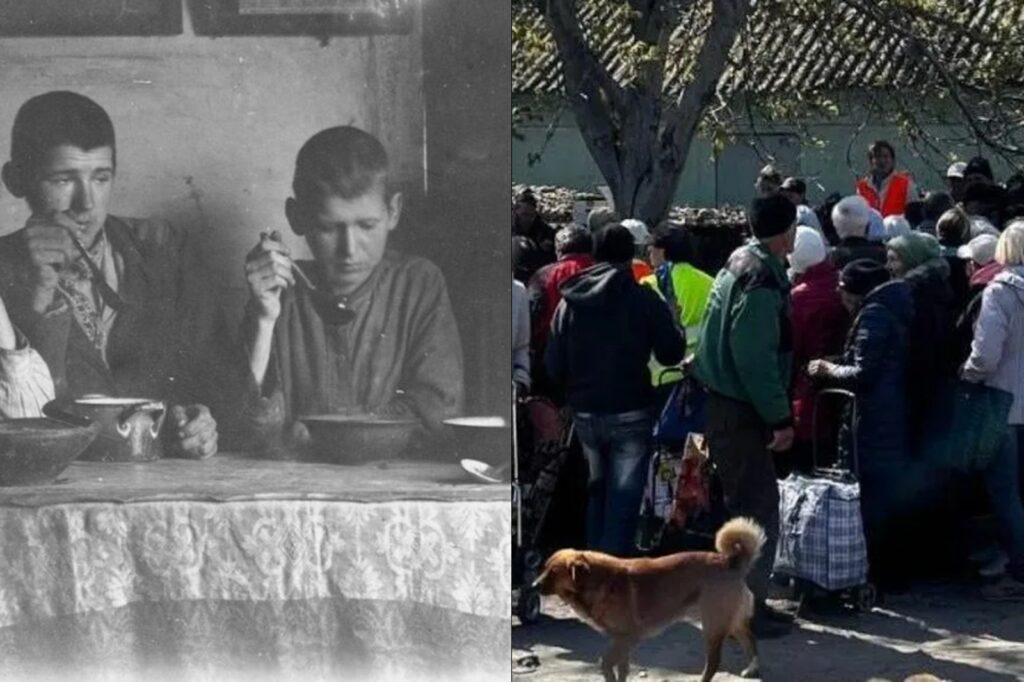
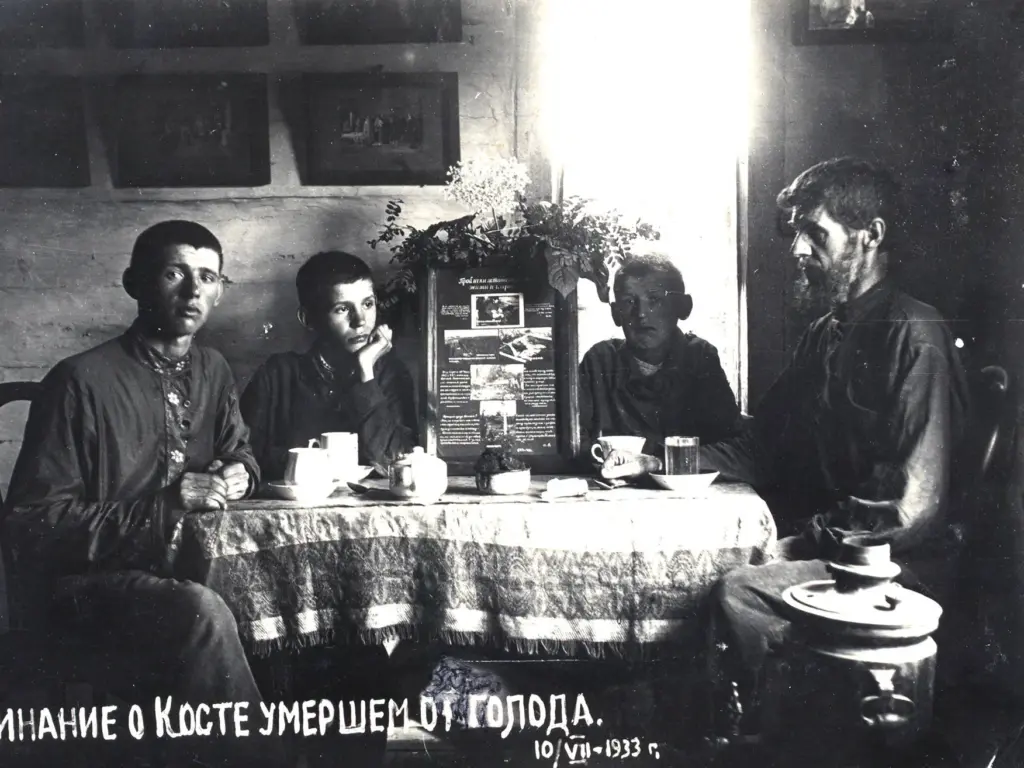
    On the left, the Bokan sitting around the dinner table during the Holodomor, as they starve; on the right, Ukrainian civilians in Oleshky waiting in line for food distribution.

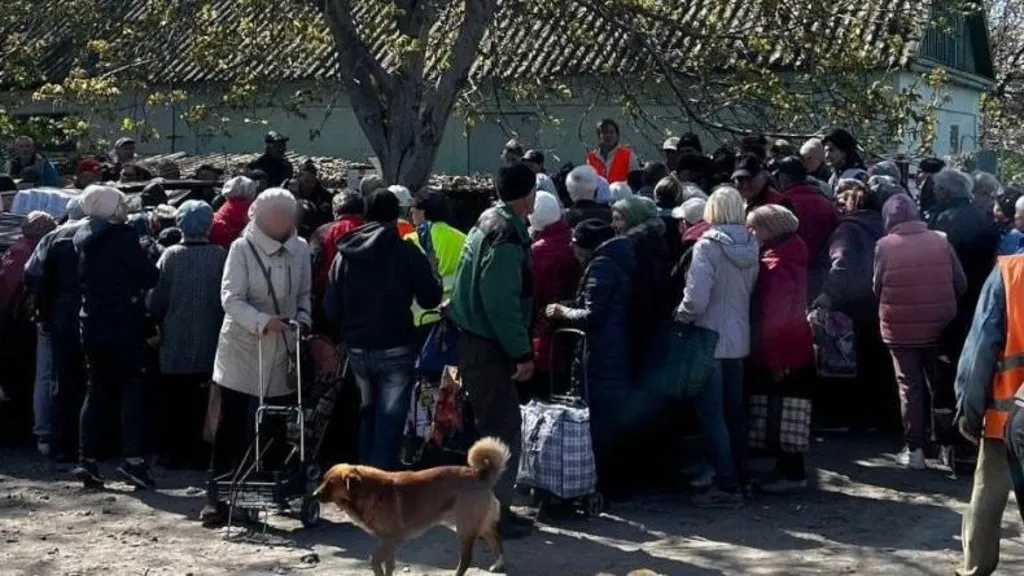
      For months, Russian forces have cordoned off the occupied town of Oleshky. They have blocked roads and emptied pharmacies, all while mining the area. In June, a food truck ran over a landmine at the edge of town, killing a man bringing in aid. Up to 6,000 Ukrainians are still trapped in Oleshky and neighboring villages, more than 180 of them children. The last grocery store shut in January, and for stretches this spring no food reached the town at all. 

      Ukraine has seen this before. In its siege of Oleshky, Russia is reviving methods Stalin’s regime used against Ukrainian villages in 1932 and 1933: branding villages "hostile," cutting them off from supplies, barring the starving from leaving, and letting hunger kill the population. That famine—the Holodomor—killed millions. 

      People in Oleshky wait for food supplies. Photo: BBC

      Yet as it besieges Oleshky, Russia says the Holodomor never happened. Moscow has dismissed the Holodomor as Western propaganda, rewritten its schoolbooks to blame the famine on the weather, and in occupied Ukraine has torn down the memorials to its dead.

      Russia rewrites history in another way too: banning scholars. On 5 January 2026, it barred 28 Canadians from the country. Among them were 16 scholars of the Holodomor Research and Education Consortium (HREC) of the Canadian Institute of Ukrainian Studies at the University of Alberta. At the time, they were working on a course about the famine Russia denies.

      They released it anyway. Seventy-seven days after the ban, Famine as Genocide: The Holodomor in Ukraine went live on Coursera—13 free modules, built by HREC at the University of Alberta.


      What was the Holodomor?

      The Holodomor—"murder by starvation"—was a man-made famine that struck Soviet Ukraine between 1932 and 1933. Scholars generally put the death toll at around 3.5 million; some figures go up to 7 million. Most died in the winter of 1932 and the spring and summer of 1933, as Soviet collectivization emptied whole villages.

      The 1932 harvest was poor, but Soviet policy turned shortage into catastrophe. Stalin's government set grain quotas the farmers could not meet. Brigades entered the villages and seized what was left, killing those who resisted. Authorities blacklisted villages that fell short, sealing them off from the outside world. When peasants tried to flee to less famine-stricken parts of the USSR, a draconian passport system trapped them inside Ukraine.

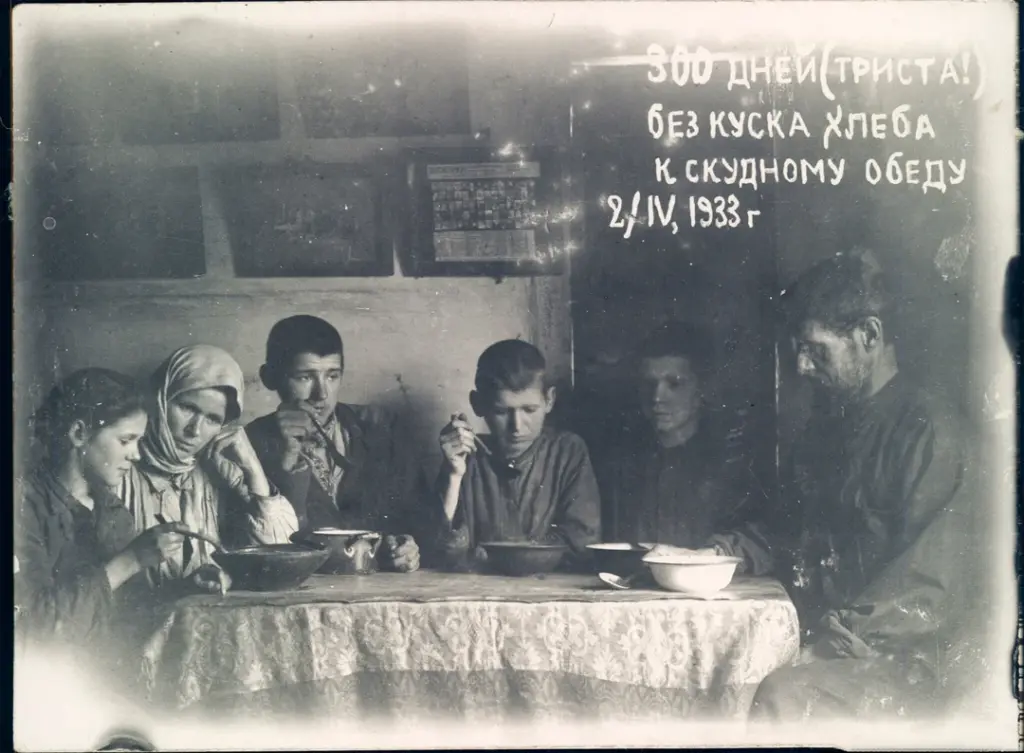
      One Ukrainian photographer left the famine its starkest visual record. In the spring of 1933, Mykola Bokan shot a near-daily record of the Holodomor from inside his own home in the Chernihiv Oblast. One photograph shows his family at the dining-room table, beneath his caption: "300 days without a single piece of bread to have with our meager lunch!"

      The Bokan family at their dinner table, Soviet Ukraine, 1933, beneath an inscription reading "300 days without bread."
      Mykola Bokan's family at lunch in Baturyn, Chernihiv Oblast, 2 April 1933. Bokan inscribed the print himself: "300 days (three hundred!) without a piece of bread to add to the meager lunch." From left: daughter Anna, wife Vassa, and sons Oleksandr, Kostiantyn, and Lev, with Mykola Bokan on the right. Source: Mykola Bokan / TsDKFFA Ukraine, via the National Museum of the Holodomor-Genocide.

      Three months later, his son Kostiantyn, one of the gaunt figures in the image, was dead. On 10 July 1933, Bokan gathered his surviving children around a smaller table, a framed portrait of Kostiantyn between them. The caption reads: "Remembrance for Kostia, who died of starvation."

      Bokan was arrested for "counter-revolutionary activities." The photographs were among the evidence. He died in the Soviet camp system. His pictures sat in a secret police archive until researchers found them in 2007. They are now part of Famine as Genocide’s evidence. 

      Mykola Bokan with three of his surviving sons at a family remembrance for his son Kostiantyn, who had died of starvation that spring. The framed portrait at the center of the table is of Kostiantyn. Bokan inscribed the photograph "Remembrance for Kostia, who died of starvation. 10 July 1933." Baturyn, Chernihiv oblast. Photo: Mykola Bokan / TsDKFFA Ukraine, via the National Museum of the Holodomor-Genocide.

      Ukraine commemorates the Holodomor each year on the fourth Saturday of November, with a national minute of silence at four o’clock in the afternoon. 


      The permanent damage the deniers have to explain away

      Russia’s denial now has to contend with a growing body of evidence—including the famine's mark on the bodies of people born long after it ended. 

      For decades, the Holodomor was usually told as a story of starvation. The Soviet archives remained locked until the early 1990s, preventing people from obtaining an accurate picture of the Soviet famine. Before that, scholars studying the Holodomor worked from the memories of émigré survivors and the cables foreign diplomats sent to their home countries in 1932-33.

      That picture has changed. “Thanks to the amount of research done over the past twelve years, there is now a field called Holodomor studies,” Marta Baziuk, The Holodomor Research and Education Consortium’s (HREC) executive director and one of the course’s builders, told Euromaidan Press. 

      HREC’s course broadens that view by tracing the famine’s epigenetic legacy — its lingering physical and psychological effects — among survivors and their descendants.

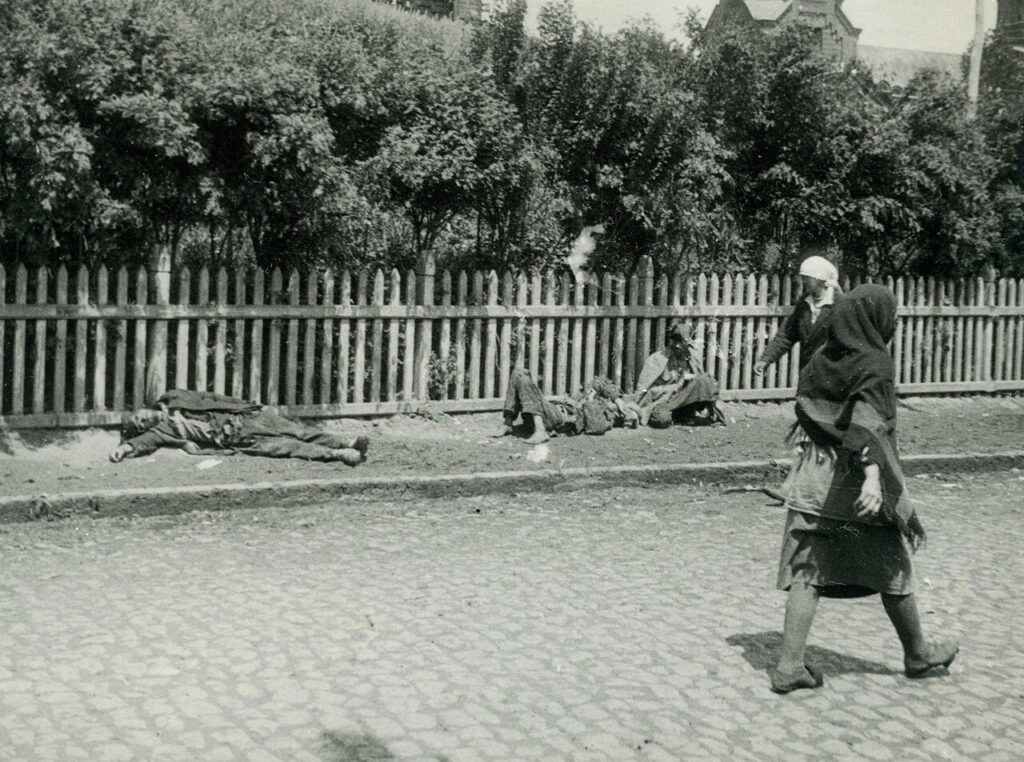
      Bodies of starved peasants on a street in Kharkiv, 1933; the Austrian engineer Alexander Wienerberger took this photo. Source: Wikimedia

      Research into other man-made famines, especially the Dutch Hunger Winter during World War II, informs this part. In the winter of 1944, German forces blockaded the western Netherlands and cut food supplies to civilians. A 2026 study groups Holodomor descendants with Dutch Hunger Winter and Holocaust survivors, pointing to shared histories of famine, mass deprivation, and inherited trauma. 

      Children conceived during the famine showed lasting epigenetic changes. Over sixty years later, the generation affected by famines showed accelerated biological aging and elevated risk of diabetes and heart disease compared to other generations.

      Researchers studying three generations of Holodomor survivor families have found stress, mistrust, and food hoarding in grandchildren who never went hungry themselves. They describe it as “living in survival mode.” 

      "Russia’s war has made Ukrainian history important to a lot of people. This course might’ve been good before the war, but it would have sat quietly, with less interest." — Baziuk

      The targeting of Ukrainians shows up in Soviet death records, Baziuk told Euromaidan Press. Even outside the Ukrainian Soviet republic, and even in mixed villages, ethnic Ukrainians died at noticeably higher rates than their neighbors.


      The Executed Renaissance

      HREC’s course does not treat the Holodomor in isolation. It situates the famine within a broader Soviet pattern of repression against non-Russian groups, in which physical destruction and material deprivation went hand in hand with the stifling of all culture hostile to Stalinism. 

      Raphael Lemkin, who coined the term "genocide," called the Holodomor the classic example of “Soviet genocide” in 1953. To him, the famine was one prong of a wider assault on Ukraine’s cultural figures, clergy, the peasantry, and Ukrainian national identity through resettlement with non-Ukrainians.

      Over the course of the 1930s, Soviet security services arrested, deported, or executed roughly 30,000 Ukrainian writers, scholars, and clergy.

      Ukrainian cultural figures flourished in the 1920s, as the Ukrainian language was more widely promoted, only for Soviet authorities to murder them in the 1930s. Today, Ukrainians remember that generation as the “Executed Renaissance.” 

      Many of those killed were themselves committed Communists. In the 1920s, the Bolsheviks had little organic support in Ukraine. They had recruited young, idealistic Ukrainians by promising room for a Ukrainian version of socialism.

      Korenizatsia, the Soviet promotion of non-Russian nationalities, had once promised room for Ukrainian culture. Stalin’s Great Turn — the Soviet regime’s late-1920s drive toward forced collectivization and rapid industrialization — crushed that opening. Ukrainian national communists became, at best, relics of a discarded future, and at worst marked for death.

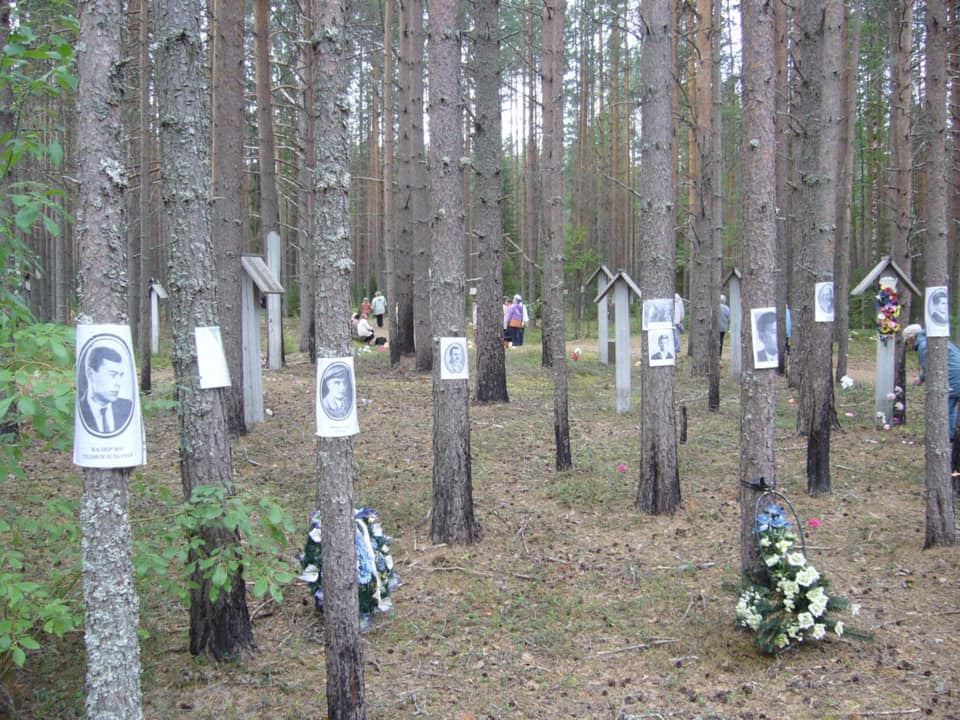
      Sandarmokh, a forest site in Karelia where the NKVD, the USSR’s secret police, executed thousands of victims, including many Ukrainian intellectuals of the “Executed Renaissance.” Source: Razom for Ukraine.

      Russia’s present war follows a similar logic. Ukrainian writers are again being killed, as they were in the 1930s. In 2022, Russian forces seized the children’s author Volodymyr Vakulenko near Izium. He is among the more than 100 cultural figures killed by Russia, according to PEN Ukraine. 

      In Russian-occupied territory, churches not part of the Moscow Patriarchate have been closed, seized, or destroyed. Tens of thousands of Ukrainian children have also been forcibly transferred to Russia, where they are to be brought up as Russians. Moscow’s abduction of children has formed the basis for the ICC arrest warrants for Vladimir Putin and his children’s rights commissioner, Maria Lvova-Belova. 


      Forget what you’ve seen: Soviet-era denial of the Holodomor

      Soviet denial began while Ukrainians were still dying. When the International Red Cross offered famine aid, Moscow refused, denying that mass starvation was taking place. Even as Ukraine’s villages became open-air morgues, Soviet ships carried Ukrainian grain out of Odesa for sale on foreign markets.

      In March 1933, a young Welsh journalist named Gareth Jones went from village to village in Soviet Ukraine, recounting what he saw:

      "There is hunger almost everywhere. Millions die from it. I travelled for several days in Ukraine, and there was no bread. The children had stomachaches, all the horses and cows were dying, and the people were also dying of hunger. The terror was on an unheard-of scale." — Gareth Jones in a letter to his parents, March 1933

      For his trouble, Jones was mocked by name in The New York Times. NYT’s Moscow correspondent, Walter Duranty, responded to Jones in print, denying that any famine existed.

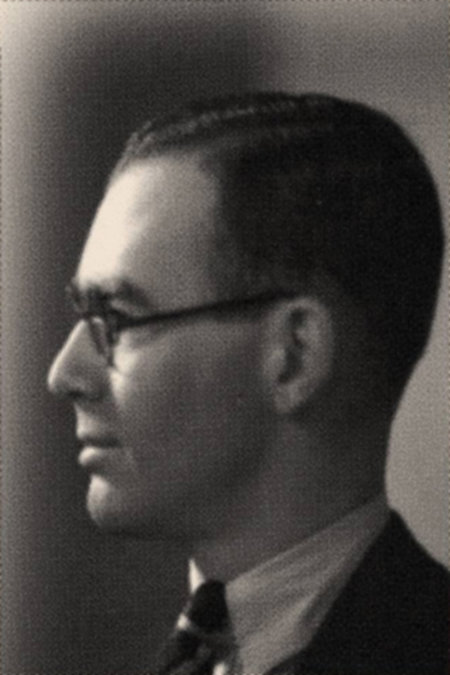
      A picture of Gareth Jones, the first reporter to break news of the Holodomor to the wider world. Source: Wikimedia

      Duranty received more acclaim than Gareth Jones in his lifetime, receiving a Pulitzer Prize in 1932. The Times has since disavowed his coverage, calling his Soviet dispatches "some of the worst reporting to appear in this newspaper." Nevertheless, NYT has yet to return the award.

      Jones was banned from the USSR and shot dead two years later in Inner Mongolia, in northern China. He did not live to see his findings vindicated.

      Russia’s denial today

      Following in Soviet footsteps, Russia continues to whitewash or deny the Holodomor. In 2014, Kremlin-backed outlets called it a “hoax invented by the West’s propaganda machine.” Since 2023, Russian school textbooks have blamed the famine on poor harvests and local mismanagement rather than the Stalinist policies. 

      Asked about intent, Baziuk did not treat it as a difficult question. The archives, she says, show Soviet officials knew people were starving and kept selling Ukrainian grain abroad as they died. 

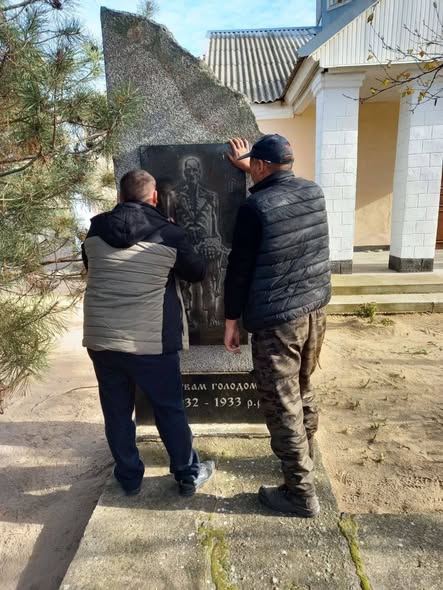
      Beyond intimidating scholars, Russia's denial extends to physical destruction. On 19 October 2022, occupation forces in Mariupol dismantled the monument to victims of the Holodomor and political repression near the destroyed Drama Theatre, where up to 600 Ukrainian civilians were killed by a Russian airstrike. The granite, officials said, would be turned into construction materials.

      Occupation authorities dismantle a Holodomor memorial in Nova Kakhovka. Source: Holodomor Museum

      In November 2023, Russian-installed administrators in occupied Kherson Oblast began demolishing Holodomor memorials in Nova Kakhovka and the Oleshky community. They called the memorials "a tool for manipulating history," artificially created to incite hatred toward the Russian Federation.

      Echoes of the Past: Russia’s Starvation of Oleshky in 2026

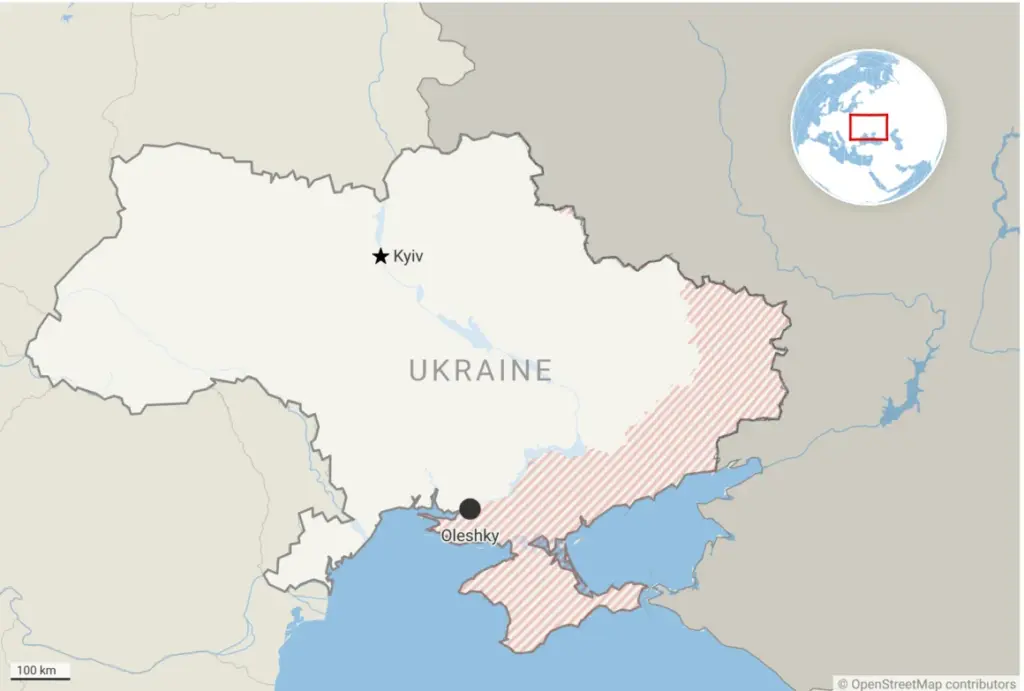
      Location of Oleshky, Kherson region

      Russia’s destruction has not stopped at memorials. 

      In a 25 June report, UN monitors who interviewed residents recorded at least 29 civilians killed this year in Oleshky and neighboring villages, most by FPV drones. No food had reached Oleshky since 26 May. A few of Oleshky’s trapped residents escaped through ad-hoc volunteer runs, including 32 people during a three-day lull in the shelling. Others could not be moved at all. 

      One woman’s husband stayed behind with his 84-year-old father, who could not walk the ten kilometers to the meeting point. 

      Russian forces imposing these conditions, the monitors noted, are legally bound to feed the town they occupy. 

      The Soviet state followed the same logic, cutting off villages that missed grain quotas and barring peasants from leaving Soviet Ukraine in search of food. 

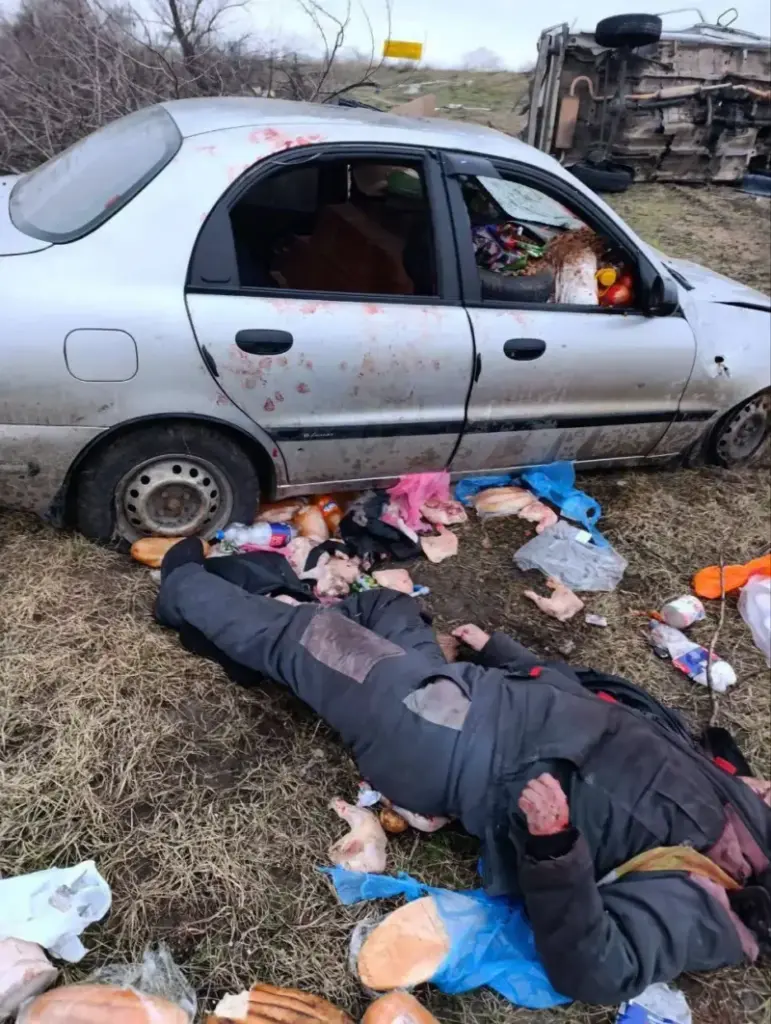
      A car bombed by a Russian FPV drone while attempting to deliver food to occupied Oleshky. Photo: Kherson Nonfake

      Ninety years on, Russia is doing it again in Oleshky. Parliament Commissioner Dmytro Lubinets calls Russia's siege deliberate terrorism

      Oleshky’s exiled administration describes what that means in practice: the dead buried in plastic bags, sometimes marked only with a name and two dates. One man who died in December lay unburied for nearly two months. 

      Concerning Oleshky, Oleksandr Prokudin, head of Kherson Regional Military Administration, told Censor.NET that Russian forces have “created a situation there akin to the Holodomor." The historical parallels are not lost on Ukrainians.


      This material was produced as part of a project by the Institute of Mass Information with the support of the Ministry of Foreign Affairs of the Netherlands. The content of this publication does not reflect the official position of the IMI or the Kingdom of the Netherlands.

      ❌