Vue normale

  • ✇Euromaidan Press
  • Precision missiles hit the coordinates. Investigators ask who was still standing there
    Ukrainian investigators have published a framework that challenges Russia’s standard justification for missile strikes on civilian places: that a precision weapon hit a legitimate military target. Precision settles nothing, they argue, when the missile takes 10 minutes or more to arrive, and the target is a gathering of people who can leave, disperse, or be warned before it lands.The report, titled “Out of Control” and published on 28 July by the documentation group Truth
     

Precision missiles hit the coordinates. Investigators ask who was still standing there

29 juillet 2026 à 11:10

report out of control by the truth hounds

Ukrainian investigators have published a framework that challenges Russia’s standard justification for missile strikes on civilian places: that a precision weapon hit a legitimate military target. Precision settles nothing, they argue, when the missile takes 10 minutes or more to arrive, and the target is a gathering of people who can leave, disperse, or be warned before it lands.

The report, titled “Out of Control” and published on 28 July by the documentation group Truth Hounds and Project Expedite Justice, builds the argument on four strikes and calls the pattern a “moving target attack.”

The report reaches a war crime conclusion for only one of the four—the 2023 strike on a Kramatorsk cafe. The other three are offered as variations on the same problem, not as verdicts. The framework itself is new: a test the authors want courts and investigators to apply to a kind of attack that existing law, they say, has addressed without enough rigor.

A missile can hit its programmed coordinates exactly and still land where no military objective remains.
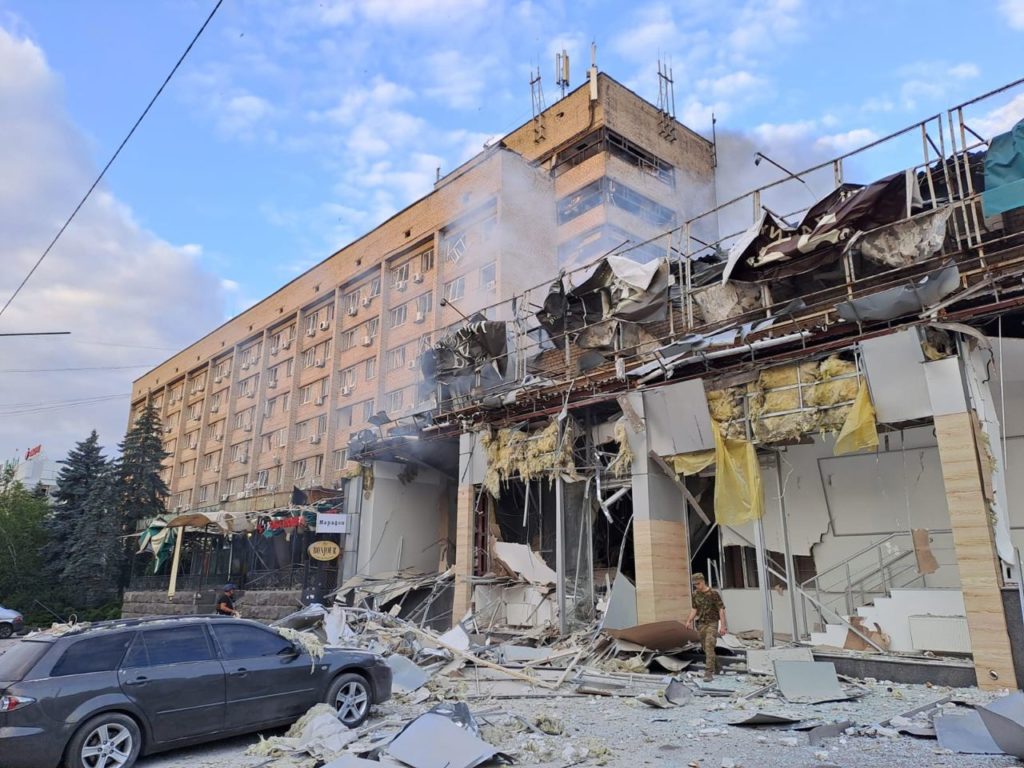
pizzeria destroyed in kramatorsk on 27 june 2023
Pizzeria in Kramatorsk destroyed by a Russian missile strike on 27 June 2023. Photo: Donetsk Oblast Administration.

The two hours before the pizzeria

The diagnostic case is the strike on the Ria Lounge cafe in central Kramatorsk on 27 June 2023, which killed 13 people and injured 60. A Russian informant last watched the site at around 17:00. The missile arrived at 19:29, after a flight of nine to 15 minutes. In the interval, no one on the Russian side could see who was inside, and once the missile was launched, no one could call it back.

Russia’s Defense Ministry said it had destroyed a temporary command post of the 56th Motorized Infantry Brigade, killing two generals, up to 50 officers, and up to 20 foreign mercenaries.

The evidence describes an ordinary pizza restaurant instead: 40 to 50 customers, around half civilians and half off-duty soldiers in mixed dress, unarmed, out with friends and family. A basement room had been booked a month ahead for an officer’s birthday. No one outside could tell the place was military.

The missile struck the public level. The basement that Russia said it was aiming at came through essentially intact. Of the 13 killed, two were serving soldiers. Among the dead was Victoria Amelina, a novelist who had retrained as a war crimes documenter and worked with Truth Hounds itself. The organization concluded in 2023 that the strike was a war crime in the form of an indiscriminate attack under the Rome Statute.

victoria amelina
Explore further

Award-winning Ukrainian writer who uncovered Russian atrocities dies in missile attack

The gap the weapon leaves open

The framework turns that single case into a test. A moving target attack, as the authors define it, combines three features: a military rationale resting on a temporary presence of personnel, a location of civilian character where civilians are foreseeably present, and a weapon whose flight time is long enough that the situation on the ground can change before impact.

A missile can hit its programmed coordinates exactly and still land where no military objective remains.

The authors selected three further strikes that met the same criteria and examined them through open sources.

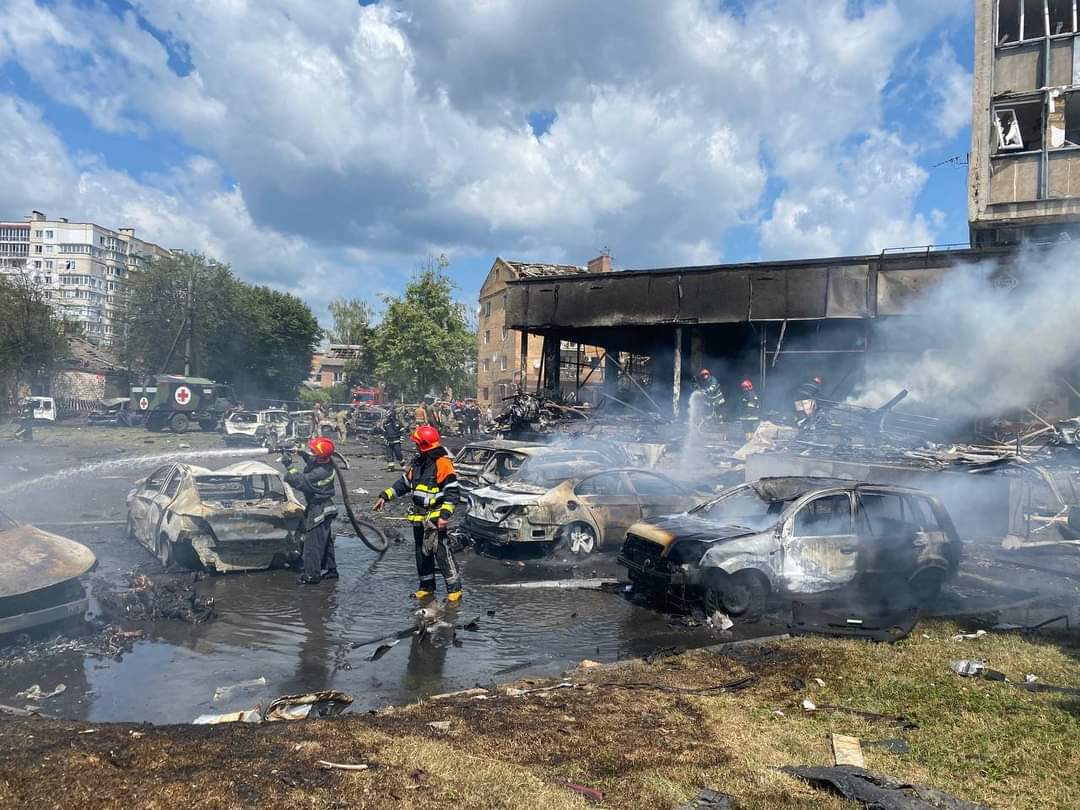
In Vinnytsia on 14 July 2022, the report finds, three Kalibr missiles killed 29 people, including three children and five servicemen, and wounded at least 154. Russia said the target was a scheduled Air Force command meeting. The air raid alert sounded at 10:12; the missiles hit at 10:41, about 40 to 50 minutes after launch.
Explore further

Ukraine calls to brand Russia a terrorist state after missile strike kills 21 in Vinnytsia

In Zlatopil on 4 July 2023, the report documents, a missile landed 800 meters from a serviceman’s funeral, in a residential area, wounding 42 civilians including 12 children. Organizers had asked mourners to shelter from the heat about 10 minutes earlier, leaving the square nearly empty.

In Chernihiv on 19 August 2023, a missile fitted with a proximity fuse detonated in the air above the Drama Theatre, where NGOs were running a defense-tech exhibition inside. All seven people killed were outside the building.

For these three, the report states that the evidence does not support conclusions equivalent to Kramatorsk.
International Criminal Court
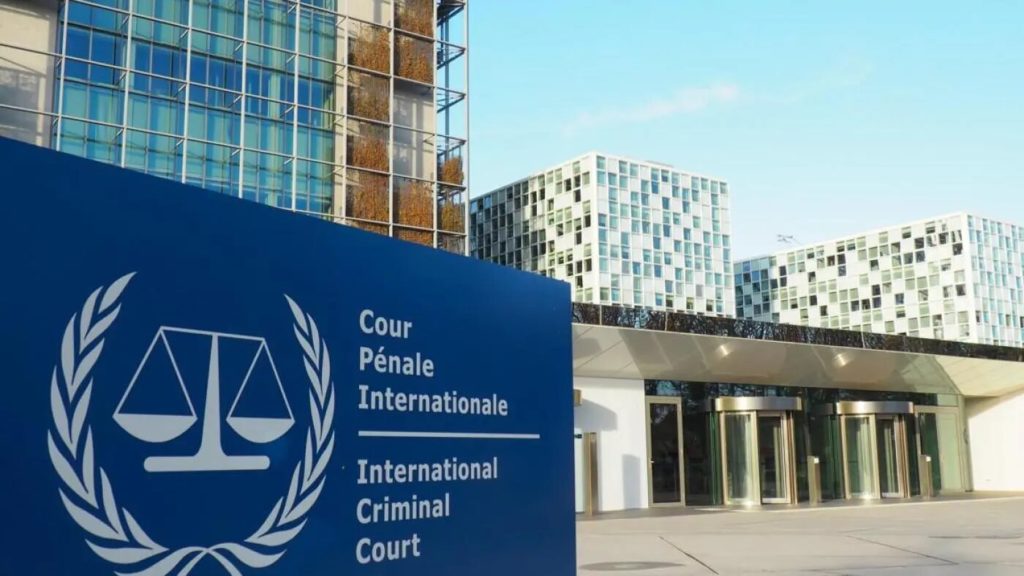
The International Criminal Court in The Hague, Credit: Marina Riera/Human Rights Watch

What the report asks investigators to do

The recommendations run to the International Criminal Court, the ICRC, the UN human rights office, and prosecutors working under universal jurisdiction.

They ask that the launch-to-impact interval be treated as a working indicator, that technical precision no longer be read as evidence that a strike was lawful, and that the presence of soldiers in a civilian place not be taken to strip it of protection.

One question the report raises and declines to settle is whether the four strikes are a run of targeting failures or a method. Answering it needs orders and targeting packages that only investigators with coercive powers can reach—at a moment when Truth Hounds is working on a budget cut by a third after the US withdrew funding, Reuters reported in May.
  • ✇Euromaidan Press
  • Ukraine’s Supreme Court refused to lift Zelenskyy’s sanctions on opposition leader
    Ukraine's Supreme Court refused to lift the sanctions imposed by President Volodymyr Zelenskyy on the opposition leader who ran against him. The Cassation Administrative Court rejected Petro Poroshenko's lawsuit on 10 July, per Interfax Ukraine. Two of the five judges on the panel filed dissenting opinions. Zelenskyy imposed the sanctions by decree in 2025. They freeze Poroshenko's assets, ban him from economic activity, and revoke his state awards, sharply restricting
     

Ukraine’s Supreme Court refused to lift Zelenskyy’s sanctions on opposition leader

13 juillet 2026 à 17:36

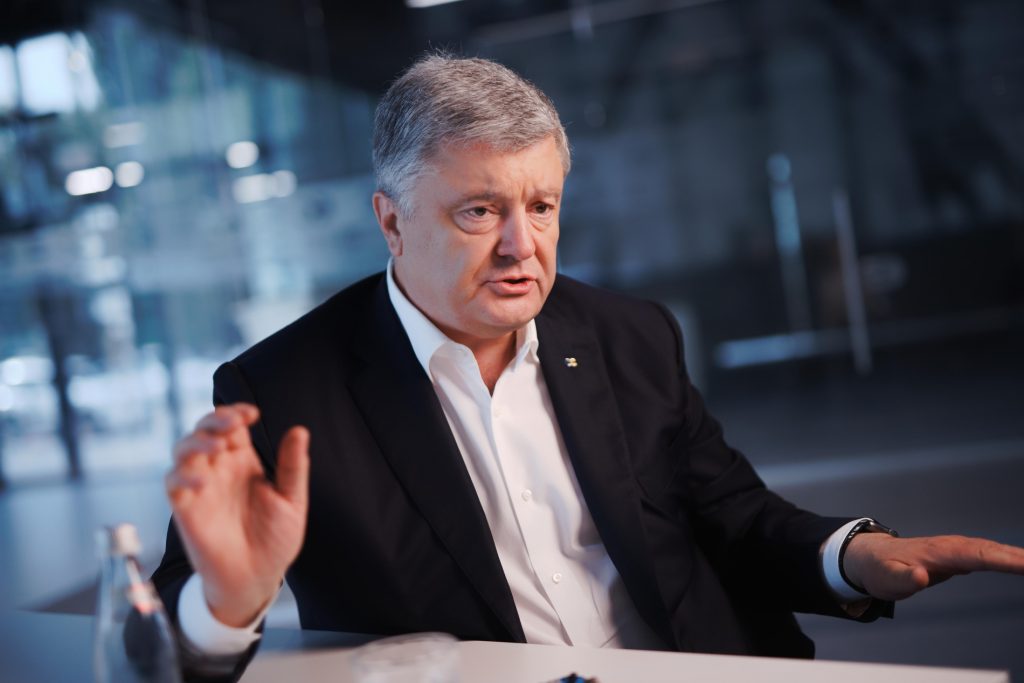
Former President Poroshenko, 2019

Ukraine's Supreme Court refused to lift the sanctions imposed by President Volodymyr Zelenskyy on the opposition leader who ran against him. The Cassation Administrative Court rejected Petro Poroshenko's lawsuit on 10 July, per Interfax Ukraine. Two of the five judges on the panel filed dissenting opinions.

Zelenskyy imposed the sanctions by decree in 2025. They freeze Poroshenko's assets, ban him from economic activity, and revoke his state awards, sharply restricting both his political and financial life.

The decision drew condemnation from the International Democrat Union, the global alliance of center-right parties, which called it a politically motivated attempt to suppress the opposition. Kyiv Mayor Vitali Klitschko warned that persecuting opposition leaders could threaten Ukrainian democracy.

Poroshenko has opposed Moscow consistently since 2014, and his foundation has delivered tens of thousands of drones to the army, including 500 FPV drones to an air defense regiment on the day the sanctions were announced.

Poroshenko says judges were blackmailed

The ruling was the result of pressure on the court, Poroshenko said on the day of the decision.

"The judges of this panel of five were blackmailed, including their relatives, with the opening of criminal cases if the wrong decision was taken," he said.

Poroshenko claimed he had plans to file a statement with law enforcement and provide journalists with materials for a journalistic investigation.

"Society has the right to know how Ukraine is being cut off from membership in the European Union," said Poroshenko.

His lawyer, Illia Novikov, said the pressure came from the Security Service on the instructions of Bankova, the seat of the President's Office.

"I will release new information that we have not published before... We had information that pressure was being applied to the court ... Now the time has come to name these people. According to our information, they are SBU officers Eduard Rudiuk and Vitalii Solodzhuk," Novikov said.

Novikov said he would ask their leadership to check whether the two men tried to pressure the court. He said four hearings had been disrupted since 5 January 2026, each of which could have been the last in the case, and argued the disruptions bought time to lean on the panel. The two dissenting opinions, he said, show two judges did not yield.

Poroshenko says the clusters will not open in July

Poroshenko said the ruling is blocking Ukraine's EU accession.

"Those who are trying to build authoritarianism in Ukraine instead of democracy have got what they wanted. Seven clusters will not be opened for us," he stressed.

He added that "the reason is today's decision."

"And apart from the foreign policy cluster, unfortunately, with high probability the clusters will not be opened in July," Poroshenko claimed.

He said four foundational documents had been adopted in the past week, including a European Parliament resolution stating that applying sanctions to the opposition leader is illegal, extrajudicial, and unconstitutional, and an OSCE Parliamentary Assembly decision recognizing extrajudicial sanctions against Ukrainian citizens as unlawful.

Poroshenko will appeal to the Supreme Court's Grand Chamber and then to the European Court of Human Rights, which accepted his case in May 2026. His lawyers have filed a second complaint in Strasbourg over the length of the proceedings, as Ukraine's administrative code allows two months for such a case. This one took eighteen.

  • ✇The Kyiv Independent
  • ICC issues arrest warrants for Taliban leaders as Russia recognizes their legitimacy
    The International Criminal Court (ICC) said on July 8 that it had issued arrest warrants for two senior Taliban leaders, accusing them of crimes against humanity and gender-based persecution following the group's takeover of Afghanistan in 2021. The move follows Russia's recognition of the Taliban as Afghanistan's legitimate government on July 3. Russia, which had previously designated the Taliban as a banned terrorist group, became the first country in the world to recognize it. In a statement,
     

ICC issues arrest warrants for Taliban leaders as Russia recognizes their legitimacy

8 juillet 2025 à 15:18
ICC issues arrest warrants for Taliban leaders as Russia recognizes their legitimacy

The International Criminal Court (ICC) said on July 8 that it had issued arrest warrants for two senior Taliban leaders, accusing them of crimes against humanity and gender-based persecution following the group's takeover of Afghanistan in 2021.

The move follows Russia's recognition of the Taliban as Afghanistan's legitimate government on July 3. Russia, which had previously designated the Taliban as a banned terrorist group, became the first country in the world to recognize it.

In a statement, the ICC named Taliban supreme leader Haibatullah Akhundzada and Afghanistan's top judge Abdul Hakim Haqqani as suspects in a campaign of systematic oppression targeting women, girls, and others who do not conform to the group's rigid gender ideology.

The court said the alleged crimes took place across Afghanistan from the Taliban's return to power on August 15, 2021, and continued at least until Jan. 20, 2025. The suspects are believed to have played key roles in the enforcement of Taliban policies that led to "murder, imprisonment, torture, rape and enforced disappearance."

The persecution was not limited to women and girls, according to the ICC. The court said that men perceived as allies of women or opponents of Taliban ideology were also targeted.

The ICC emphasized that the Taliban implemented a state-led policy of repression that violated fundamental human rights and freedoms across the country.

Most of the international community has refused to formally recognize the Taliban regime due to its human rights abuses and failure to meet international standards.

Meanwhile, since Moscow's full-scale invasion of Ukraine in 2022 the Kremlin has deepened relationships with authoritarian regimes, including North Korea, Iran, and now the Taliban. Russia has expanded trade with Afghanistan and allowed Taliban officials to participate in Russian forums.

In December 2024, the Russian State Duma passed a law allowing certain groups, including the Taliban, to be removed from the country's list of banned terrorist organizations. The move paved the way for official recognition.

Putin has referred to the Taliban as "allies," and Lavrov has called them "sane people," despite the group's ongoing enforcement of strict Islamic law, including gender apartheid, public executions, and bans on women's education.

Seeing war through the lens of narcissism
We usually think of narcissism as a personal flaw — a grandiose ego, a craving for attention, a lack of empathy. But what if narcissism is not just a diagnosis, but a lens? A way of understanding how individuals — and even entire nations — cope with wounds too painful to face directly?
ICC issues arrest warrants for Taliban leaders as Russia recognizes their legitimacyThe Kyiv IndependentDr. Gary E Myers
ICC issues arrest warrants for Taliban leaders as Russia recognizes their legitimacy
  • ✇The Kyiv Independent
  • Russia says South Africa invited Putin to G20 summit despite ICC arrest warrant
    Russian President Vladimir Putin has received an official invitation to attend the G20 summit in South Africa, Russian Ambassador-at-Large Marat Berdyev said in an interview with state-owned media outlet RIA Novosti on June 19.South Africa is a member of the International Criminal Court (ICC) and a signatory to the Rome Statute, meaning it is obliged to arrest Putin if he enters the country.The ICC issued a warrant for the Russian leader's arrest in March 2023 over the illegal deportation of Ukr
     

Russia says South Africa invited Putin to G20 summit despite ICC arrest warrant

19 juin 2025 à 10:05
Russia says South Africa invited Putin to G20 summit despite ICC arrest warrant

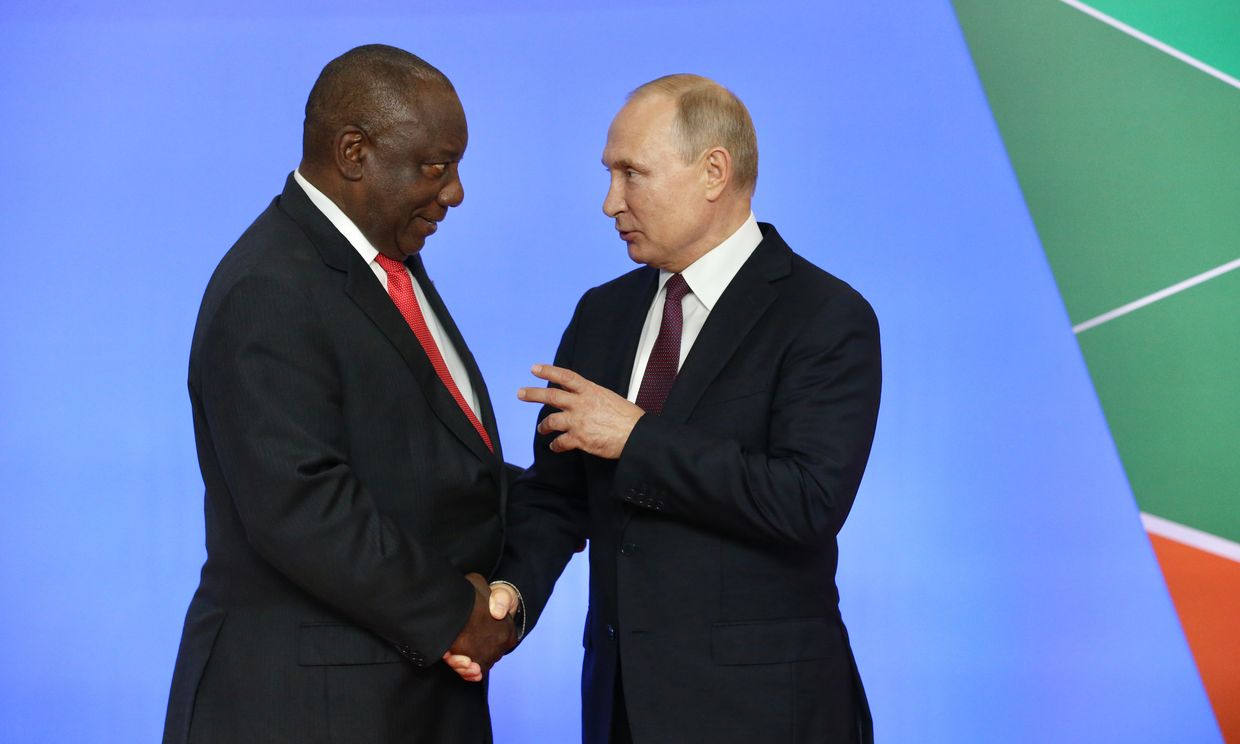
Russian President Vladimir Putin has received an official invitation to attend the G20 summit in South Africa, Russian Ambassador-at-Large Marat Berdyev said in an interview with state-owned media outlet RIA Novosti on June 19.

South Africa is a member of the International Criminal Court (ICC) and a signatory to the Rome Statute, meaning it is obliged to arrest Putin if he enters the country.

The ICC issued a warrant for the Russian leader's arrest in March 2023 over the illegal deportation of Ukrainian children during Russia's full-scale invasion of Ukraine.

"Last week, we received an official invitation. This is an appeal from the head of state, the president of South Africa (Cyril Ramaphosa), to his colleagues," Berdyev said.

The summit is scheduled to take place in Johannesburg from Nov. 22 to 23. Berdyev noted that Russia's final decision on Putin's participation will be made closer to the date. In recent years, Russia has been represented at G20 summits by Foreign Minister Sergey Lavrov.

Despite the warrant, South Africa continues to deepen political and military ties with Moscow. In 2023, the country conducted joint naval drills with Russia and China, and maintains its membership in the BRICS bloc alongside both nations.

In November 2024, Putin skipped the G20 summit in Brazil, another ICC member state, and sent Lavrov instead. Russia's G20 participation has continued uninterrupted despite its war against Ukraine.

In September 2024, Putin made a rare visit to Mongolia, which is also a signatory of the ICC, prompting criticism over the non-enforcement of the warrant.

Putin-Trump meeting currently not on the table, Kremlin says
“Until the necessary ‘homework’ is done to remove the irritants in our relations with the United States, it makes no sense to organize a meeting,” Kremlin spokesperson Dmitry Peskov said.
Russia says South Africa invited Putin to G20 summit despite ICC arrest warrantThe Kyiv IndependentAnna Fratsyvir
Russia says South Africa invited Putin to G20 summit despite ICC arrest warrant
❌