
 Connexion

Russian armor joins some bad-weather assaults toward Sloviansk, and still gets nowhere, Ukrainian soldier says
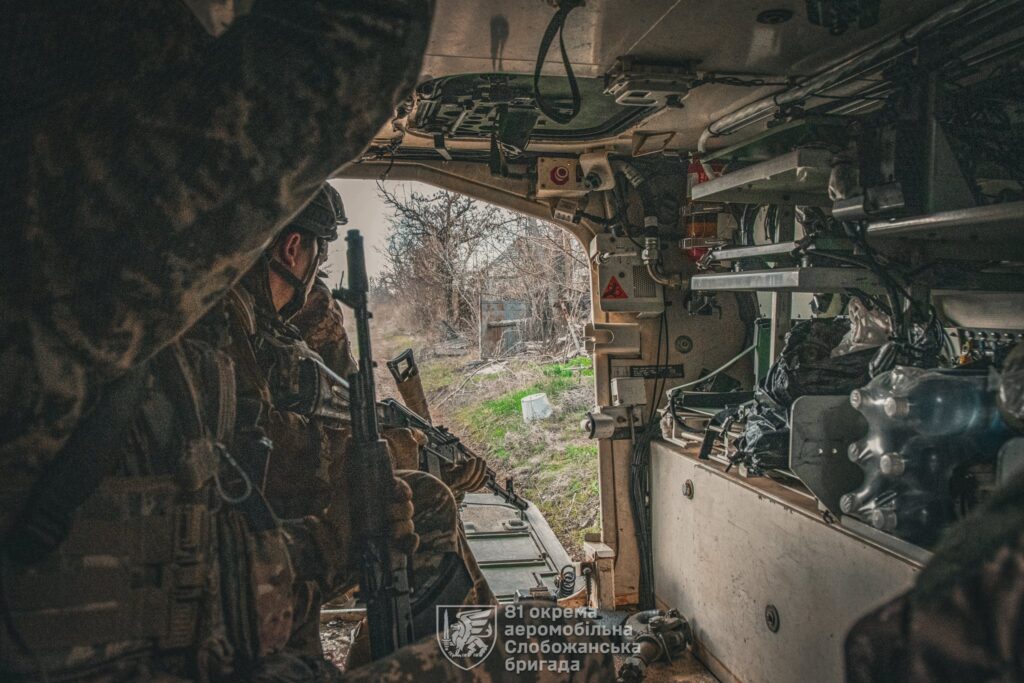
Russia uses bad weather for relatively larger assaults toward Sloviansk, the Institute for the Study of War (ISW) said. On 18 November, it cited a Ukrainian soldier: Russia wants to break into Mykolaivka, a town east of the city. From there, Russian troops would try to slip into the city itself, he said. Urban areas likely suit their infiltration tactics, ISW assessed.
Russia wants the rest of Donetsk Oblast, whatever it costs. At the US-brokered talks in Abu Dhabi on 10 November, Moscow still wanted Ukraine to hand over the part of the oblast Kyiv holds. That part includes Sloviansk and Kramatorsk, two cities of the Fortress Belt, a chain of fortified Donbas cities. Russia keeps sending troops forward despite the losses. Ukraine's General Staff counted 1,970 Russian troops killed or wounded along the whole front on 18 November alone.
Bad weather covers bigger assaults
Russian troops attack constantly, Stanislav Krasnov of the 81st Airmobile Brigade, the soldier ISW cited, told Ukraine's United News telethon. They often try mass assaults in bad weather and sometimes bring in armor, he said. They use cars and motorcycles all the time, and their target is still Sloviansk, he added.
"This is their main goal now: to advance into Mykolaivka to force street fighting on us. To gradually infiltrate Sloviansk itself and fight such battles here. But … they are getting nowhere," Krasnov said.
Ukraine's General Staff reported 12 Russian attempts to advance on the Sloviansk axis on 18 November. They came near Pyskunivka, Kryva Luka, Yampil, and Mykolaivka. A day earlier, it counted three attacks near Yampil and Ozerne. Late on 18 November, the Ukrainian mapping project DeepState said Russian troops had advanced near Rai-Oleksandrivka, east of Sloviansk.

Why Russia wants the fight inside the city
Russian forces likely find cities, with their basements and ruined buildings, better for infiltration missions, ISW assessed. Open fields leave them without cover or concealment, the think tank noted.

On 12 November, analyst Clément Molin argued that Ukraine had stabilized the front east of Sloviansk. He credited reinforcements and a new commander of the city's defense, Brigadier General Andrii Biletskyi. He also wrote that Russian infiltrations continued, but that there had been no recent reports of Russian troops slipping into the town of Mykolaivka.

Putin has new plan for Ukraine’s fortress city — and he may be counting on Trump to make it happen, expert says
Dozens of Molniya drones a day
Russia also uses Molniya drones very widely, Krasnov said. The fixed-wing drones can carry a heavy load, and Russia sends them against both vehicles and infantry, he explained.
"The Russians fire them, you could say, like from a machine gun," Krasnov said. Many dozens fly every day, but Ukrainian forces shoot most of them down, and only a small share reaches its target, he added.
Read also
-
Russia asks for a pause in the Donbas city of Kostiantynivka after more than a year of assaults failed to take it—ISW sees a bid to mass troops for nearby Druzhkivka
-
Ukraine blocks Russia from outflanking its fortress cities in Donbas, retaking 277 square kilometers and hitting 8,000 Russian troops
-
Russian forces keep faking sweeping advances with AI. A new clip claims a strike in Druzhkivka, but ISW cites it as AI-doctored
