A global reporting effort by The New York Times included many twists and turns, from surprising photos and shipment records to a big break through astonishing tips from sources.
“I was unfaithful to my wife,” Jensen Huang, Nvidia’s chief executive, said in a message to the company. “My actions hurt her and our children. There is no excuse for what I did. I am deeply sorry.”
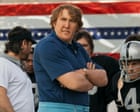
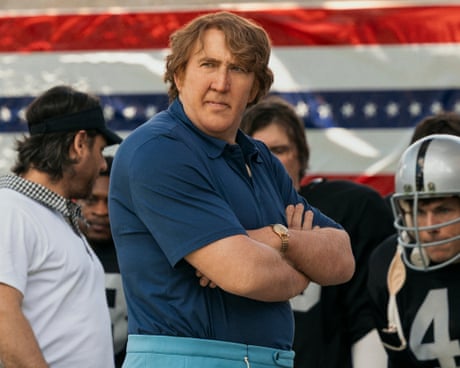
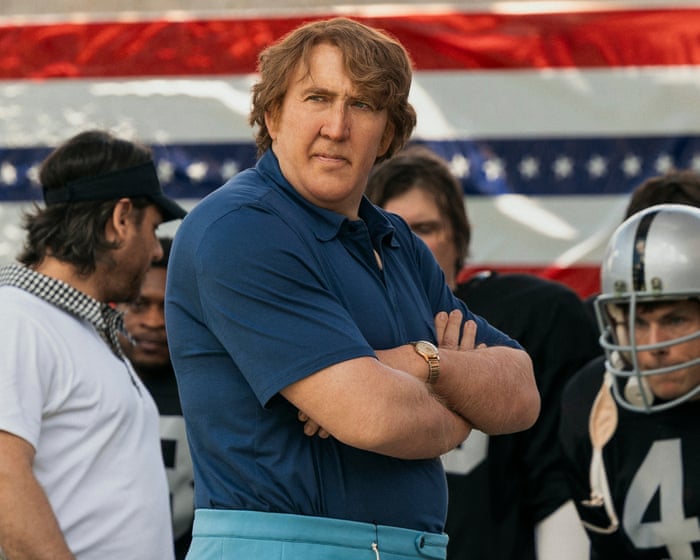
Oscar-nominated director delivers a thoroughly unserious biopic, wasting Christian Bale and Sienna Miller’s talents
John Madden was a beloved American original, the burly football coach who segued easily from Super Bowl burnout to television darling to the last name in gaming as the NFL was overtaking baseball as the national pastime. When he wasn’t crashing into family rooms on football Sundays and Thanksgivings to break down the game’s rough complexities into fun-sized morsels, he was pressing flesh with everyday Americans while barnstorming the country in his Madden cruiser – the coach bus he depended on to compensate for his well-documented fear of flying.
That the Madden video game franchise outlived the avuncular Minnesotan, whose death at age 85 in 2021 was mourned throughout the sport, is as much a testament to his singular knack for teaching the game’s fundaments as it is to his willingness to bring his classroom to students, wherever they might huddle. But Madden, a new Amazon biopic that can’t decide whether it’s serious or slapstick, has drawn all the wrong lessons.
Ukraine must put a "just and tough" end to Khimprom, a drug cartel led by a Russian citizen, President Volodymyr Zelenskyy wrote on 17 November. He discussed the cartel investigations with Ukraine's acting top prosecutor, after an anti-corruption case that caught the cartel's leader on tape reached the security service and police.
Russia keeps fighting Ukraine along the front line and hitting Ukrainian cities with drones and missiles, while Kyiv negotiates to join the European Union. Brussels ties those talks to the rule of law, and Kyiv can't close any negotiating chapter until it meets interim targets on courts, corruption, policing, and democratic institutions. In October, Kyiv and Brussels agreed to set up a joint task force to speed up the rule-of-law and anti-corruption reforms that gate membership. A cartel accused of trying to buy people in the very agencies meant to stop it shows what those reforms are up against.
The president wants punishment nobody can dodge
Zelenskyy and acting Prosecutor General Anton Kovalskyi went over the work of the Prosecutor General's Office in the two months since Kovalskyi took charge, and the investigations into what the president called the Khimprom gang.
"The inevitability of punishment is the principle that must become the best answer to the criminal activity of Khimprom and the people linked to this structure," Zelenskyy wrote.
Acting Security Service of Ukraine (SBU) head Oleksandr Poklad proposed internal steps to strengthen the service, Zelenskyy wrote in a separate post on 17 November. The president ordered a plan for them and said there were also answers to "weighty personnel questions."
A Russian-built drug network inside Ukraine
In April, Ukraine's National Police tied Khimprom to U420, a chain of shops it says sold drugs, and said the cartel's network had grown to 105 distribution points across the country. Khimprom's leader is a Russian citizen known as "Mexican," and police counted more than 30 violent crimes the gang committed or ordered.
Why now: the trail reached the security service
On 4 November, detectives from the National Anti-Corruption Bureau (NABU) detained SBU Major General Serhii Duka, suspected of shielding a group that investigators say ran or protected scam call centers, drug sales, and a fake-euro workshop. Two police officers are also among the five people NABU charged. On the investigators' recordings in the same case, Khimprom's leader offered $2 million to remove Dmytro Torhalo, the police's anti-drug chief, investigative outlet Slidstvo.Info reported. Torhalo confirmed the cartel leader had threatened him. The leader also discussed bribing then-Interior Minister Ihor Klymenko, a NABU unit head said.
Serhii Duka (center), a general in the Security Service of Ukraine (SBU), being detained by anti-corruption detectives at a cottage in Roslavychi, Kyiv Oblast, Ukraine, 4 November 2026. Photo: DR, via NV
Duka left custody on 13 November after 1,612 payments covered the bail the court had set, Ukrainska Pravda reported, citing its sources. The outlet's sources had said SBU officers in the regions were pressed to pay. Duka told a parliamentary inquiry on 18 November that nobody had forced anyone to collect the money.
On 7 November, Zelenskyy called that week's news about the SBU "frankly shameful" and asked lawmakers to make security officers declare their wealth again. He also said Kyiv had raised Khimprom with the United States. On 10 November, Kovalskyi ordered an internal check on whether prosecutors helped return property seized from scam call centers and U420, his office said.
Explore further
Investigators say prosecutors shielded scam call centers. Their office has now fired eight people and is checking how its ex-chief left Ukraine
On Friday, Zelenskyy told reporters the cartel had already entered Poland and was trying to enter Germany, and that Ukraine needed foreign law enforcement, primarily the US, to stop it, Interfax-Ukraine reported. Anti-corruption officials told him they had nothing linking Klymenko, now secretary of Ukraine's National Security and Defense Council, to Khimprom, he said.
Police officers at a U420 shop, part of the chain linked to the Khimprom drug cartel. Photo: National Police of Ukraine
A prosecutor's office with a record of its own
Kovalskyi, previously Khmelnytskyi Oblast's chief prosecutor, became acting prosecutor general by decree on 17 September. His predecessor, Ruslan Kravchenko, left Ukraine while anti-corruption agencies investigated alleged protection of scam call centers.
The residents of the Hollywood Hills have sued Los Angeles, saying the city has not done enough to address the dangerous conditions created by tourists vying for a glimpse of the iconic Hollywood sign.
The residents of the Hollywood Hills have sued Los Angeles, saying the city has not done enough to address the dangerous conditions created by tourists vying for a glimpse of the iconic Hollywood sign.

 Connexion